-
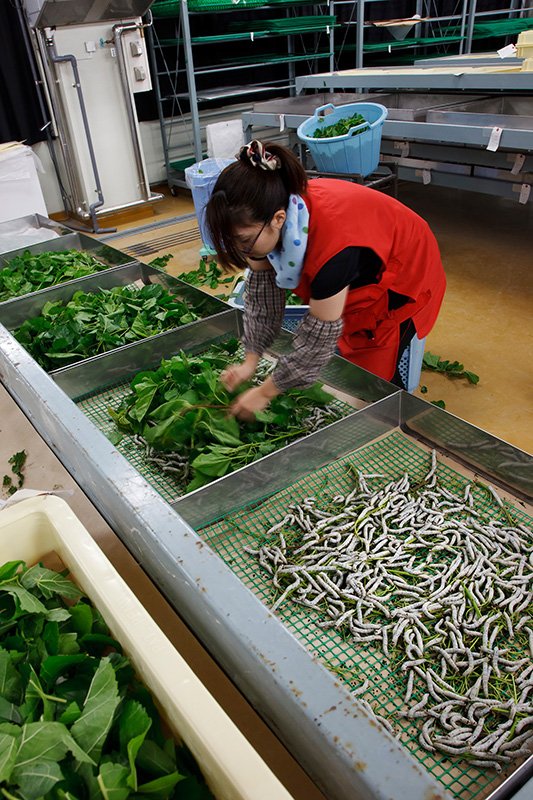
The NIAS breeds many varieties of silkworms. This both benefits research and contributes to the preservation of the species.
-
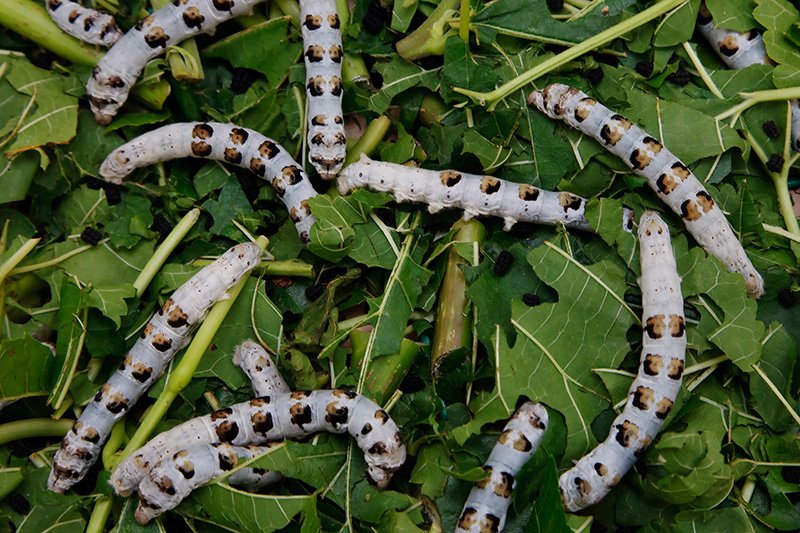
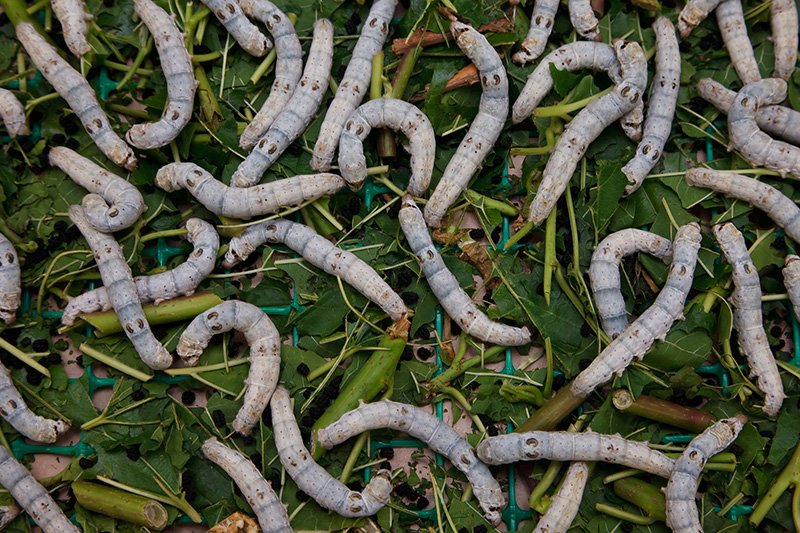
Silkworms lay 300–400 eggs at a single time. Immediately after hatching they are the size of small pieces of thread, but after molting four times their body weight is some 10,000 times greater.
-
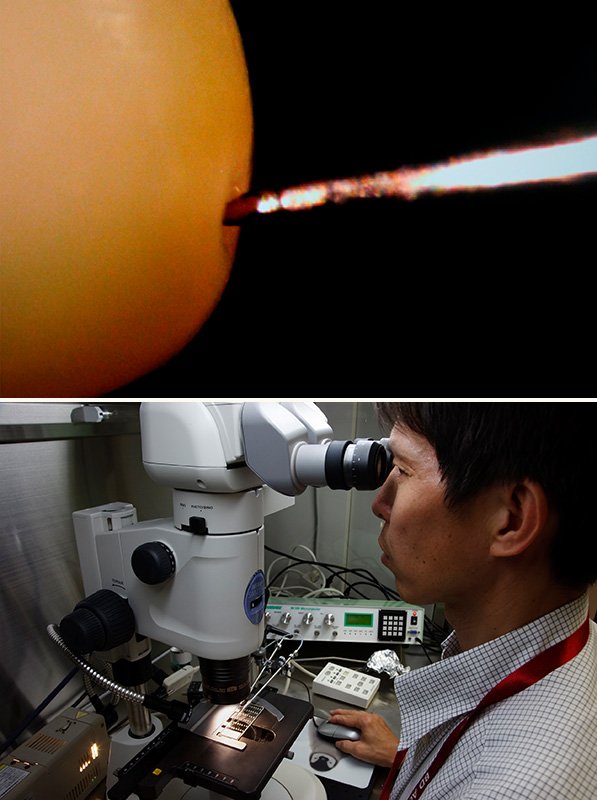
Silkworm eggs are about 1 mm in diameter. Great skill is required to inject DNA into the portion of the egg that will differentiate into germ cells (top). Chief researcher Uchino Keirō introducing DNA into an egg using a microscope (bottom).
-
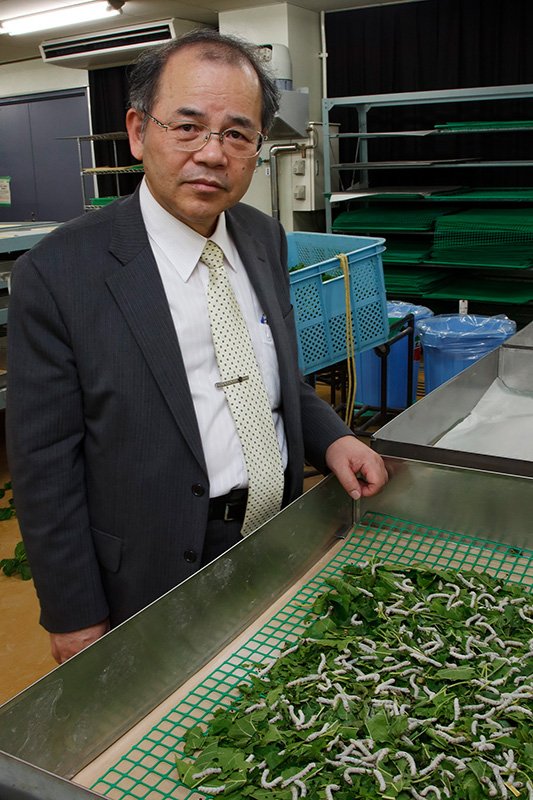
Dr. Machii Hiroaki, director of the Genetically Modified Organism Research Center, NIAS
-
When introducing new materials to existing markets, cost competitiveness is as important as quality. Researchers at Immuno-Biological Laboratories believe proteins derived from transgenic silkworms offer cost benefits for some pharmaceutical products.


 Read in other languages