-
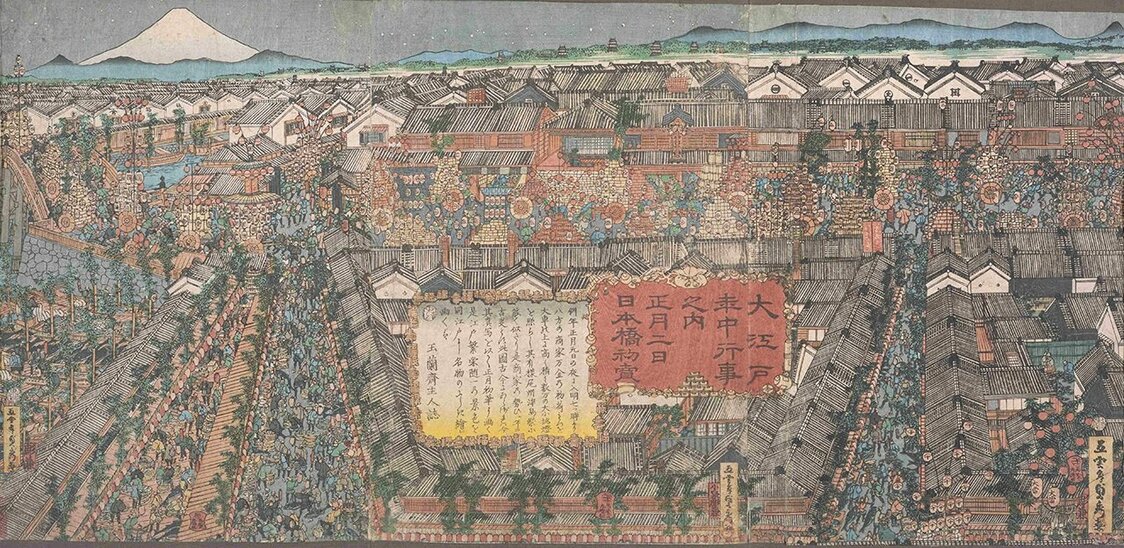
The streets of Nihonbashi are thronged with shoppers for hatsuuri in Utagawa Sadahide’s print Ōedo nenchū gyōji no uchi shōgatsu futsuka Nihonbashi hatsuuri (The First Sales on the Second Day of the New Year in Nihonbashi). (Courtesy the Tokyo Metropolitan Central Library Special Collection Room)
-
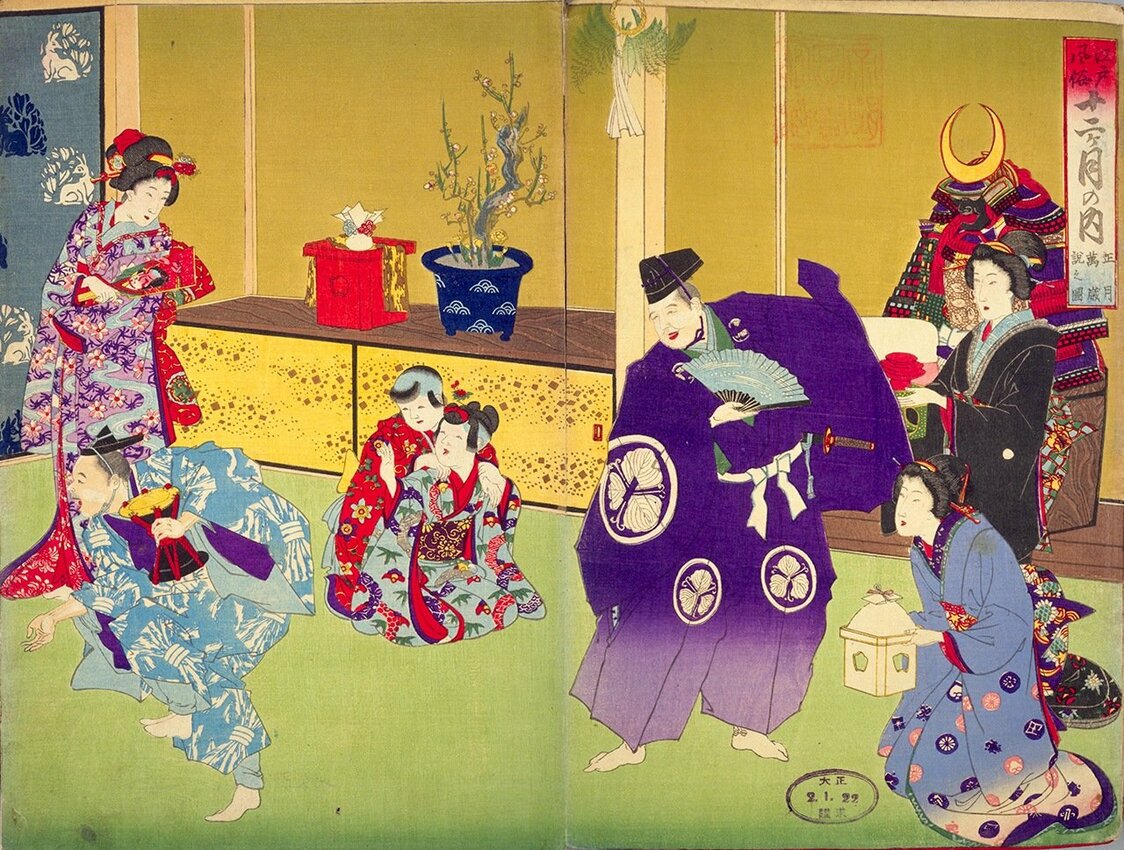
A tayū, in his distinctive triangular eboshi hat and hitatare court robes, and a drum-carrying saizō perform for a well-off family in a series of prints by Yōshū Chikanobu depicting daily life in Edo. (Courtesy National Diet Library)
-
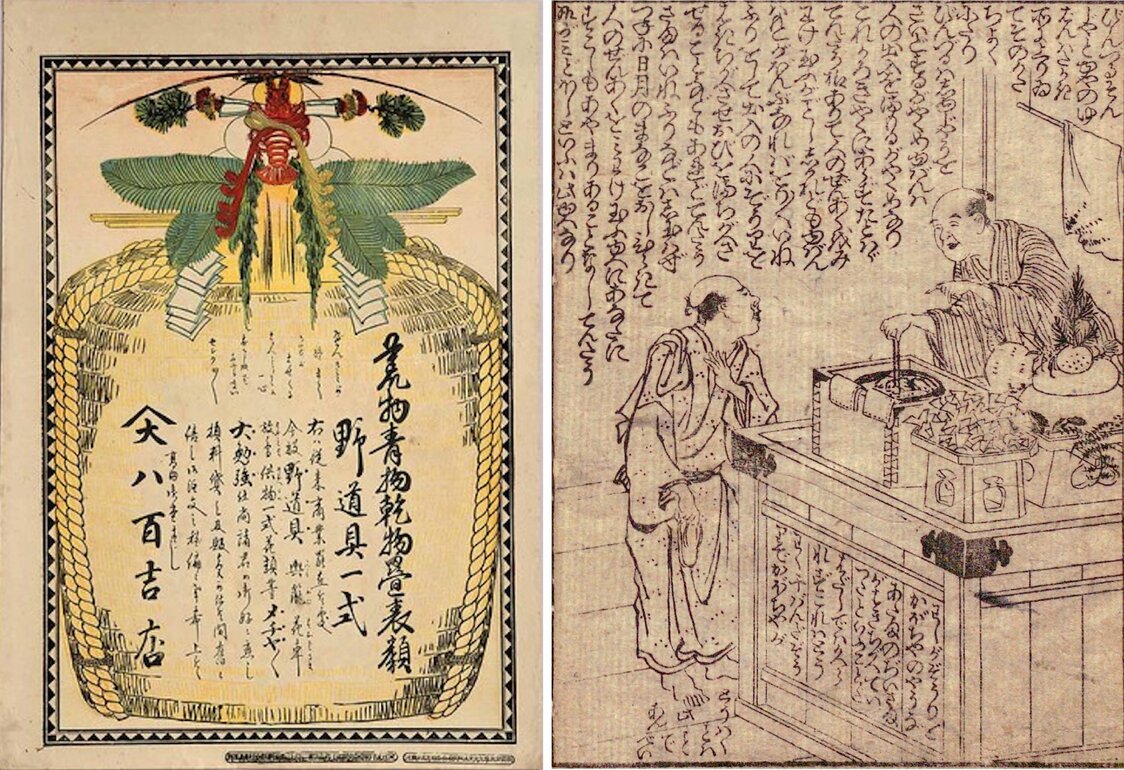
From left: A drawing of an elaborate kagami-mochi displayed at a shop (courtesy ColBase); an attendant at a public bath sits next to a kagami-mochi displayed on a sanbō pedestal, from the 1802 work Kengu irigomi sentō shinwa (Wisdom and Folly Mixed in New Tales of the Bathhouse). (Courtesy National Diet Library)
-
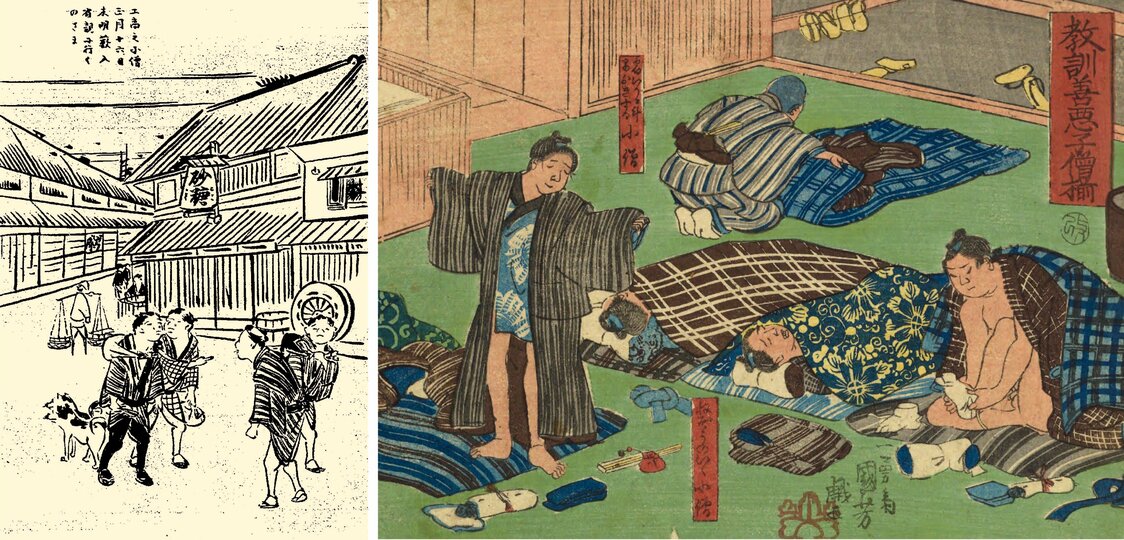
From left: Apprentices return home during yabuiri, as depicted in Kikuchi Kiichirō’s work Edofunai ehon fūzoku ōrai (Picture Book of Edo Customs and Manners); a print showing young apprentices preparing for their day off, from Utagawa Kuniyoshi’s series Kyōkun zenaku kozōzoroe (A Survey of Good and Bad Children). (Both images courtesy National Diet Library)
-
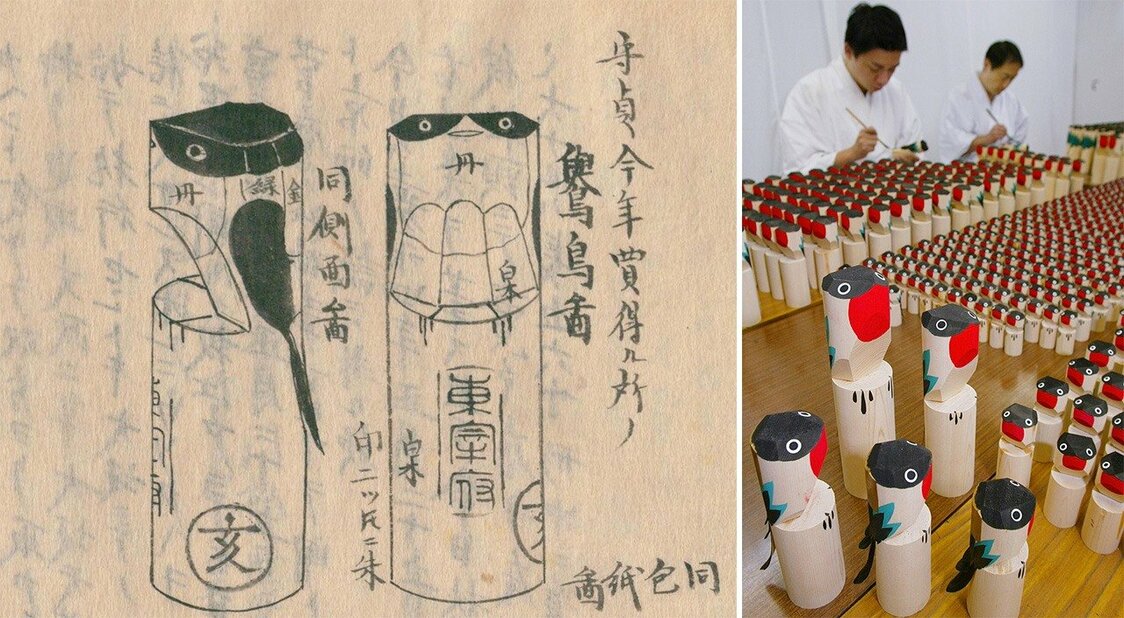
From left: A wooden kiuso as depicted in Morisada mankō (courtesy National Diet Library); workers make kiuso at the Kameido Tenjin Shrine (© Jiji).


 Read in other languages