-
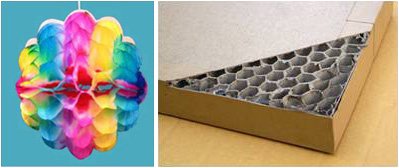
Left: The colorful folding paper decorations for the Tanabata festival are said to have inspired a typical manufacturing method for honeycomb core panels. Right: Honeycomb core structures can be seen in everyday uses like packaging. (Photos courtesy Hagiwara Ichirō.)
-

Meiji University Professor Hagiwara with some of the members of his team of 12 researchers from Japan, China, Russia, and Vietnam. (Photo by Yamada Shinji.)
-
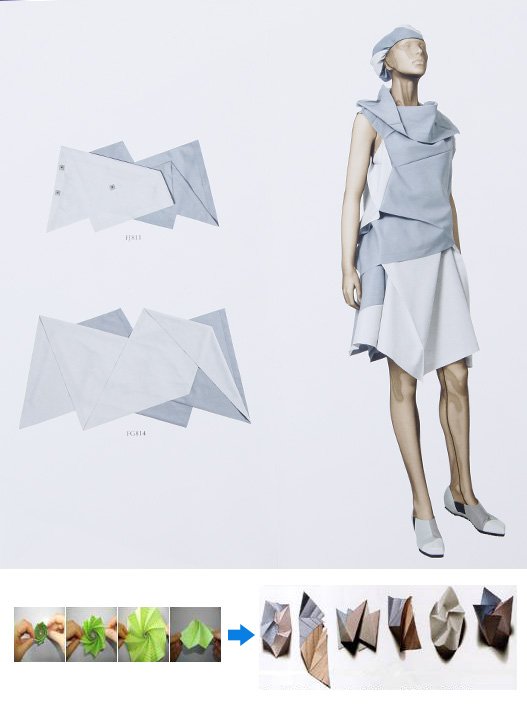
A dress designed by Issey Miyake, folded using an origami technique called makitori, or “coiling” (below). (Photo by Yamada Shinji [above]; courtesy Hagiwara Ichirō [below].)
-
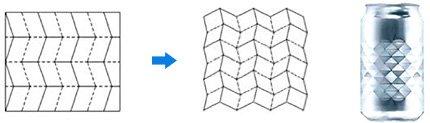
The “Miura fold” on the left, created by Miura Kōryō, professor emeritus at the Japan Aerospace Exploration Agency (JAXA), unfolds and refolds simply by being pulled and pushed from opposite corners. Meanwhile, the diamond-cut pattern, which also originated in Miura’s space engineering research, is being used in beverage cans like the one on the right.
-
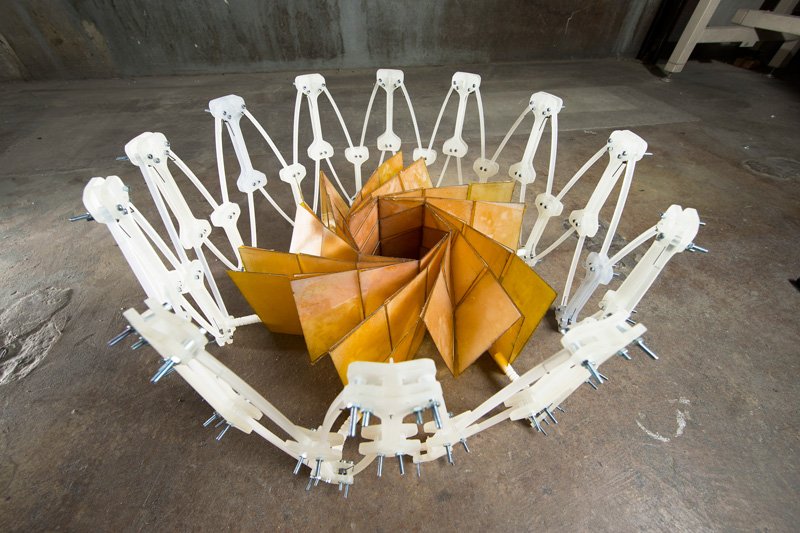
The US National Aeronautics and Space Administration’s Jet Propulsion Laboratory is working with researchers at Brigham Young University to develop a solar panel array that folds up like origami and deploys to 10 times its folded size. (Photo of prototype, courtesy BYU/NASA.)
-
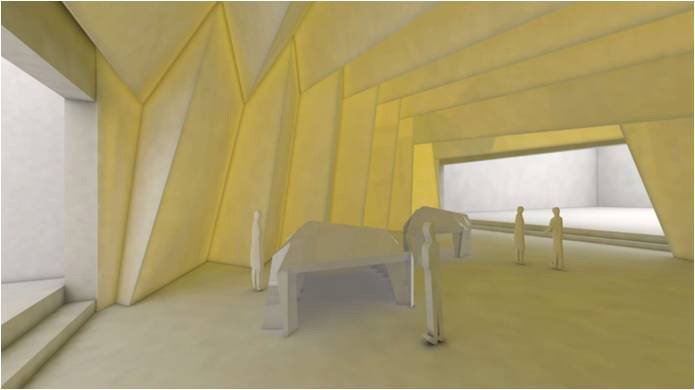
University of Tokyo Assistant Professor Tachi Tomohiro is aiming to apply origami techniques to building construction, as shown in this model design. (Photo courtesy Tachi Tomohiro.)
-
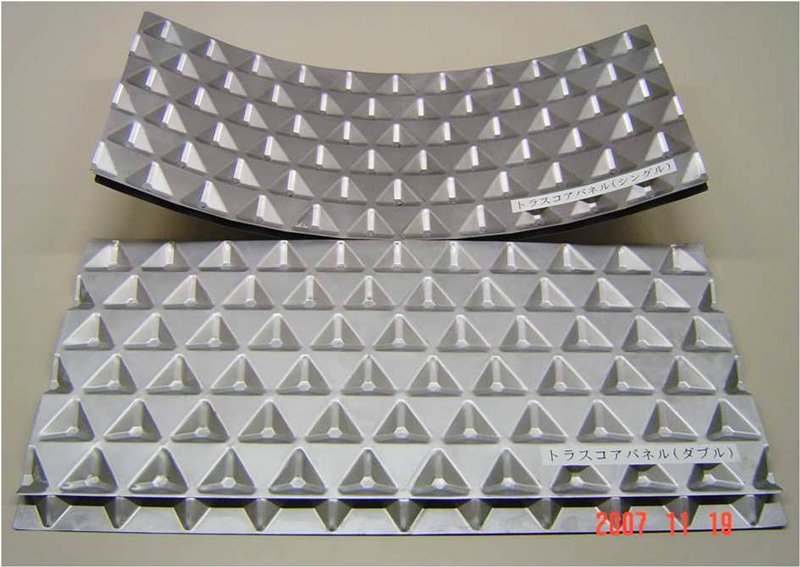
The truss core panels developed by Hagiwara’s team can be machine-pressed and curved; they are cheap to make and fire-resistant. (Photo courtesy Hagiwara Ichirō.)


 Read in other languages