-
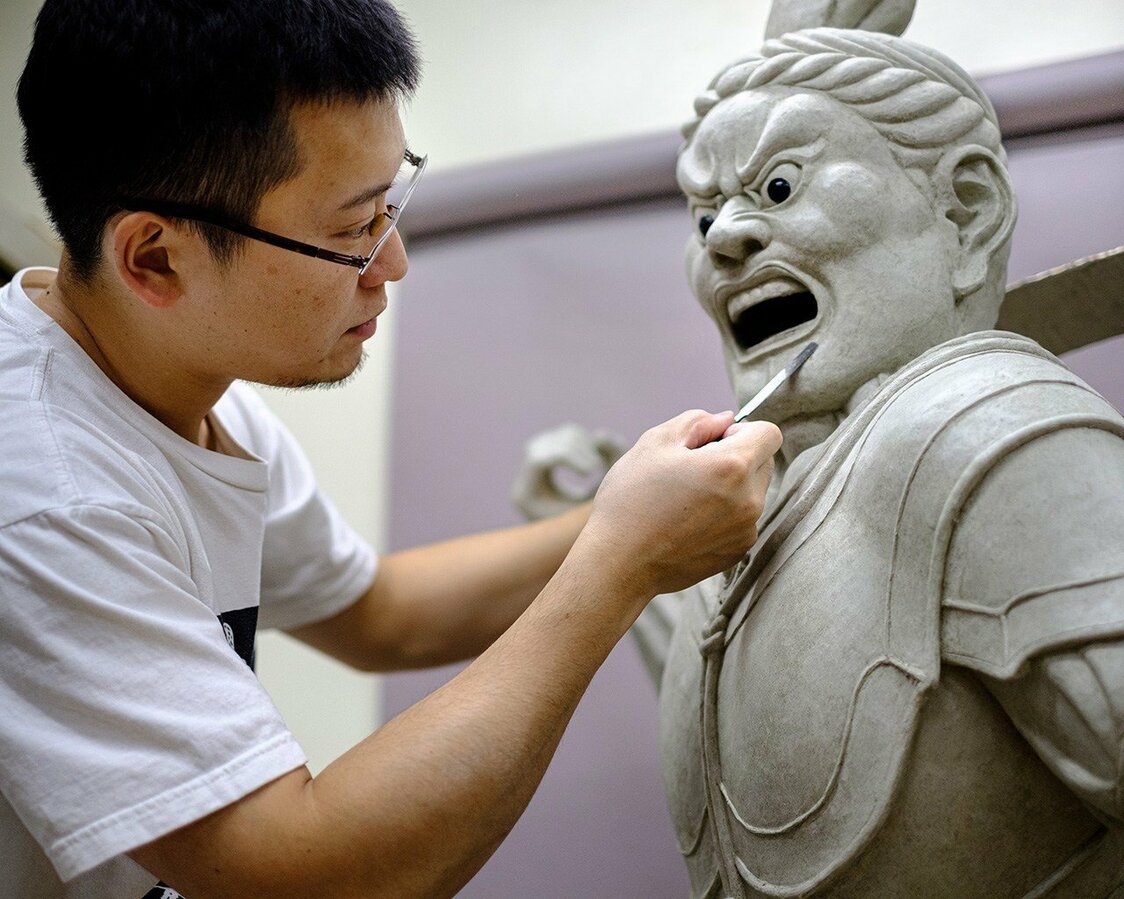
Shigematsu Yūshi, clay sculptor and Tokyo University of the Arts 2019 doctoral program graduate. (© Kojima Hisanori)
-

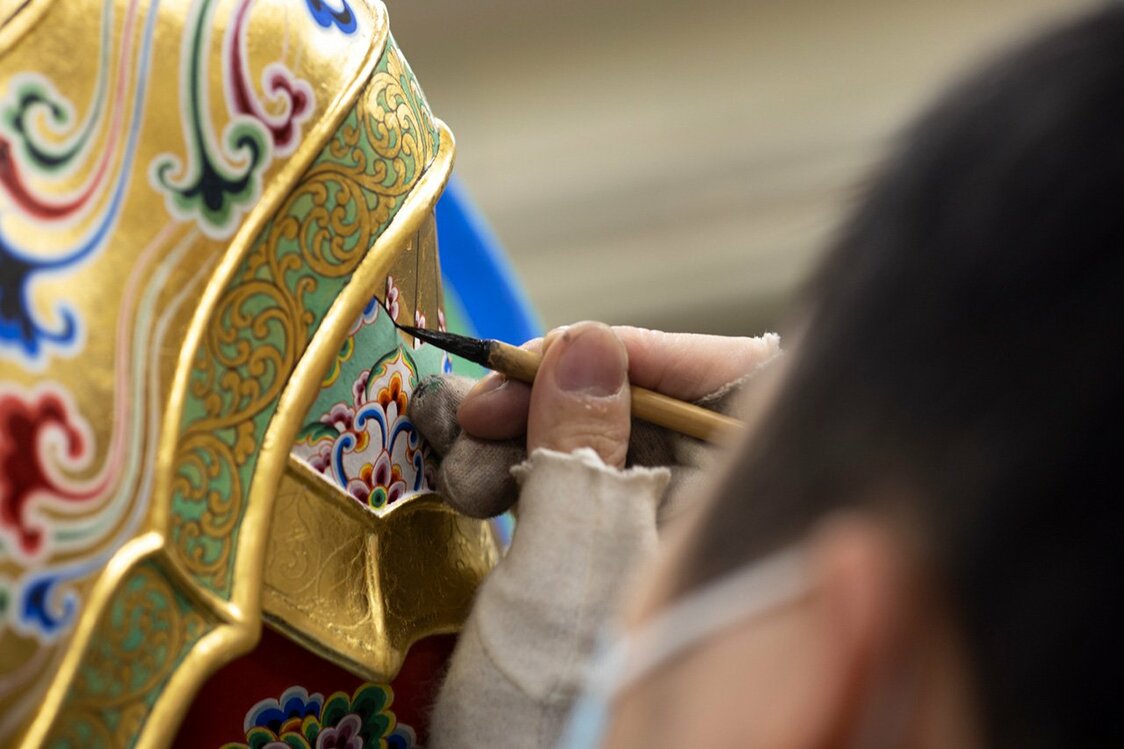
In ungen saishiki (banded coloring), a color is applied at various strengths in multiple bands. These multiple applications are used rather than simply painting a deep color on a white foundation. Here an artist applies the very light blue layer. (© Kojima Hisanori)
-
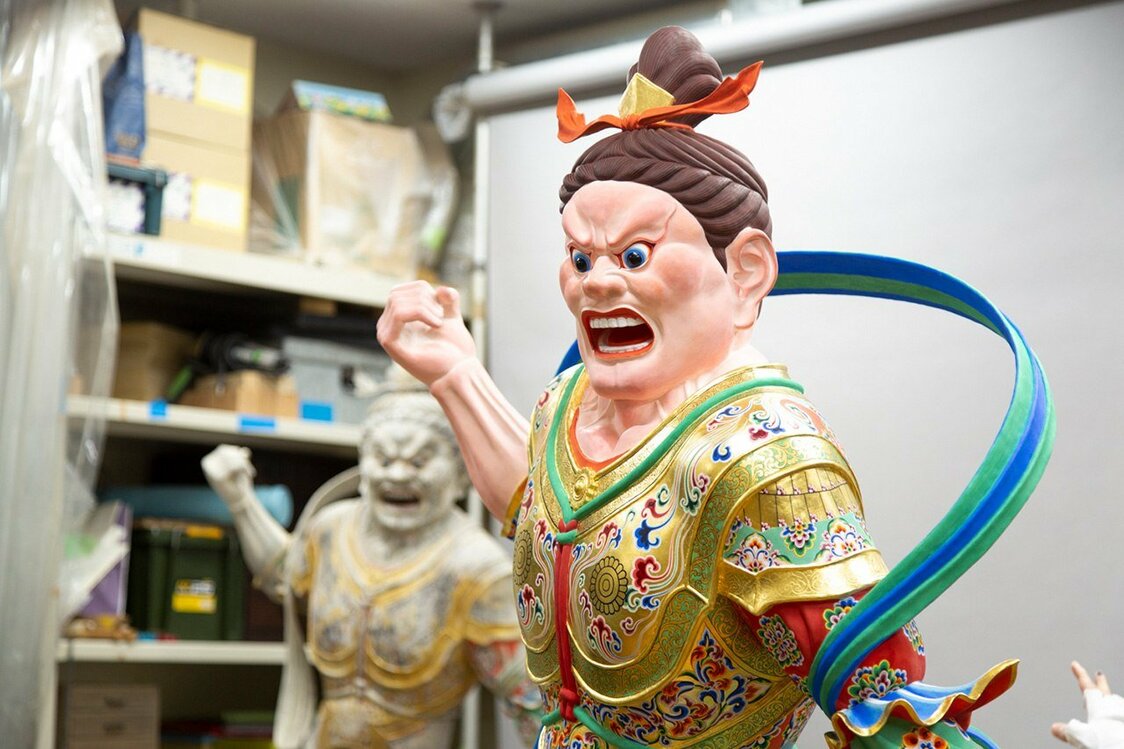
A clay statue in the foreground; in the background is a re-creation of the original dry-lacquered version. Shigematsu Yūshi created them both based on computerized data provided by Yamada Osamu, a speciallyappointed professor at the Tokyo University of the Arts. (© Kawamoto Seiya)
-
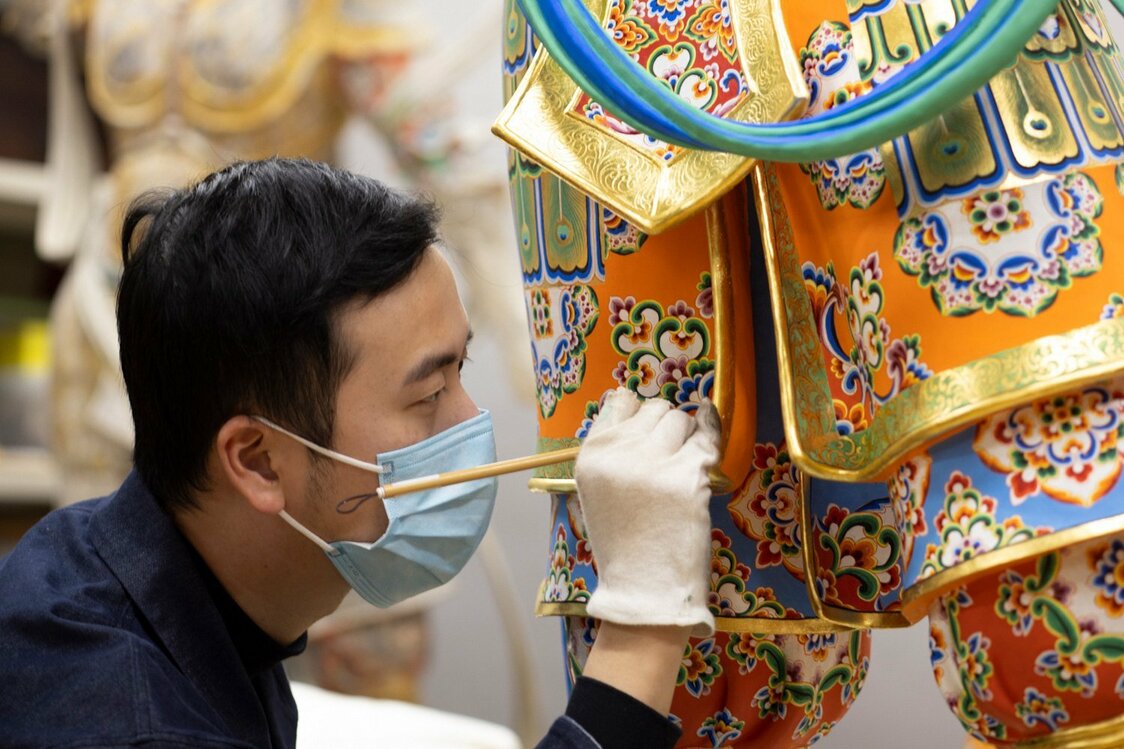
Cho Hinbun, a nihonga (Japanese painting) artist and graduate of the Tokyo University of the Arts, is on the coloring staff. Here he puts finishing touches on a statue. While working in physically awkward positions, he pays careful attention to the statue’s legs and other inconspicuous places. (© Kawamoto Seiya)
-
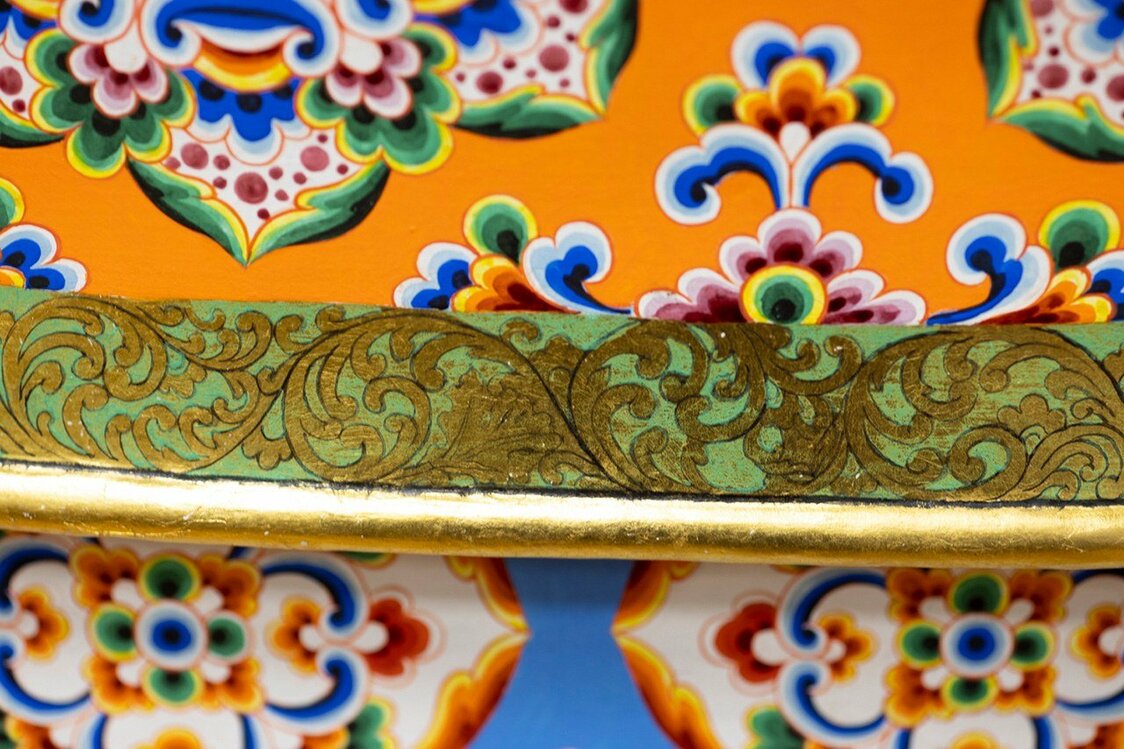
The foliage, painted with ink on a gold leaf base, is beautifully enlivened by application of a patina color to surrounding parts. (© Kawamoto Seiya)
-
(© Kawamoto Seiya)
-
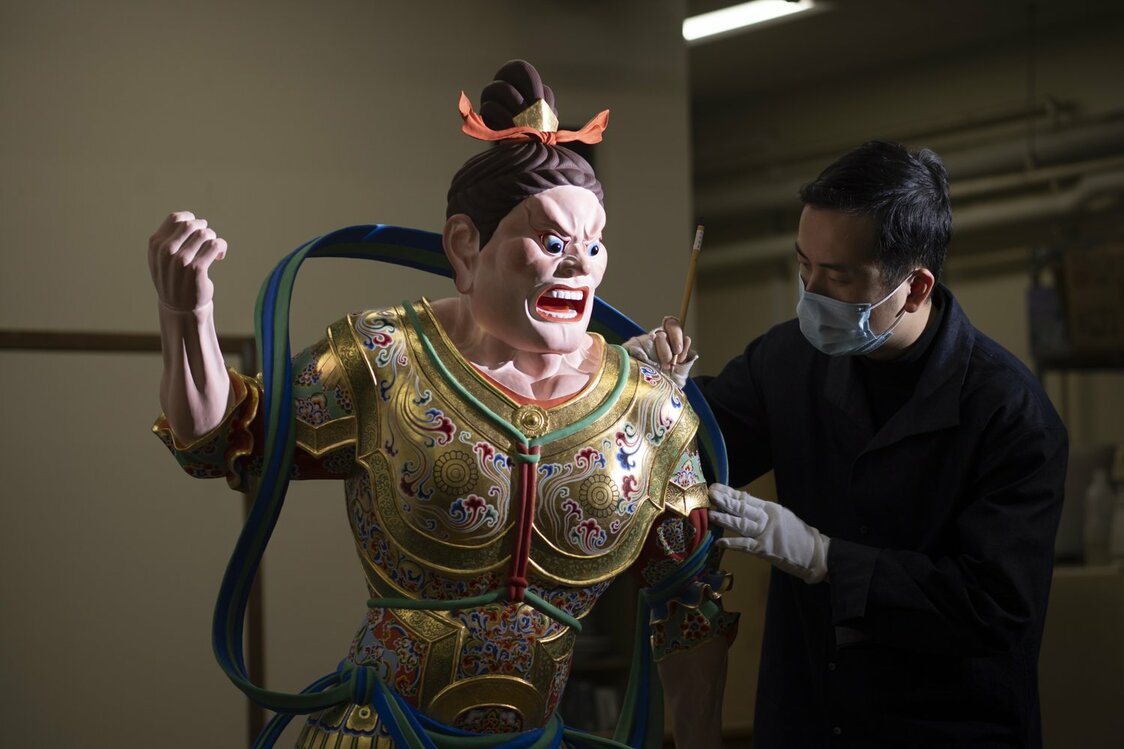
Coloring to preserve vestiges of Silk Road culture. (© Kawamoto Seiya)
-
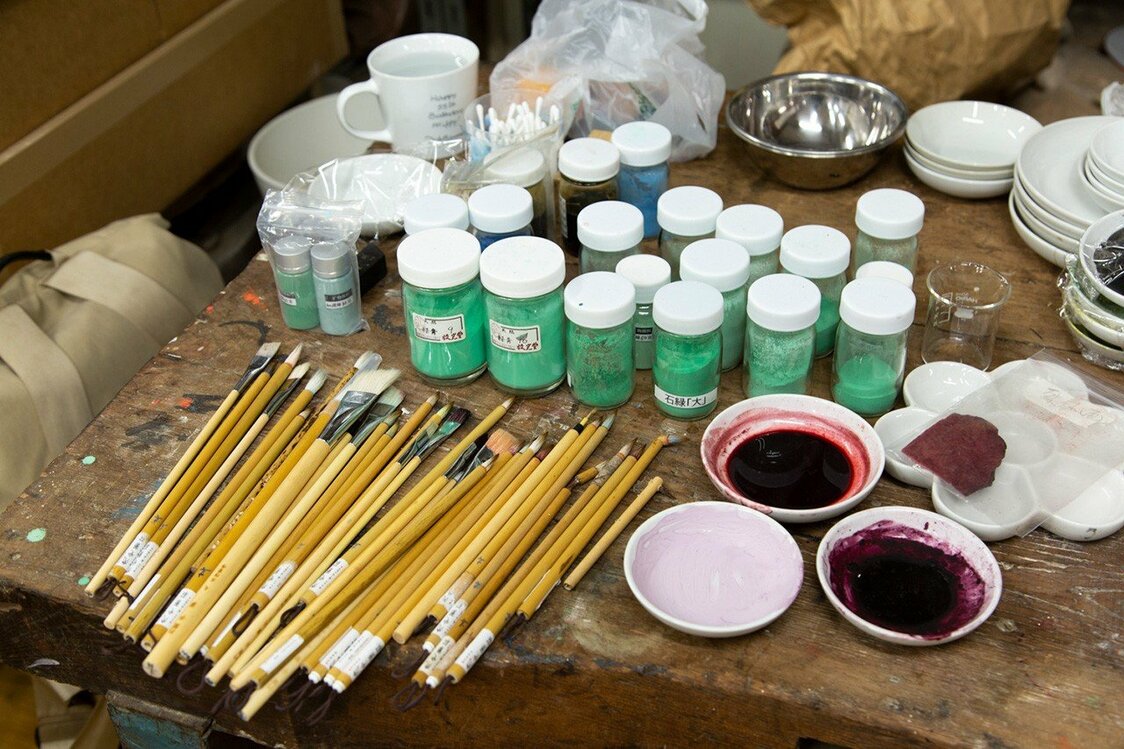
Mineral pigments that do not exist in Japan are obtained from China. (© Kawamoto Seiya)
-
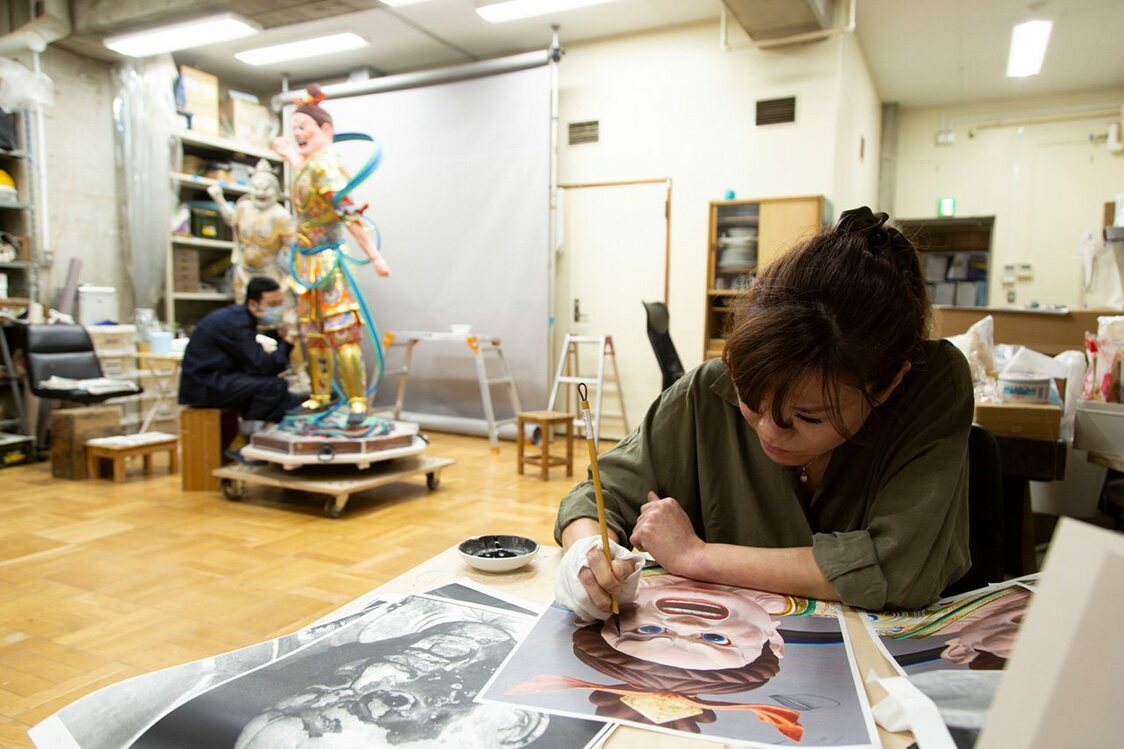
The facial expression is a vital part of a statue. The coloring stage, which comes last, is especially difficult here, due to the face’s conspicuous nature. Before applying paint to the sculpture, Inuma Haruko tests painting different expressions on a flat surface with the help of reference materials. (© Kawamoto Seiya)
-
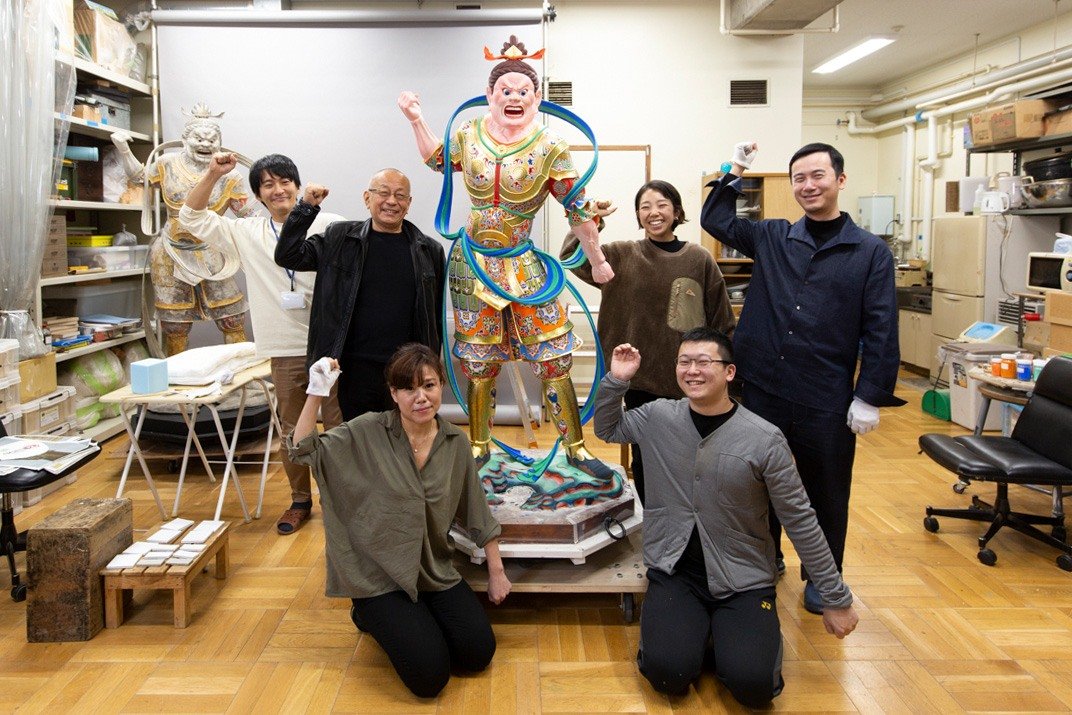
Back row, from left: Assistant Professor Kojima Hisanori, Professor Yabuuchi Satoshi, research assistant Yamada Aki, Cho Hinbun; front row, from left: lecturer Inuma Haruko, Shigematsu Yūshi. (© Kawamoto Seiya)


 Read in other languages