-
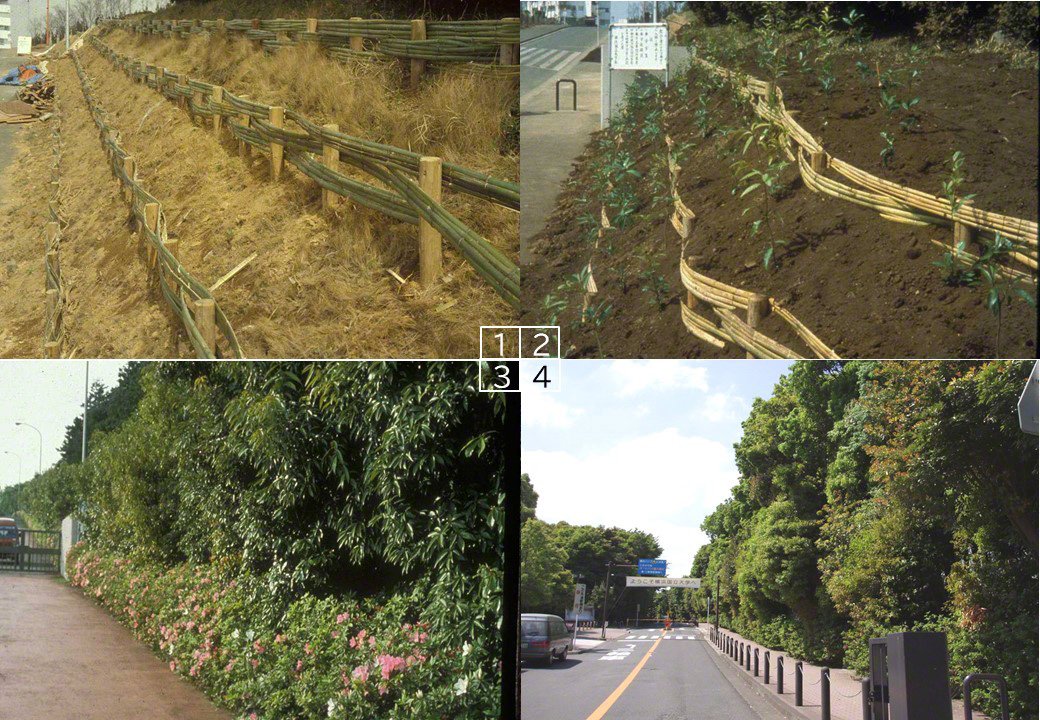
(1) The site for the Miyawaki forest at Yokohama National University was a 2–3 meter embankment covered in invasive species of grass. (2) Topsoil was added and varieties of shii (Japanese chinquapin), tabu (Japanese bay tree), and kashi (Japanese oak) were planted. (3) Three years after planting, the trees had grown to 3 meters. (4) A decade after planting, the trees had reached 10 meters in height. (Courtesy of Miyawaki Akira)
-
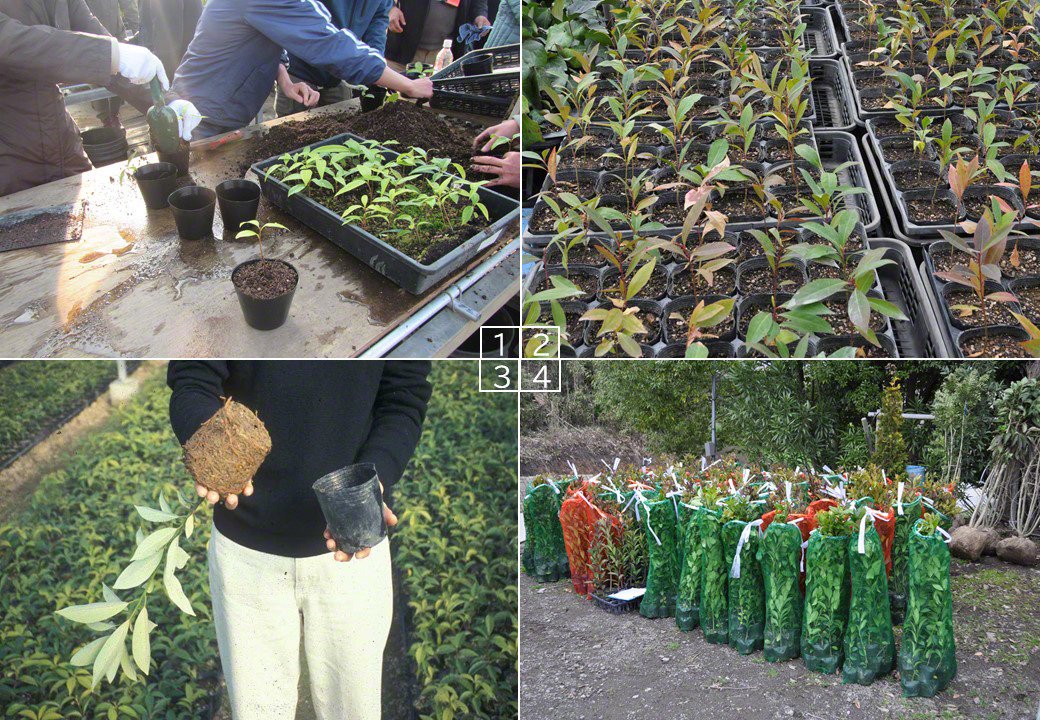
(1) Sprouted seeds are transplanted into plastic planting pots. (2) Saplings grow at a nursery. (3) A sapling of a Japanese bay tree with a fully developed root ball. (4) Net bags containing saplings await transfer to the planting site. (© Suzuki Shin’ichi)
-
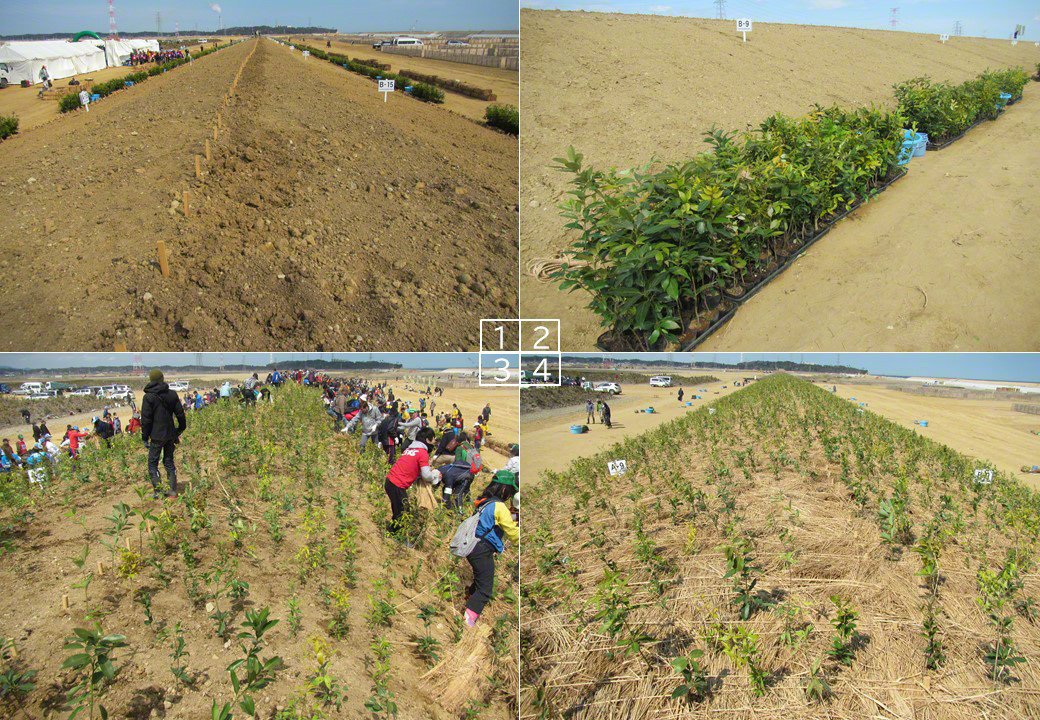
(1) A prepared embankment stands ready for planting at a large-scale planting event. (2) Potted saplings are lined up for transplanting. (3) Saplings of different species are planted together in small, square plots. (4) A layer of rice straw mulch is laid out and secured against the wind. (© Suzuki Shin’ichi)
-
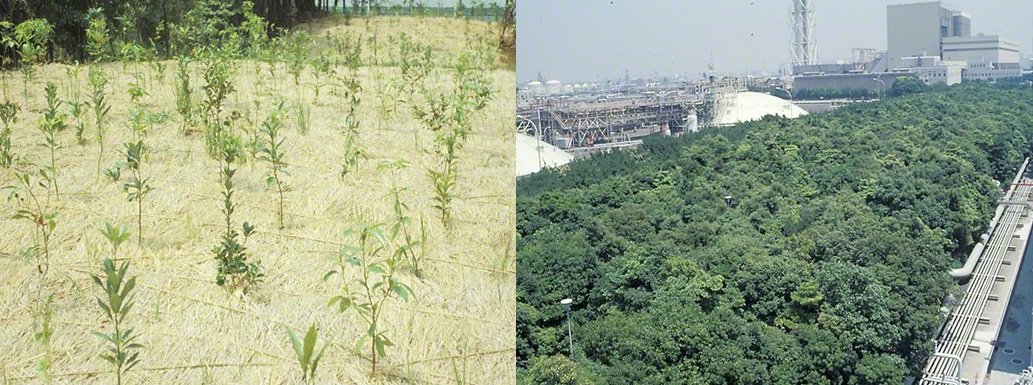
The man-made forest at Tokyo Electric Power Company’s Higashi-Ōgishima Thermal Power Station in Kawasaki, Kanagawa Prefecture. Starting in the 1980s, saplings were planted at the site, first just one plant per square meter, as shown at left. Later plantings increased this to three. More than 10 years later, the trees, which have yet to reach full height, have formed a dense forest. (Courtesy of Miyawaki Akira)


 Read in other languages