-
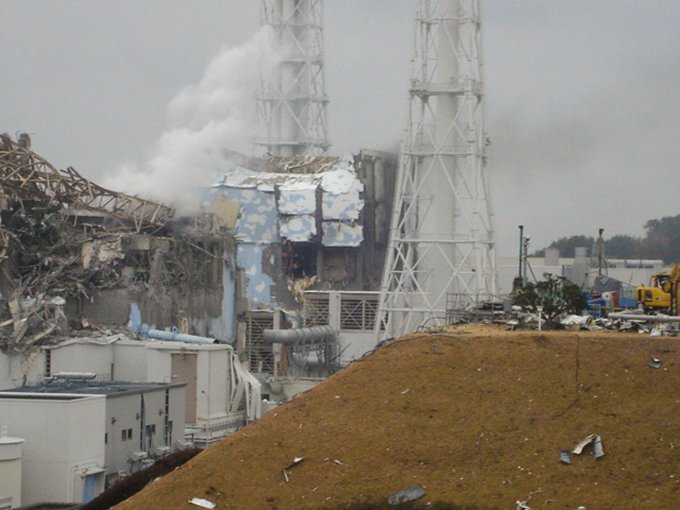
Steam billows from the mangled remains of the Unit 3 (left) and Unit 4 buildings at Fukushima Daiichi on March 15, 2011, following hydrogen explosions. (Photo courtesy Tokyo Electric Power Company Holdings)
-
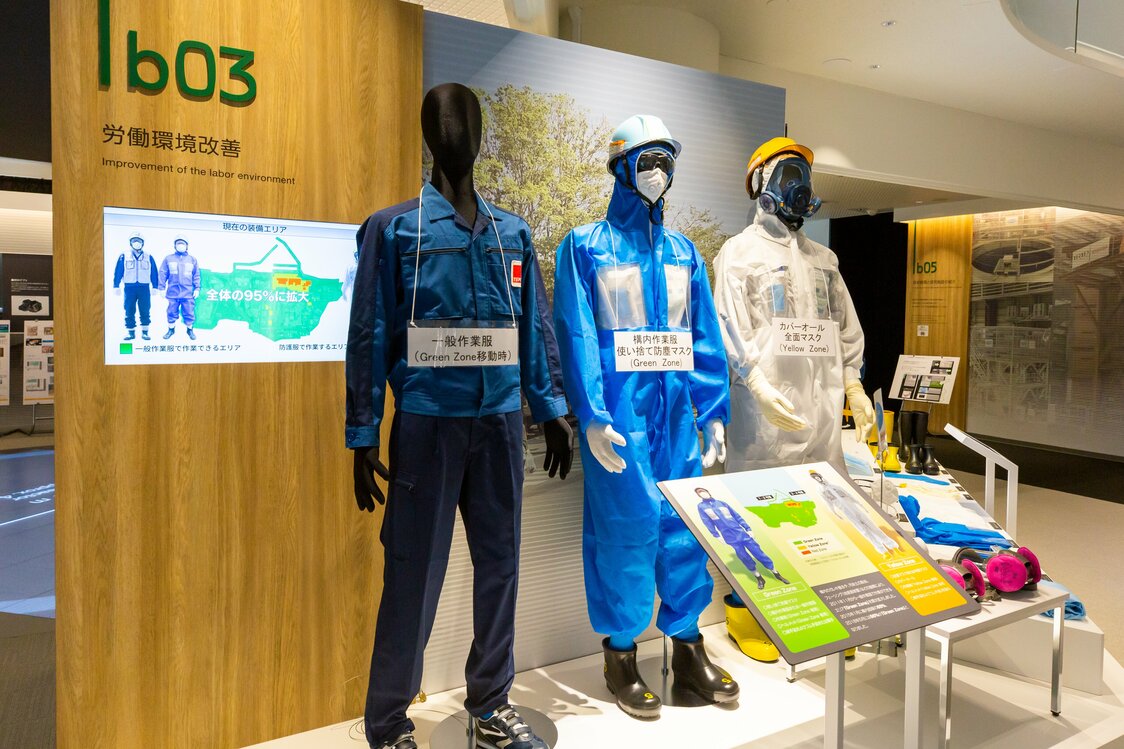
A display at the TEPCO Decommissioning Archive Center in Futaba, Fukushima, shows the different types of suits worn by workers at Fukushima Daiichi.
-
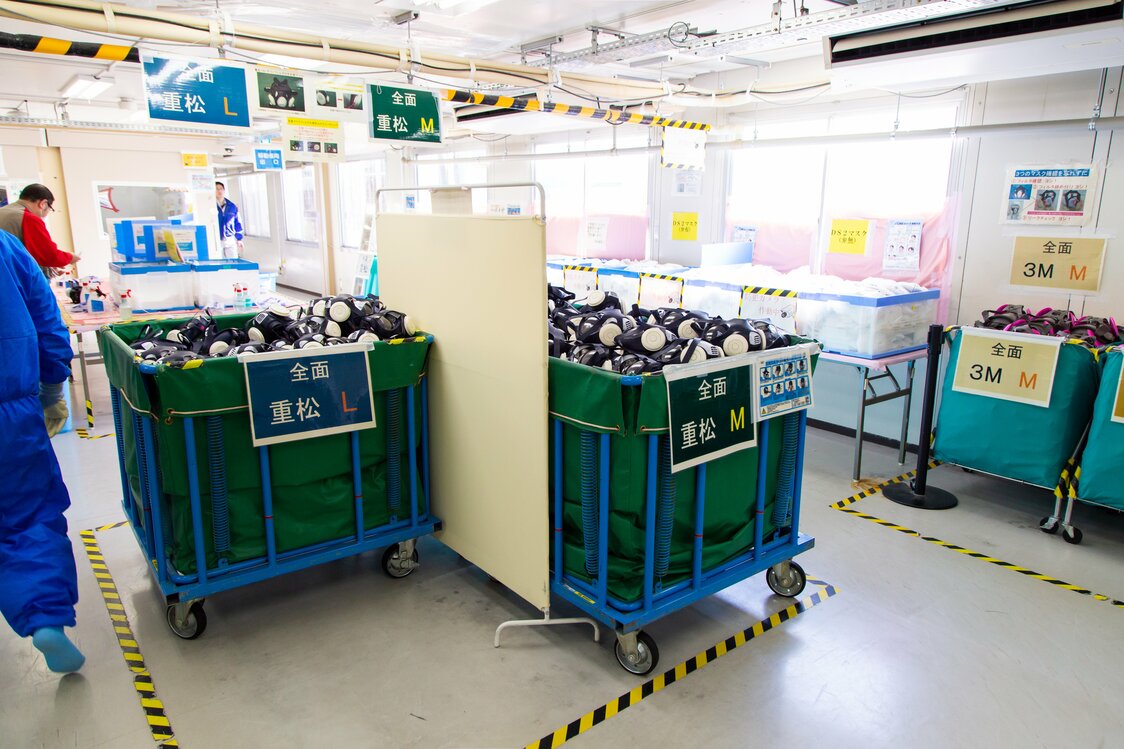
Carts full of masks await workers. The type of work to be conducted and site location determines what mask is to be worn.
-
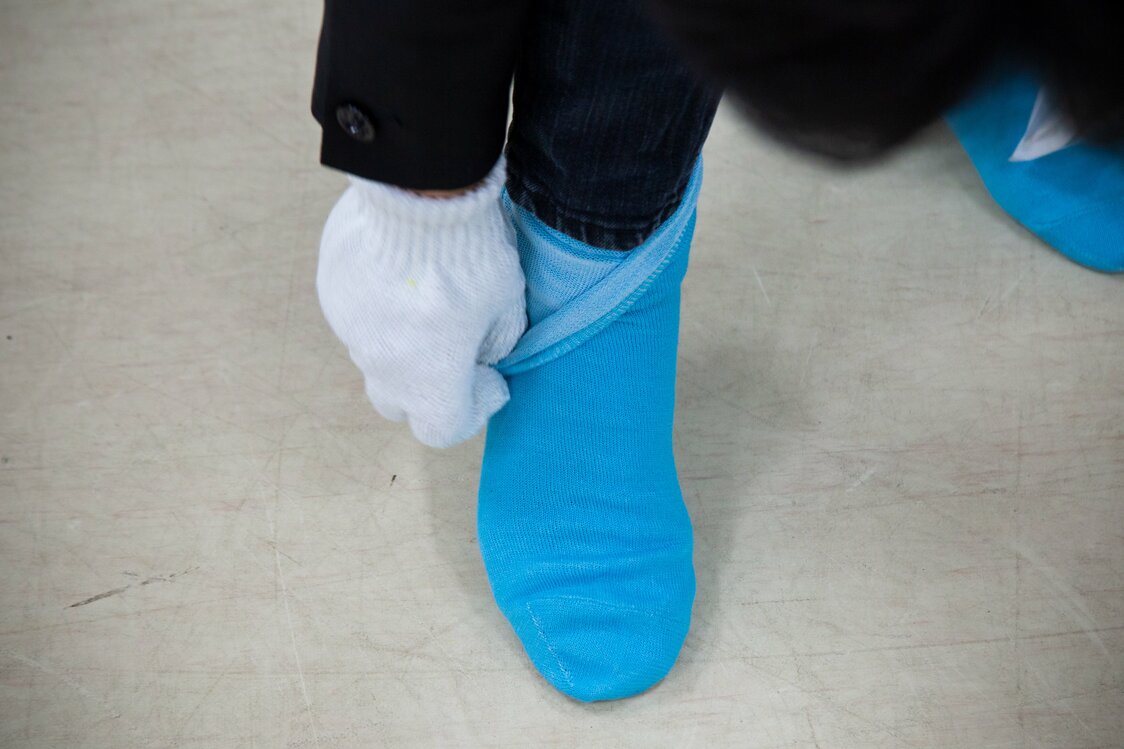
Cotton gloves and socks are part of the attire provided to visitors. Participants are asked to tuck in their pant legs during the tour to keep dust and other particles from getting in.
-
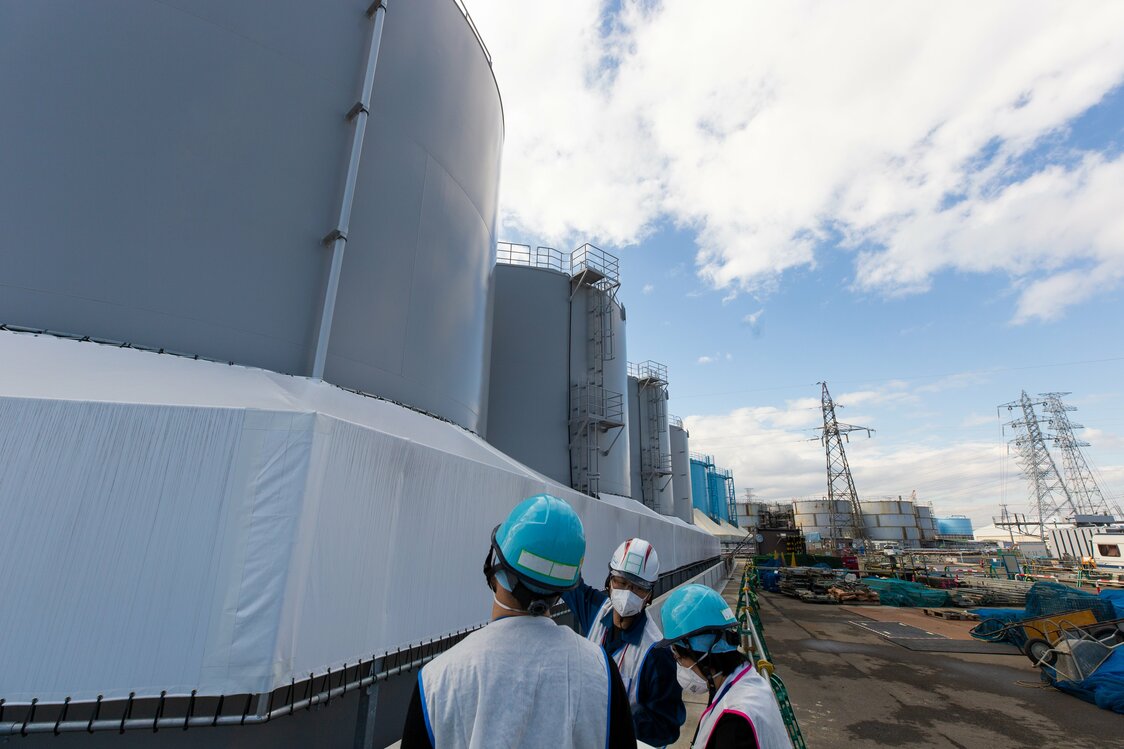
Visitors during a tour wear helmets, vests, and dust masks.
-
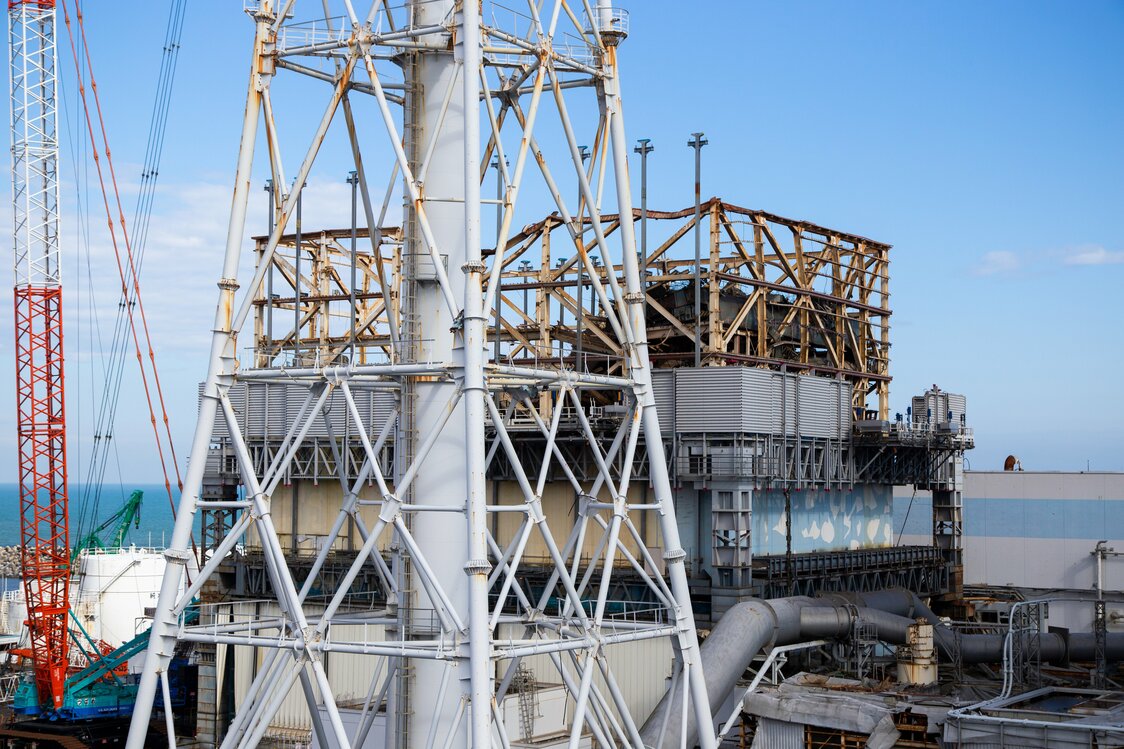
The heavily damaged Unit 1 building is the only structure housing a reactor at Fukushima Daiichi that is still uncovered.
-
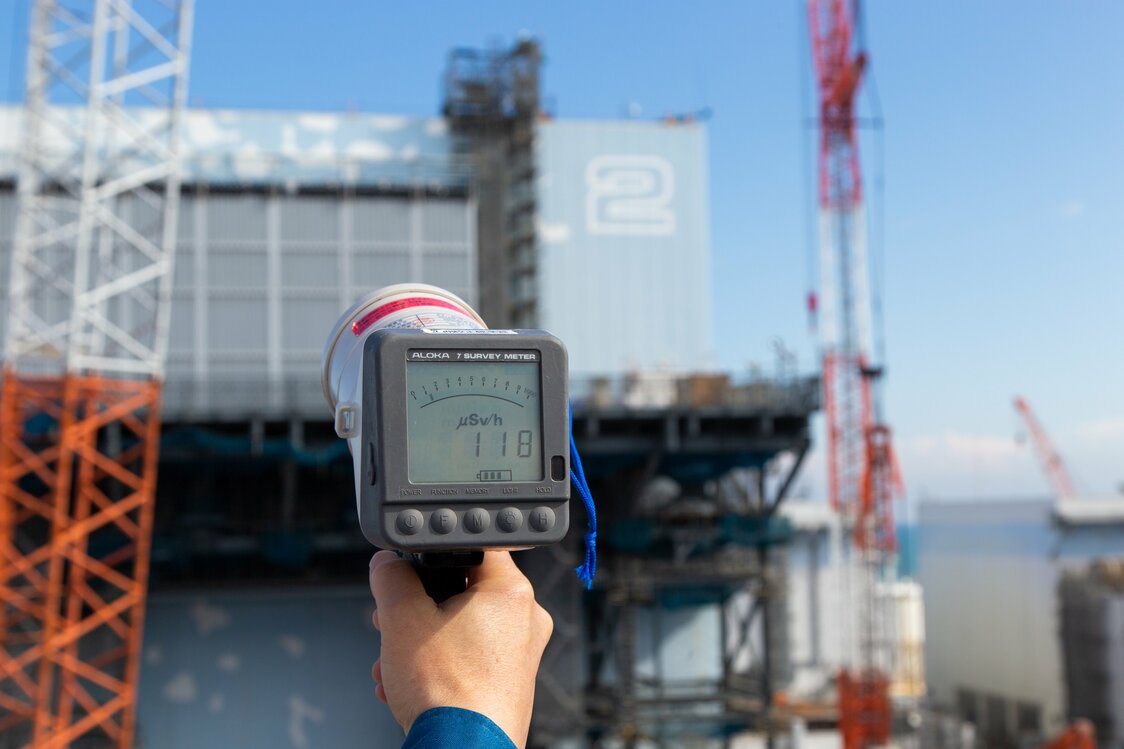
A dosimeter reads 118 microsieverts per hour in an area near the damaged reactor buildings. Although cleanup efforts have lowered radiation levels, the contaminated debris that remains is still a concern for workers.
-
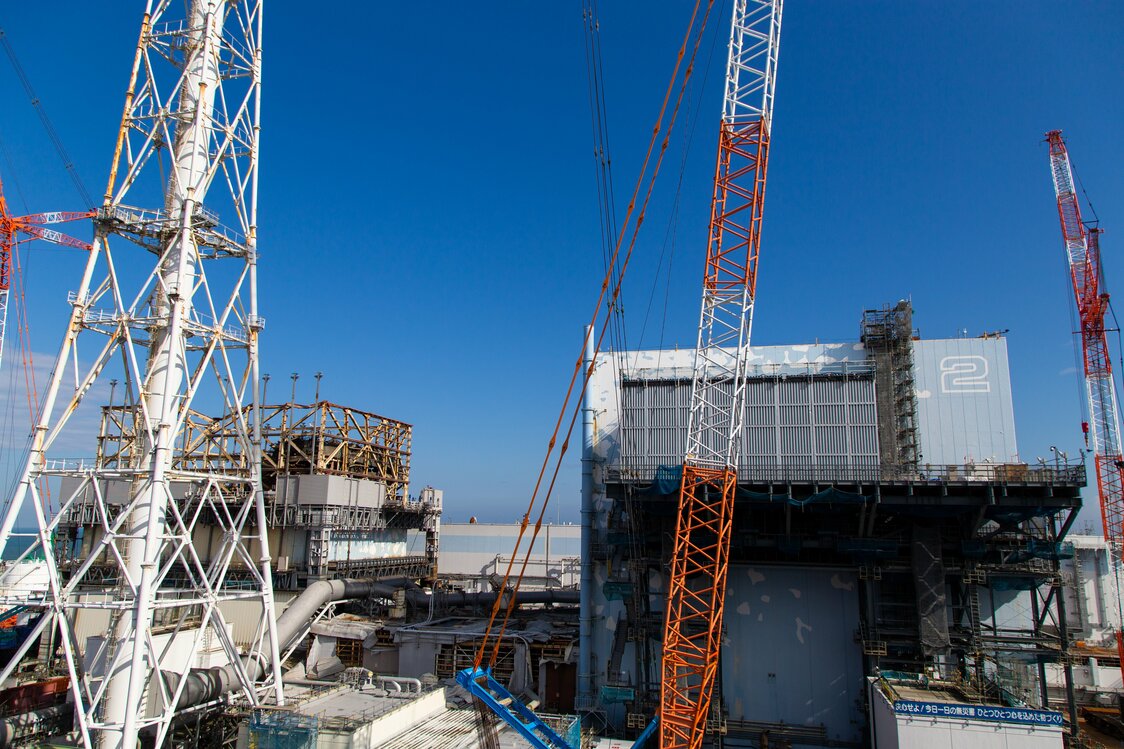
Cranes and other equipment around the Unit 1 (left) and Unit 2 reactor buildings.
-
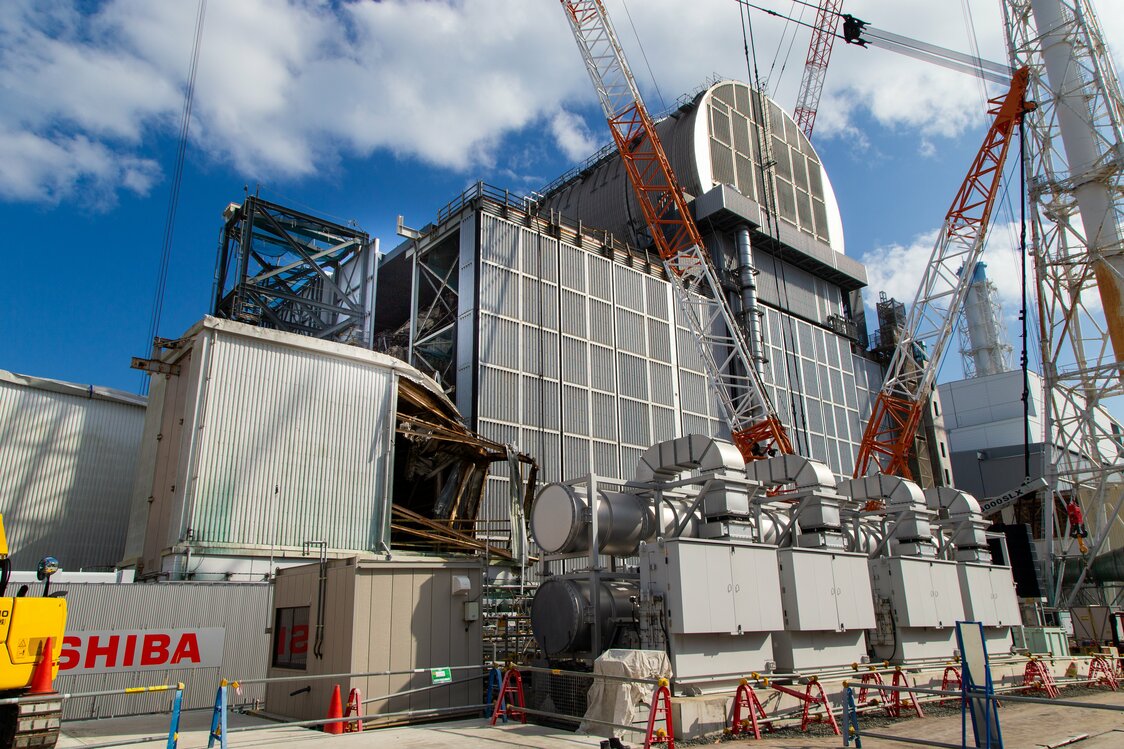
A dome-shaped cover installed atop the Unit 3 reactor building helps contain radiation.
-
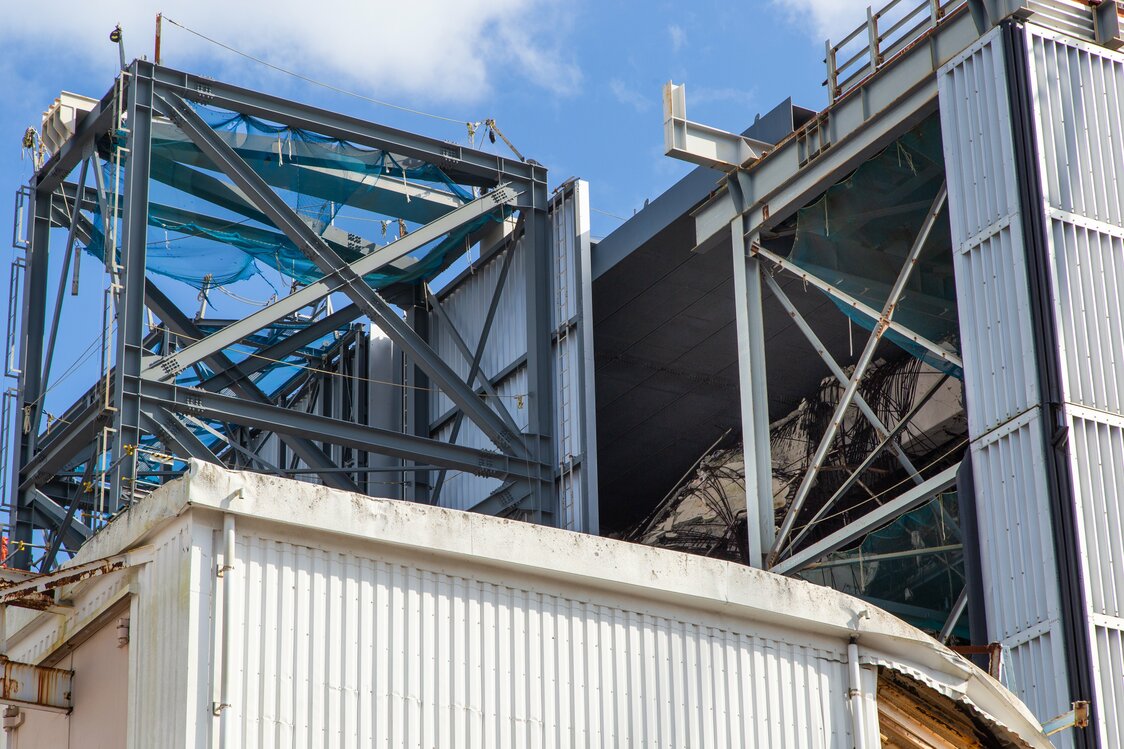
Naked steelwork visible through a gap in the outer wall of a reactor building.
-
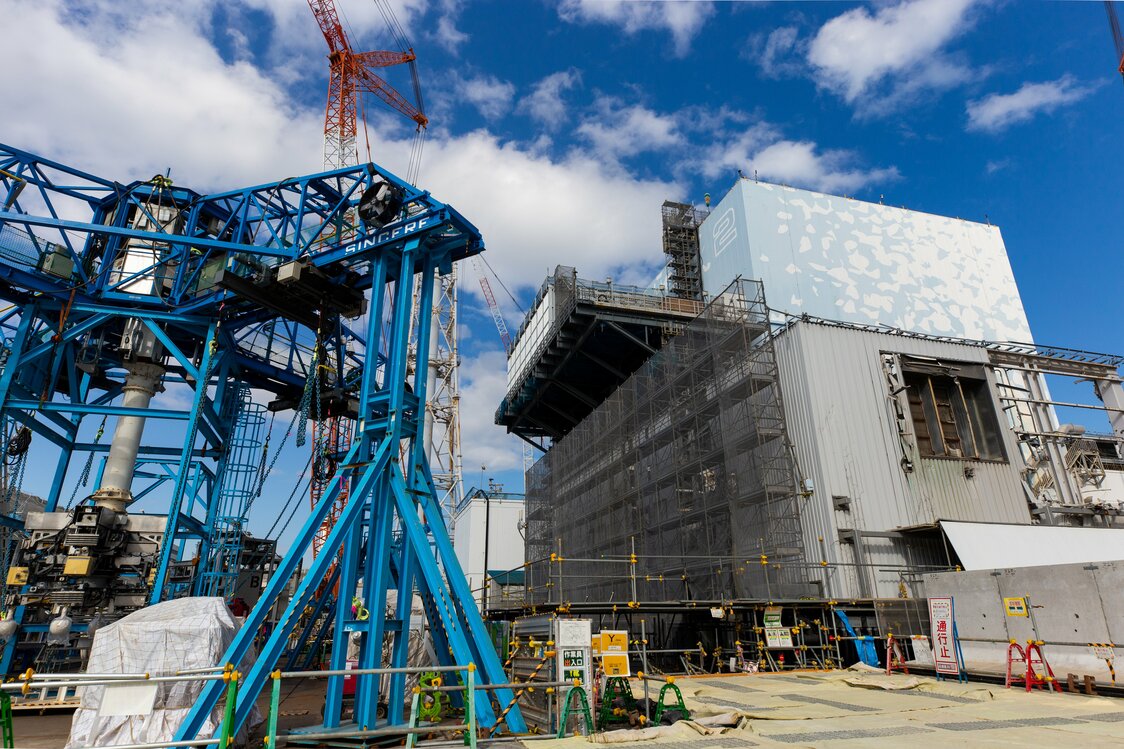
A crane and other equipment for dismantling an exhaust stack stand next to the Unit 2 building.
-
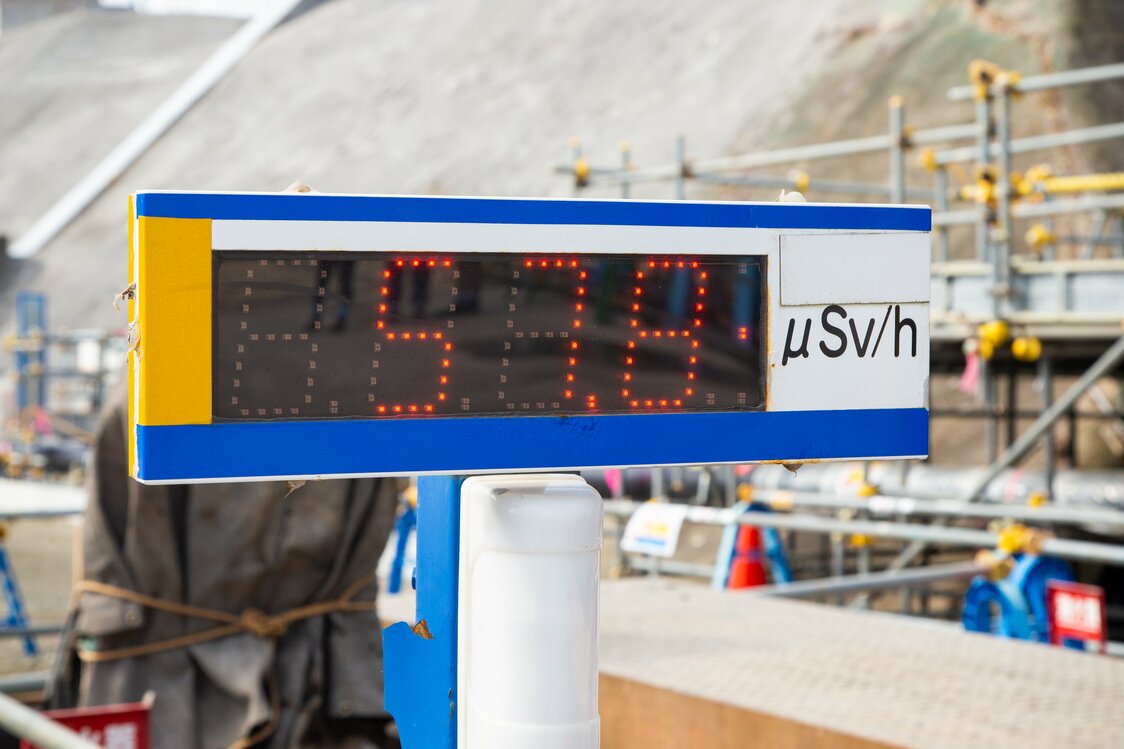
An onsite dosimeter displays radiation levels.
-
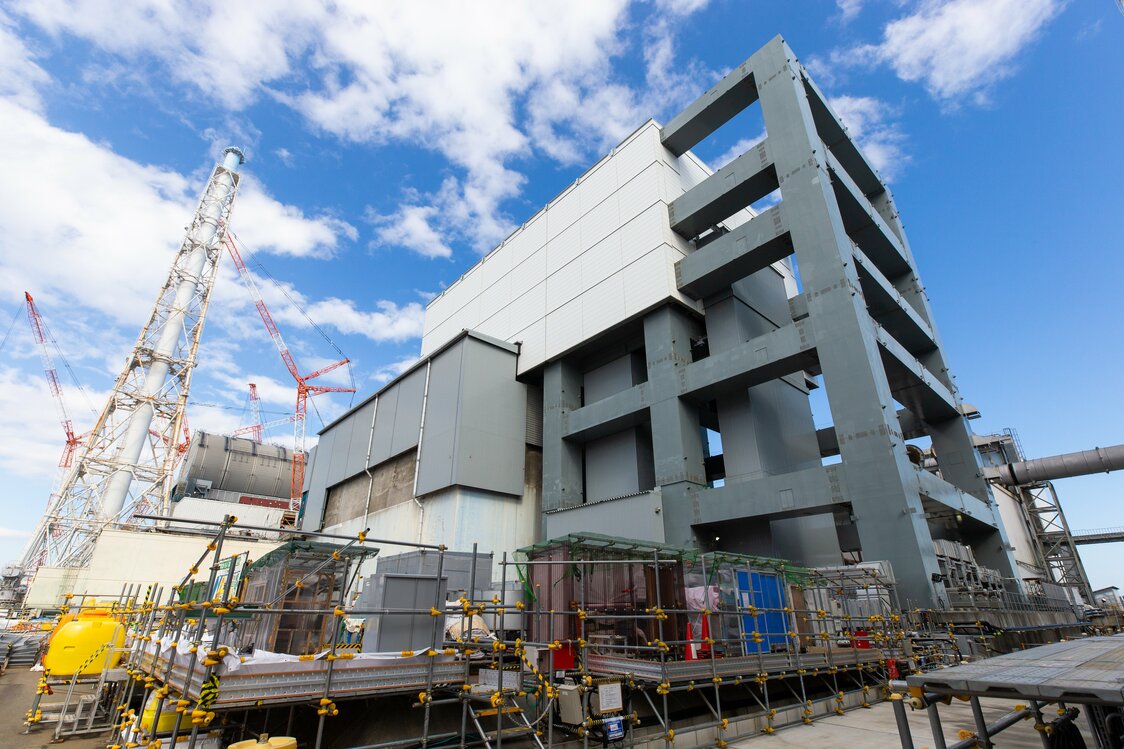
A gray scaffoldlike structure around the Unit 4 building was built to support equipment for extracting fuel rods. Offline on March 11, it was the only reactor among Units 1–4, located in the main plant area, that did not melt down and has since had its fuel successfully removed.
-
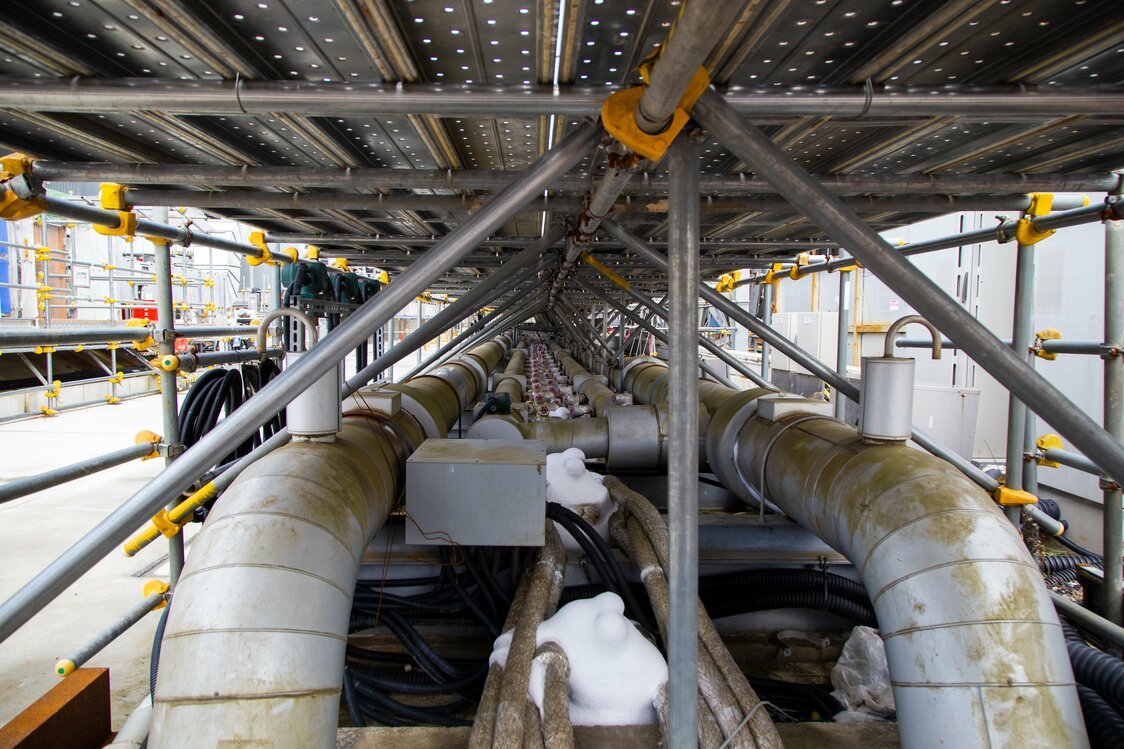
Pipes carry coolant chilled to –30ºC to the “ice wall.” The perimeter of frozen soil helps divert groundwater flowing toward the sea away from the reactors.
-
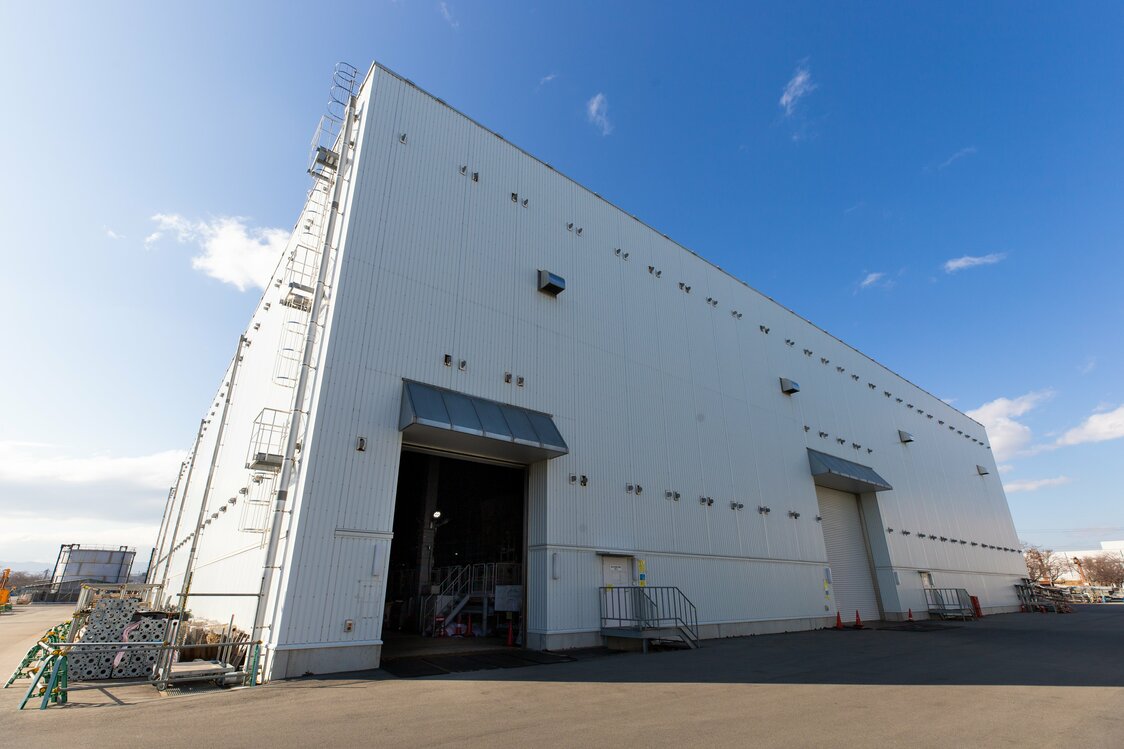
A building housing ALPS systems for treating water contaminated with radioactive material.
-
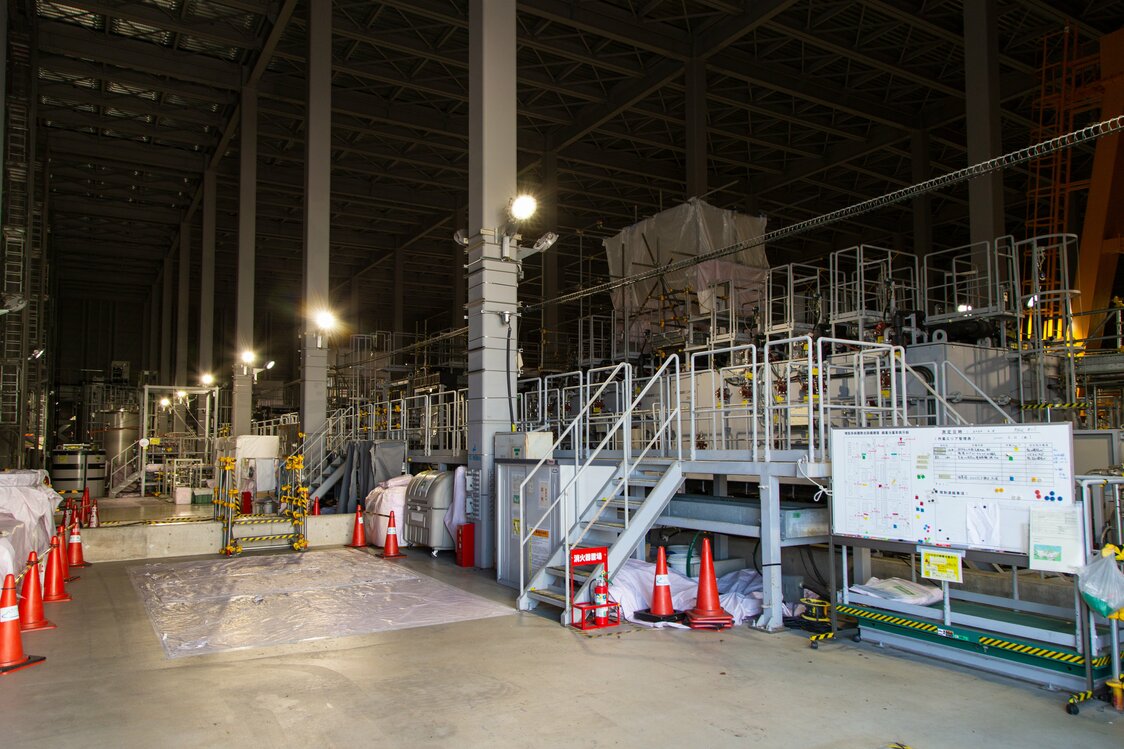
Equipment to process accumulated water. The ALPS systems are able to remove most radioactive contaminants.
-
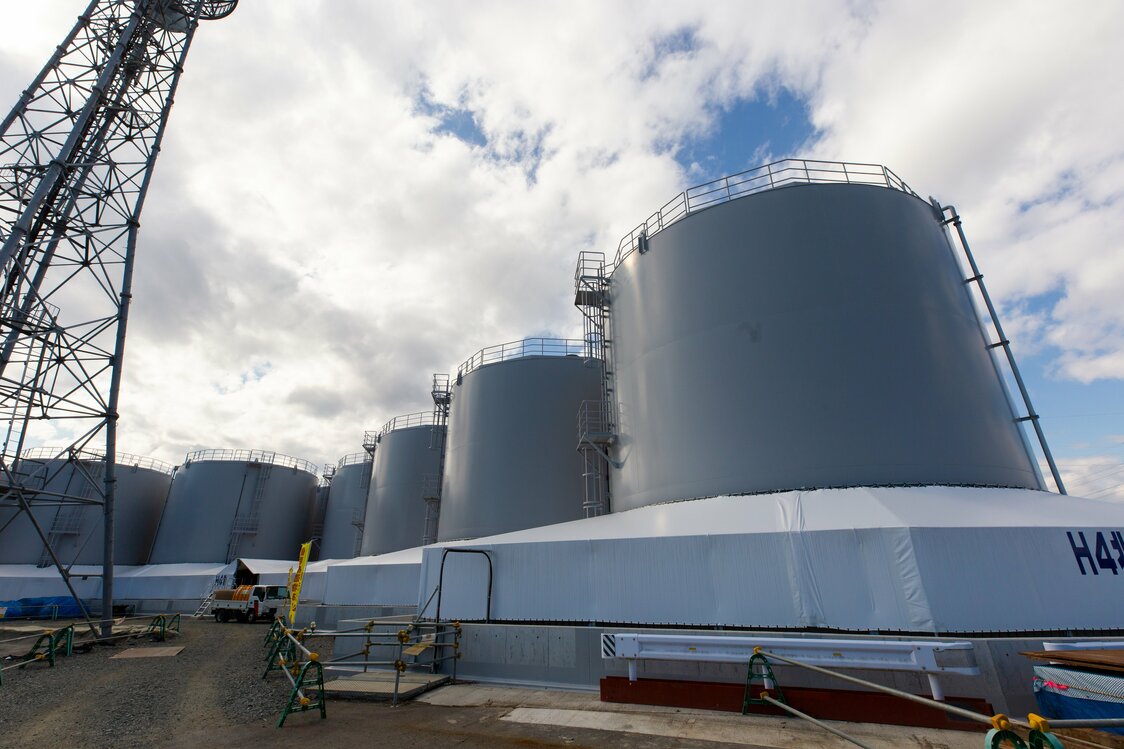
A row of steel tanks for storing treated water.
-
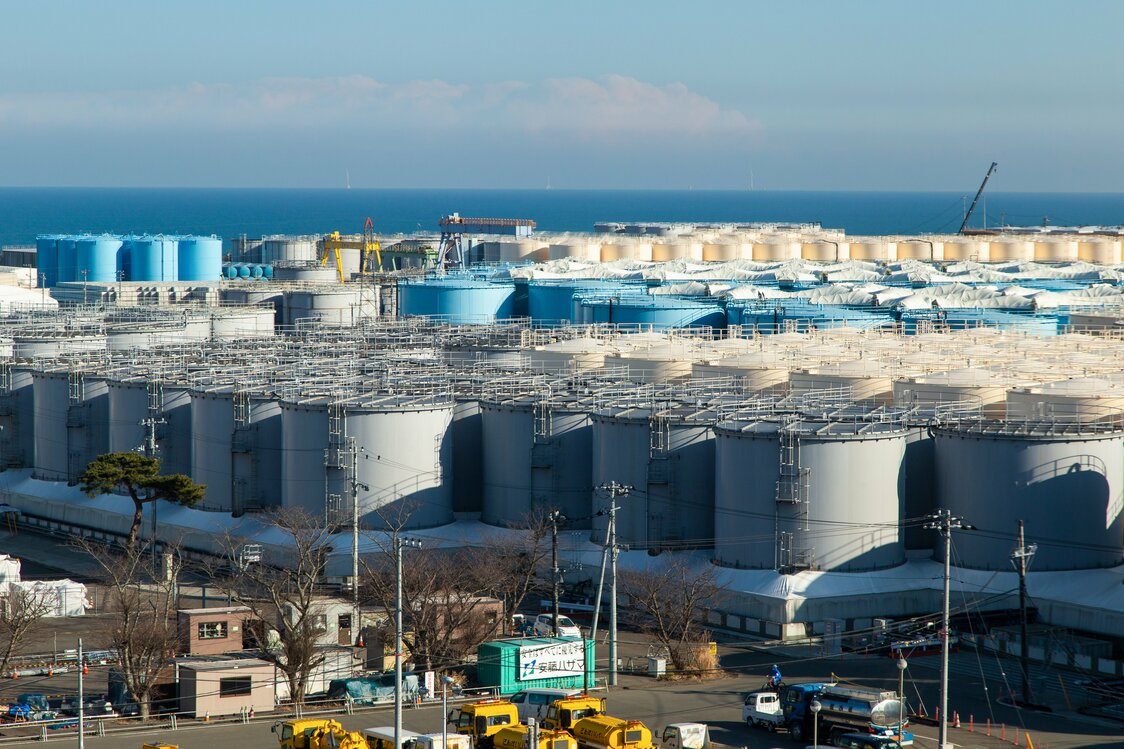
The site is already crowded with tanks, and space for constructing additional vessels is quickly running out.
-
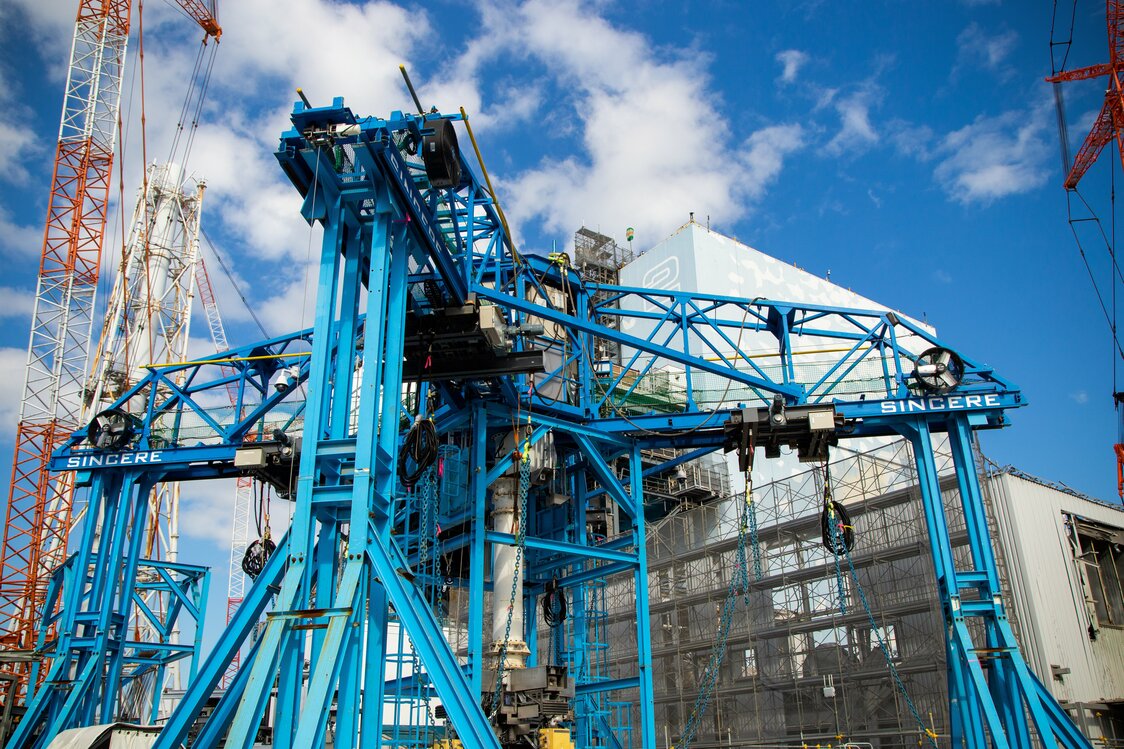
Equipment for cutting up an exhaust stack.
-
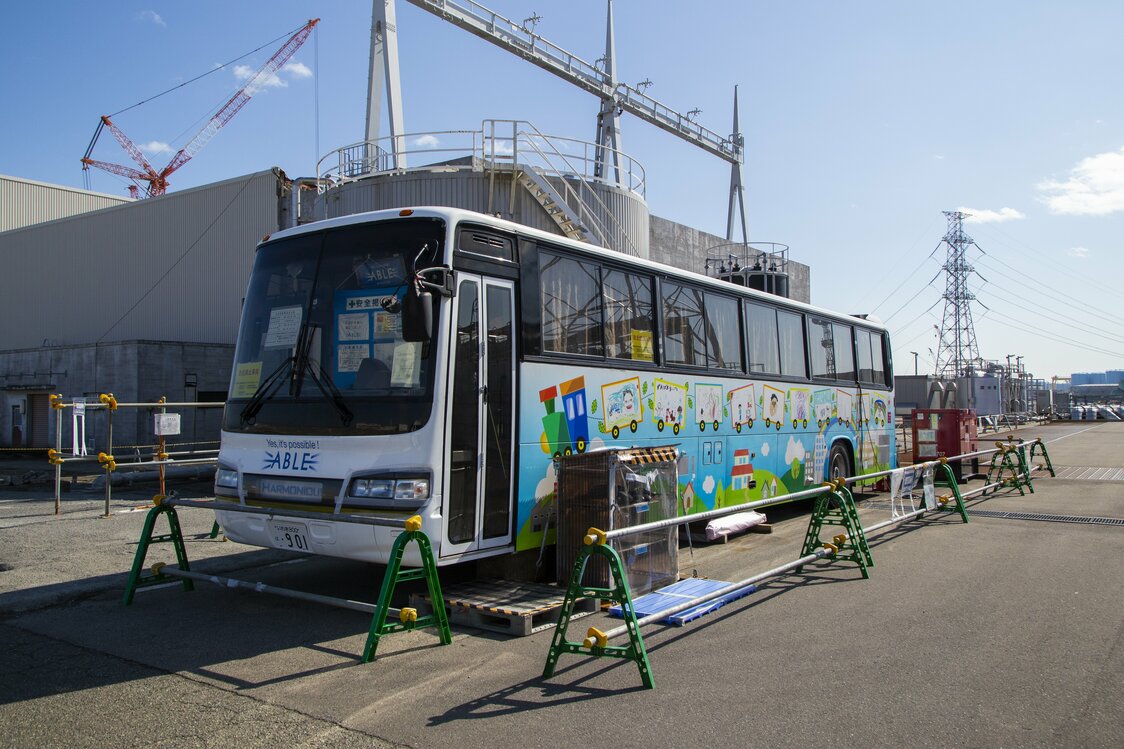
A bus serves as a control room for workers guiding equipment by remote control in areas where radiation remains high. The pictures on the side of the vehicle were drawn by the children of employees who work onsite.


 Read in other languages