-
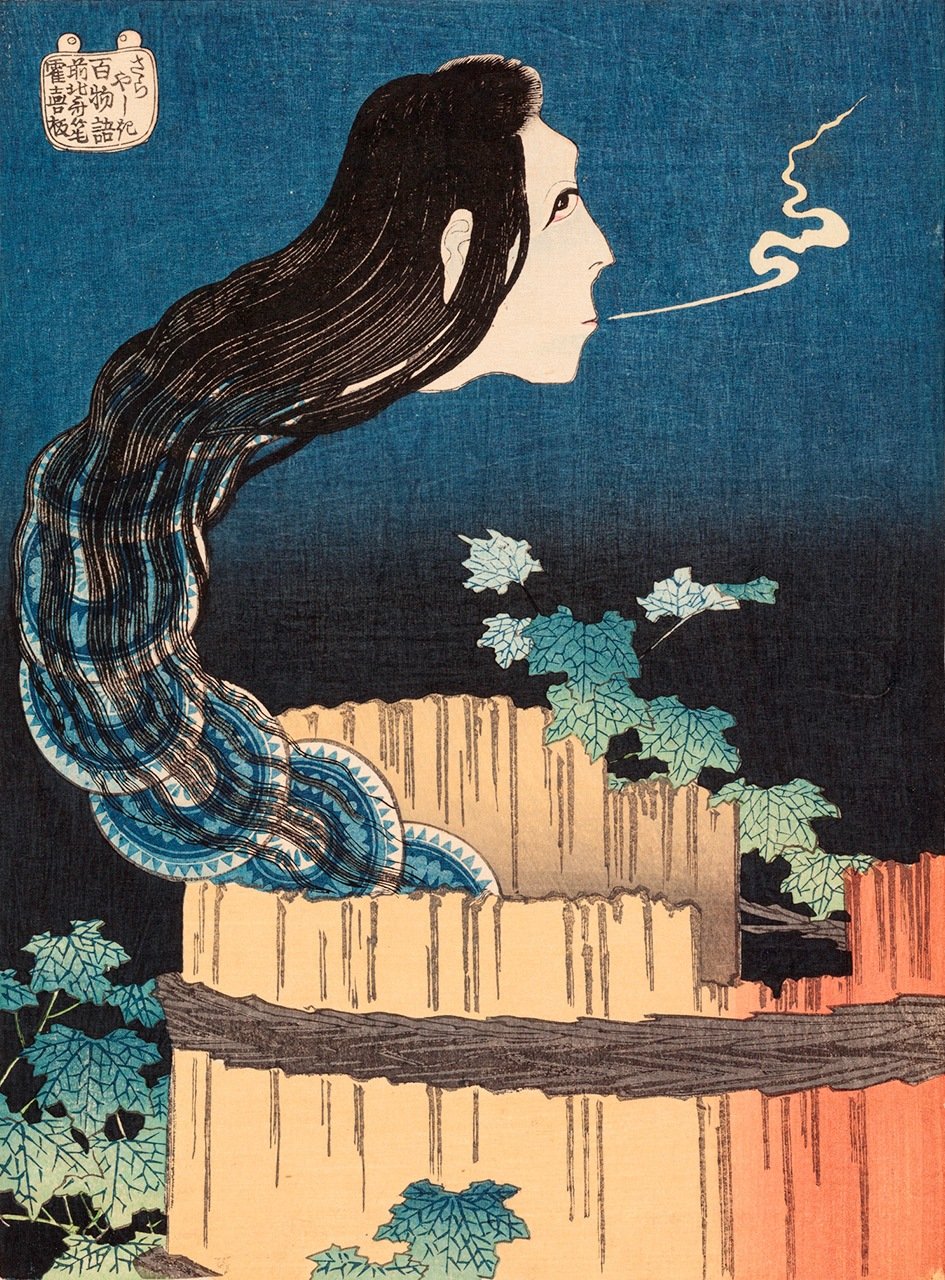
Katsushika Hokusai, Hyaku monogatari: Sarayashiki (One Hundred Tales: Dish Mansion). (Courtesy Miyoshi Mononoke Museum)
-

From the third volume of One Hundred Tales from Many Lands. The wife of a man called Abe Sōbei dies of sickness after he treats her badly, and returns as a spirit to wreak her revenge. (Courtesy Center for Open Data in the Humanities)
-
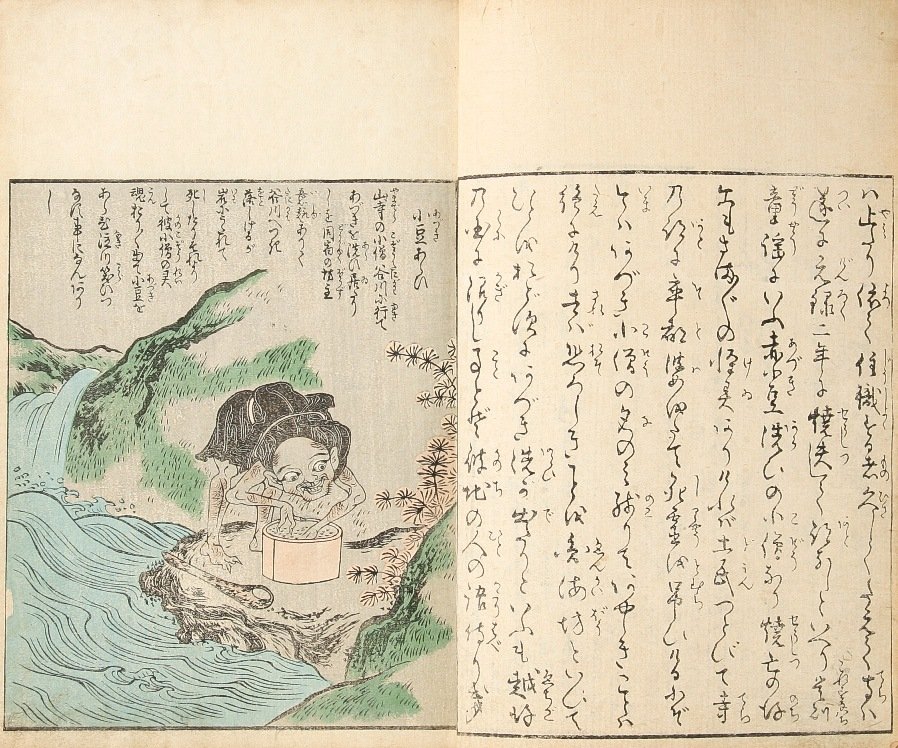
Part of Ehon hyaku monogatari (One Hundred Tales Picture Book), published in five volumes in 1841. The picture shows the “bean washer,” a former priest killed by a wicked comrade, who became a spirit in Takada, Echigo (now Niigata Prefecture). He appears at night, washing azuki beans in the river. As an expert counter in his lifetime, he is said to know the exact number of beans just by washing them. (Courtesy Miyoshi Mononoke Museum)
-
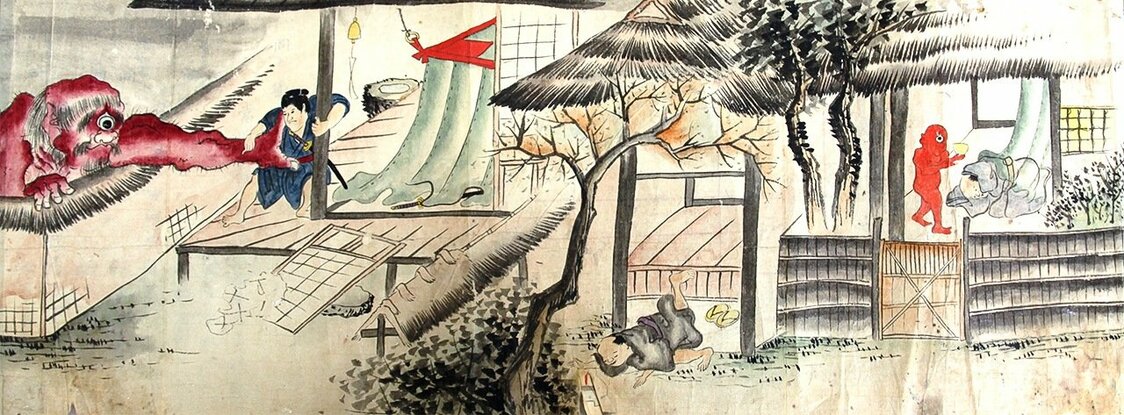
Detail from the Edo-period Inō mononoke roku emaki (Inō Spirit Record Picture Scroll), said to record the strange events of the first day of the seventh month of 1749. On the left, Heitarō is caught by a giant, who appears at the wall. His friend Gonpachi, who also joined him in the ordeal, receives a yōkai visit at the neighboring house on the right. (Courtesy Miyoshi Mononoke Museum)
-
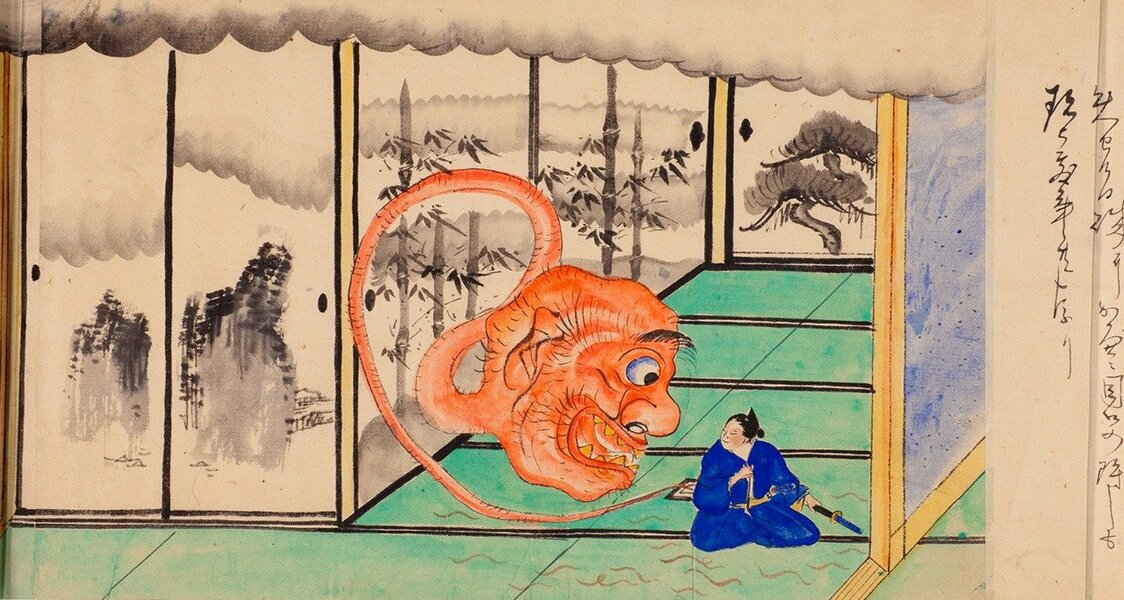
Detail from the Meiji era (1868–1912) Hyaku monogatari emaki (One Hundred Tales Picture Scroll). Modernizing Japan saw no end to works depicting the Inō Spirit Record. This example shows the creature that came on the thirtieth of the seventh month. It is a yōkai made of ash that appeared from the building’s hearth. Many worms are also crawling through the room. (Courtesy Miyoshi Mononoke Museum)
-

Karuta cards with yōkai from the Edo period and later. (Courtesy Miyoshi Mononoke Museum)


 Read in other languages