-
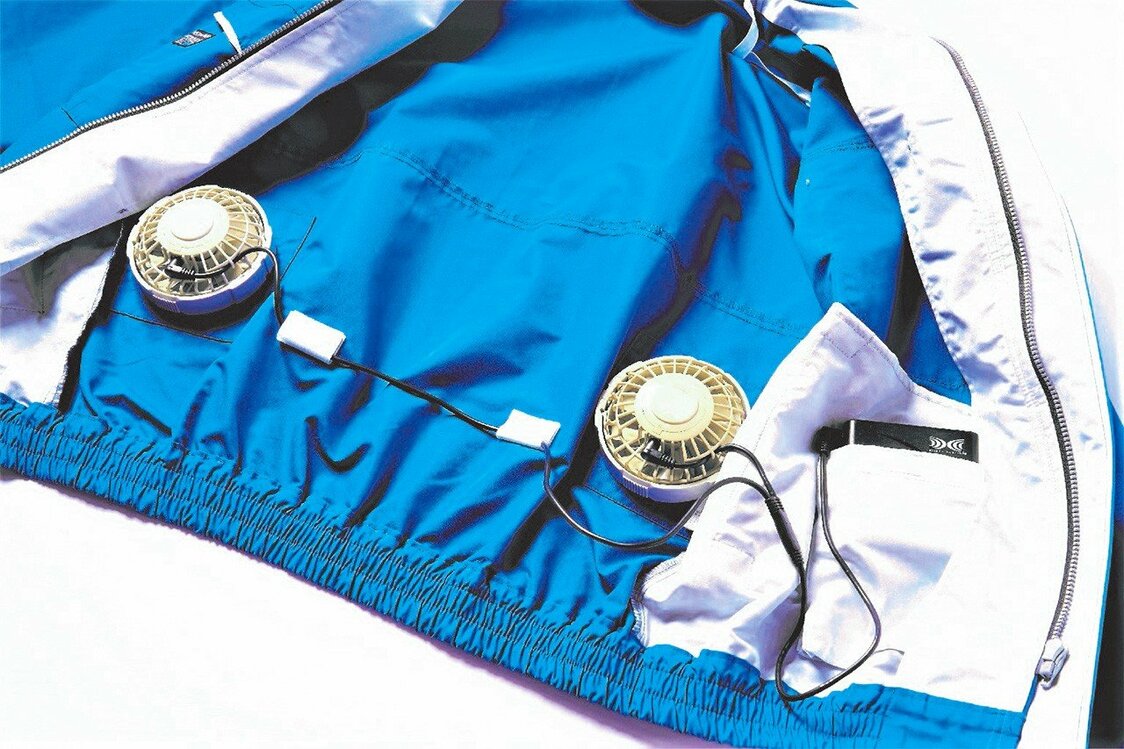
The internal structure of air-conditioned clothing. An inside pocket carries a rechargeable battery pack that powers the two fans. (Courtesy of Kūchōfuku KK)
-
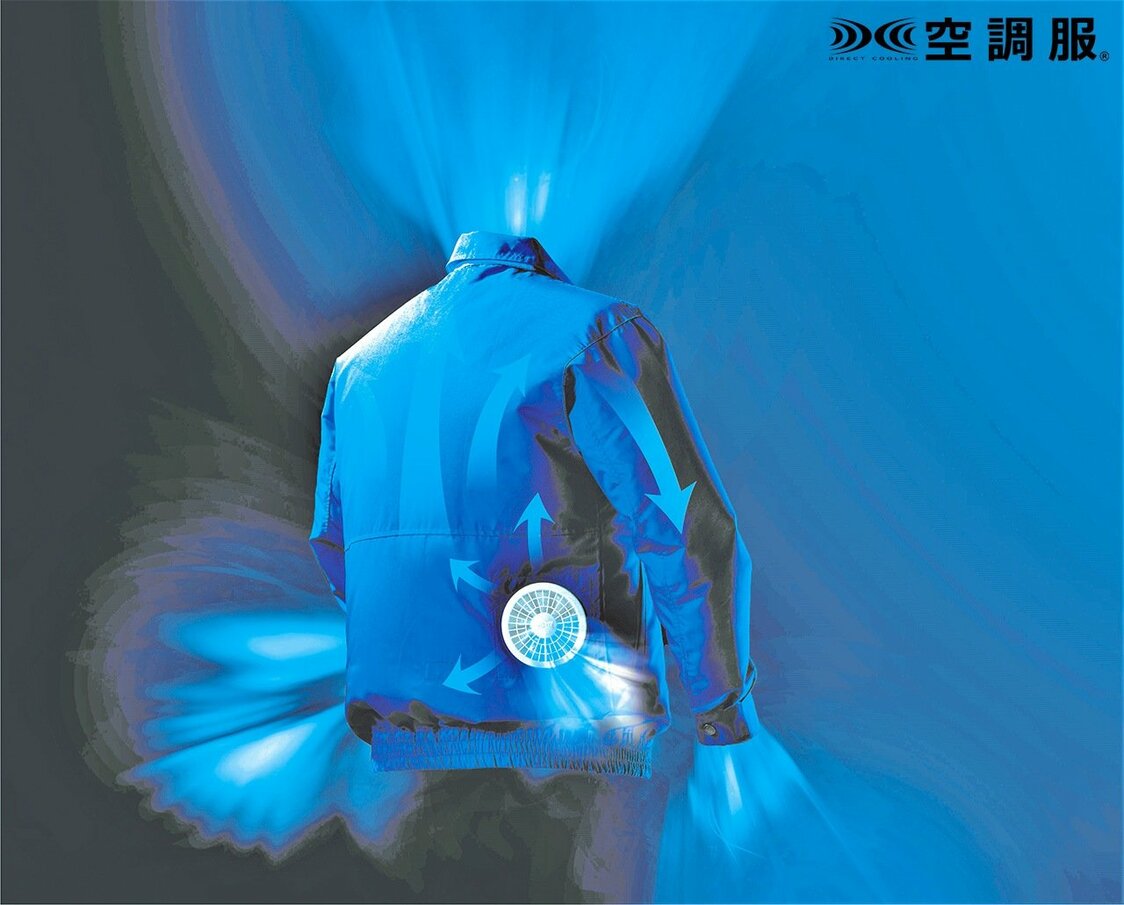
Outside air is drawn into the clothing, helping sweat to evaporate, before passing out from the collar and cuffs. (Courtesy of Kūchōfuku KK)
-
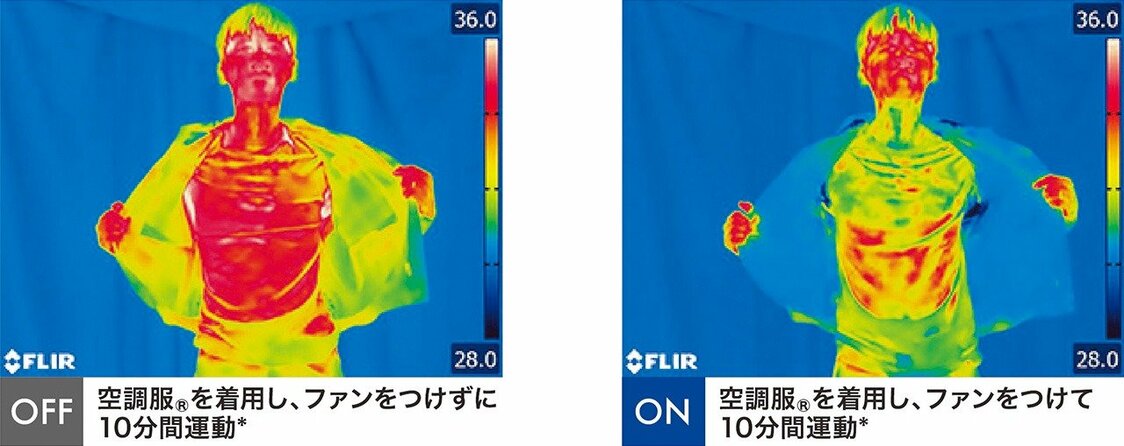
A thermographic image of the effect. The red portions of the image indicate higher temperatures. After 10 minutes with the fan switched off (left), the wearer is uncomfortably hot. Switching the fan on for 10 minutes (right) cools the body considerably. (Courtesy of Kūchōfuku KK)
-
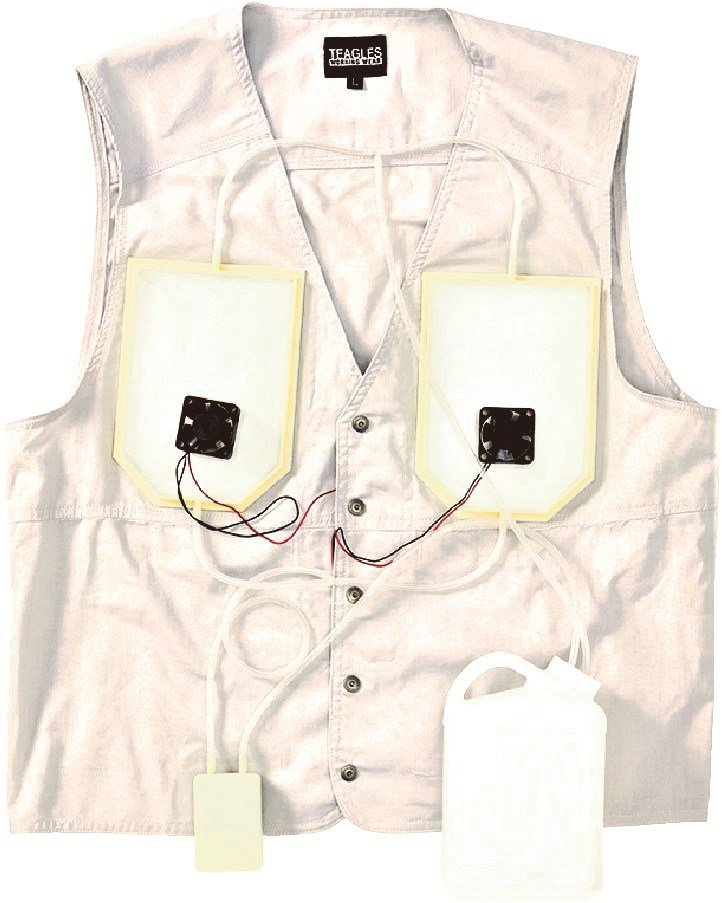
Ichigaya’s 1999 model, the first prototype for his air-conditioned clothing. Water was delivered to filters in the chest, while fans provided air flow. (Courtesy of Kūchōfuku KK)
-
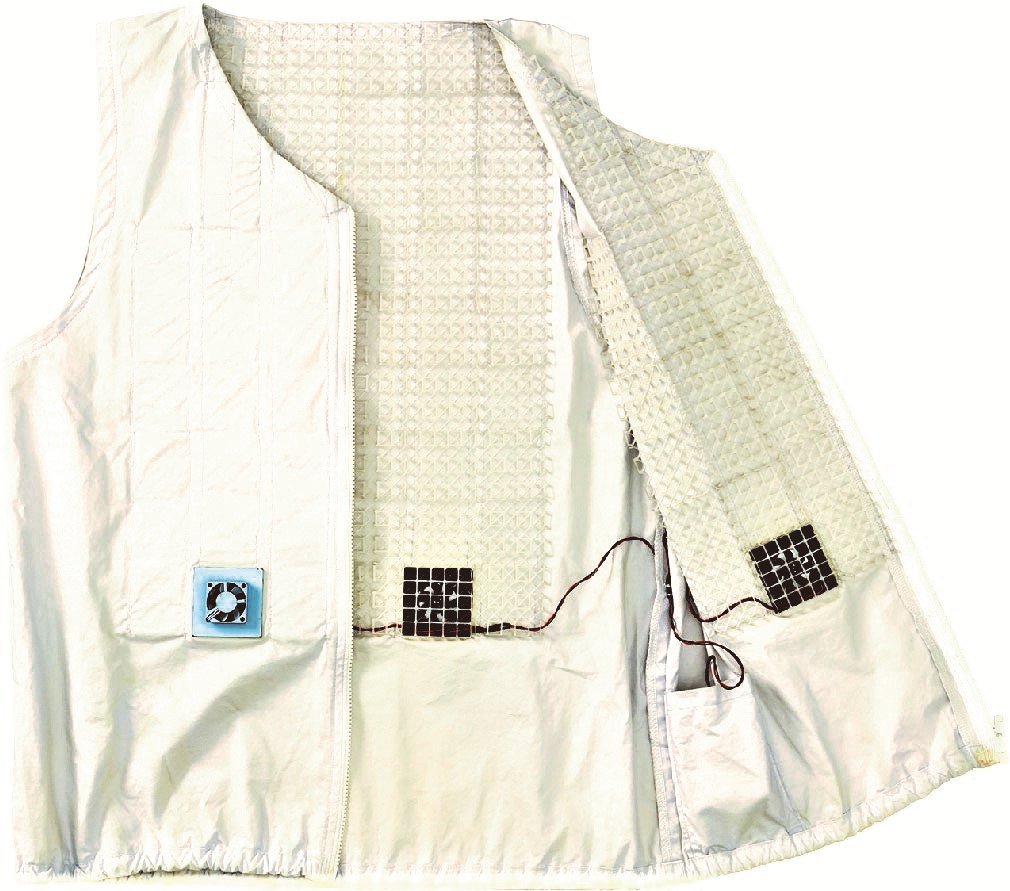
Ichigaya’s 2001 model used four commercially available miniature fans and a new mechanism to expel hot air from inside the clothes. (Courtesy of Kūchōfuku KK)
-
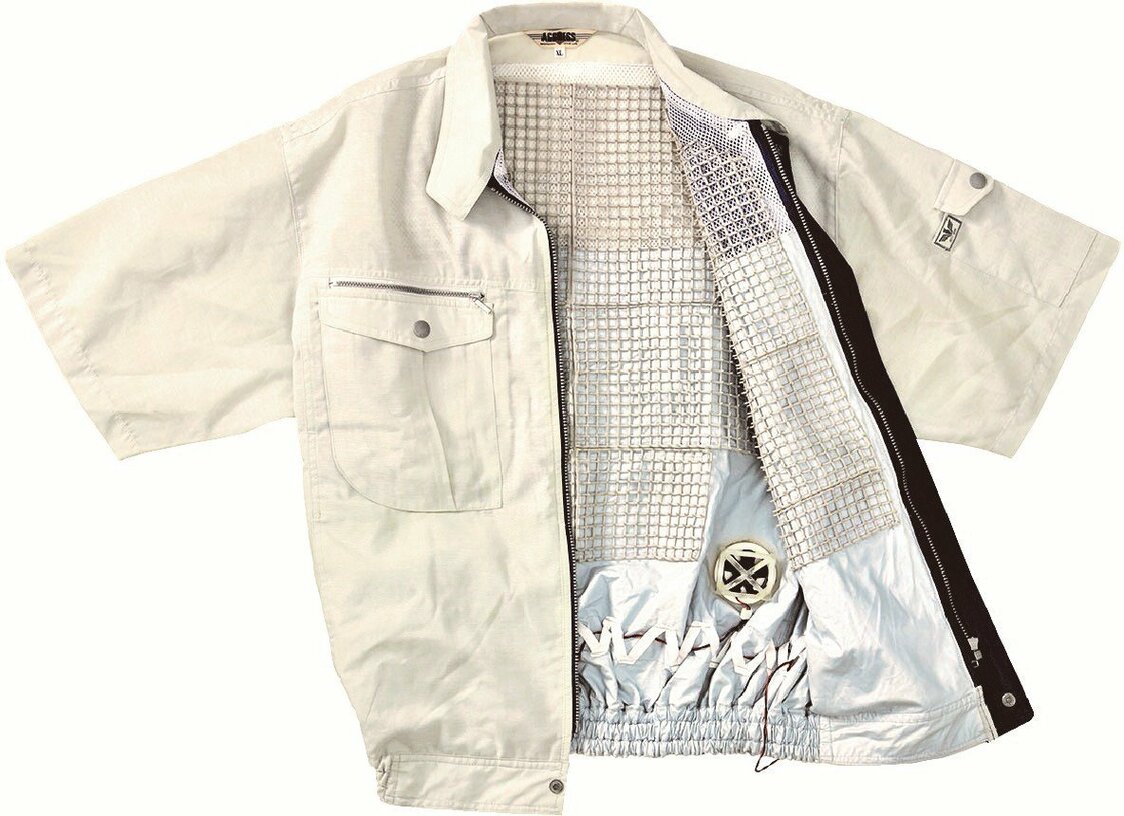
In the 2002 model, spacing mesh was fitted on the interior to keep the material from adhering to the body and improve air flow. (Courtesy of Kūchōfuku KK)
-
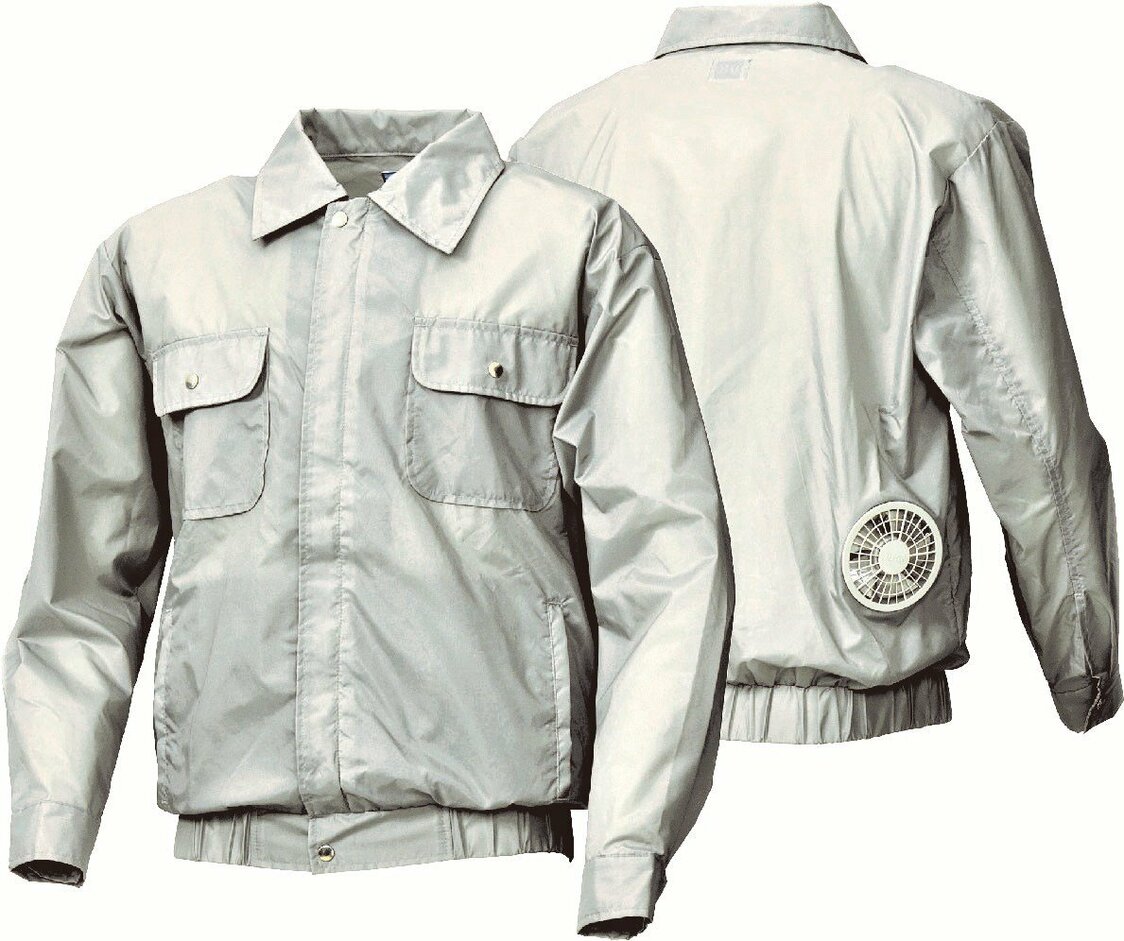
In 2004 Ichigaya released the first commercially available model, enlarging the fan units on the advice of his son, Tōru. In a reversal of the earlier version, it sucked air in. (Courtesy of Kūchōfuku KK)
-
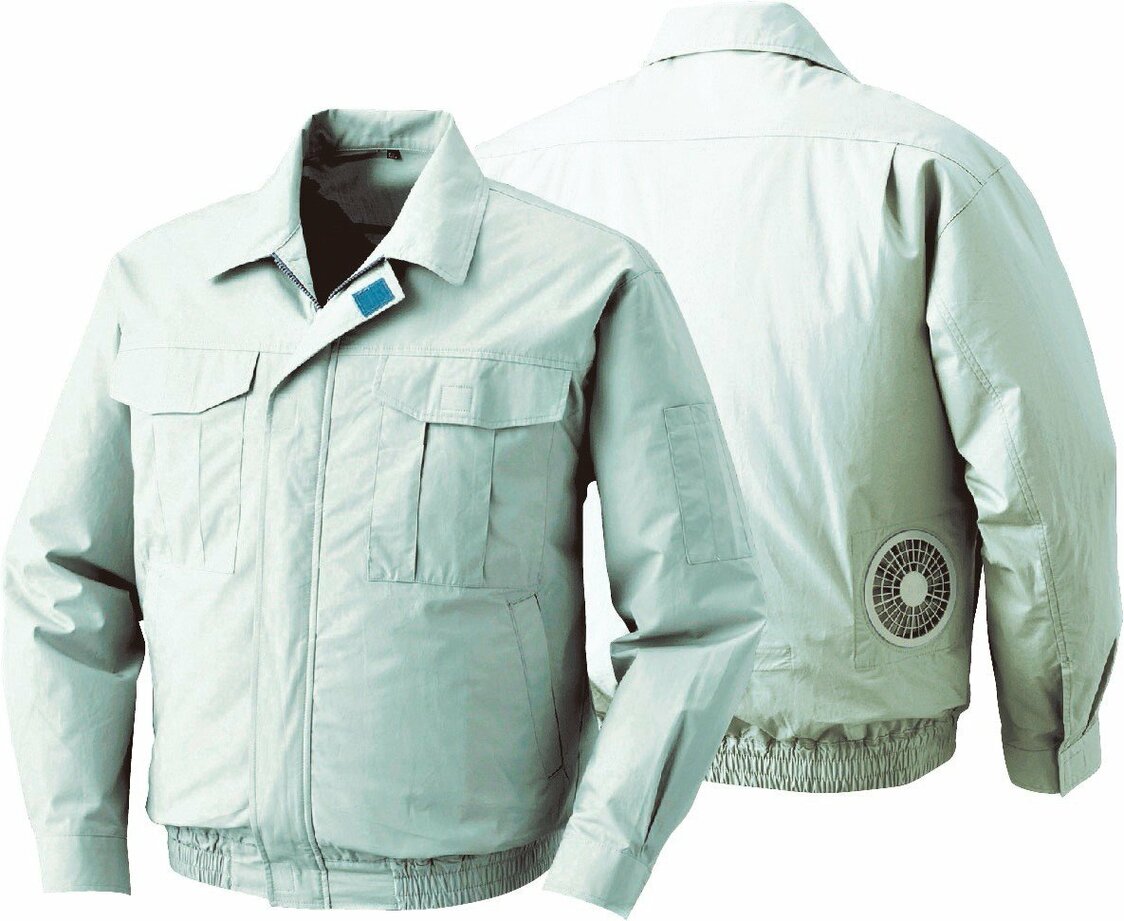
The 2005 model was the first to use the current design. Improvements were made to fan installation. (Courtesy of Kūchōfuku KK)
-
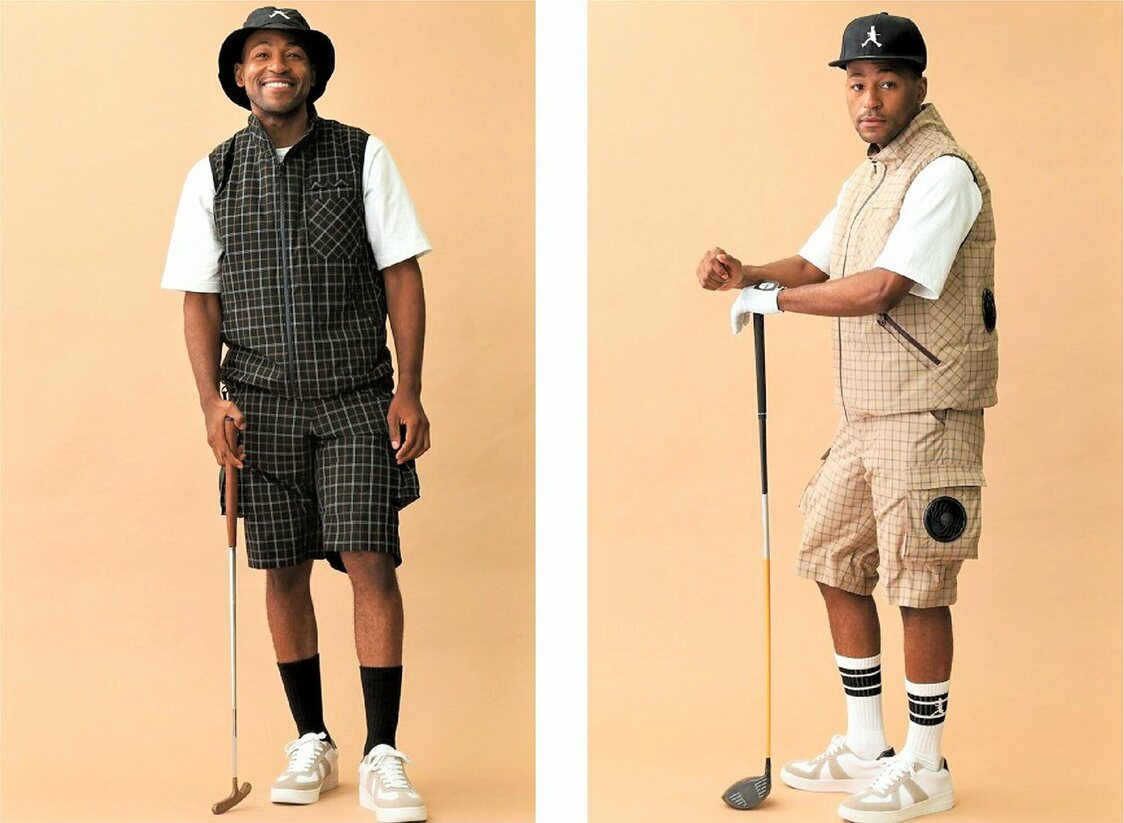
In August 2022, Kūchōfuku released menswear suitable for golf and other leisure activities, produced in collaboration with Takeo Kikuchi. (Courtesy of Kūchōfuku KK)
-
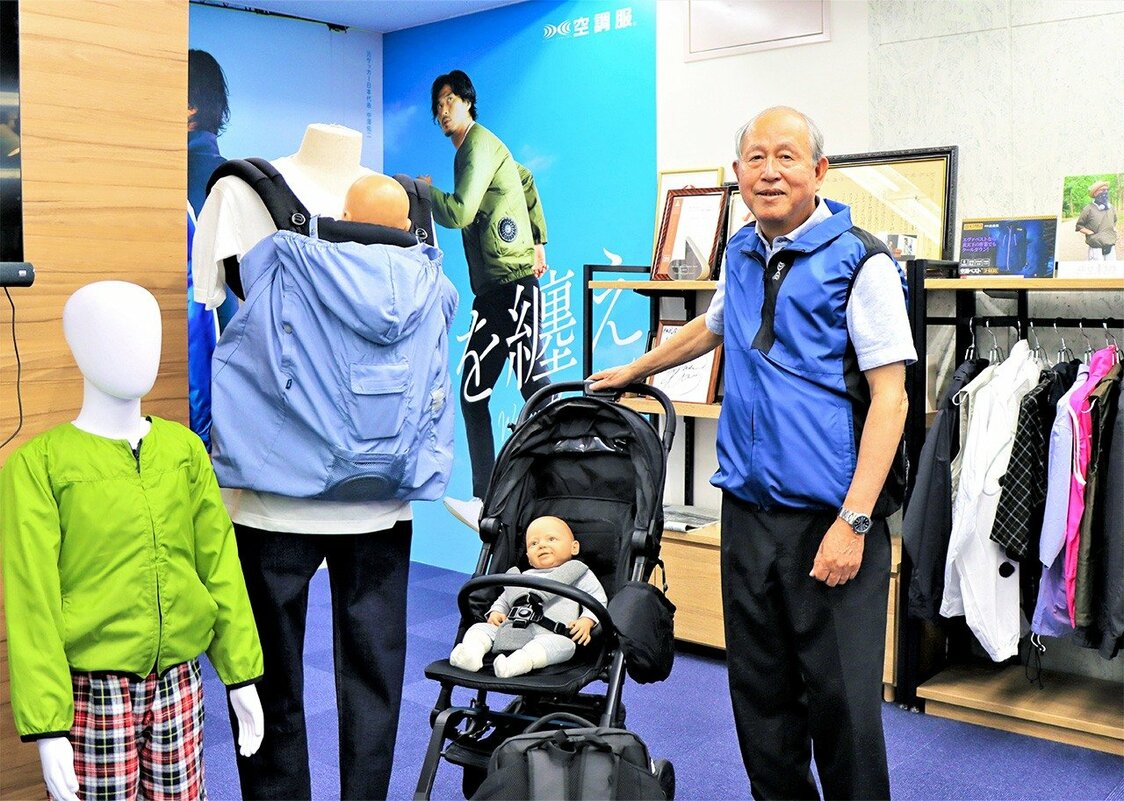
The firm has expanded its range, with the development of prams, backpacks, cushions, beds, and other products incorporating cooling mechanisms. (© Amano Hisaki)


 Read in other languages