-
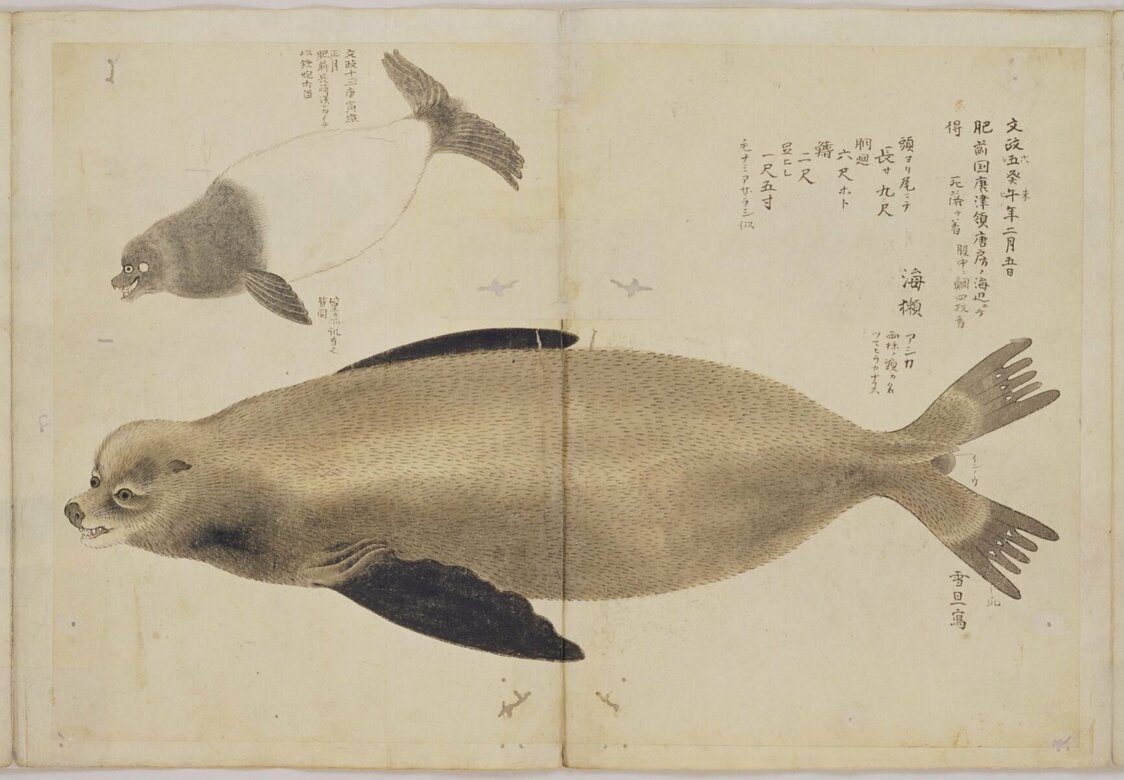
An 1822 drawing of a Japanese sea lion by Hasegawa Settan based on a specimen that washed ashore in what is now Karatsu, Saga Prefecture. (Courtesy of the National Archives of Japan)
-
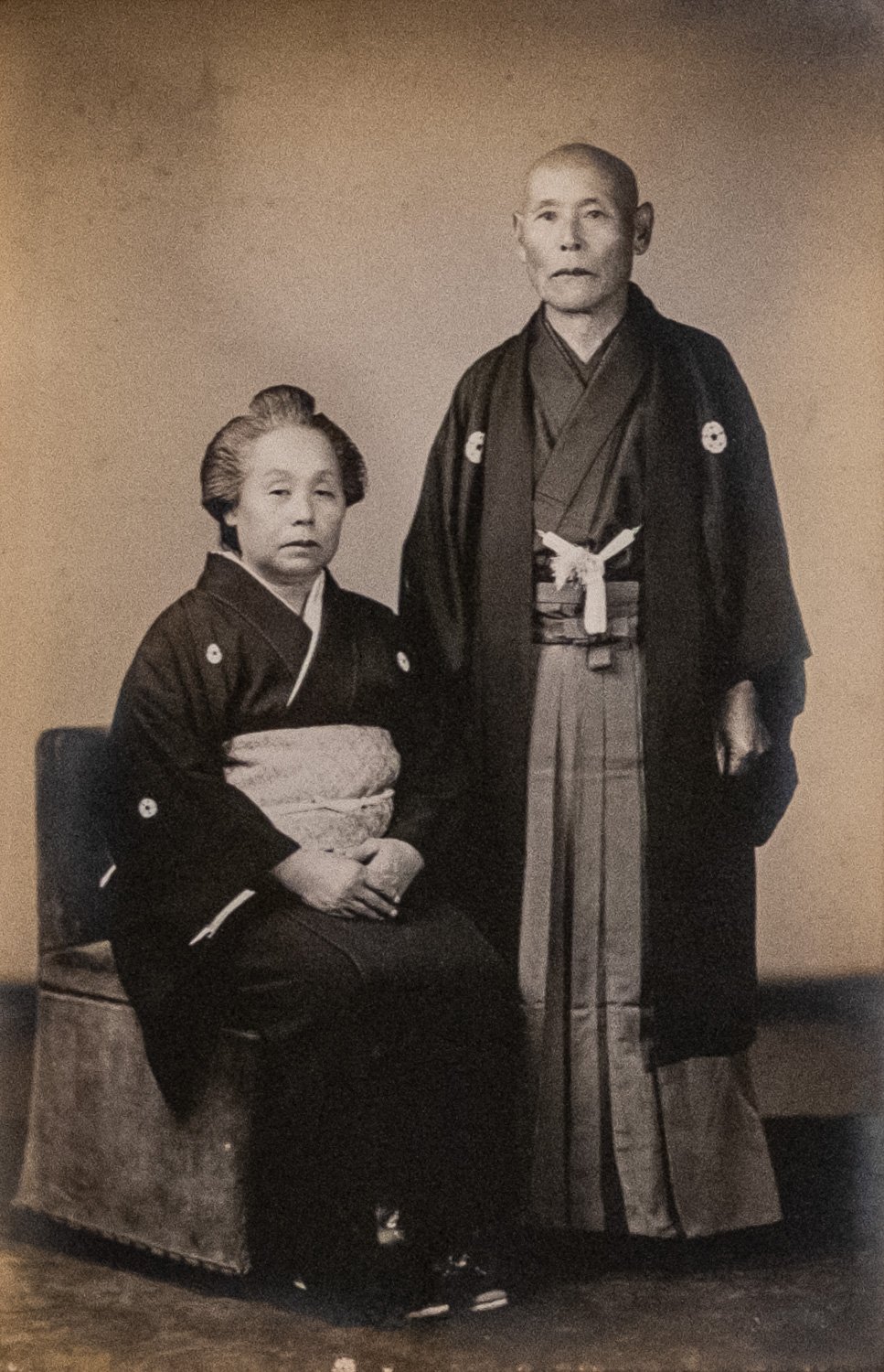
Kubota Tomotoshi, right, with his wife. As head of the Hakozaki Aquarium, he diligently worked to run the facility and educate the public. (Courtesy of Hanada Noriko)
-
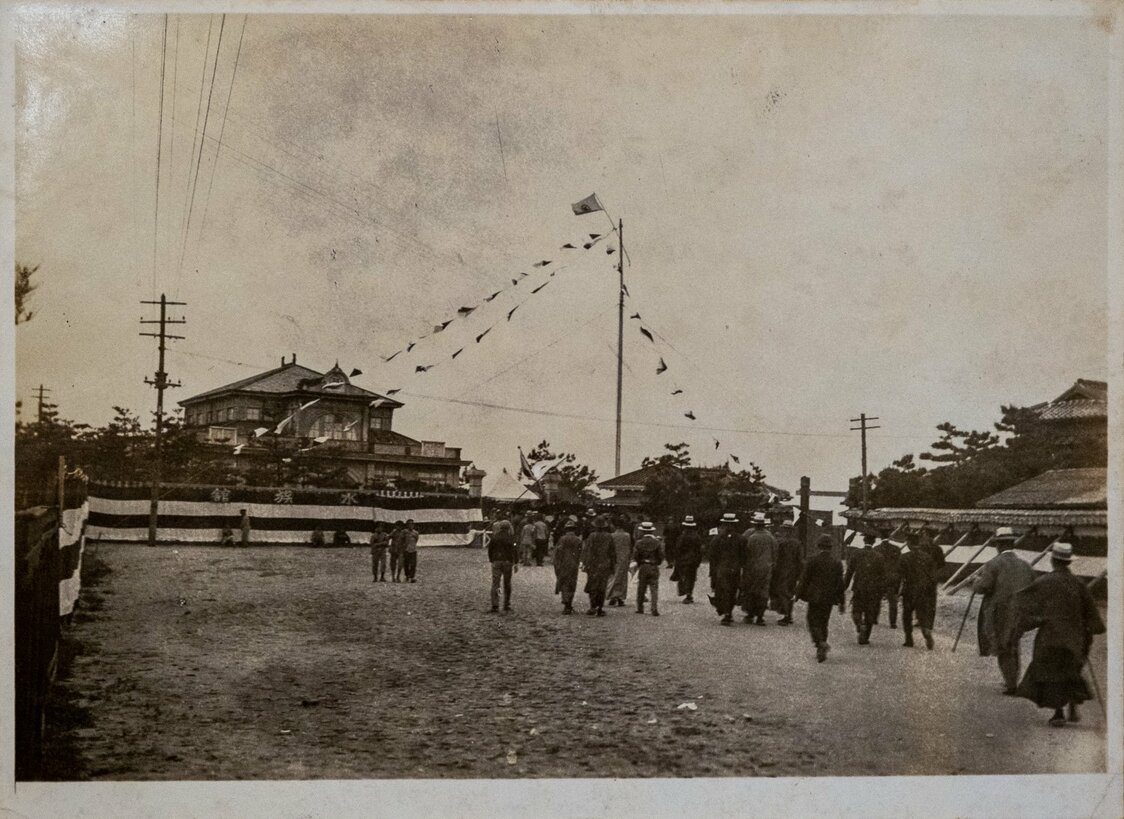
The Hakozaki Aquarium’s grand opening in March 1910. The facility was built with the financial backing of prominent locals as a “permanent amusement spot” for residents of the area. (Courtesy of Hanada Noriko)
-
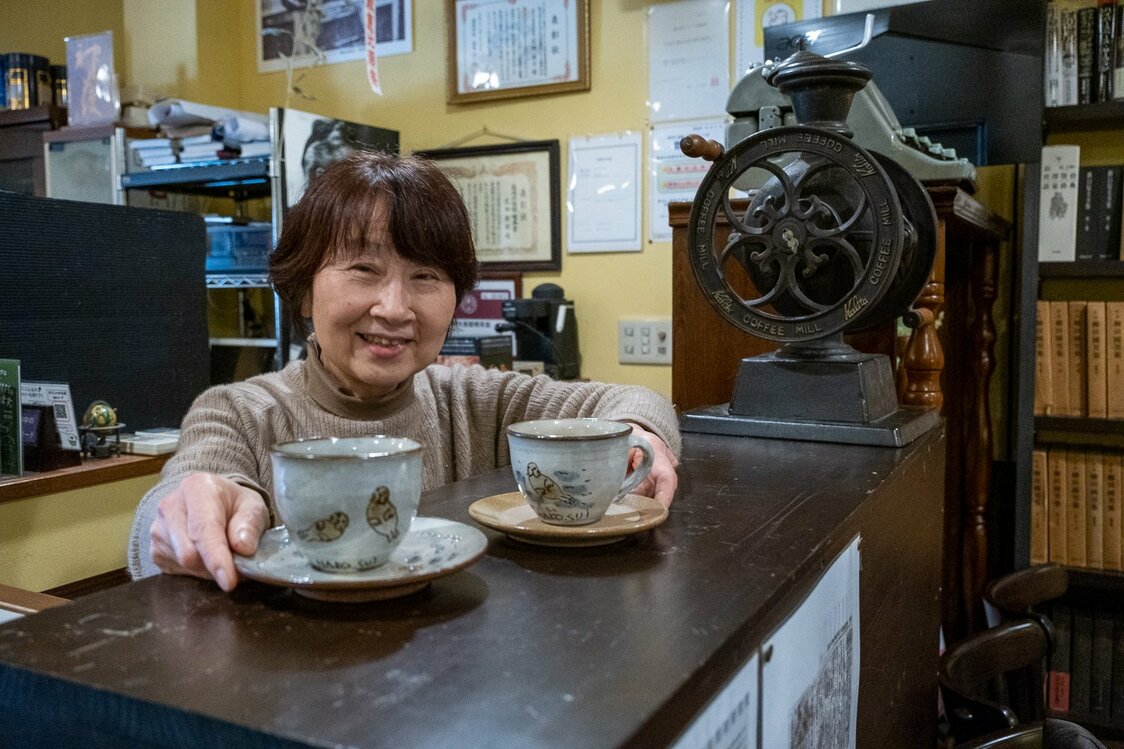
Hanada Noriko, owner of the Hakozaki Suizokukan Café. The shop’s specially designed cups feature Japanese sea lions. (© Hayashi Michiko)
-
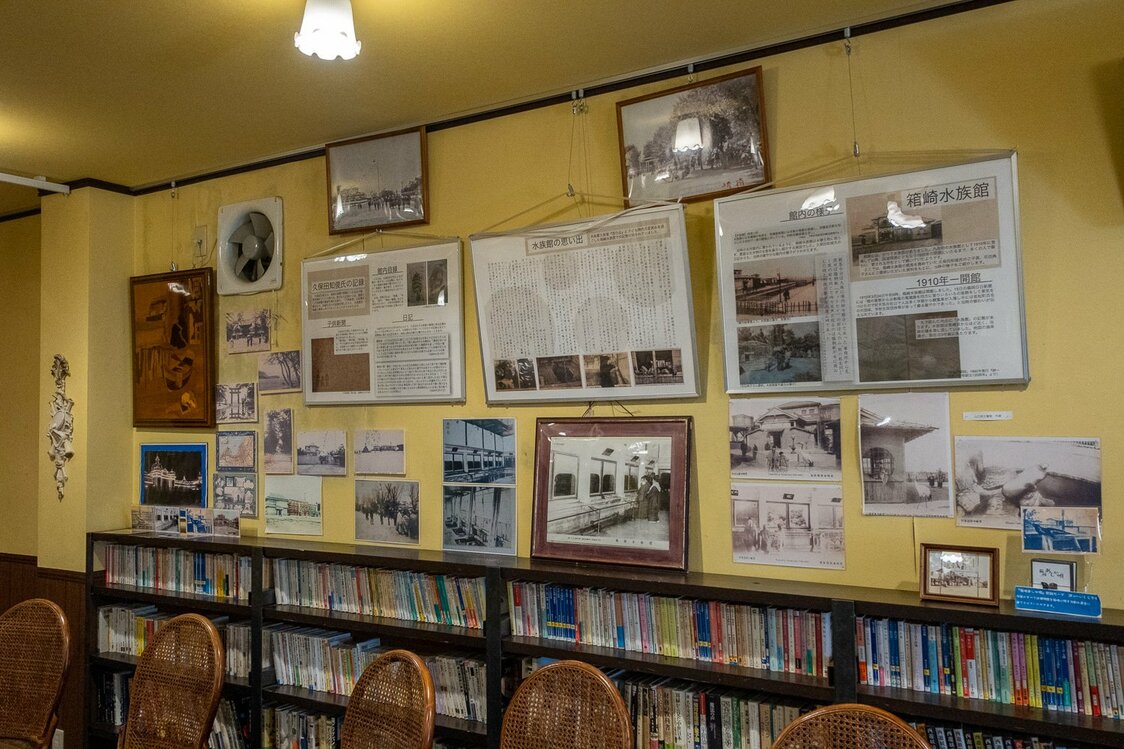
Displays about the aquarium hang along the walls of the café. (© Hayashi Michiko)
-
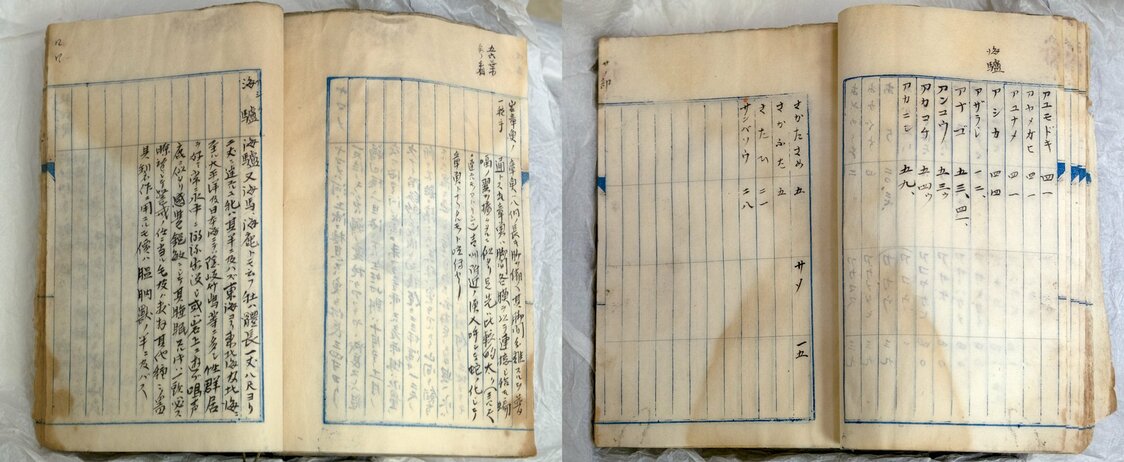
A ledger from the aquarium contained in a box of Hanada’s great-grandfather’s belongings with a section headed “Sea Lion.” (© Hayashi Michiko)
-
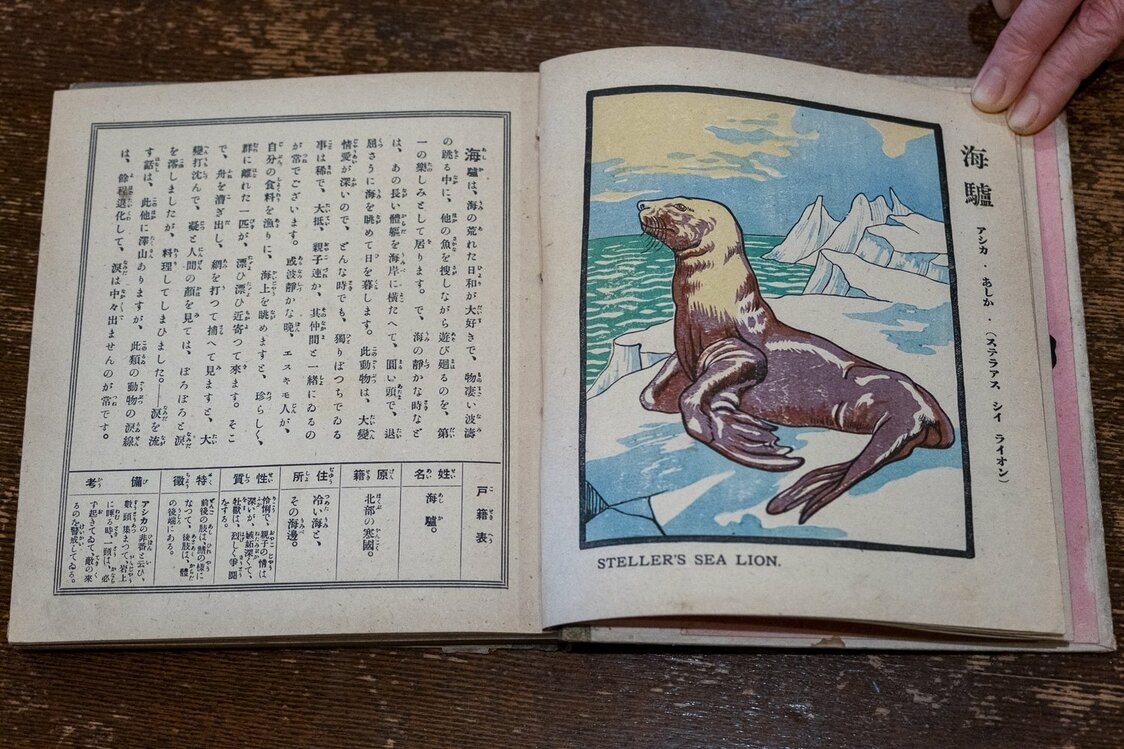
Also among her great-grandfather’s belongings was an illustrated encyclopedia of animals from 1915 authored by the Japanese biologist Ishikawa Chiyomatsu and others. (© Hayashi Michiko)
-
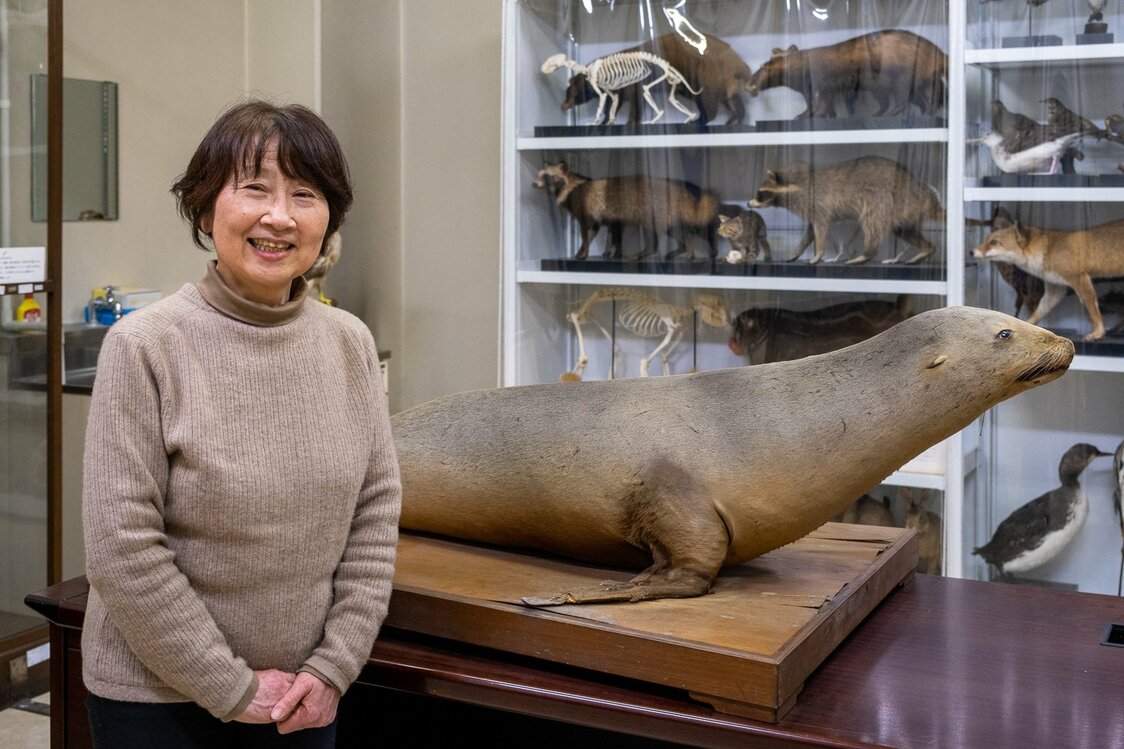
Hanada says she felt a strong affinity for the stuffed sea lion from the moment she laid eyes on it. (© Hayashi Michiko)
-

Some of the commemorative postcards from the Hakozaki Aquarium that Hanada uncovered. (© Hayashi Michiko)
-
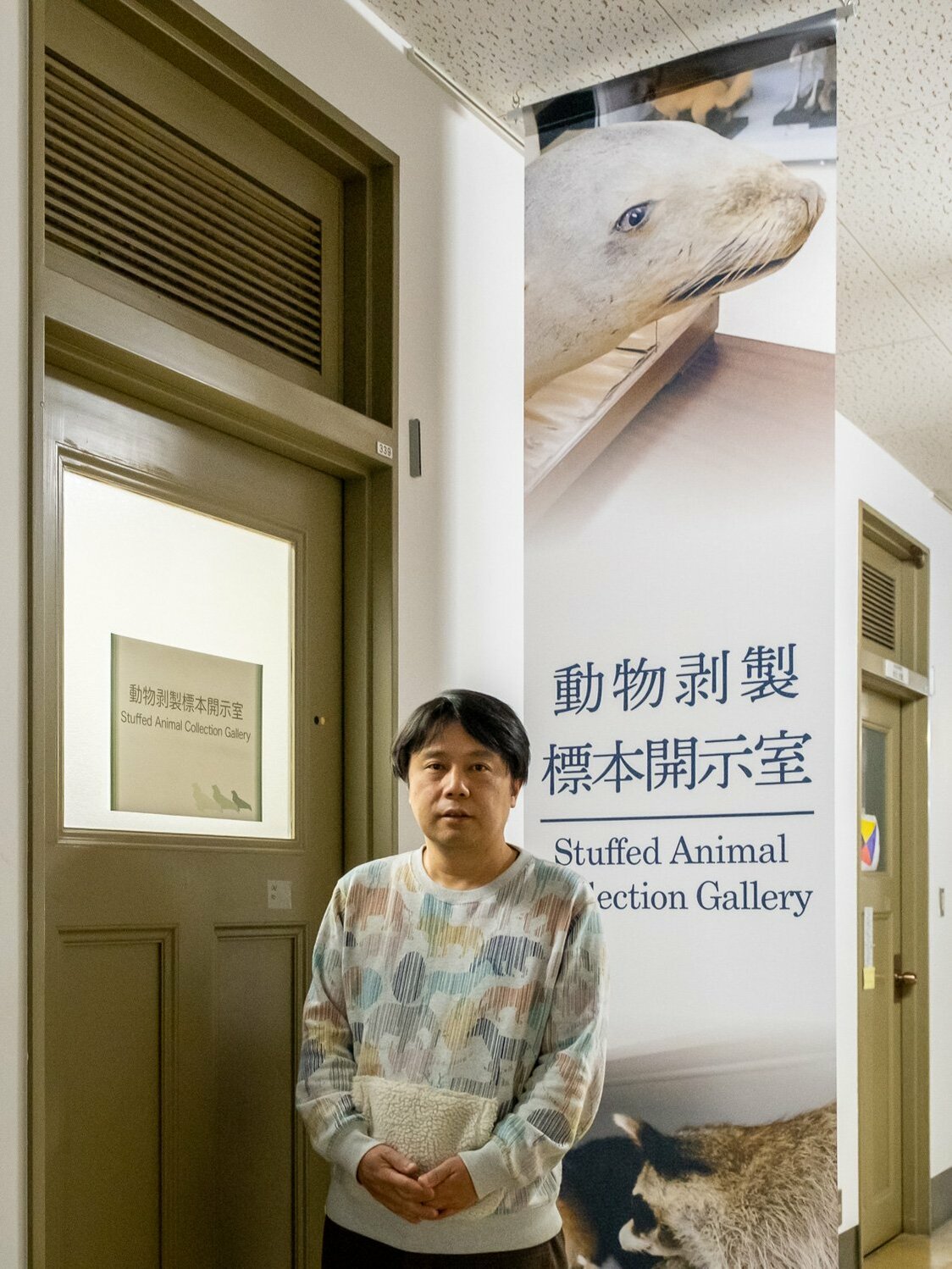
Maruyama Munetoshi outside the Kyūshū University Museum’s stuffed animal gallery. Hanging out front is a banner featuring the preserved Japanese sea lion. (© Hayashi Michiko)
-
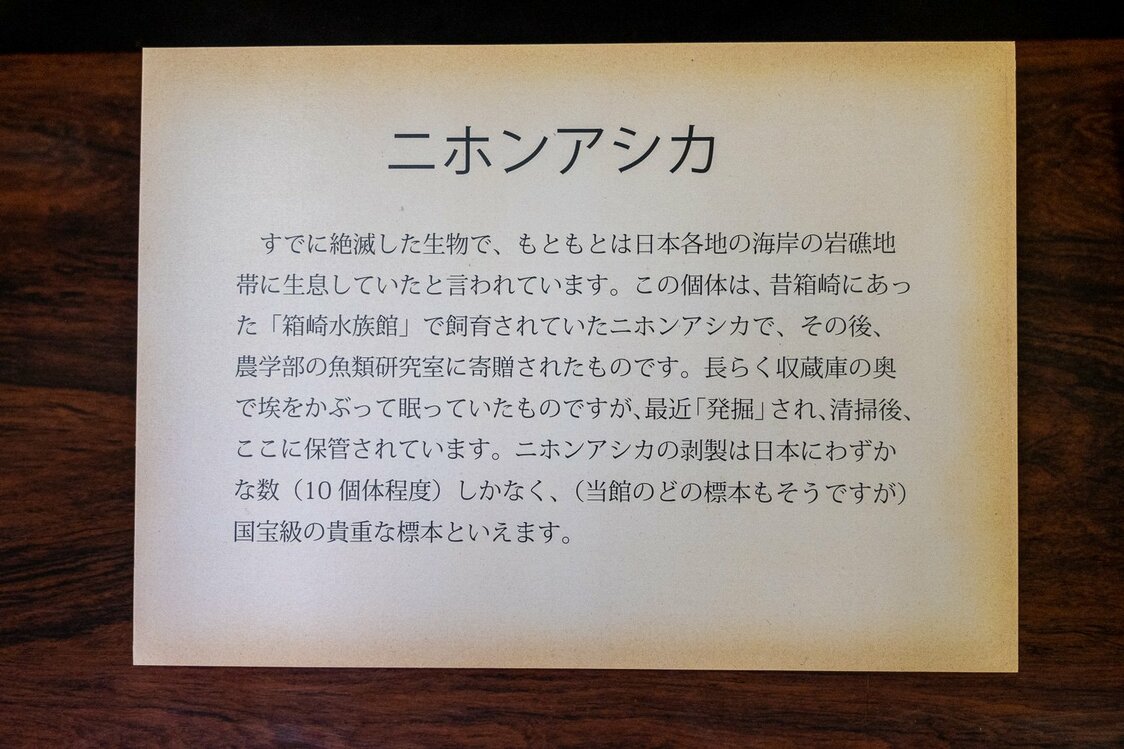
A plaque at the museum with information on the Japanese sea lion. (© Hayashi Michiko)
-

The Hakozaki Suizokukan Café. (© Hayashi Michiko)
-
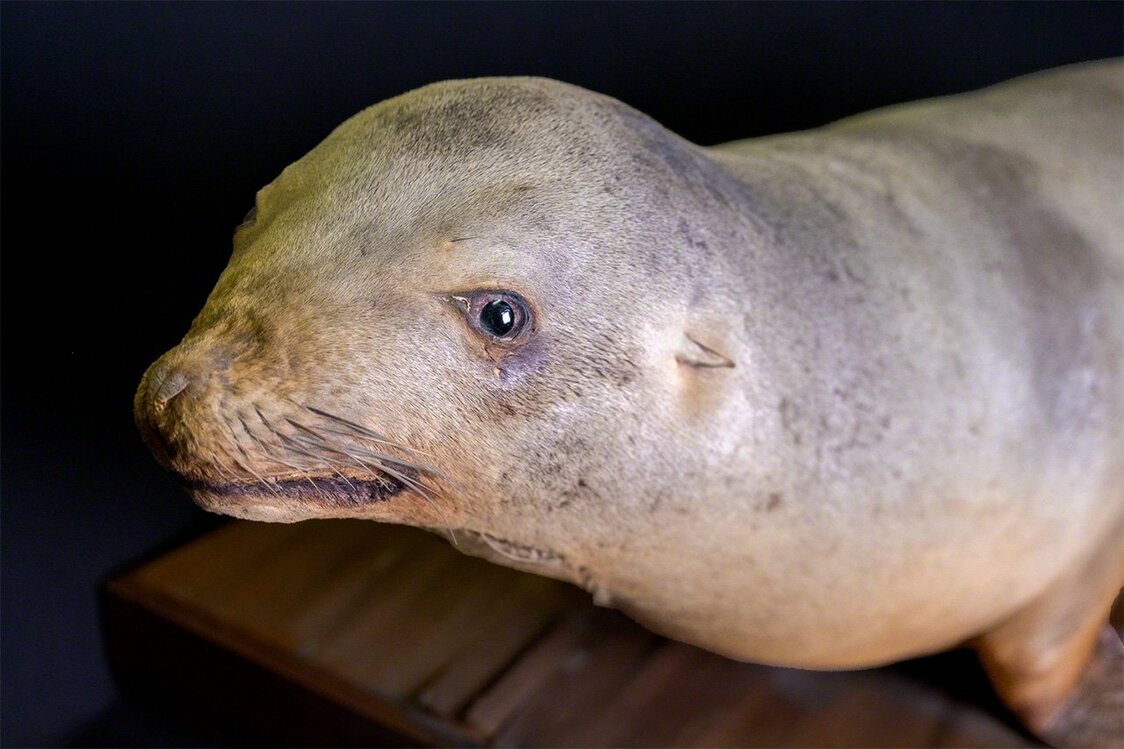
The Japanese sea lion has a kind face, but when photographing the specimen, the scars left by the taxidermist come to the forefront, giving the creature with what appears to be a sad, pained expression. (© Hayashi Michiko)
-
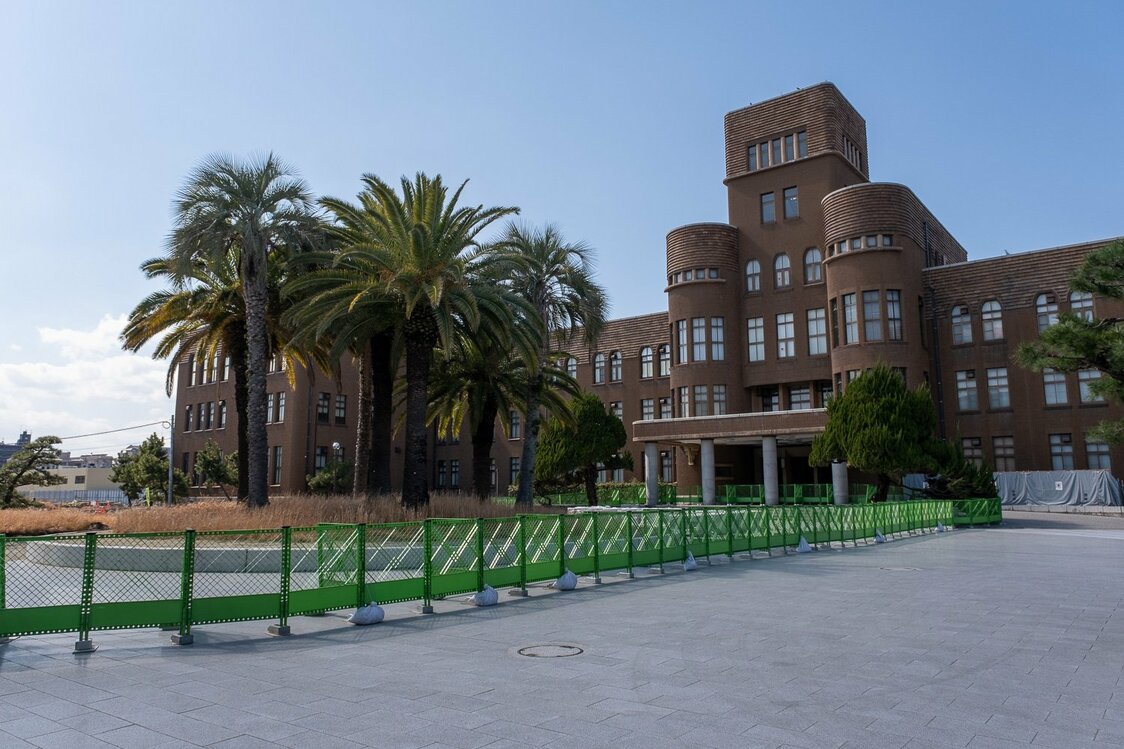
The historic science building that now houses the Kyūshū University Museum was registered as a tangible cultural property in spring 2023. (© Hayashi Michiko)


 Read in other languages