-
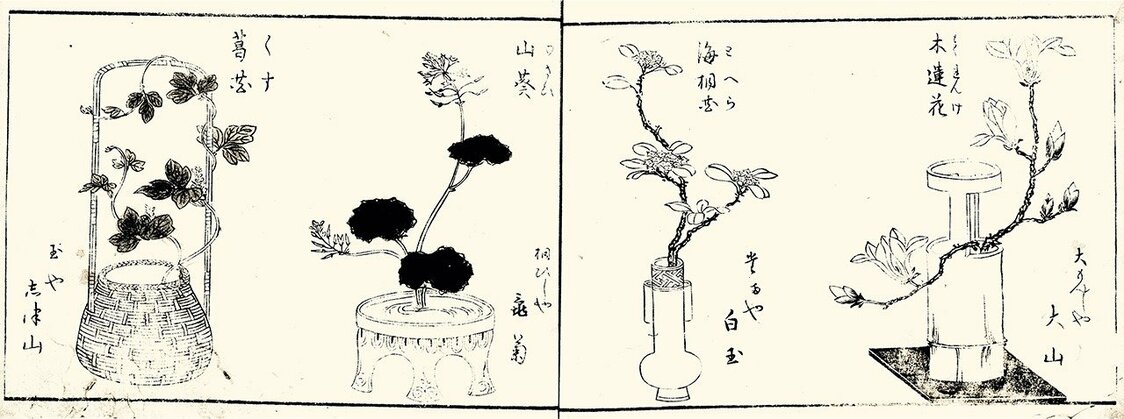
Tsutaya Jūzaburō’s first publication Hitome senbon. (Courtesy the National Institute of Japanese Literature)
-
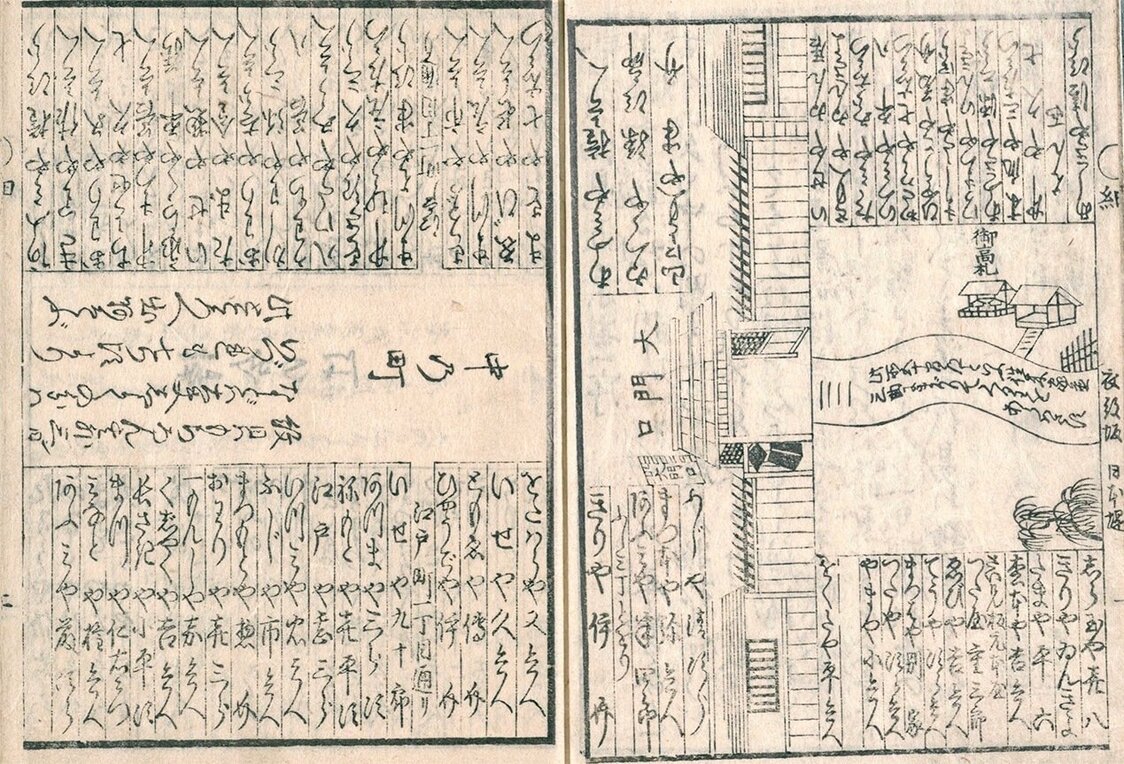
The Yoshiwara guide Goyō no matsu (Five-Needled Pines) shows the main gate to the right and the Nakanochō main street to the left, lined with brothels. From 1783, when the guide was published, Tsutaya had a monopoly on its production. (Courtesy the National Diet Library)
-
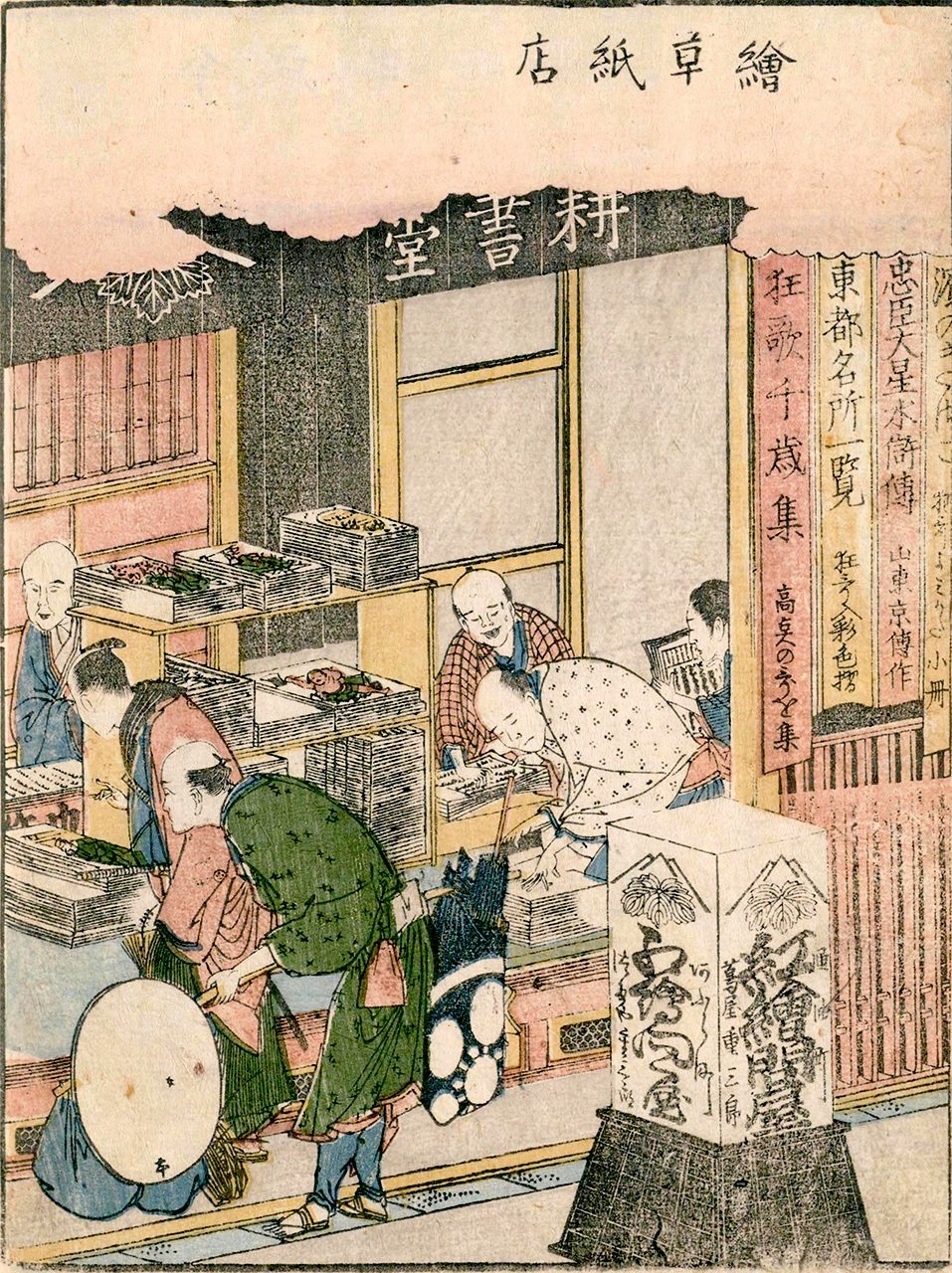
Kōshodō is included in Katsushika Hokusai’s Ehon azuma asobi (Picture Book of Edo Amusements). The work was published in 1802 and is thought to depict the store after Tsutaya’s death. (Courtesy the National Diet Library)
-
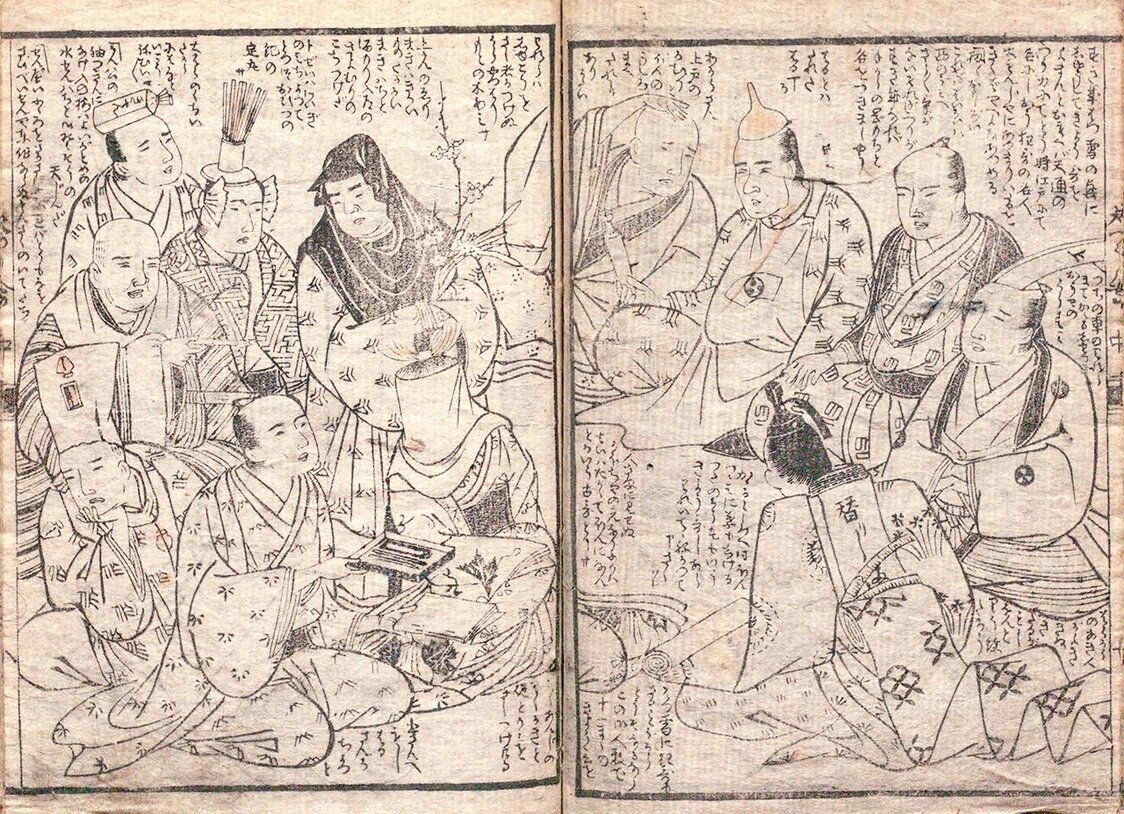
A picture in Yoshiwara daitsūe (Meeting of the Great Yoshiwara Connoisseurs) shows popular kyōka poets meeting together, dressed in costumes. Only Tsutaya (at bottom left) is dressed in an ordinary kimono. (Courtesy the National Diet Library)
-
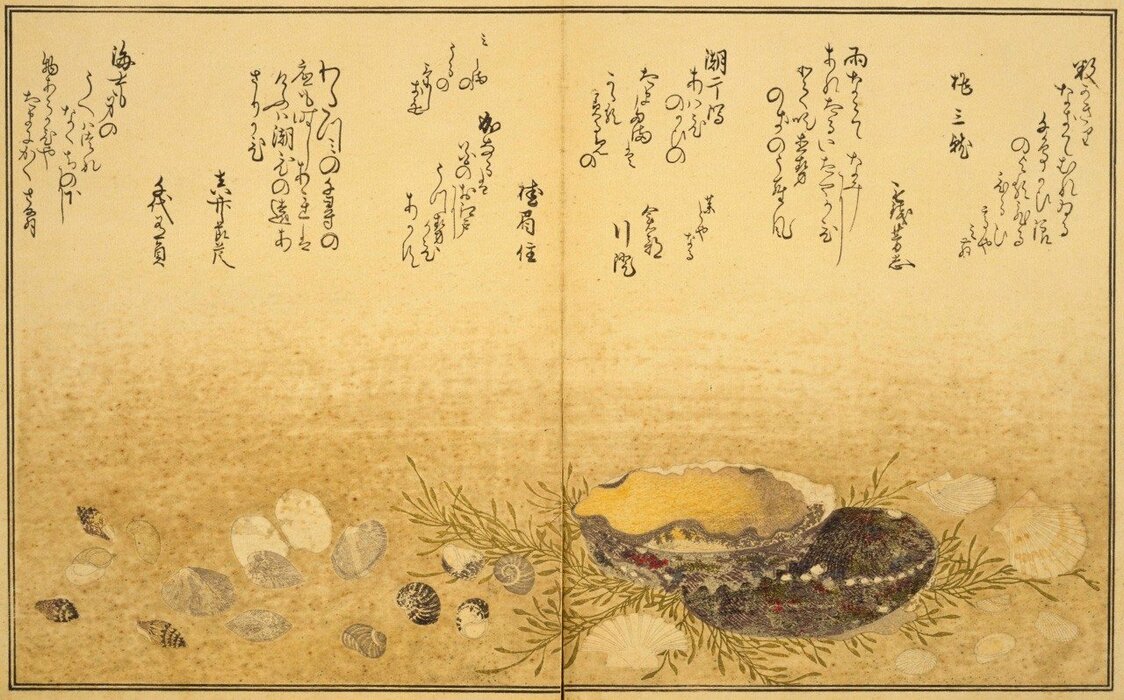
Ehon: Shiohi no tsuto (Picture Book: Gifts of the Ebb Tide) was a gorgeous publication with realistic illustrations by Utamaro, published in the late 1780s. (Courtesy the National Diet Library)
-
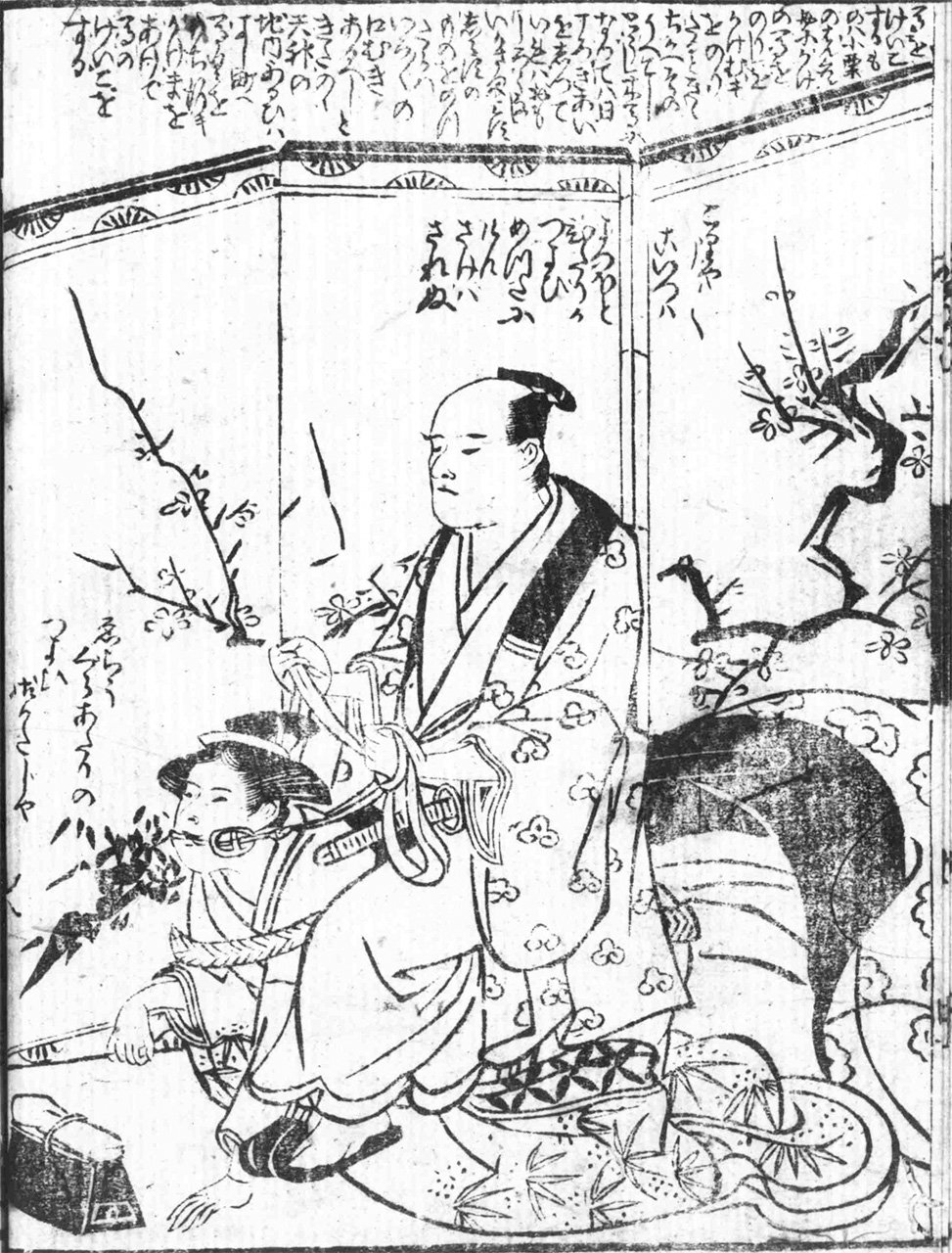
Ōmugaeshi bunbu no futamichi is full of biting satire aimed at the samurai class. (Courtesy the Tokyo Metropolitan Central Library Special Collection Room)
-
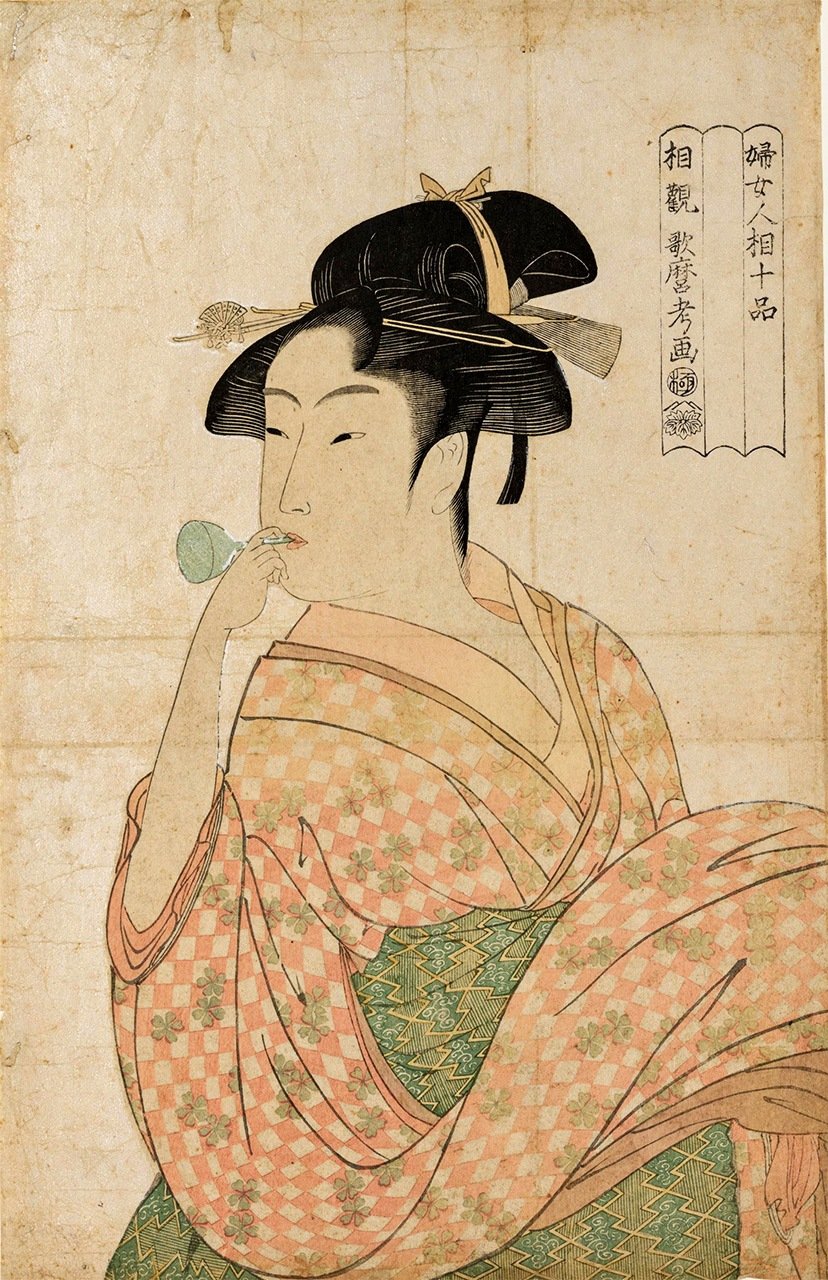
A woman in Fujin ninsō juppon (Ten Types of Feminine Demeanor) casually blows a poppin, a kind of glass toy that makes a noise. Painted around 1792–93. (Courtesy ColBase)
-
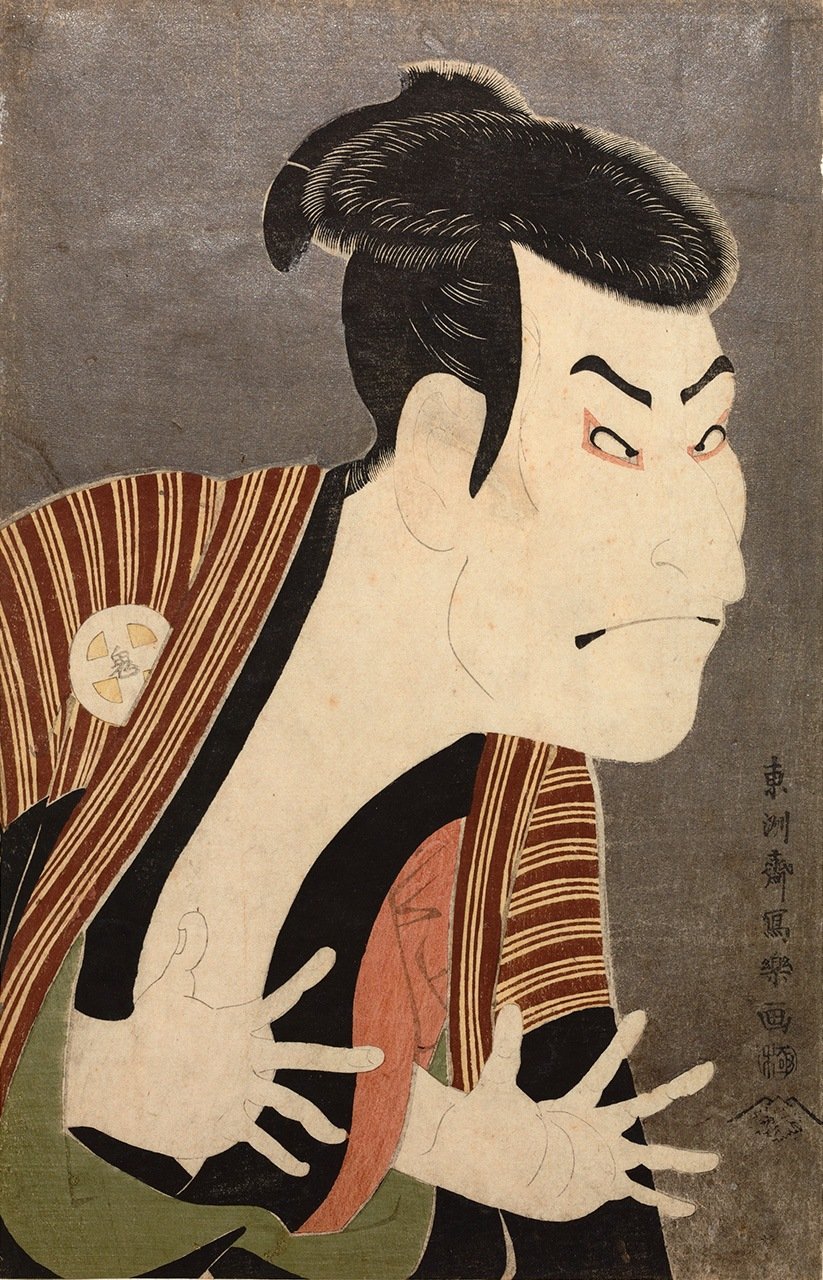
Sharaku’s Sandaime Ōtani Oniji no yakko Edobei (Ōtani Oniji III as the yakko Edobei) is a classic kubie work. Edobei was a yakko or servant and also a robber in a kabuki play, showing a distinctive evil expression in this 1794 work. (Courtesy ColBase)


 Read in other languages