-
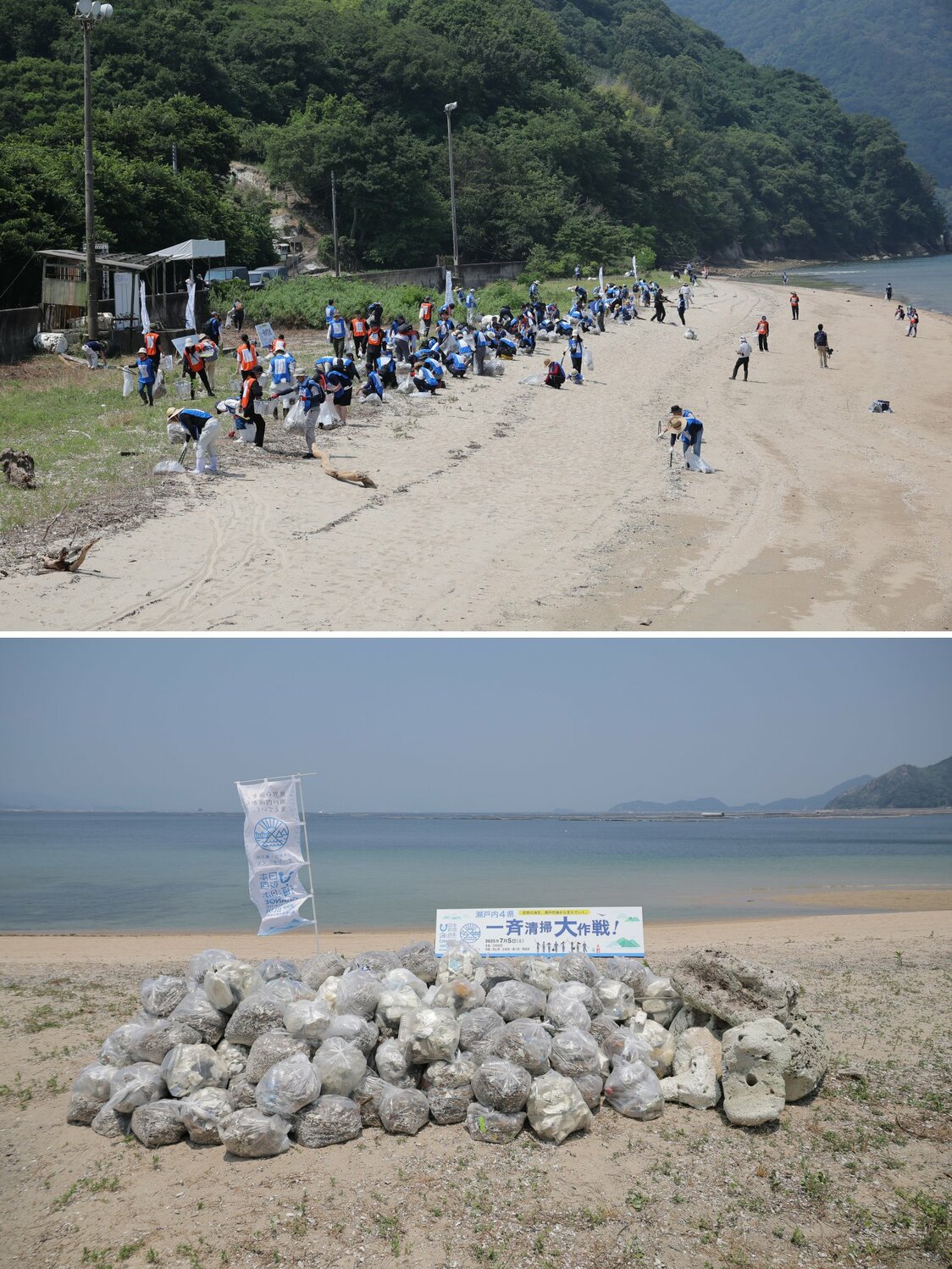
Cleanup efforts in Hiroshima (top); oversized floats that don’t fit into trash bags. (Courtesy Nippon Foundation)
-
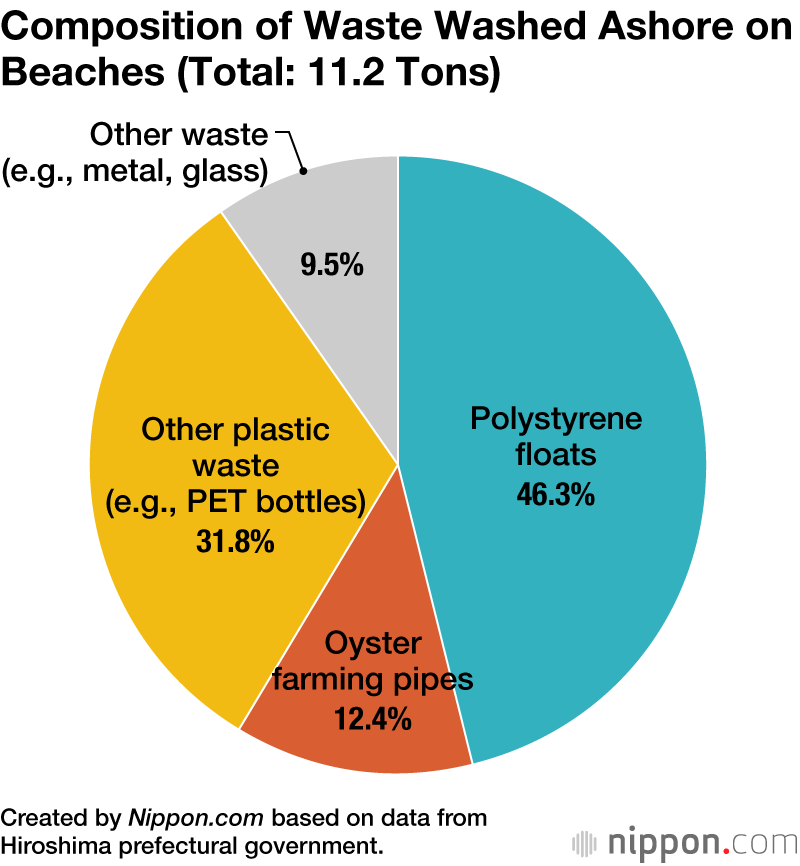
Composition of Waste Washed Ashore on Beaches (Total: 11.2 Tons)
-
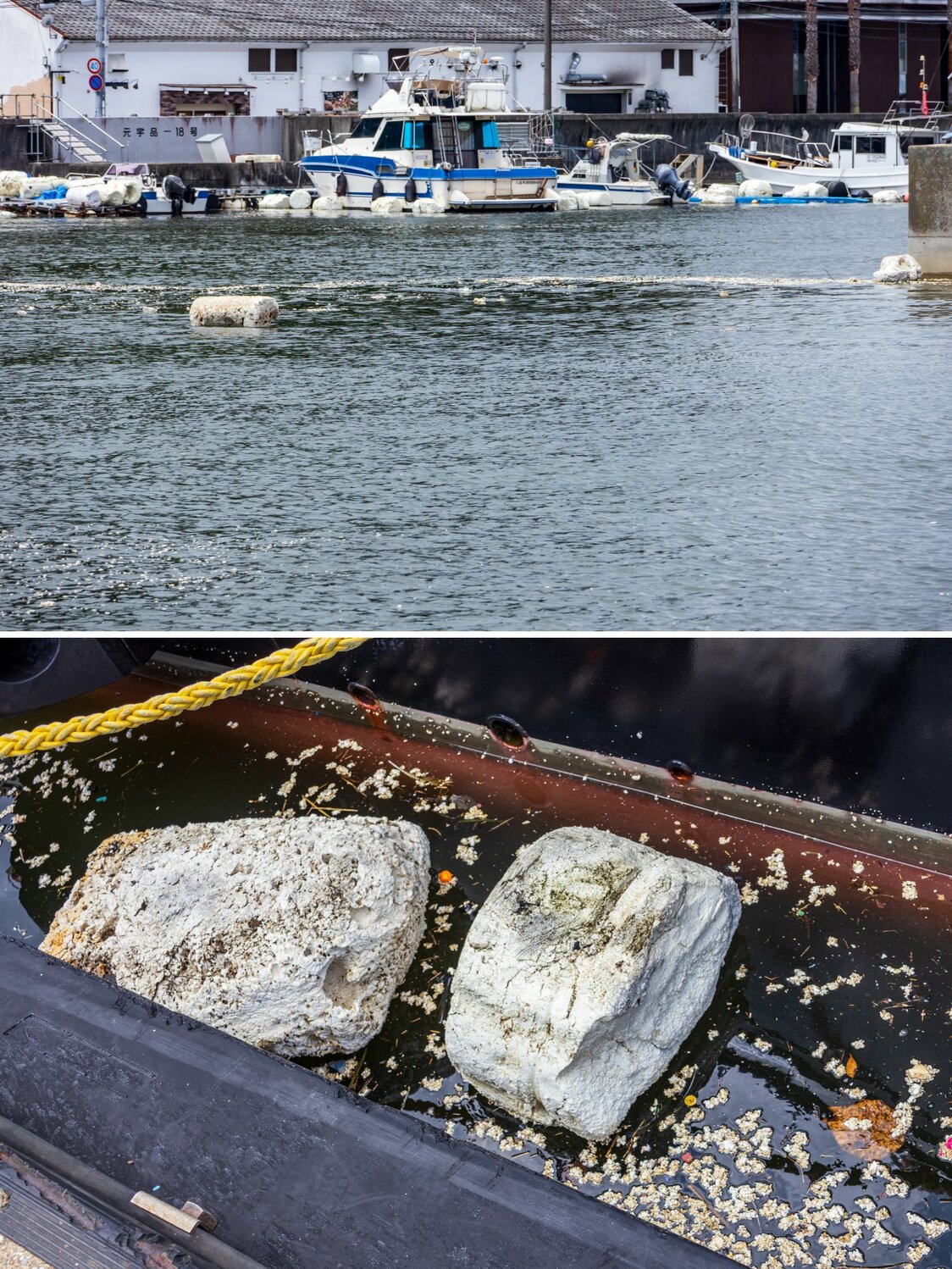
Float waste washed ashore at Ujina Beach in Hiroshima (top); once broken down into microplastics, the impact on the ecosystem is severe. (© Nippon.com)
-
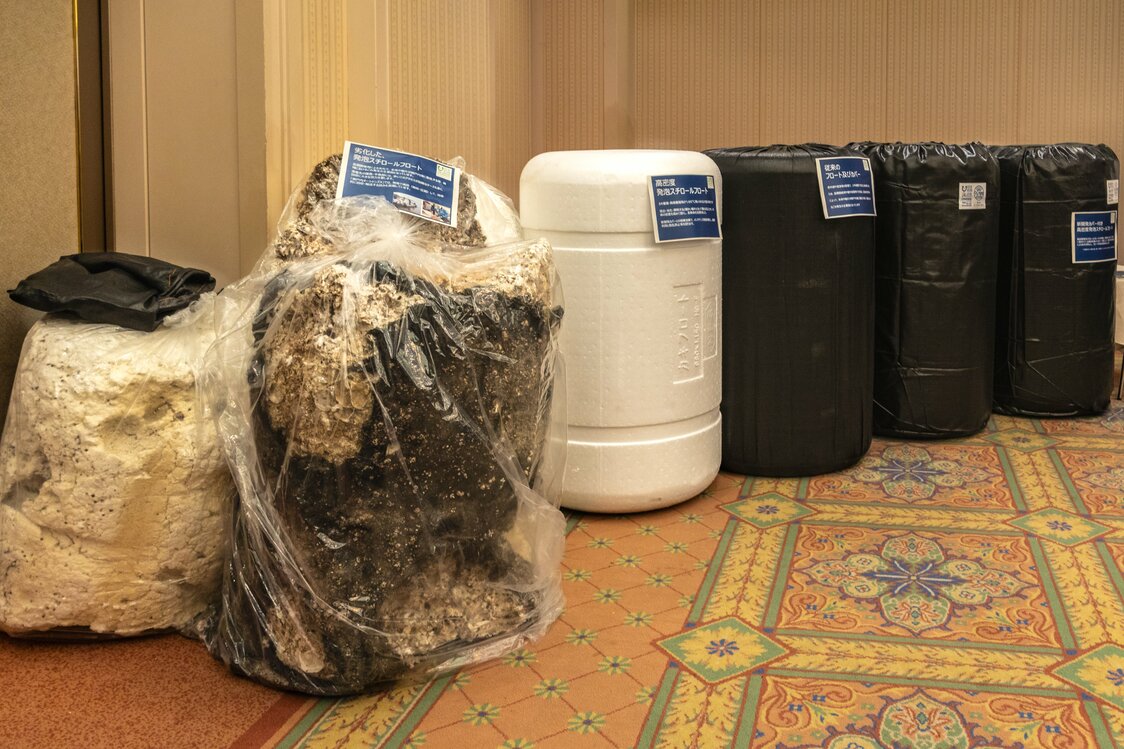
The two floats on the right are newly developed high-density models with protective black covers. The white one in the center is the float body that goes inside the cover. Between these is the standard model. In the front left is a discarded float found on the shore. (© Nippon.com)
-
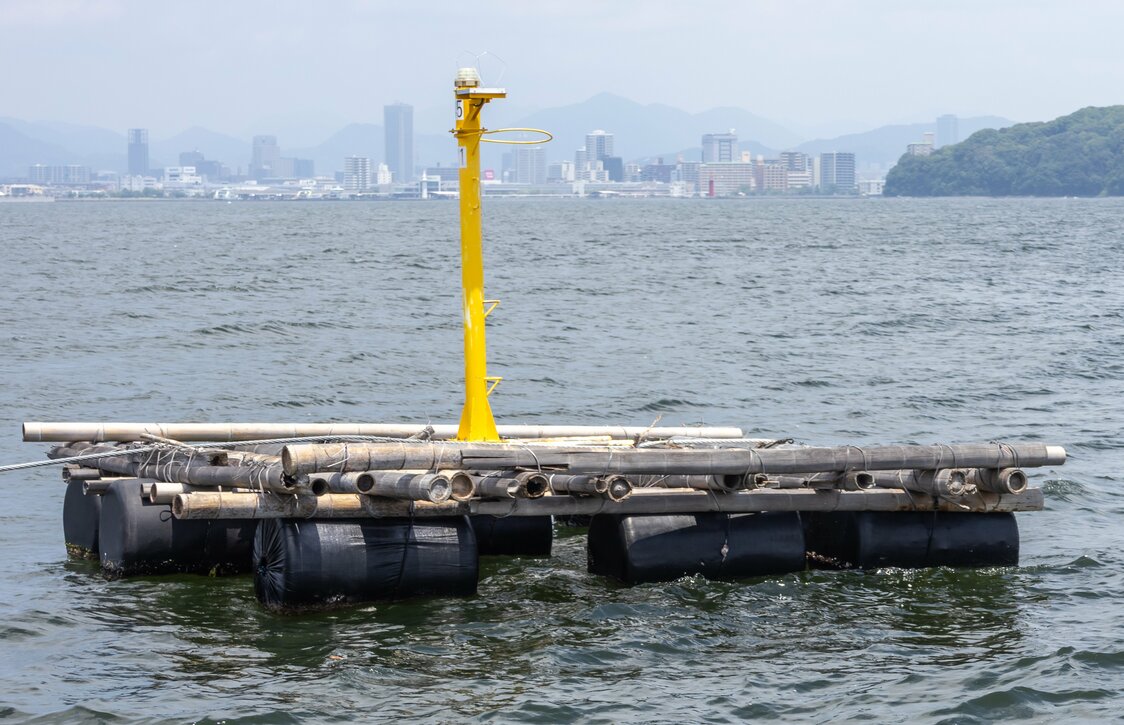
A light buoy raft equipped with floats, visible above the water. The weight of oysters on aquaculture rafts causes floats to submerge and makes them more susceptible to compression. (© Nippon.com)
-
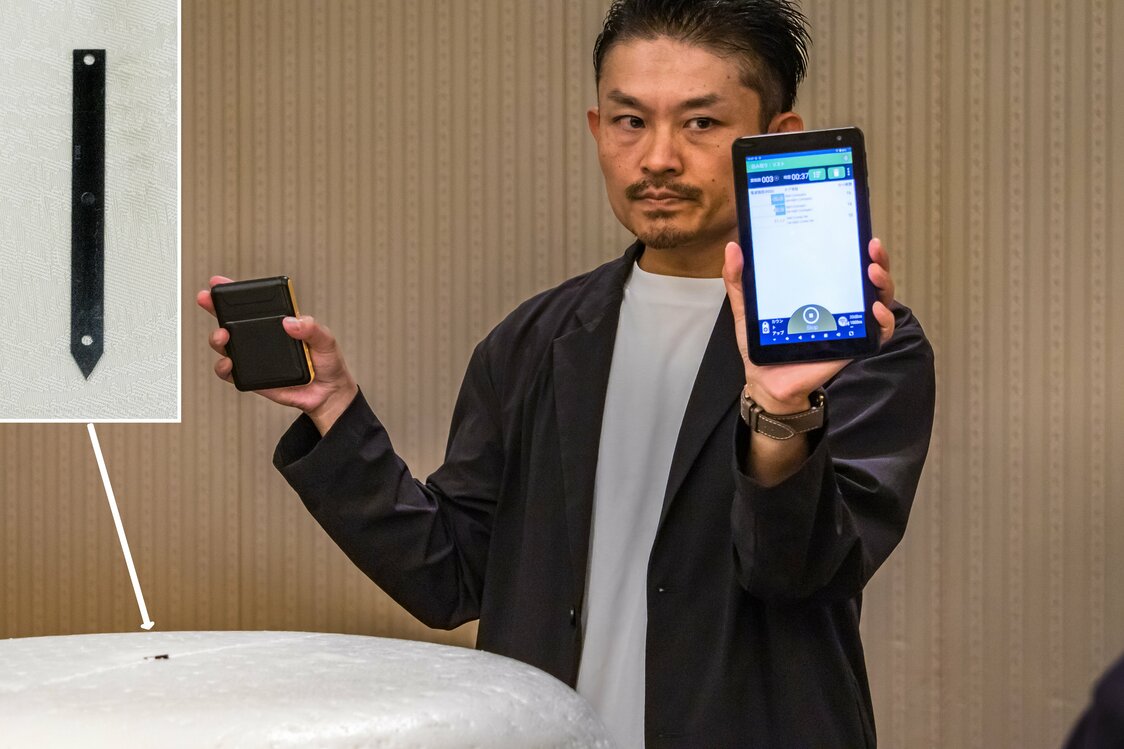
Scanning a float embedded with an IC tag using a specialized reader displays information on the device. (© Nippon.com)
-
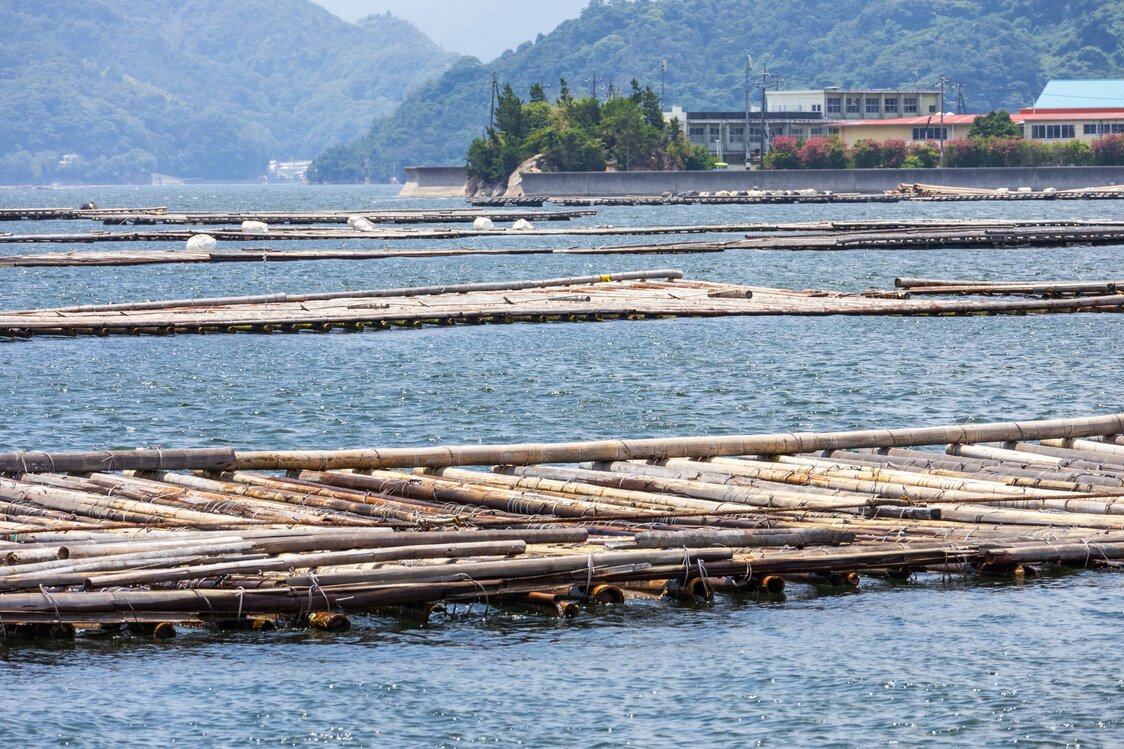
Some floats without protective covers were seen at the aquaculture site. (© Nippon.com)
-
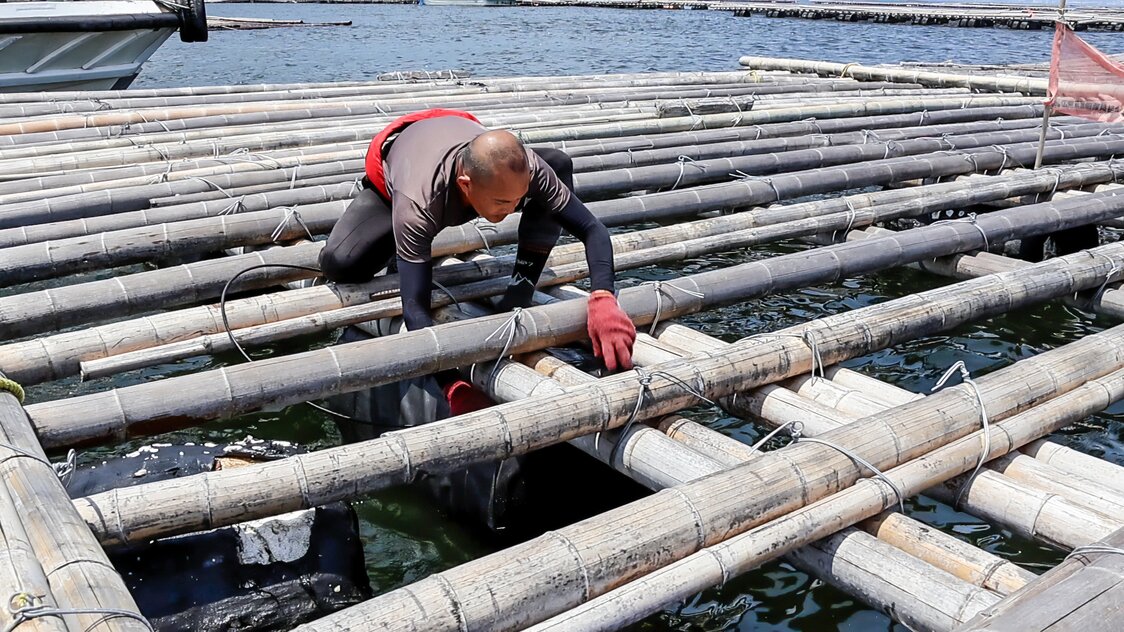
Replacing old floats with new models. Each raft uses a little over 30 floats. (© Nippon.com)
-
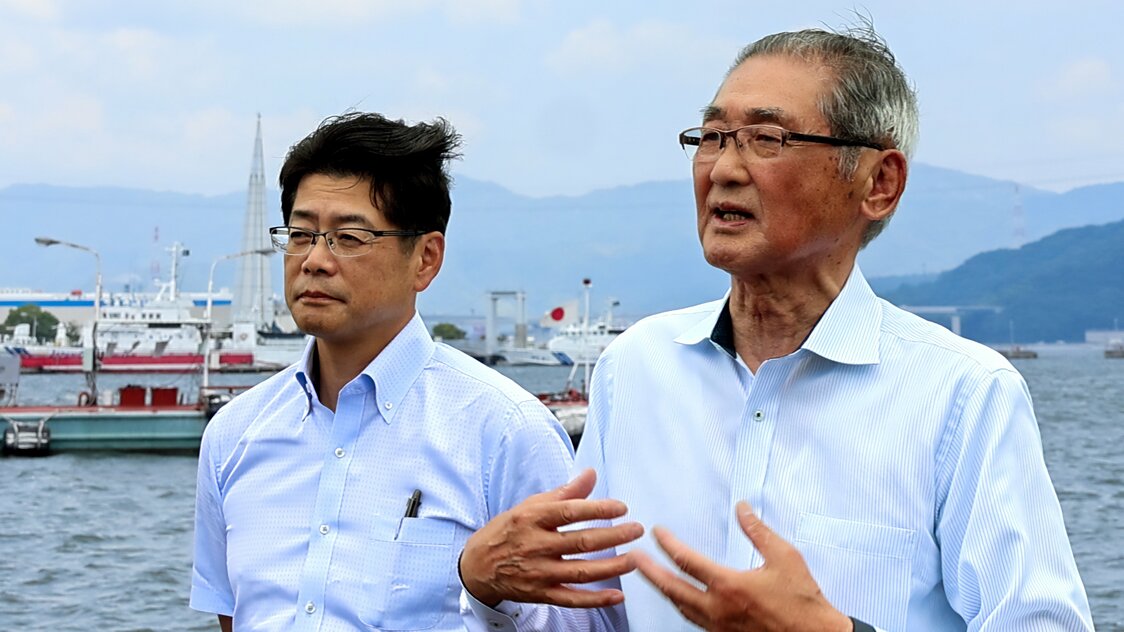
Yoneda Terutaka of the Hiroshima Fishery Cooperative (right) pledges to take on the mission of float waste reduction. (© Nippon.com)


 Read in other languages