-
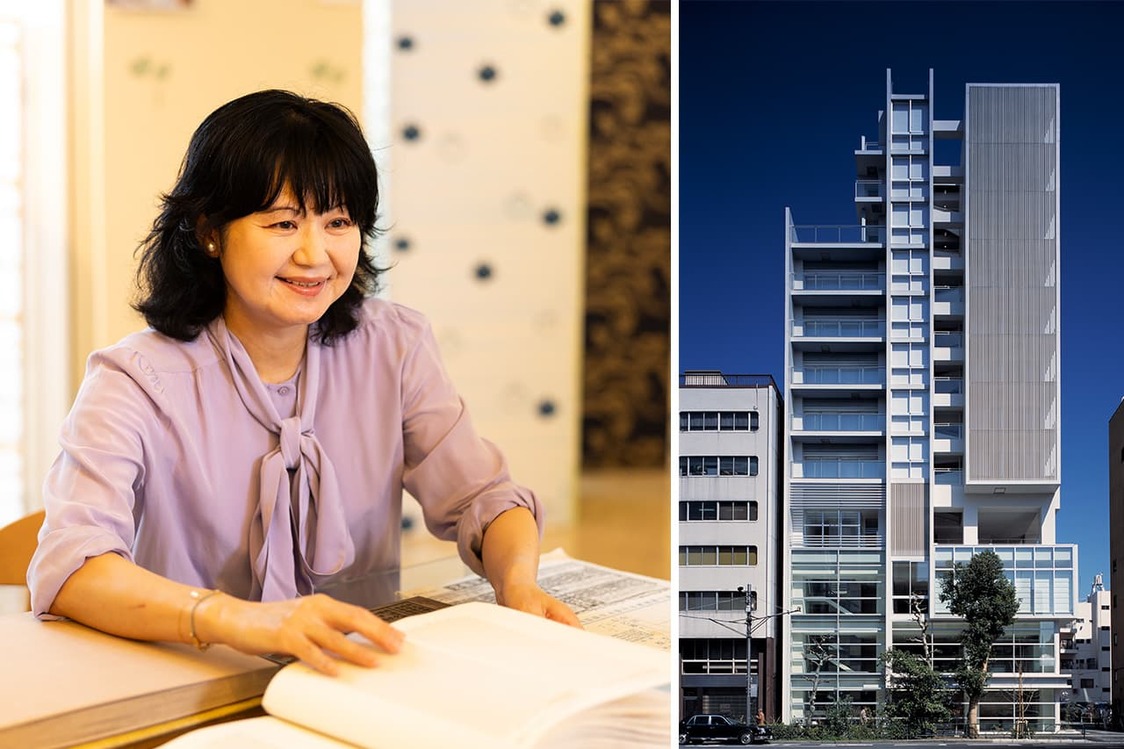
Kōno Ayako in Tokyo Matsuya’s showroom. At right is the company’s head office. (Courtesy of Tokyo Matsuya)
-
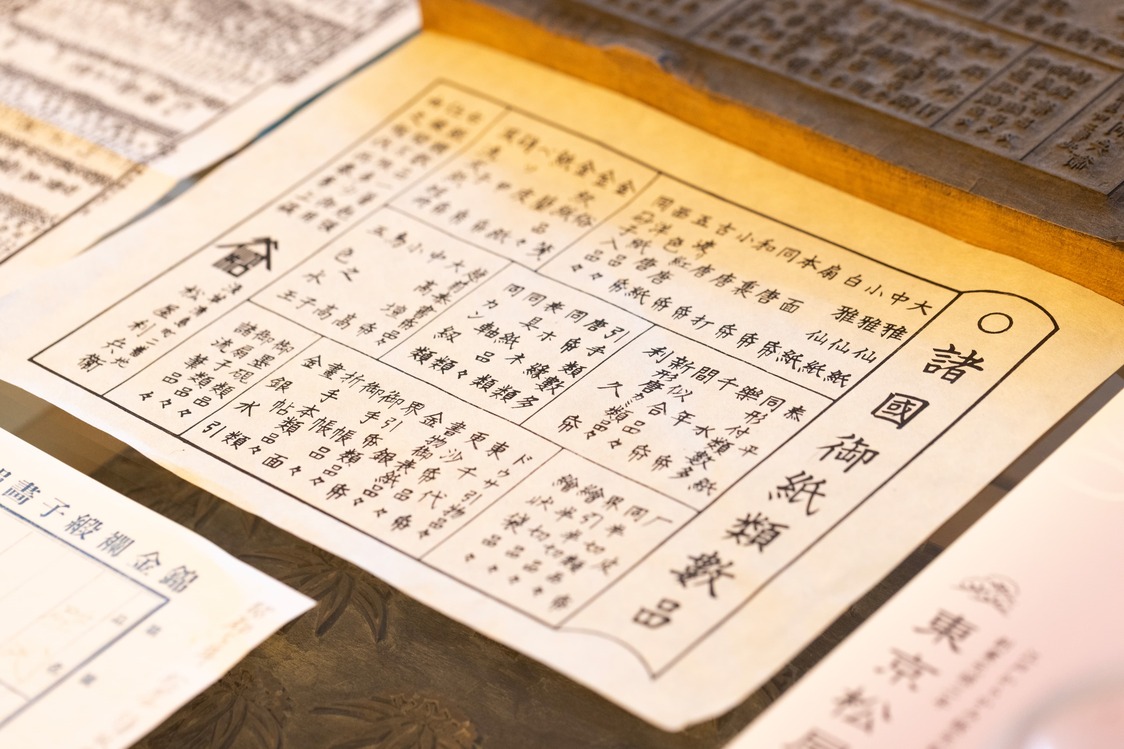
A woodblock flyer from the late Edo period (1603–1868) listing categories of paper products. A reference to “new-style karakami varieties” is found in the middle-right box. (© Kawamoto Seiya)
-
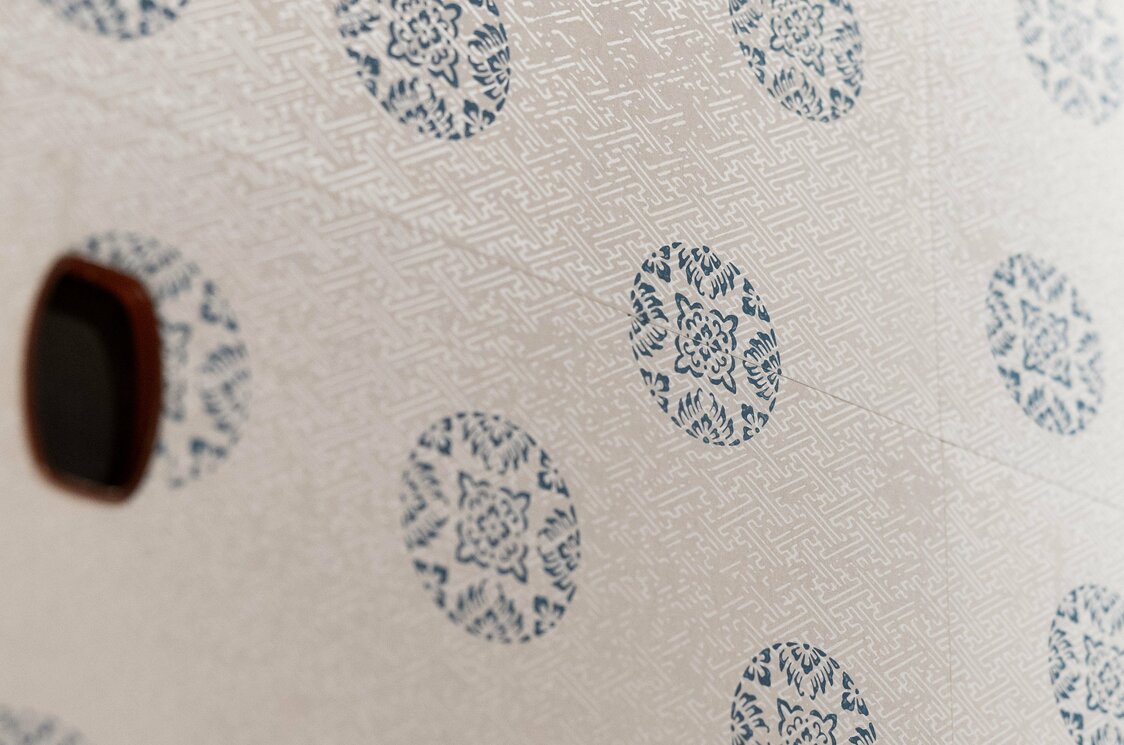
A fusuma made by joining 12 sheets of karakami. The pattern flows seamlessly across the panels. (© Kawamoto Seiya)
-
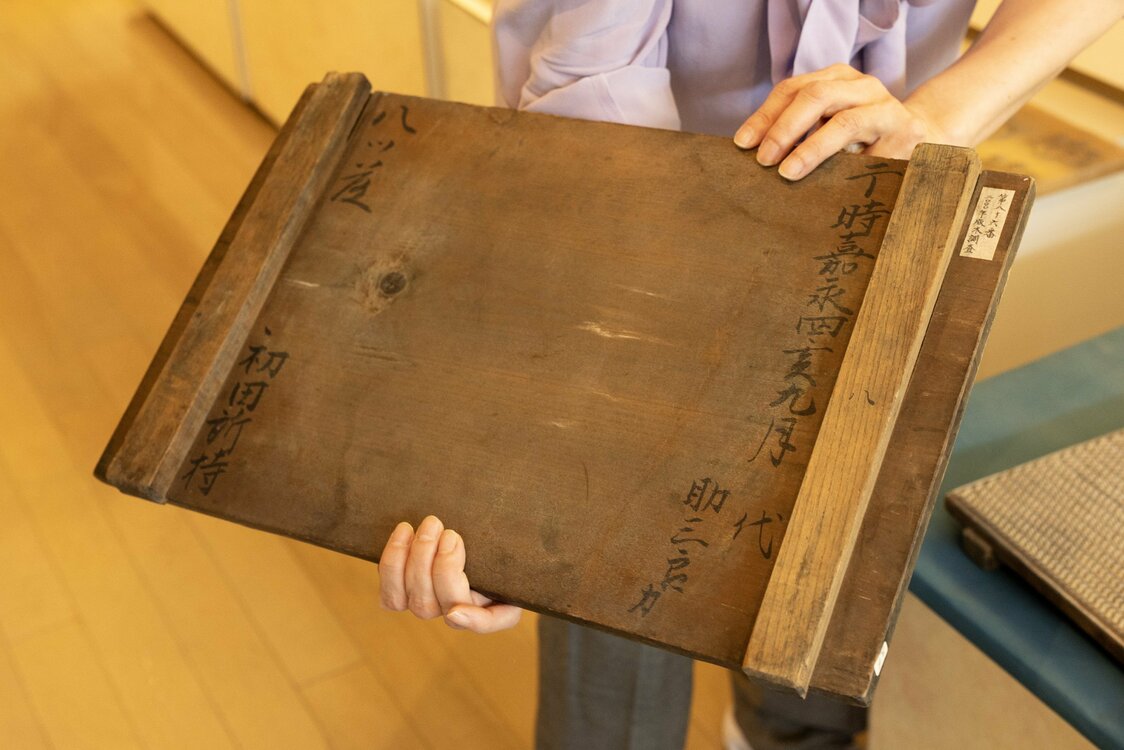
The reverse side of a woodblock from the Edo period. The inscription “September, Kaei 4, Year of the Boar” dates it to 1851. (© Kawamoto Seiya)
-
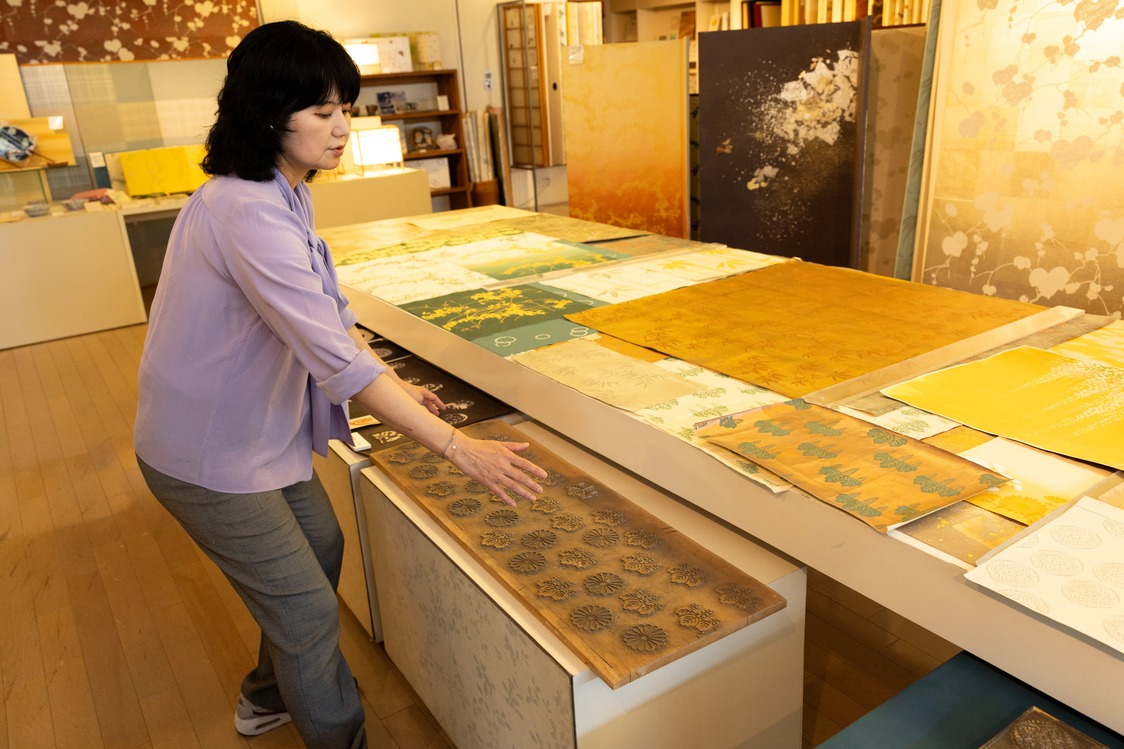
As techniques for making large-format paper improved, woodblocks also grew in size, allowing for more elaborate designs. (© Kawamoto Seiya)
-
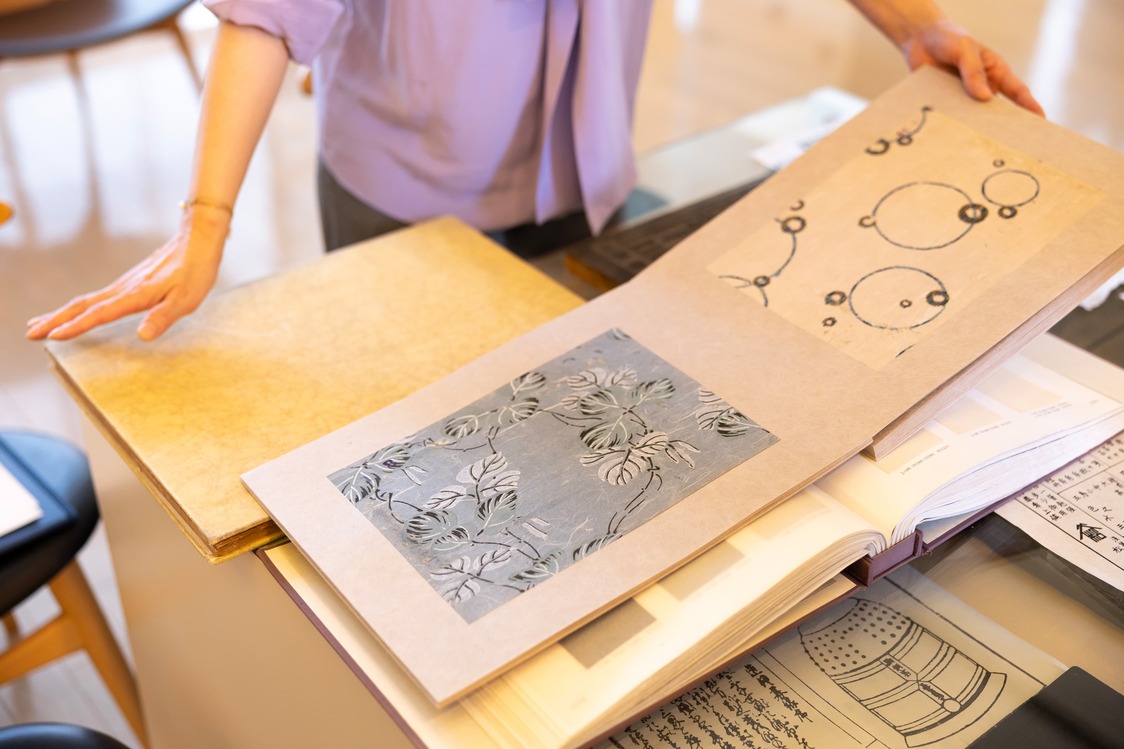
A prewar catalog of Tokyo Matsuya’s design samples. (© Kawamoto Seiya)
-

Takasugi applies blended pigments to a cloth-stretched sieve. (© Kawamoto Seiya)
-

Aligning the paper requires two pairs of hands. (© Kawamoto Seiya)
-

Pigment is gently dabbed onto the raised surface of the woodblock using a cloth-covered sieve. (© Kawamoto Seiya)
-
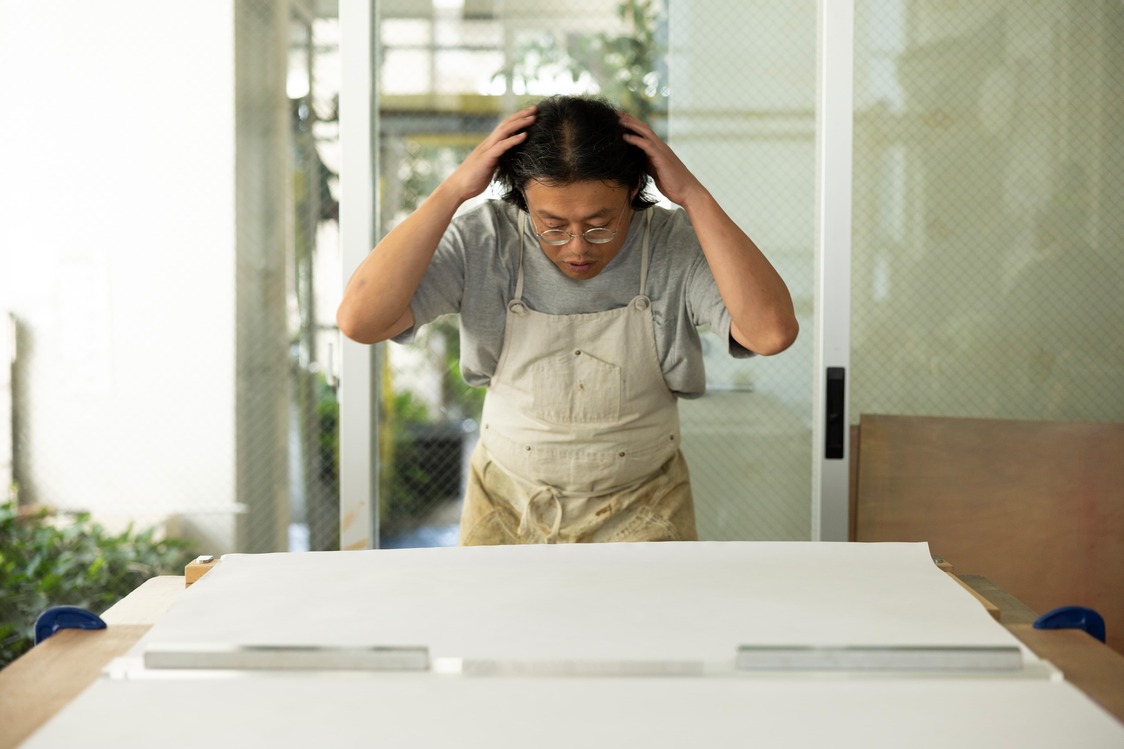
Touching one’s hair before printing is a trick Takasugi learned from a veteran artisan to improve hand glide. (© Kawamoto Seiya)
-
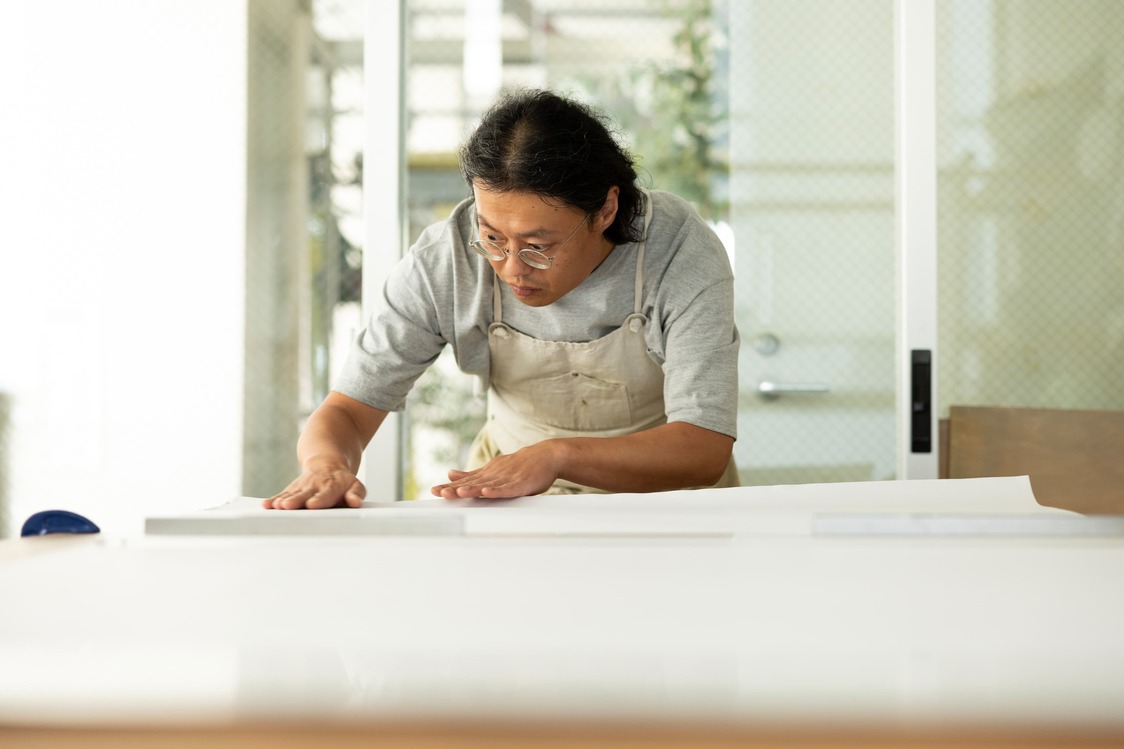
Every step of the printing process demands complete focus. (© Kawamoto Seiya)
-
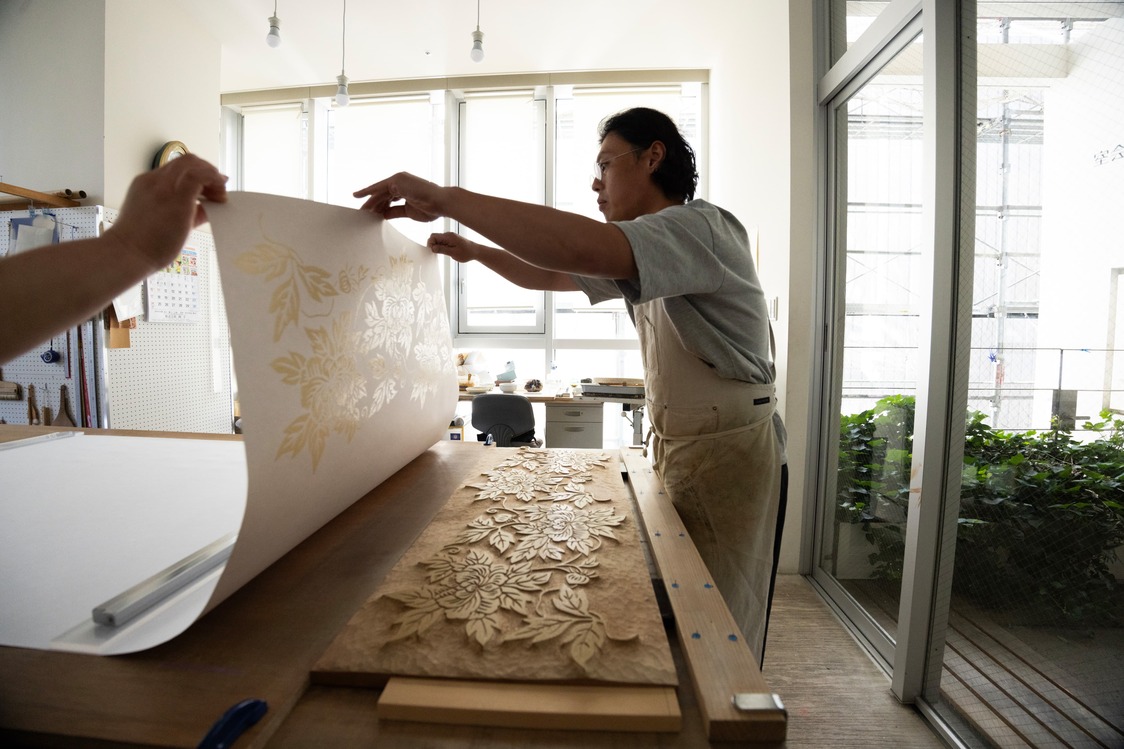
Lifting the printed paper with nervous anticipation. (© Kawamoto Seiya)
-
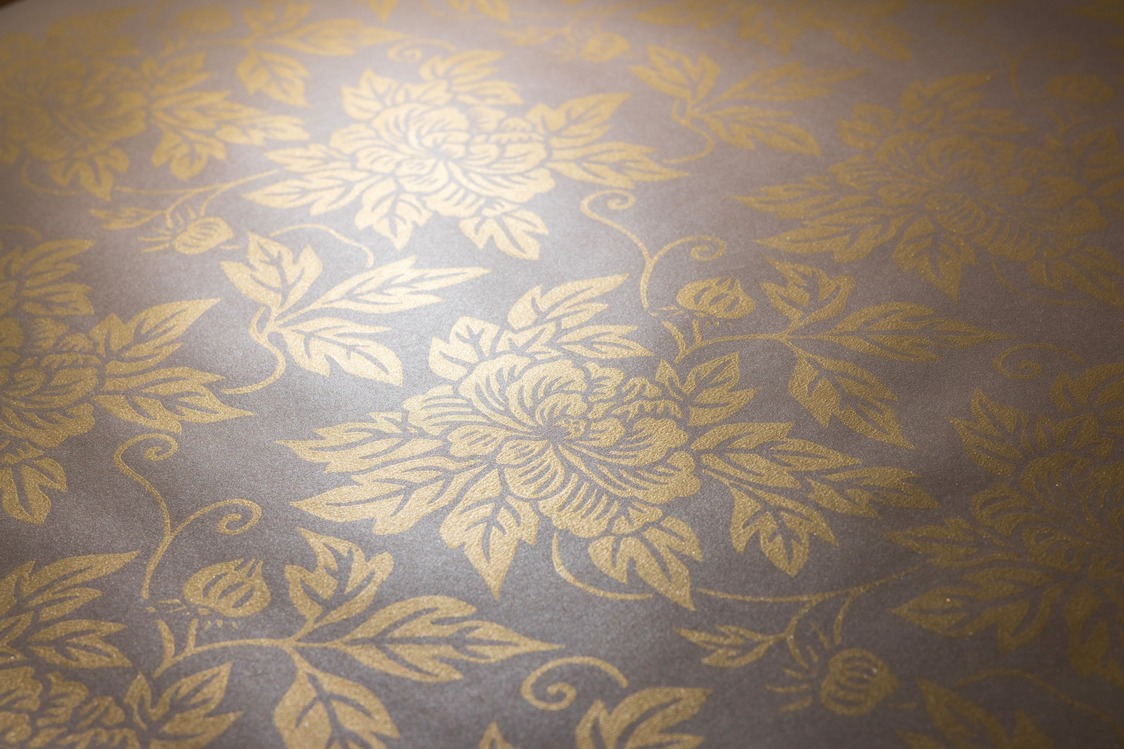
The shimmering peony motif exudes quiet elegance. (© Kawamoto Seiya)
-
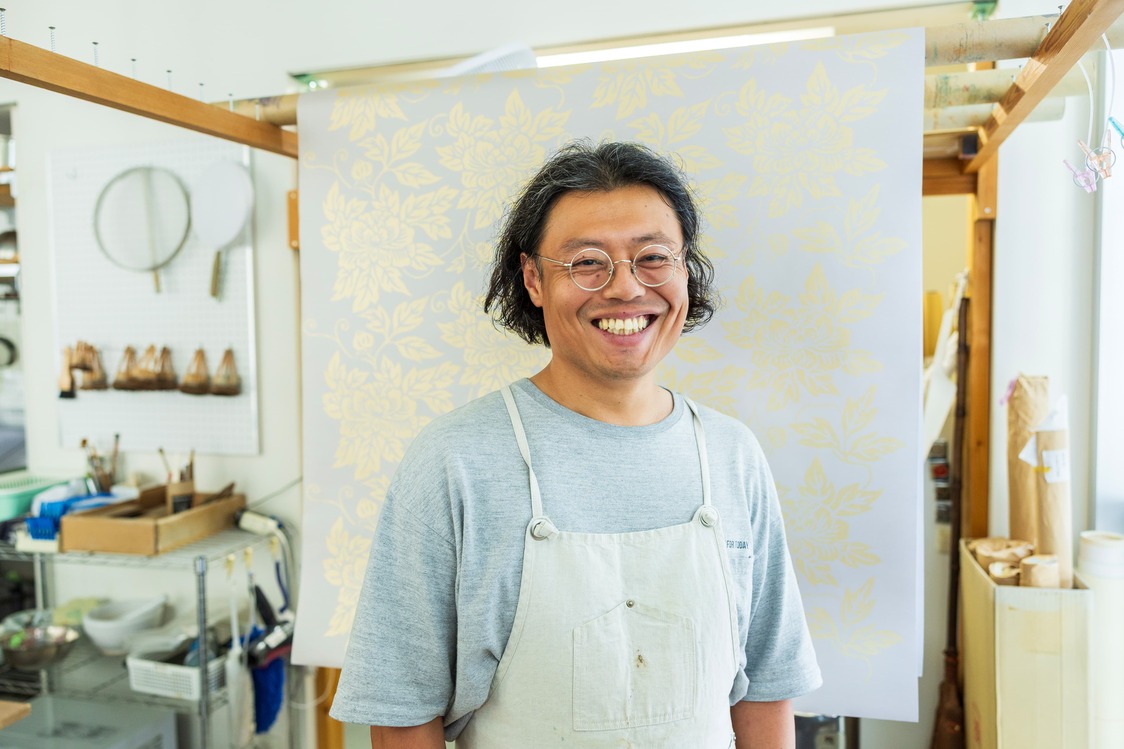
Takasugi Yūya, a karakami artisan. (© Kawamoto Seiya)
-
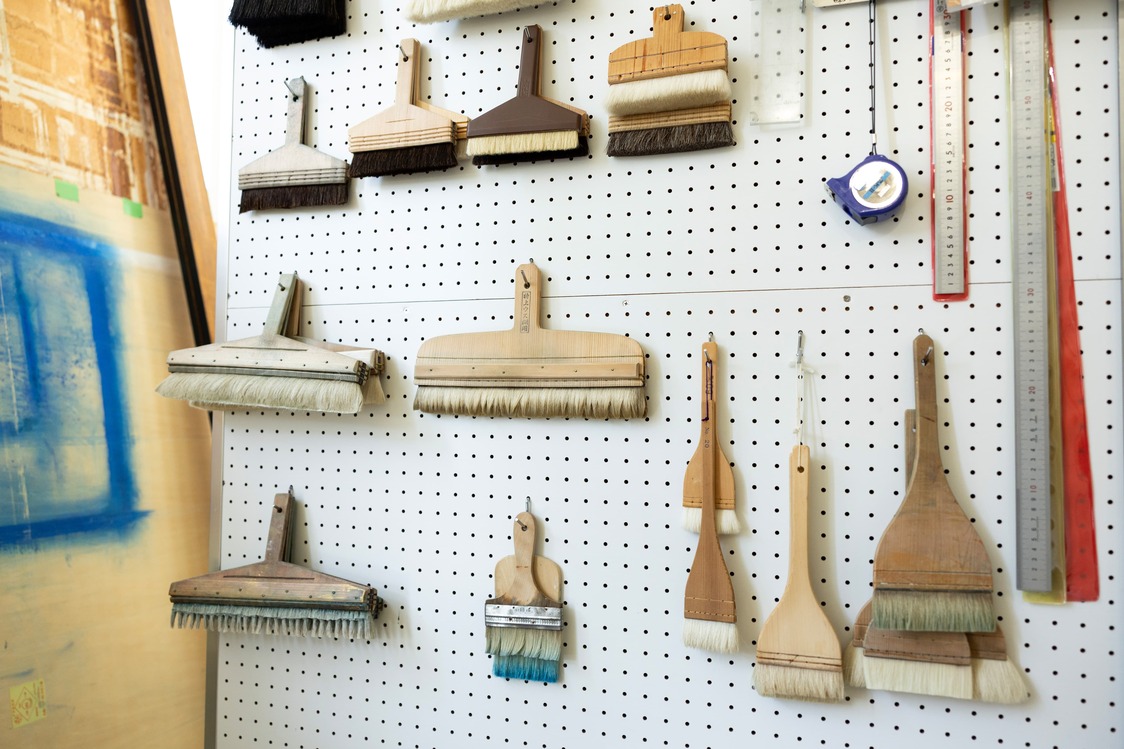
Takasugi customizes his own tools. At lower left is a brush with thinned bristles, used to create striped patterns. (© Kawamoto Seiya)
-
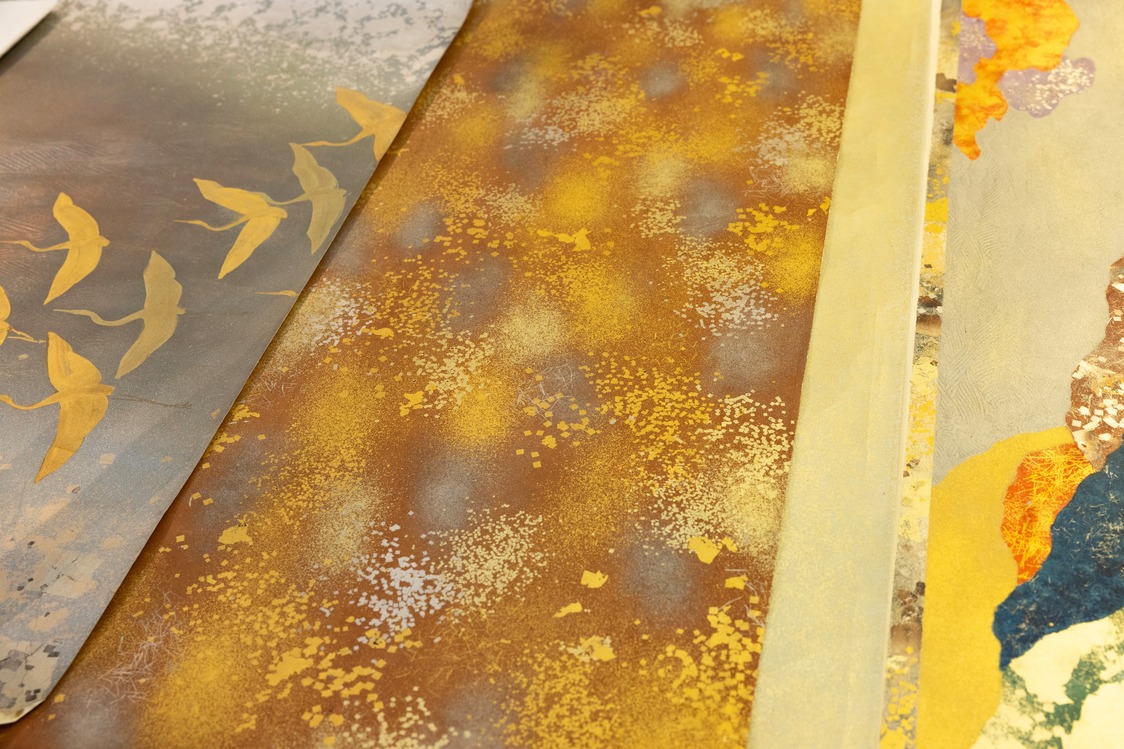
Edo karakami decorated using gold and silver flakes. (© Kawamoto Seiya)


 Read in other languages