-
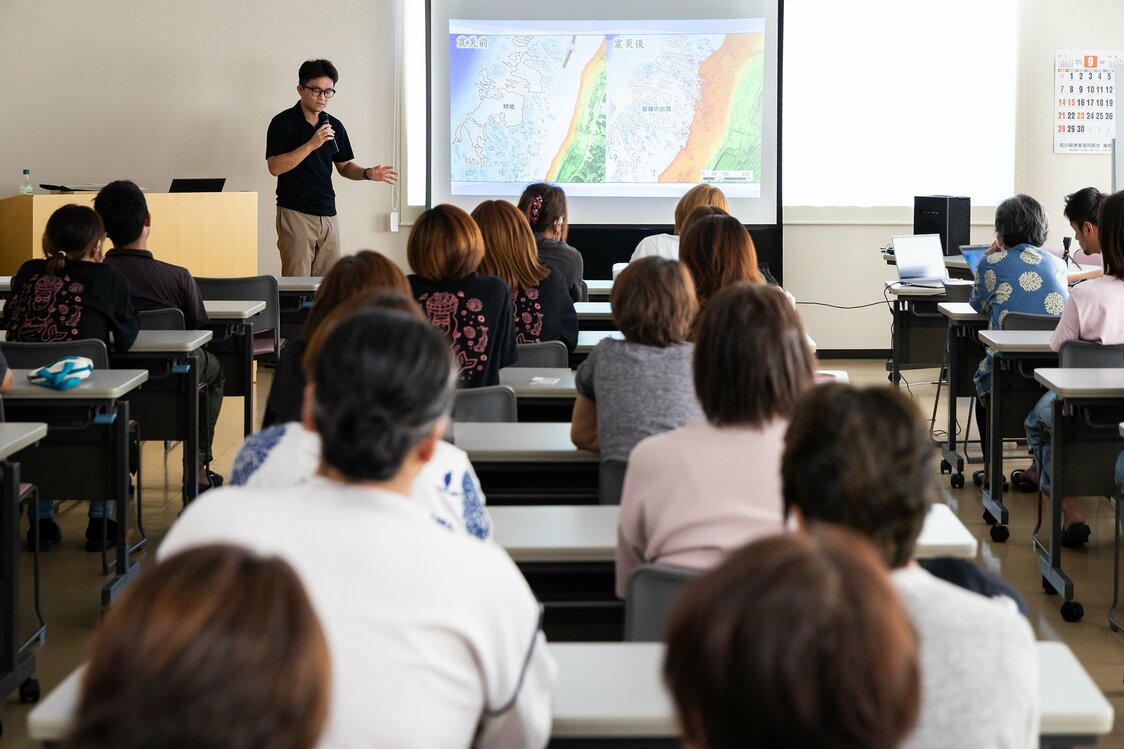
About 40 people attended the presentation, many of them ama divers. (© Nippon.com)
-
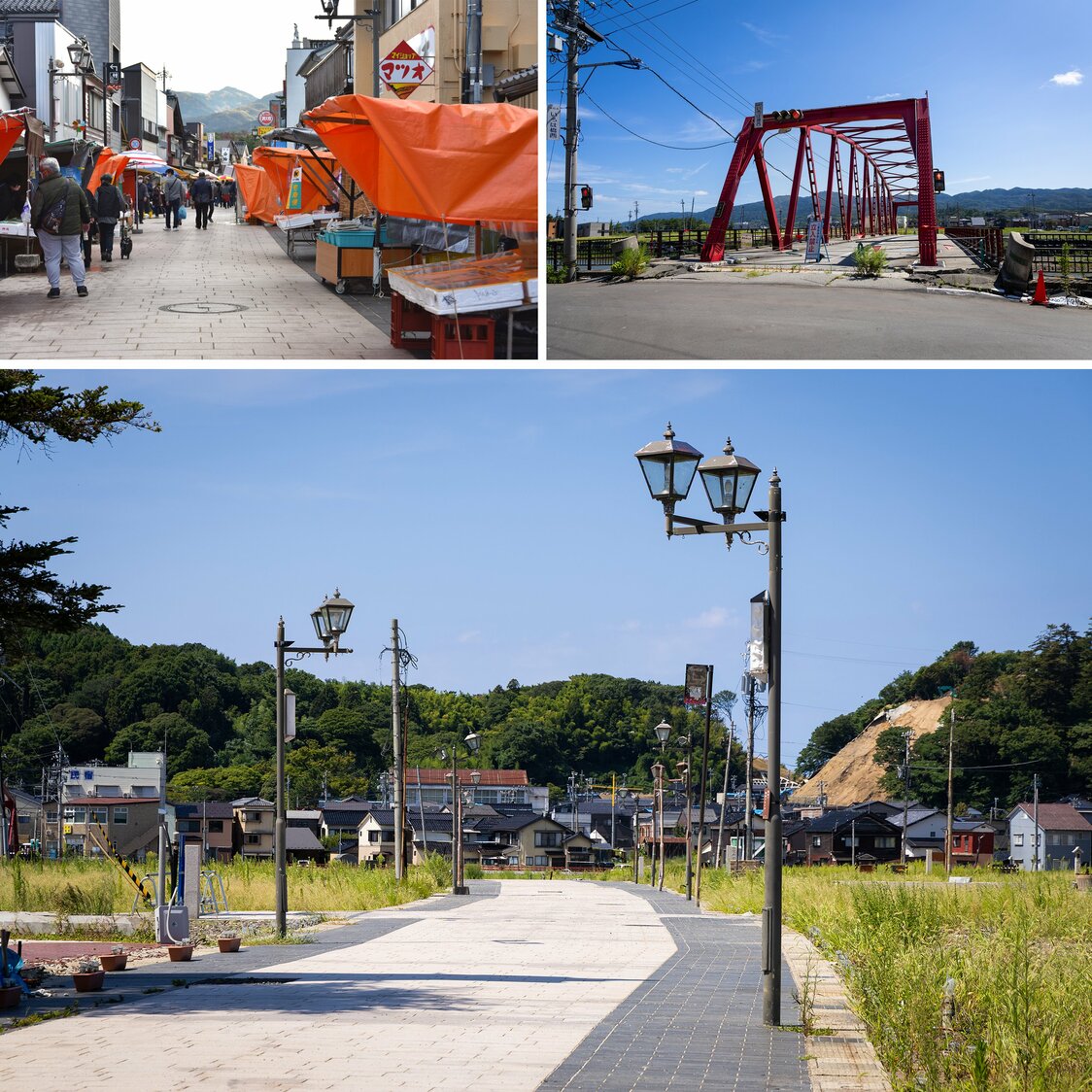
Clockwise from top left: The morning market when it was bustling with tourists (© Pixta). Iroha Bridge, which once served as the western gateway to the morning market, is now closed. The other side is overgrown with weeds (© Nippon.com). Shops selling seafood once lined both sides of the street beneath retro-style streetlights (© Nippon.com).
-
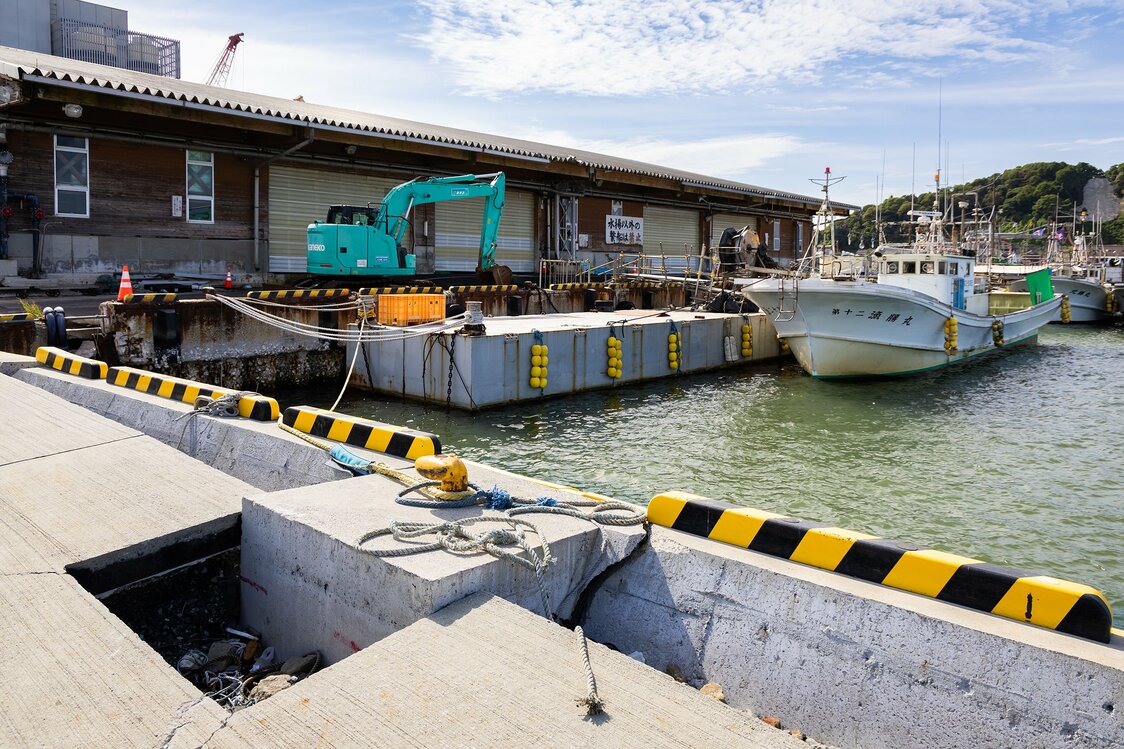
A boat docked next to a temporary pier. The seafloor at the original unloading site has risen by about 1.5 meters. (© Nippon.com)
-
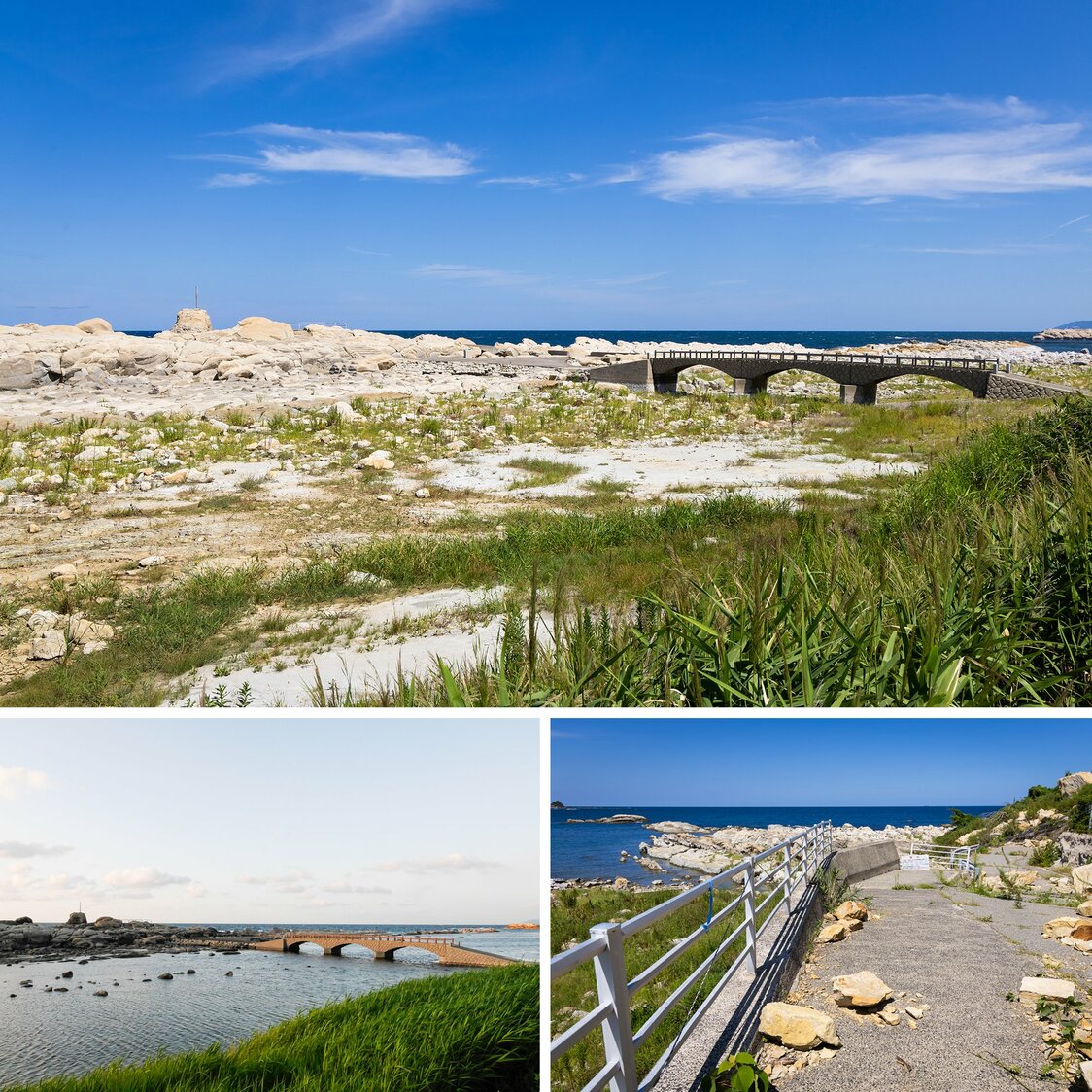
Clockwise from top: At Kamogaura, a scenic spot near the Port of Wajima, the view has changed with a ground uplift of more than 2 meters. Nearby are spots where ama divers harvest turban shells and seaweed (© Nippon.com). The walking path to Sodegahama Beach to the west had been cut off by a landslide (© Nippon.com). A photo from before the earthquake, when the area was under seawater (© Pixta).
-
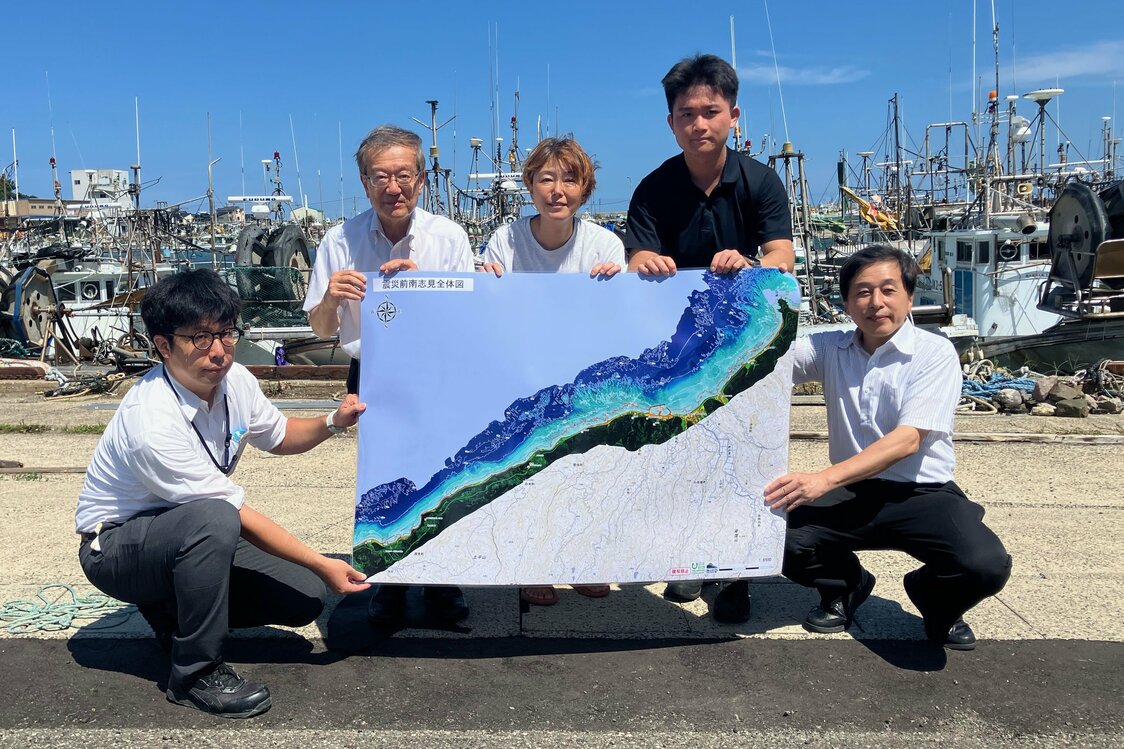
Ishikawa Ryōko (center) with members of the Umi-no-Chizu Project. (Courtesy the Japan Hydrographic Association)
-
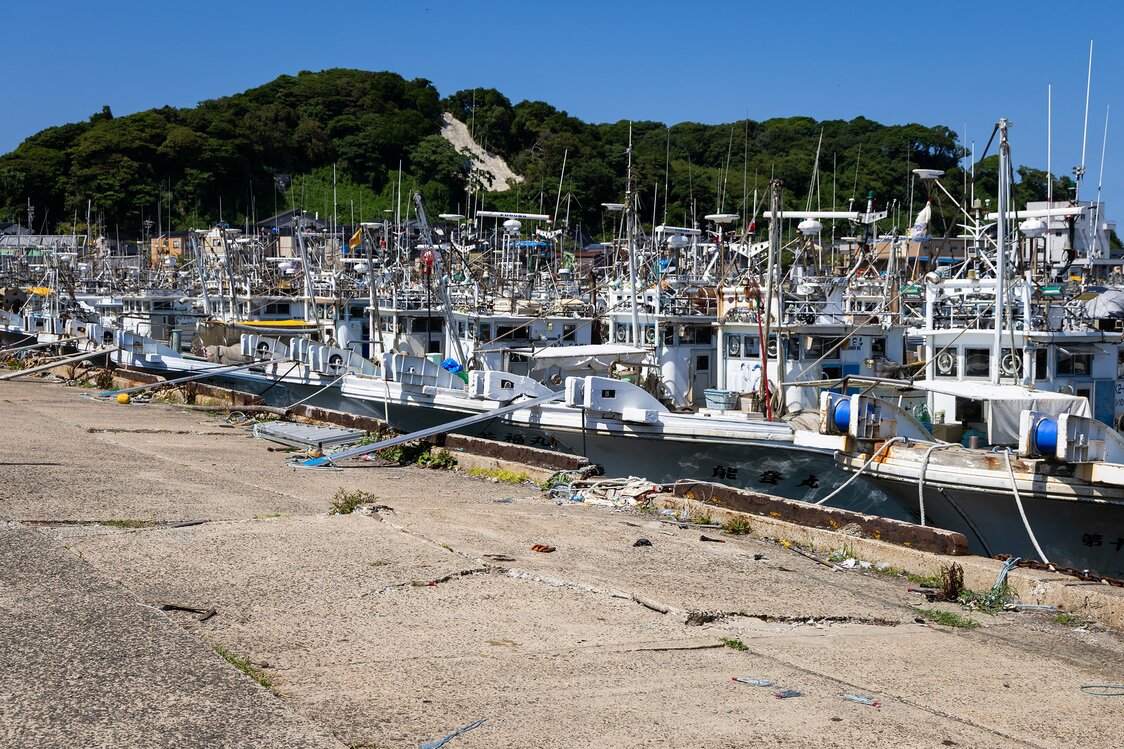
Behind the fisheries cooperative, boats are moored in layers like double-parked cars. (© Nippon.com)
-
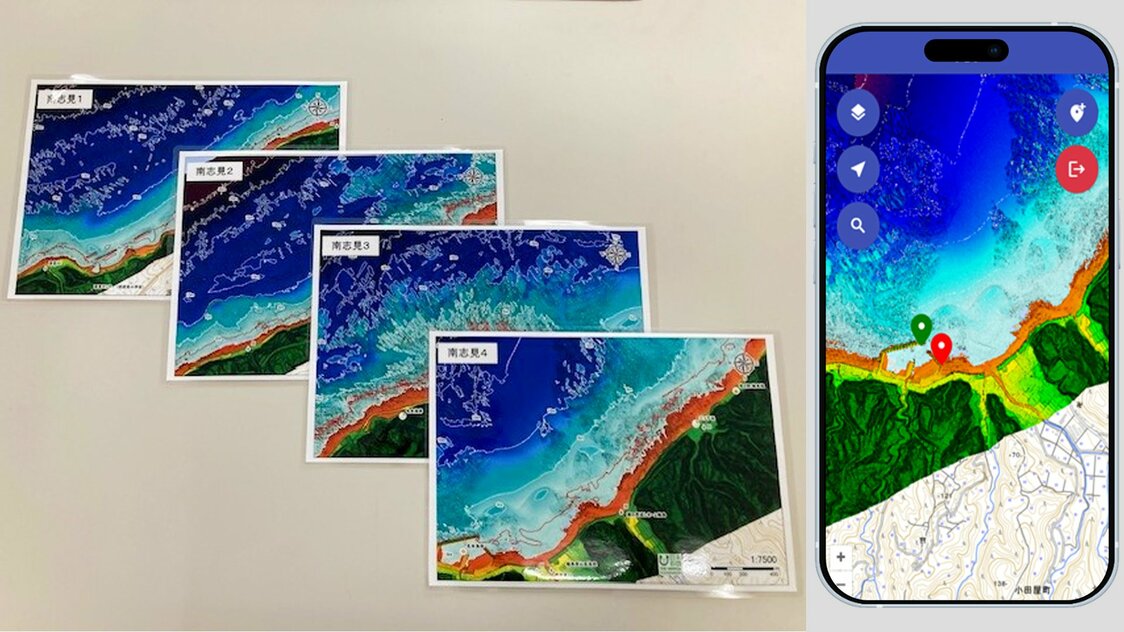
Waterproofed paper versions and the smartphone version of the map. (Courtesy the Japan Hydrographic Association)
-
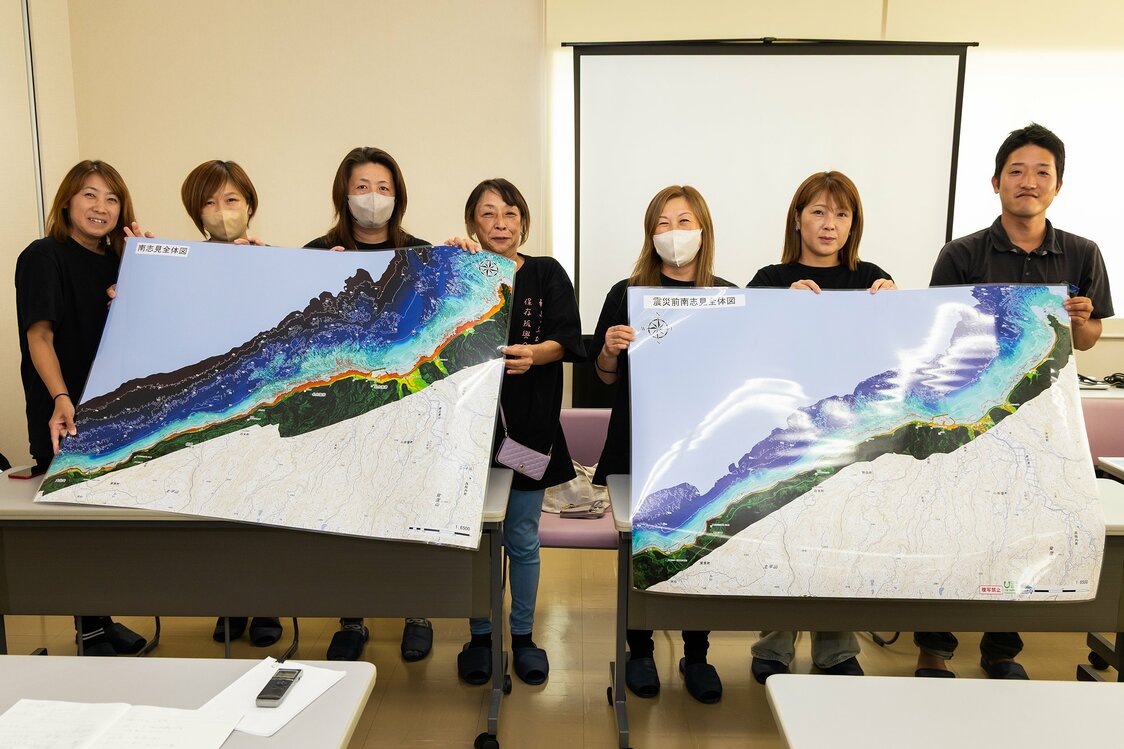
Members of the Wajima Ama Diving Preservation and Promotion Association with Ejiri Kazuki from the Najimi area at right. (© Nippon.com)
-
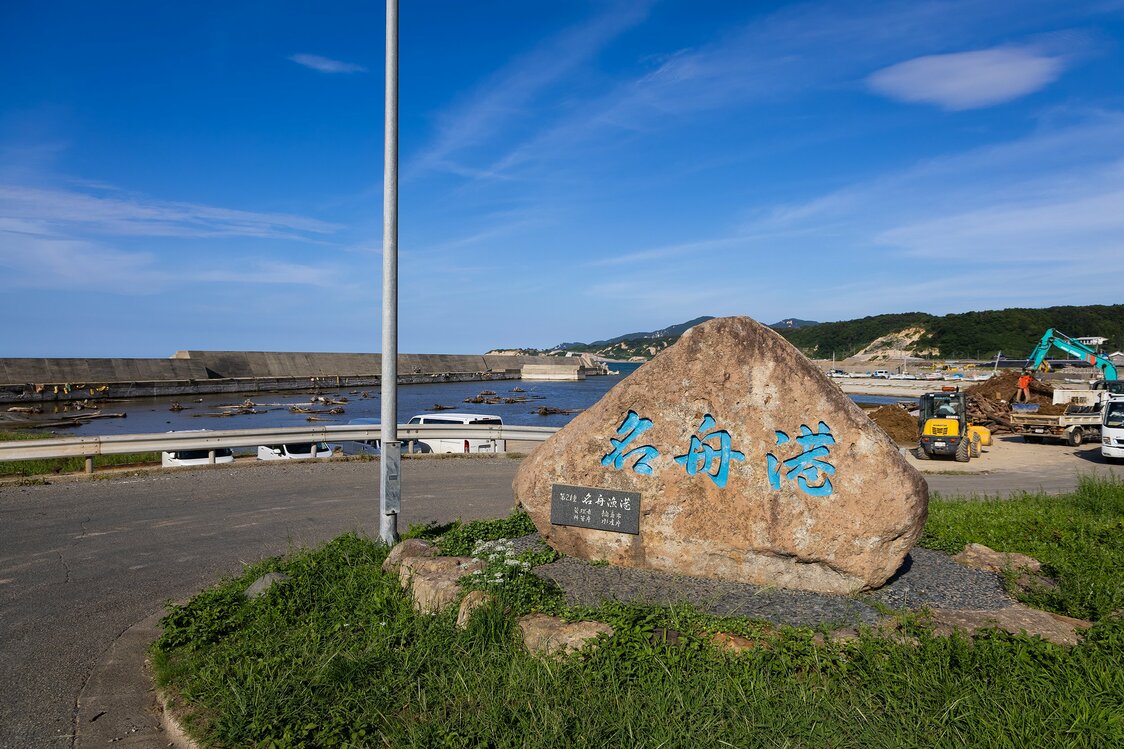
Nafune Port, where recovery work is still ongoing, is still littered with driftwood. (© Nippon.com)


 Read in other languages