-
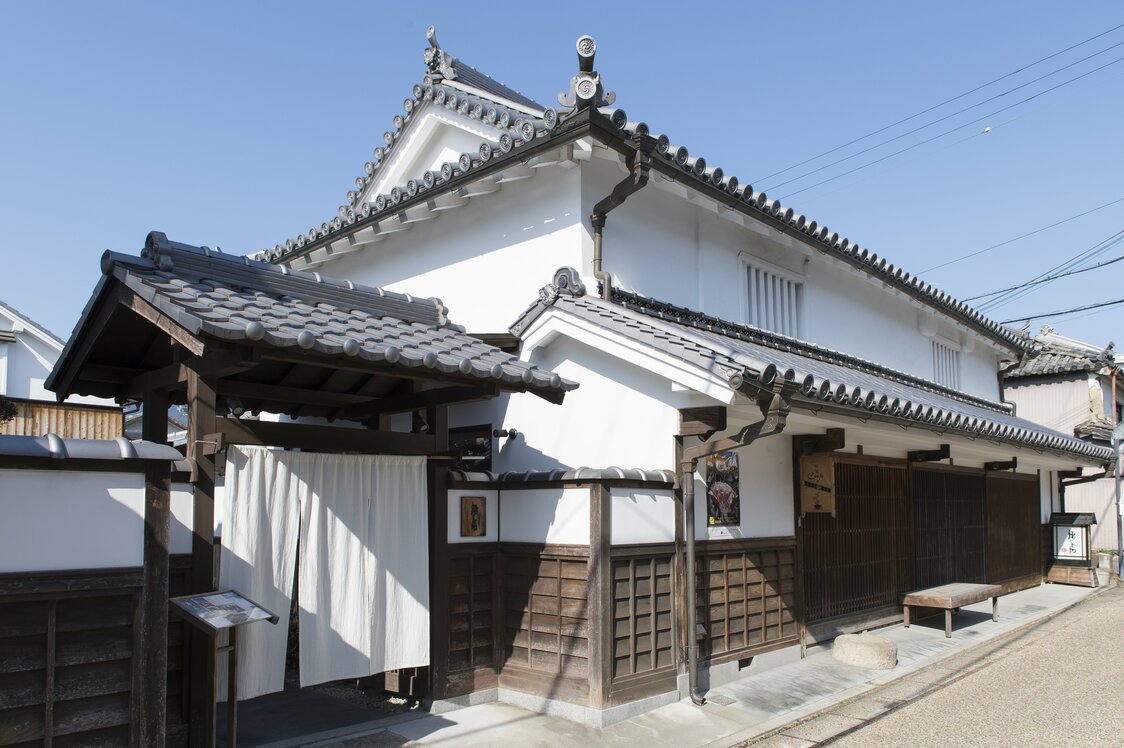
Gojō Genbei is housed in a beautifully restored 250-year-old machiya (traditional townhouse).
-
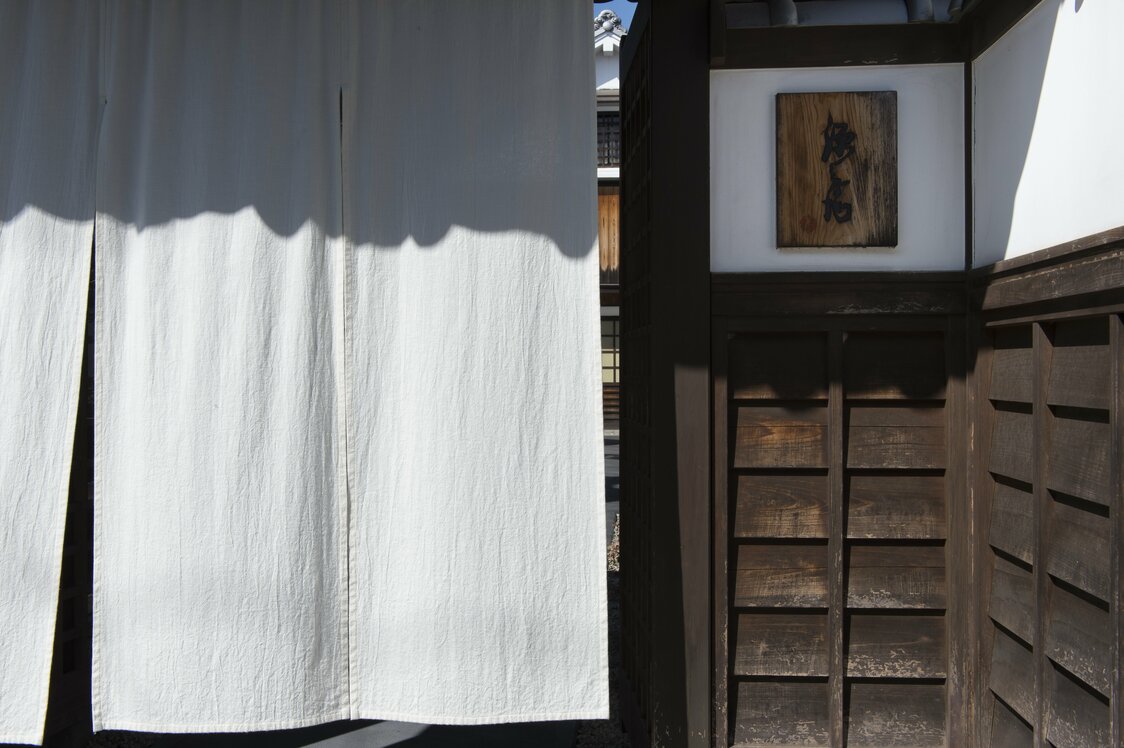
Sparkling white noren mark the entrance to Genbei. The restaurant’s logo at right is the signature of one of the town’s Edo-period headmen.
-
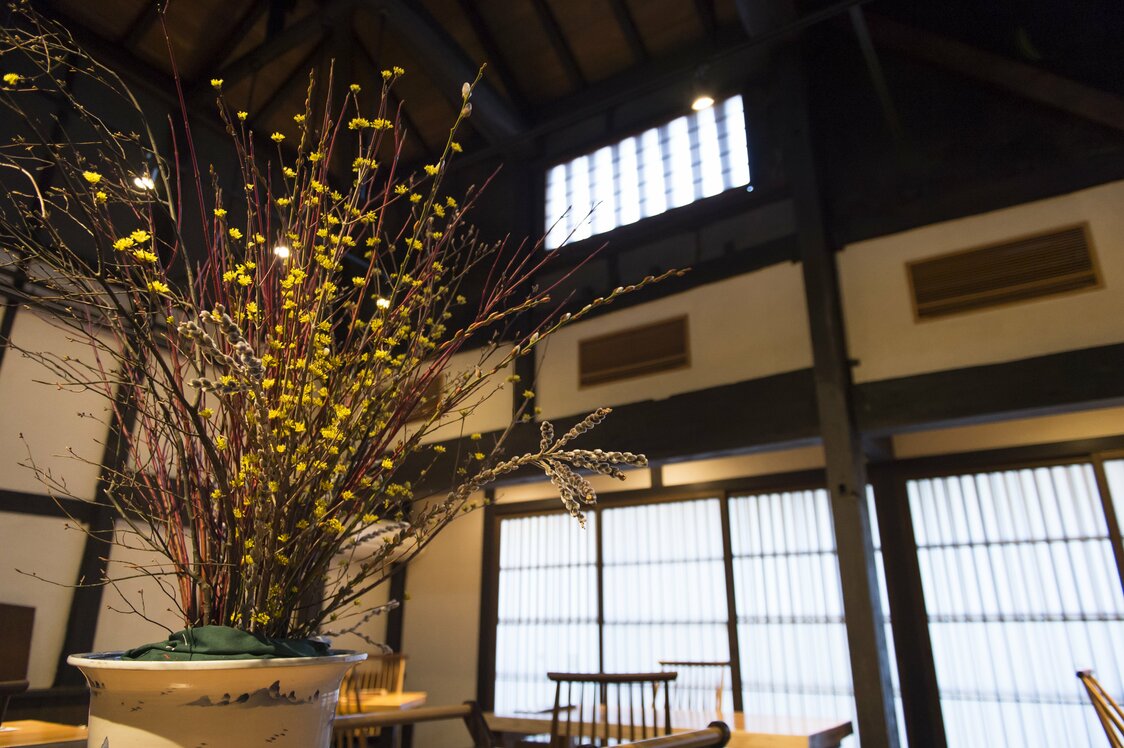
The dining room at Gojō Genbei.
-
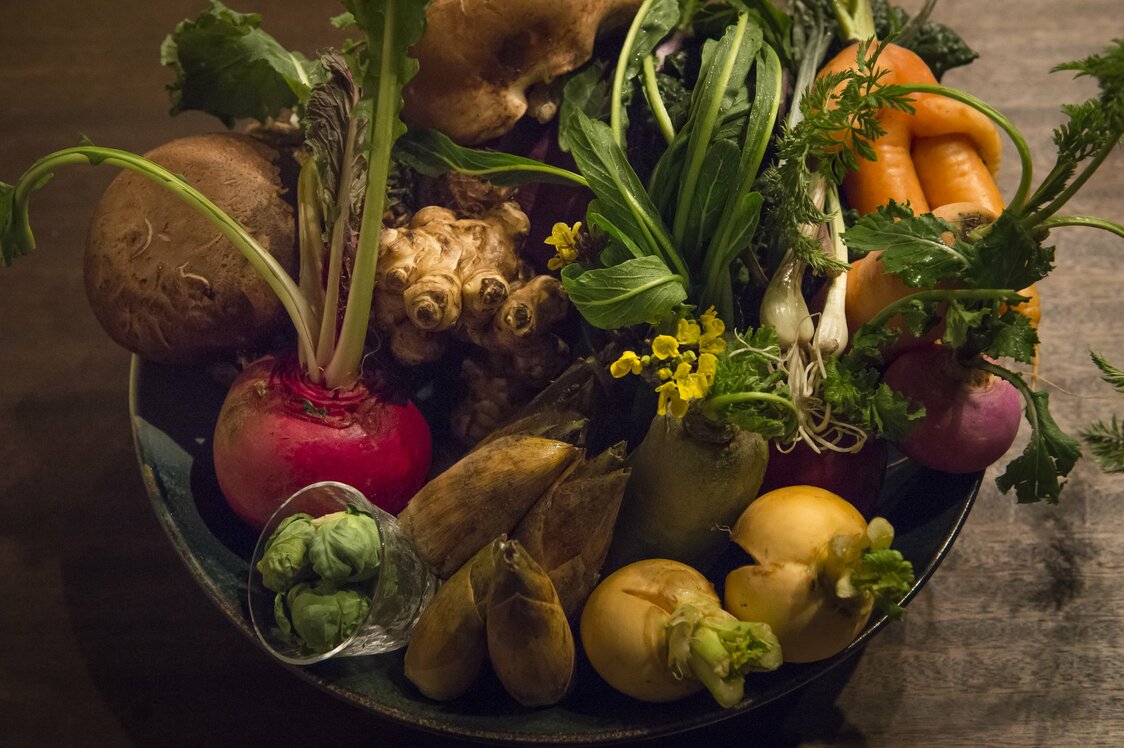
A cornucopia of fresh vegetables from nearby farms.
-
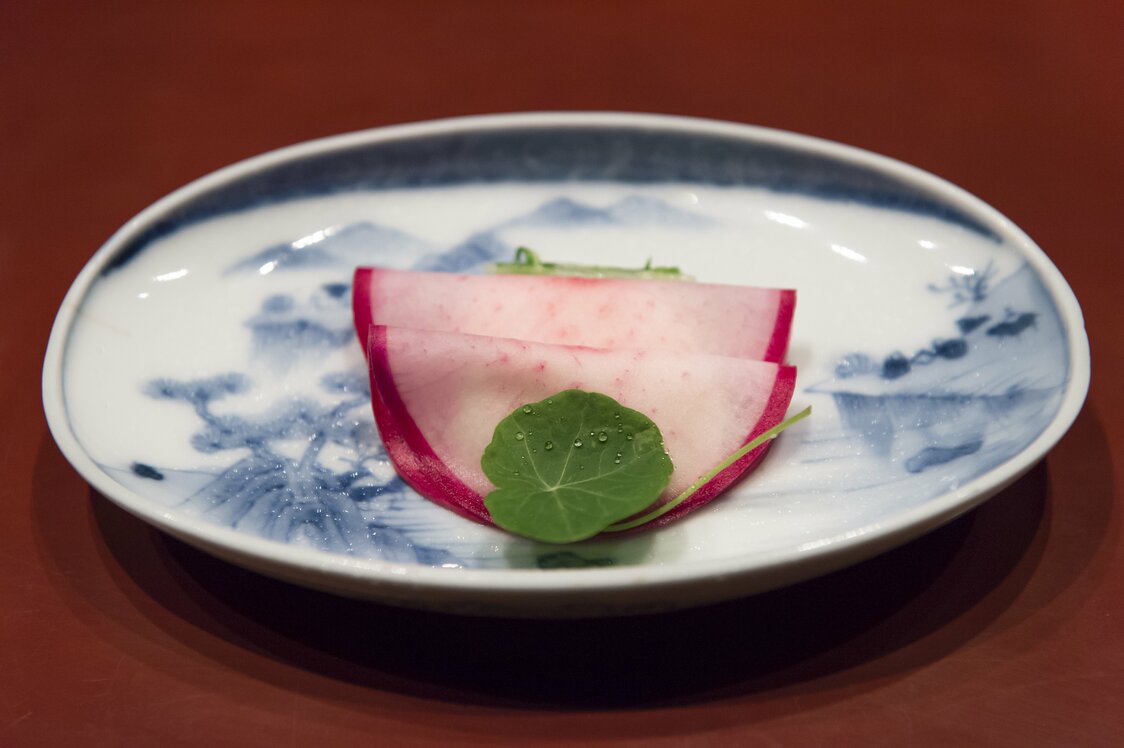
Thin slices of “Momonosuke” red turnip enfold a puree of yamato-imo yam in a visual play on hanabira-mochi, a traditional Japanese sweet.
-
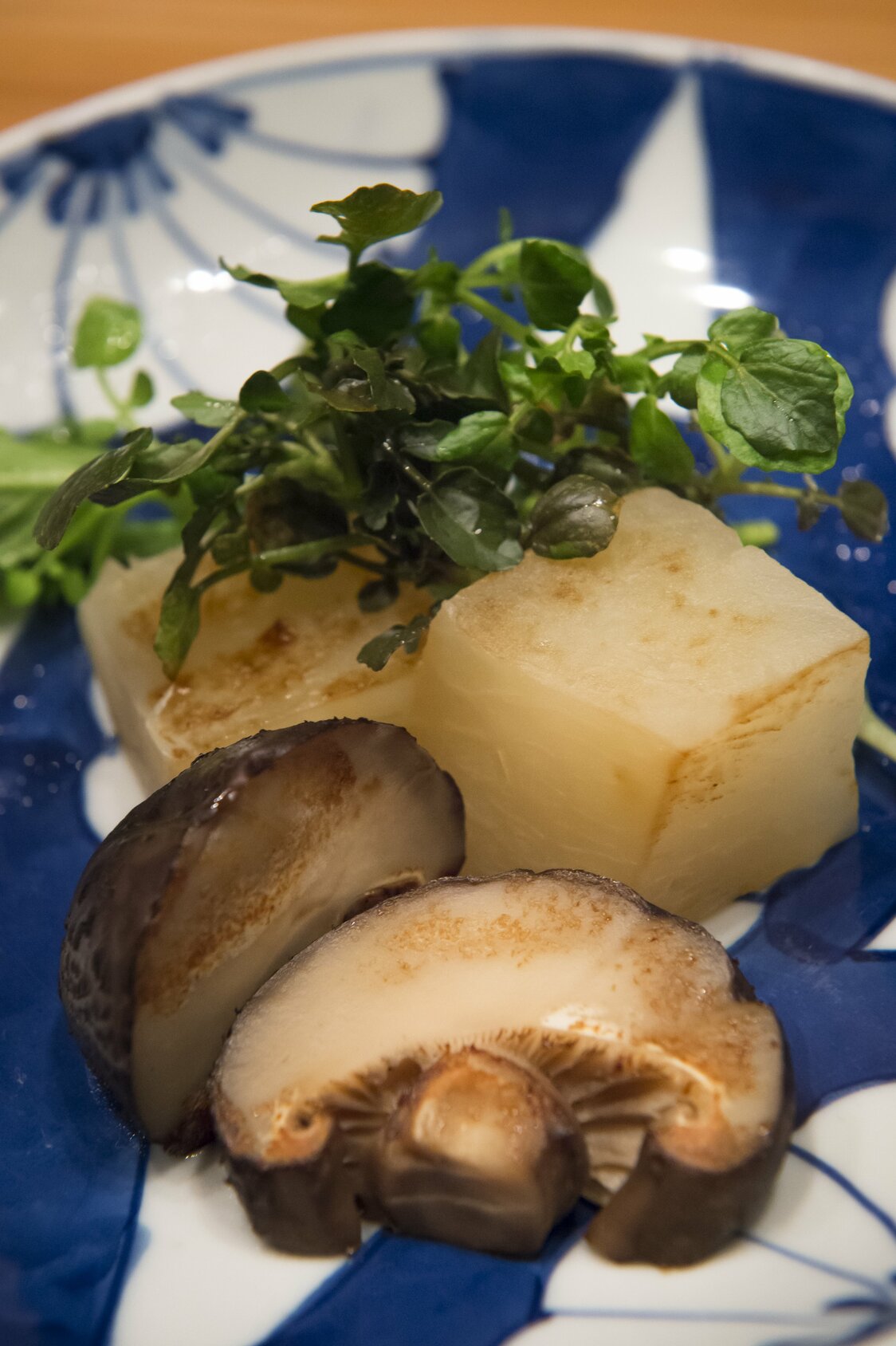
Field-grown daikon radish and baby daikon greens with extra thick shiitake mushrooms.
-
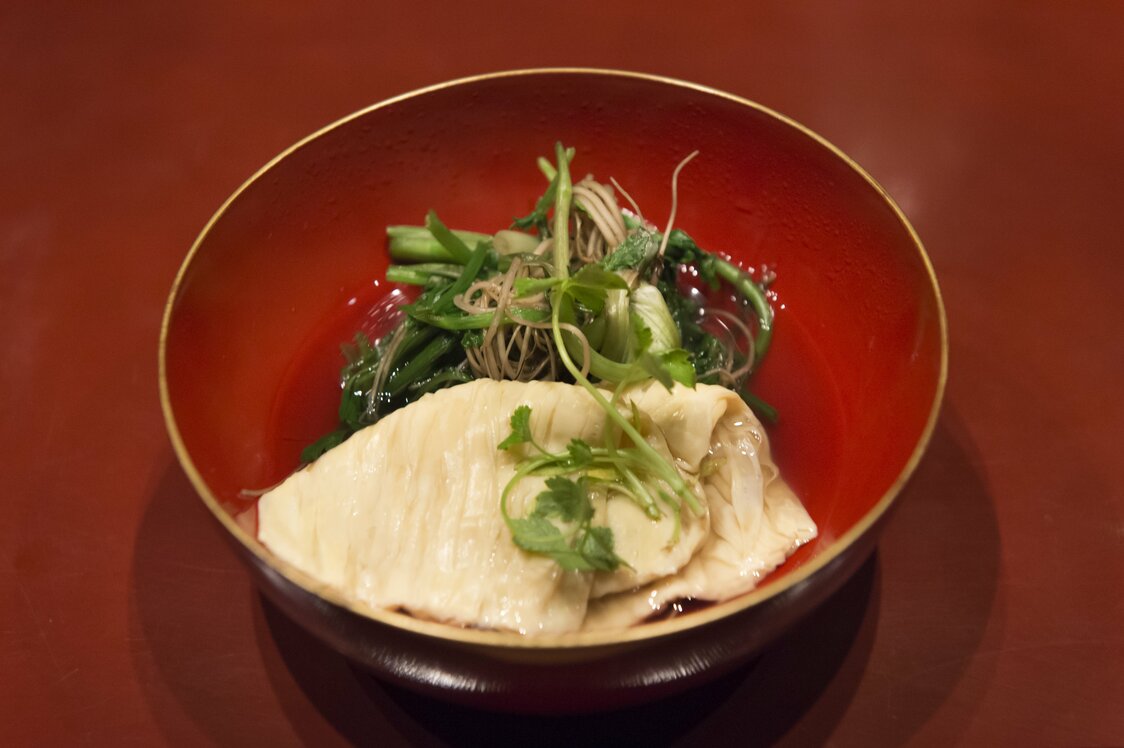
Hand-skimmed yuba (tofu skin) served with seri (water celery) with the roots attached, a delicacy.
-
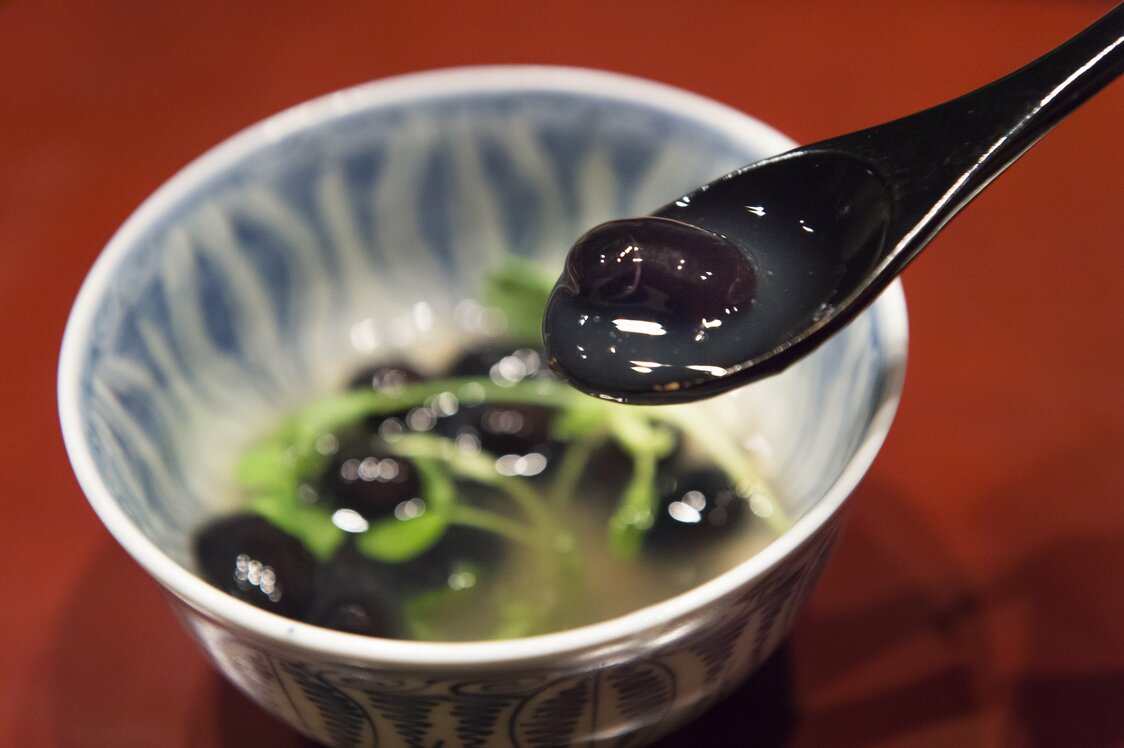
Braised black beans and pea tendrils in a sauce thickened with Yoshino arrowroot.
-
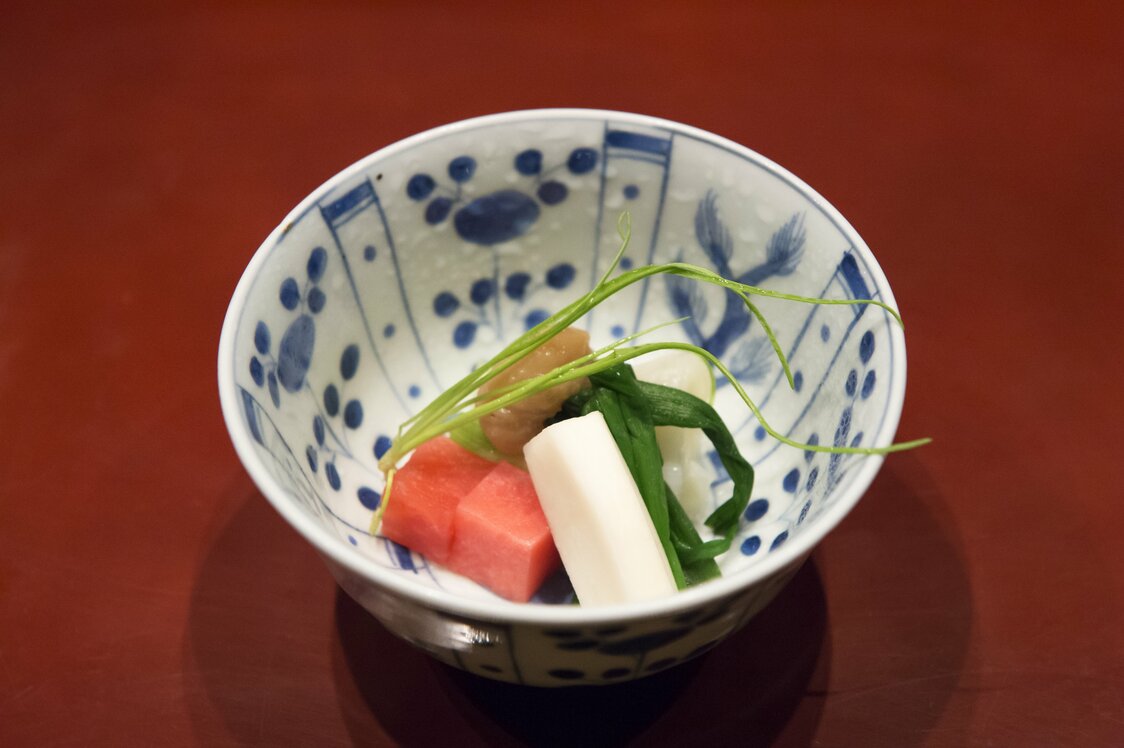
Simmered vegetables garnished with baby erba stella greens.
-
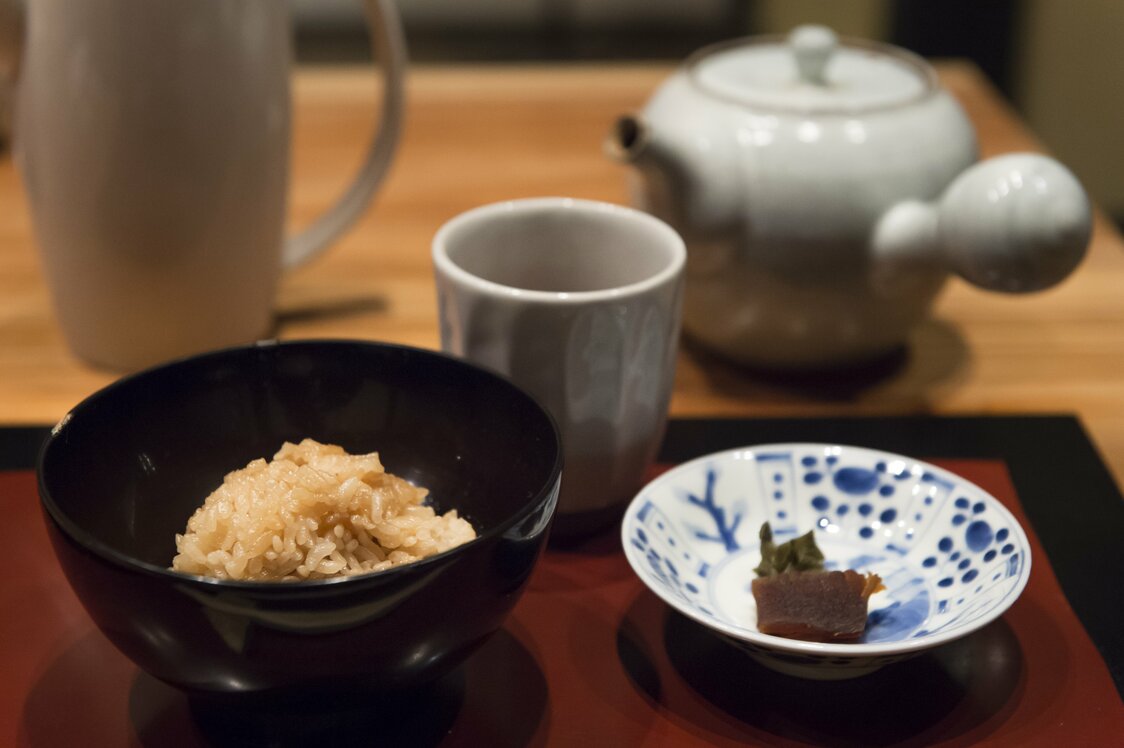
Meals are served in antique ceramics and lacquerware preserved in the storehouse of the historic building that houses the restaurant.
-

Gojō Shinmachi has been designated an Important Preservation District for Groups of Historic Buildings in Japan.
-

Mochishō Hitotsubashi is a favorite with photographers, not to mention fans of Japanese sweets.
-
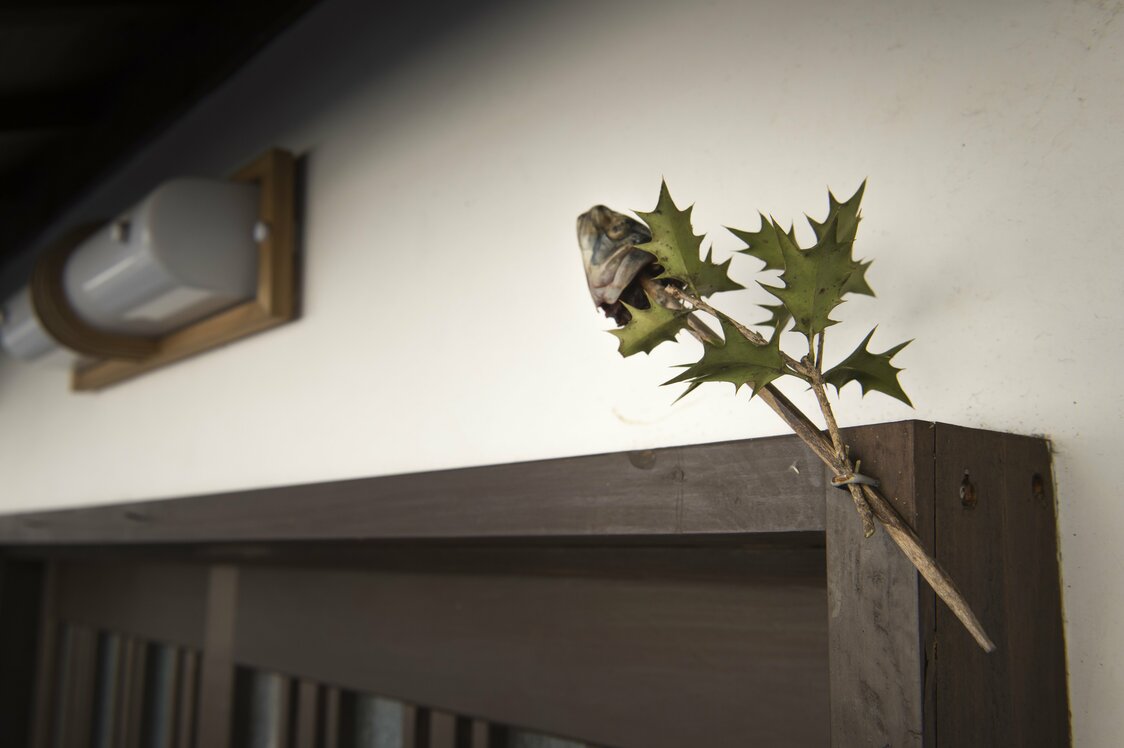
A hiiragi-iwashi ornament, made from holly and a sardine head, is placed above the entrance to homes to ward off evil spirits during the February Setsubun festival.
-
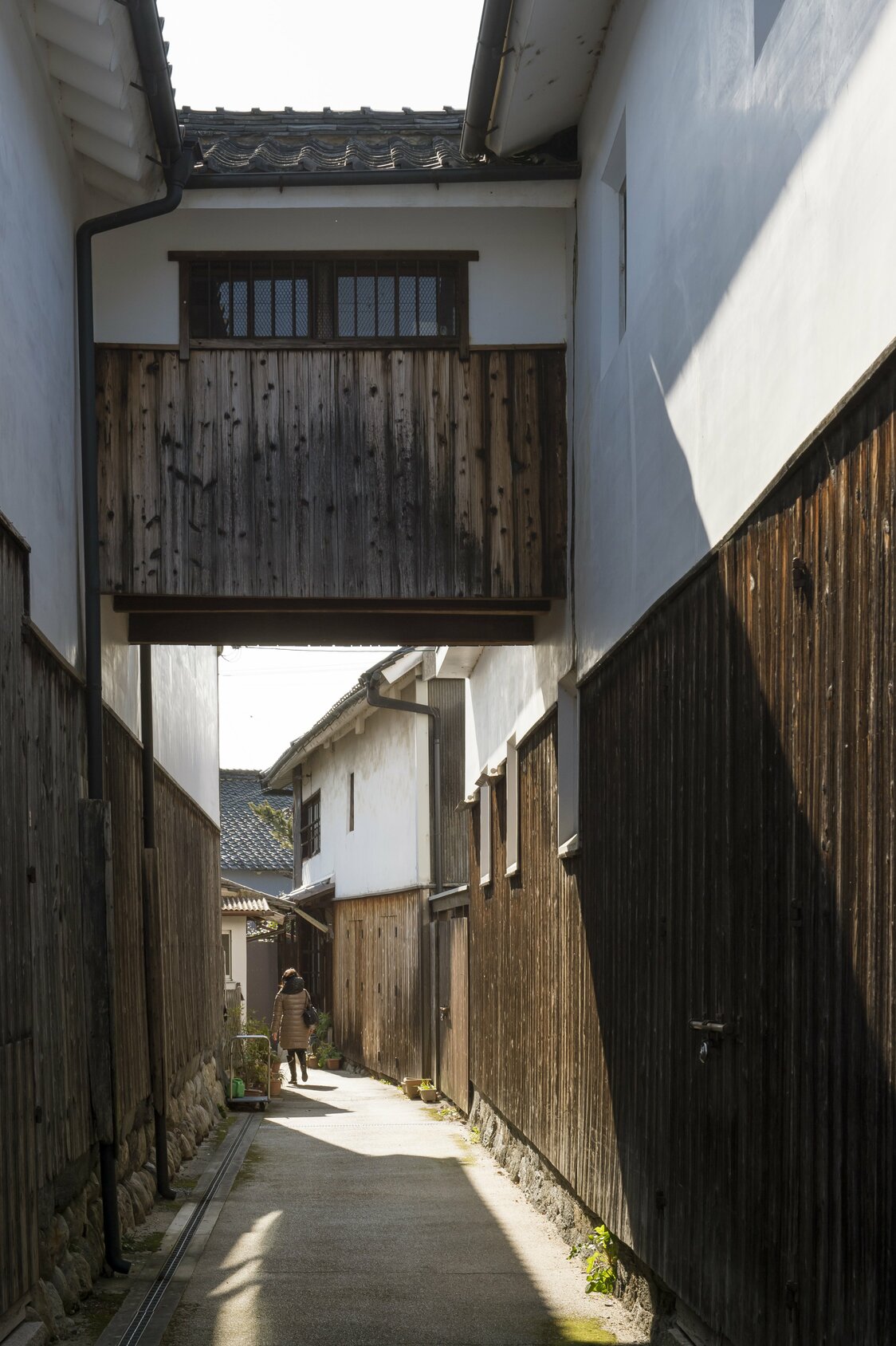
This narrow alley runs past an old brewery.
-

Night descends over the Yoshino River.


 Read in other languages