-
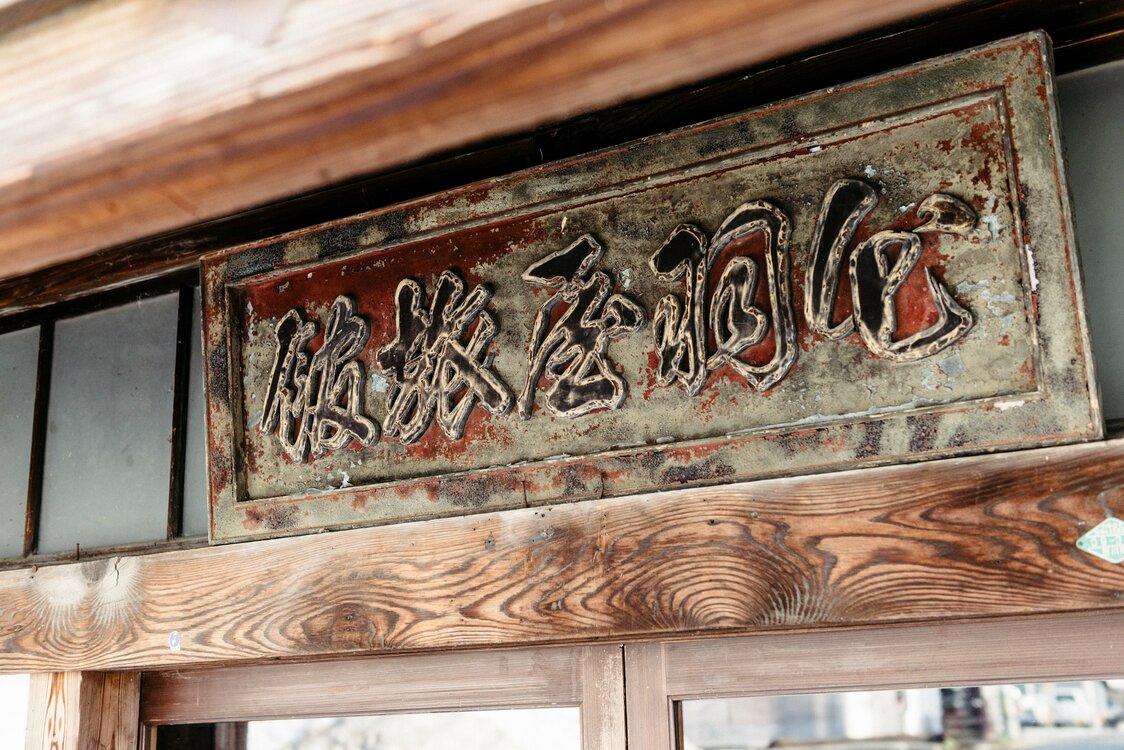
Dewaya has preserved the old wooden sign (Dewaya Ryokan) that beckoned pilgrims on their way to worship at the shrine near the summit of Mount Gassan.
-
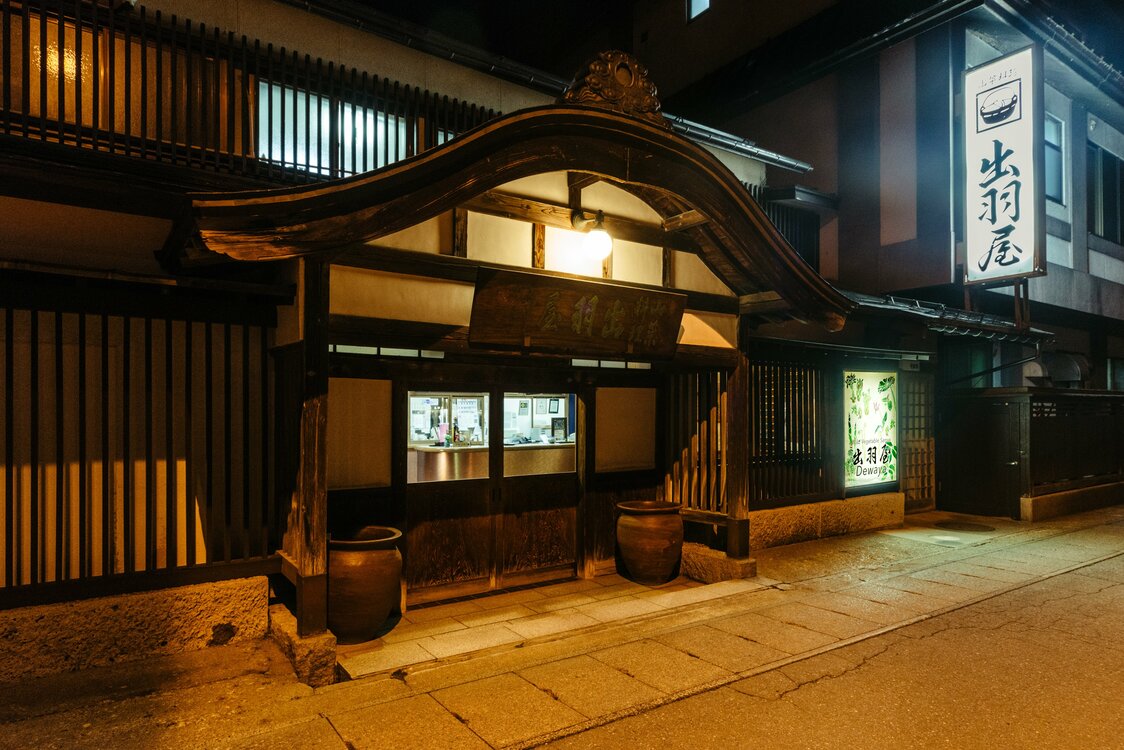
The inn’s front entrance remains much as it would have appeared to pilgrims eight or nine decades ago.
-
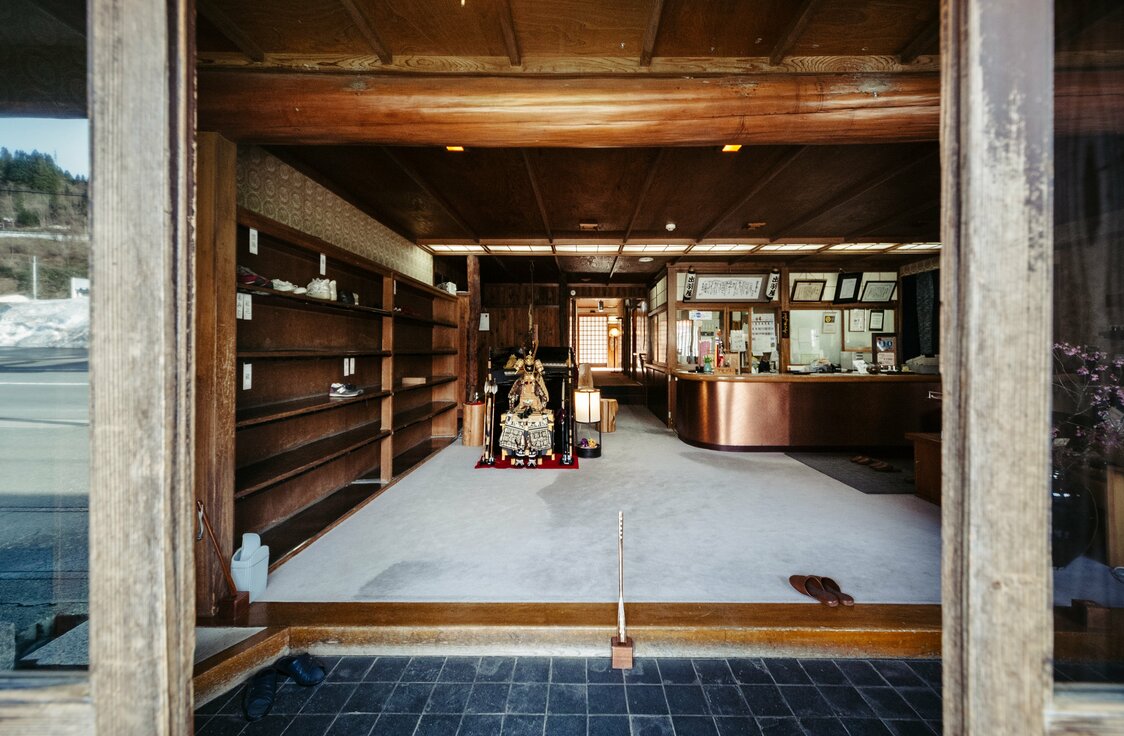
Dewaya’s welcoming genkan, just inside the front entrance.
-
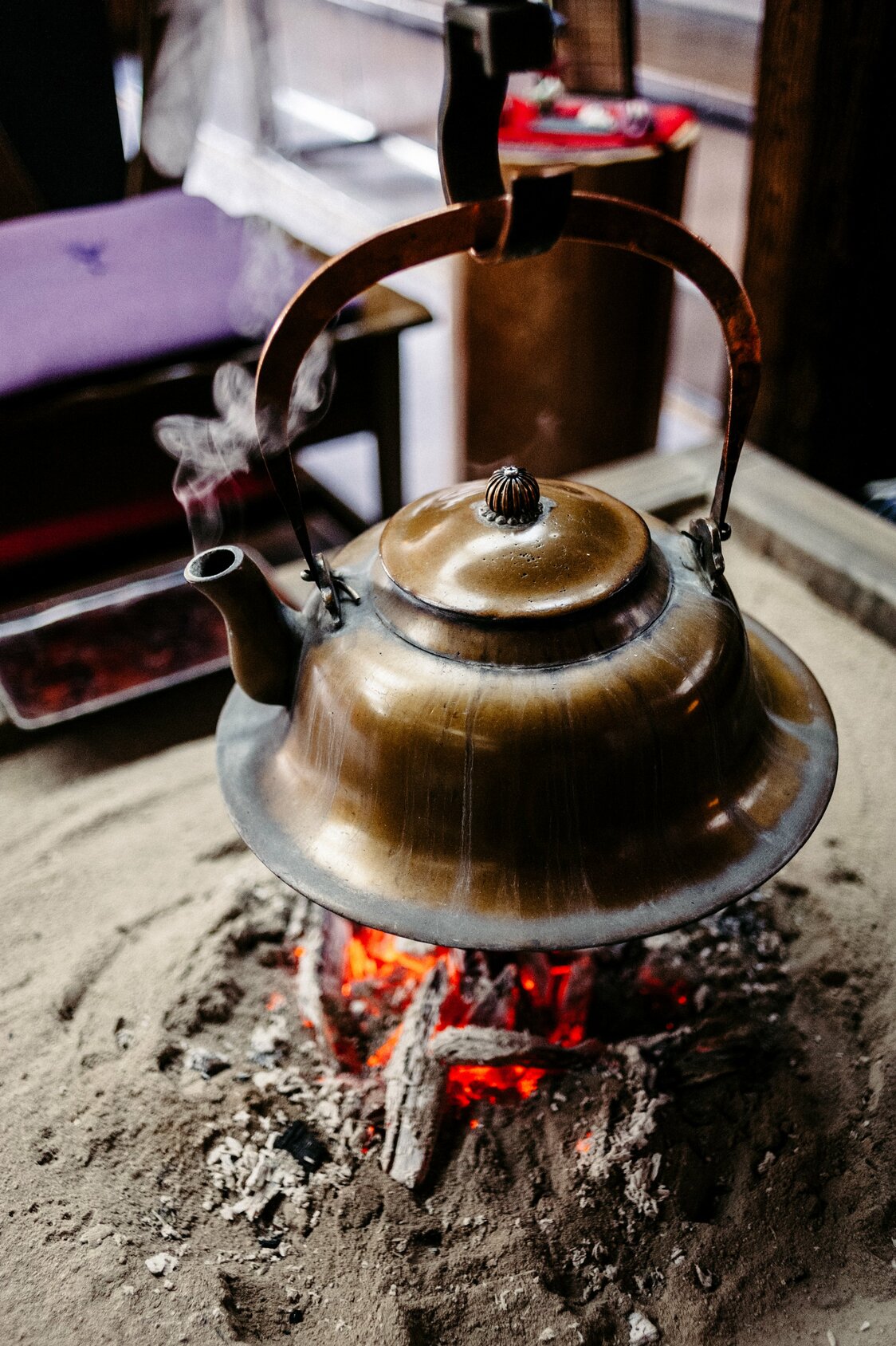
A vintage teapot bubbles over a sunken irori hearth.
-
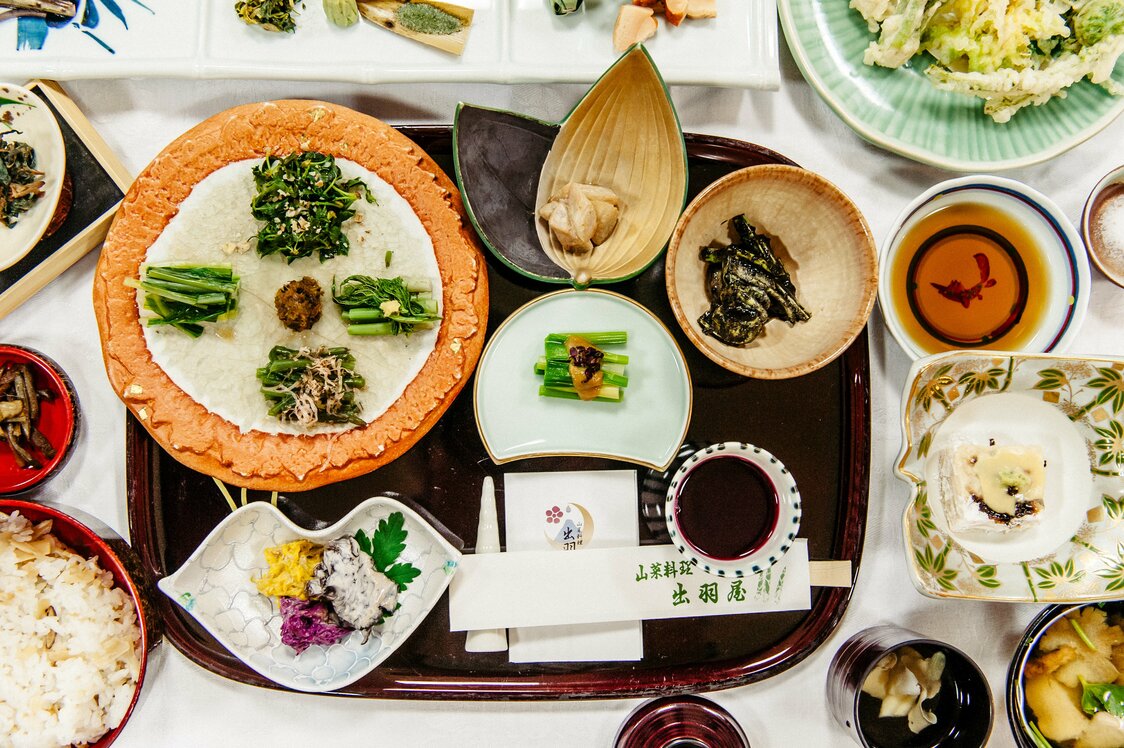
A typical meal at Dewaya features more than 20 varieties of wild vegetables and herbs in season.
-
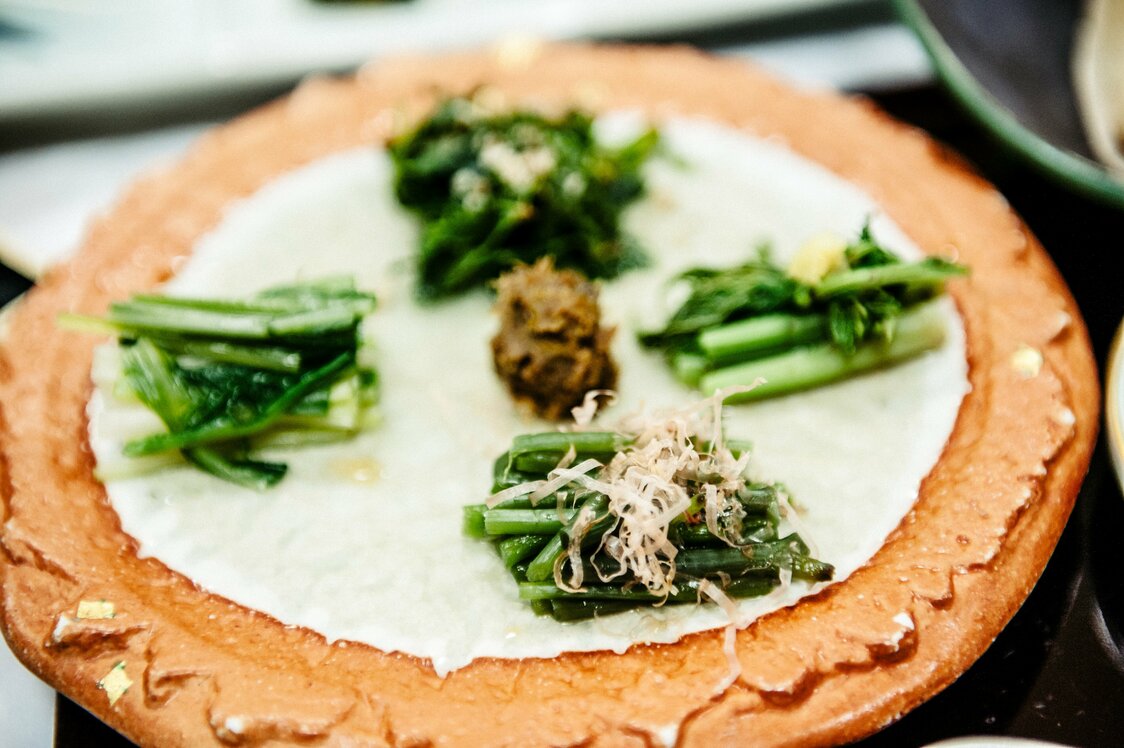
Four different wild greens (kinomoe, mizu, shidoke, and urui), each with its own garnish (walnuts, ginger, etc.), surround a mound of fuki-miso, a condiment made from fried fuki-no-tō (giant butterbur buds) mixed with seasoned miso and bonito flakes.
-
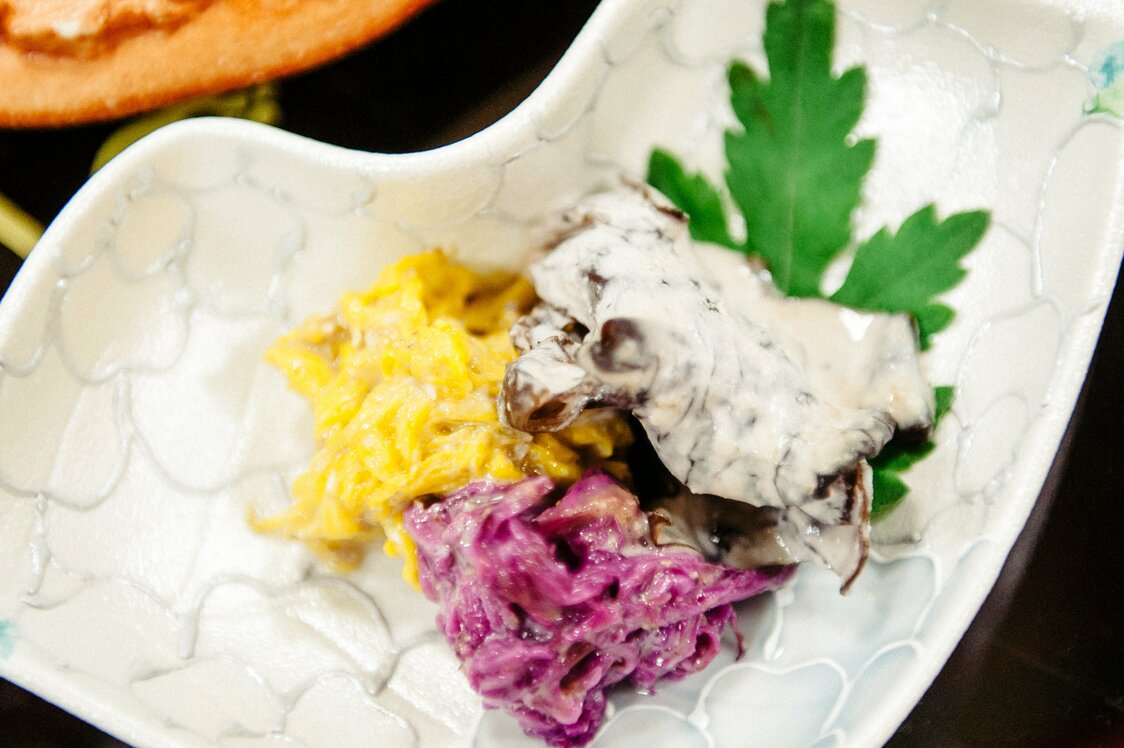
These edible chrysanthemum petals (among the few dishes prepared from cultivated plants) are an autumn delicacy.
-
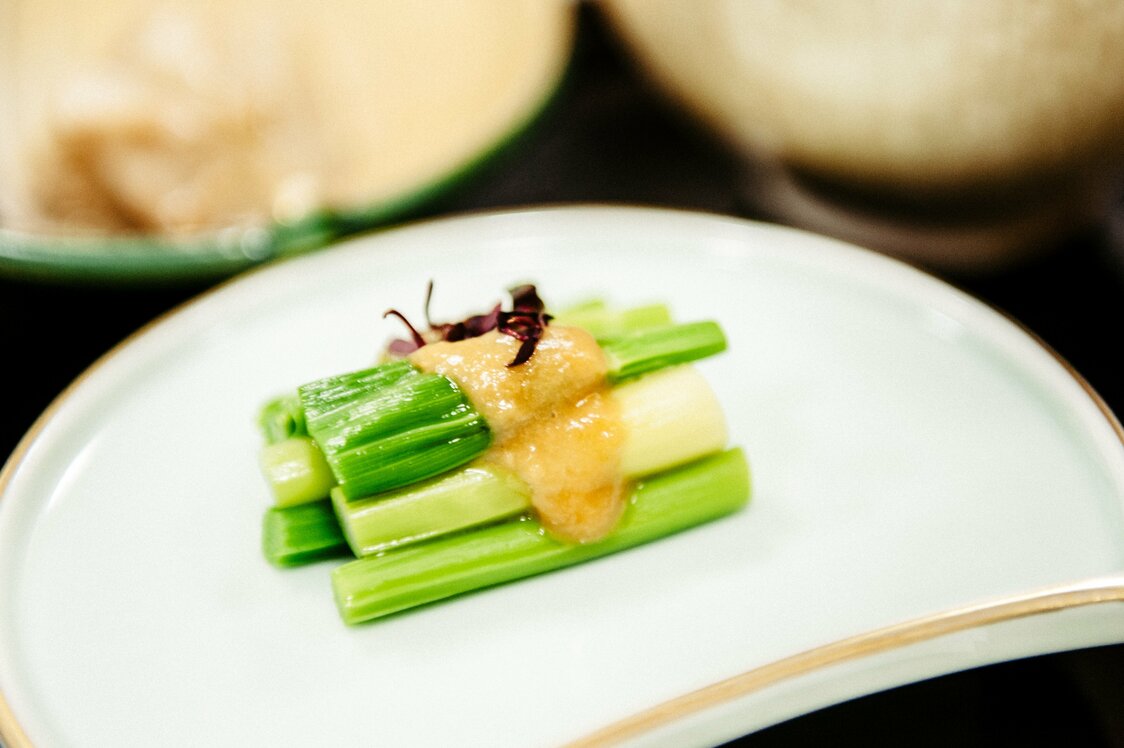
Amadokoro (fragrant Solomon’s seal) with sweet-and-sour miso dressing
-
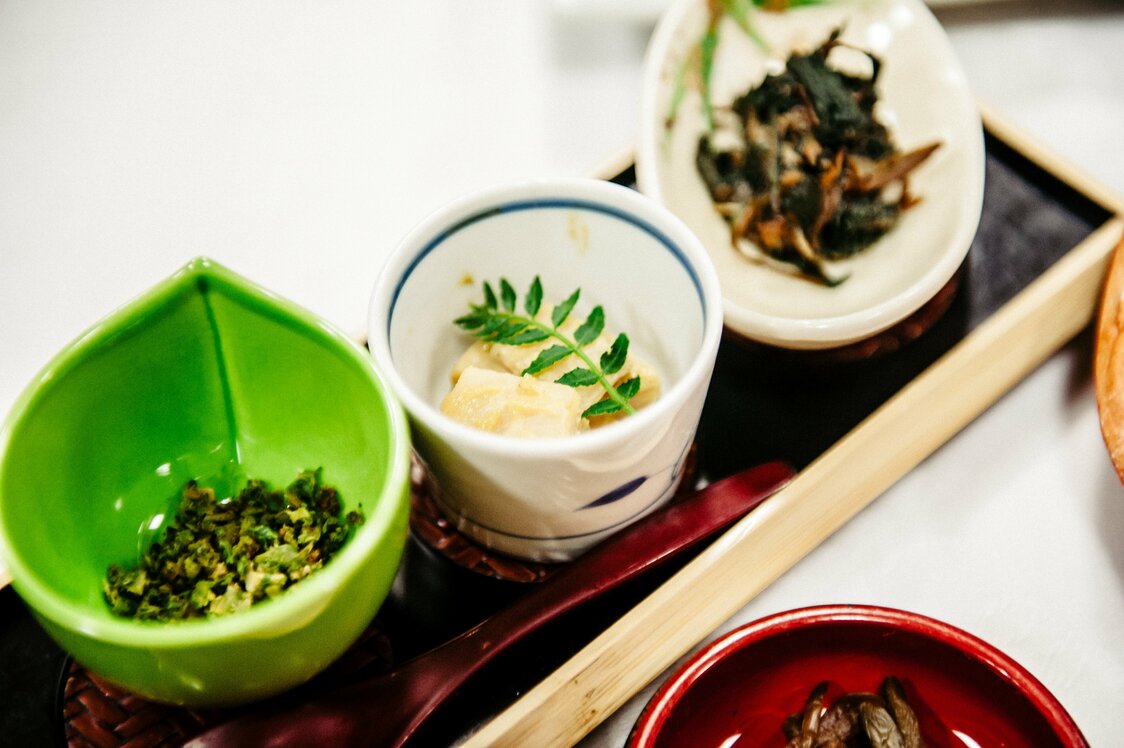
Three dainty dishes prepared from udo (mountain asparagus), bamboo shoot, and katakuri (Asian fawnlily)
-
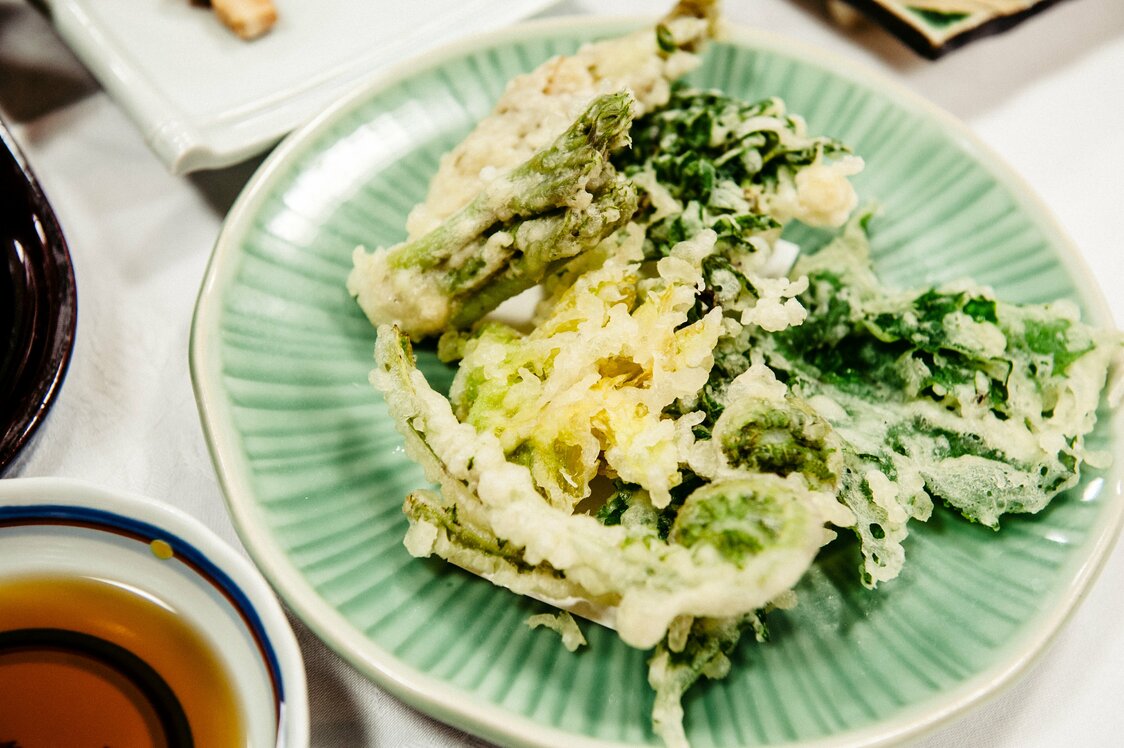
This tempura features five varieties of sansai, including fuki-no-tō (butterbur bud clusters), mountain asparagus, and ostrich fern fiddleheads.
-
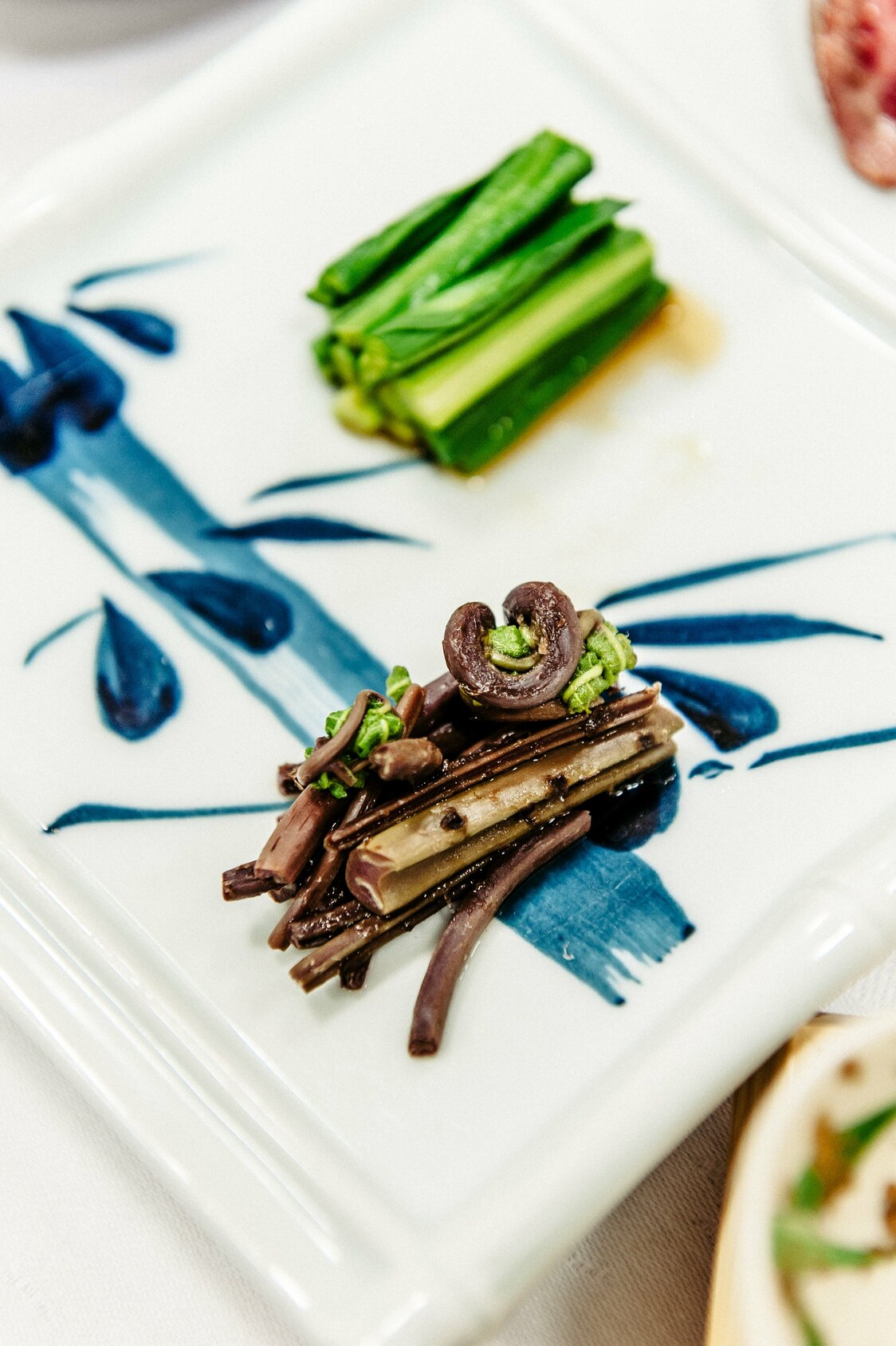
Alpine leeks (above) and red ostrich fern fiddleheads.
-
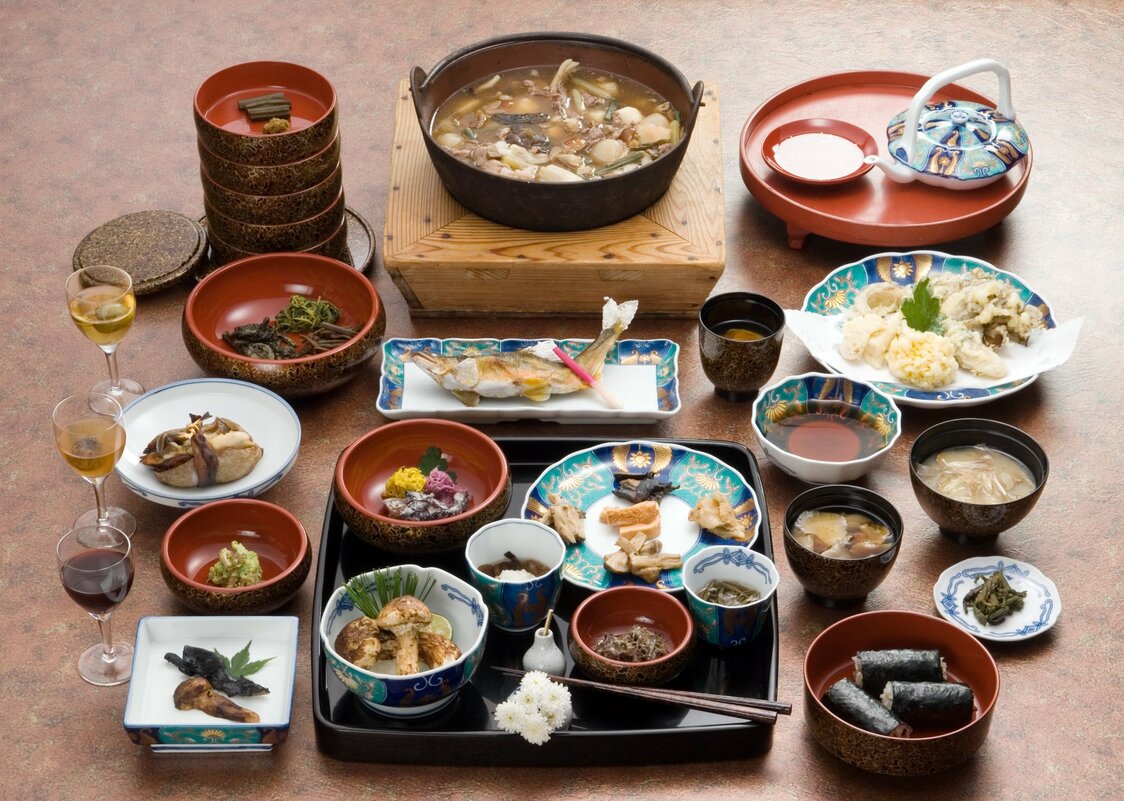
Furumai meals are served on brightly colored, intricately patterned ceramic dishes known as Imari-mono. (© Dewaya)
-
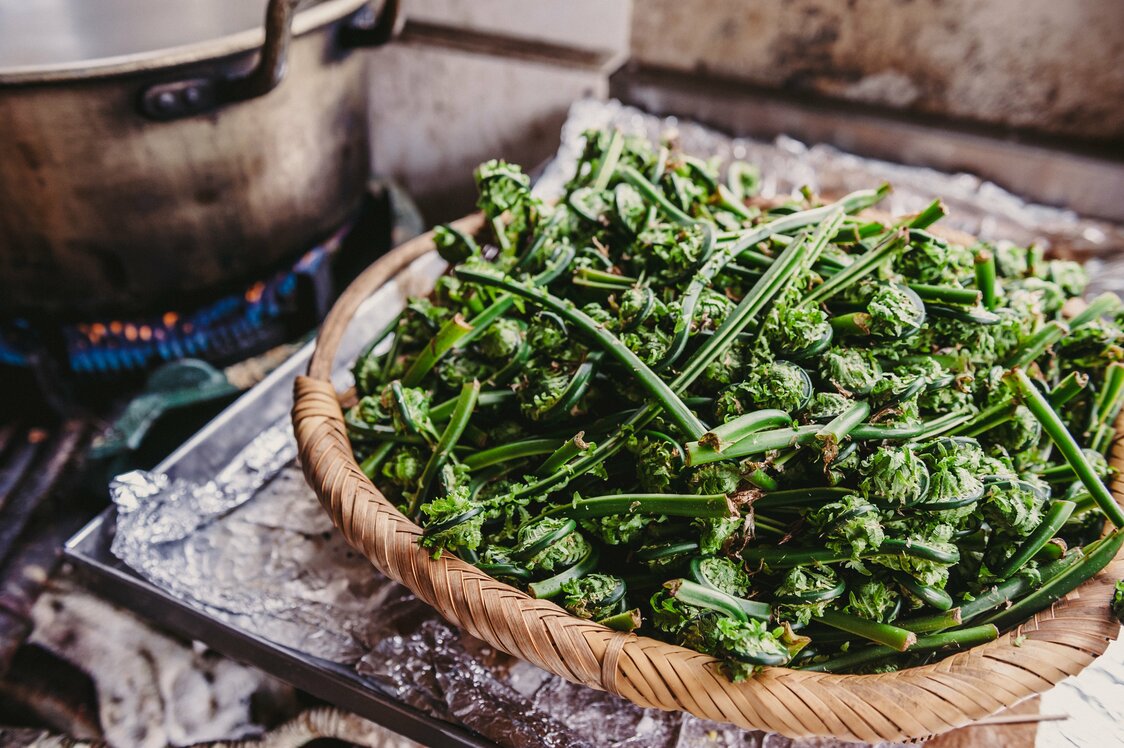
Bright green ostrich fern fiddleheads are among the fresh-picked wild vegetables delivered daily to Dewaya by trusted foragers.
-
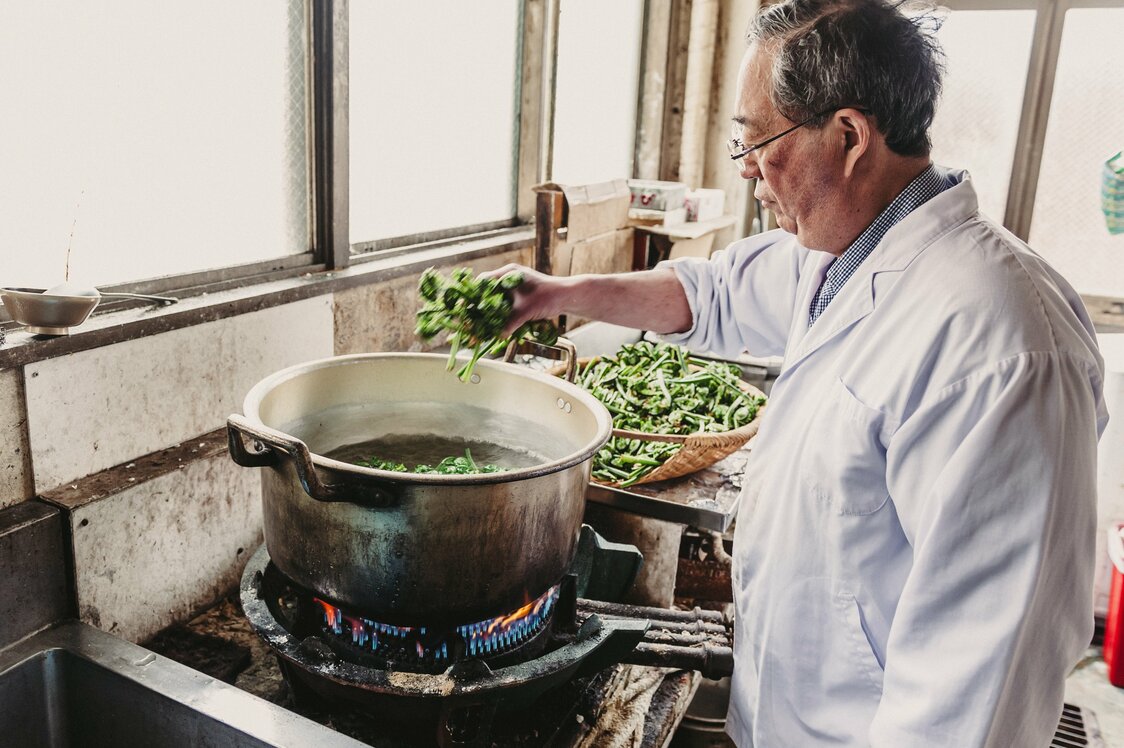
Satō Haruhiko, third-generation proprietor of Dewaya, immerses the fiddleheads in lightly salted boiling water.
-
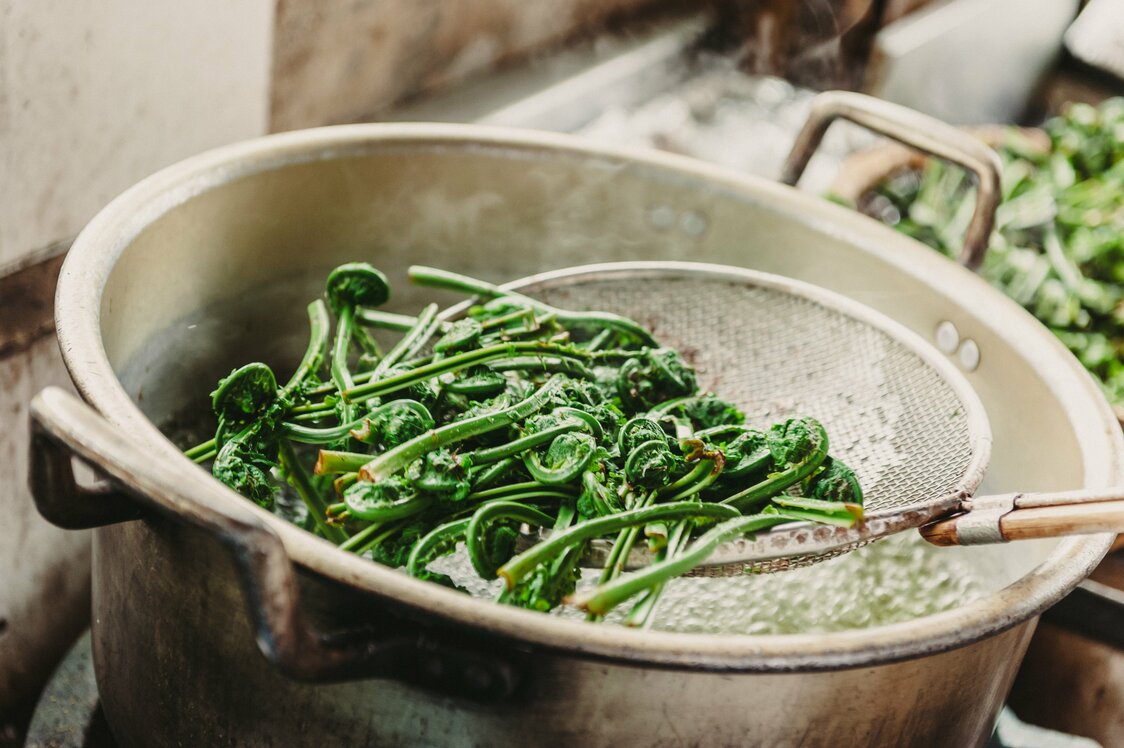
The ferns must not be overcooked, or they will lose their crisp texture.
-
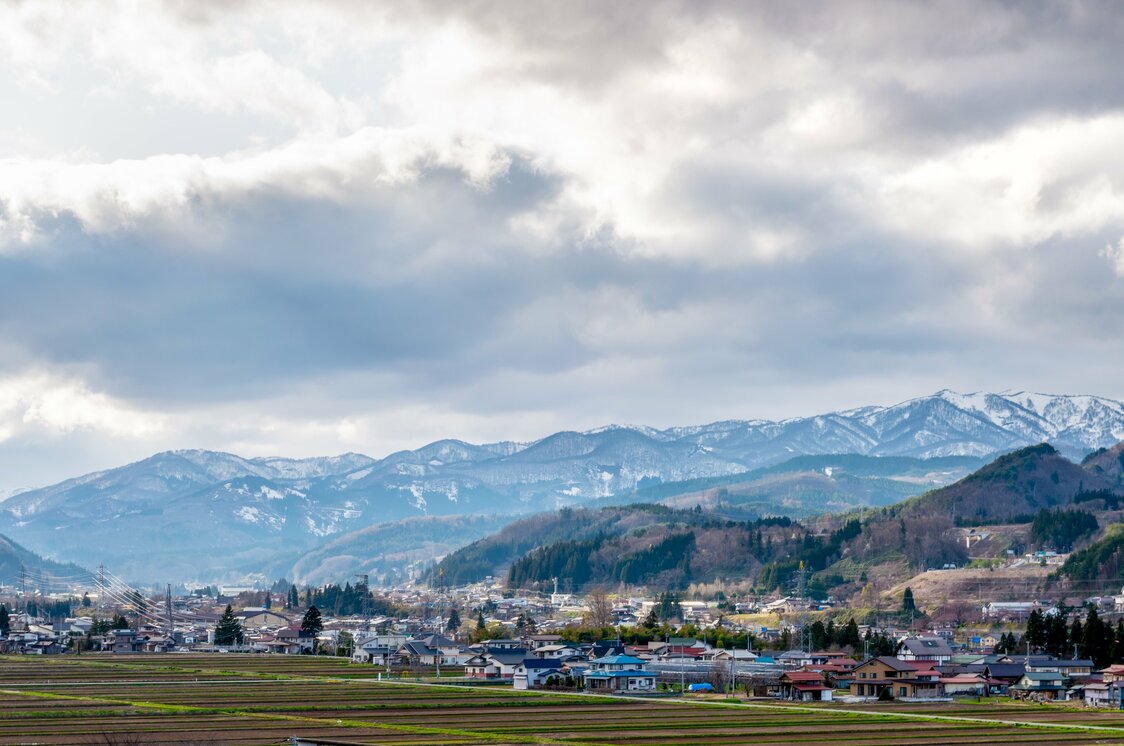
A view of the Dewa Sanzan district from the Yamagata Basin, where farming contributes to the local diet.


 Read in other languages