-
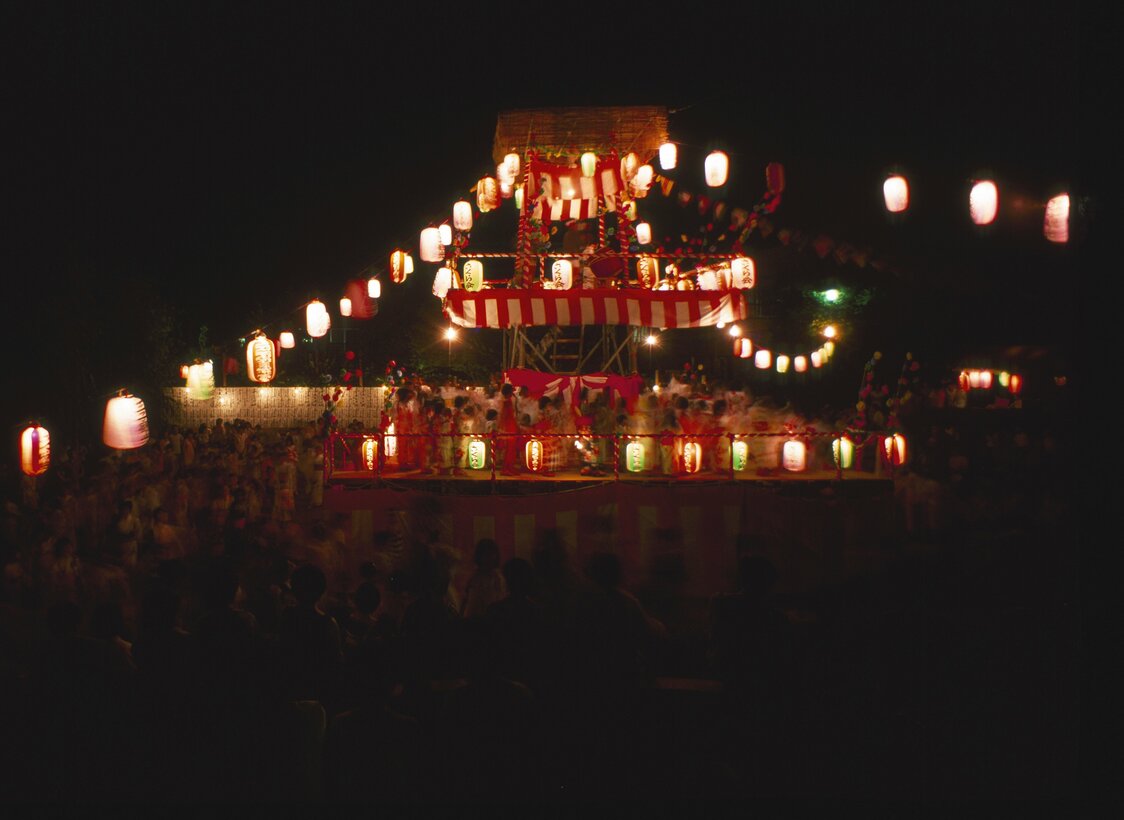
The bon odori is a popular community event. (© Haga Library)
-
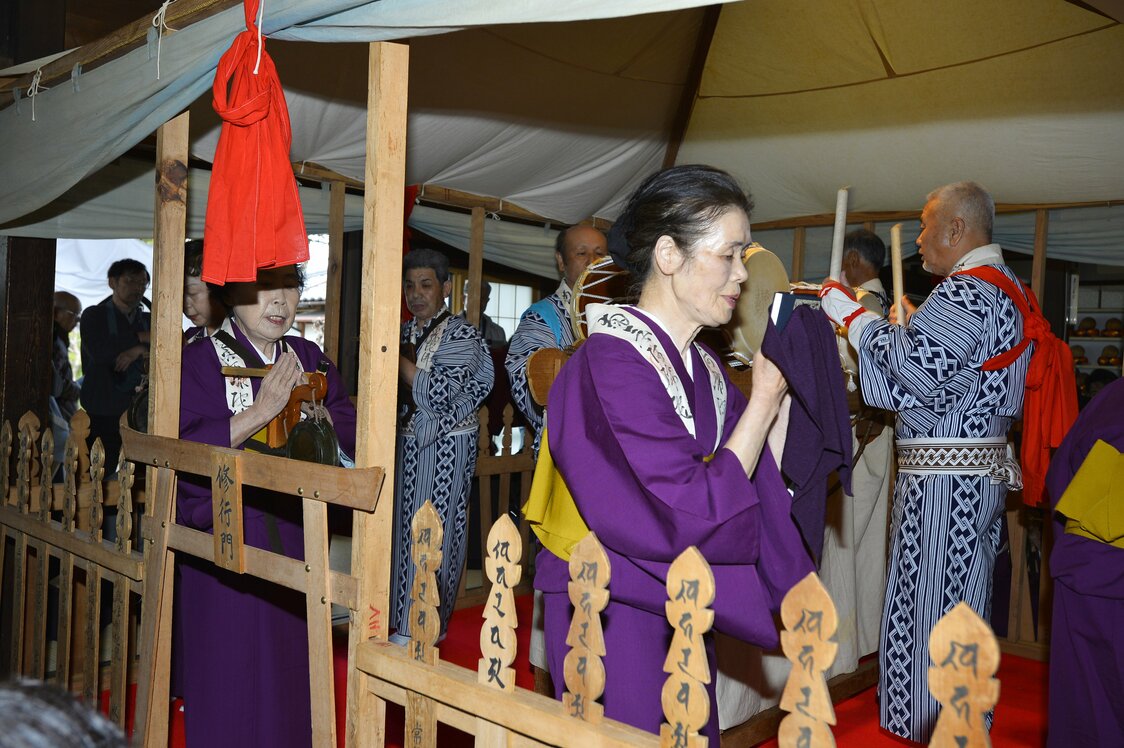
Saku, Nagano Prefecture, where odori nenbutsu originated, gave rise to a preserved form of the dance, Atobe no odori nenbutsu, which takes place on the first Sunday of April at the temple Saihōji. (© Haga Library)
-
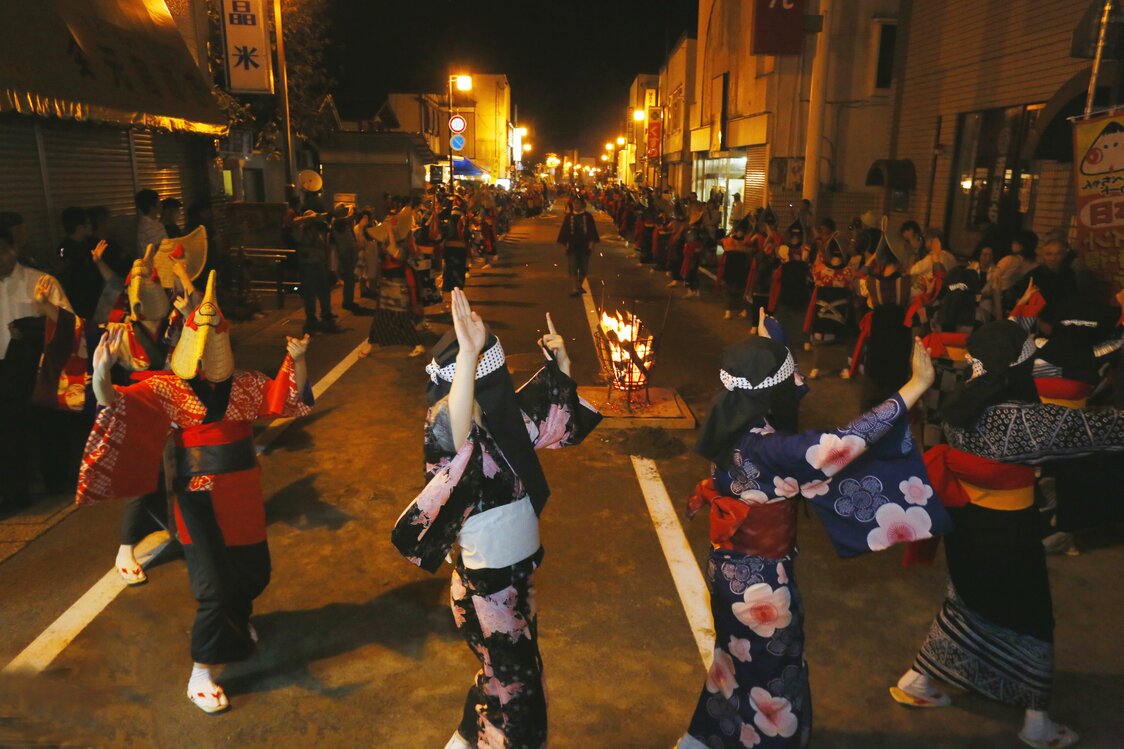
Although their faces are not visible, these dancers’ outstretched arms hint at the traditional beauty of Akita’s women. (© Haga Library)
-
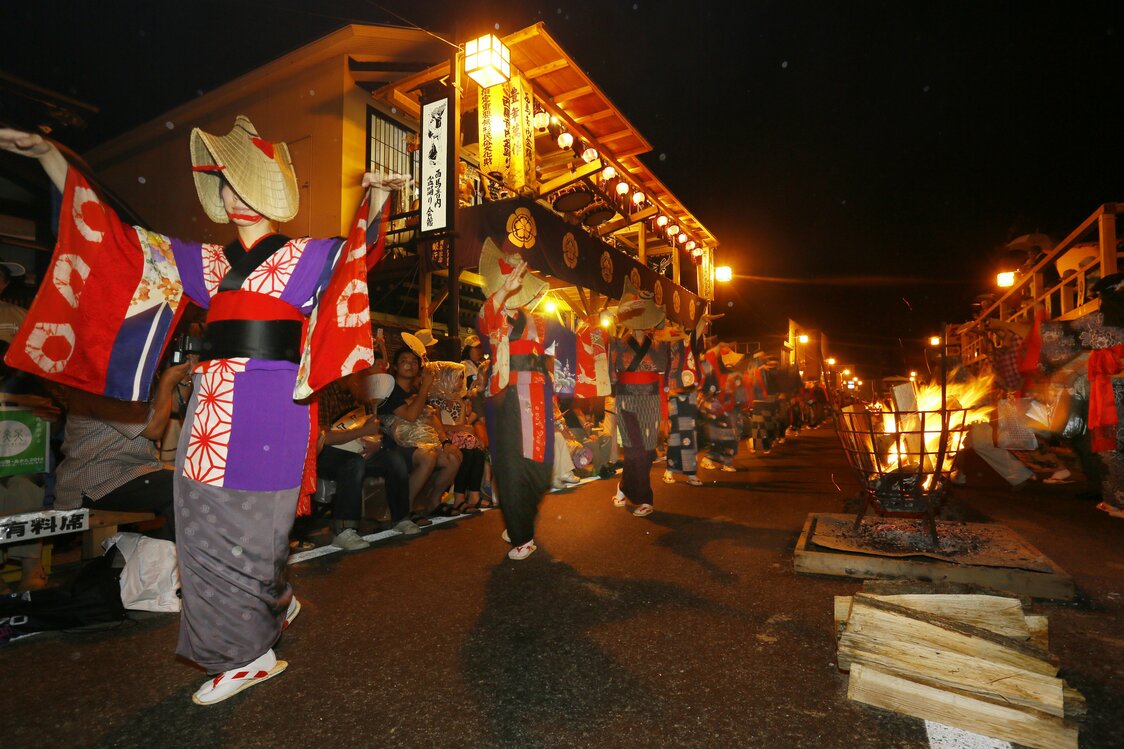
Women wear kimono made of remnants from the garments their mothers wore. The kimono are passed on in turn to granddaughters. (© Haga Library)
-
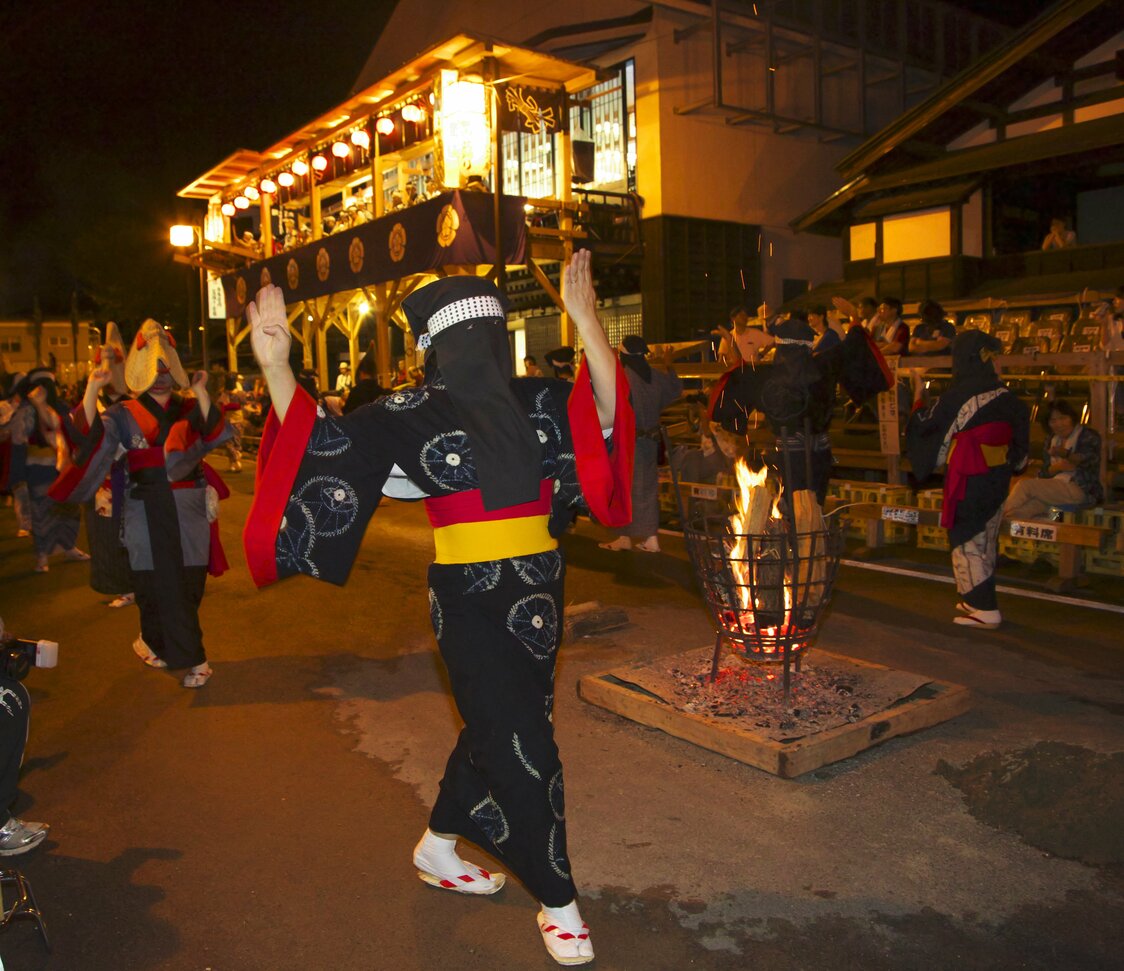
These women, wearing black hoods and indigo-dyed yukata, project a mystical appearance as they dance to memorialize the dead. (© Haga Library)
-
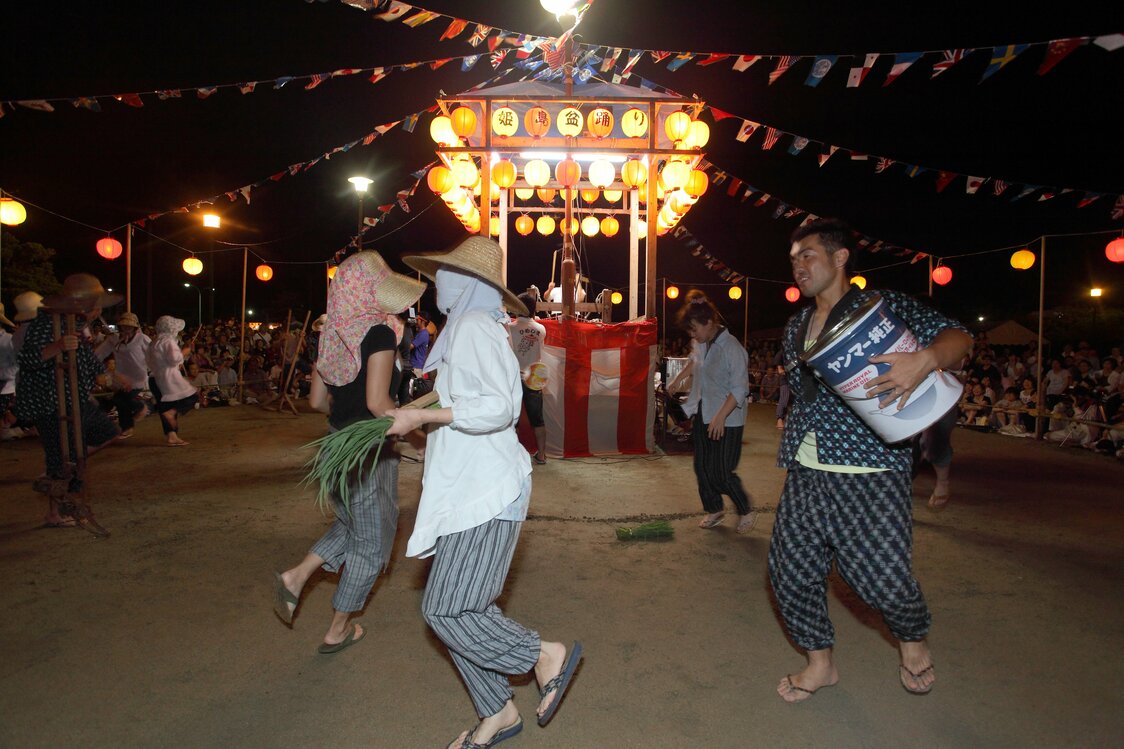
New, original dances are created every year. (© Haga Library)
-
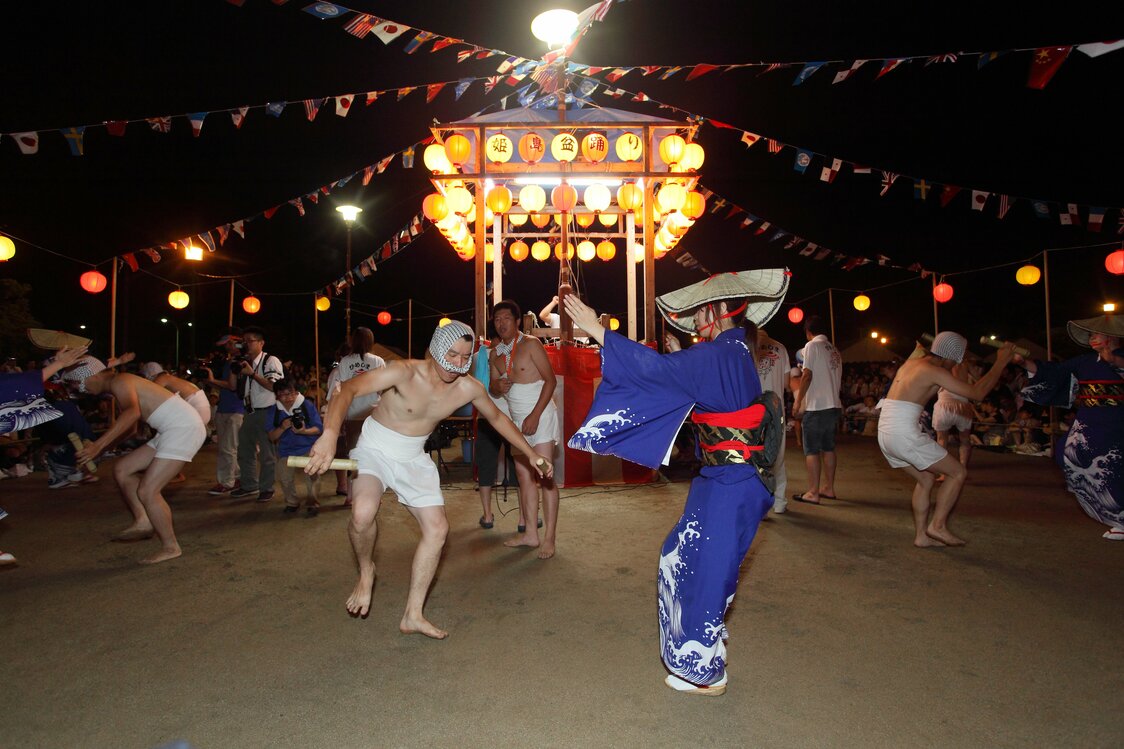
The aya odori, where bare-chested men pair with women and dance holding aya bamboo sticks. (© Haga Library)
-
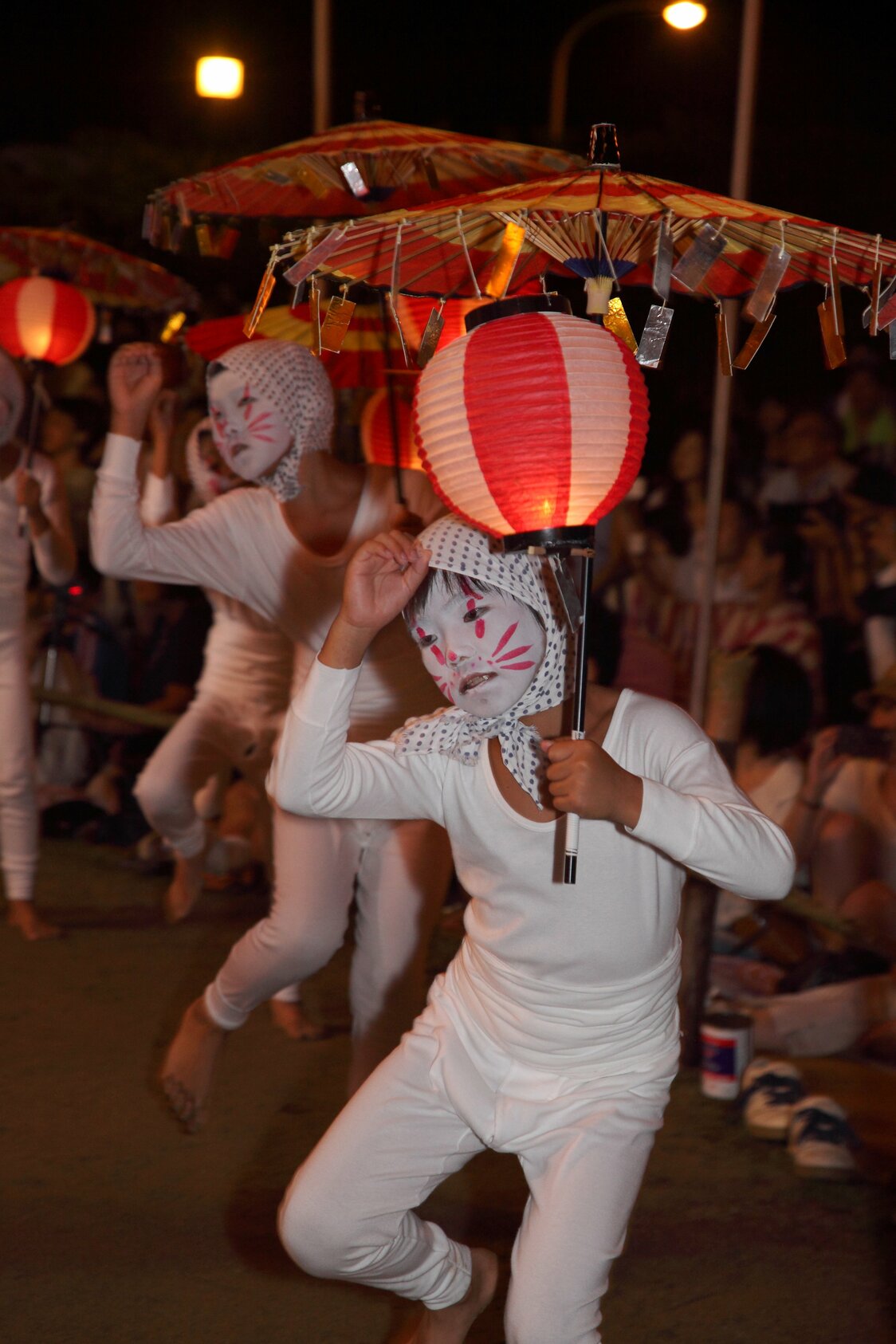
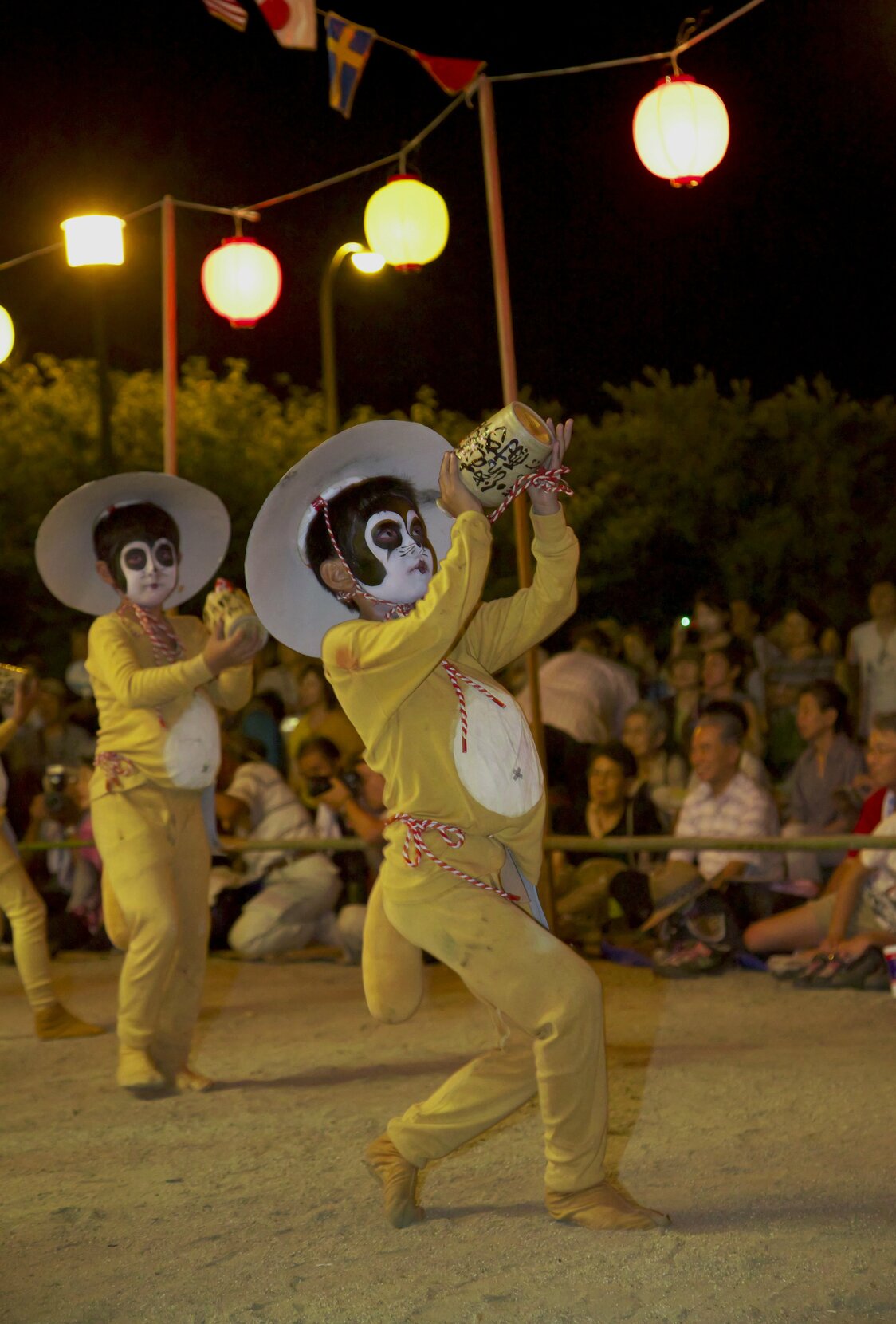
The kitsune odori was originally performed by male youths, but the role was passed to children after World War II. (© Haga Library)
-
Original dances are a staple of the Himeshima Bon Odori. (© Haga Library)
-
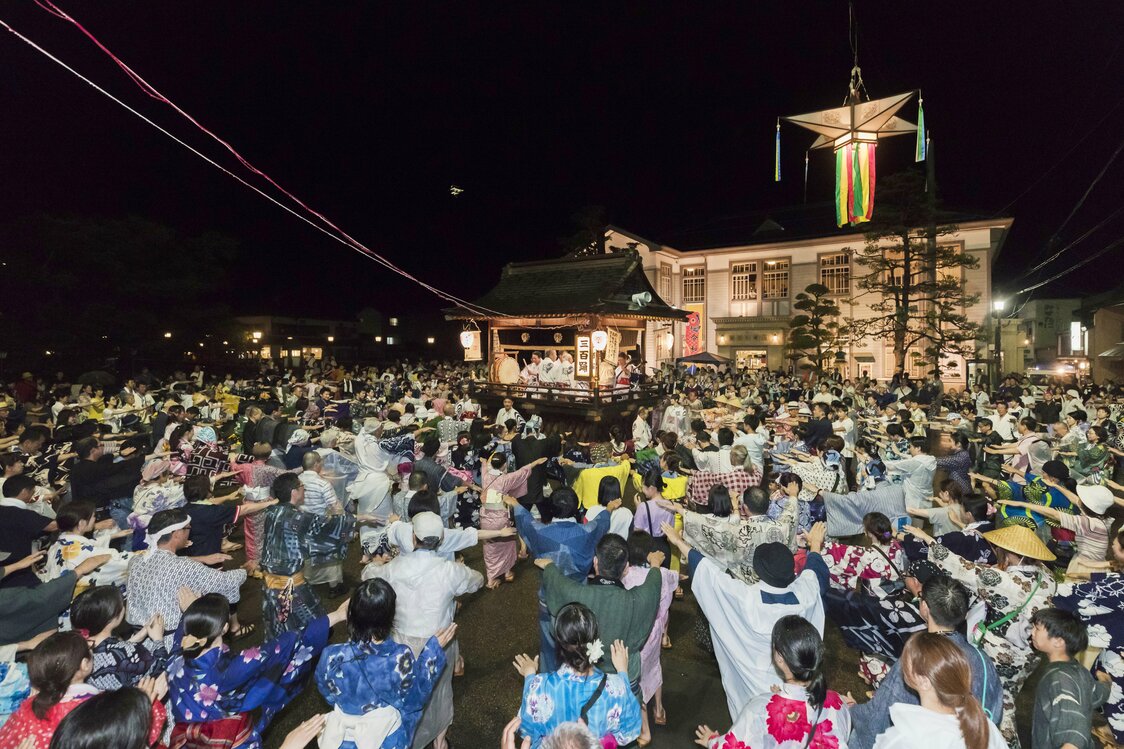
Anyone from near or far can join in the dancing. During the all-night dancing period, extra early-morning trains are laid on to transport visitors. (© Haga Library)
-
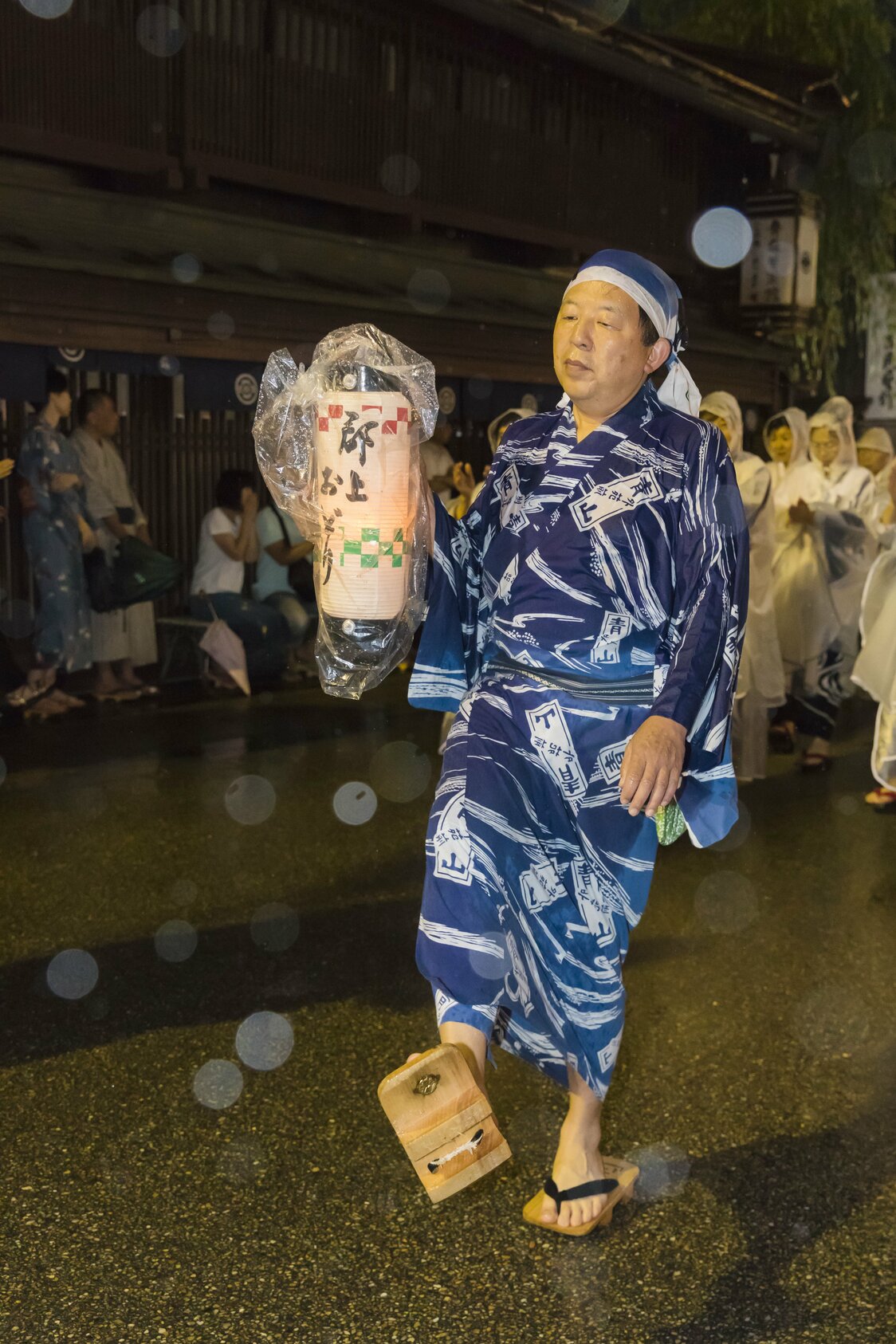
Gujō’s bon odori style calls for vigorous slapping of geta wooden clogs on pavement. Geta and yukata cotton kimono rentals are available. (© Haga Library)
-
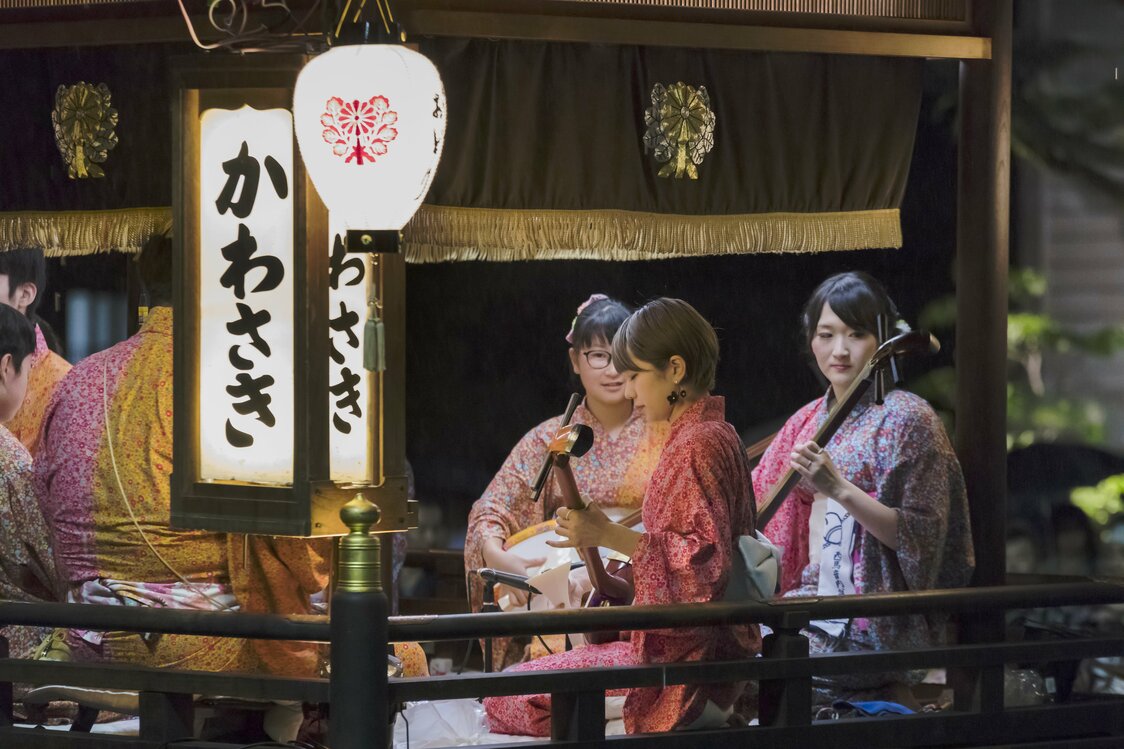
Residents brought the “Kawasaki ondo” folk tune back with them to Gujō, where it became part of the local bon odori repertoire. (© Haga Library)
-
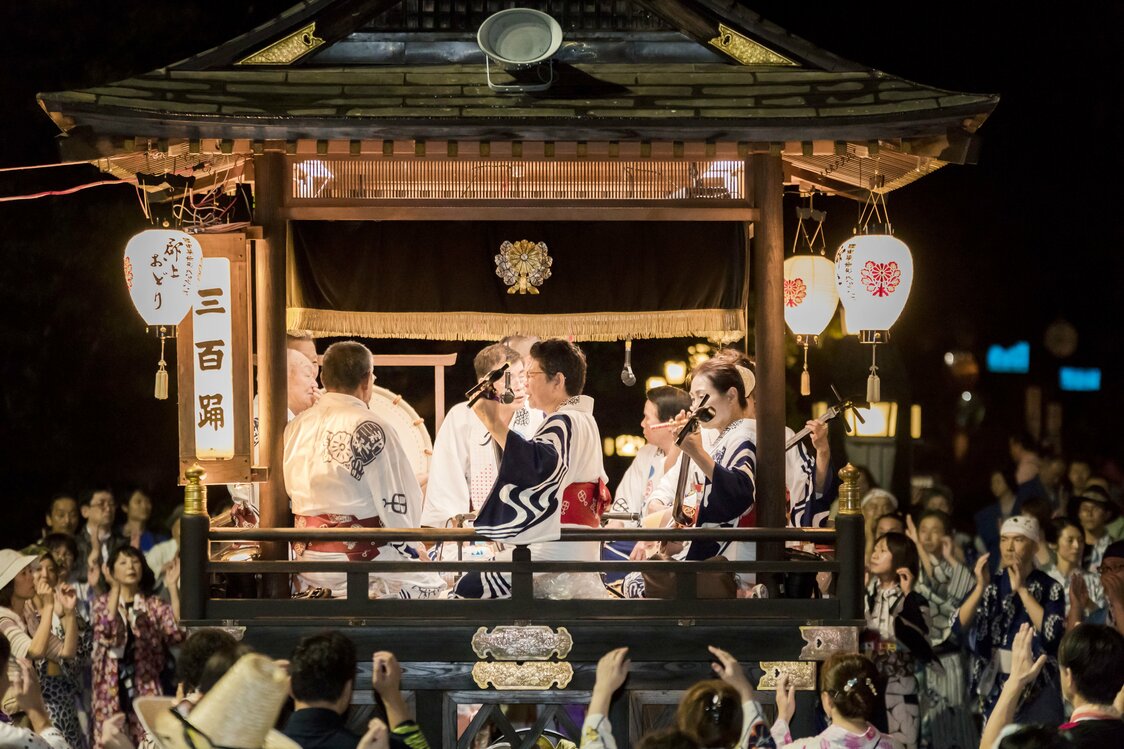
The sanbyaku odori is said to have originated to thank the feudal lord for the sum of 300 (sanbyaku) mon, an old unit of currency, that he distributed to each inhabitant of the castle town. (© Haga Library)


 Read in other languages