-
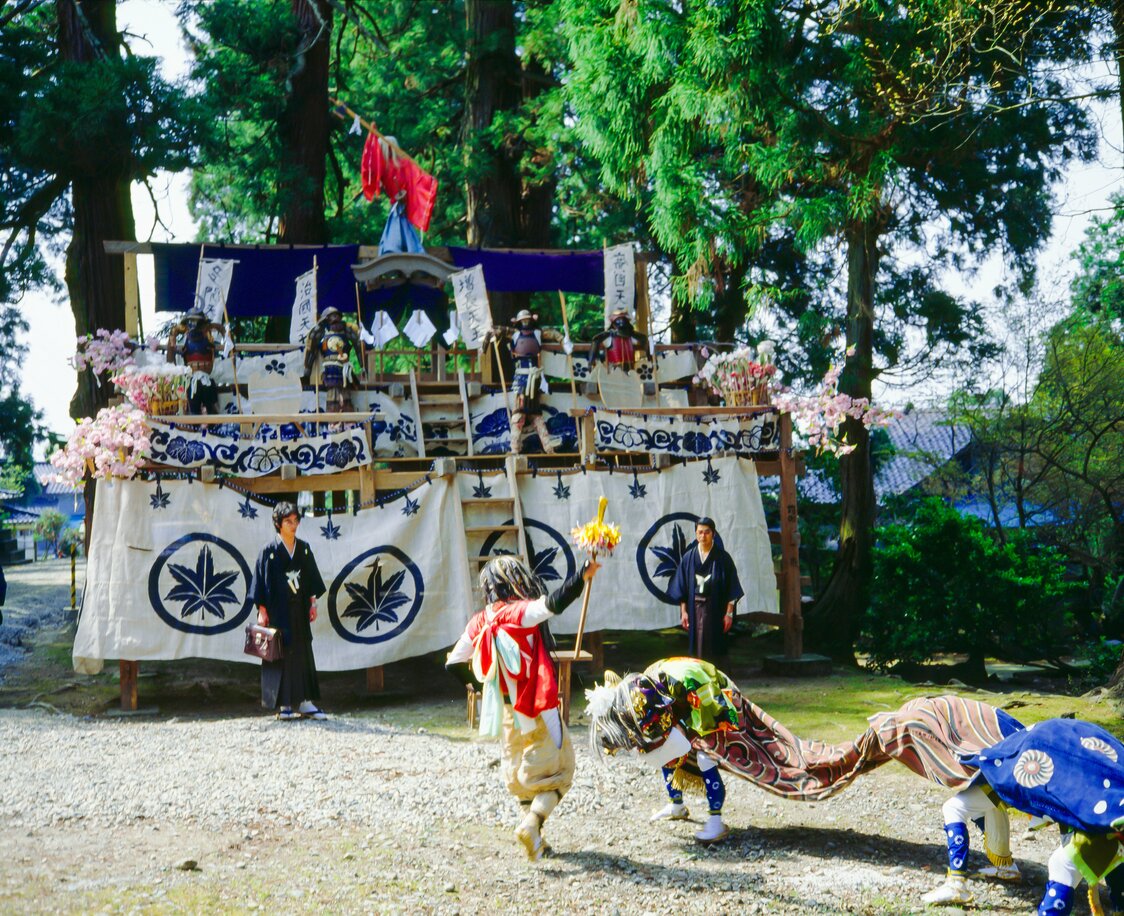
At Futagami Imizu Shrine in Takaoka, Toyama Prefecture, the tsukiyama ritual of building a sacred mound takes place on April 23 every year. Even today, a portable mound serving as a shrine is erected, a relic of ancient religious beliefs. (© Haga Library)
-
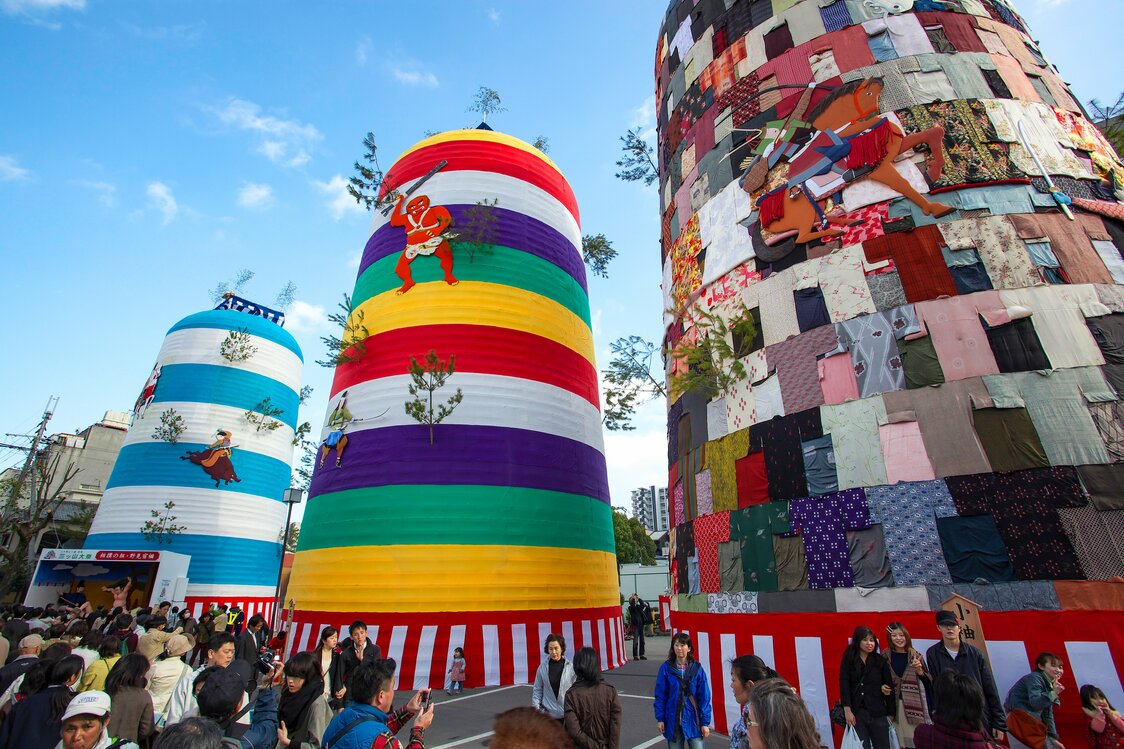
The Mitsuyama festival of Itatehyōzu Shrine in Himeji, Hyōgo Prefecture, takes places once every 20 years. Three towering wood structures representing mountains are decorated with colorful cloth to welcome spirits from across the land. This ritual has been carried out since 939, predating the development of floats. (© Haga Library)
-
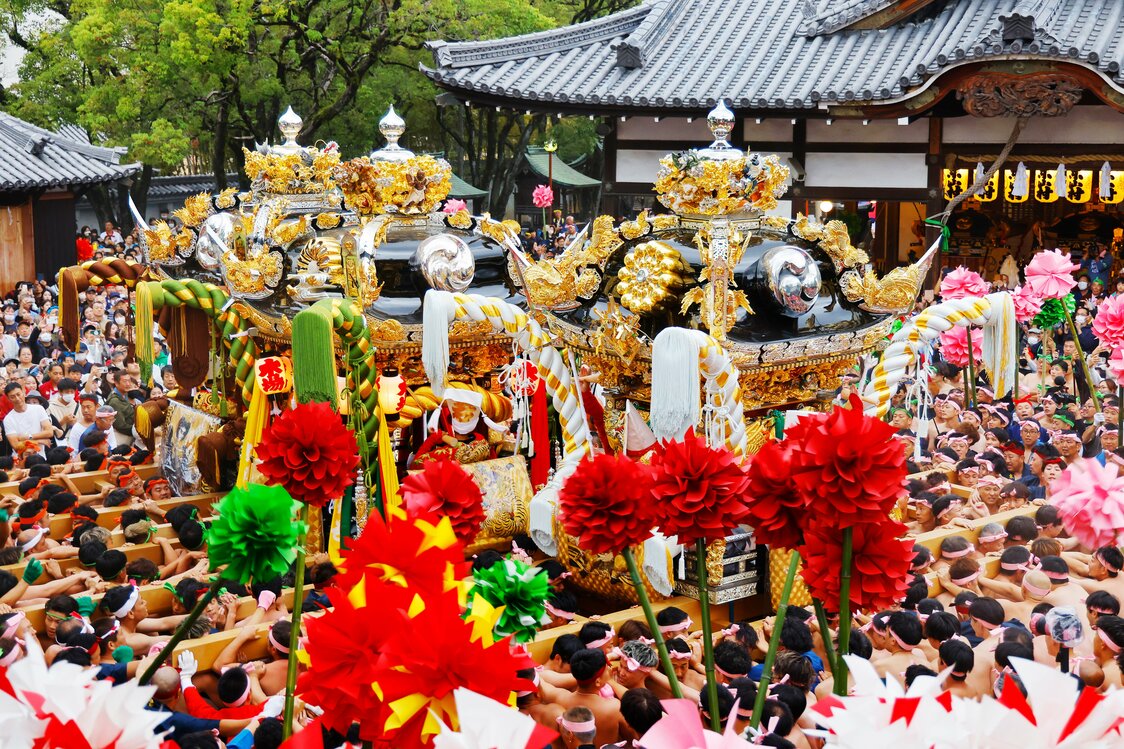
Three colorfully decorated mikoshi are paraded in front of the shrine. Parishioners from seven districts participate, each sporting headbands in the color representing their neighborhood. (© Haga Library)
-
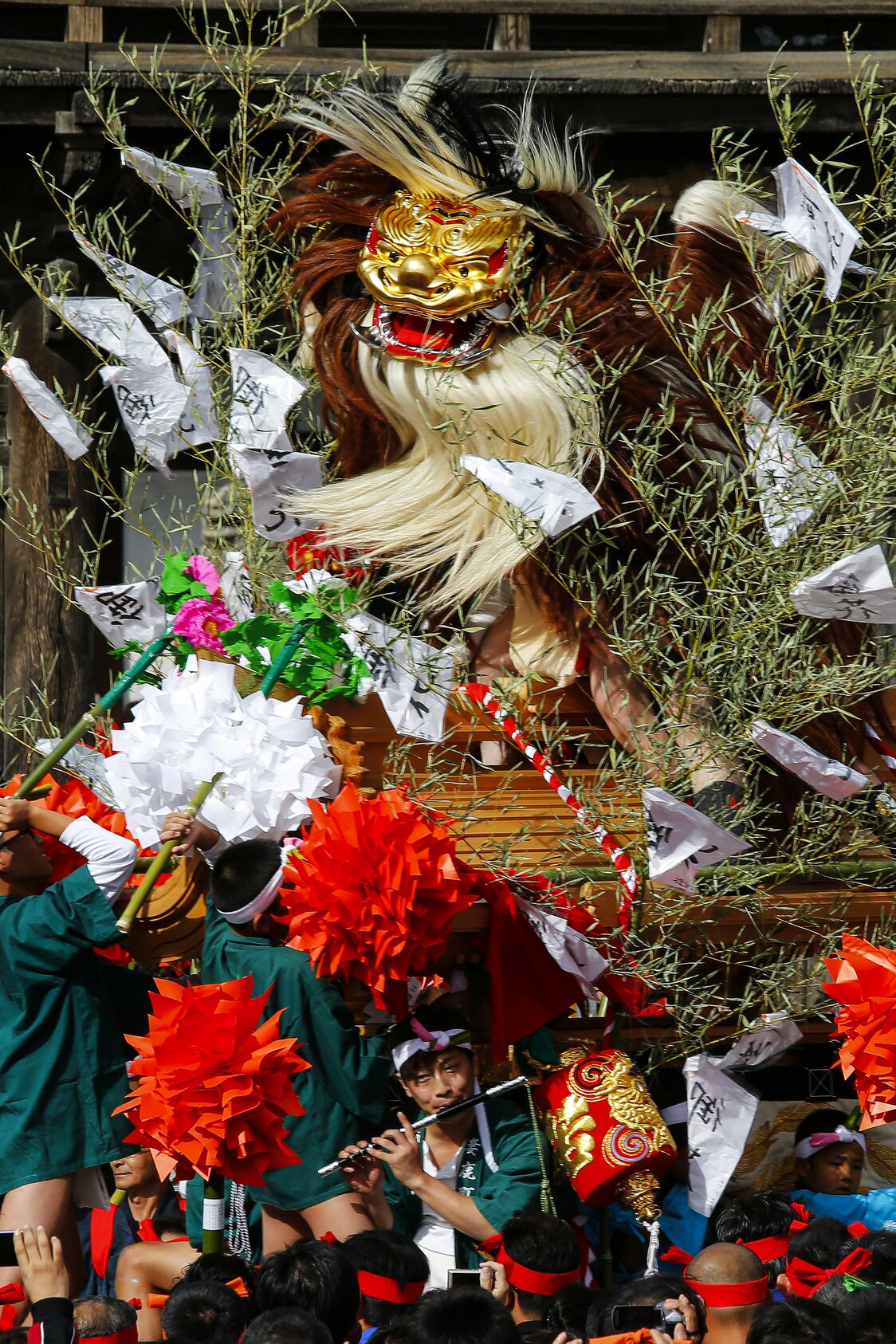
With huge banners leading the procession, a performance of the shishimai lion dance and a lion float clear the path for the main float entering the shrine. (© Haga Library)
-
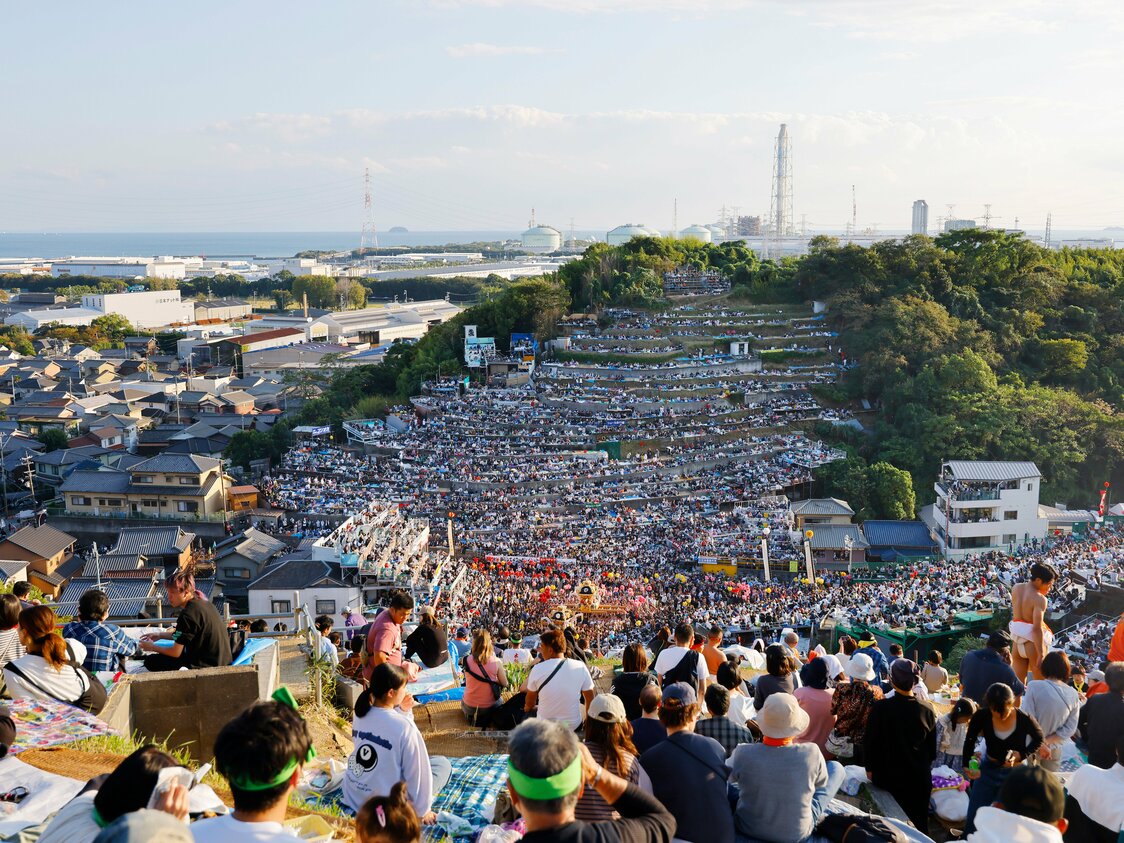
A bird’s eye view from the summit of Otabiyama, looking out toward the Harima Sea in the distance. The best views are from stands reserved for local residents and invited guests, but the festival still offers plenty of excitement for the crowds watching from above. (© Haga Library)
-
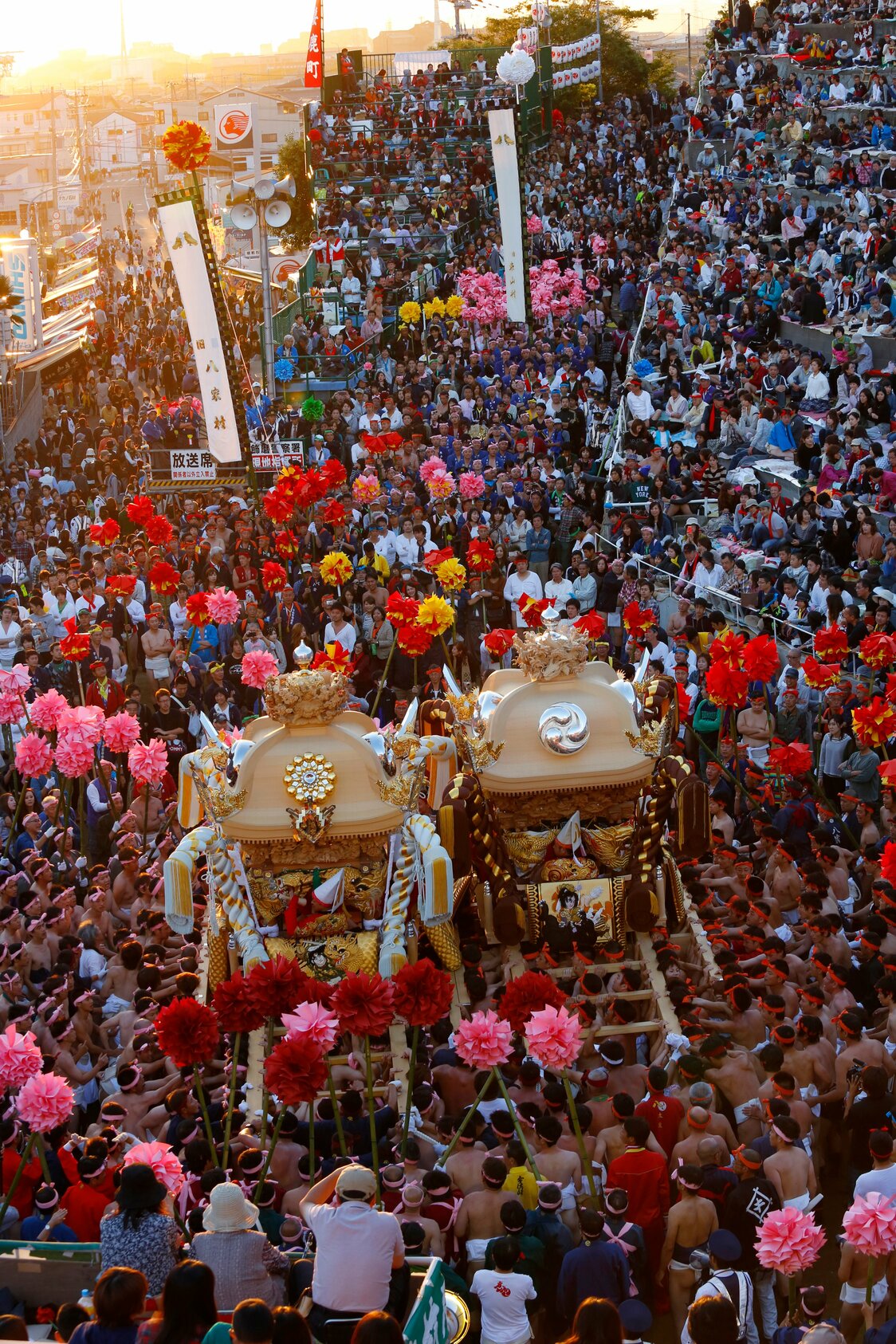
Newly constructed floats are not lacquered for the first two years, their unadorned surfaces giving them a venerable air. (© Haga Library)
-
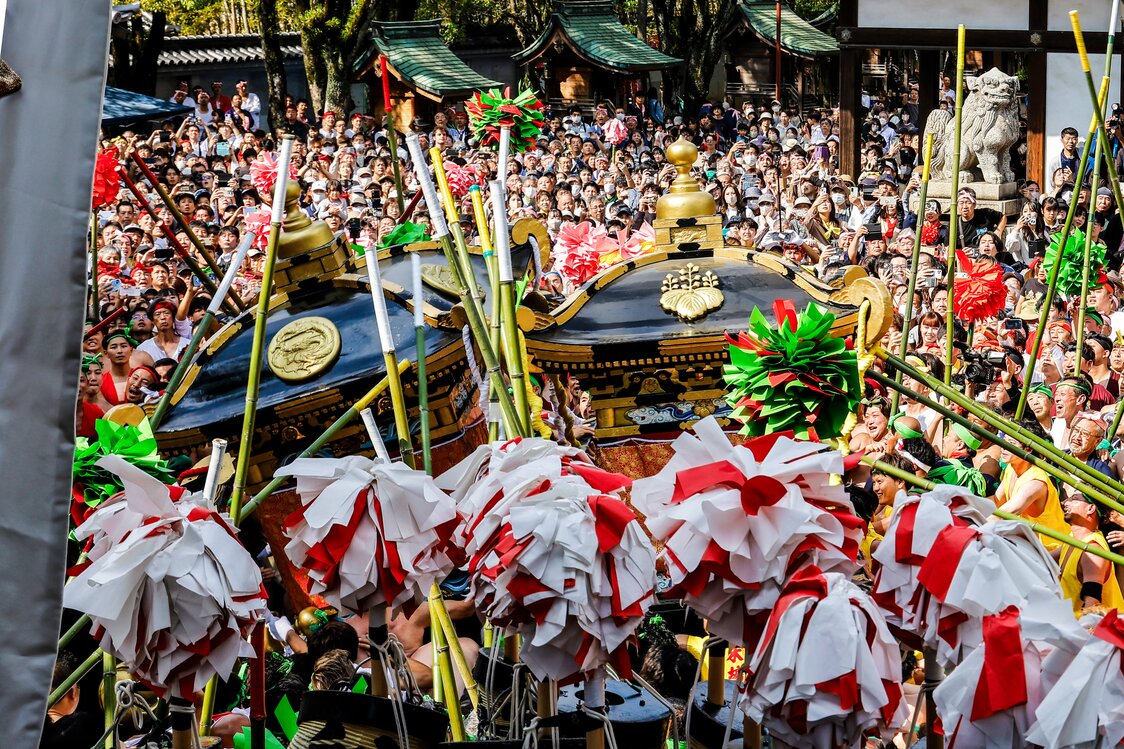
Smaller mikoshi are hoisted aloft with the help of bamboo poles. The teams vie to push their mikoshi higher than their neighbors’. (© Haga Library)
-
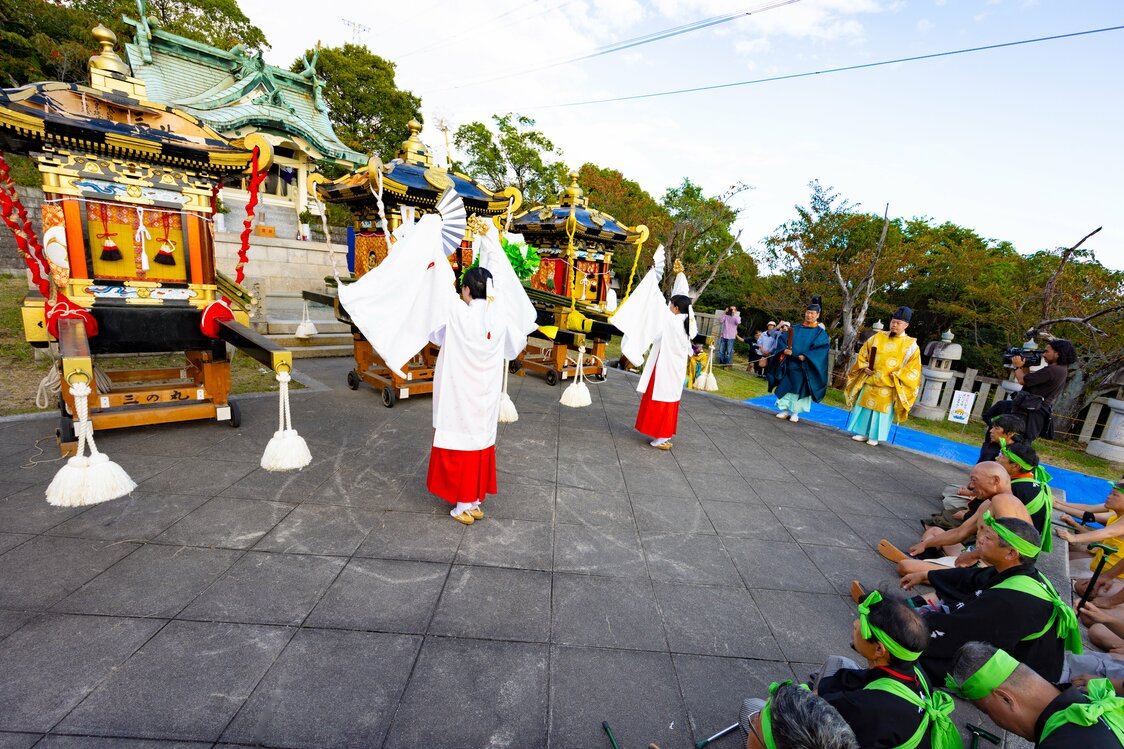
The mikoshi, fresh from battle, return to their abode on Otabiyama. Shrine maidens offer a dance to the spirits. (© Haga Library)
-
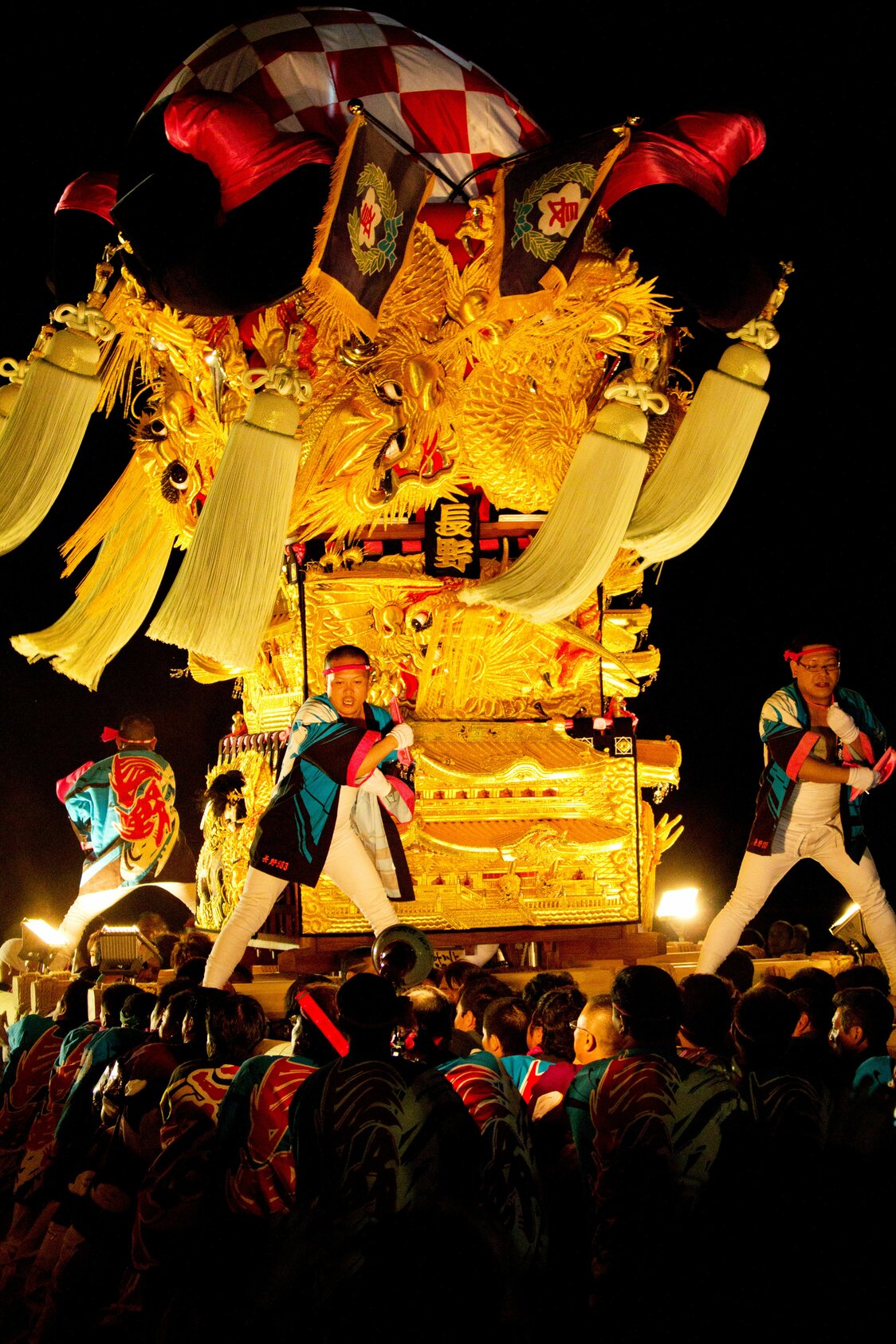
The floats’ gorgeous gold embroidery is evidence of the town’s past prosperity. (© Haga Library)
-
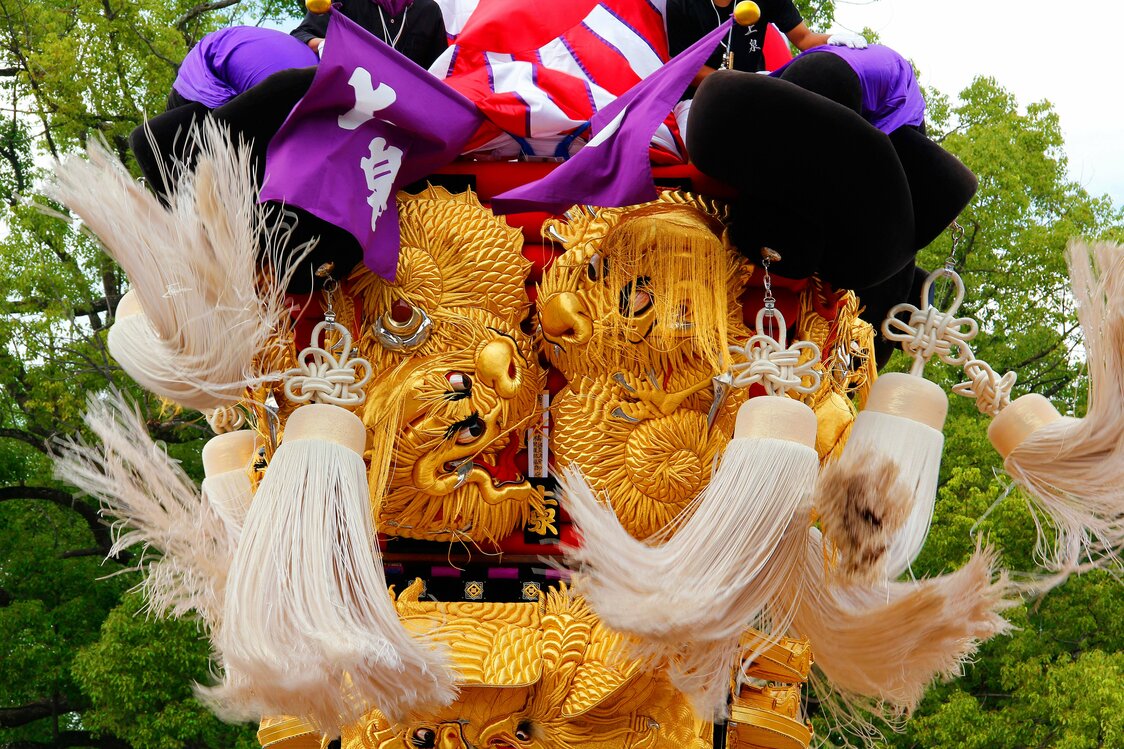
The more vigorously the drum floats are shaken and the tassels jostled, the more visible the dragons, showing off the embroiderers’ skills. (© Haga Library)
-
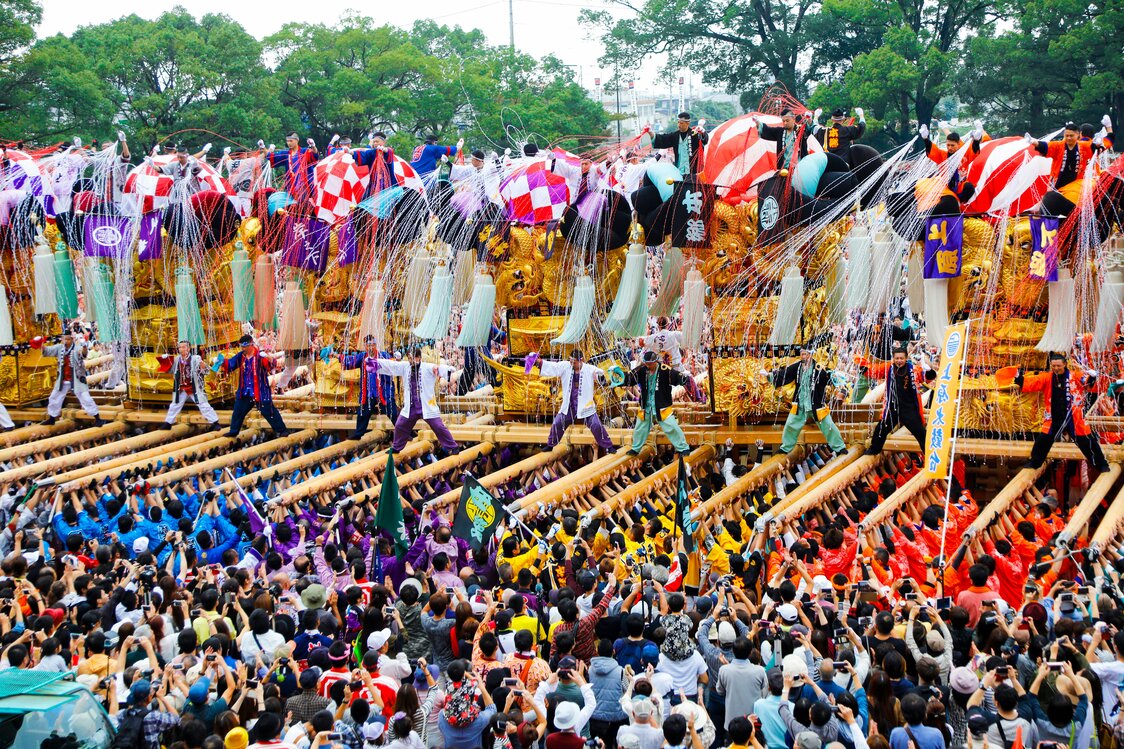
Dozens of drum floats line up in a colorful spectacle. (© Haga Library)
-
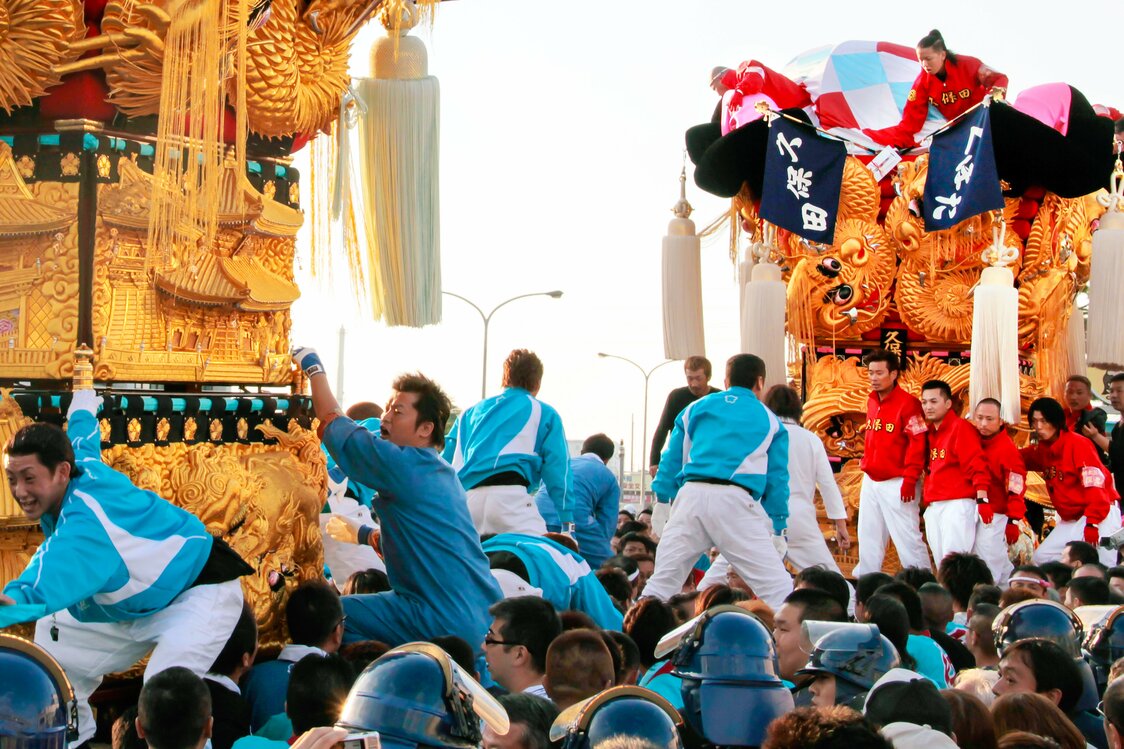
In the past, the decorative hangings were removed to allow for more intense clashes. (© Haga Library)
-
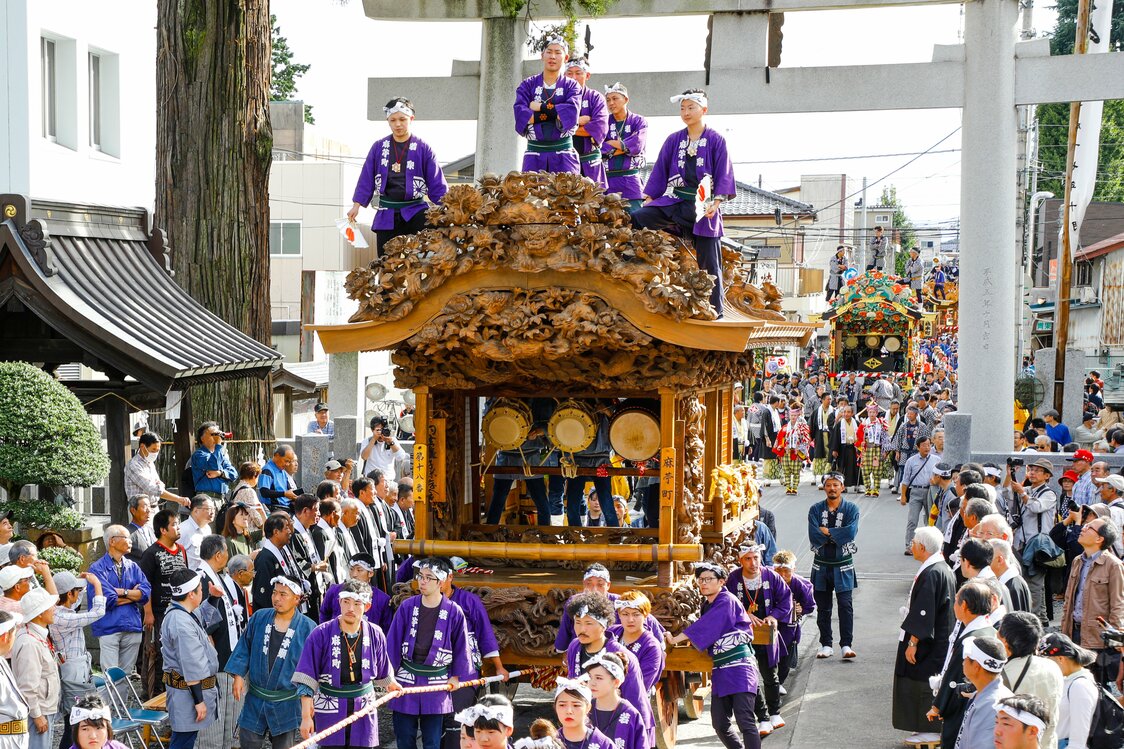
The float from the Asau district features especially intricate carvings. The golden dragon decorating the transom is the work of a master carver Hidari Jingorō XII. (© Haga Library)
-
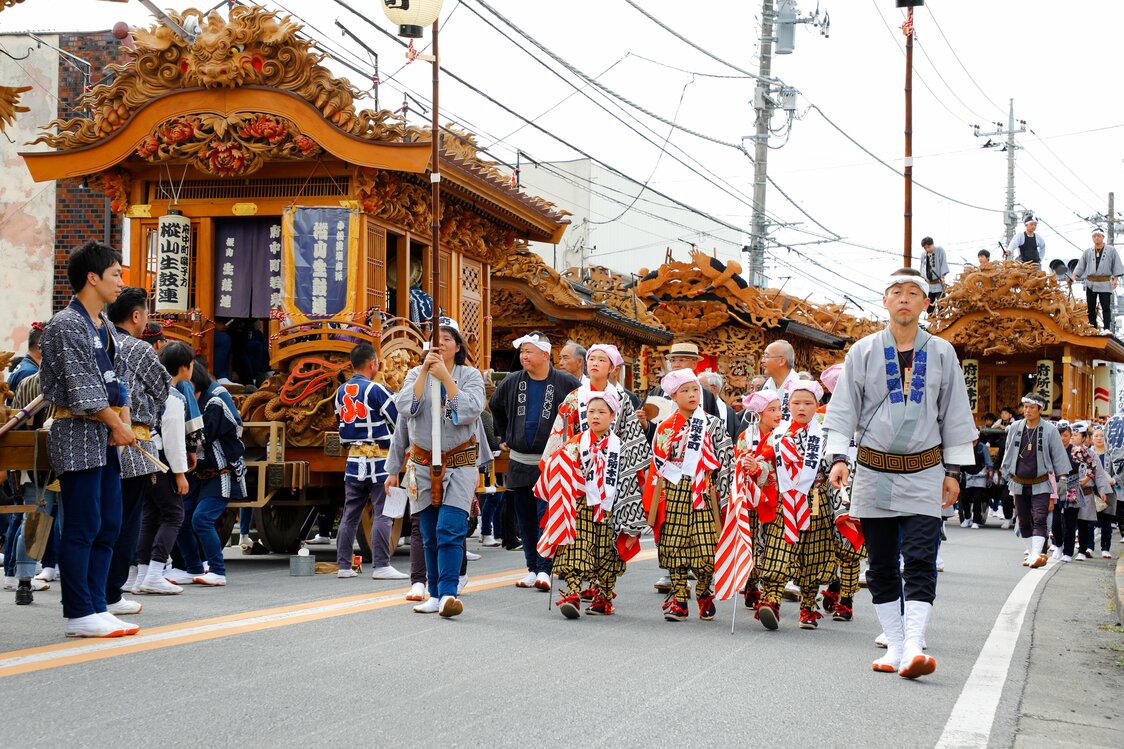
Residents of each district parade in distinctive festival outfits reminiscent of the Edo period. (© Haga Library)
-
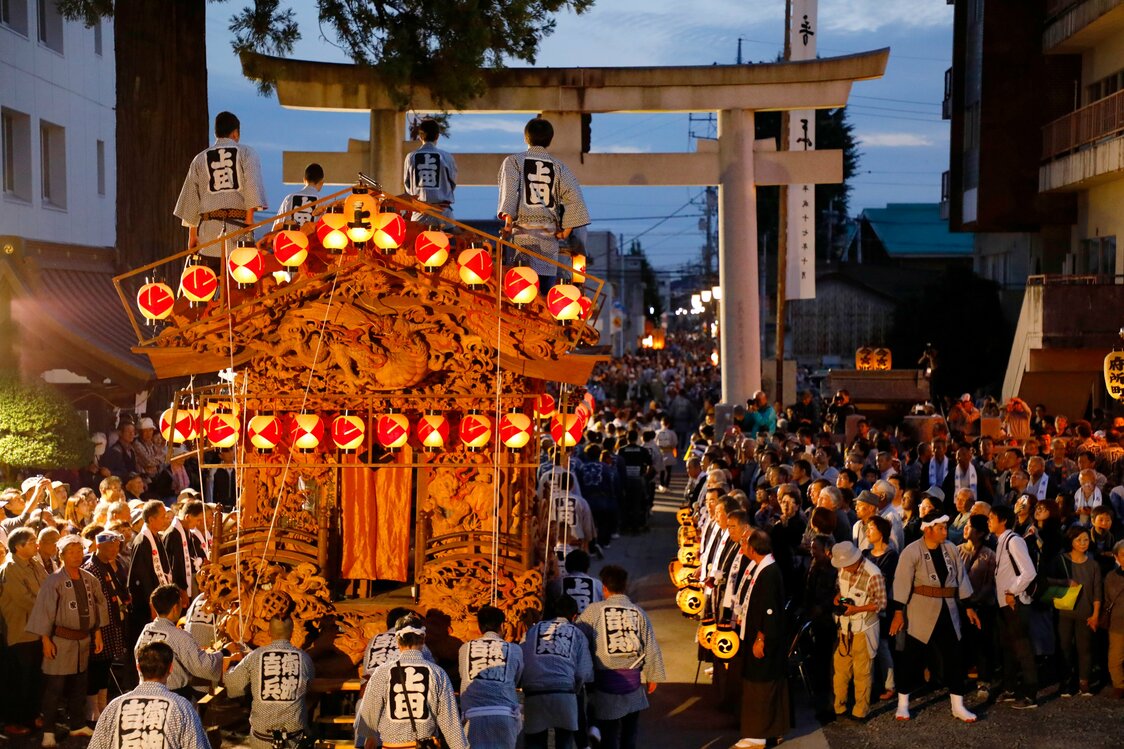
Festival music begins once the lanterns are lit. (© Haga Library)
-
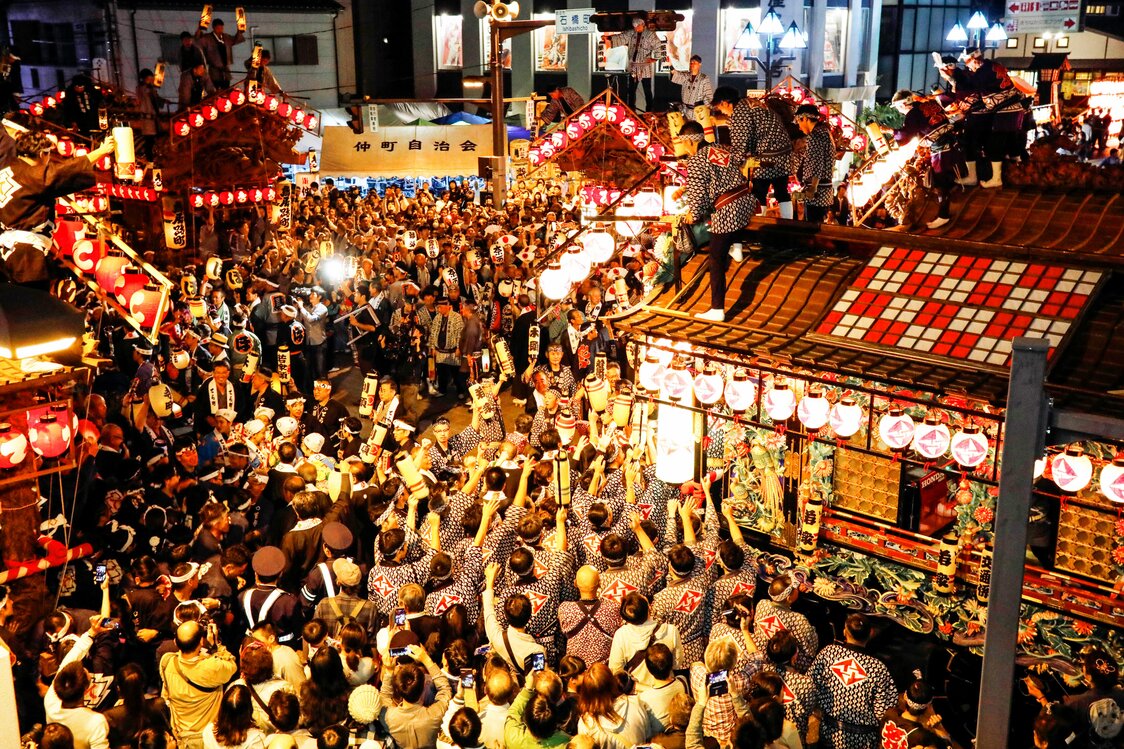
Crowds chant excitedly to the accompaniment of lively festival music. (© Haga Library)


 Read in other languages