-
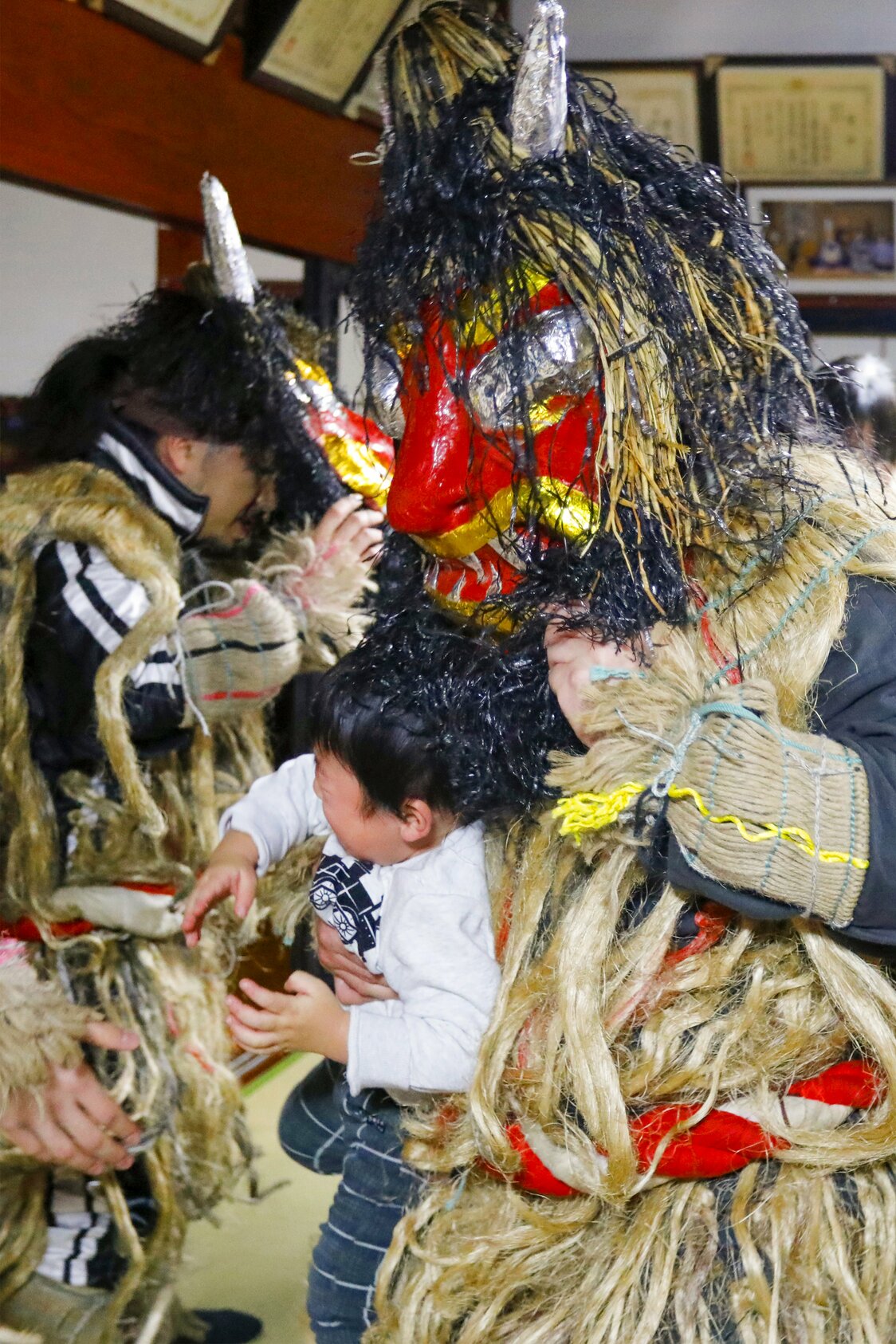
A demon mask with fangs; mask designs vary from district to district. (© Haga Library)
-
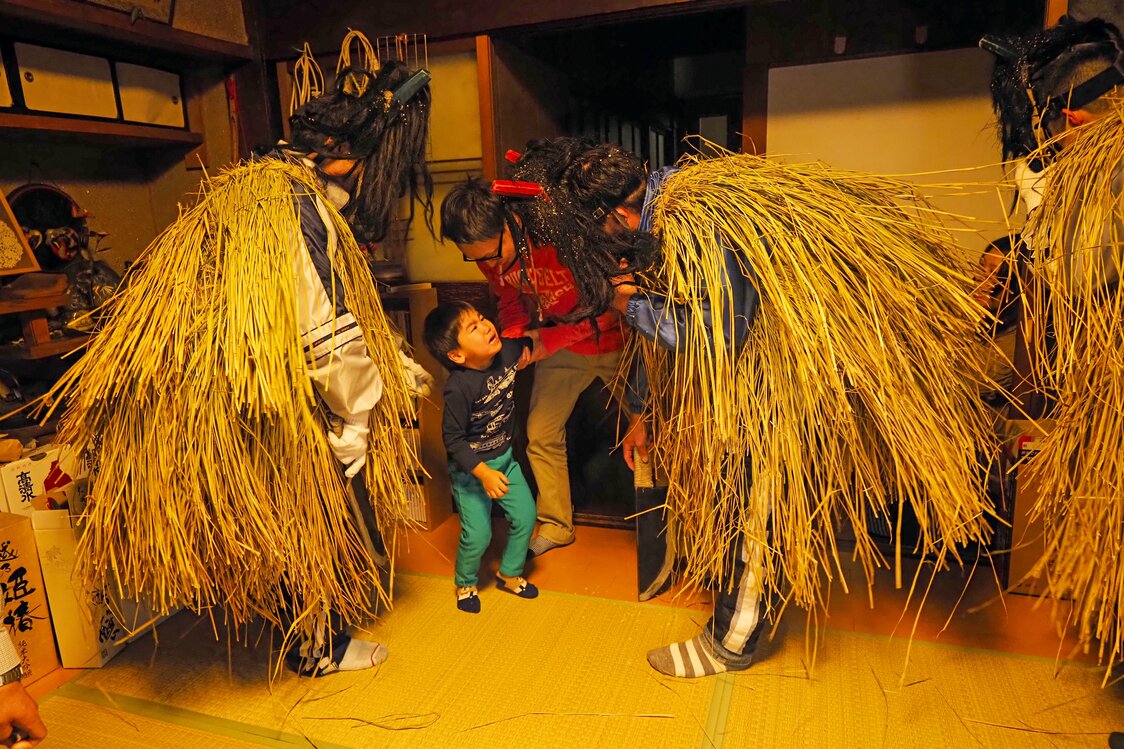
Namahage wear straw capes called kede, made from rice straw from that year’s harvest. Any straw that has fallen in the house during their visit is considered a good luck charm. (© Haga Library)
-
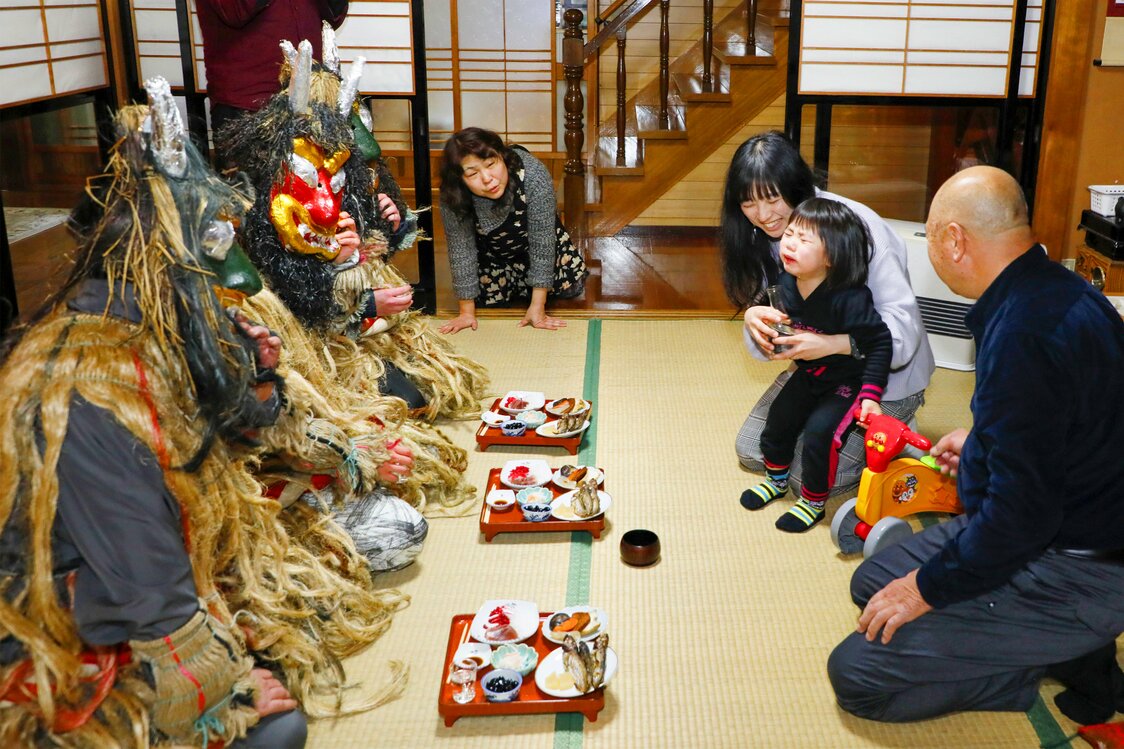
The namahage are served food and drink to bring happiness to the household. (© Haga Library)
-
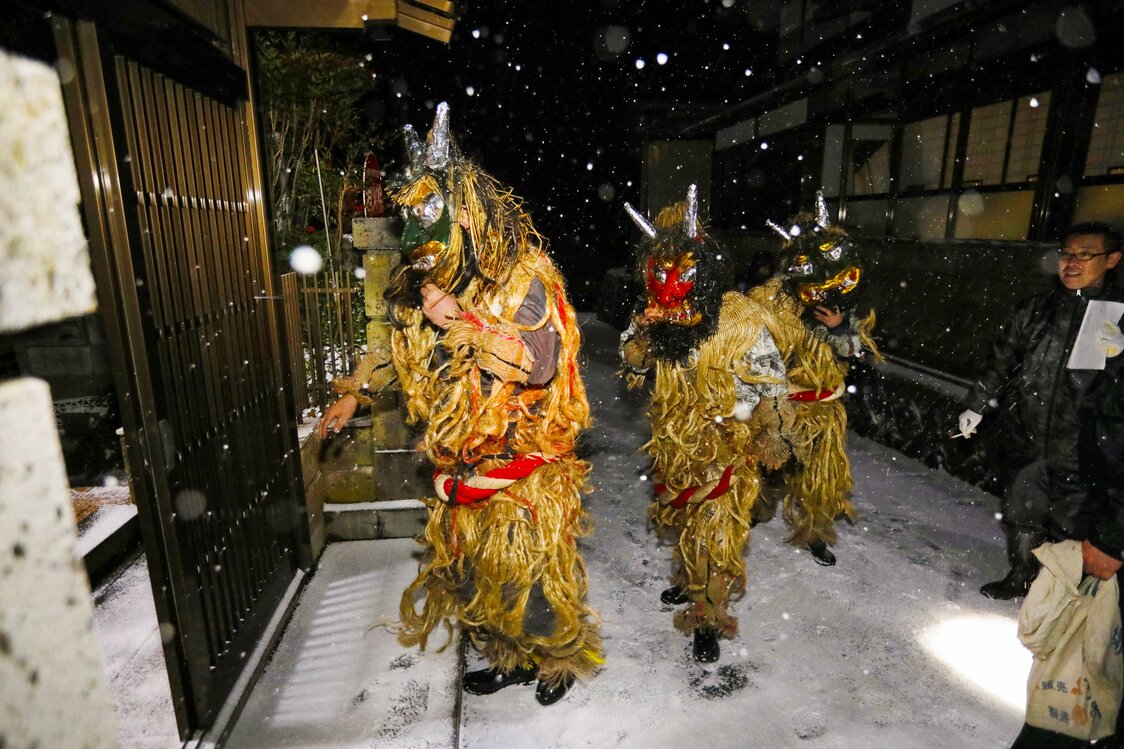
Traditionally, only single men act as namahage. With population aging, some districts face a dearth of eligible young men. (© Haga Library)
-
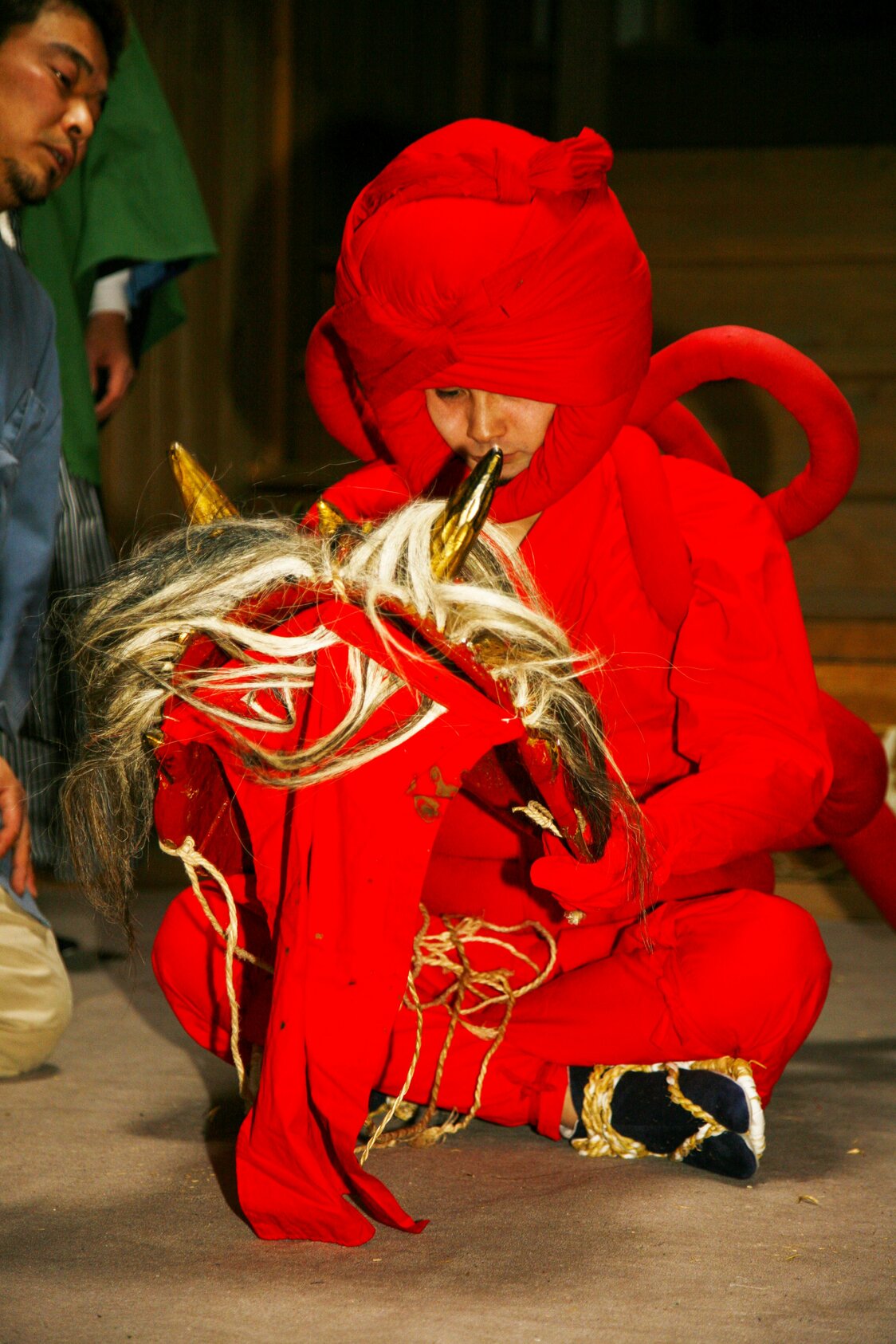
The moment the kami inhabits a person. Donning the mask imbues the participant with mysterious strength. (© Haga Library)
-
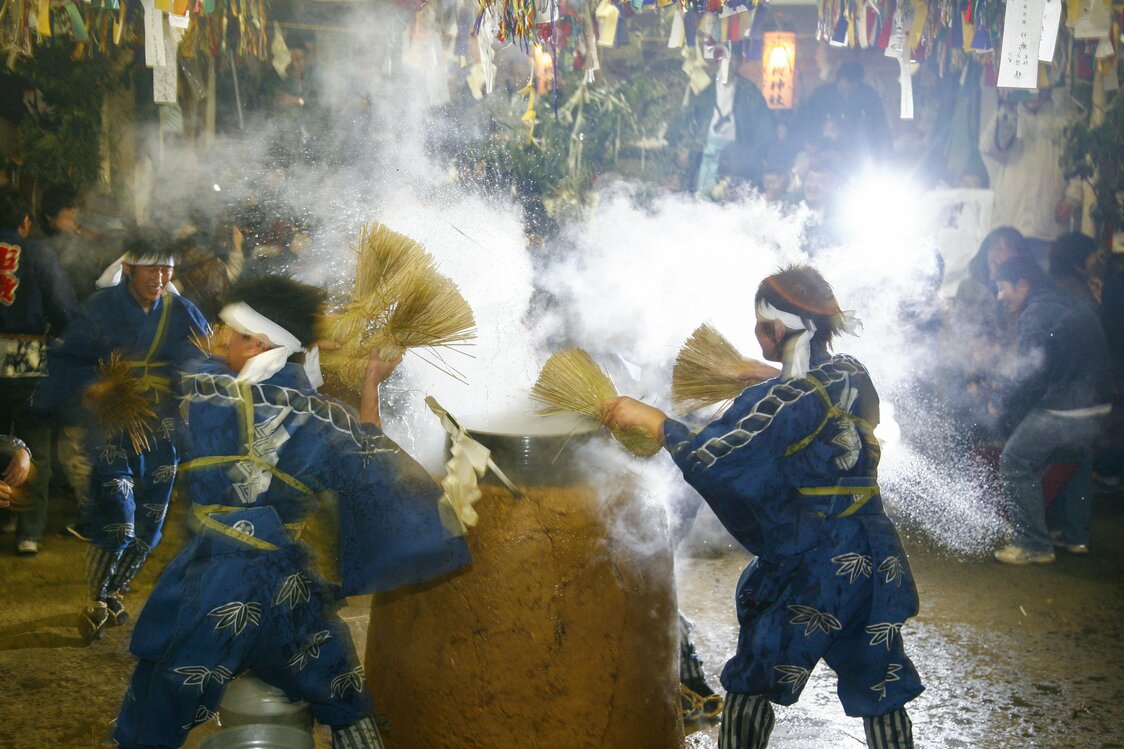
All the kami in the land supposedly gathered in the steam rising from the cauldron. The water’s power gives renewed vitality to those who are sprinkled with it. (© Haga Library)
-
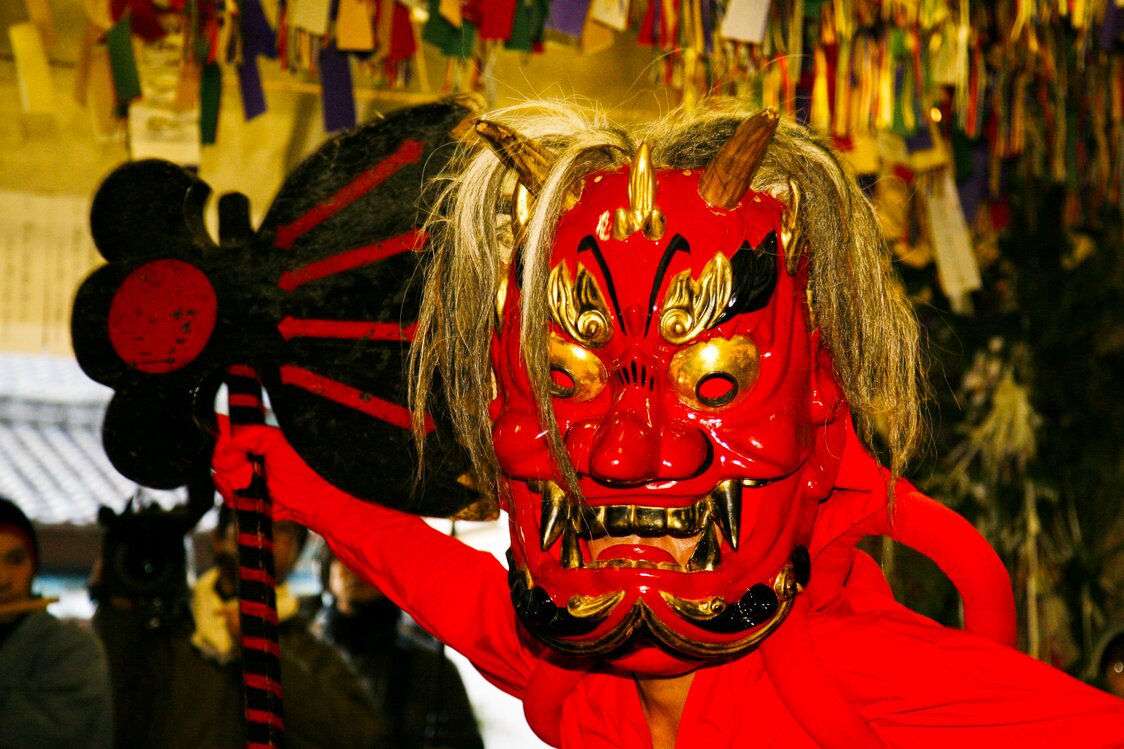
The ogre’s huge mask weighs more than five kilograms. This is the one used in Tōei’s Tsuki district; each district’s mask has a different expression. (© Haga Library)
-
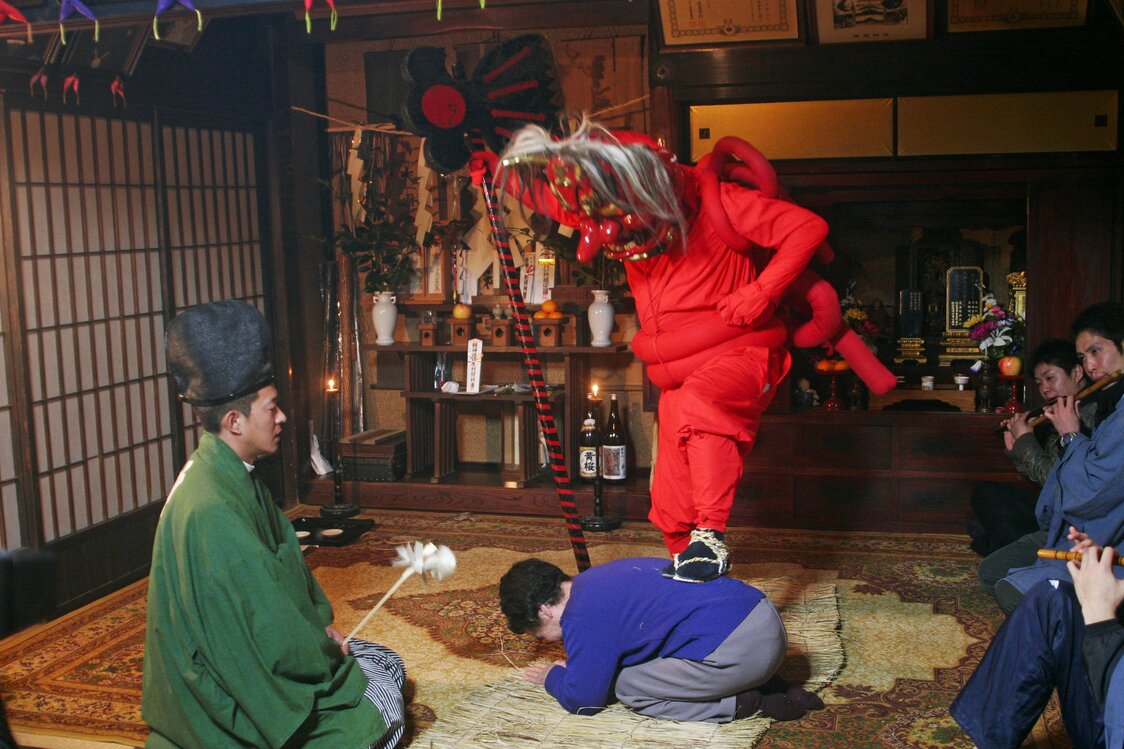
The sakaki oni rids the body of aches and pains by stepping on the affected area. (© Haga Library)
-
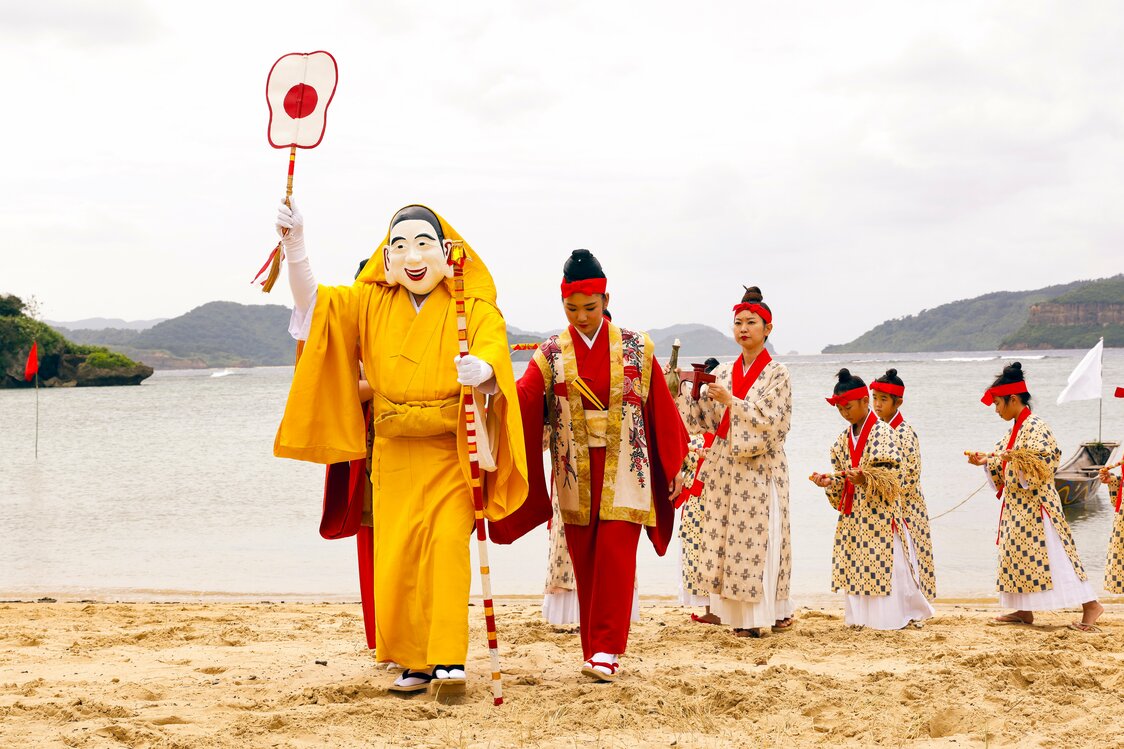
The deity Miriku leads a procession along the beach. (© Haga Library)
-
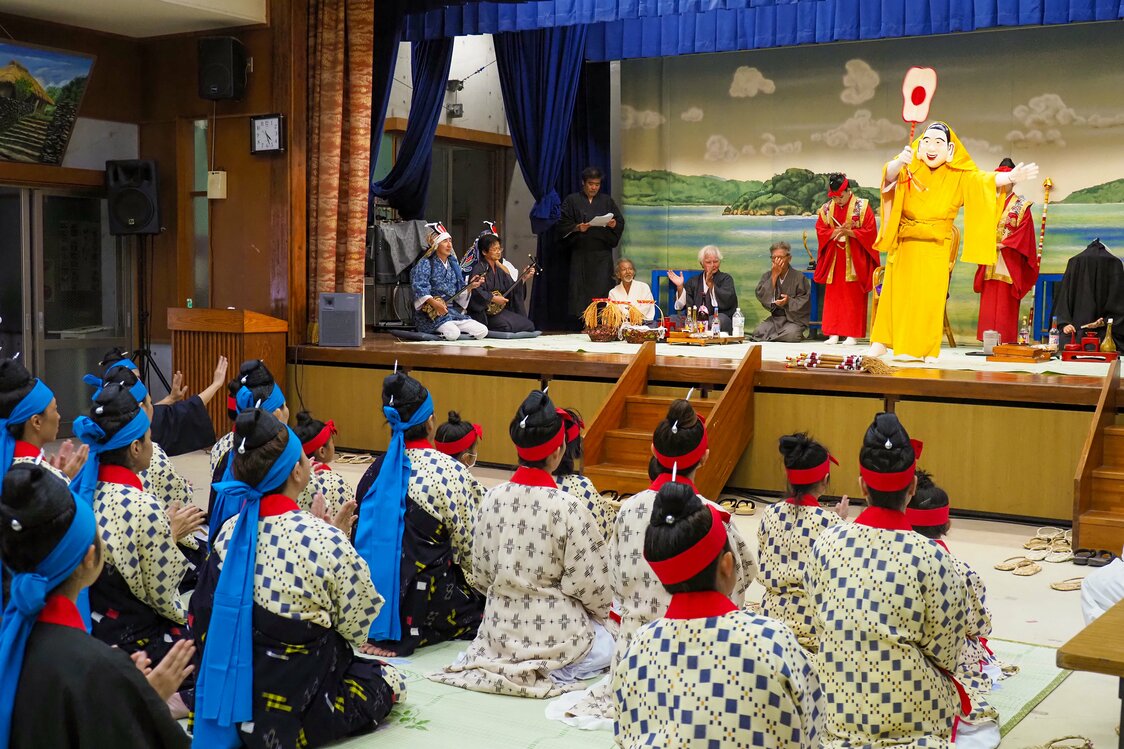
The ceremony at the public hall, where a man dons a masks and “transforms” into Miriku. (© Haga Library)
-
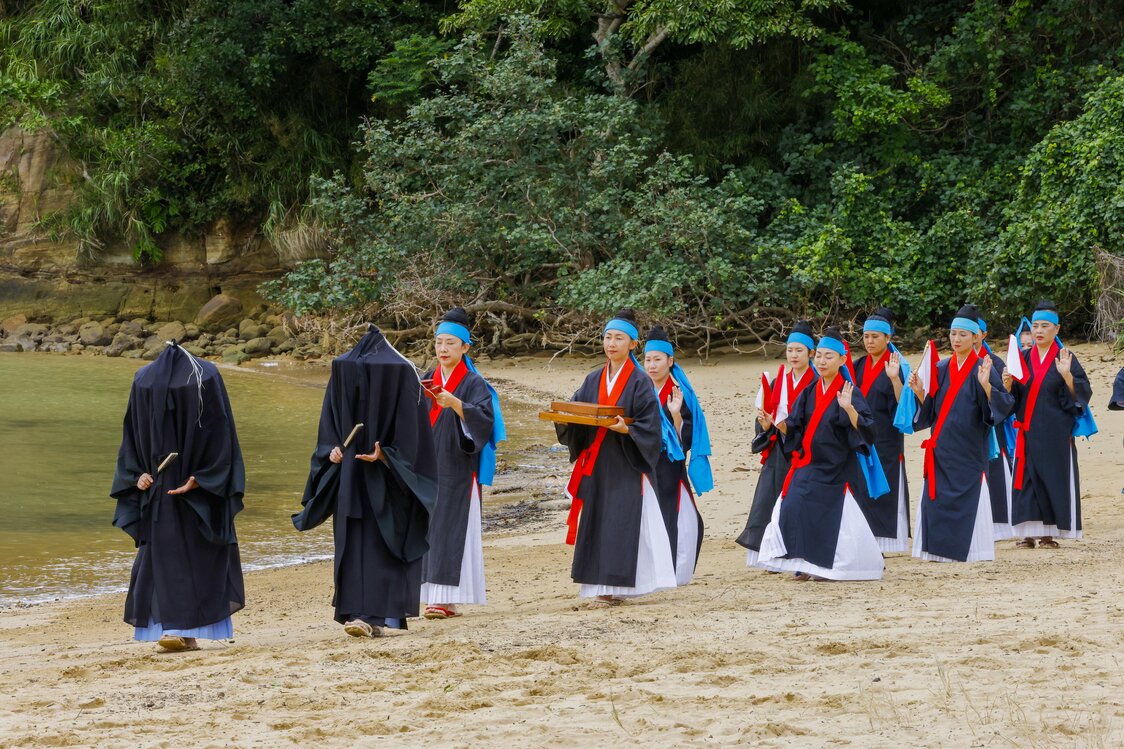
Fudachimi and angā follow Miriku in the procession. (© Haga Library)
-
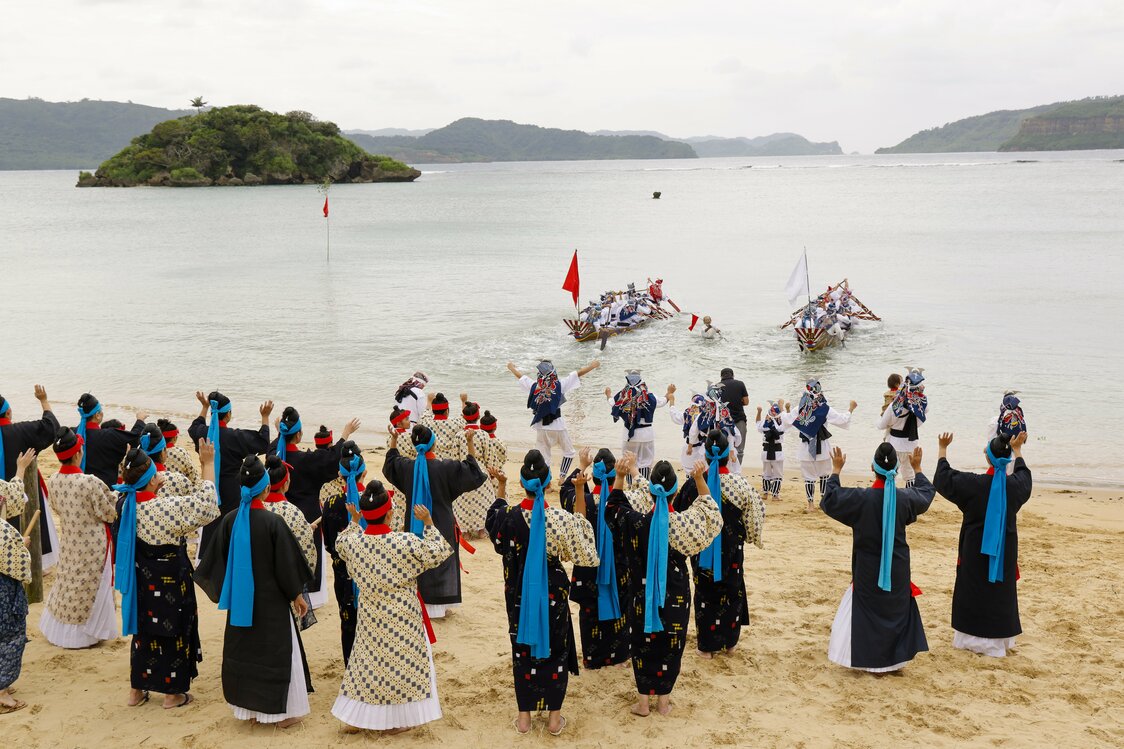
The race between the boats is the highlight of the festival. (© Haga Library)


 Read in other languages