-
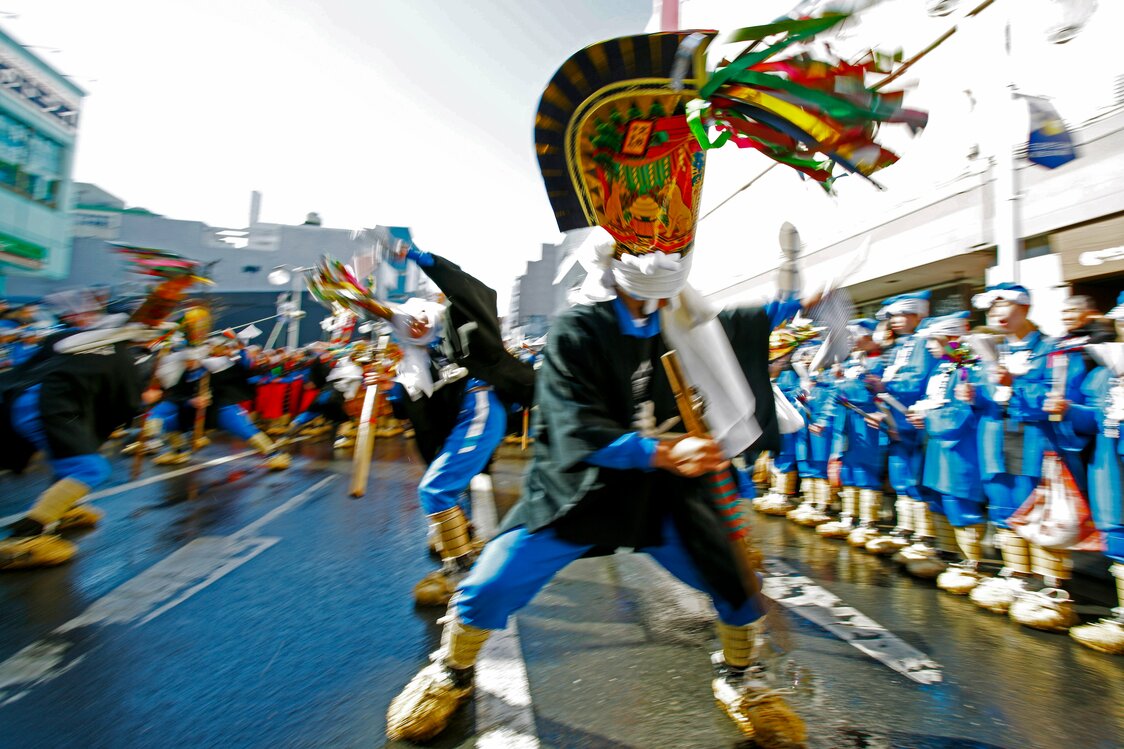
The highlight of the festival’s first day is the issei-zuri dancing by all participants. Costumed dancers prance to make the multicolored tassels on their headpieces swing wildly. (© Haga Library)
-
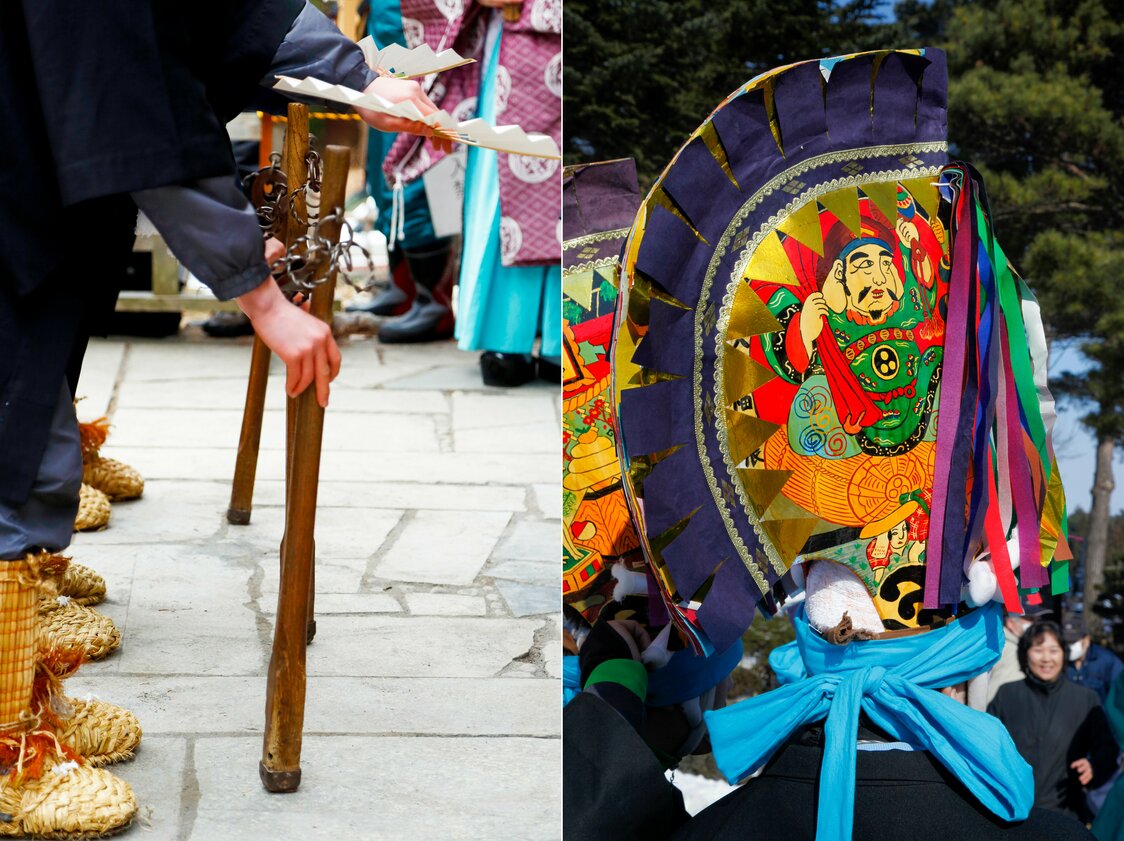
Left: Wooden staffs with metal rings attached are shaken to make noise. Right: A headpiece modeled on a horse’s head is decorated with felicitous motifs, like the deities of fortune Ebisu and Daikoku. (© Haga Library)
-
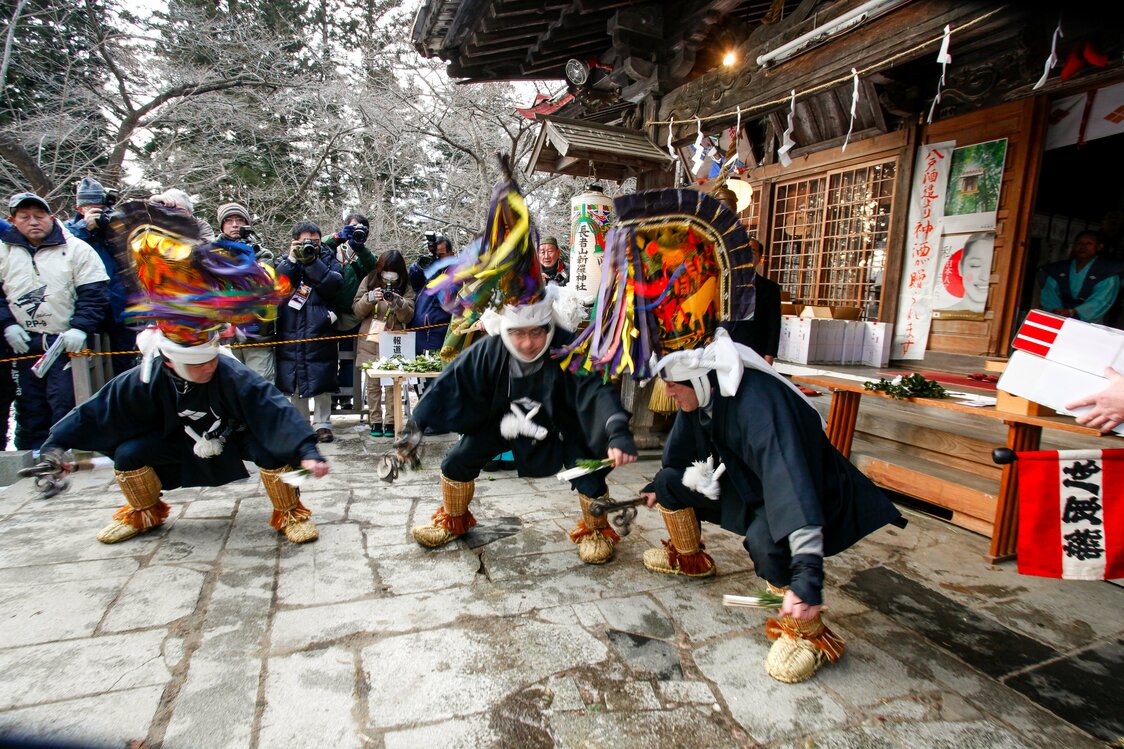
The festival begins when participants offer their dances at Shinra Shrine on the peak of Chōjayama. (© Haga Library)
-
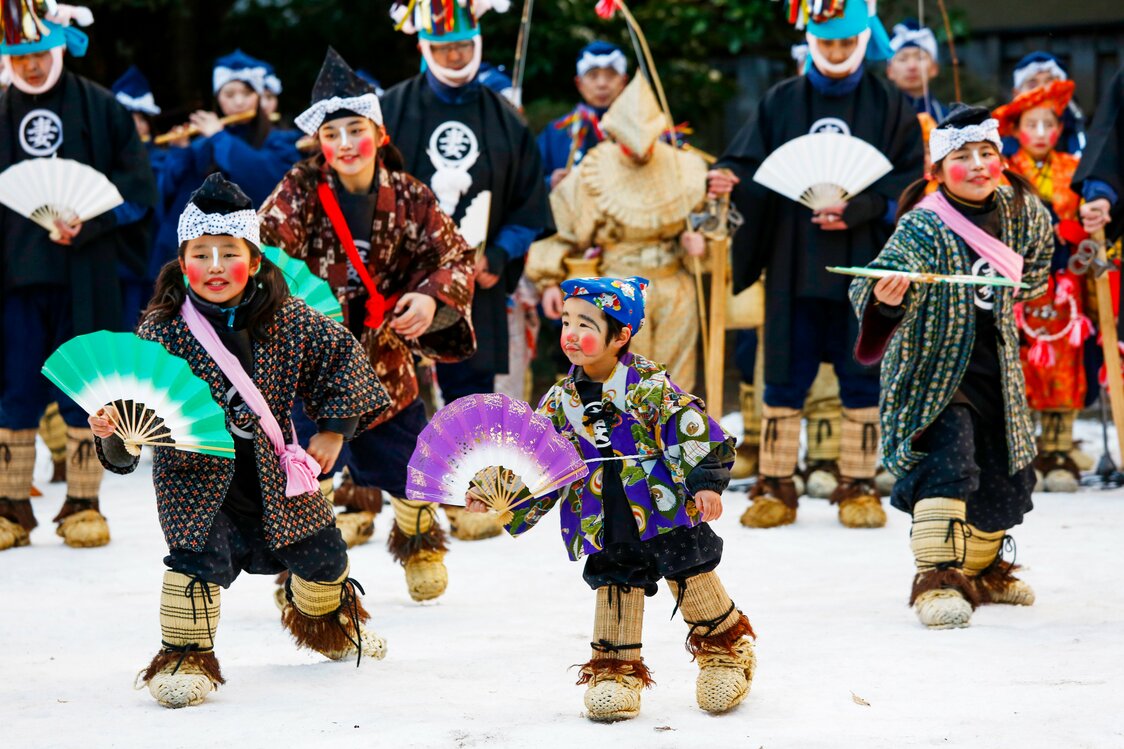
Children also take part in the festival. Their thick padded coats, called dotera, are typical cold-weather wear in the region. (© Haga Library)
-
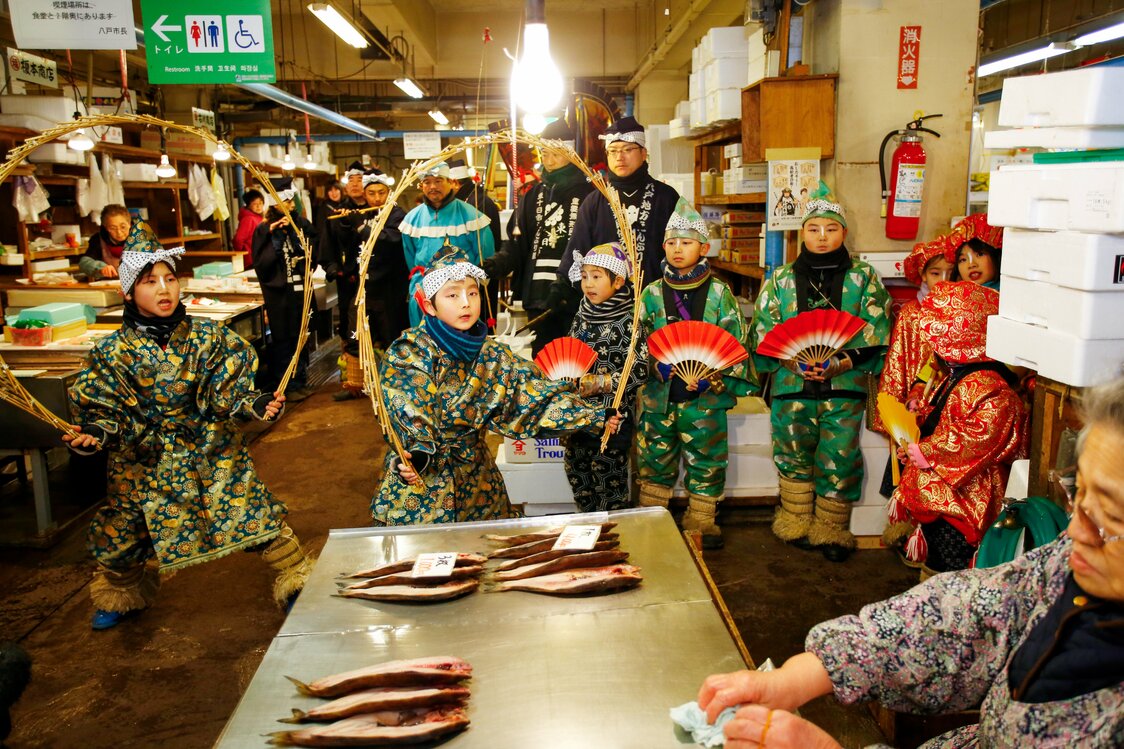
Children also deftly perform tricks with tamasudare, mats made of loosely woven sticks. (© Haga Library)
-
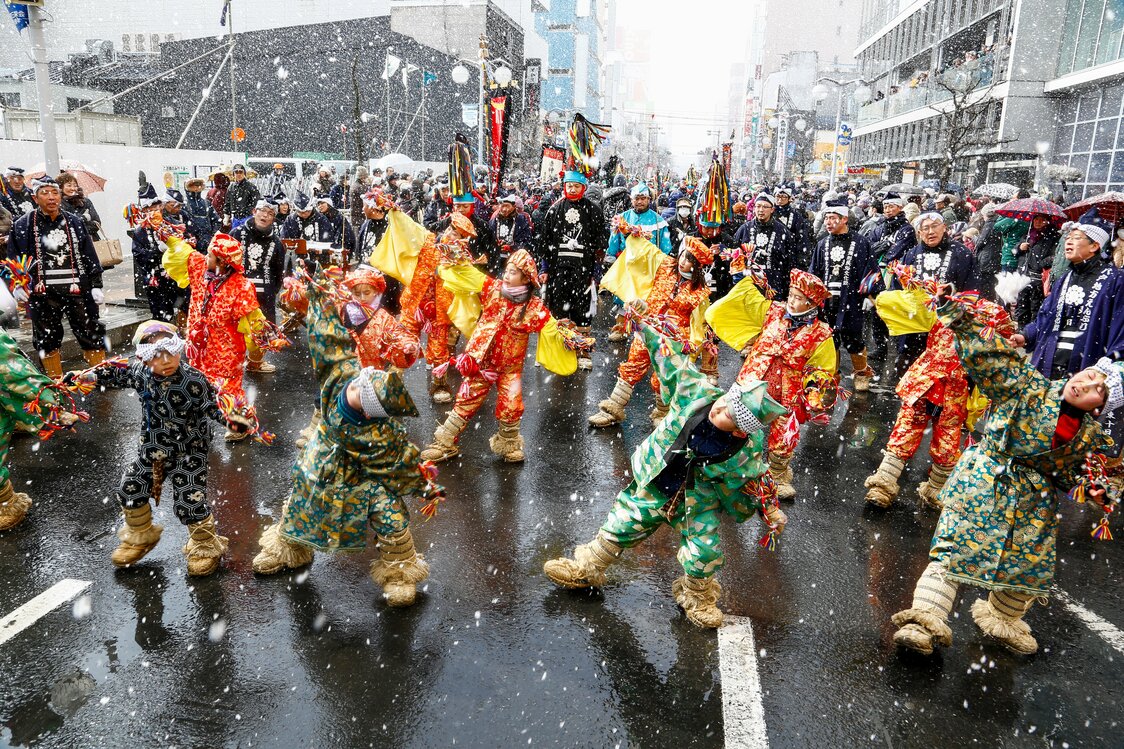
Schools close on the first day of the festival so that children can take part. (© Haga Library)
-
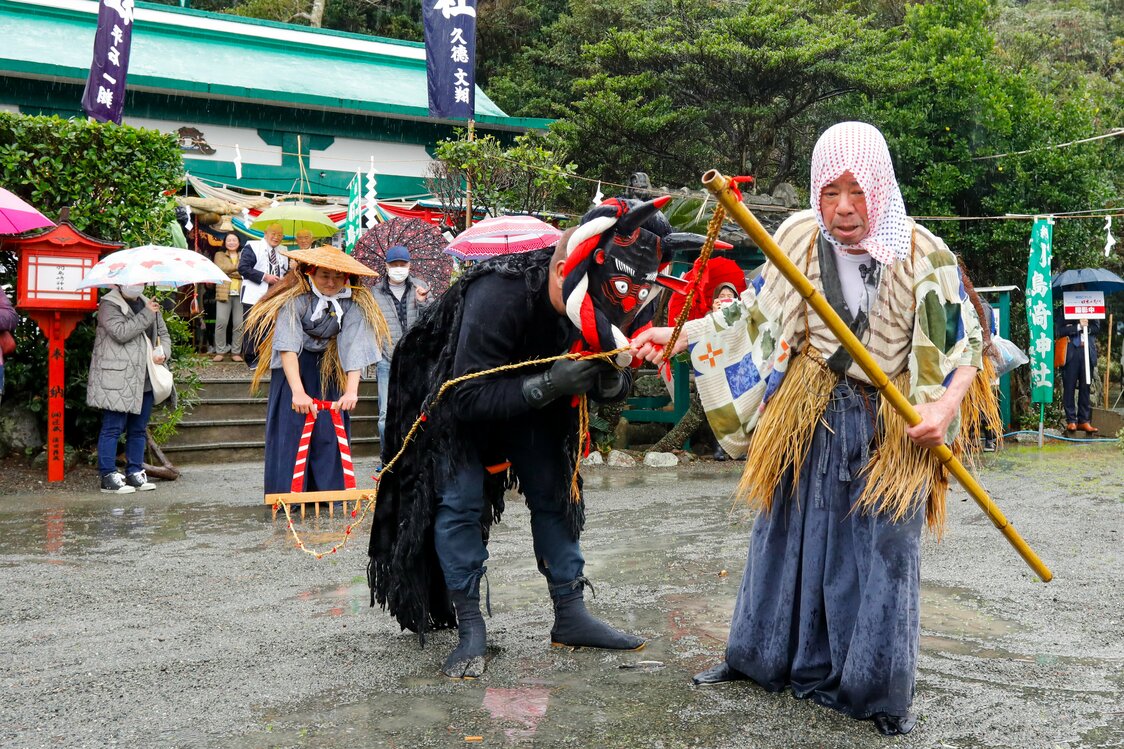
Humorous skits are a highlight of this festival. (© Haga Library)
-
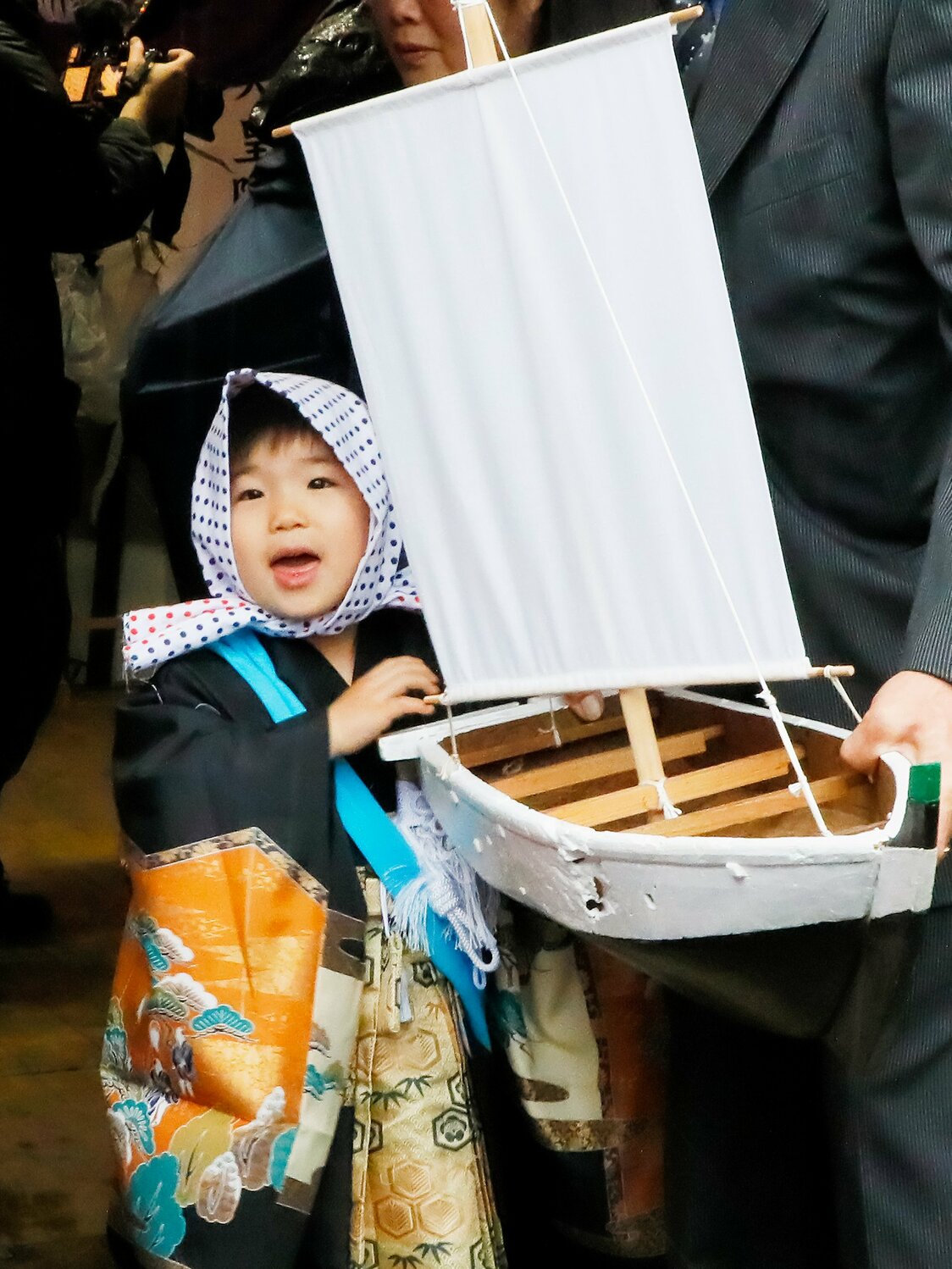
Funamochi is a ceremony to ensure a good harvest; it is also a rite of passage for young children. (© Haga Library)
-
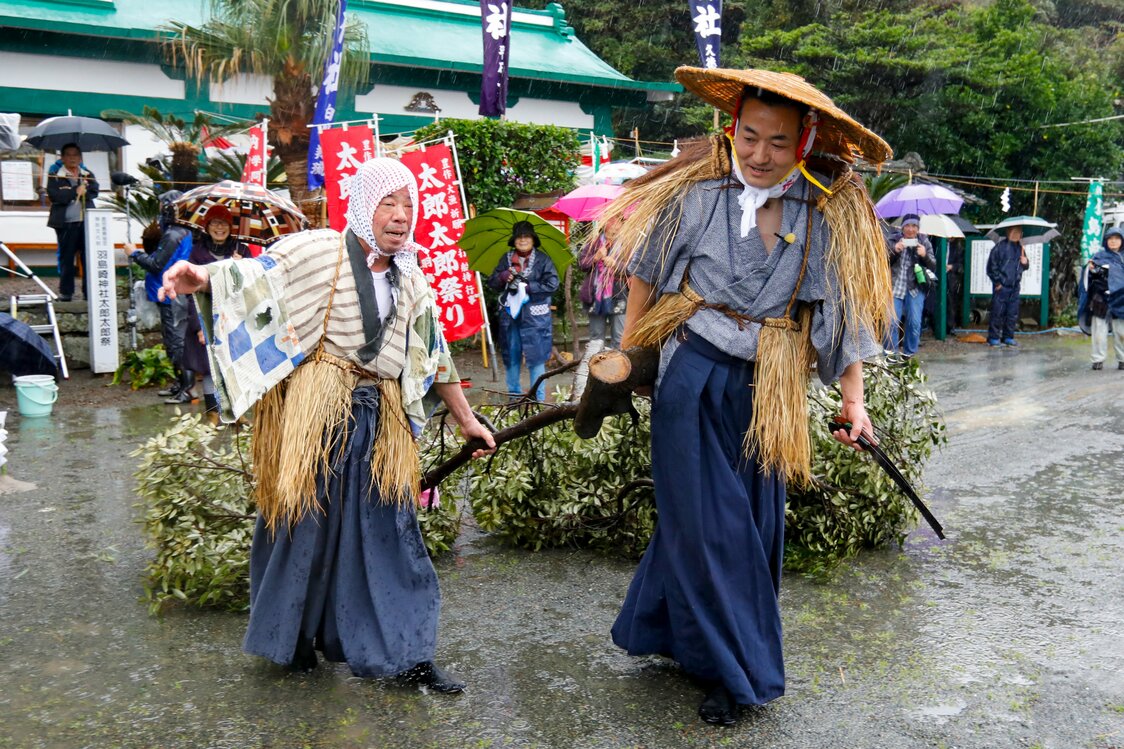
In tauchi, Tarō the paddy tiller (left), and his “father” drag branches around to represent farm tools. (© Haga Library)
-
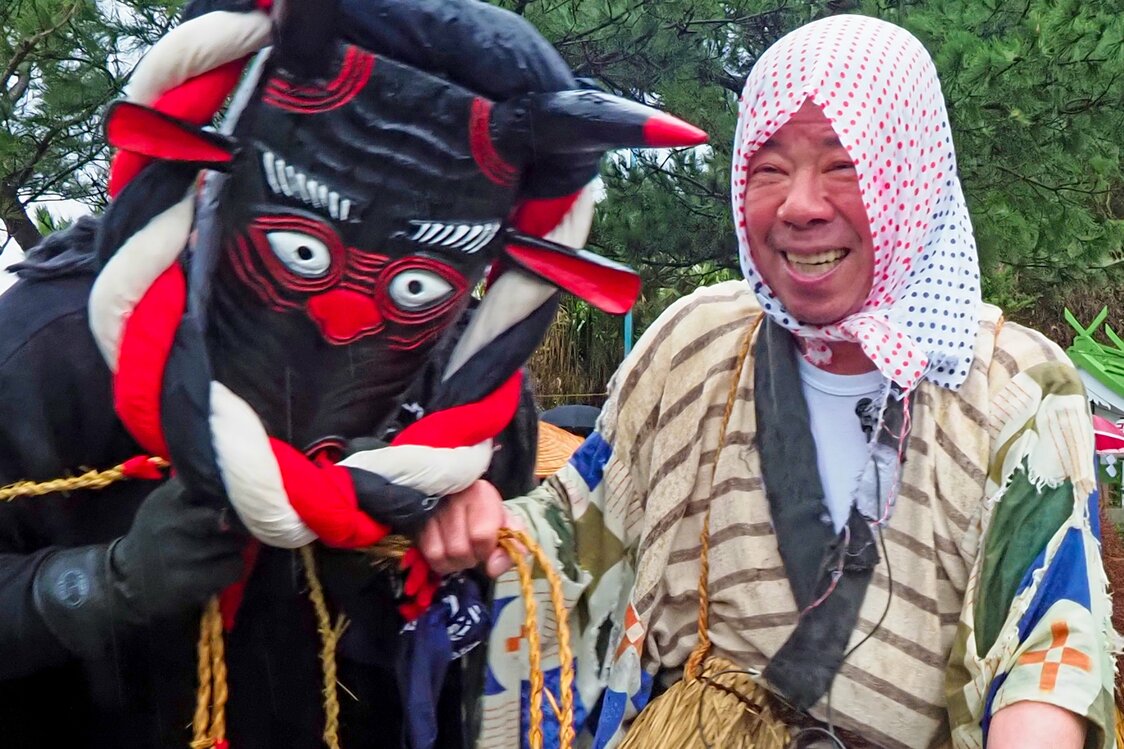
The unruly “ox” is giving the farmer a hard time. The mask bears the date 1781, evidence of the festival’s long history. (© Haga Library)
-
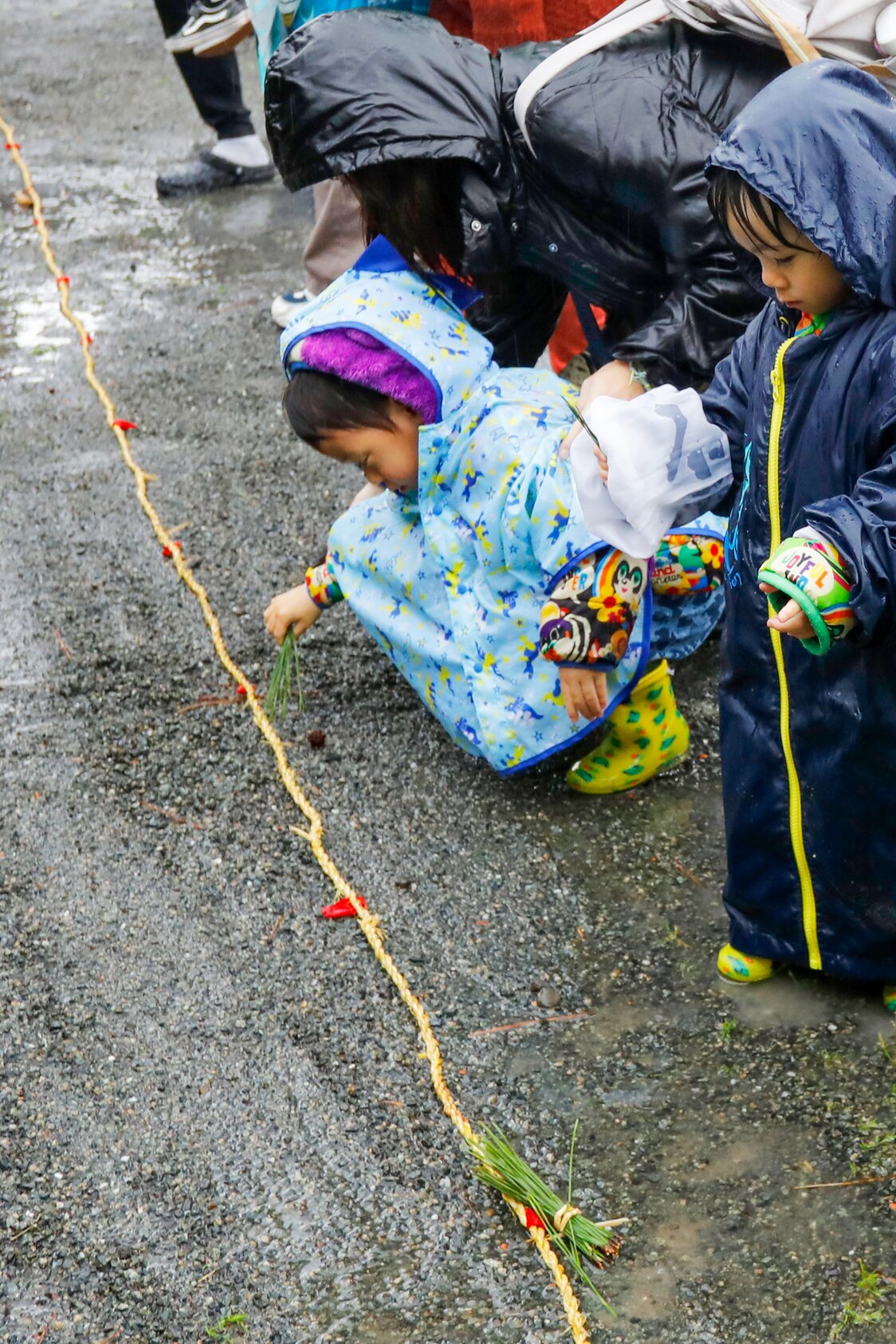
Children plant pine needles bunched to imitate rice seedlings in a mock rice-planting ceremony. (© Haga Library)
-
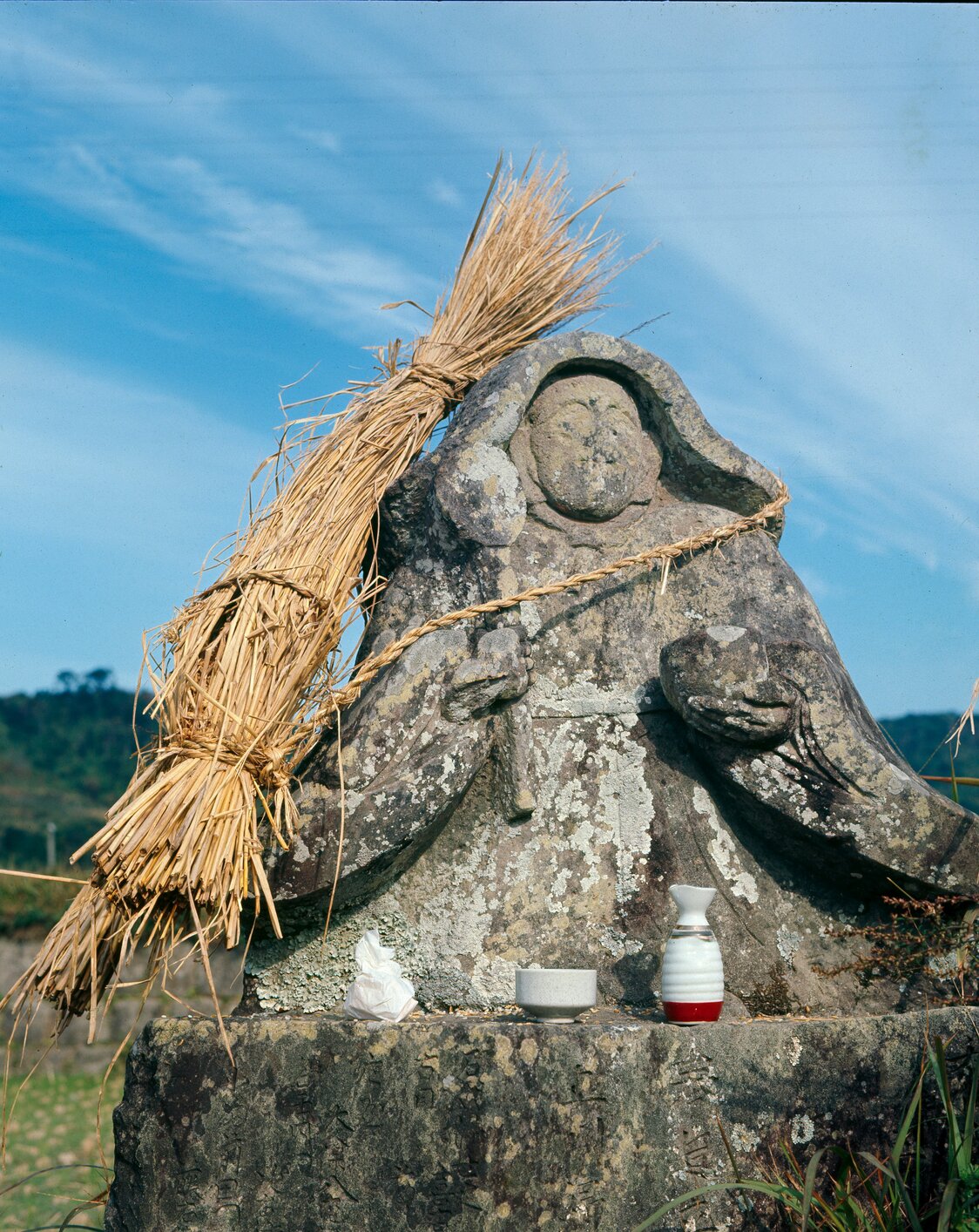
The tanokami watches over the growth of rice and children. (© Haga Library)
-
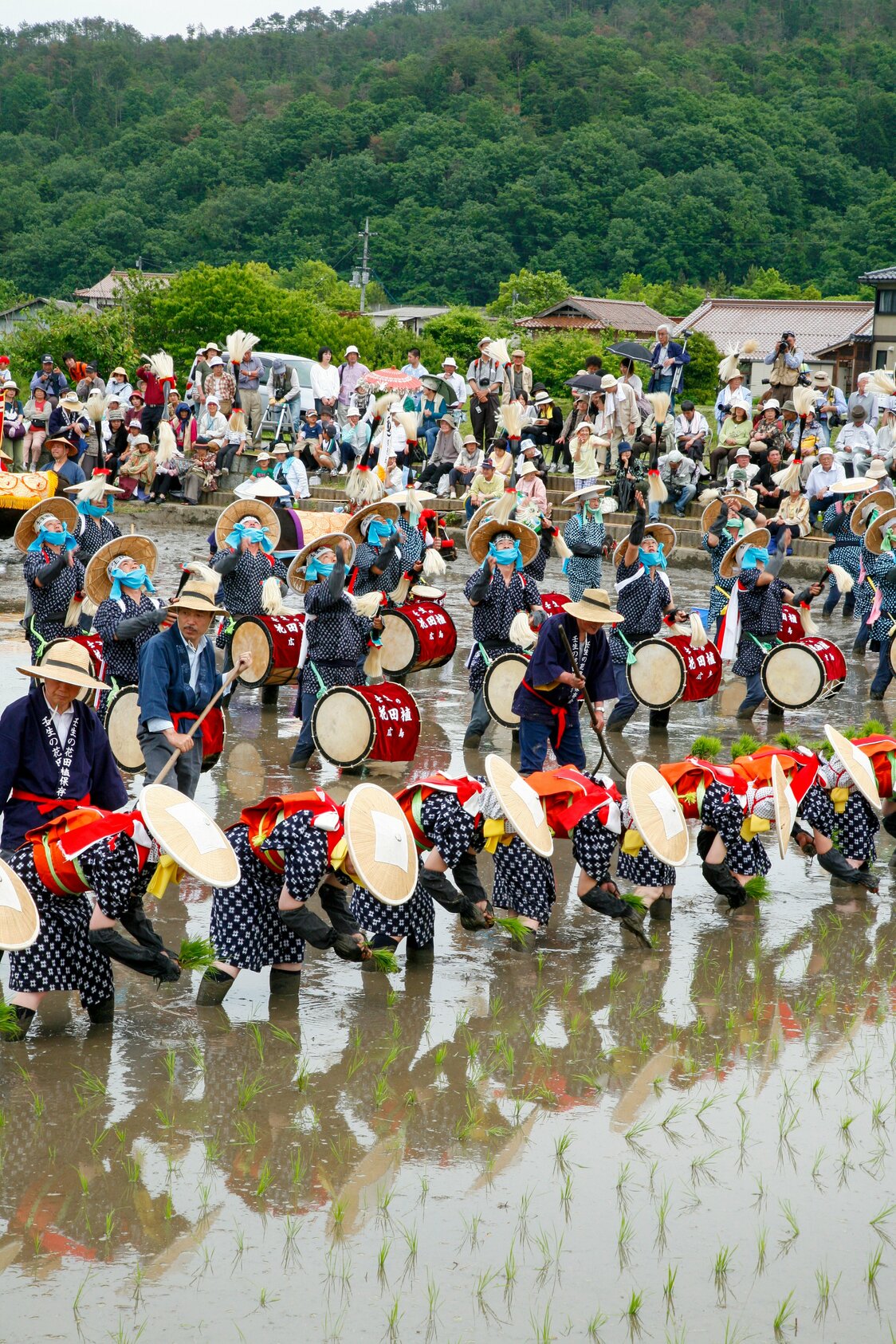
In service to the tanokami, young women plant rice seedlings. (© Haga Library)
-
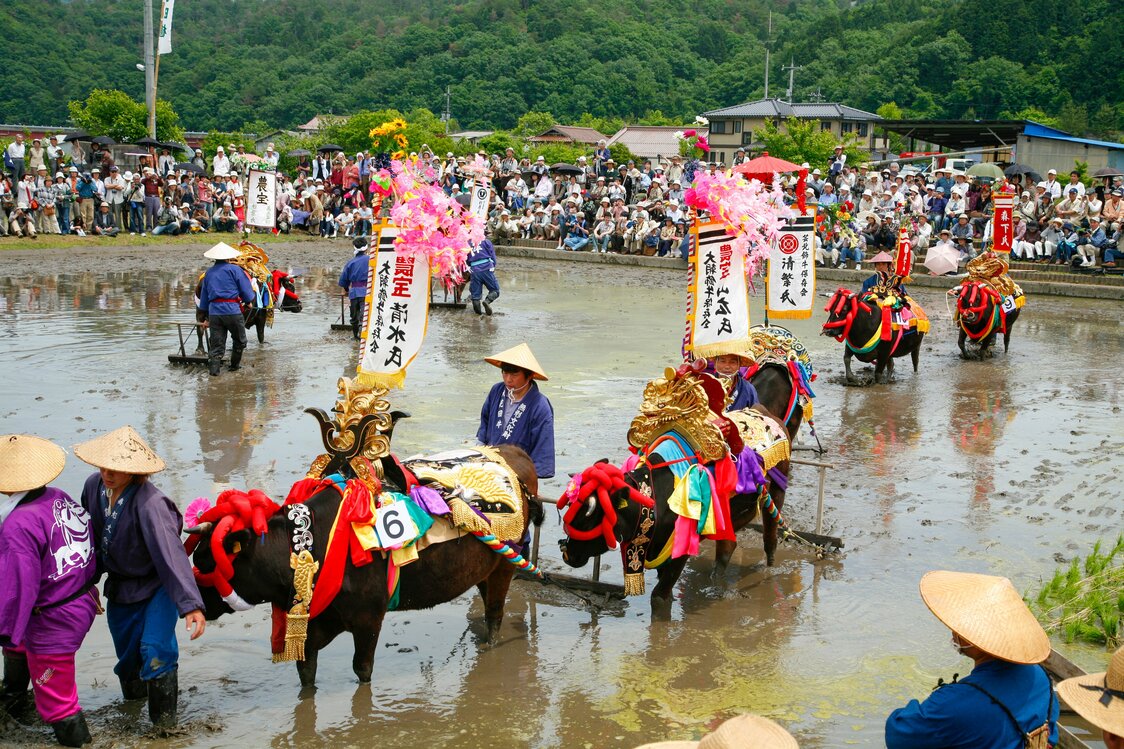
A ceremonial reenactment using oxen to scrape and level a rice paddy. (© Haga Library)
-
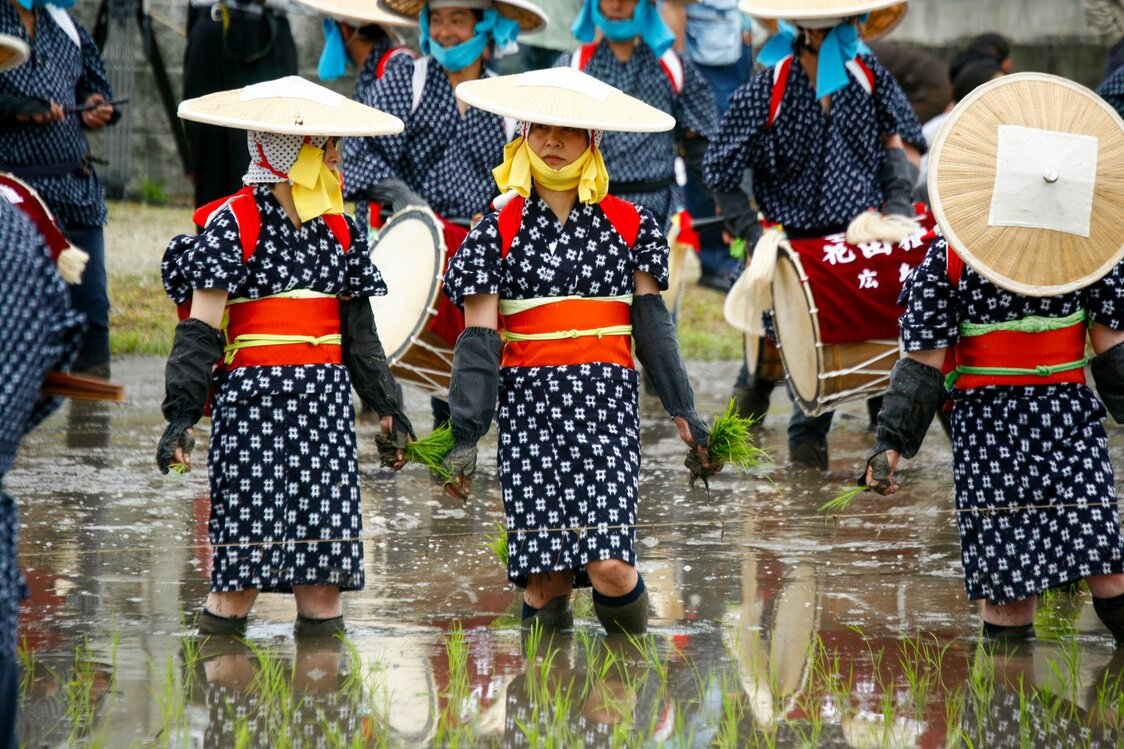
Female rice planters wear sedge hats and kasuri (ikat, a form of tie-dye) kimono. (© Haga Library)
-
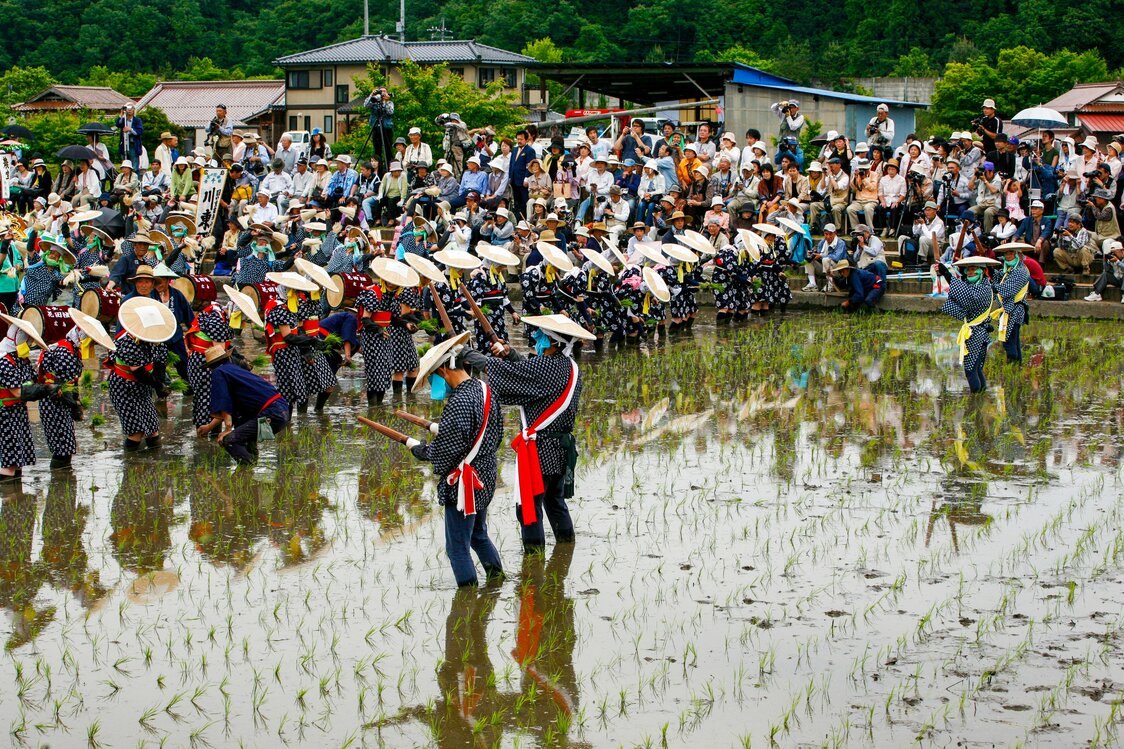
The sanbai-san chorus leaders lead the rice-planting singing. (© Haga Library)
-

The festival in 1954, photographed by folklore photographer Haga Hideo. At the time, over 200 people participated in the planting. (© Haga Library)


 Read in other languages