-
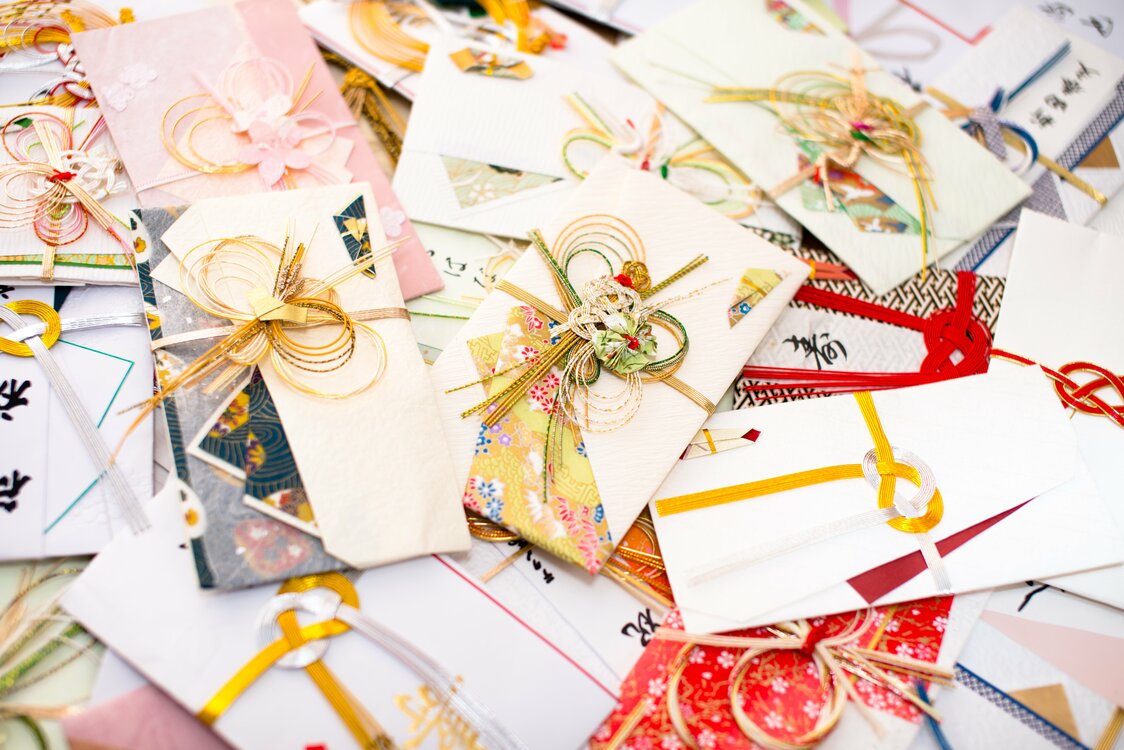
A colorful assortment of shūgi bukuro envelopes. In general, the larger the amount of the gift, the fancier the envelope used. (© Pixta)
-
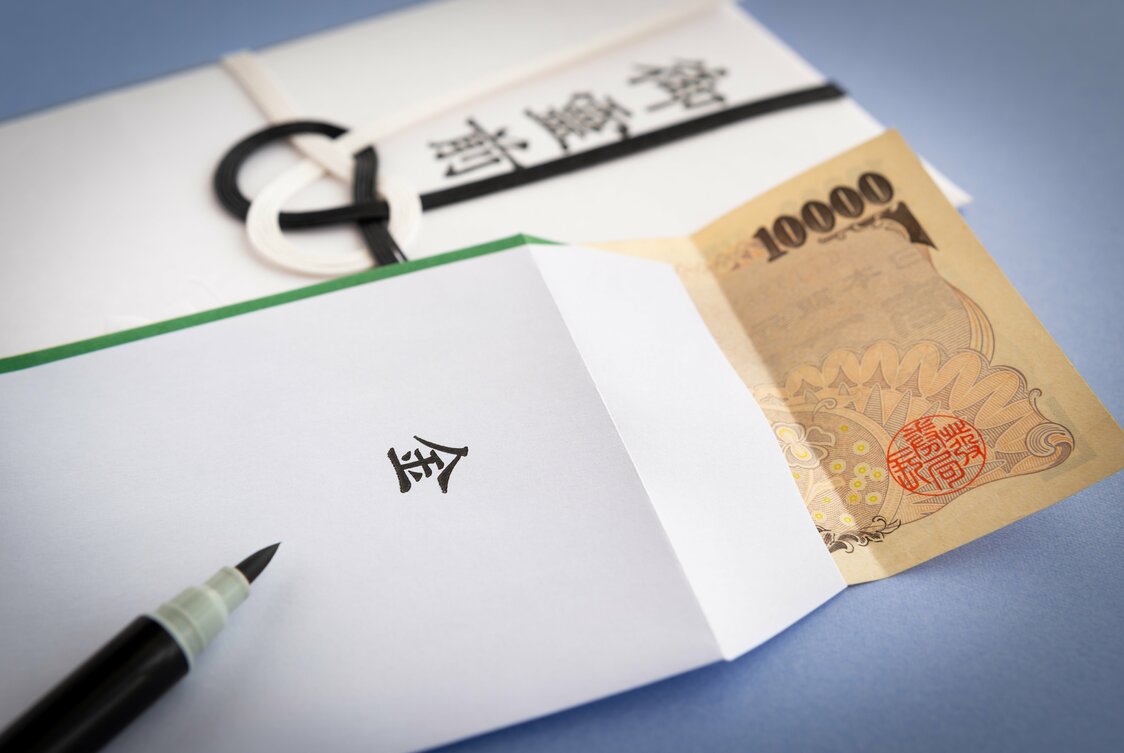
Bills used for kōden should not be new, as this carries the implication of having expected the death and prepared in advance; some people make a point of making a fold in fresh bills to “break them in.” It is also customary to insert the bills with the reverse side facing frontward. (© Pixta)
-
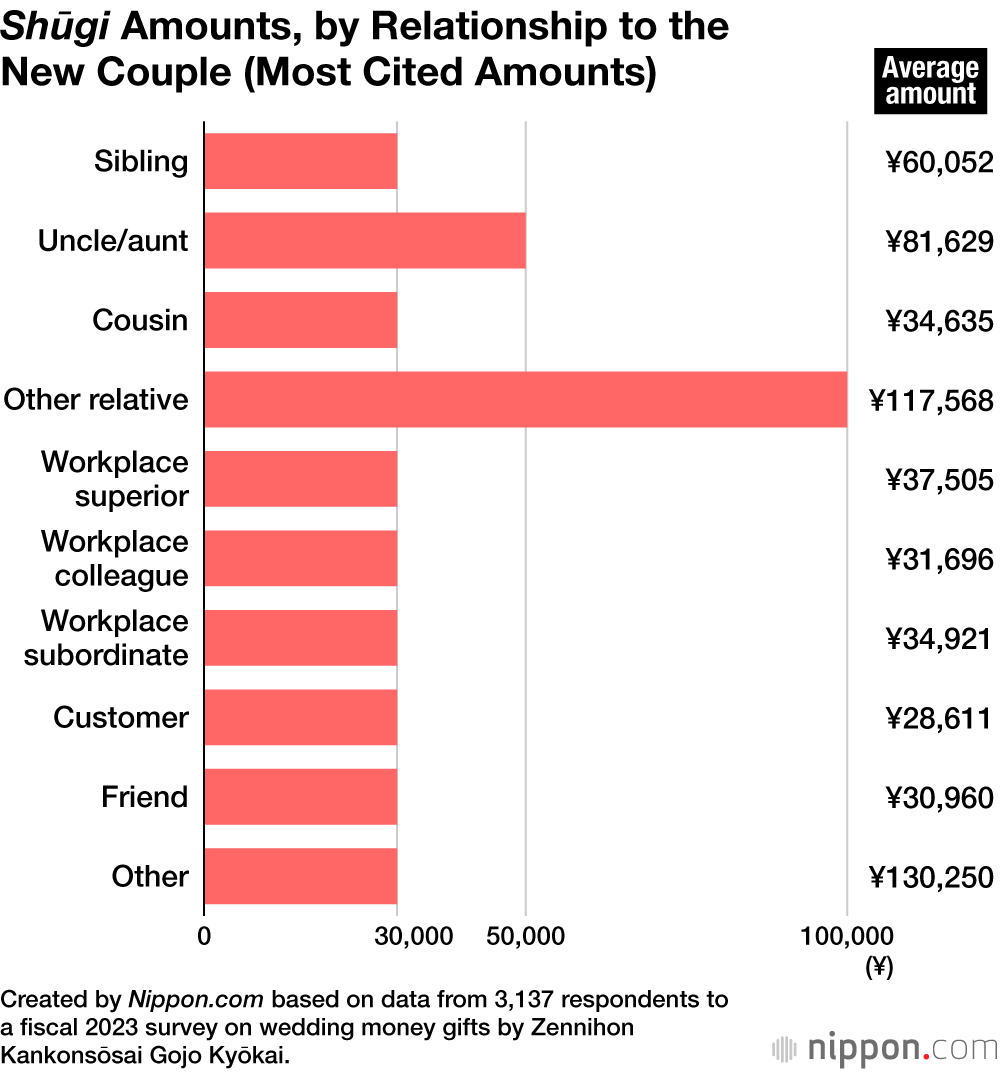
Shūgi Amounts, by Relationship to the New Couple (Most Cited Amounts)
-
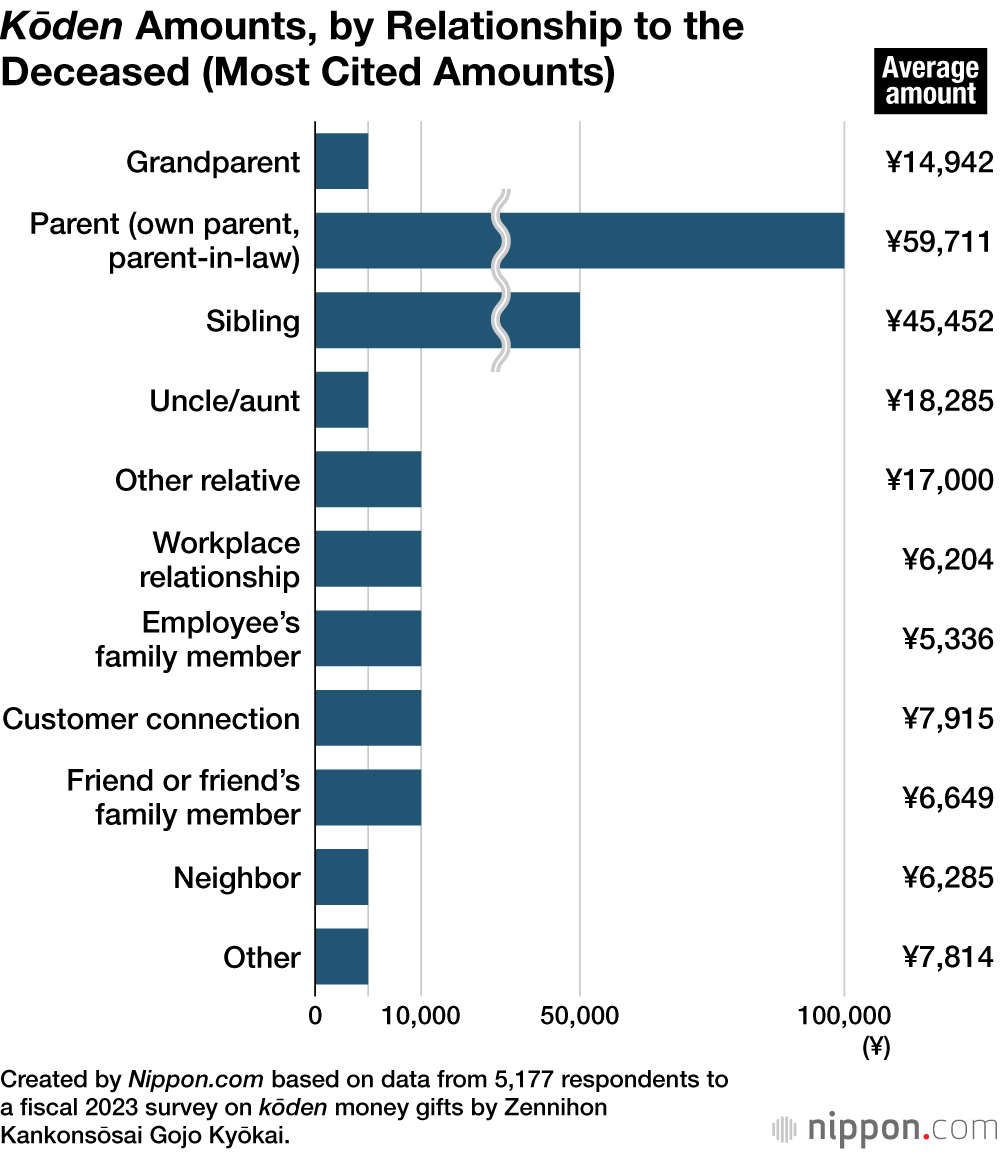
Kōden Amounts, by Relationship to the Deceased (Most Cited Amounts)
-
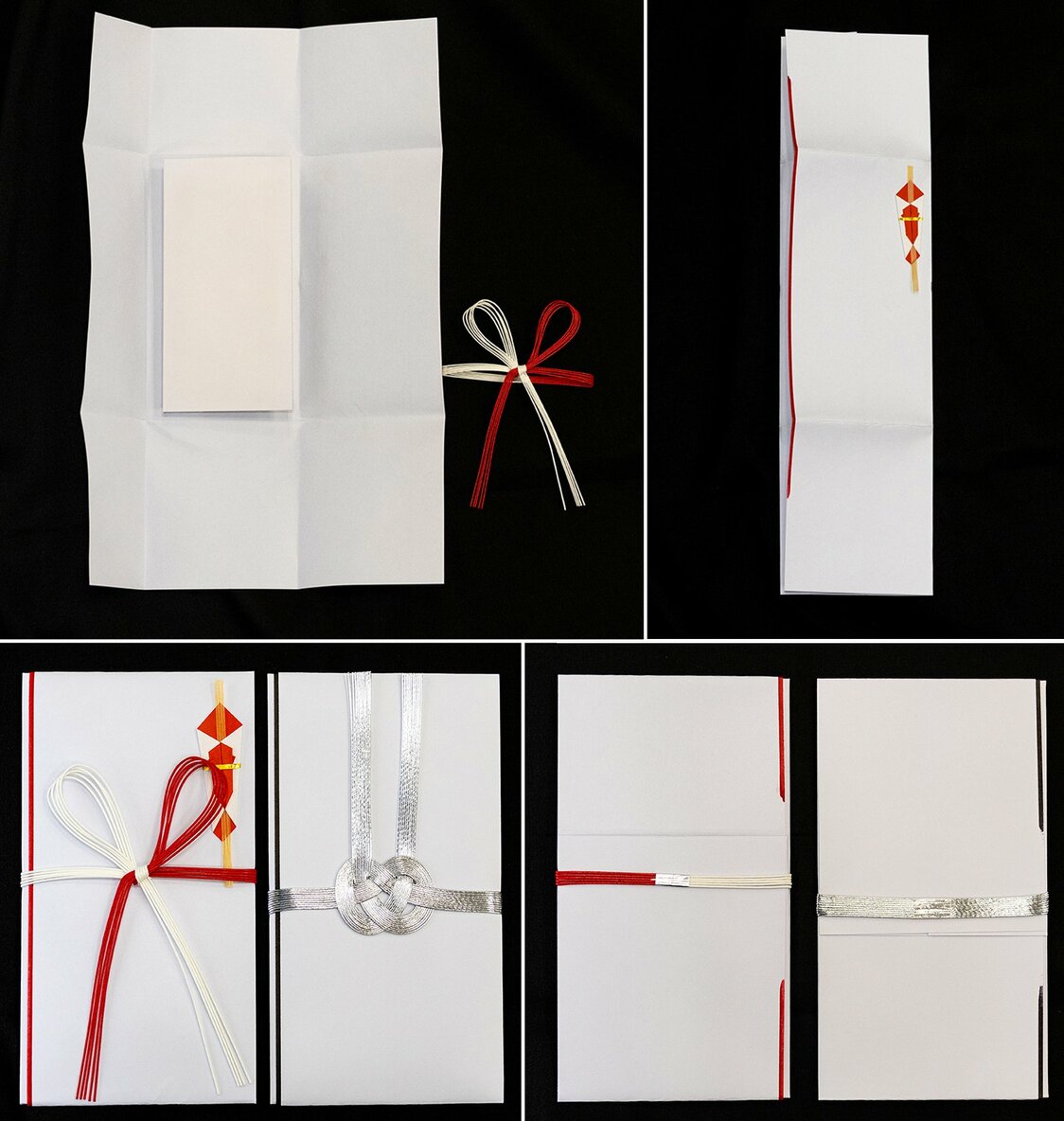
Orikata cover folding sequence and mizuhiki positioning. (© Nippon.com)
-
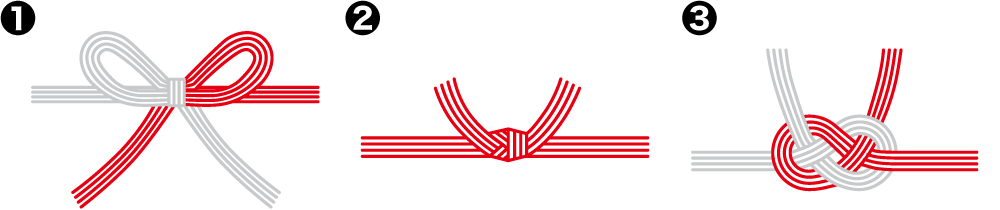
(© Pixta)
-
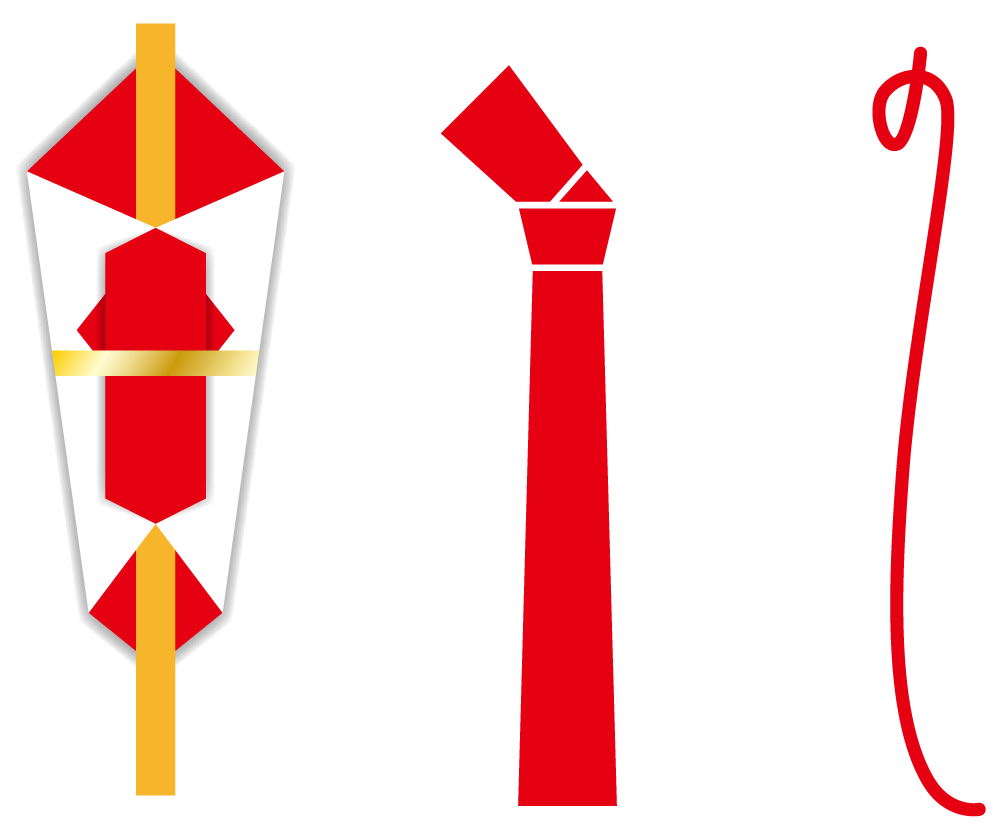
Examples of noshi. From left, a folded paper containing a long strip representing dried abalone; a simplified representation of noshi; a stylized rendering of noshi (のし) in hiragana. (© Pixta)
-
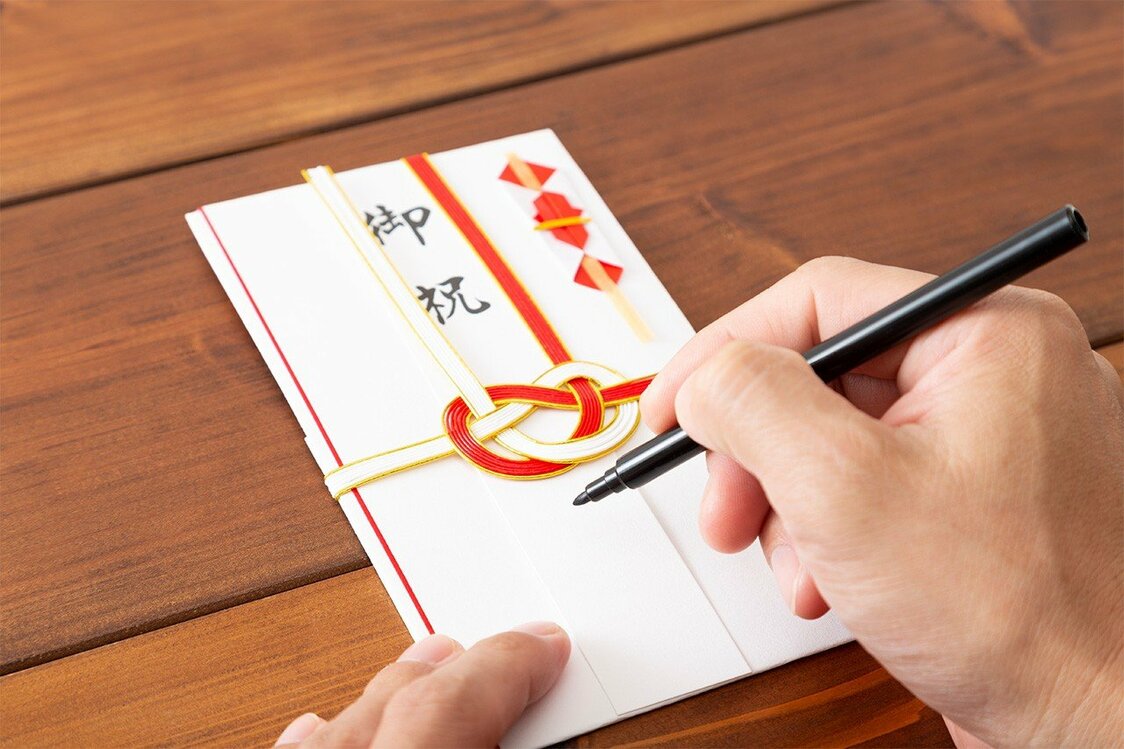
Many envelopes sold in stores come with the purpose of the gift already printed on the envelope. (© Pixta)
-
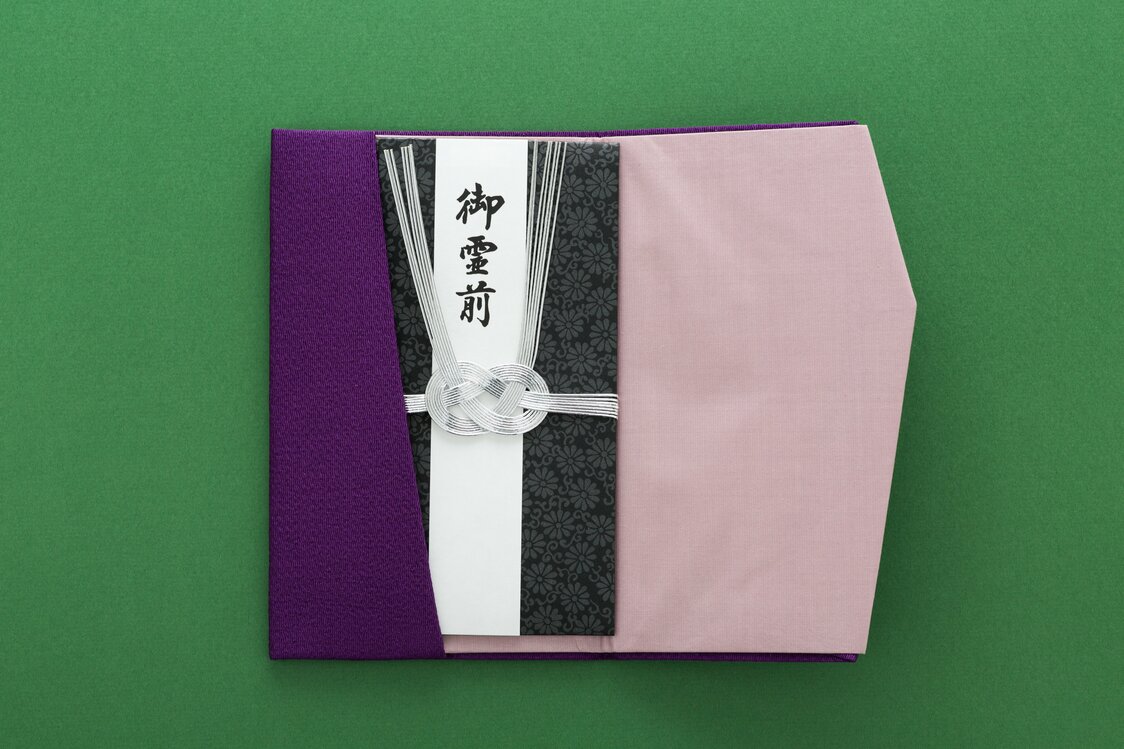
An envelope-style fukusa silk wrapping cloth. (© Pixta)
-
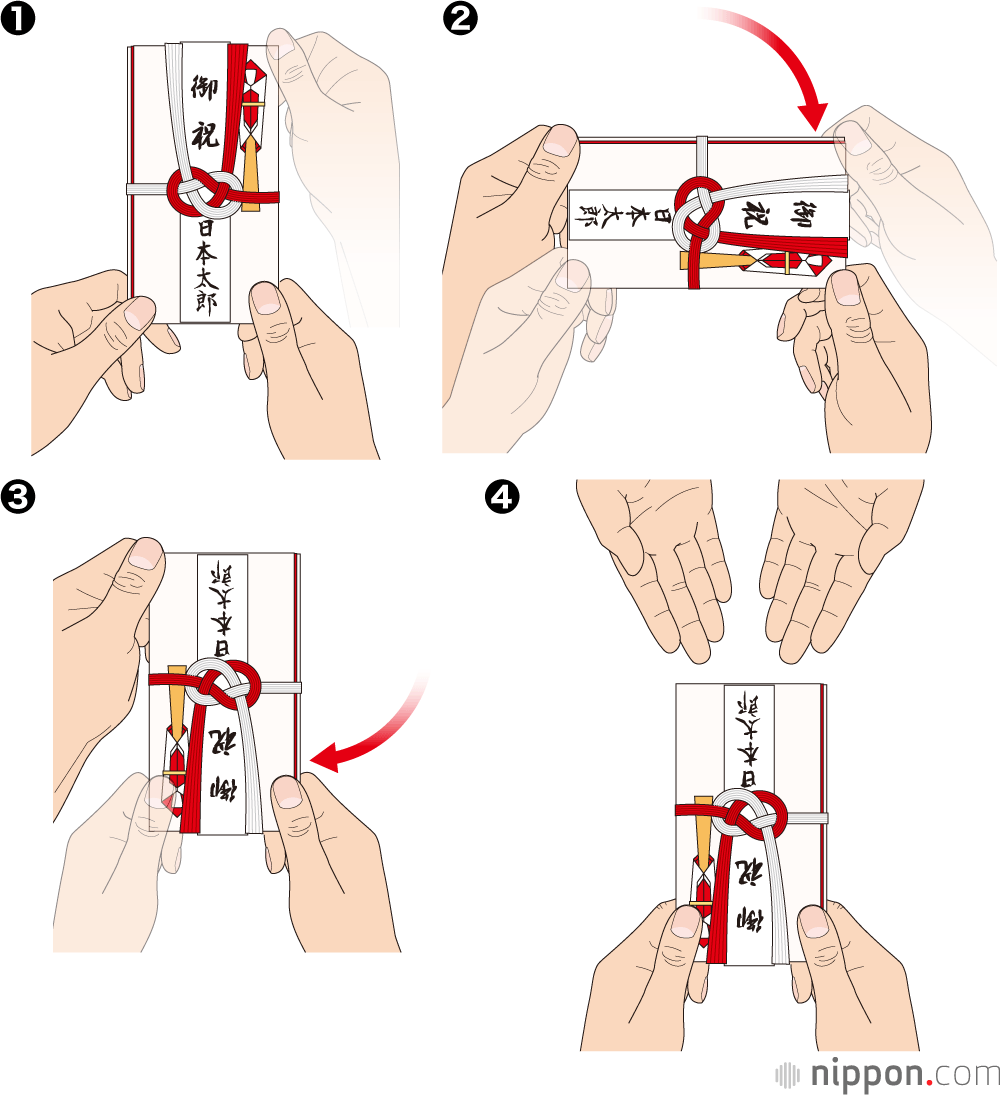
Illustration by Satō Tadashi
-
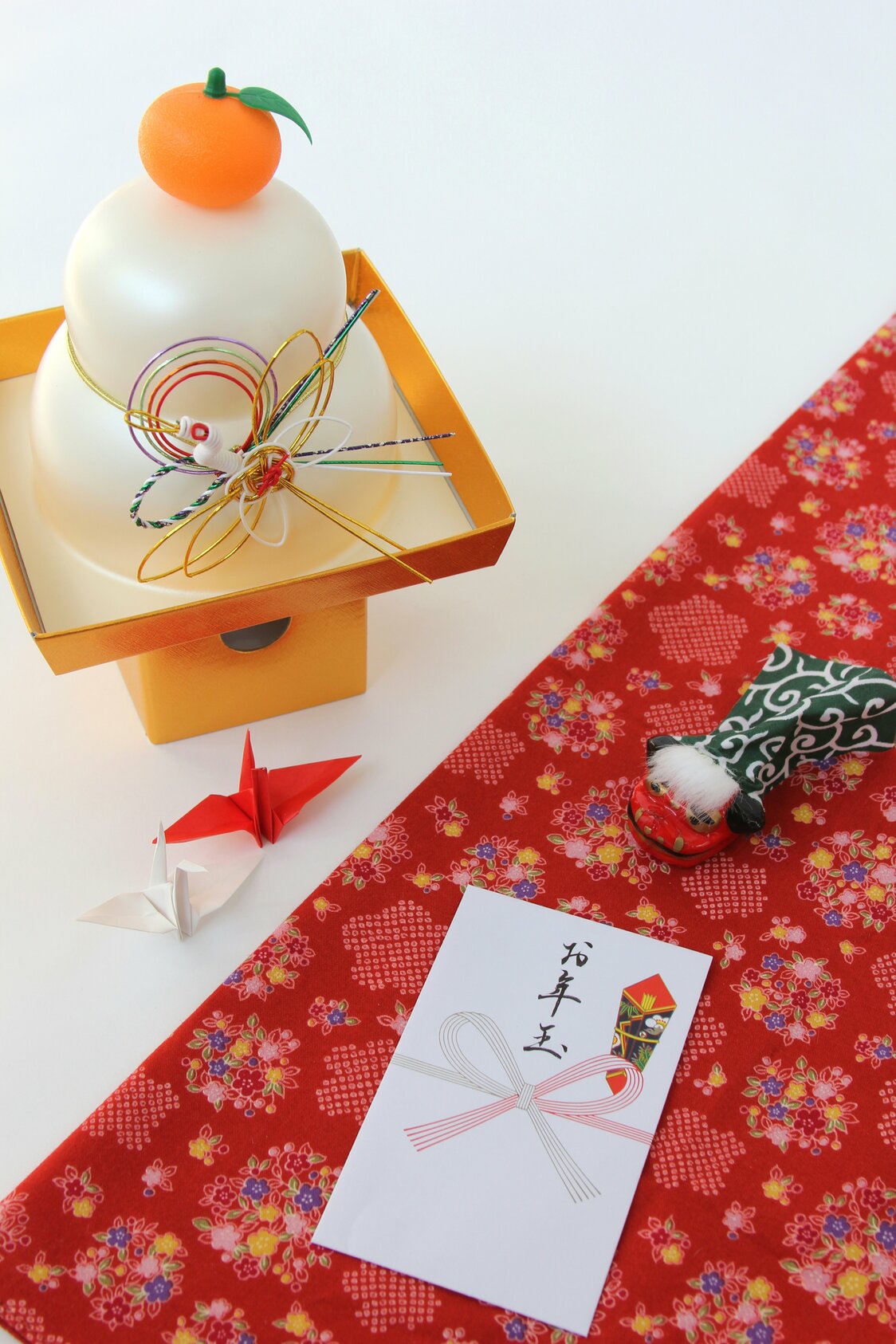
Kagami mochi at left, and a pochi bukuro envelope at right, which is used to present otoshidama money. Pochi meaning “a little,” signifies it is just a small amount. (© Pixta)


 Read in other languages