-
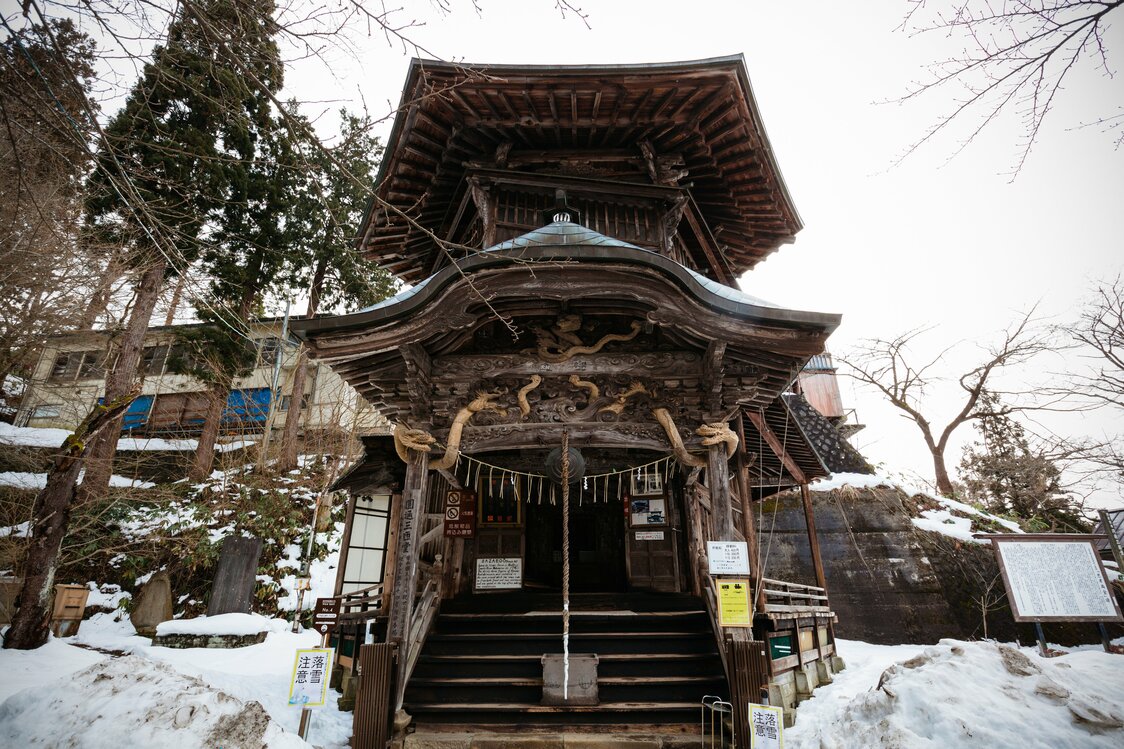
Shōsōji was closed following the Meiji government’s 1868 Shinbutsu Bunri-rei (Edict for Separation of Shintō and Buddhism) and the establishment of State Shintō as the Japan’s official religion. However, the Aizu Sazaedō itself passed into private hands, and has been preserved to the present day. It was extensively rebuilt in 1890, but its unique structural elements live on unchanged.
-
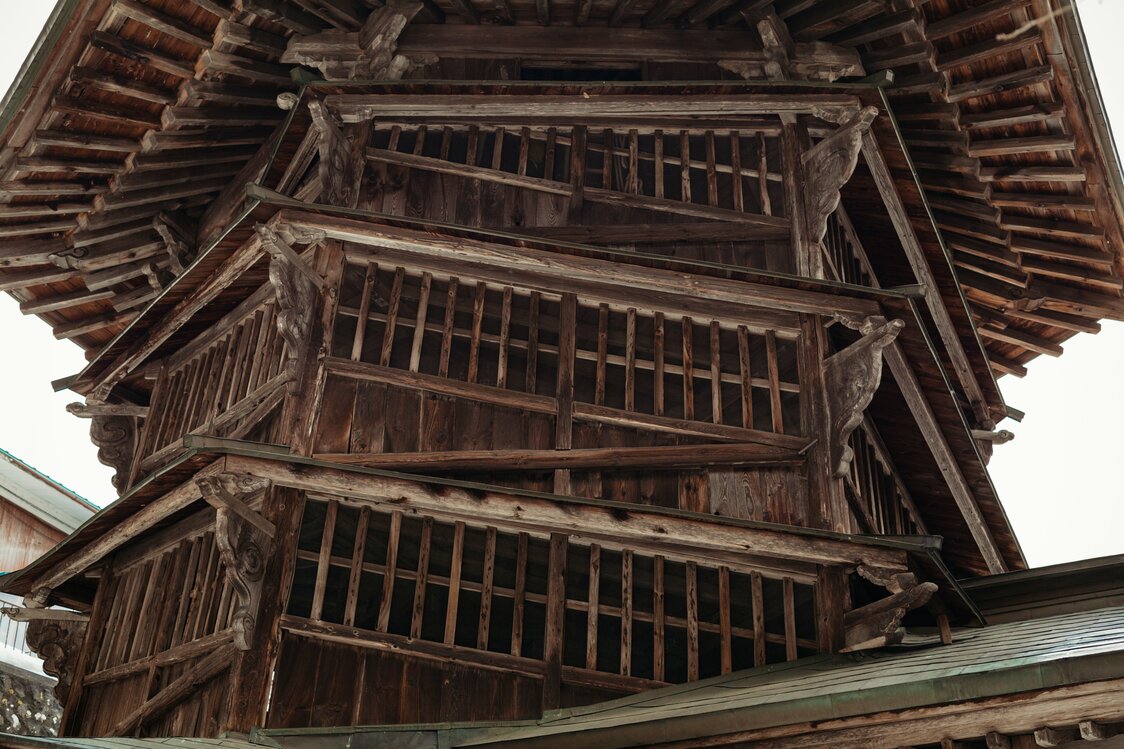
The sazae in Sazaedō is the Japanese name of the Turbo fluctuosa, the turbo sea snail with its curled shell. When seen from the side, the Sazaedō looks like a giant wooden sazae, with its strikingly tilted hisashi outer rooms and windows.
-
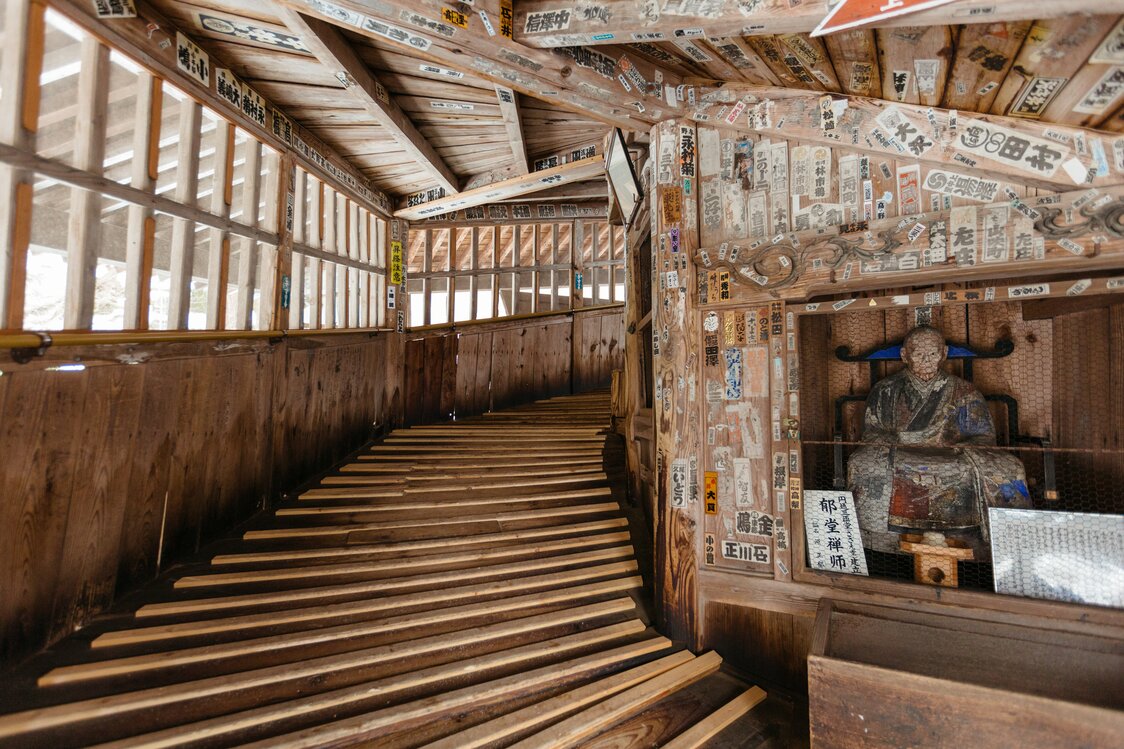
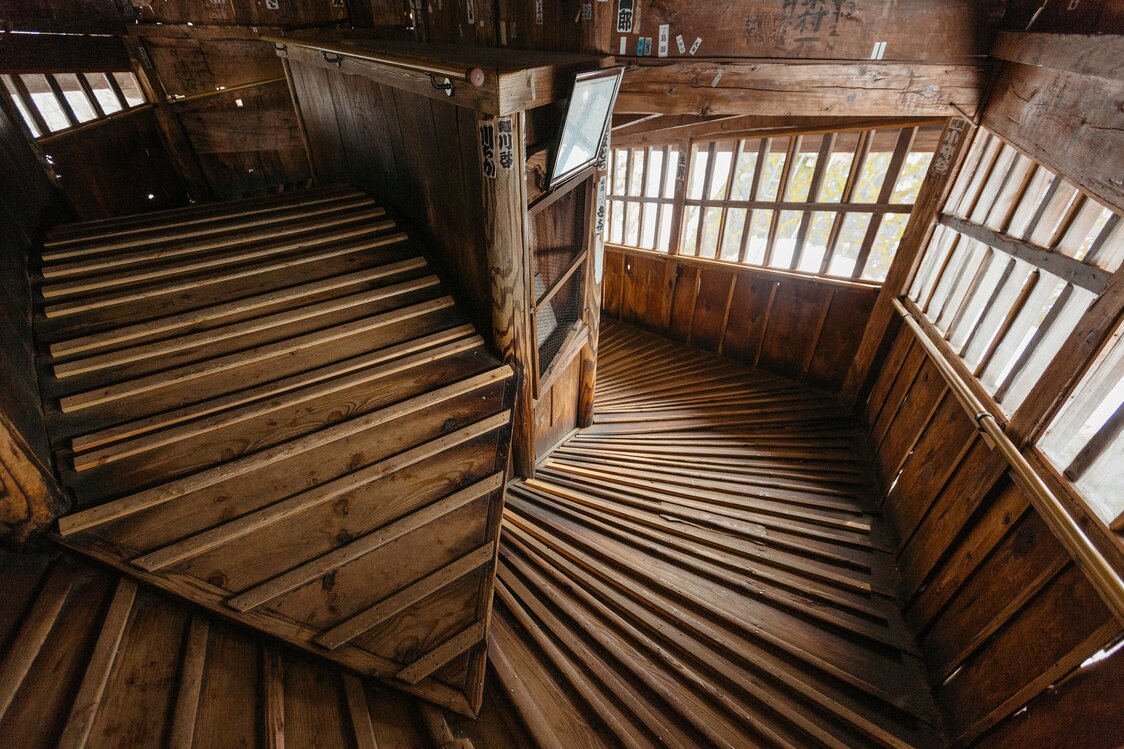
The upward twist of the helix as seen from Sazaedō’s entranceway. Cross boards laid across the floor prevent slipping.
-

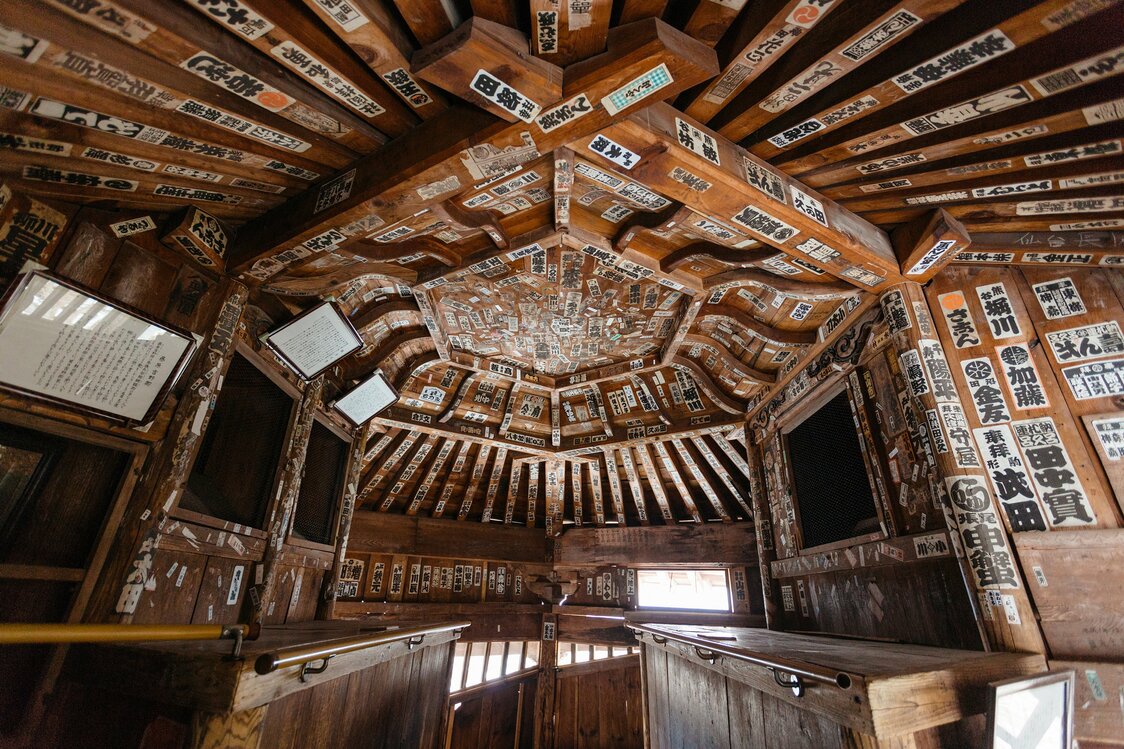
The upward slope looks like a whirlpool from above. In addition to being extremely steep, the floor planks themselves tilt in toward the center of the tower, throwing off your equilibrium.
-
-
-
-
-
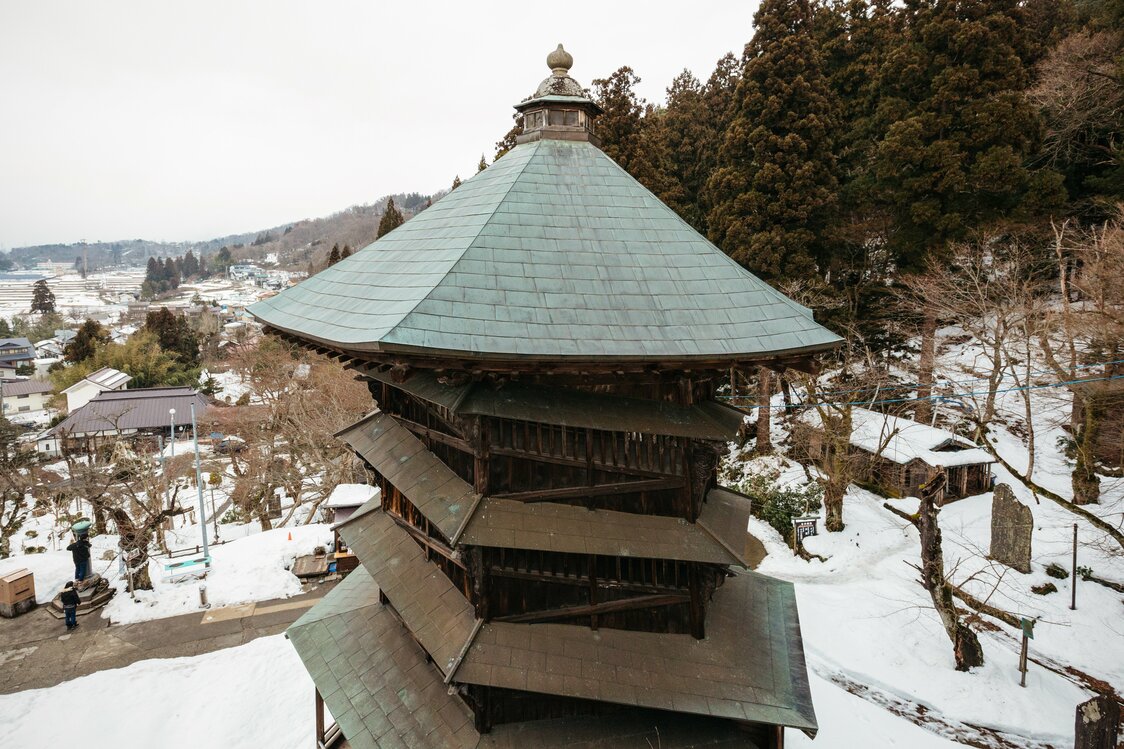
The path to the graves of the Byakkotai, enshrined higher up the flanks of Mount Iimori, affords a sweeping view of the Sazaedō and the countryside beyond.


 Read in other languages