-
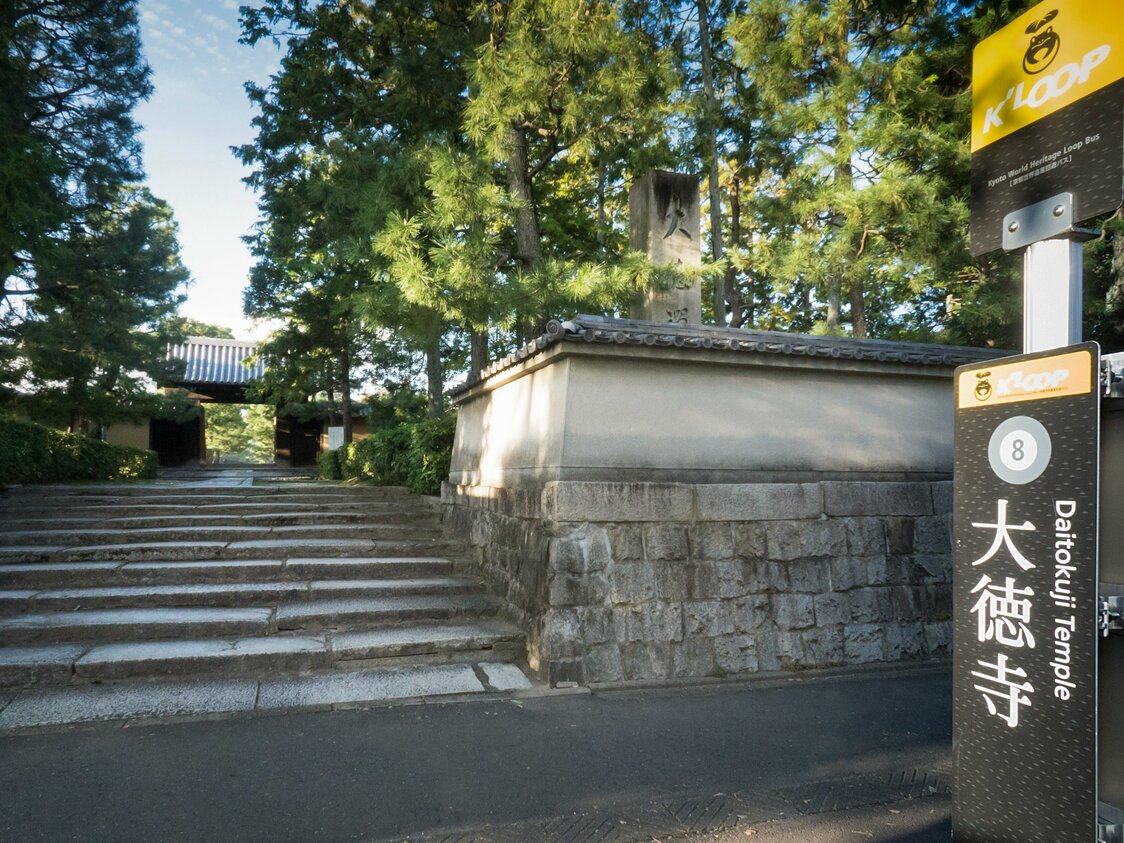
The Daitokuji bus stop for the K’Loop sightseeing bus and municipal bus lines is located on Kitaōji avenue, right in front of the south gate to the complex.
-
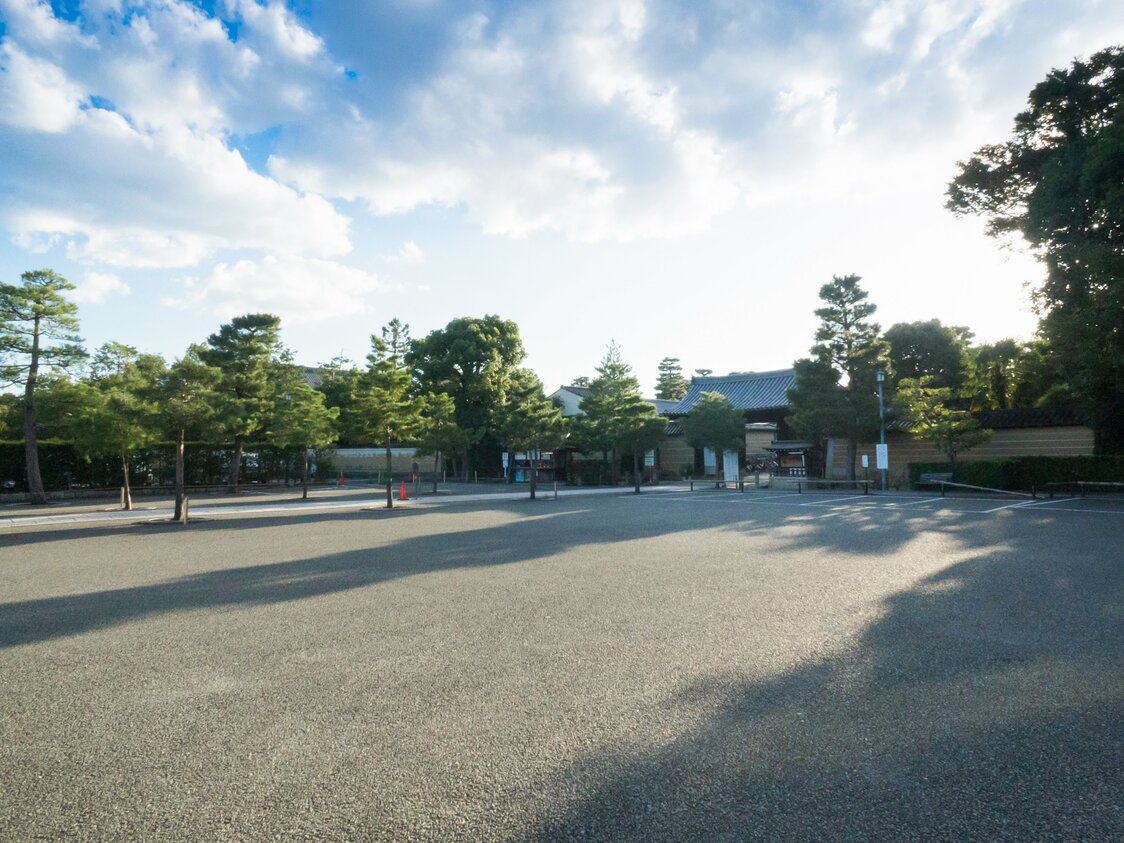
The main gate on the east side of the complex is fronted by a spacious parking area for large tour buses.
-
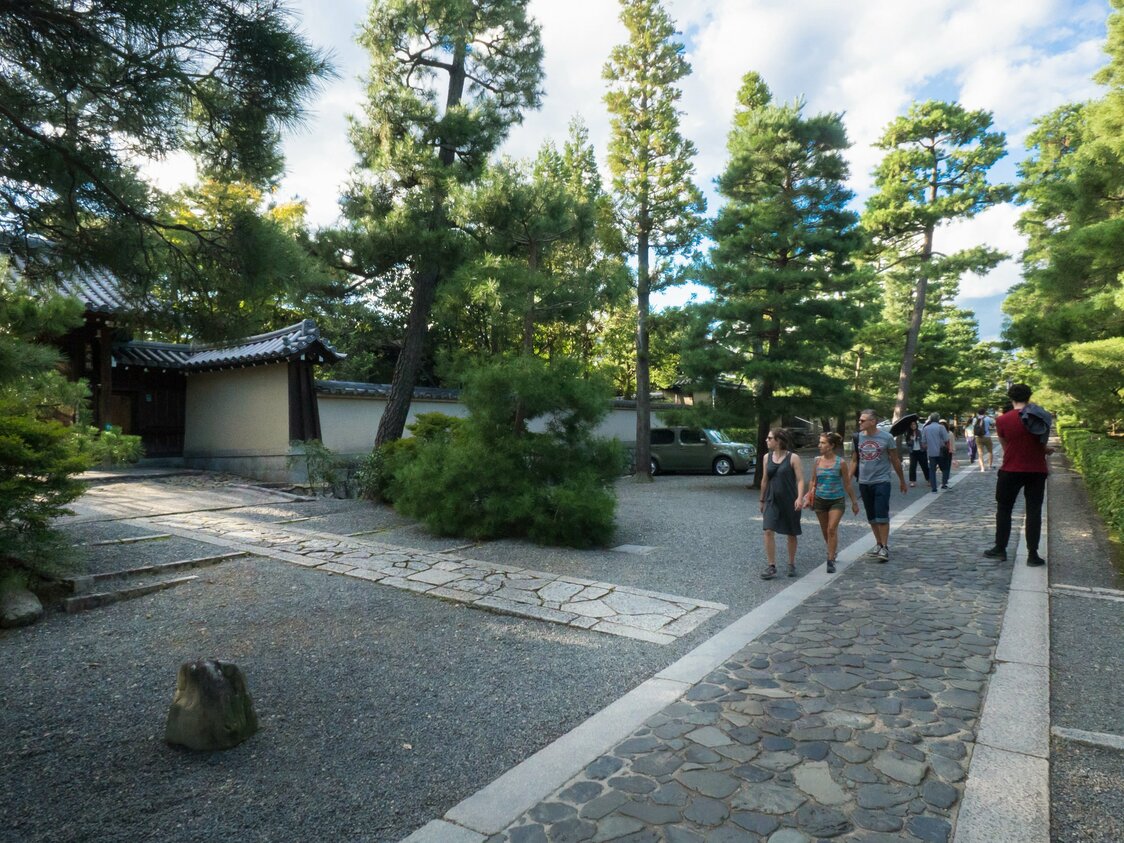
Tourists stroll through the spacious Daitokuji grounds.
-
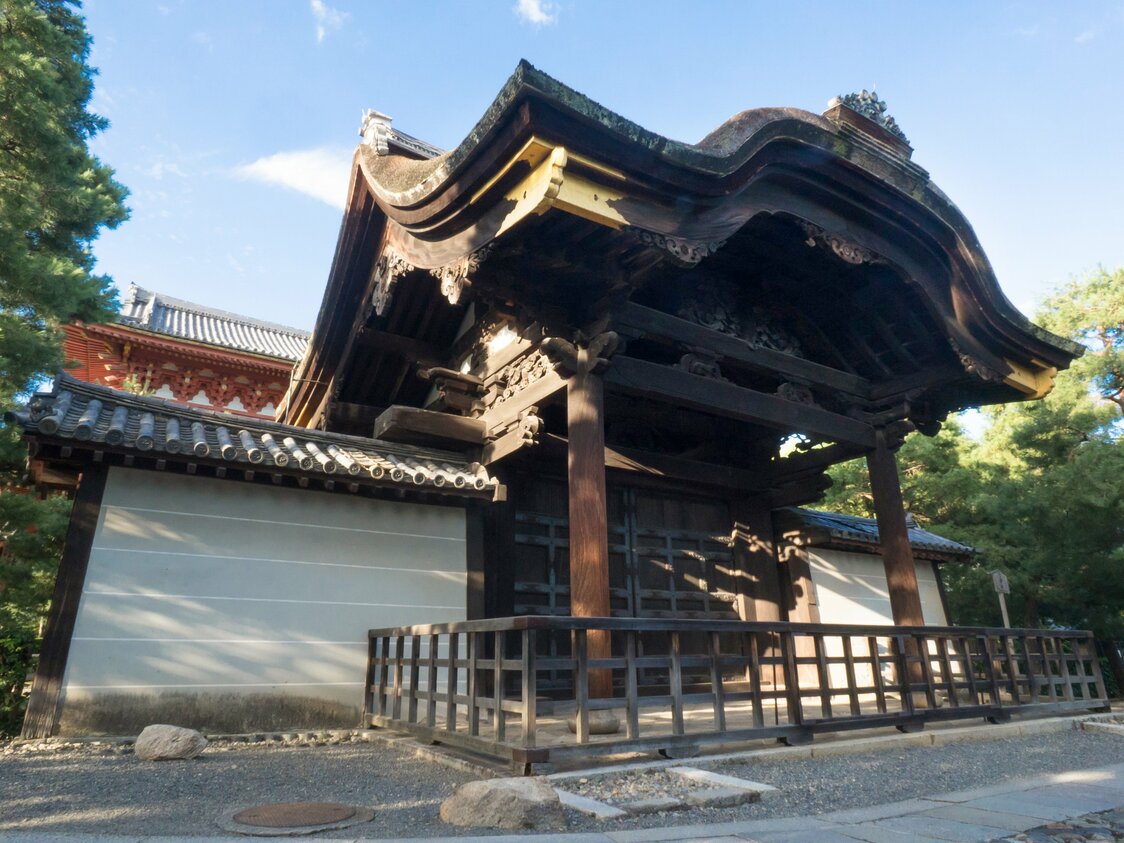
The Chokushimon gate for imperial envoys, an important cultural asset, can be viewed from the walkway to the temple.
-
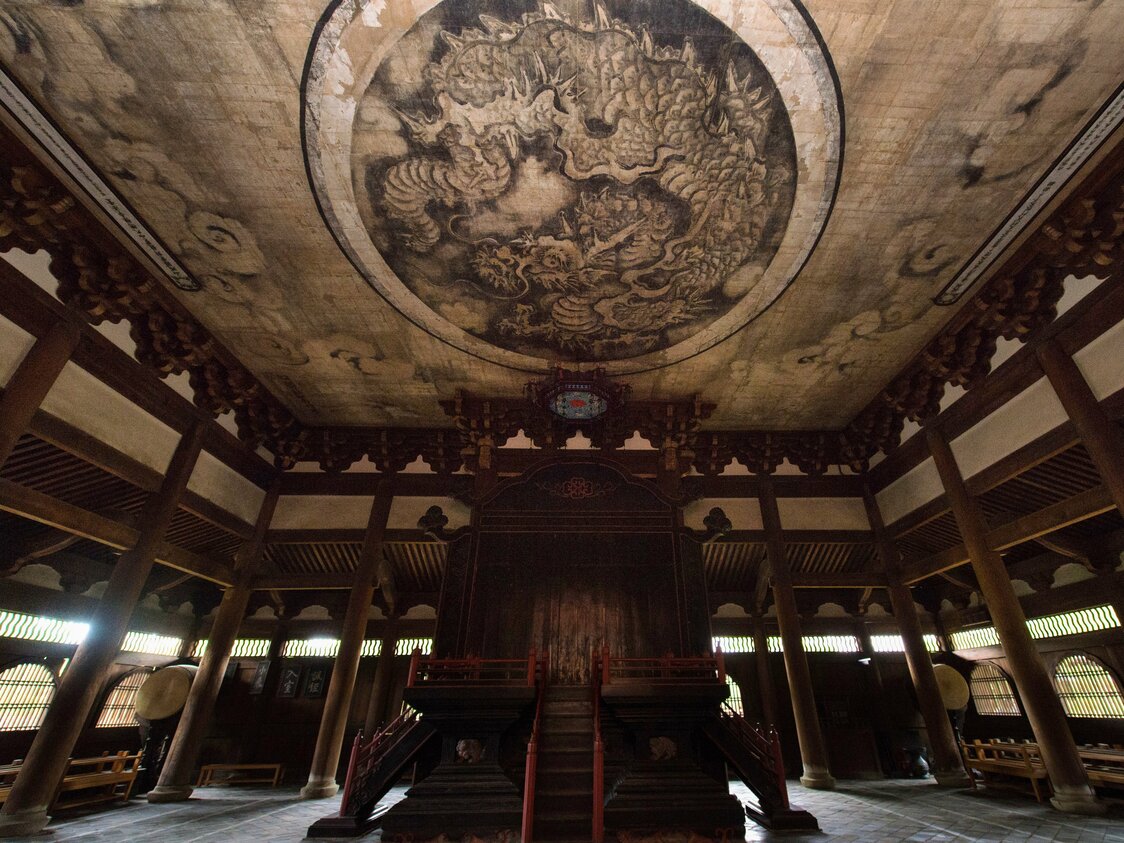
Tan’yū is said to have been just 35 years old when he painted the Unryūzu.
-
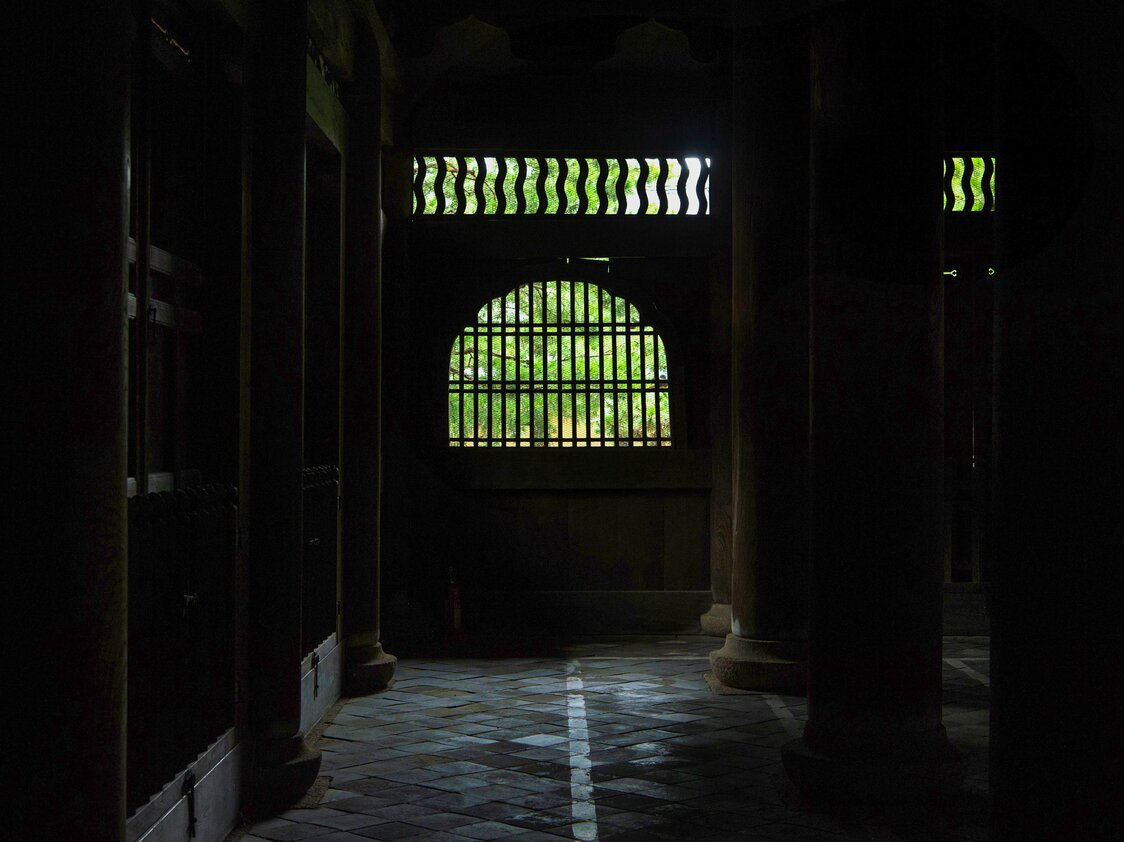
The wavy lines of the ranma transom at the top represent water and were meant to protect the building against fire.
-
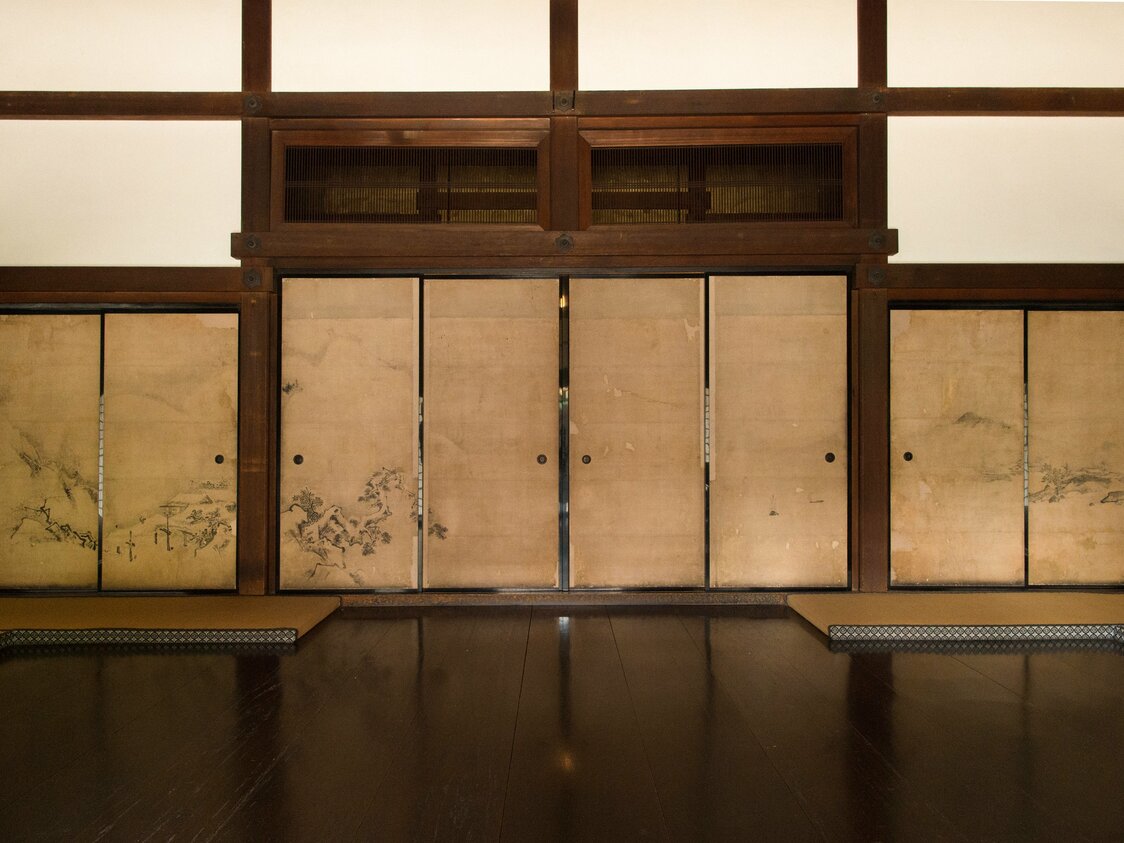
The reserved landscape painting on the fusuma of the central abbot’s chamber.
-
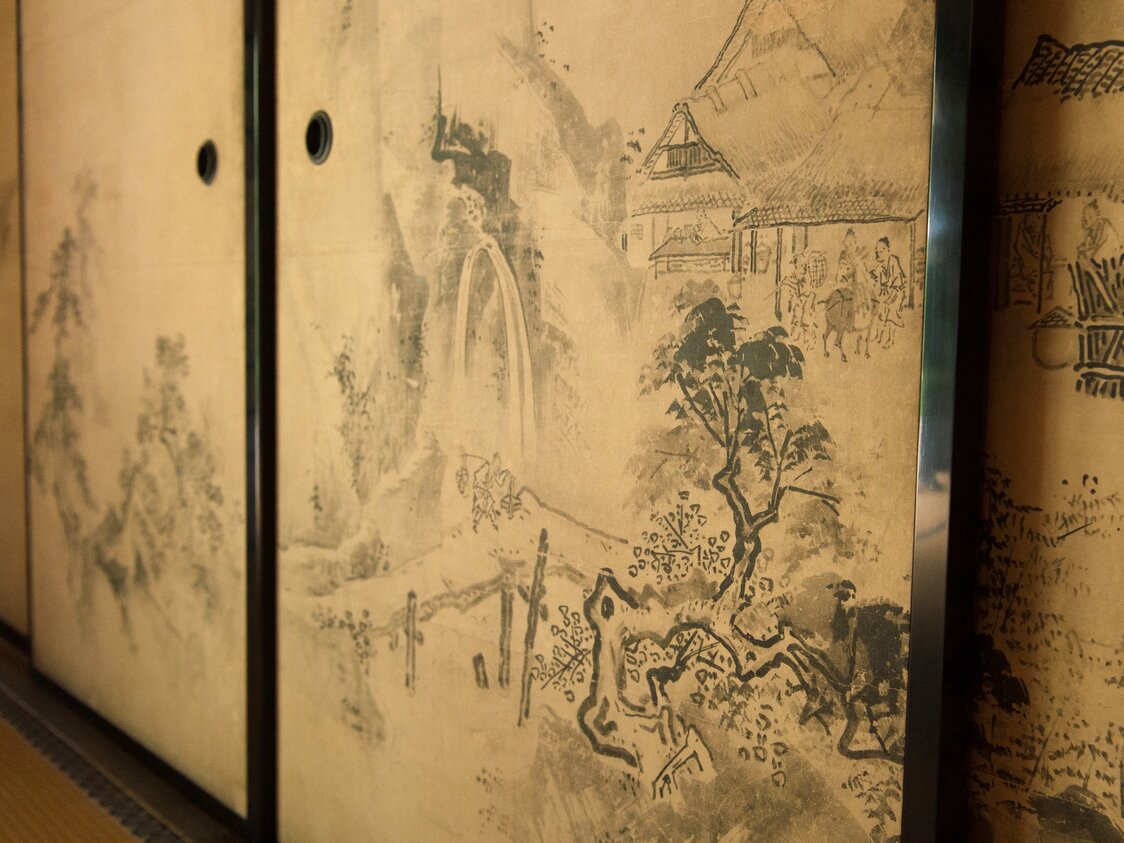
The contrast of dark and light brush strokes adds depth to the painting.
-
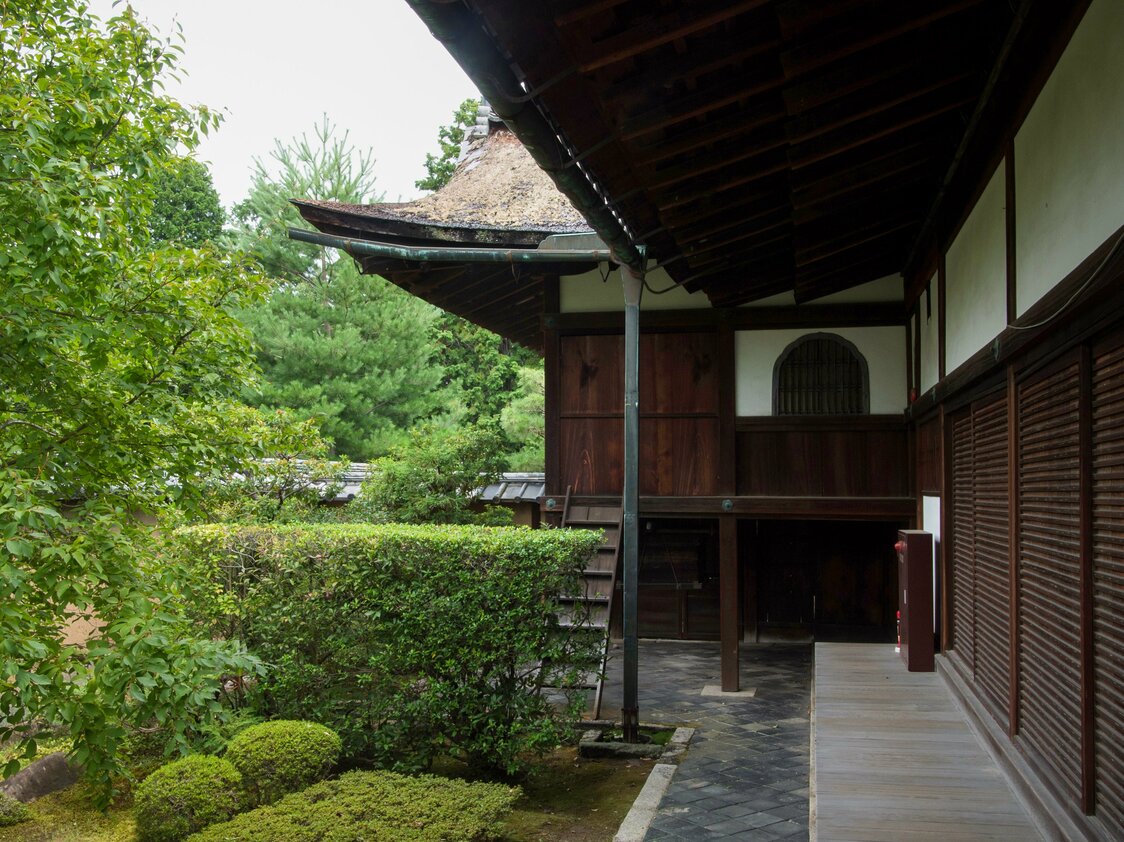
The Unmon-an annex dedicated to Daitokuji’s founder is a part of the abbot’s quarters.
-
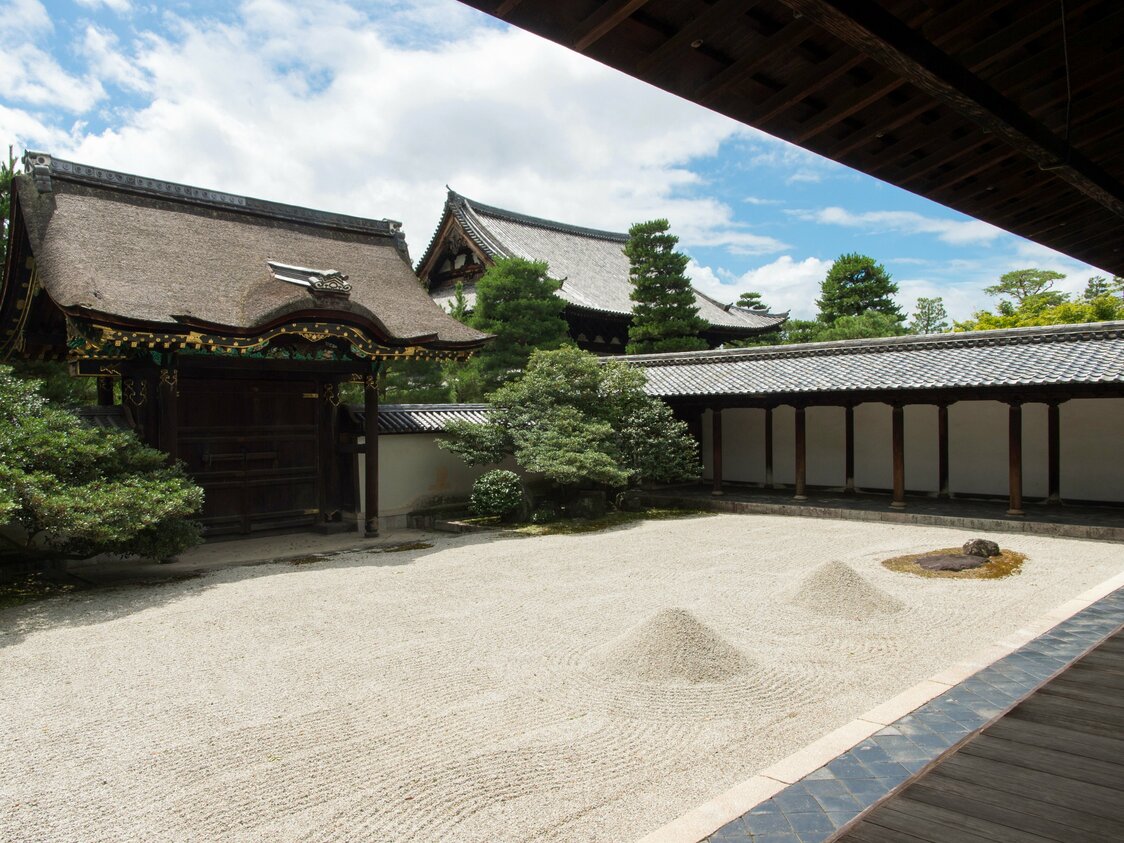
Daitokuji’s Hōjō garden is a designated place of scenic beauty and historical importance. In the background to the left is the Karamon gate, a designated national treasure.
-
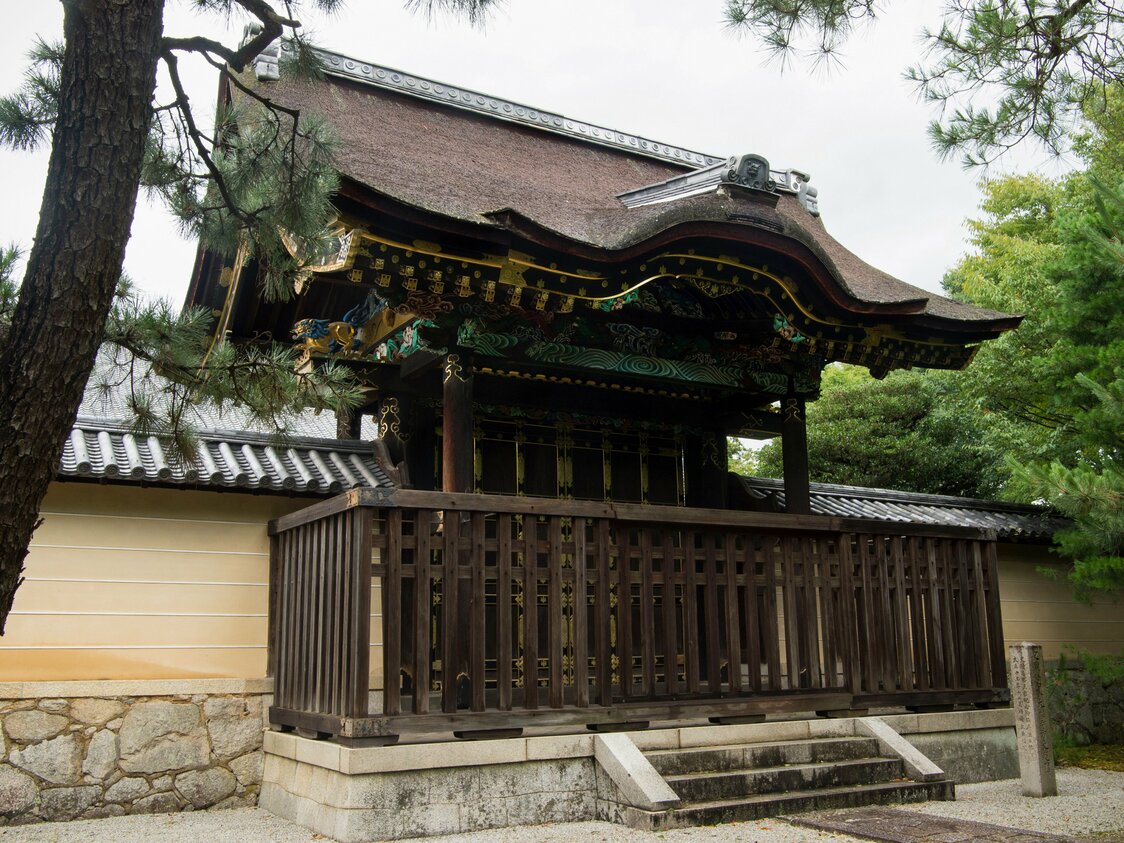
The Karamon gate viewed from outside the garden.
-
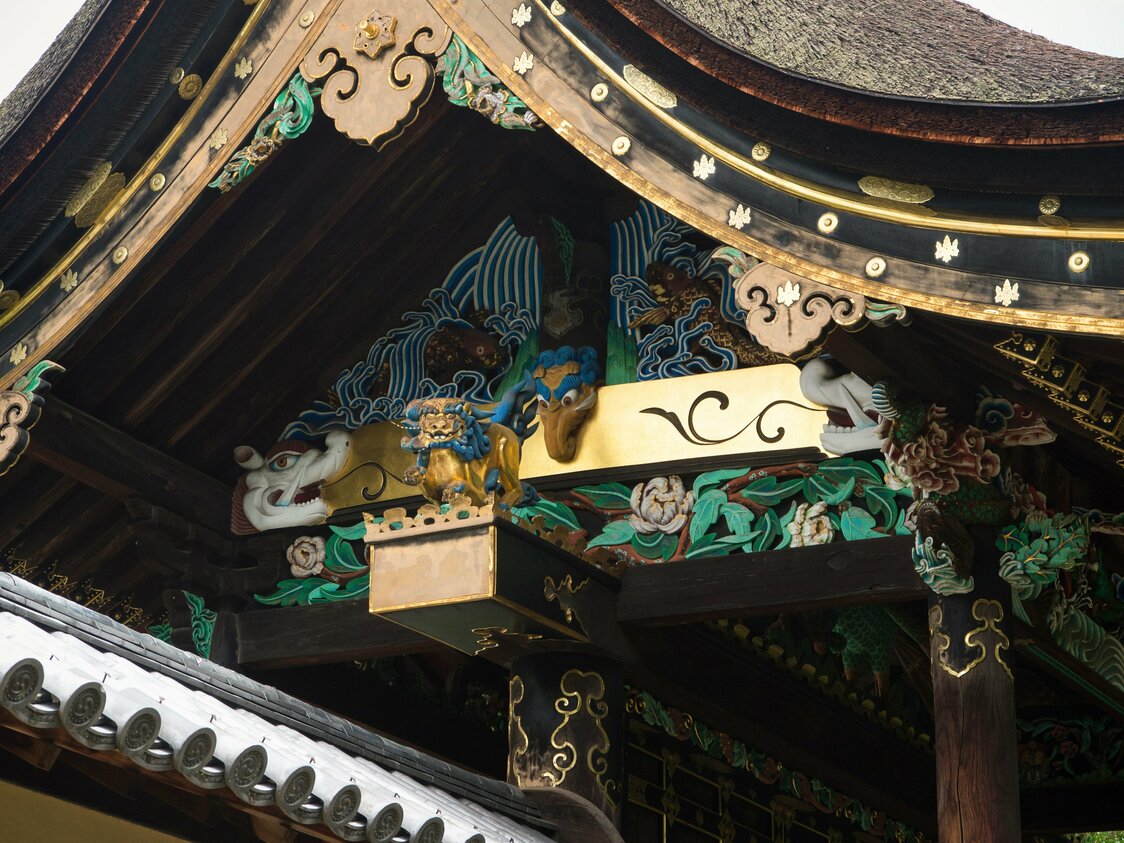
The crest of the Toyotomi family can be seen in numerous places under the gate’s eaves. The strange, long-nosed creature behind the shishi lion is a baku, a creature from Chinese myth. To either side of the shishi lion are white-faced, fanged creatures, mythical shape-shifting dragons known as shin (shen in Chinese).
-
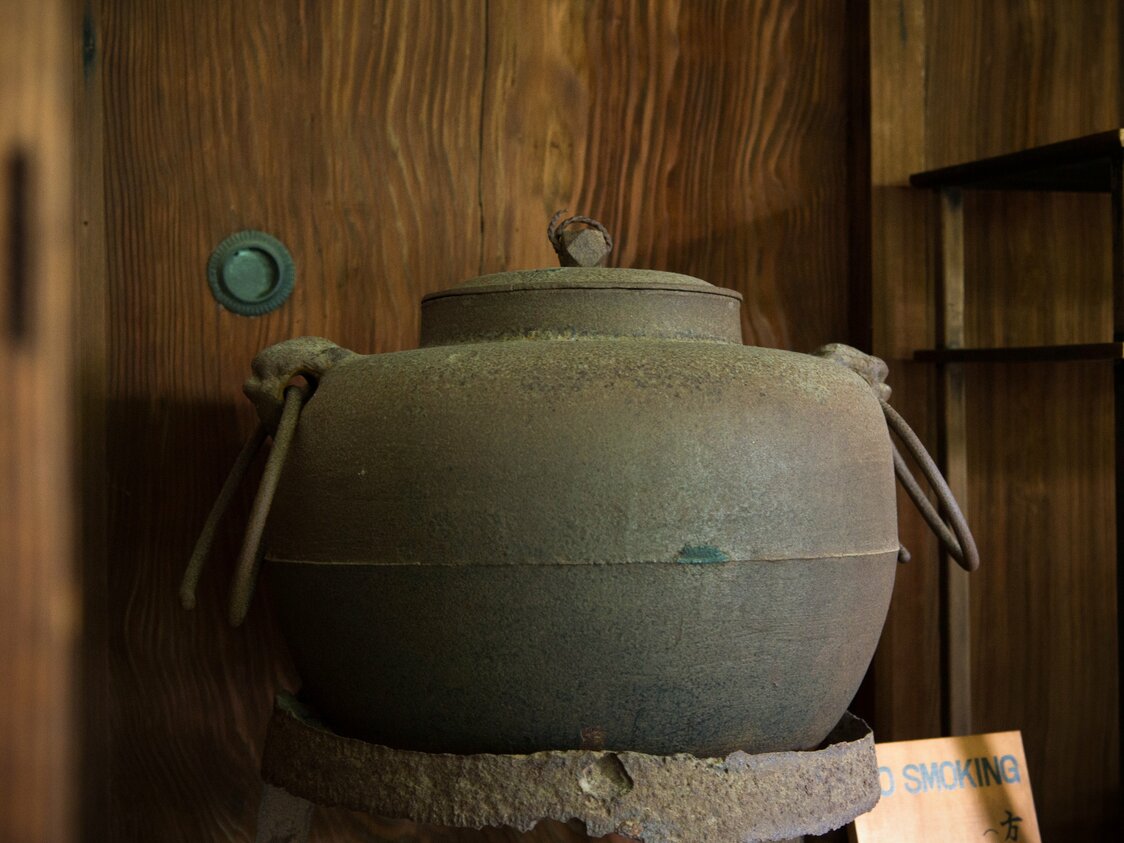
A kettle used at the Daitokuji tea party held by Hideyoshi in 1585.
-
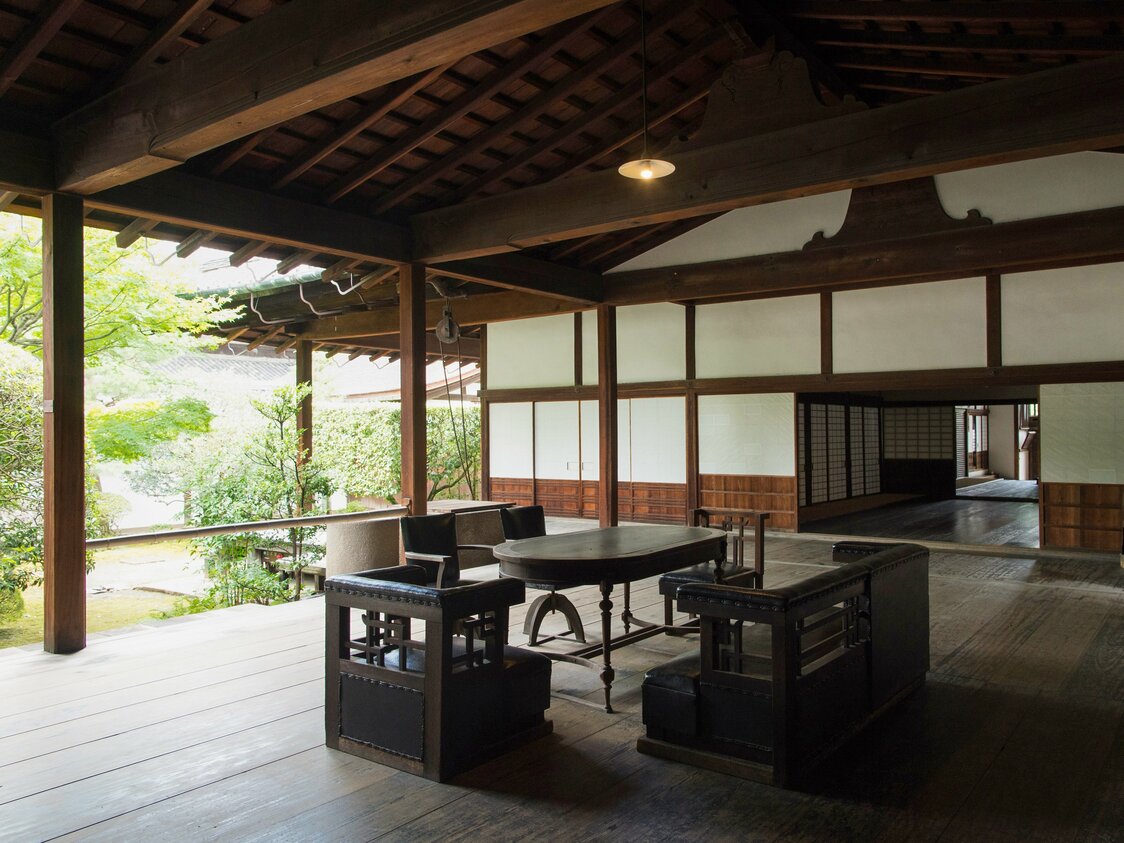
The table and chairs prepared for a visit by Empress Teimei.
-
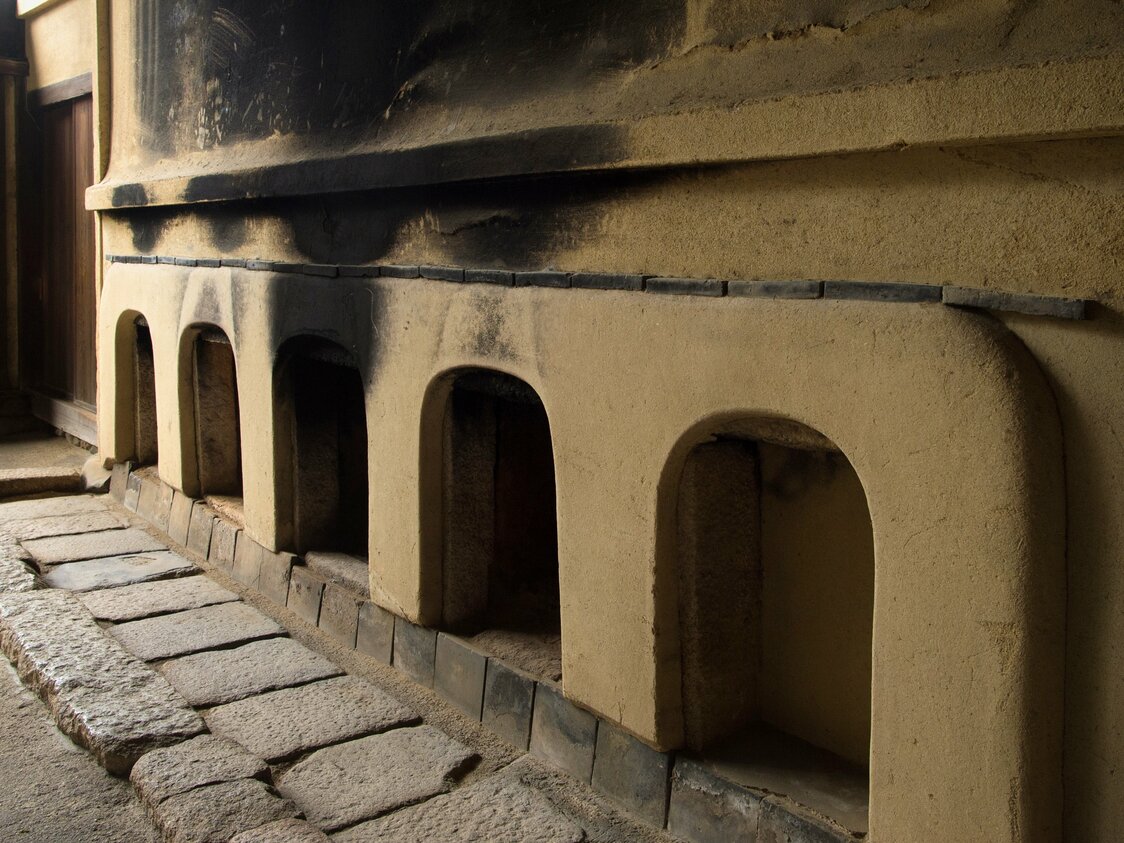
The large kitchen hearths in the kuri monks’ quarters.
-
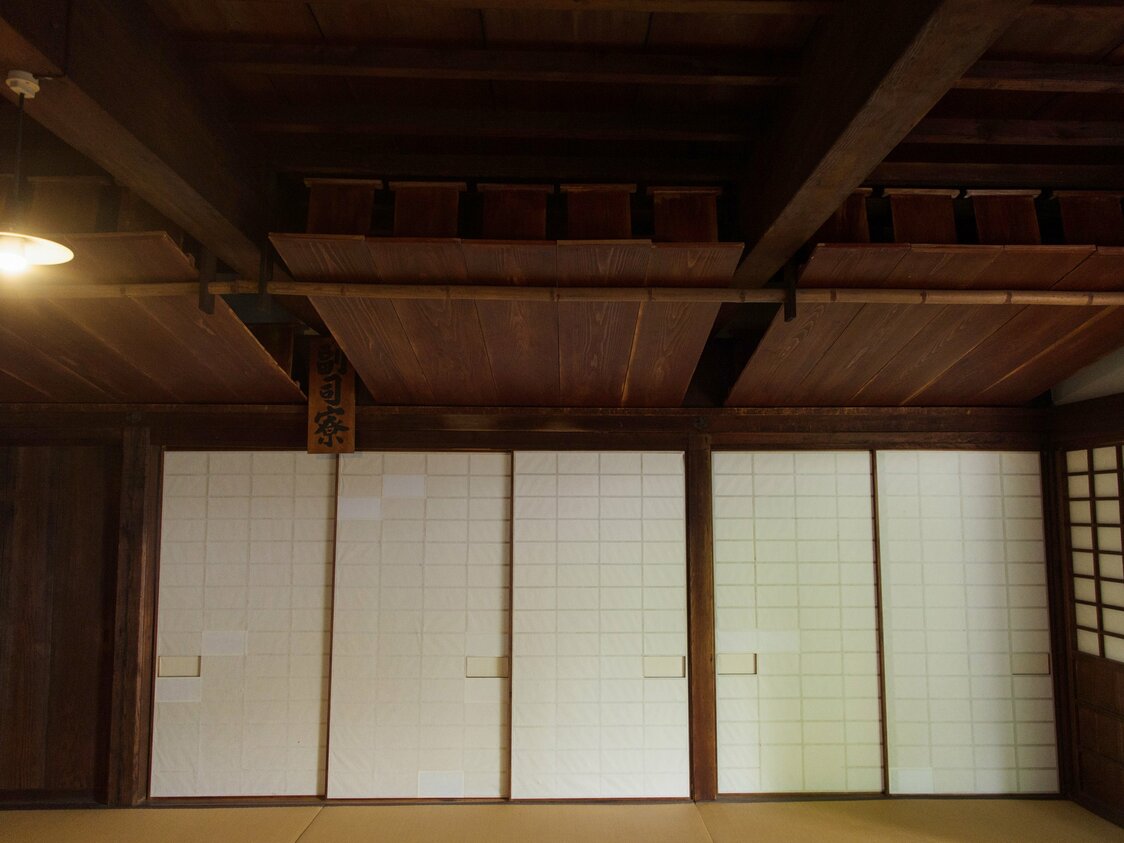
A room used by apprentice monks. Large tables were stored in the ceiling when not in use.


 Read in other languages