-
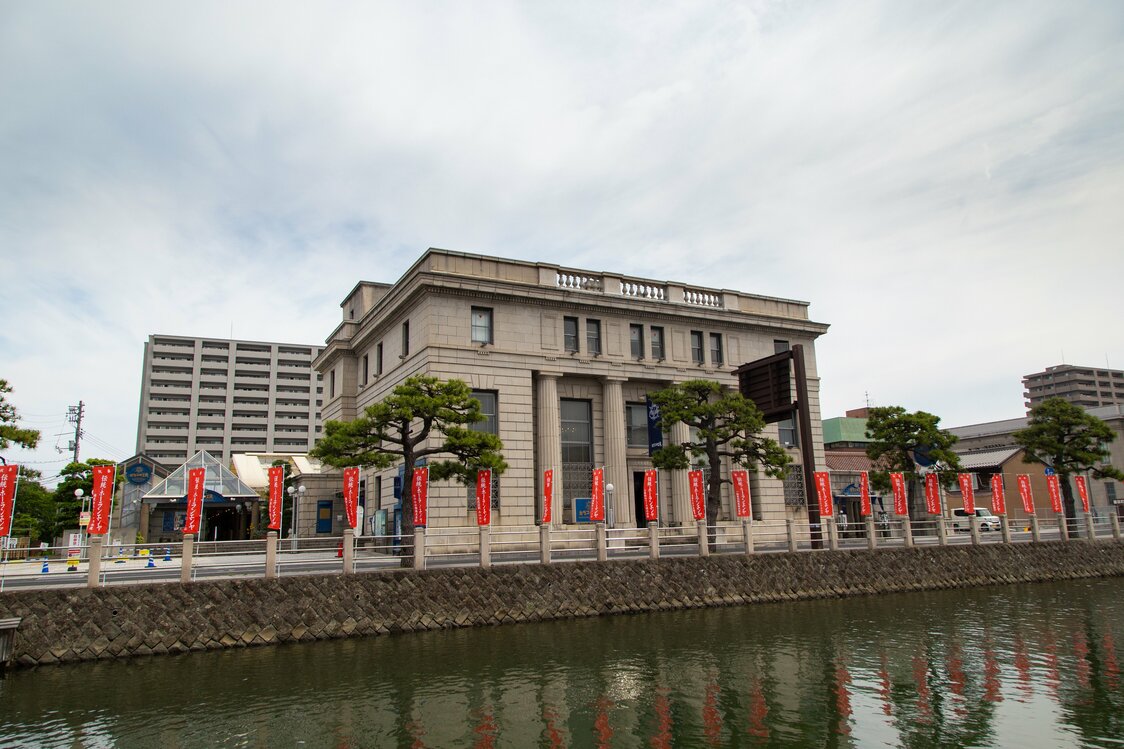
Formerly the Matsue Branch of the Bank of Japan, this building now houses the Karakoro Art Studio. Here, visitors can receive guidance and instruction from skilled artisans as they make Matsue-style Japanese snacks and personal articles.
-

A sign at the temple Gesshōji describes Hearn’s fondness for the place.
-

Koizumi Bon, great-grandson of Hearn and Setsu, and curator of the Hearn Memorial Museum.
-
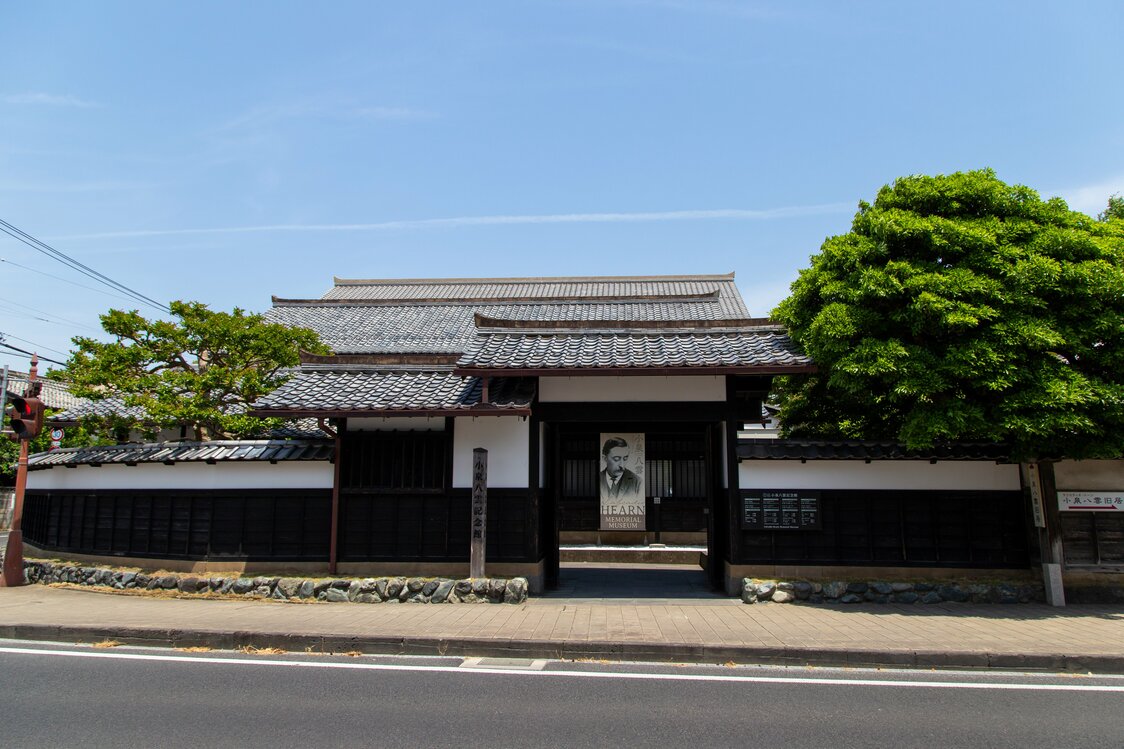
The Lafcadio Hearn Memorial Museum is located at the western end of the Shiomi-nawate road.
-
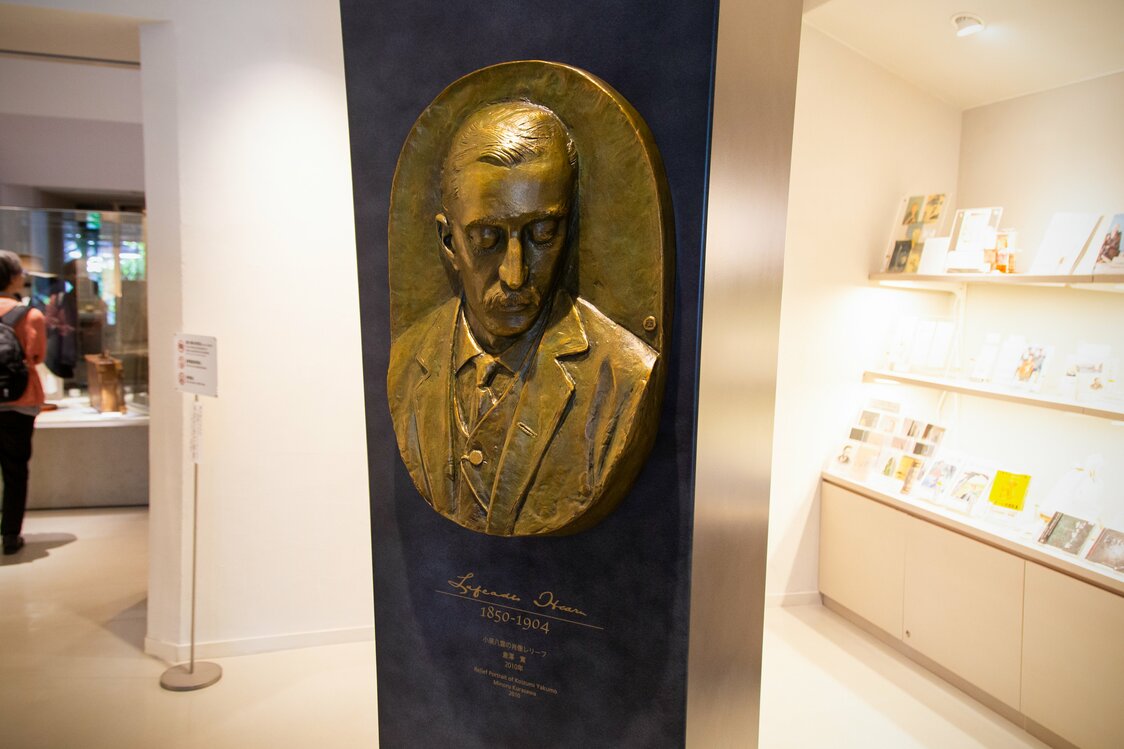
A relief based on a portrait of Hearn greets visitors. A video presentation and a gift shop are located at the entrance.
-
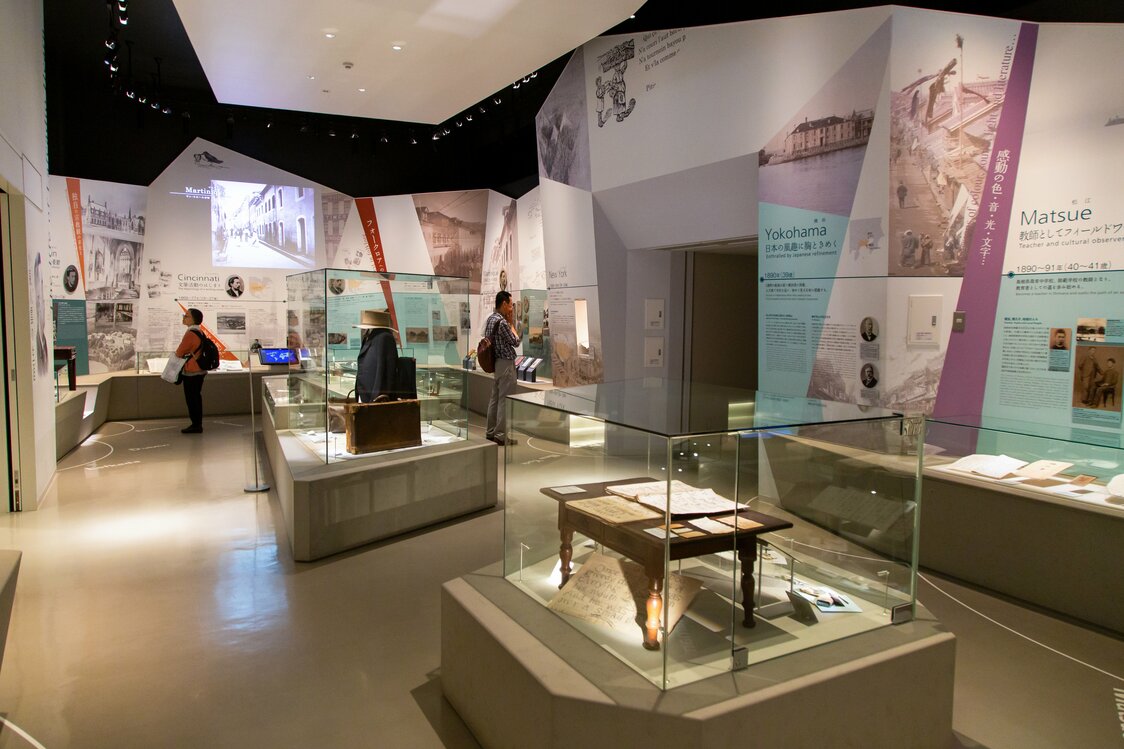
The unusually shaped walls of the first exhibition room feature easily understood explanatory panels. The display cases on the floor house Hearn’s personal effects, such as travel cases and manuscripts written in his own hand.
-
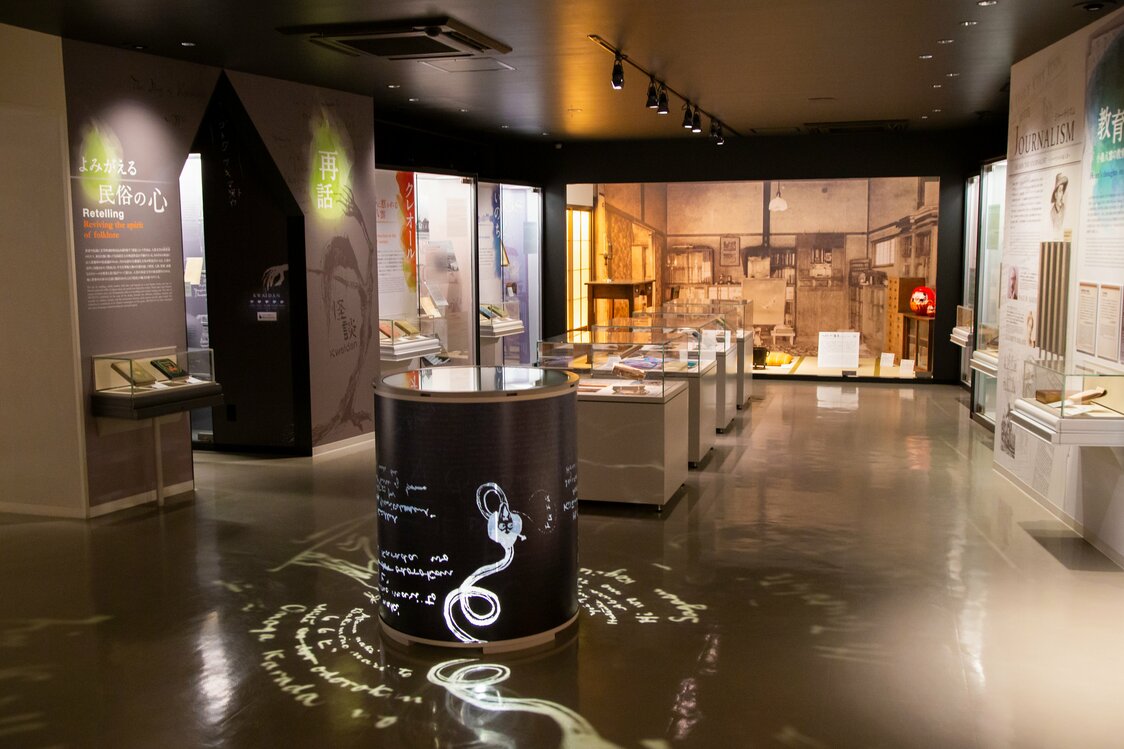
The second exhibition room sports a more modernist style. The retelling corner is at left in the photo.
-
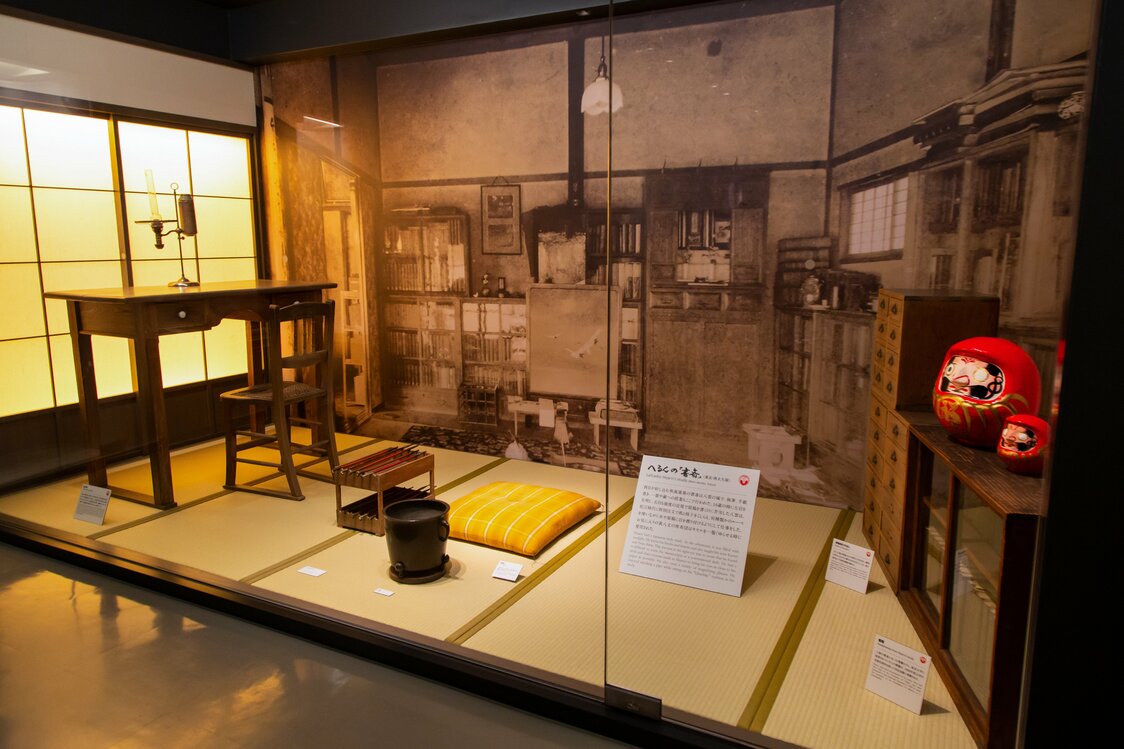
A study where Hearn worked when he lived in Nishi-Ōkubo, Tokyo, is reproduced here with his own personal belongings.
-
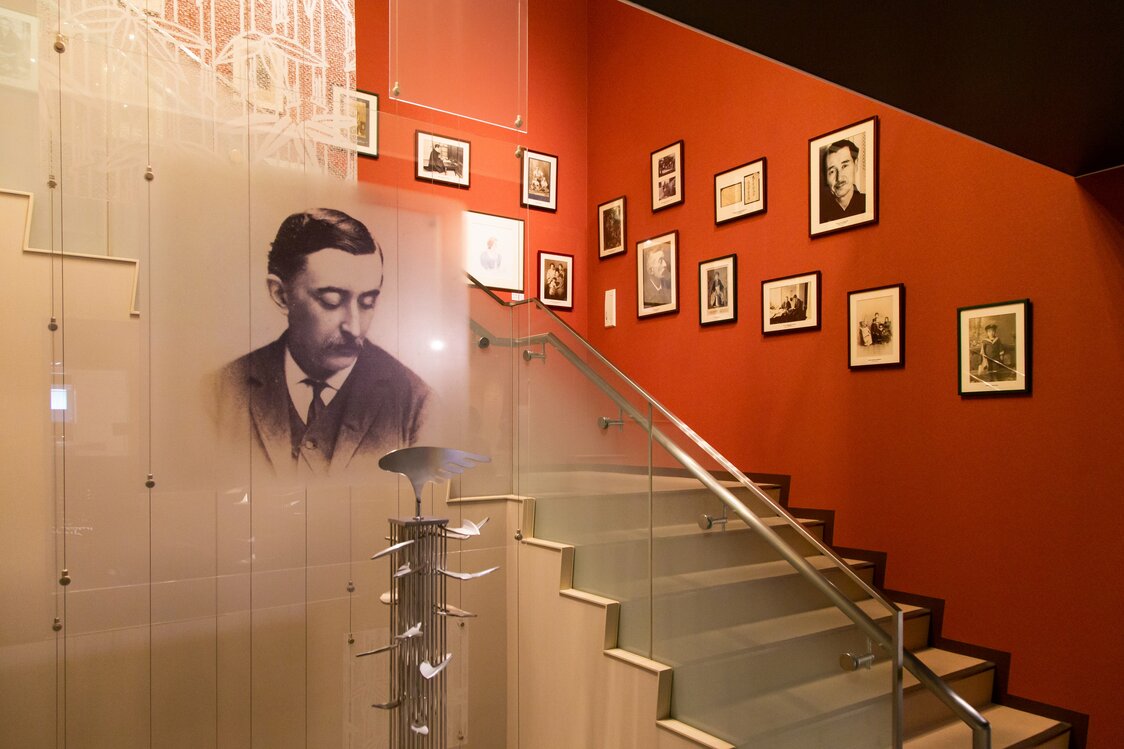
This staircase is adorned with rare photographs and artworks inspired by Hearn.
-
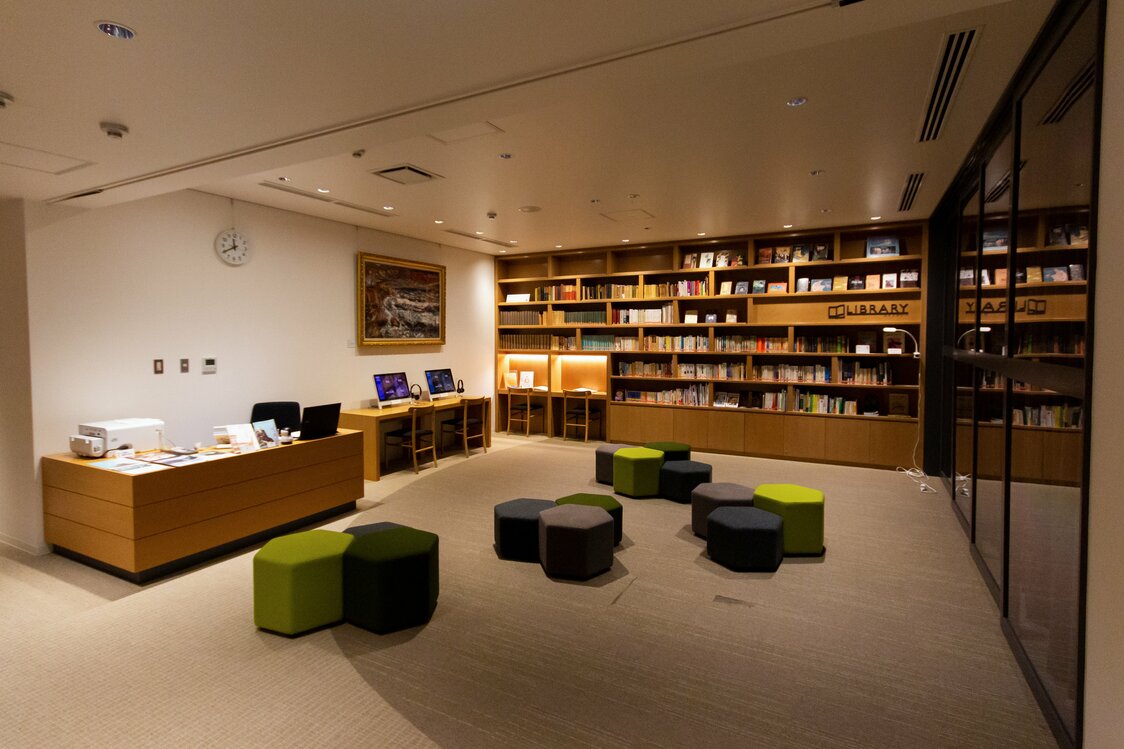
The library is a comfortable place to read. A computerized catalog allows visitors to search for works and other information on the writer and his life.
-
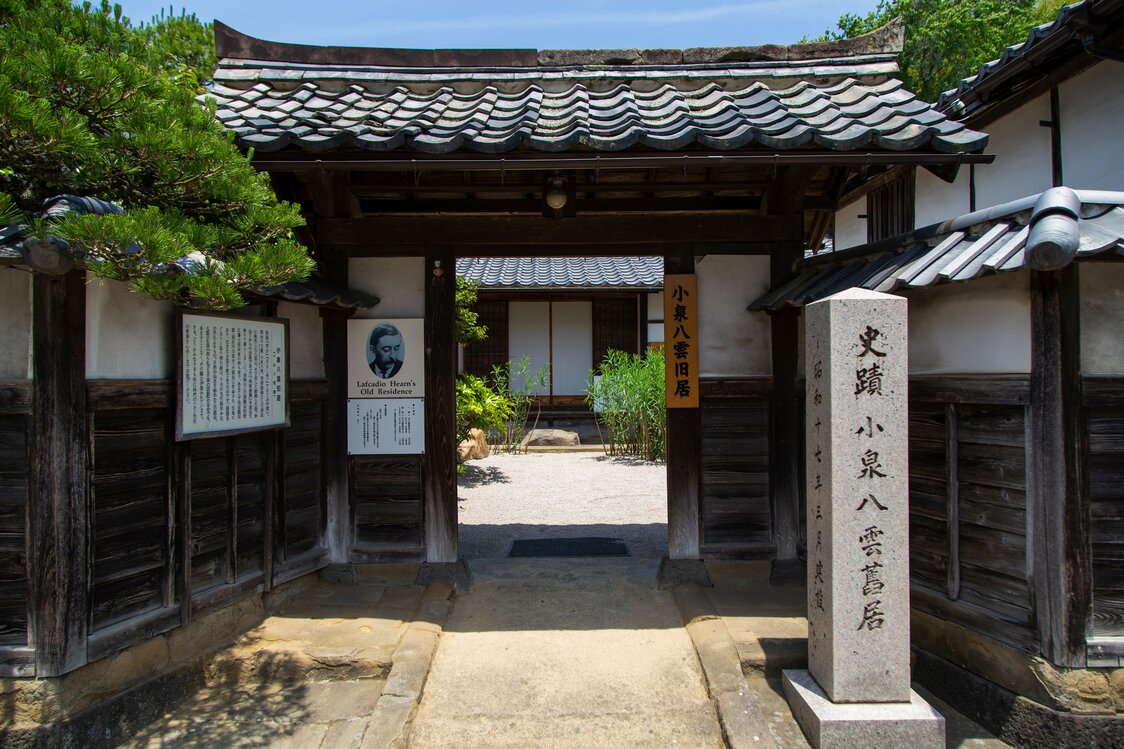
Lafcadio Hearn’s Former Residence has been designated a national historical landmark.
-
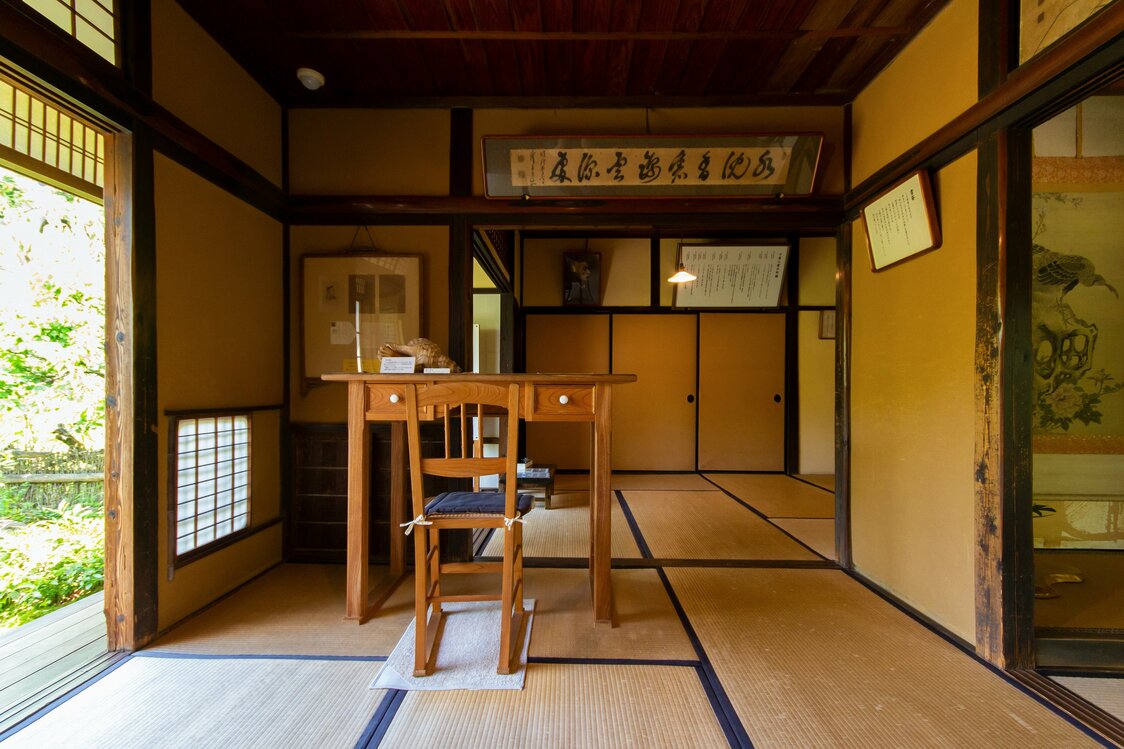
The study has been recreated with replicas of the desk and chair used by Hearn. Visitors are welcome to sit and experience being the scholar.
-
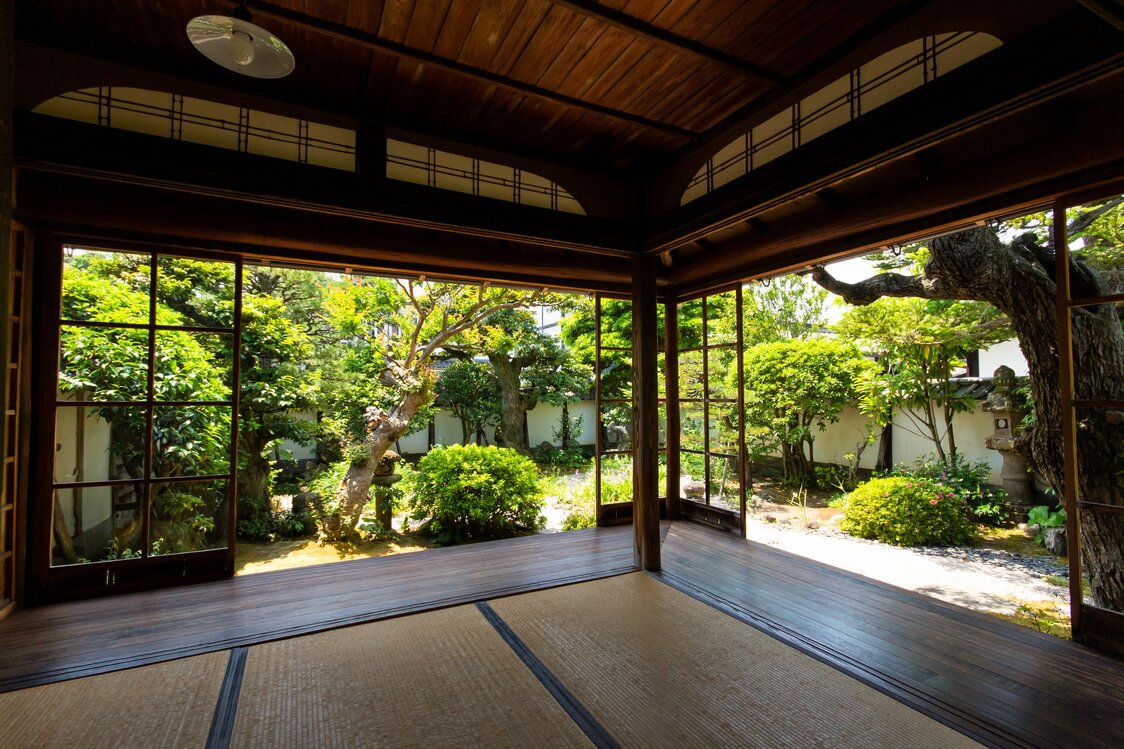
Surrounded by the deck, the living room is seemingly at one with the garden.
-
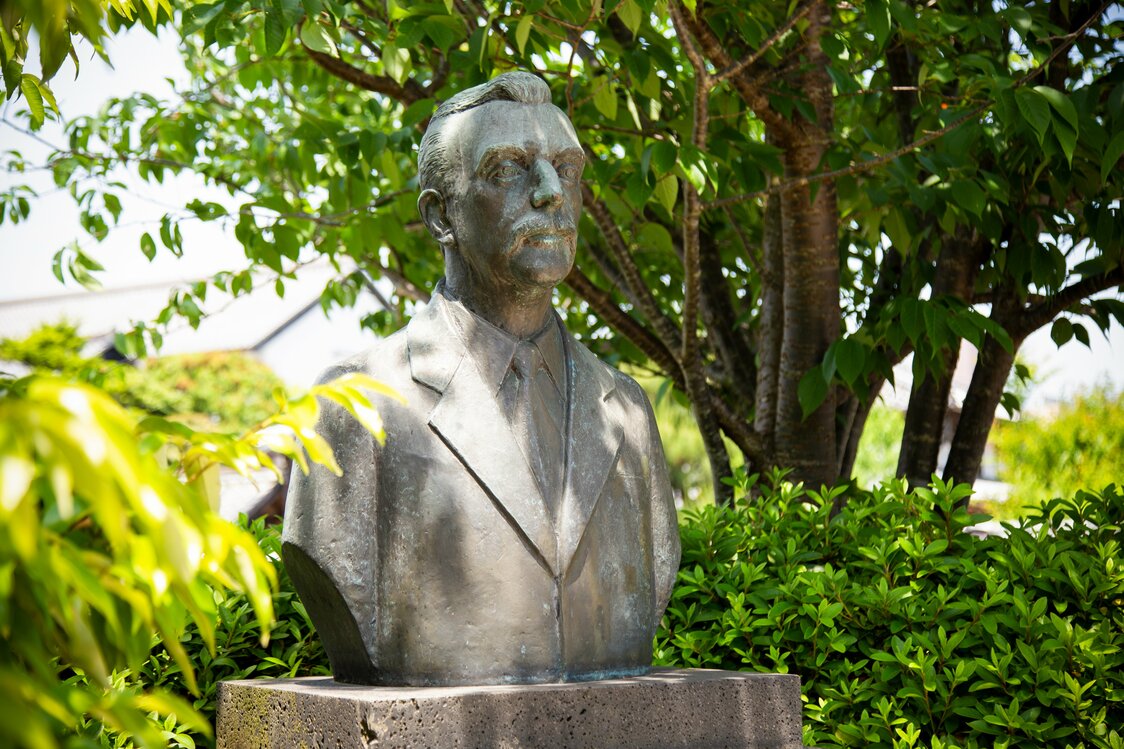
A bust of Hearn erected along the bank of the Hori River, facing the Former Residence, watches over the city of Matsue.


 Read in other languages