-
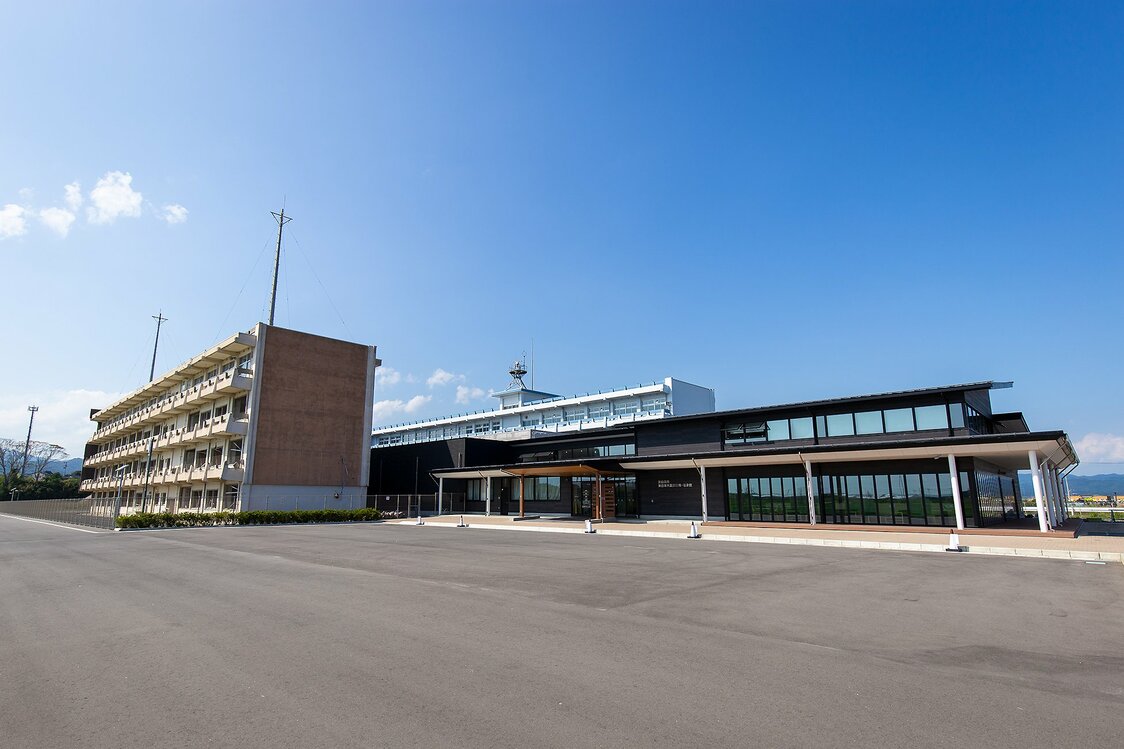
The Memorial Museum was newly built to tie in with the ruins of the Kesennuma Kōyō High School.
-
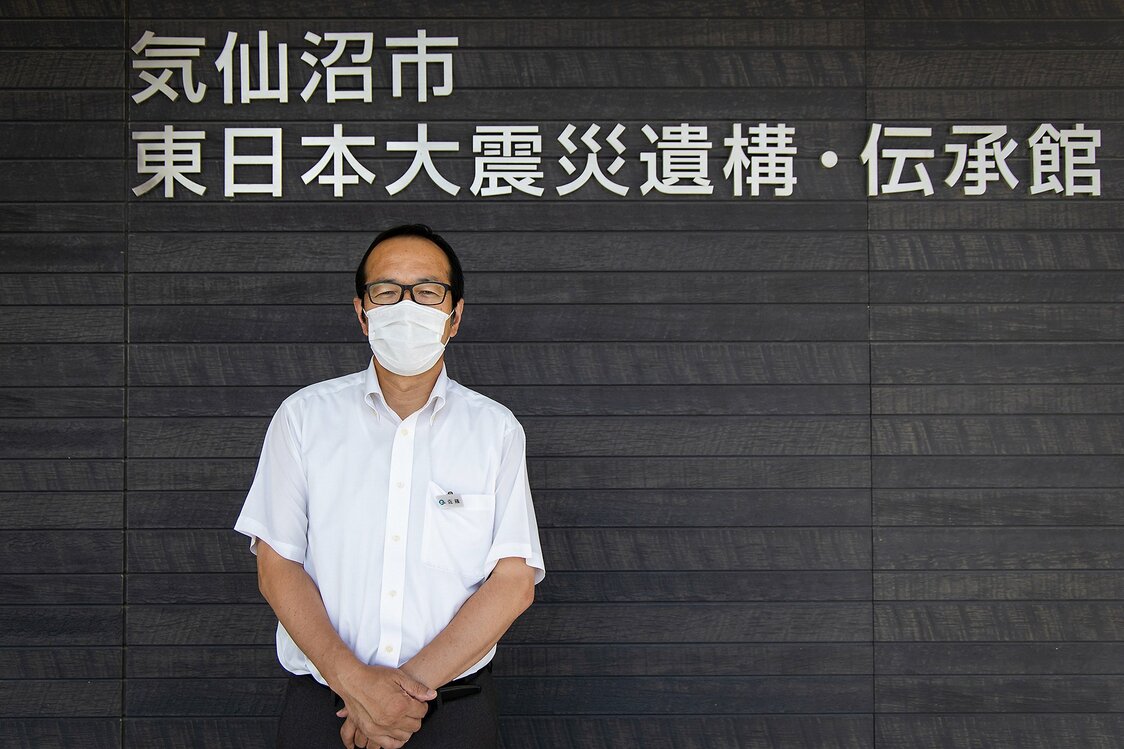
Museum director Satō Katsumi was a municipal employee at the time of the disaster and took part in the removal of the wreckage.
-
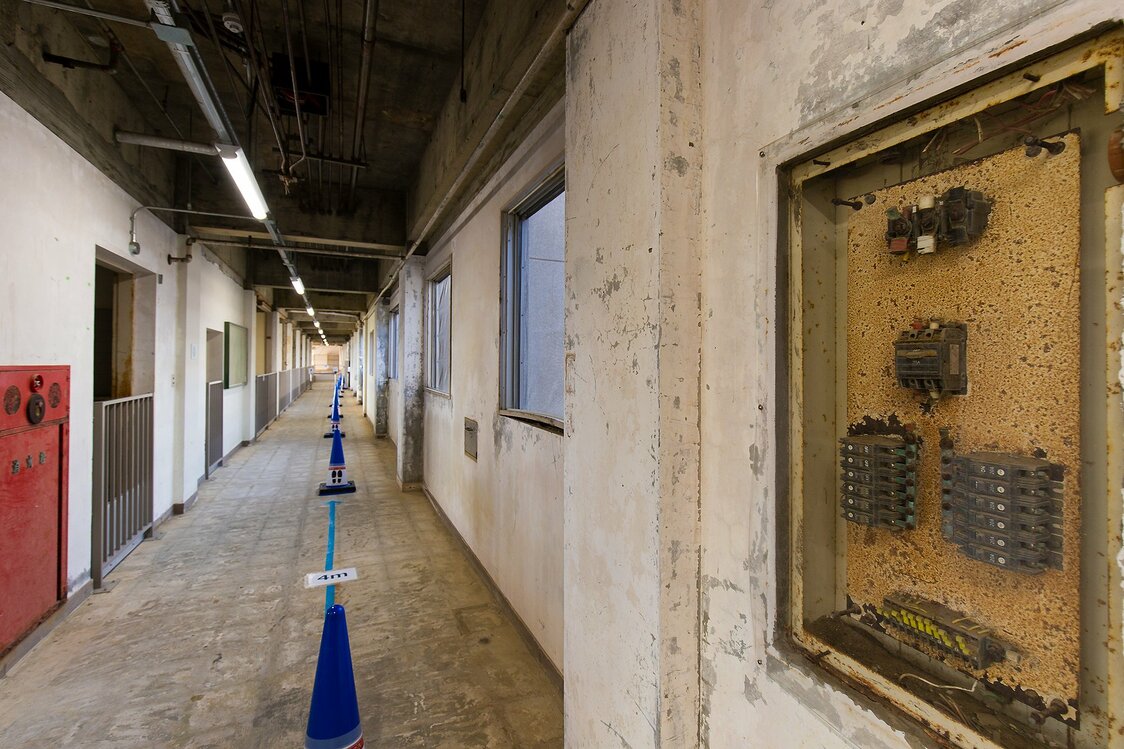
A hallway of the Kesennuma Kōyō High School. As part of COVID-19 measures, poles have been put in place in the corridor so that visitors can respect distances.
-
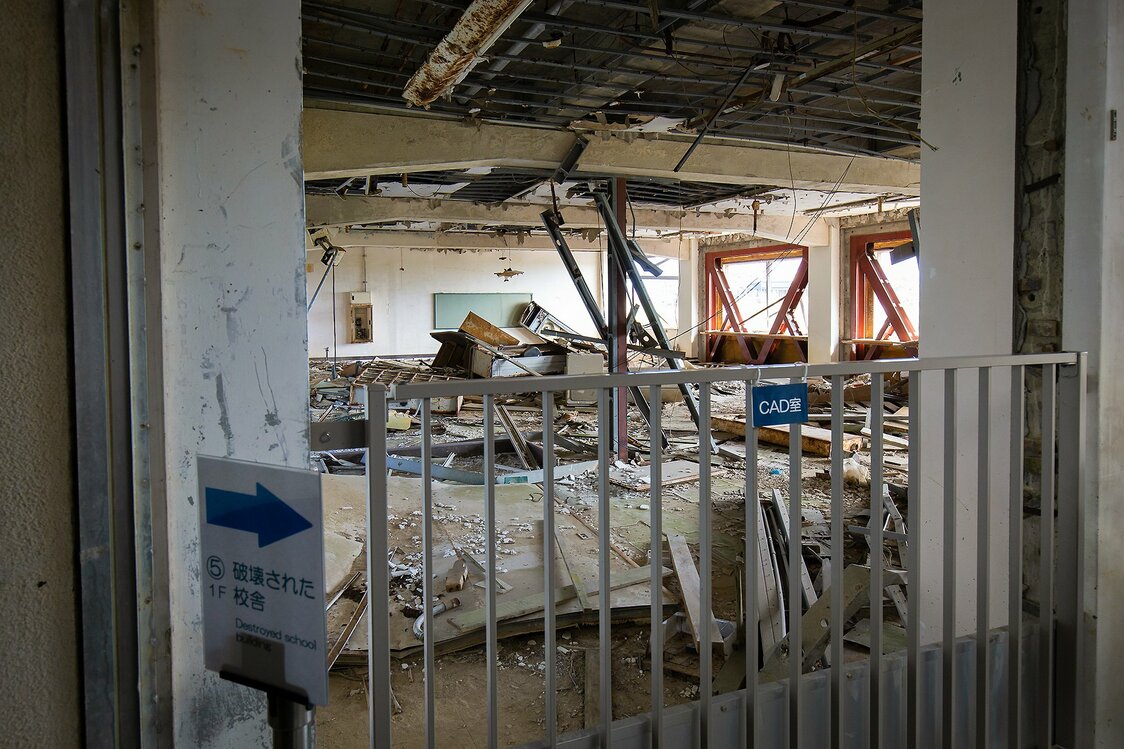
The remains of the school’s computer-aided design laboratory for mechanical engineering studies.
-
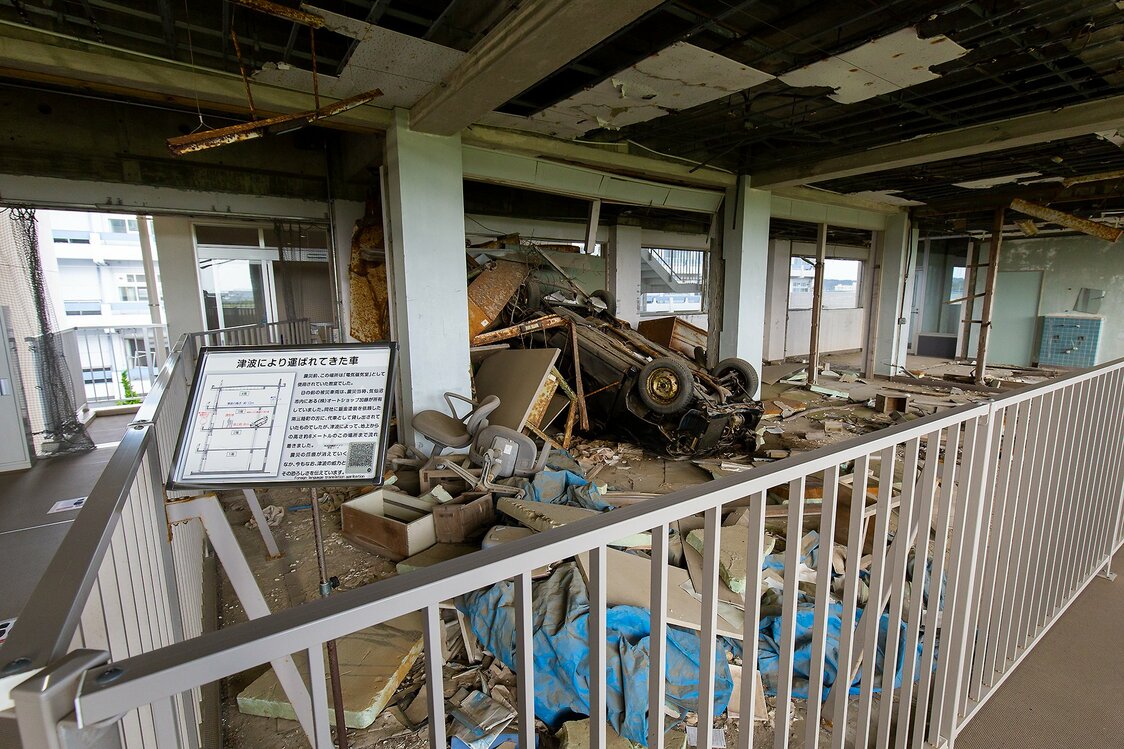
A car washed away by the tsunami settled on the third floor of the school. Information throughout the museum is available in Japanese, English, Chinese, Korean, and Indonesian.
-
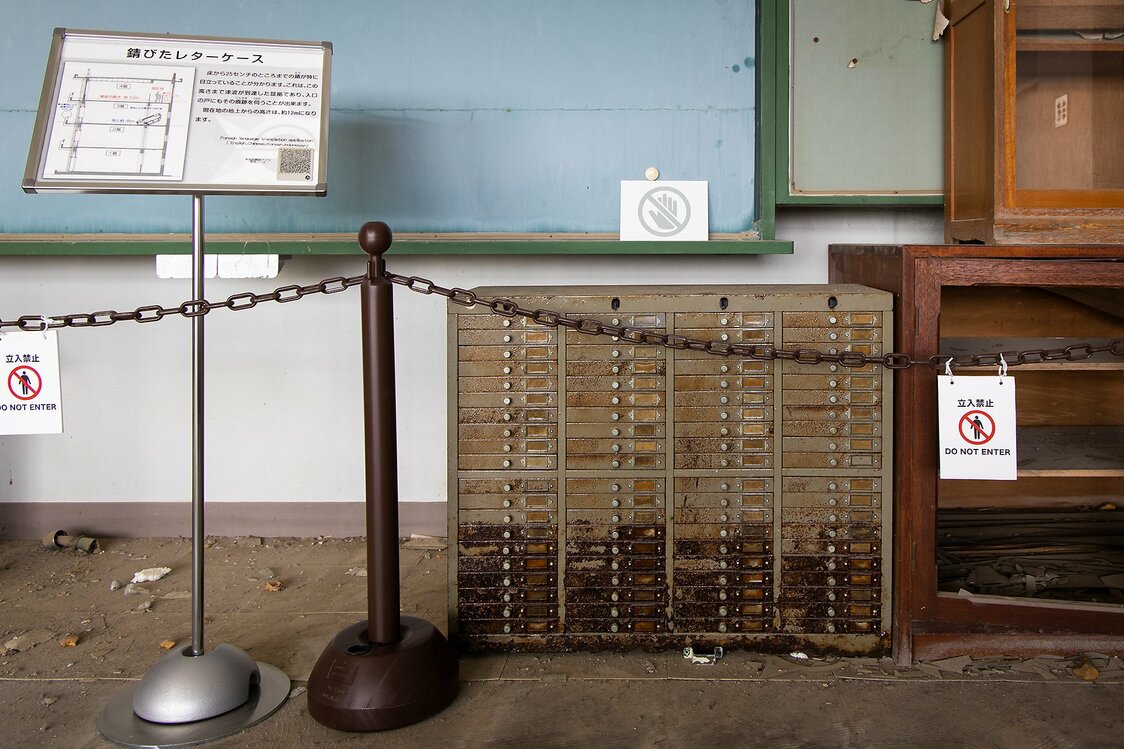
The letter cases on the fourth floor rusted to a height of 25 centimeters from the tsunami flooding.
-
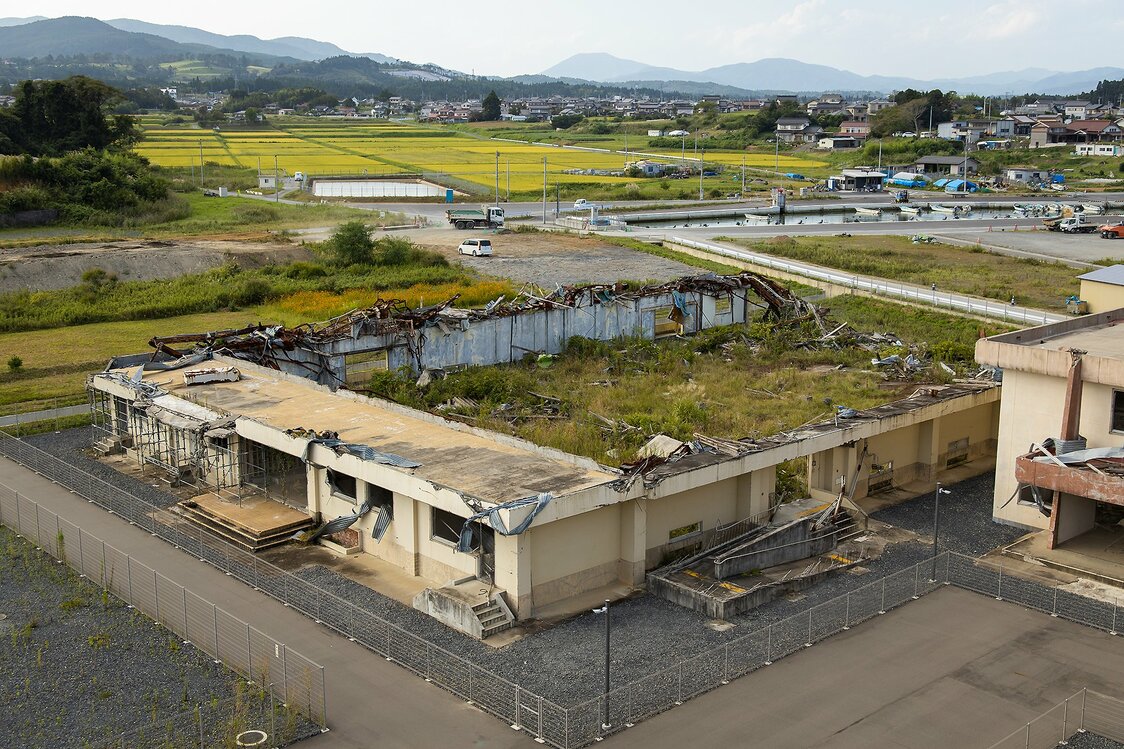
Weeds flourish on the floor of the roofless gymnasium.
-
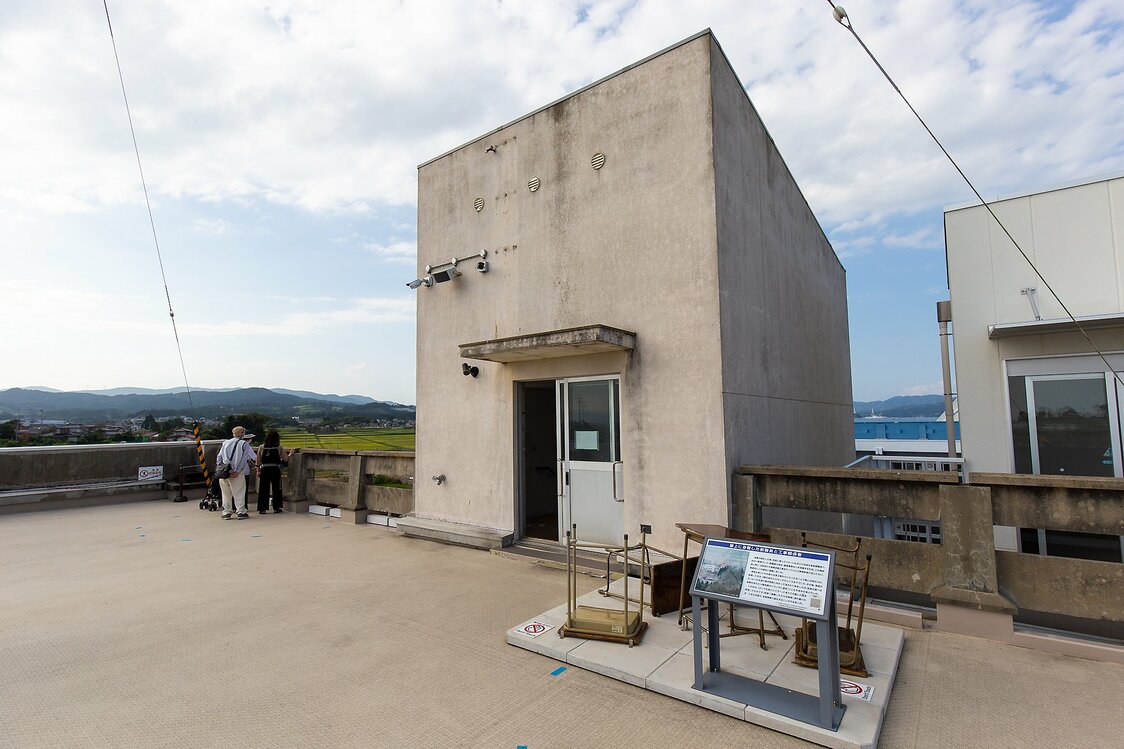
Five desks scattered in front of the roof tower tell of the desperation of the survivors.
-
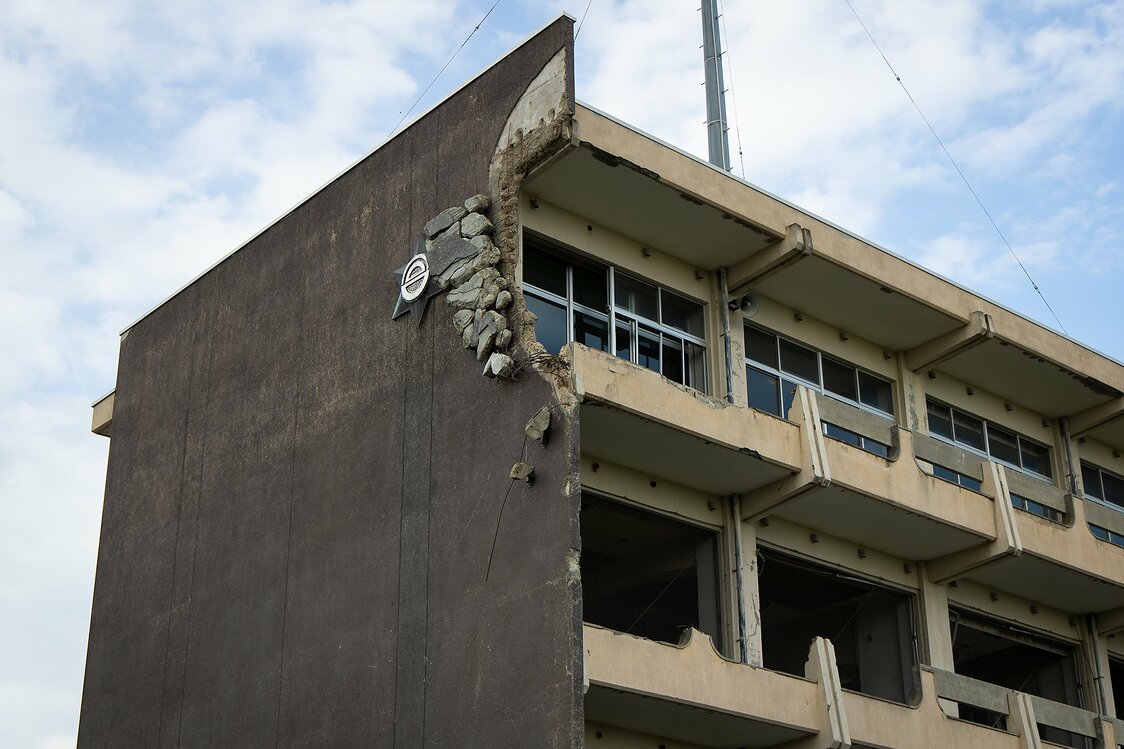
A broken section of wall marks where the refrigerating plant impacted.
-
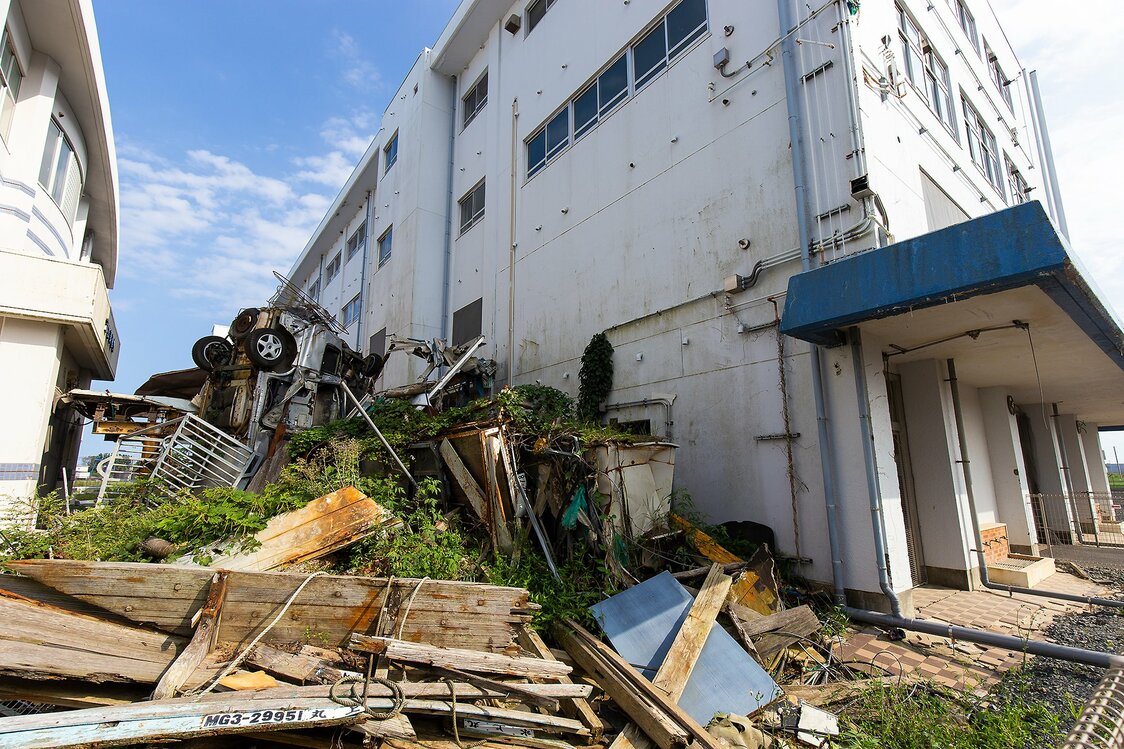
Cars and wreckage piled up in the passage between school buildings.
-
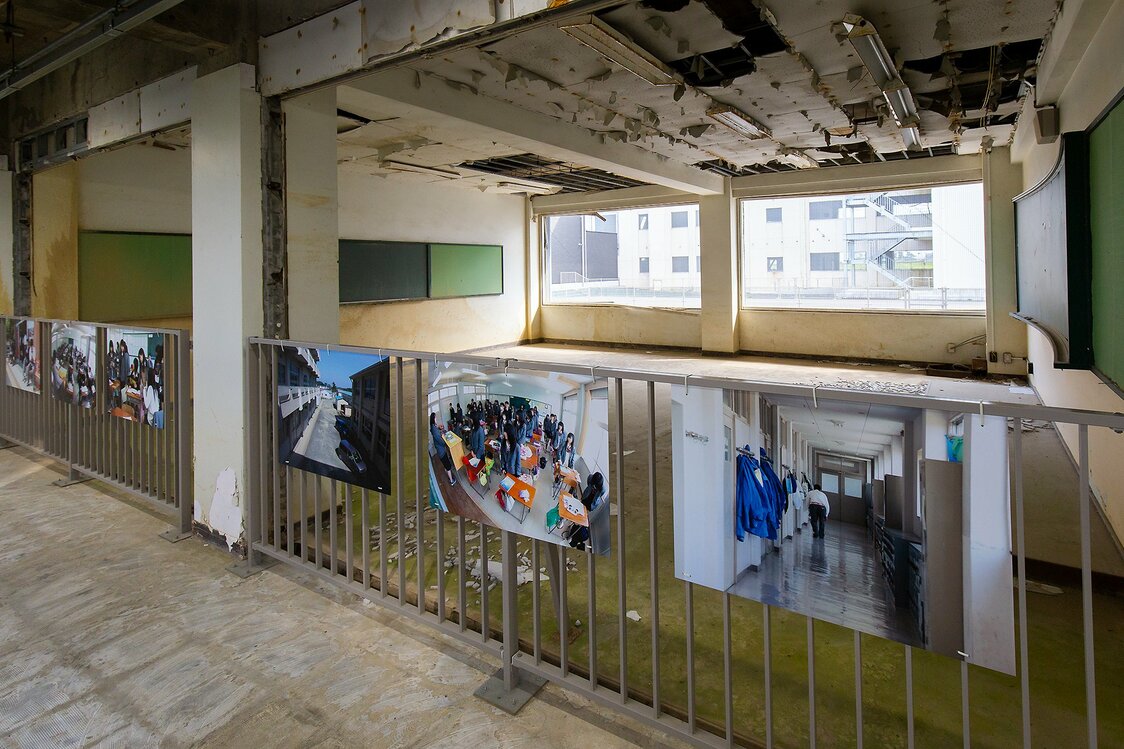
The north school building is decorated with photos showing various aspects of school life.
-
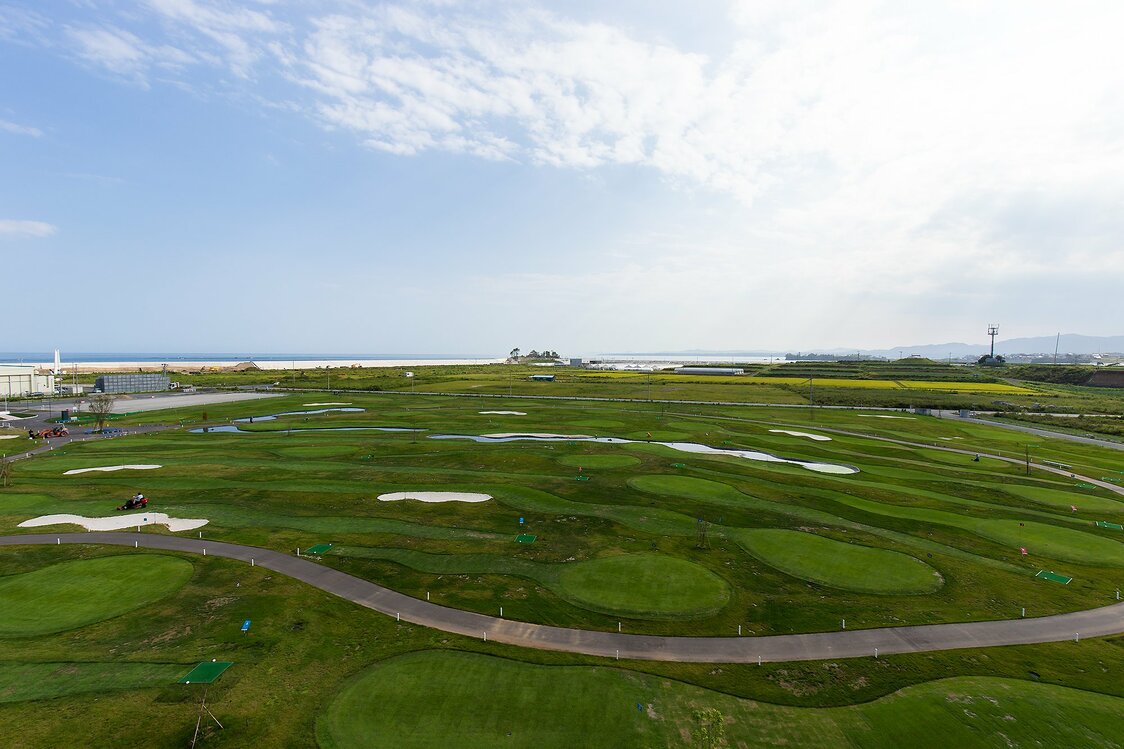
The former school grounds have been turned into a golf course and park. There are virtually no buildings until the seawall along the coast.
-
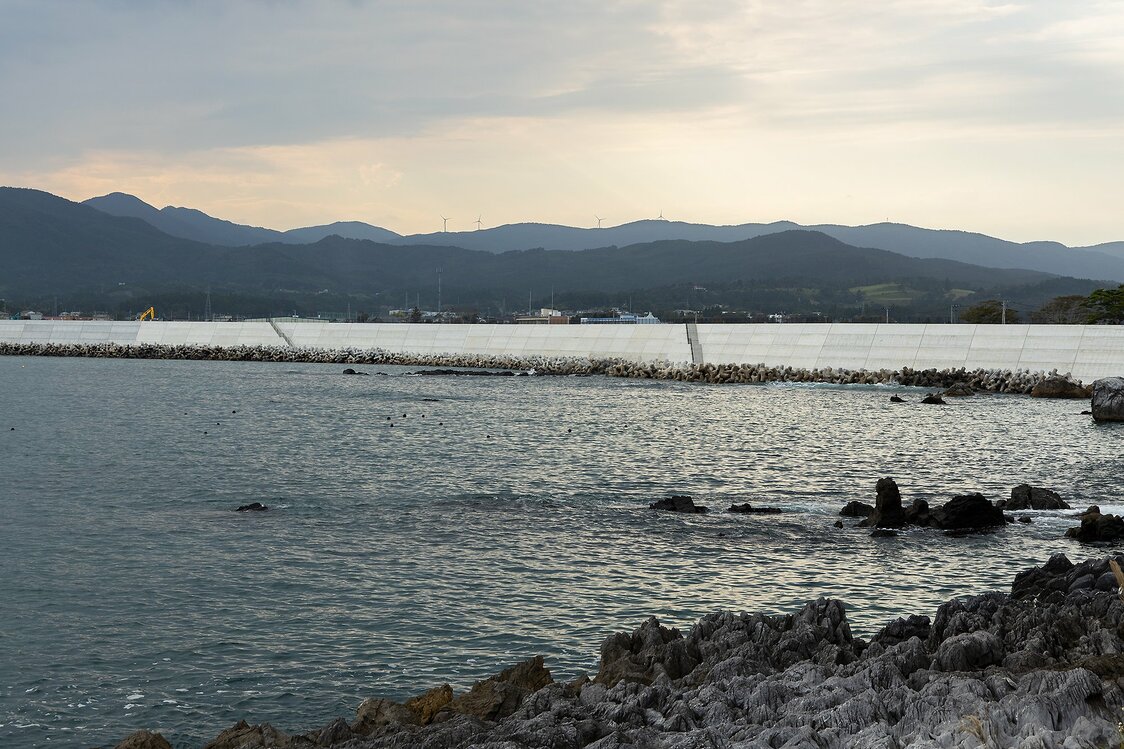
Looking across to the Ruins of the Great East Japan Earthquake Kesennuma City Memorial Museum (center) from the Iwaisaki scenic spot. A continuous high breakwater is being constructed along the coast.
-
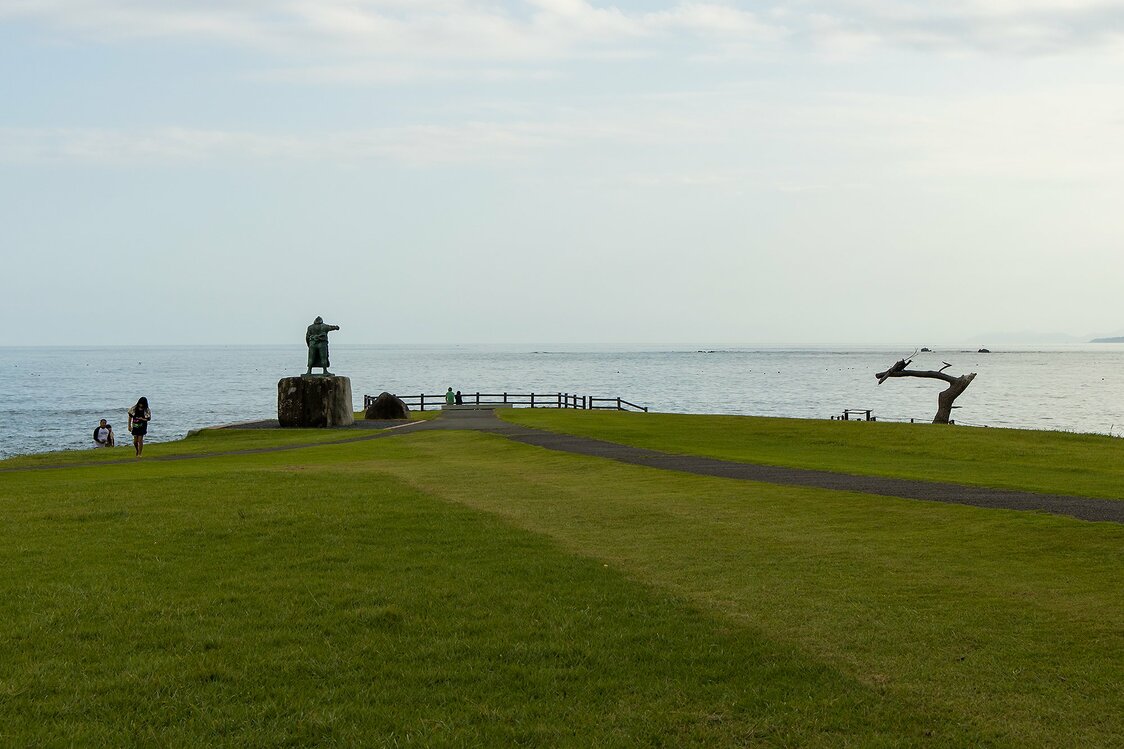
The statue of ninth yokozuna Hidenoyama Raigorō and the dragon pine tree that survived the tsunami in Iwaisaki, which stand as the symbols of the revival of Hashikami area.


 Read in other languages