-
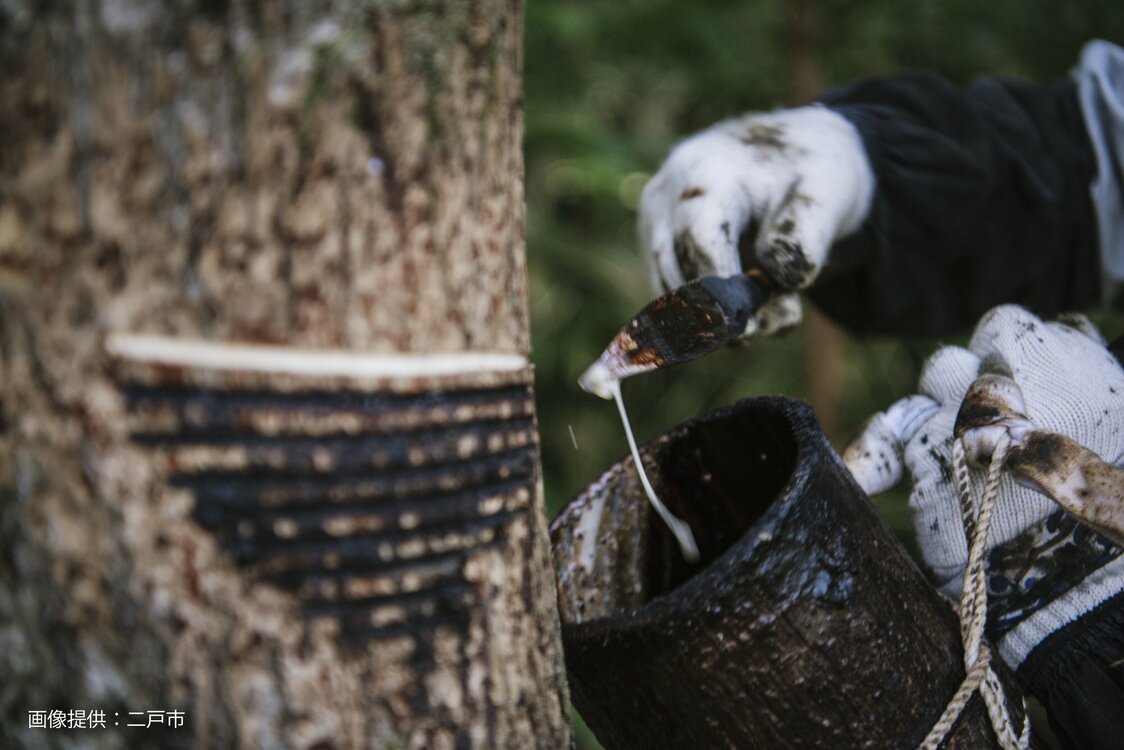
The trunk of a lacquer tree is scored and the sap oozing from the cuts is collected. (Courtesy Ninohe City)
-
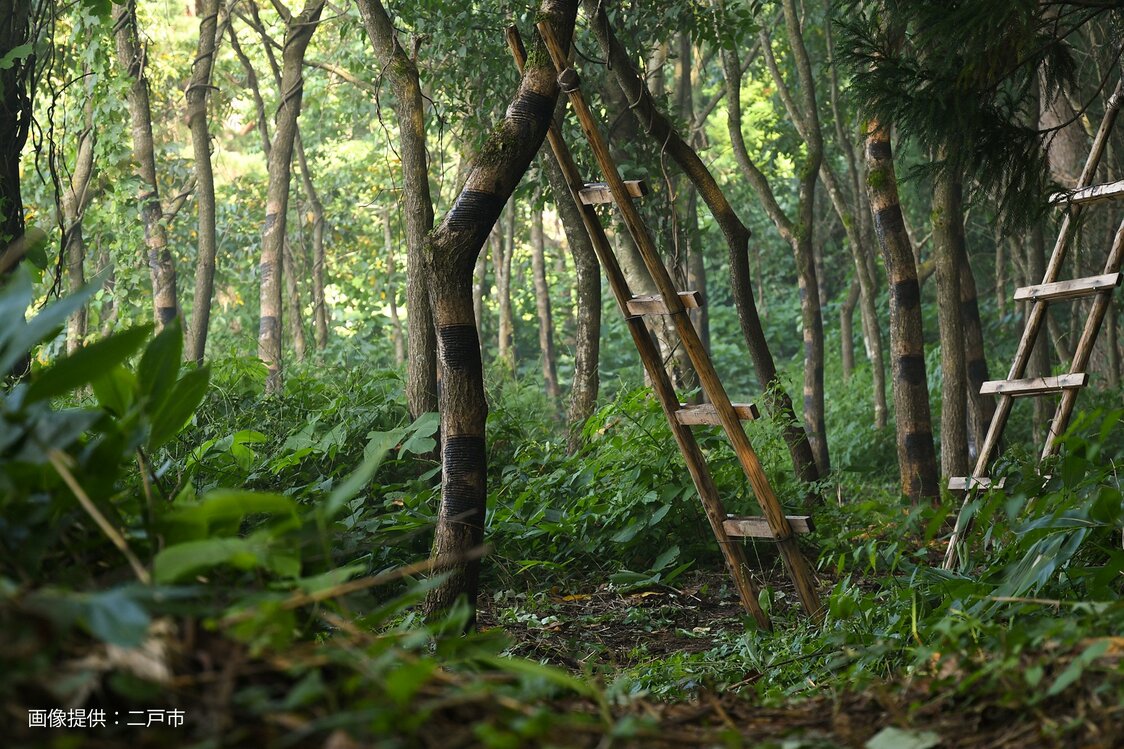
A lacquer tree plantation. Each tree produces only 200 milliliters (barely one cup) of sap a year. (Courtesy Ninohe City)
-

Urumi Kōgei’s showroom is a 15-minute walk from JR Morioka Station. The workshop itself is located in the nearby city of Takizawa. (© Shoepress)
-
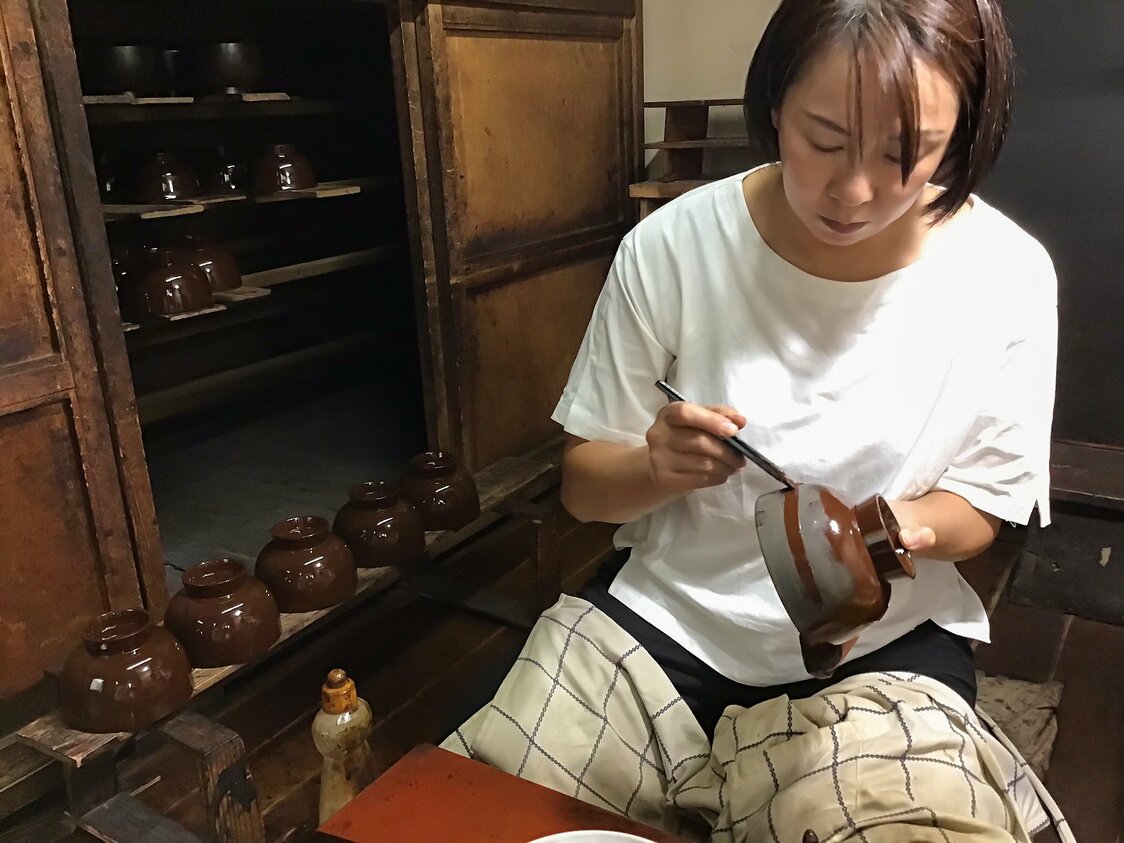
Fujimura has mastered the time-honored skill of applying lacquer, a process involving over 40 steps. After a base coat is applied to the wood, lacquering and polishing are repeated. (Courtesy of Urumi Kōgei)
-
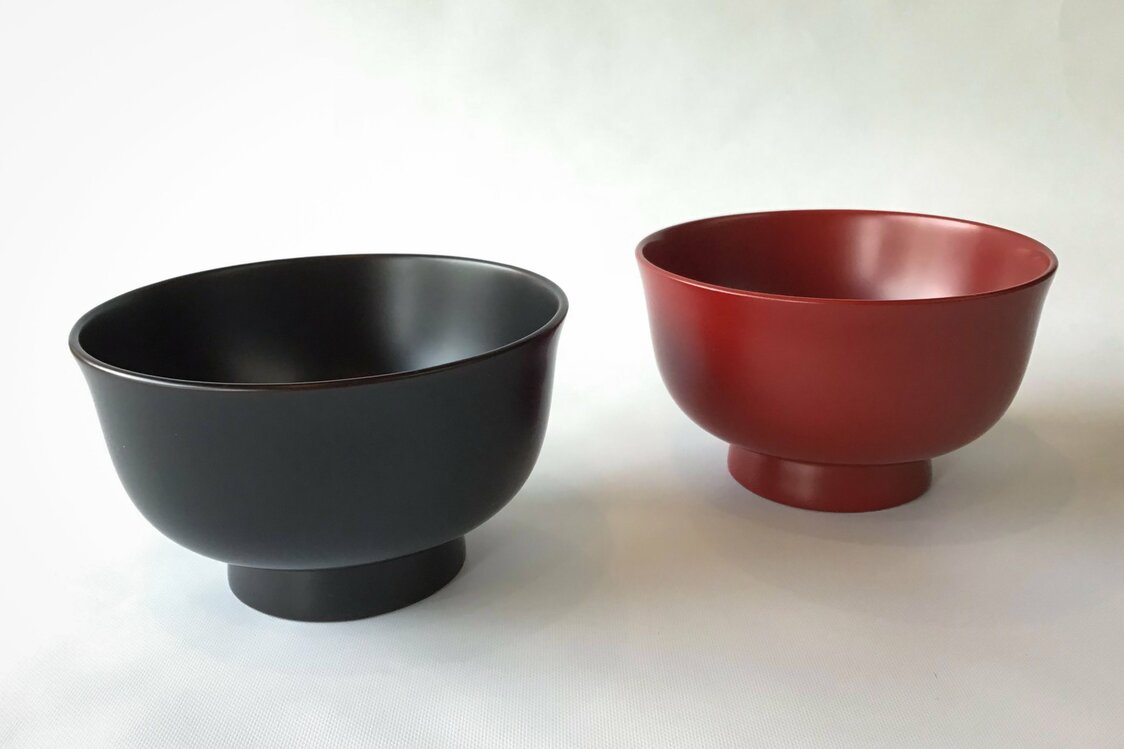
Jōbōji lacquer combines practicality and simple attractiveness. (Courtesy Urumi Kōgei)
-
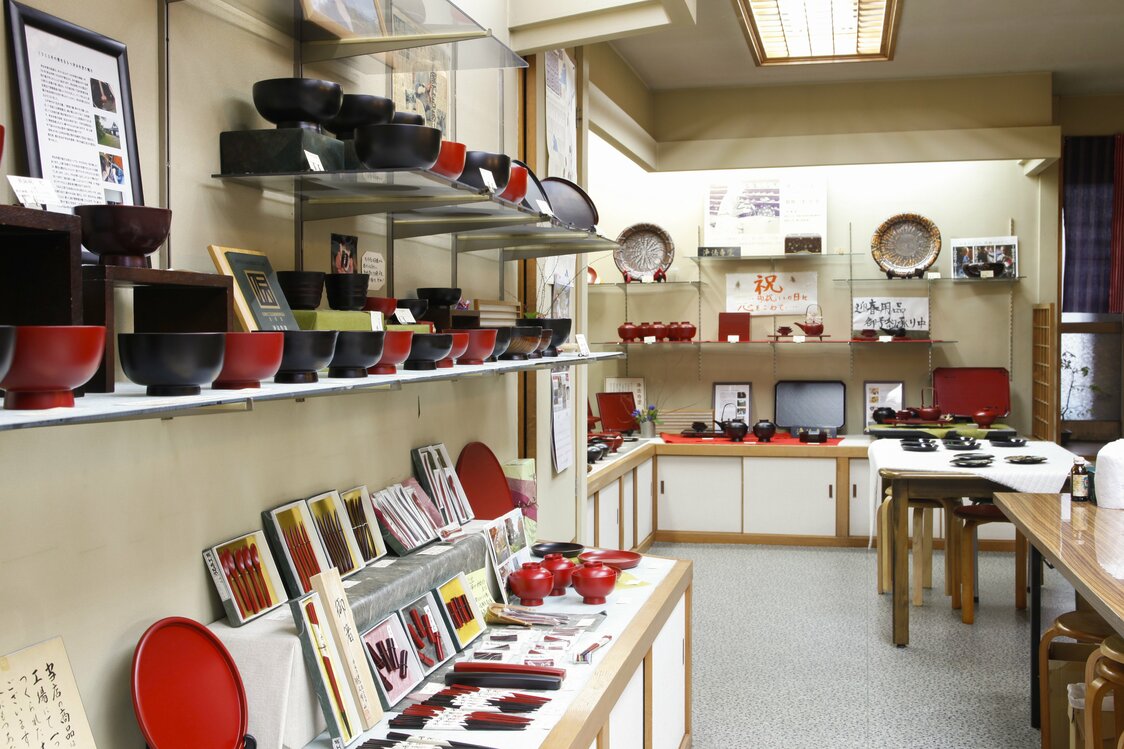
The Urumi Kōgei showroom displays numerous lacquerware items in plain styles. (© Shoepress)
-
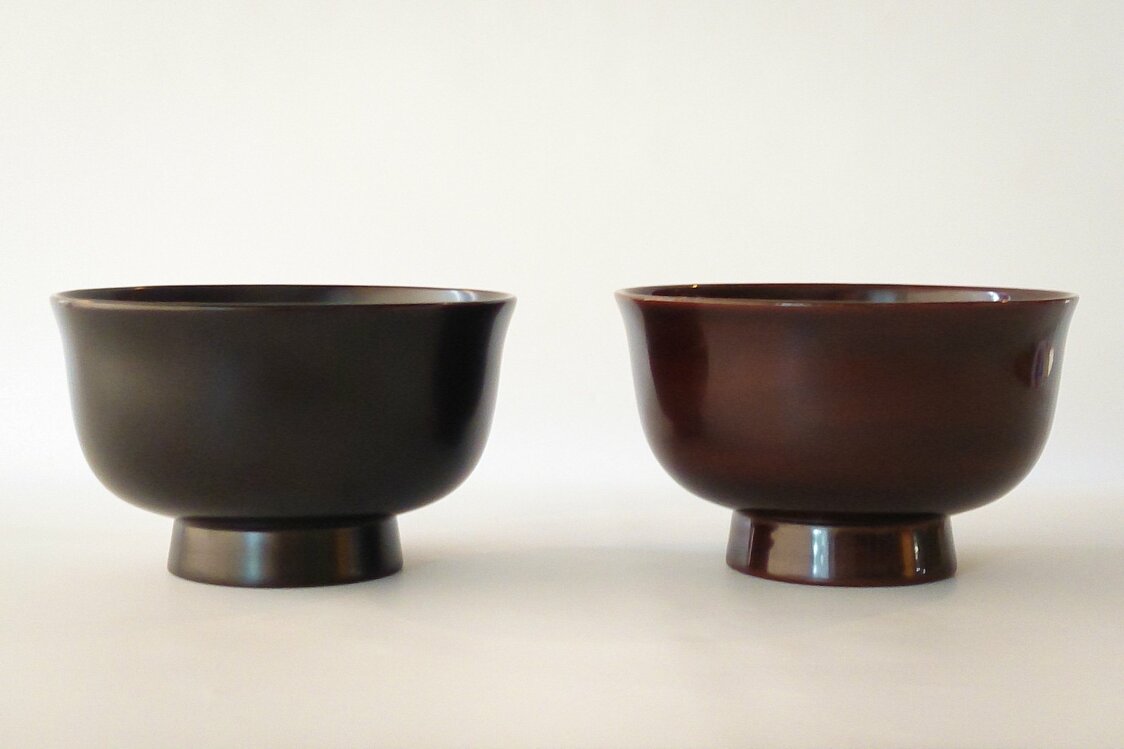
Two bowls sit side by side for comparison purposes. The one on the left is new; the one on the right has developed a reddish patina after 10 years of use. (Courtesy Urumi Kōgei)
-
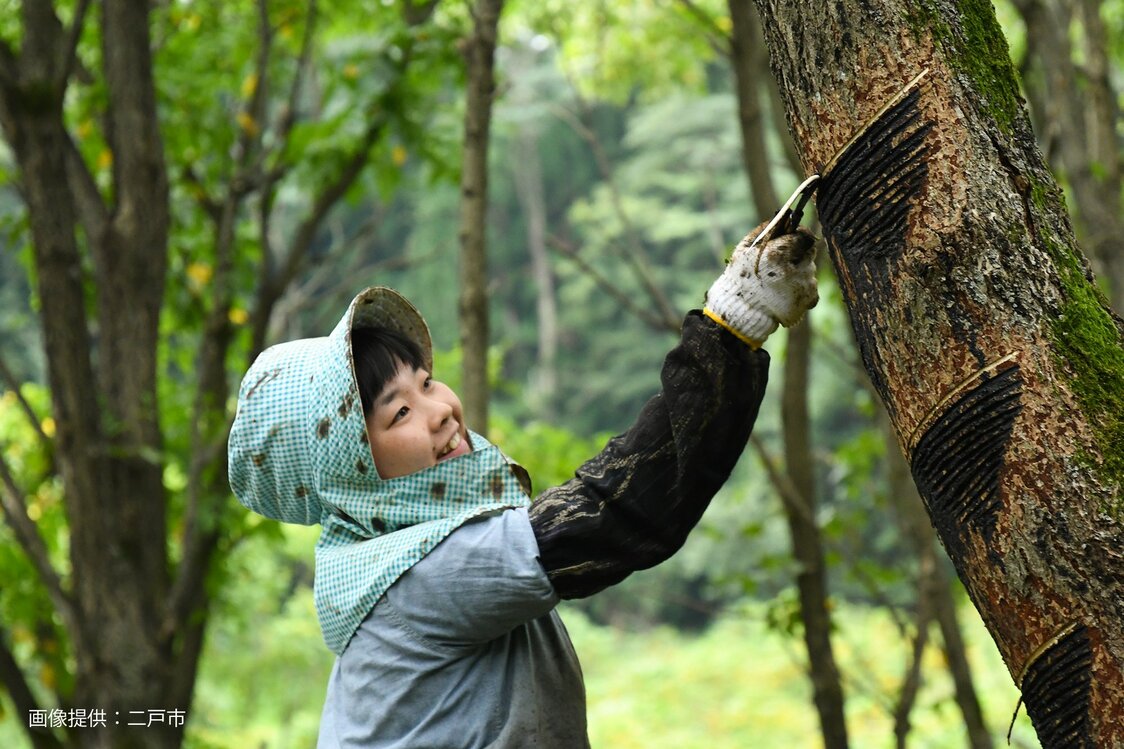
A lacquer tree plantation in Jōbōji, where workers learn essential skills. (Courtesy Ninohe City)


 Read in other languages