-
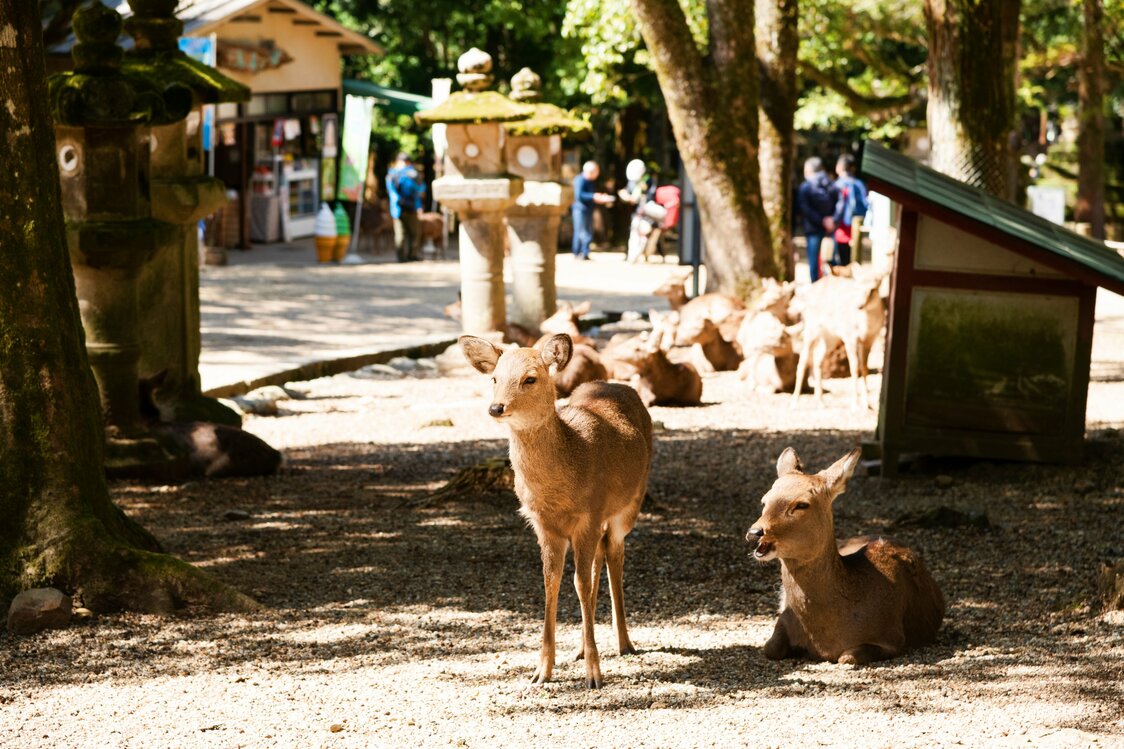
There are about 1,200 deer living in and around Nara Park.
-
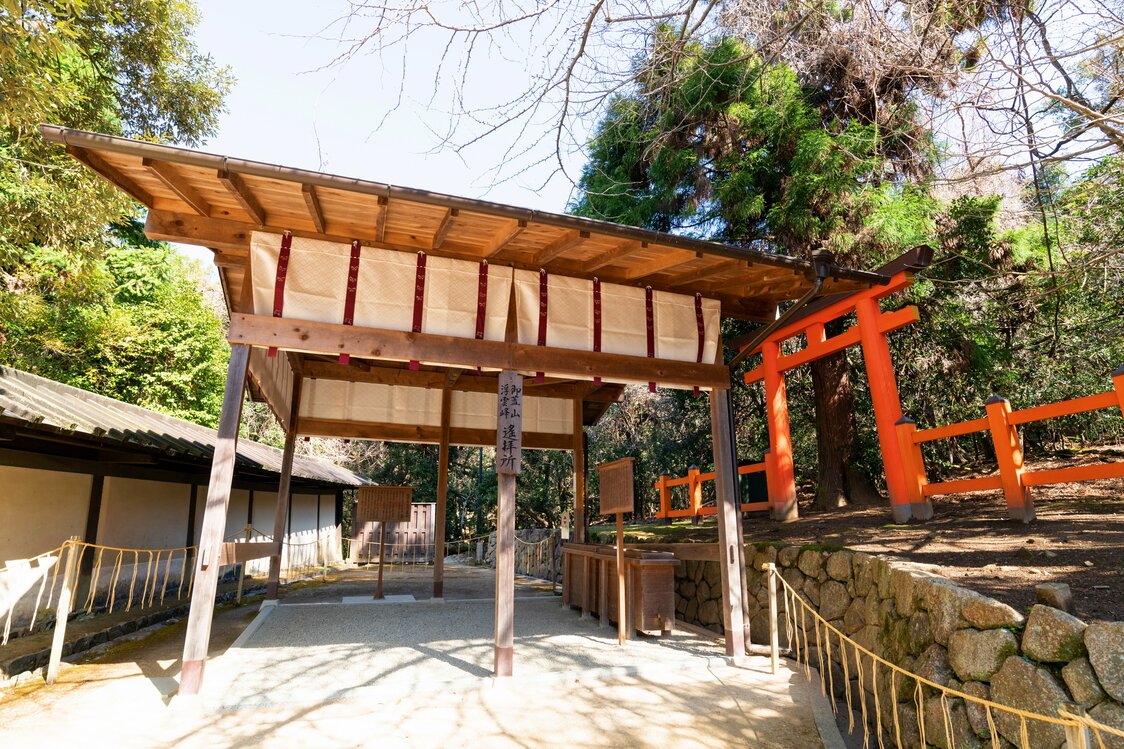
At the summit of Mount Mikasa stands Hongū Shrine, marking the spot where Takemikazuchi-no-mikoto alighted. The main hall of the shrine is closed to the public, who may pay their respects at the nearby Ukigumo no Mine worship hall to the east.
-
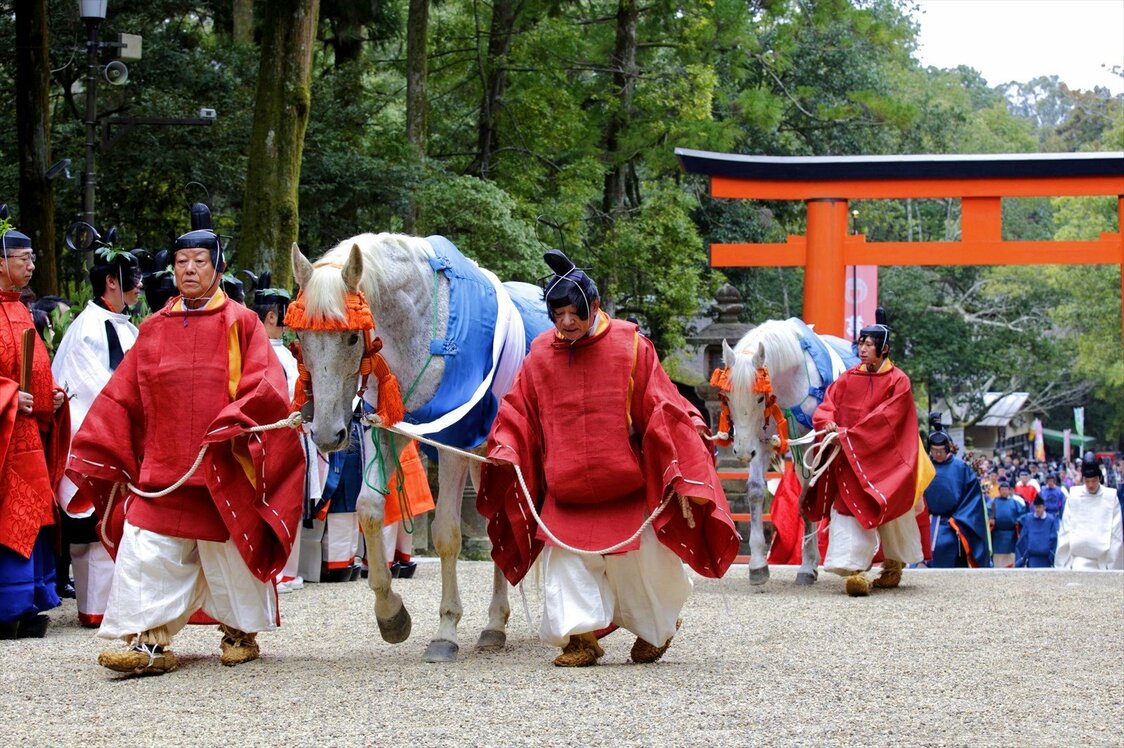
A procession at the Kasuga Festival. (© Matui Yoshihiro)
-

The shrine’s Chūmon, or “middle gate,” has 13-meter-long corridors extending to the left and right that are designated important cultural properties. Worshippers pray in front of the gate, which leads to the shrine’s honden (main hall) beyond.
-
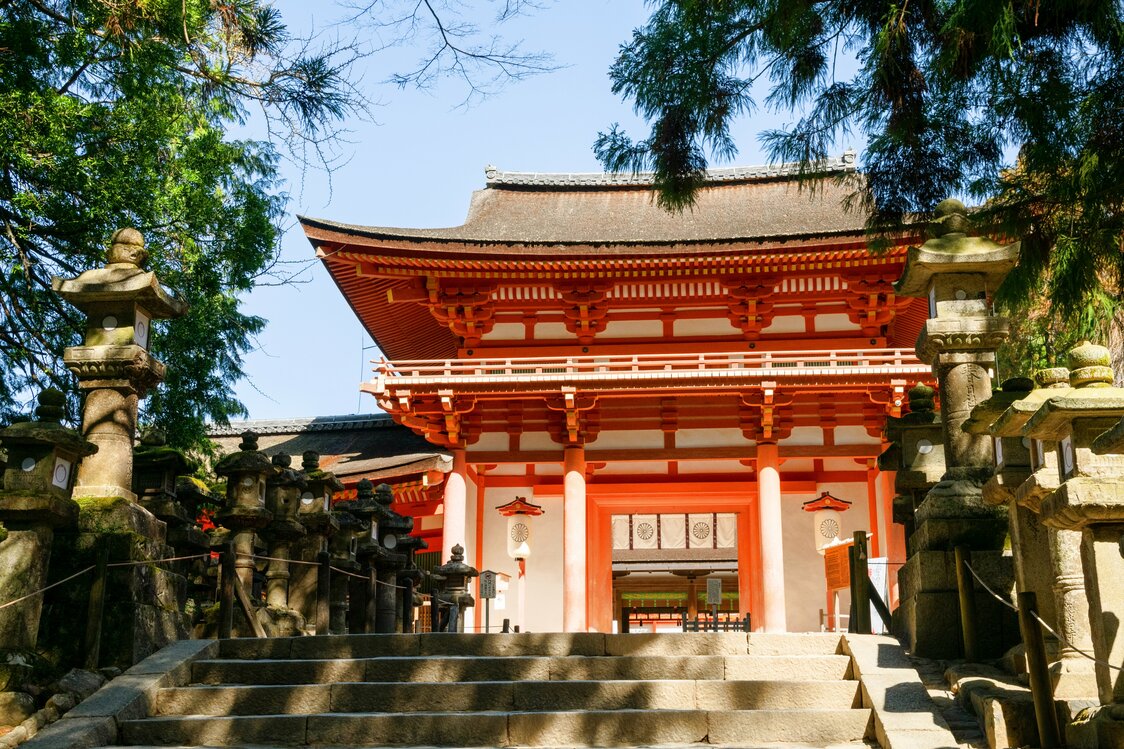
The Nanmon, the “south gate” that serves as the main entrance to the shrine, stands 12 meters high, making it the largest of the shrine’s many two-storied gates.
-
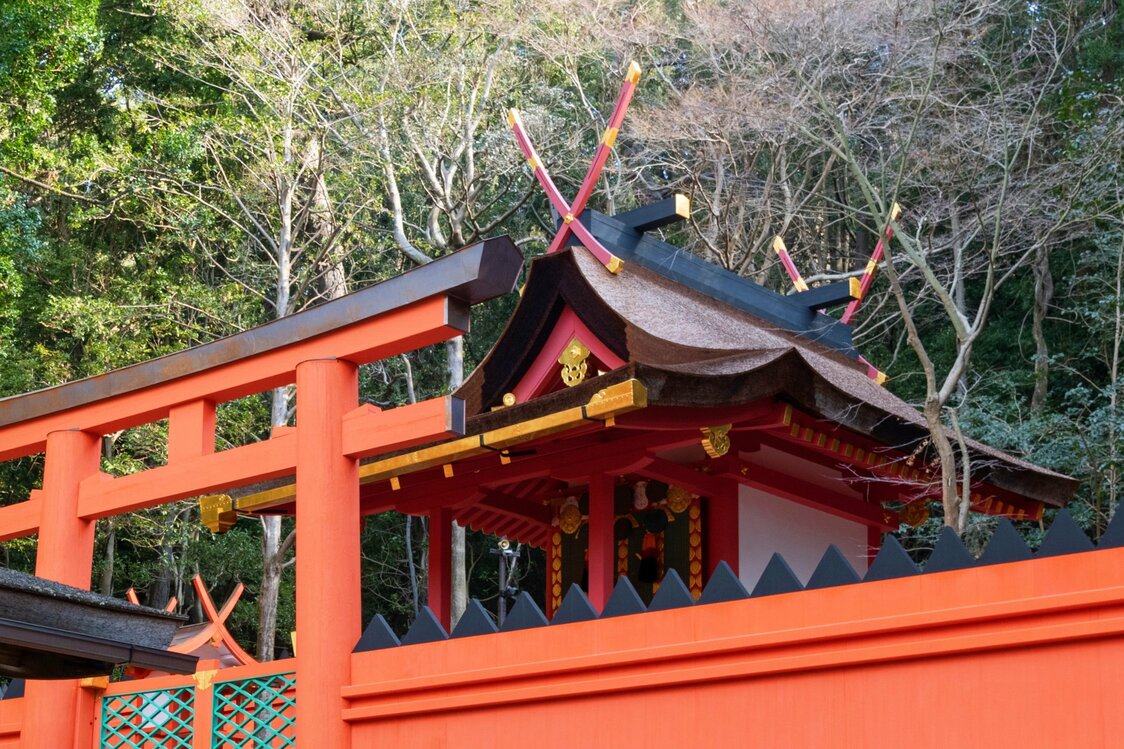
The main hall of the Wakamiya Shrine employs the same architectural style as that of the Ōmiya.
-
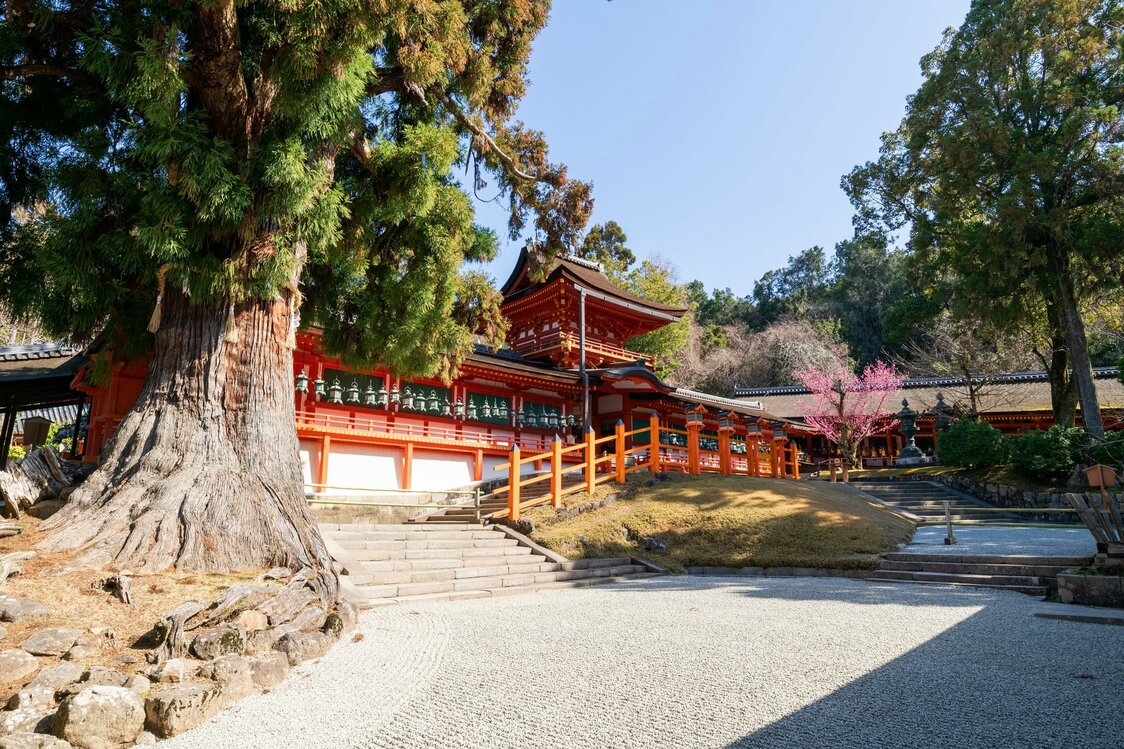
A giant old-growth cedar measuring 8.7 meters in circumference and towering 25 meters tall stands next to the main path leading to the shrine.
-
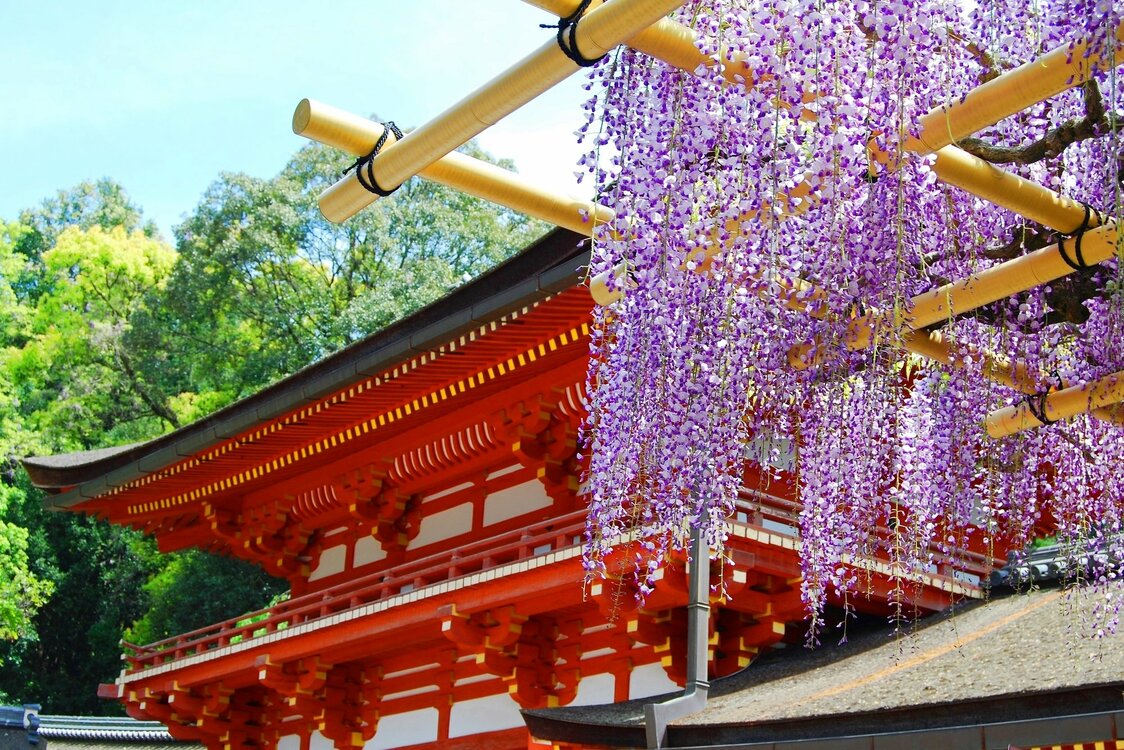
The famous sunazuri no fuji is said to have been donated by the Konoe family, direct descendants of the Fujiwara, and is purported to be more than 700 years old. (© Pixta)
-
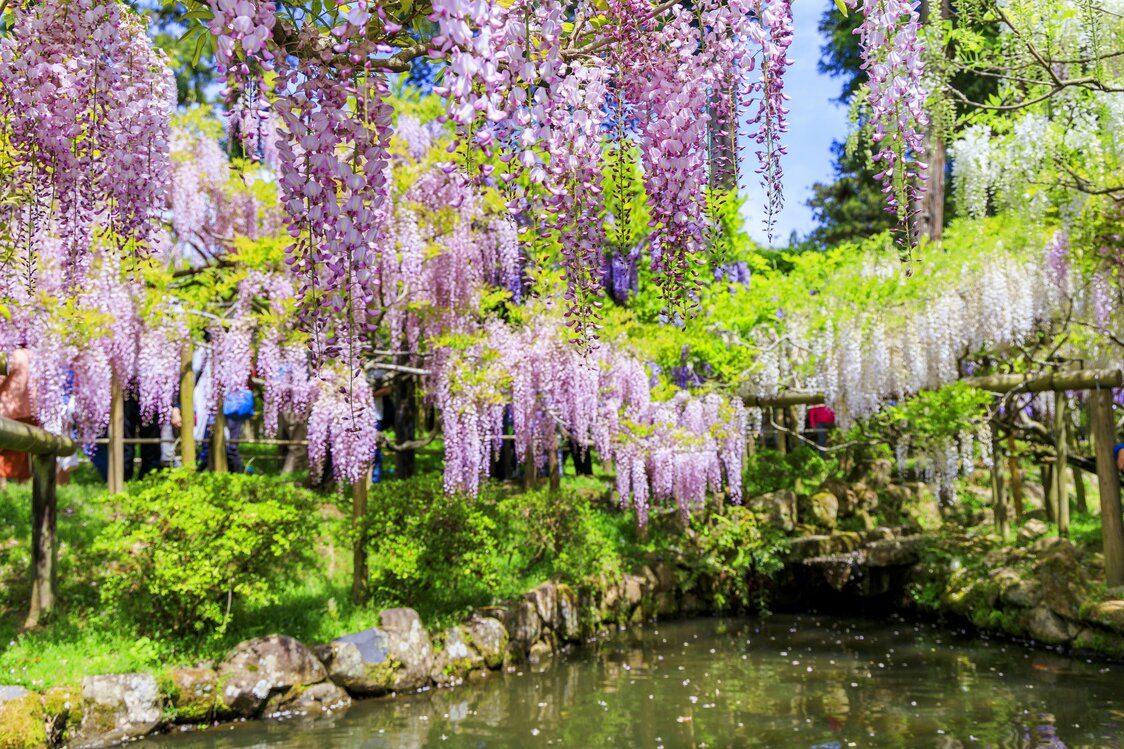
The wisteria grove in the Man’yō Botanical Garden. The flowers are in full bloom from late April to early May. (© Pixta)
-

Press officer Akita Shingo explains about the shrine’s stone lanterns. Over 70% of the lanterns still in existence in Japan that predate the Muromachi period are at Kasuga Taisha, which boasts the largest number of lanterns in the country.
-

The oaimichi is thought to be the first shrine path in the country to be lined with stone lanterns.
-
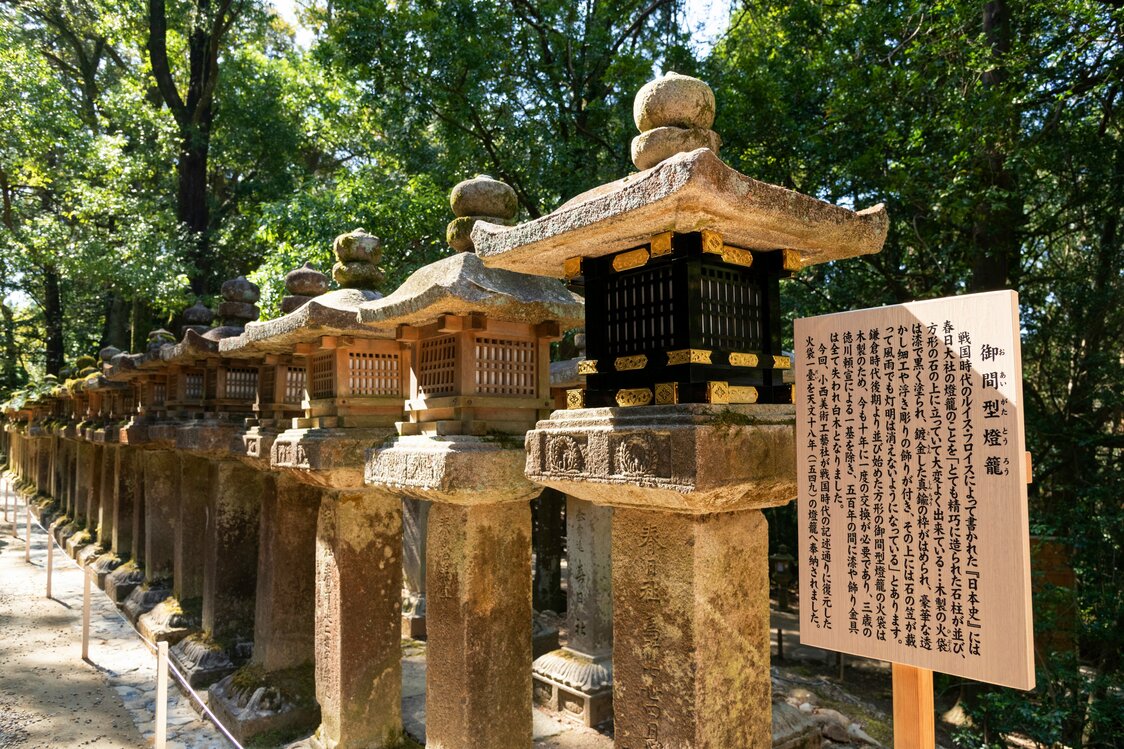
The stone lanterns on the oaimichi are distinctive for their wooden, cube-shaped fire boxes. In autumn 2022, the firebox of one lantern dating from the Warring States period (1467–1568) was painted in black lacquer, restoring it to its original appearance.
-
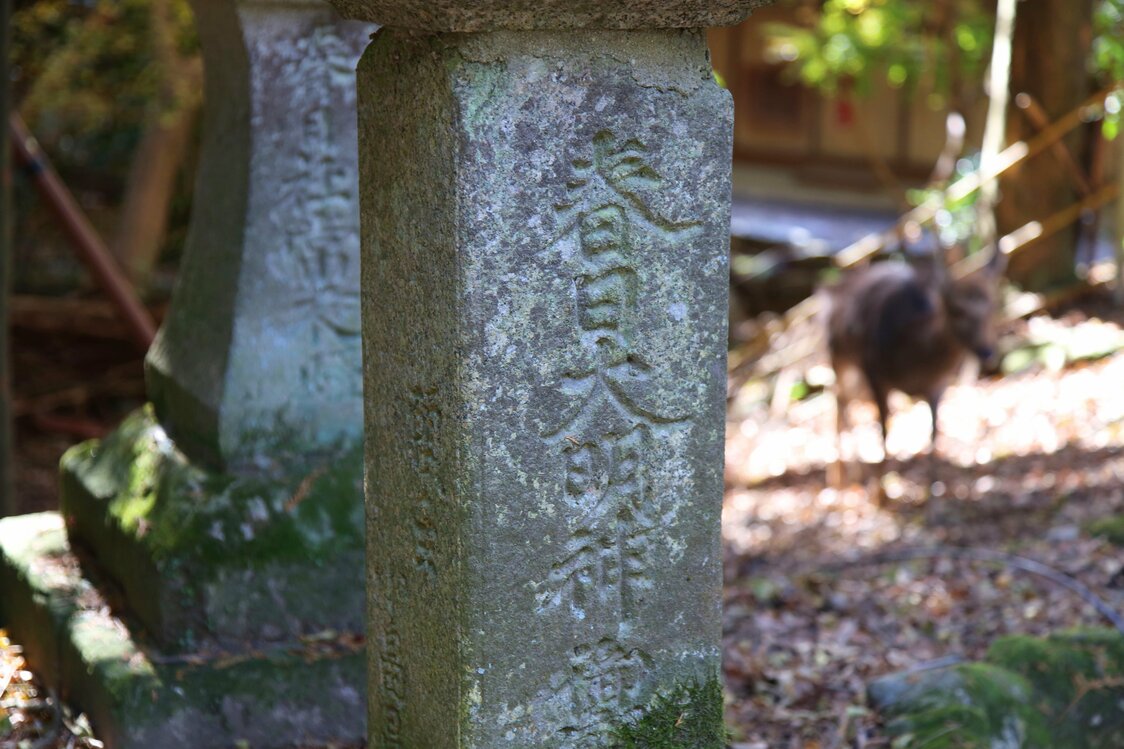
One of a handful of stone lanterns carved with the name Kasuga Daimyōjin. The four primary divine beings of Kasuga Taisha are often grouped together as a syncretic, combined deity known as Kasuga Daimyōjin.
-
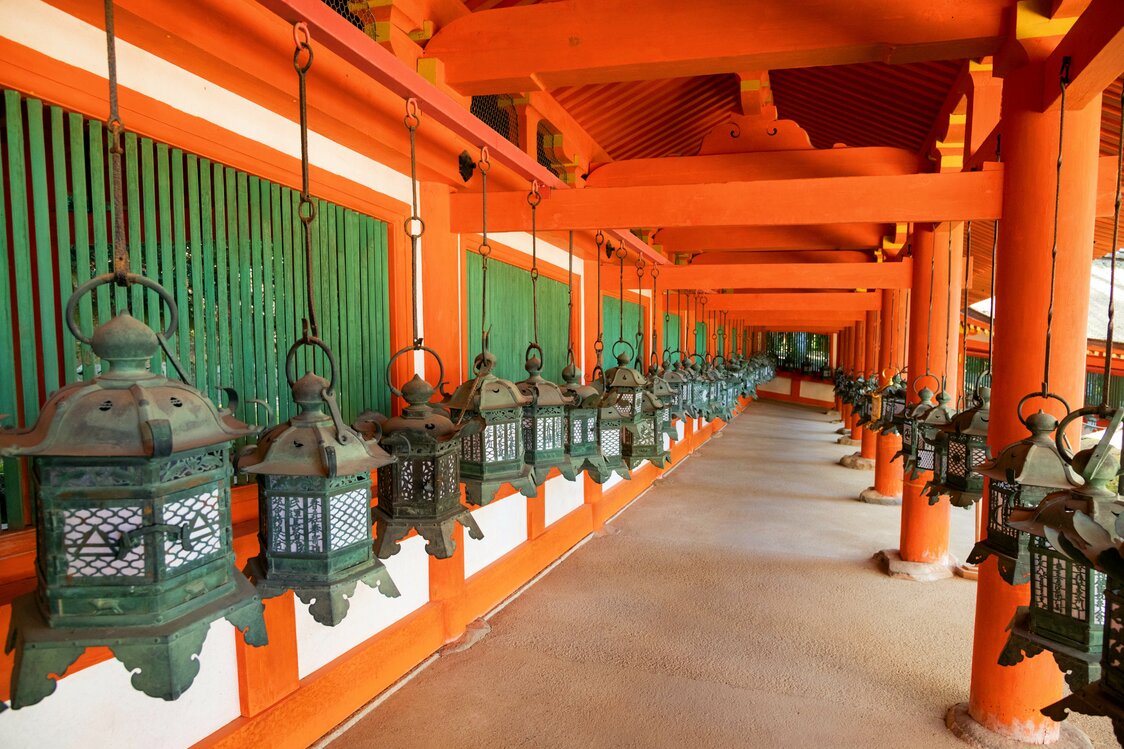
Lanterns hang along the east corridor.
-
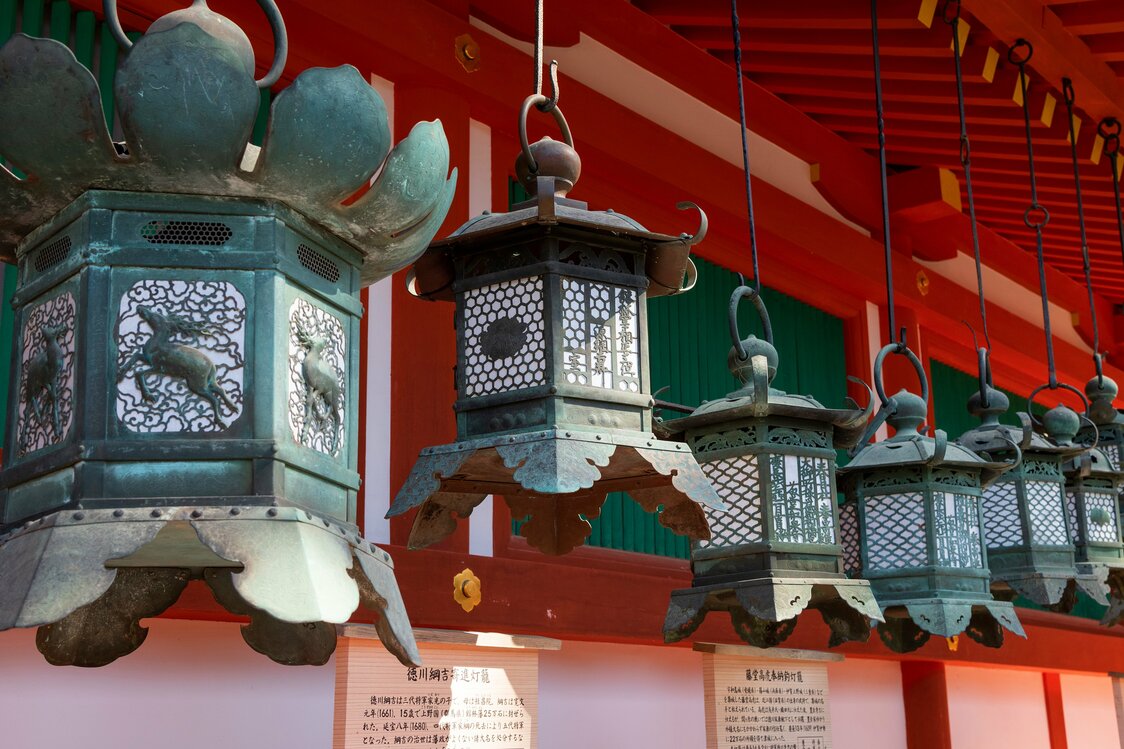
The lantern second from left was donated by shōgun Tokugawa Tsunayoshi and the next two by daimyō Tōdō Takatora.
-
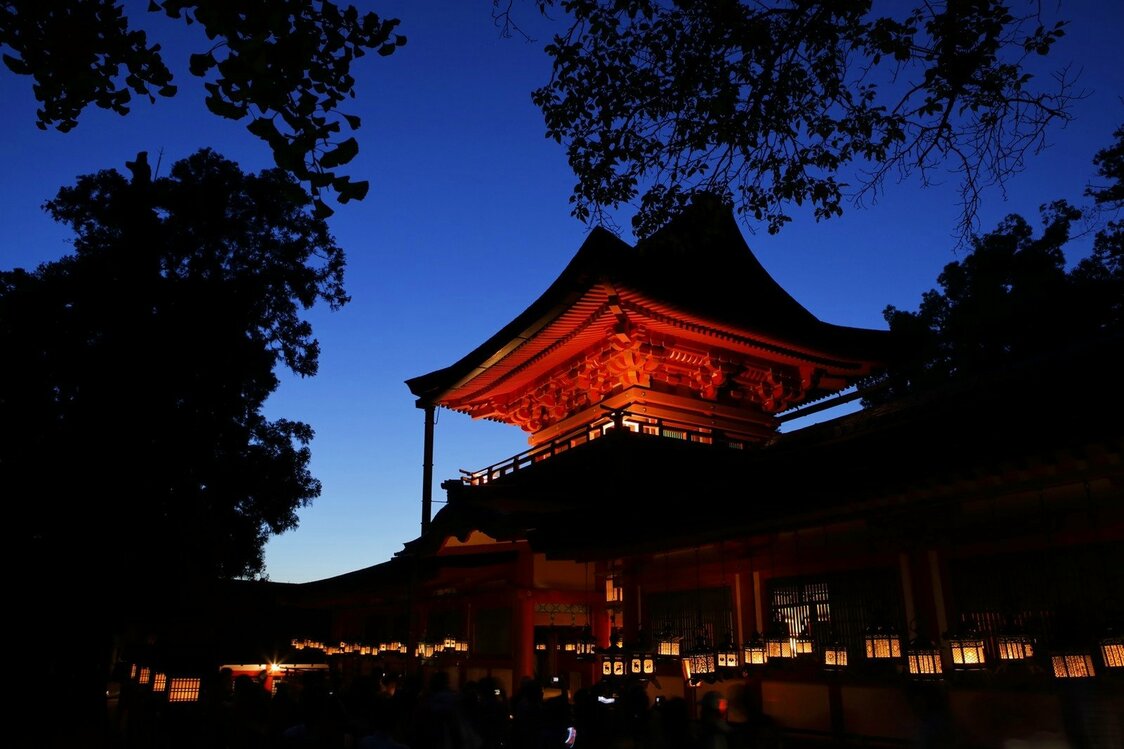
The shrine is enveloped in a phantasmagorical atmosphere during Mantōrō. (© Matsui Yoshihiro)
-

The Fujinami-no-ya Hall Mantōrō is a world of quiet beauty.
-

Moss-covered stone lanterns stand along the approach to the shrine. Deer can often be seen peeking out from the surrounding scenery.


 Read in other languages