-
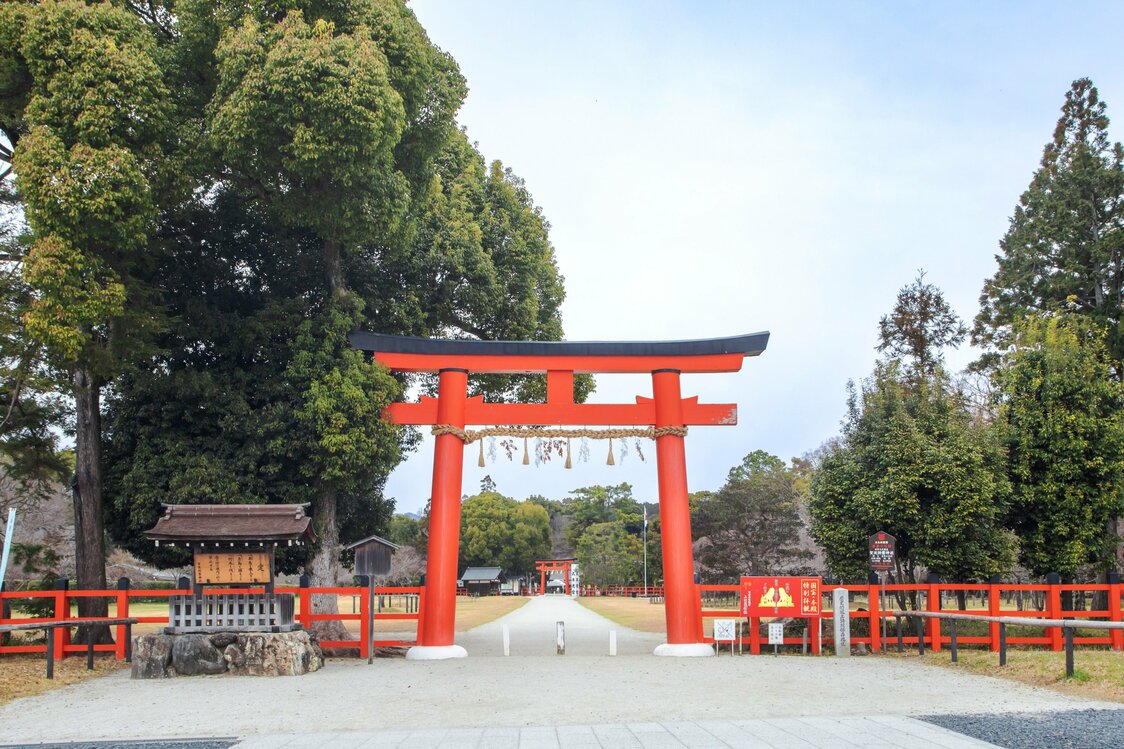
The ichi no torii gate marks the entrance to the shrine. (© Edit Plus)
-
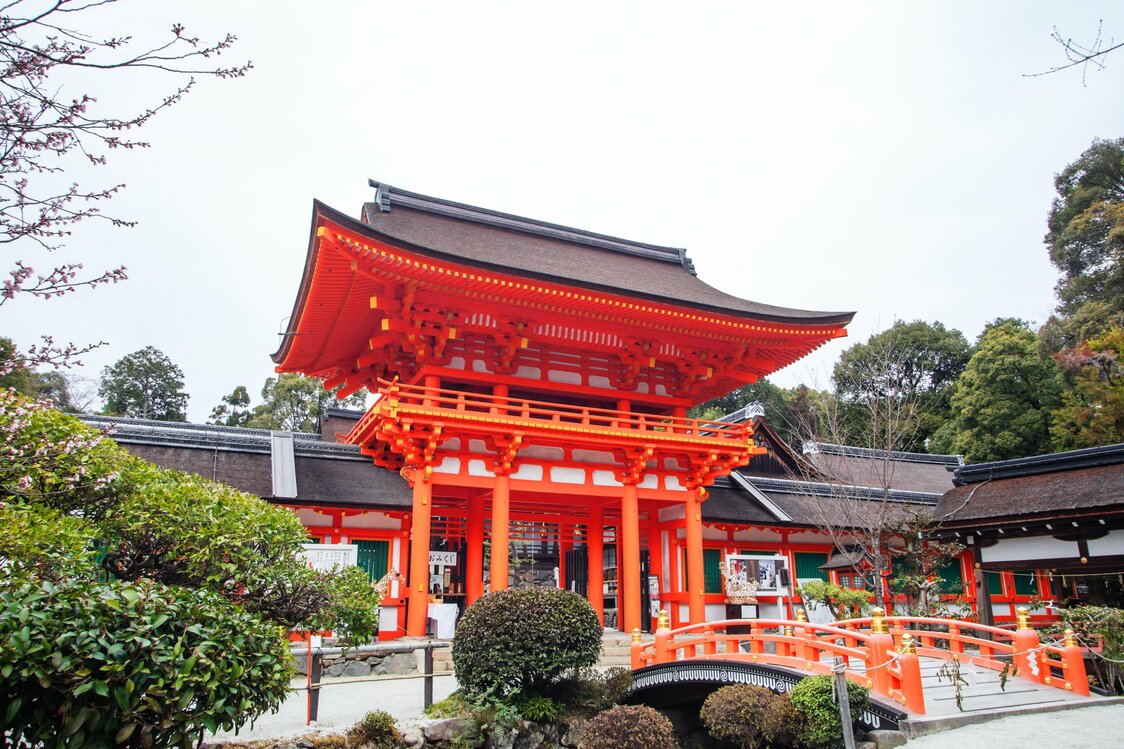
The two-storied Rōmon at the entrance to the main hall was constructed in 1628. The covered galleries to the left and right are important cultural properties. The structure’s bright vermillion color is believed to drive away evil spirits. (© Edit Plus)
-
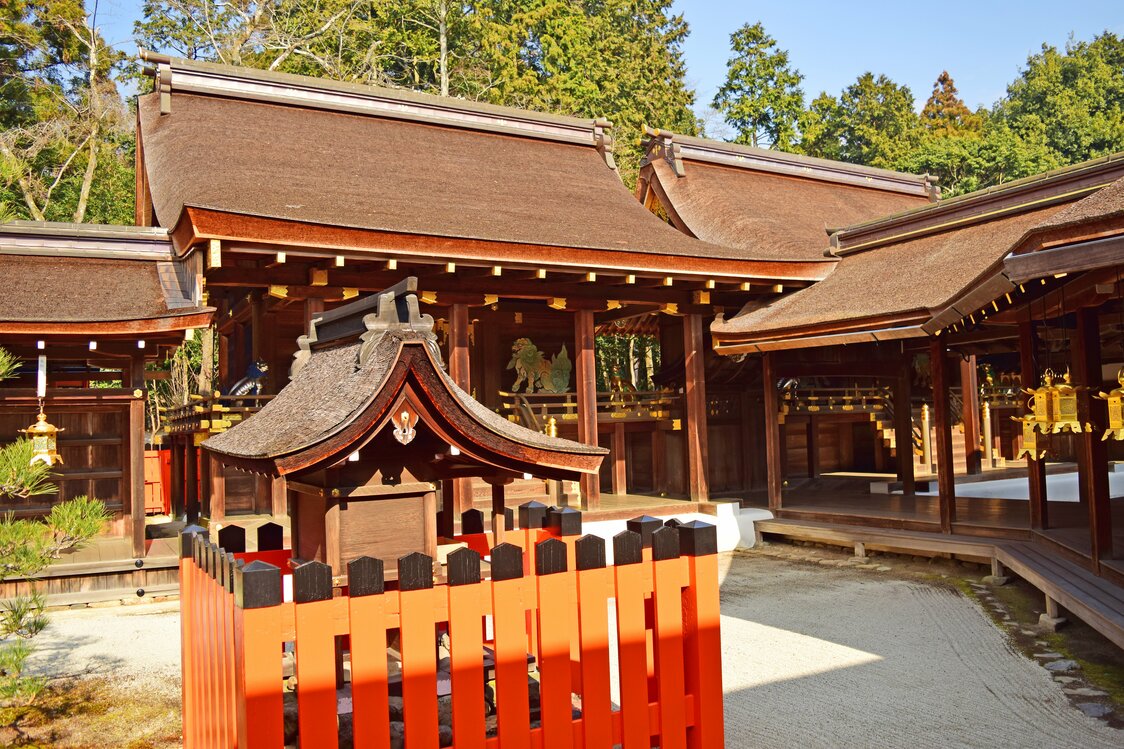
The honden and gonden at the right and left, respectively. Special worship at the honden includes a purification ceremony and a briefing on the shrine by a shrine priest. (Courtesy of Kamigamo Shrine)
-
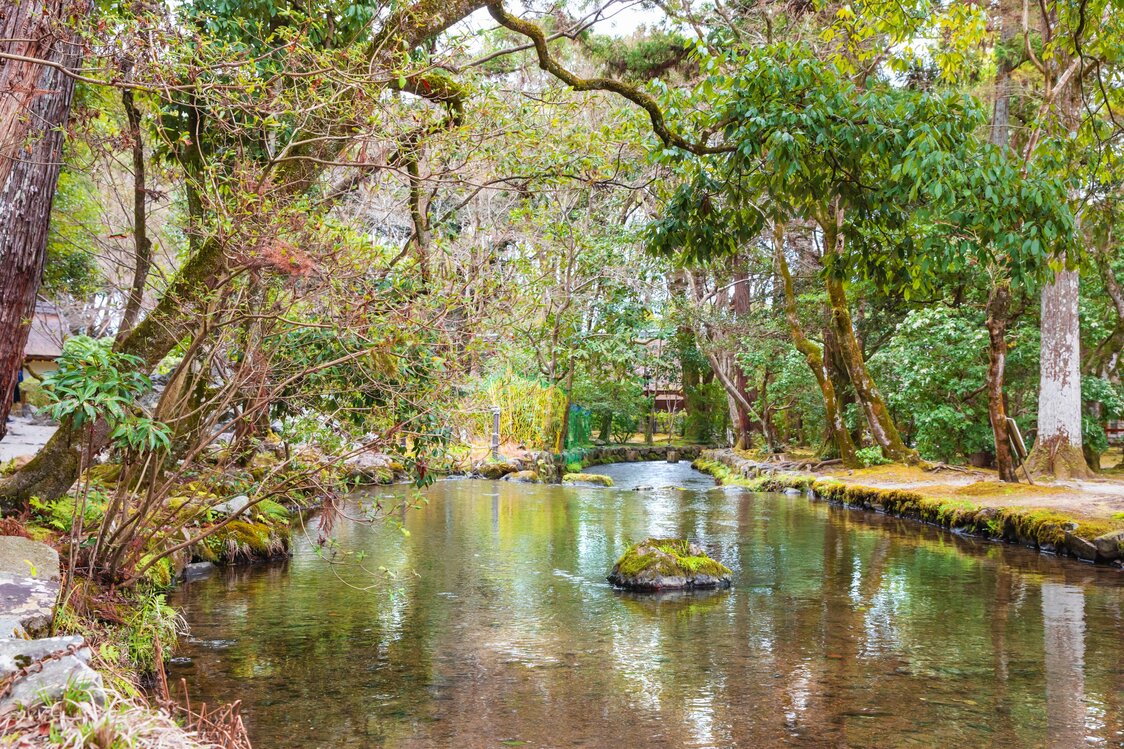
The Omonoi and Mitarashi Rivers meet to form a brook, the Nara no Ogawa, site of the nagoshi no ōharae purification ritual. (© Edit Plus)
-
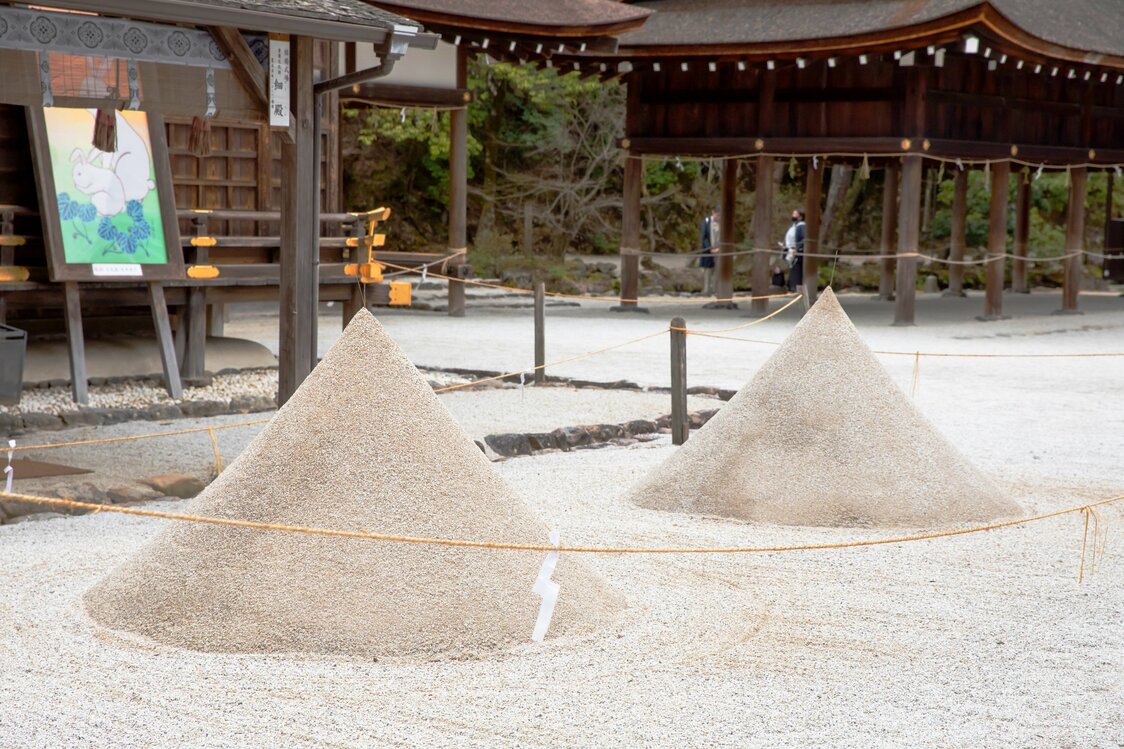
The famous tatezuna sand mounds are hand-shaped by shrine priests. (© Edit Plus)
-
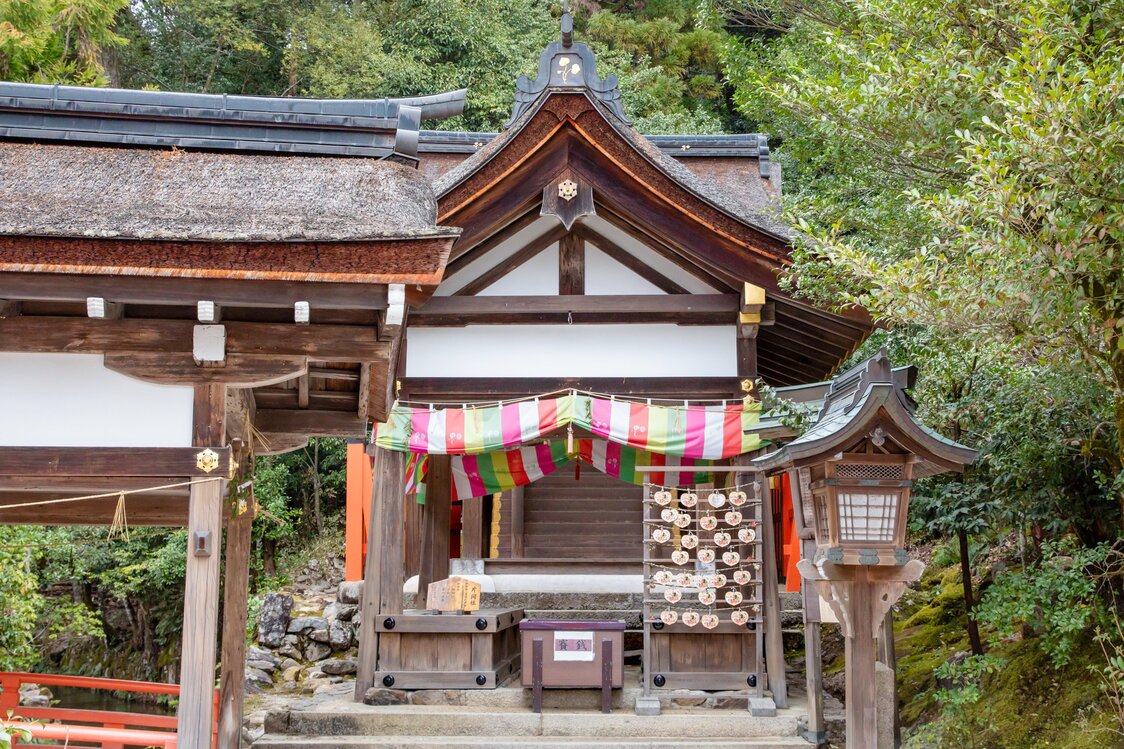
The small Katayama Miko Shrine across from the Rōmon on the far side of the Omonoi River. (© Edit Plus)
-
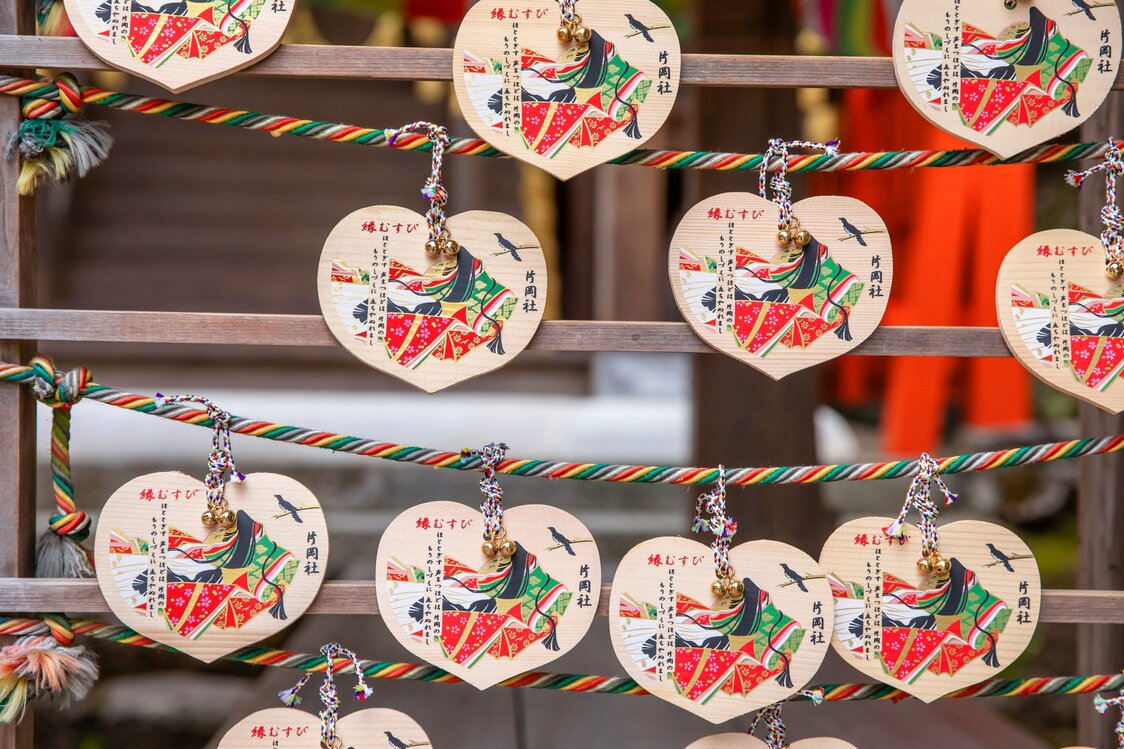
Ema depicting Murasaki Shikibu. The heart-shaped votive tablets are modeled on the shrine’s futaba aoi crest. (© Edit Plus)
-
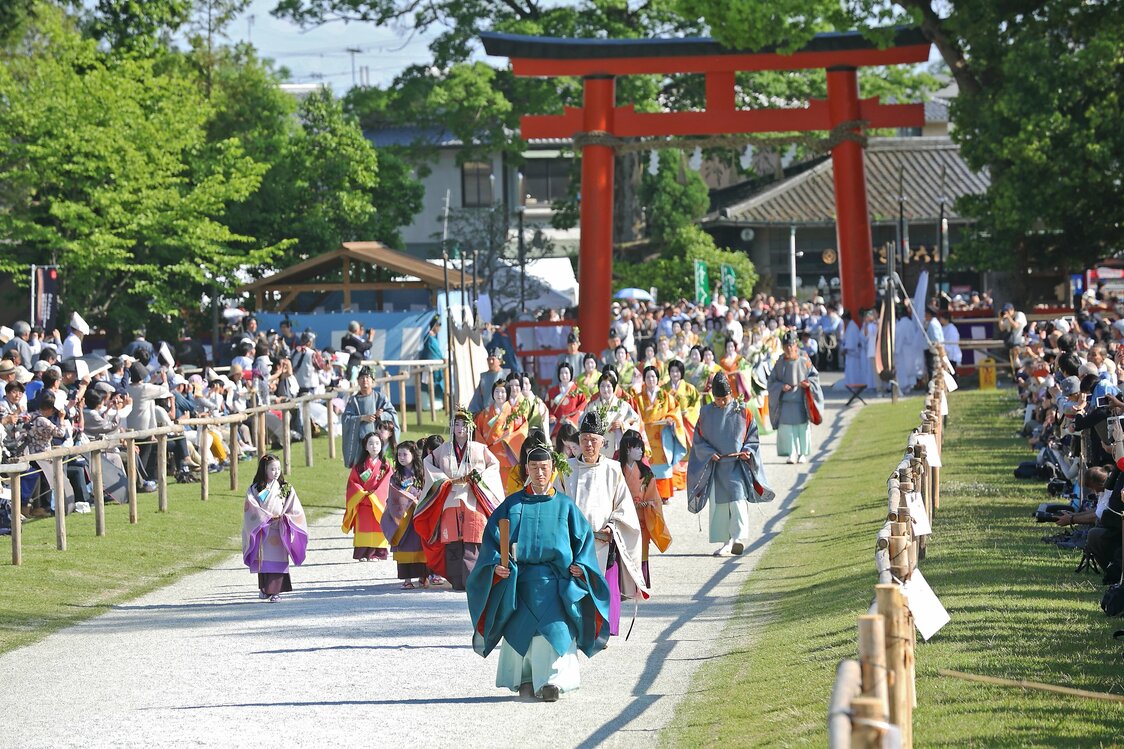
The festival procession with the saiō-dai at its head makes its way to the shrine. (Courtesy Kamigamo Shrine)
-
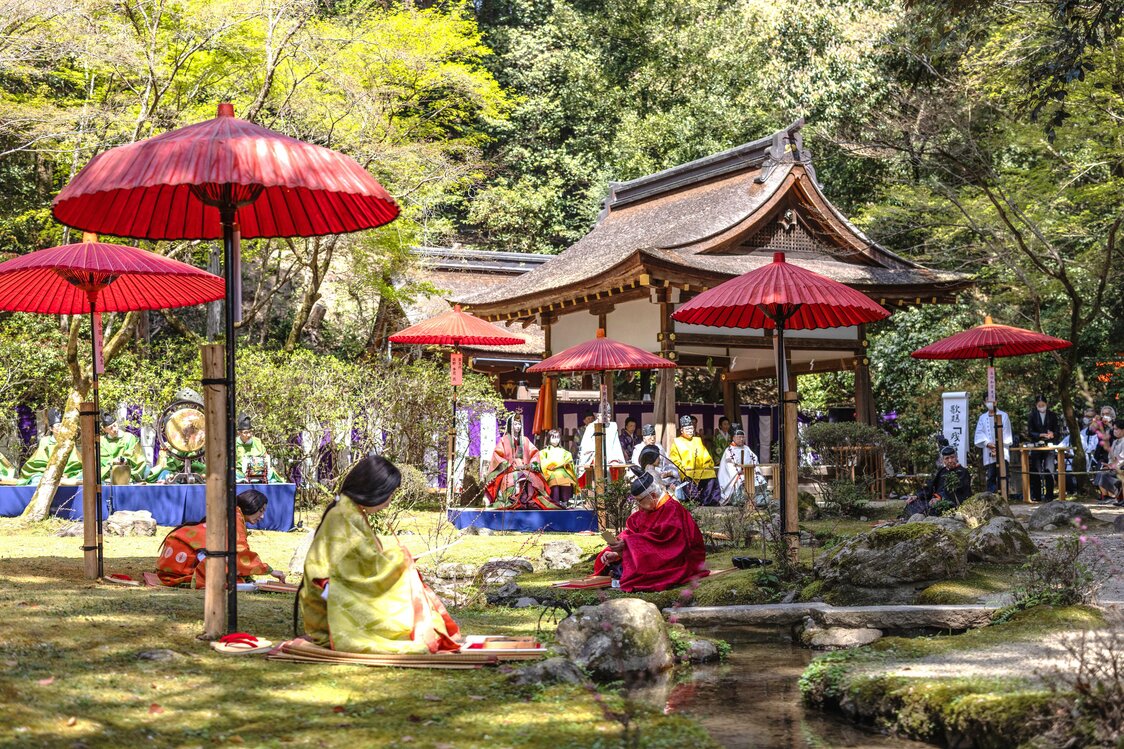
Participants of the Kamo kyokusui no en must improvise a waka verse to read before a sake cup floated on a stream passes in front of them. (Courtesy Kamigamo Shrine)
-
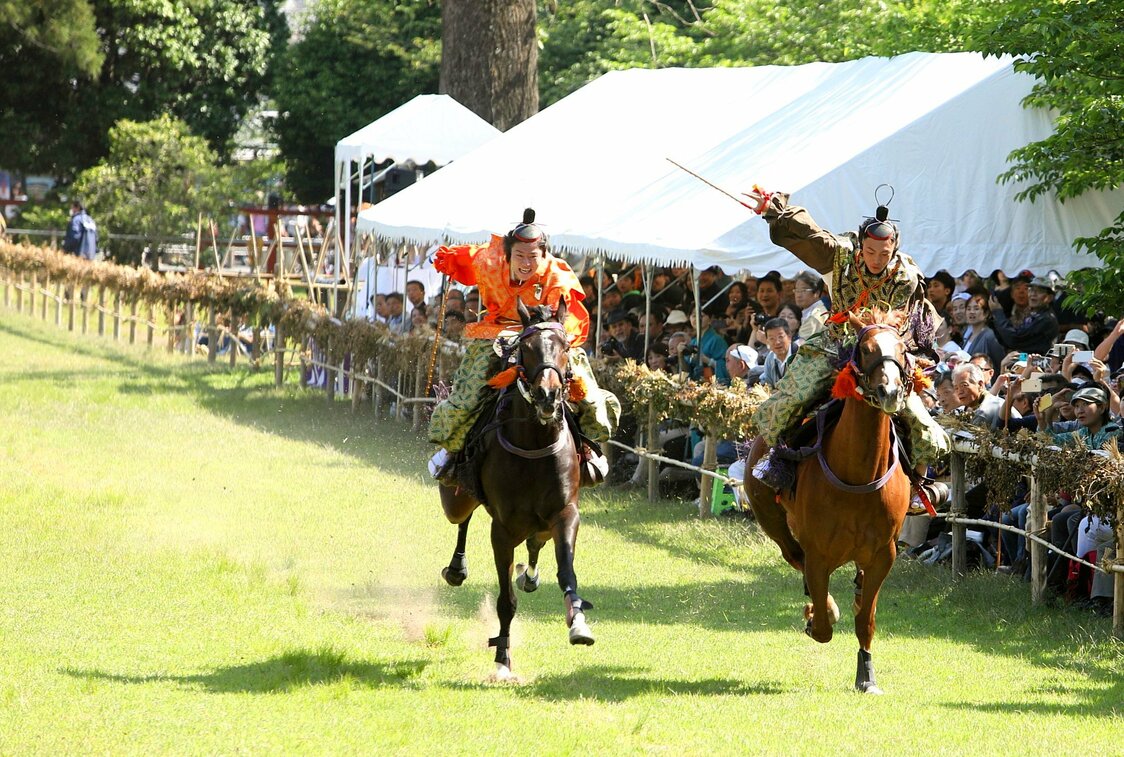
The kurabe uma is a sacred ritual staged to pray for bountiful harvests and peace in the land. (Courtesy Kamigamo Shrine)
-
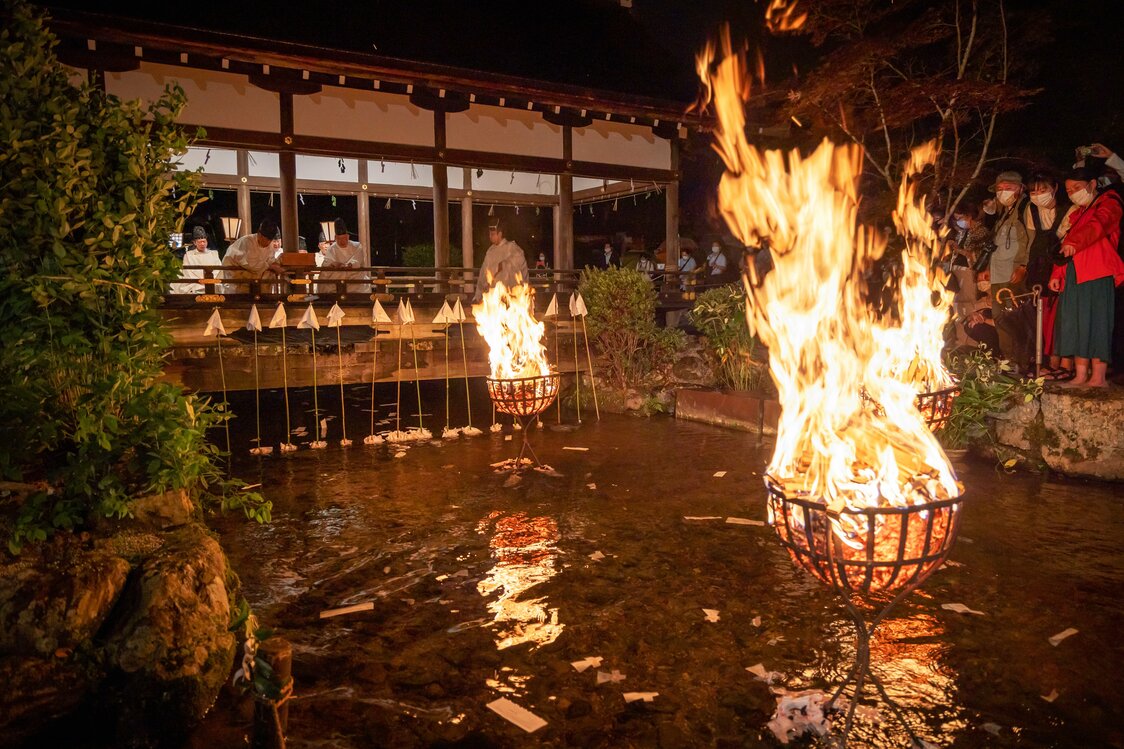
Paper figures presented by worshippers are released into the stream by shrine priests chanting invocations. (Courtesy Kamigamo Shrine)
-
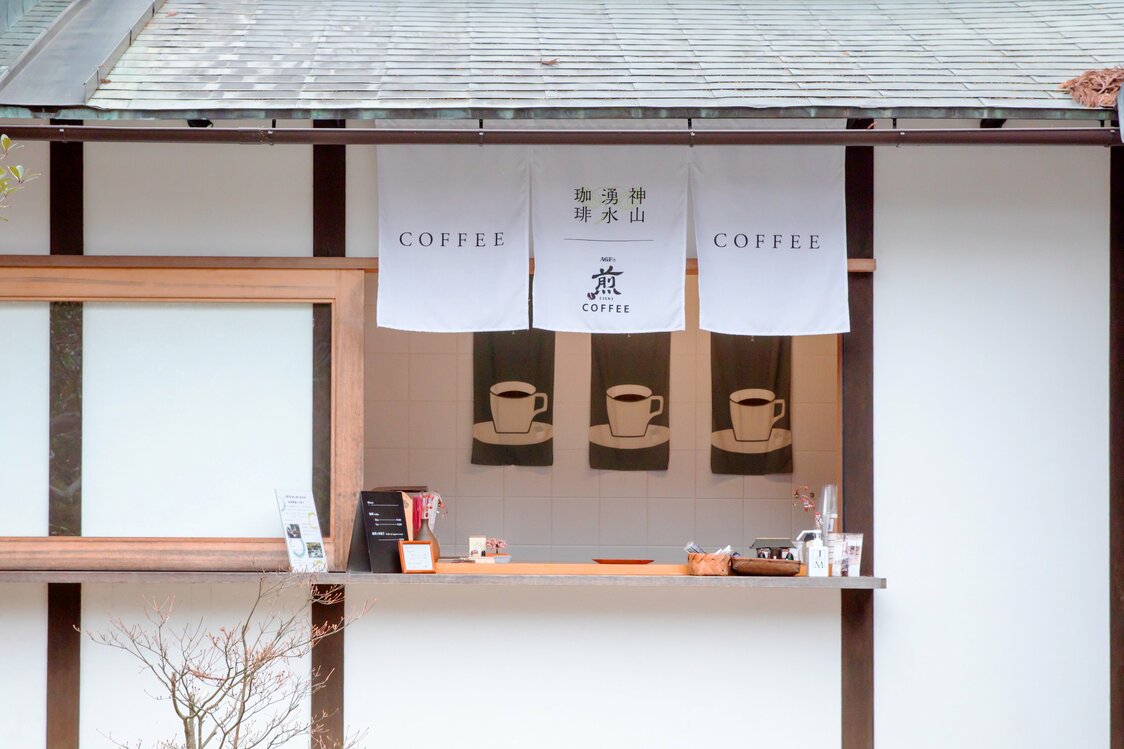
The coffee stand, which is open from 10:00 am to 4:00 pm, blends in tastefully with its surroundings. (© Edit Plus)
-
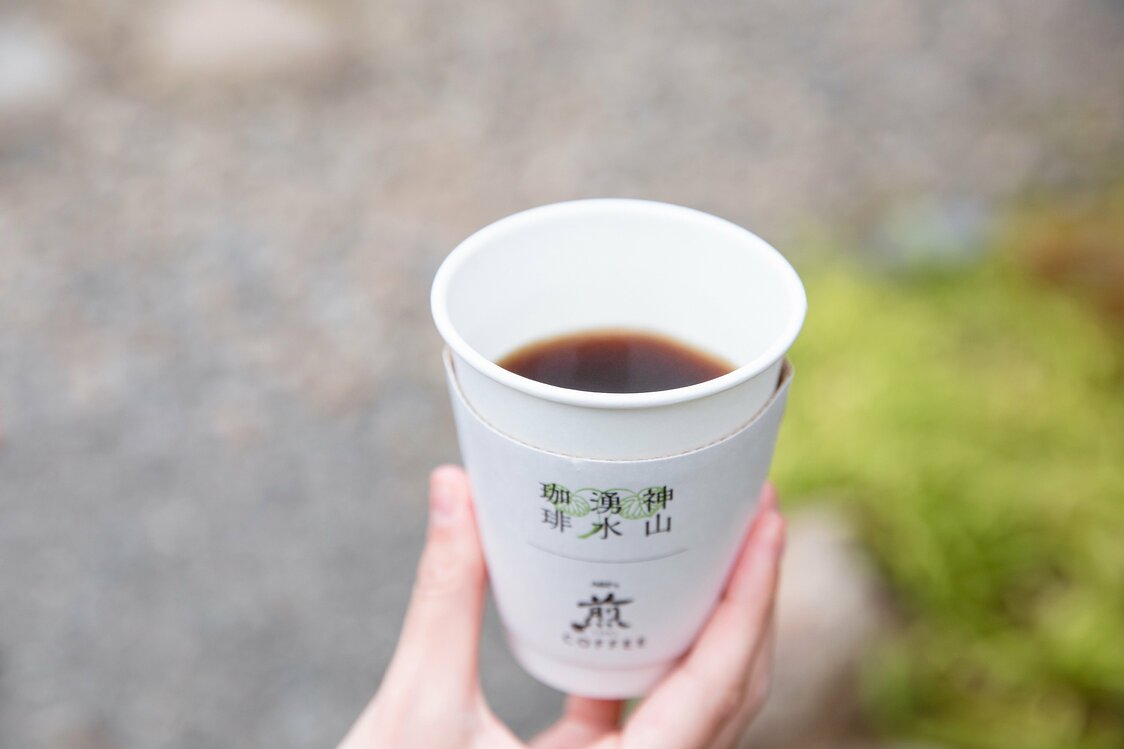
Brewed from Kōyama yūsui spring water, the coffee has a soft, mellow flavor. (© Edit Plus)


 Read in other languages