-
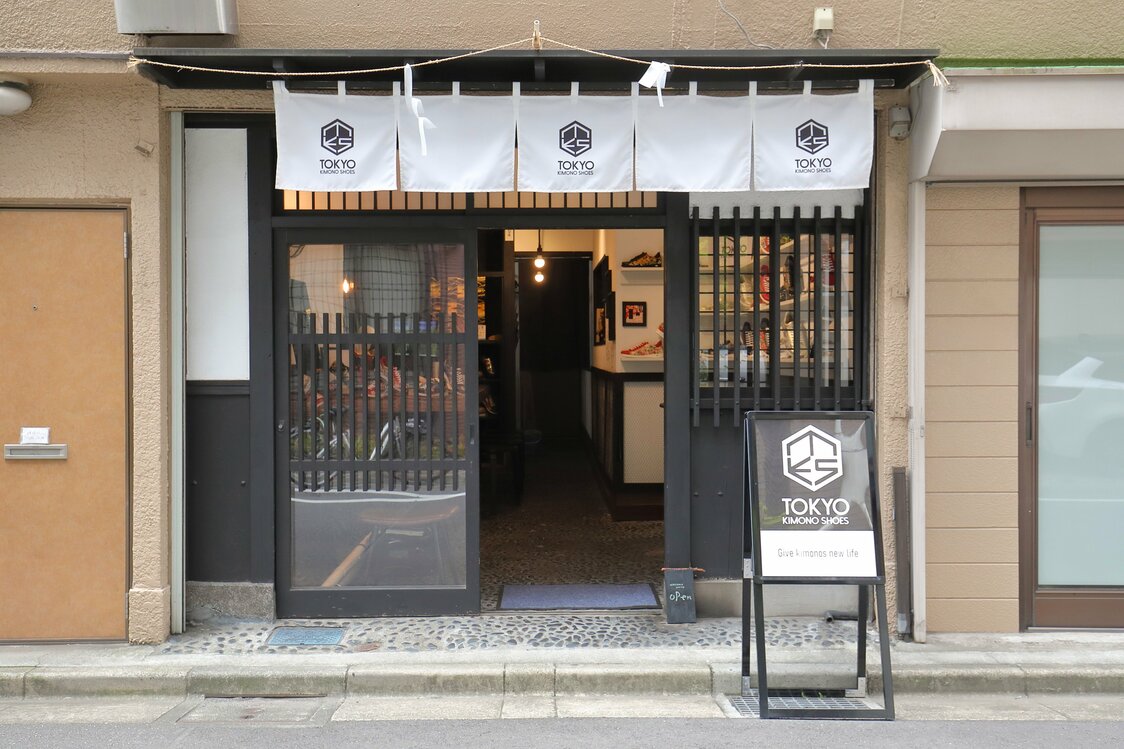
The storefront recalls early twentieth-century Asakusa. (© Hanai Tomoko)
-
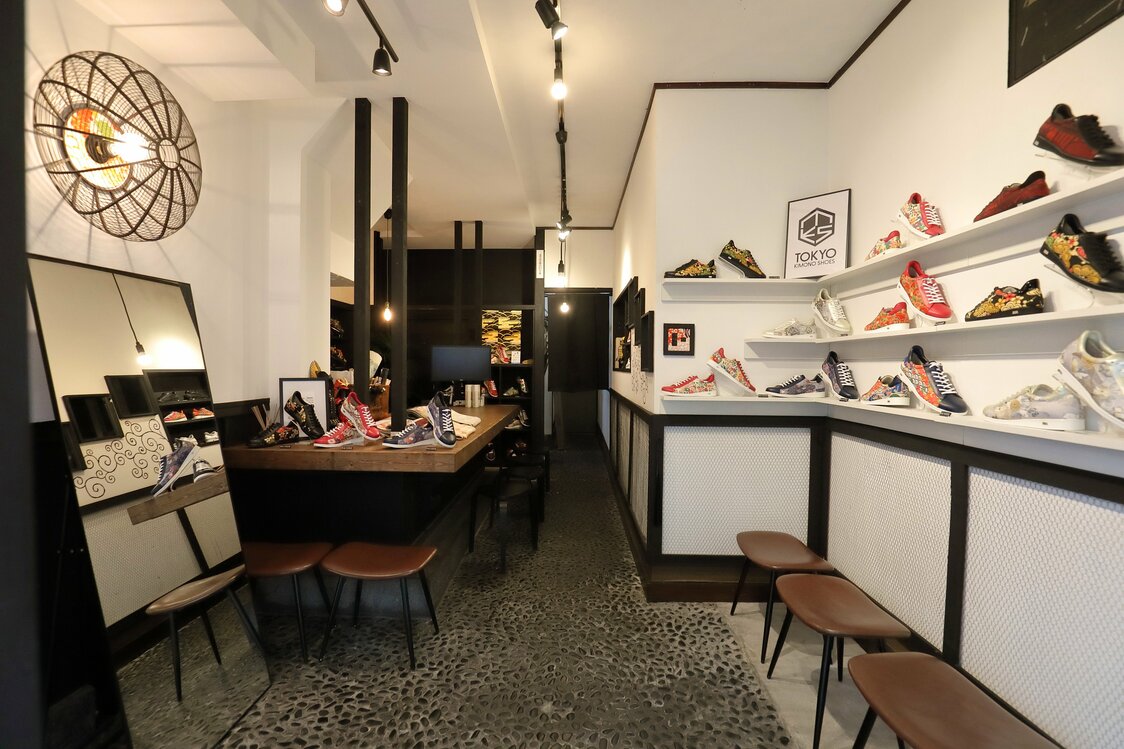
Each pair of shoes is unique. (© Hanai Tomoko)
-
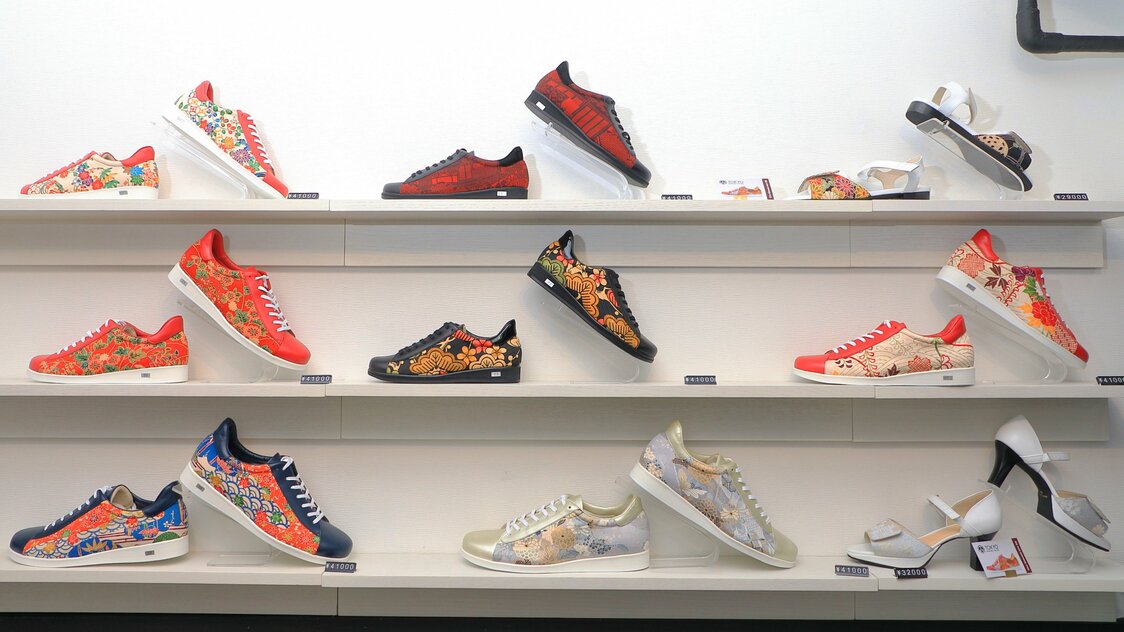
One of their many charms is the fact that the right and left shoes of each pair do not match exactly. (© Hanai Tomoko)
-
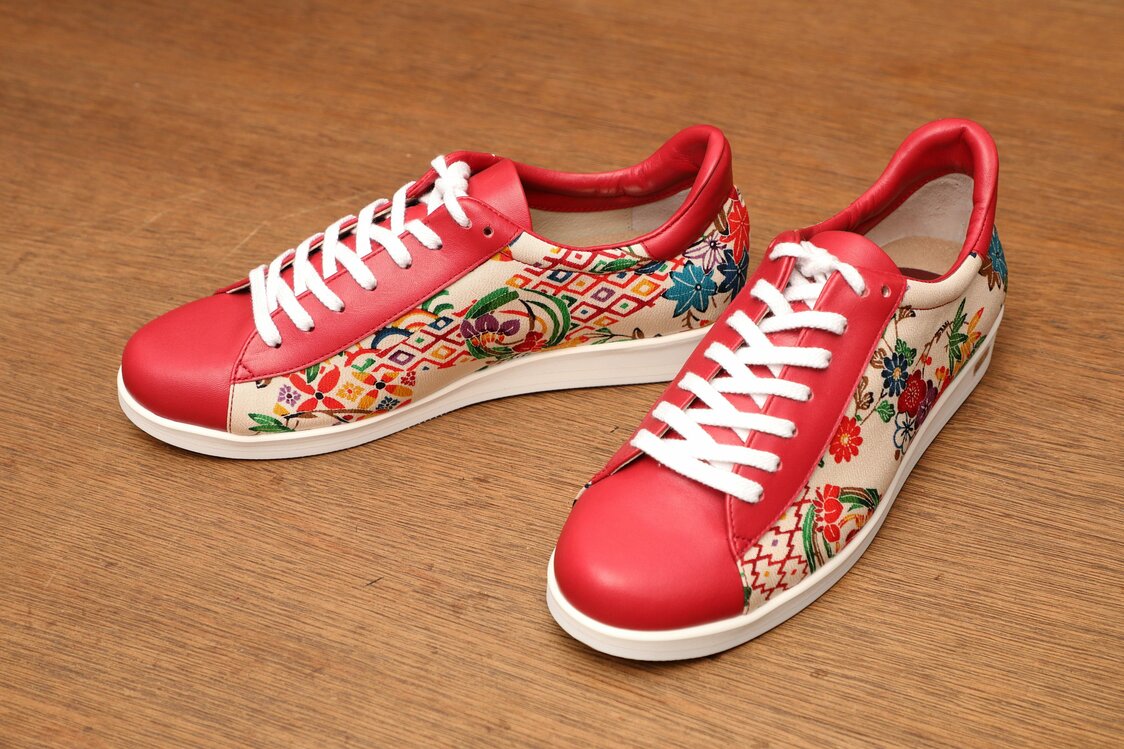
The high-quality texture of the cowhide is perfectly matched with the bright, colorful kimono patterns of these unisex sneakers. (© Hanai Tomoko)
-
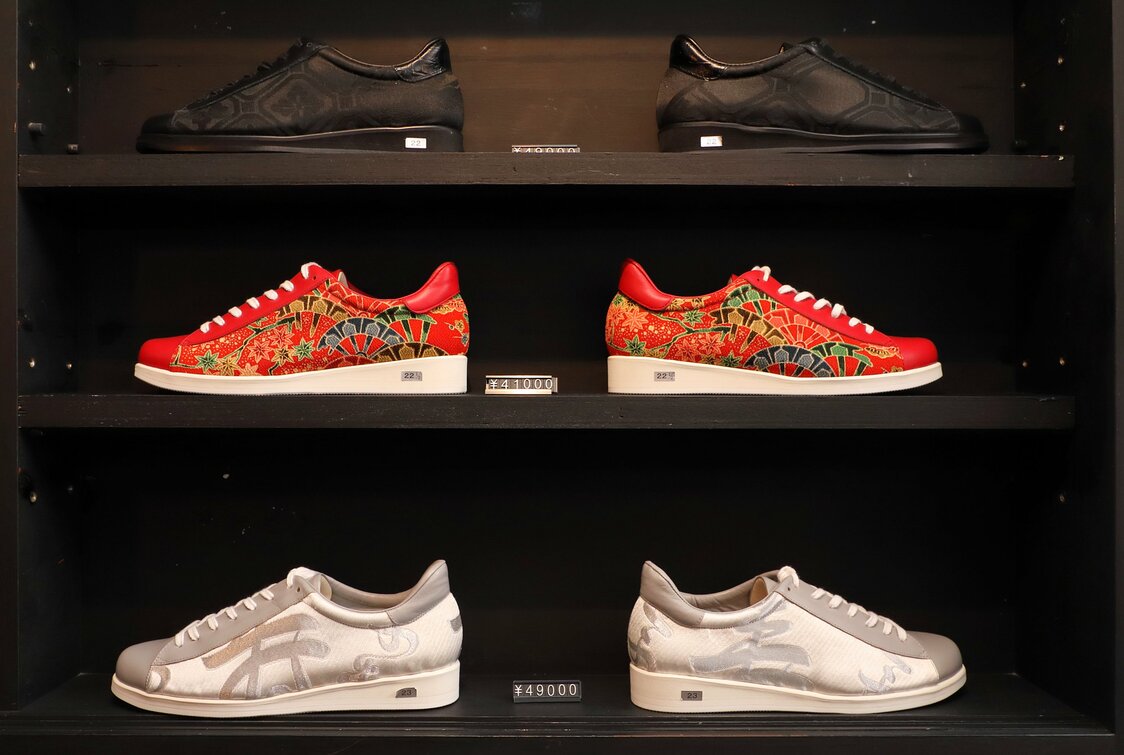
Shoes that feature the fine embroidered designs of obi (kimono sash) are higher priced than those that utilize kimono fabric. (© Hanai Tomoko)
-
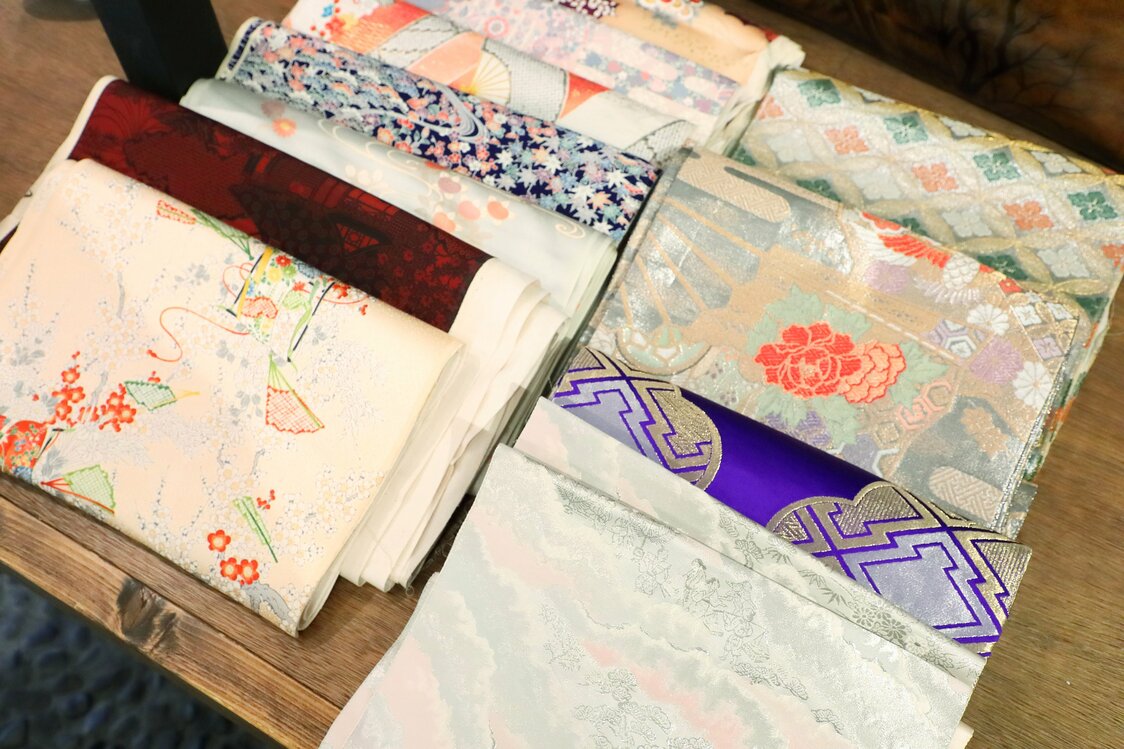
Rescued kimono are used to decorate shoes. (© Hanai Tomoko)
-
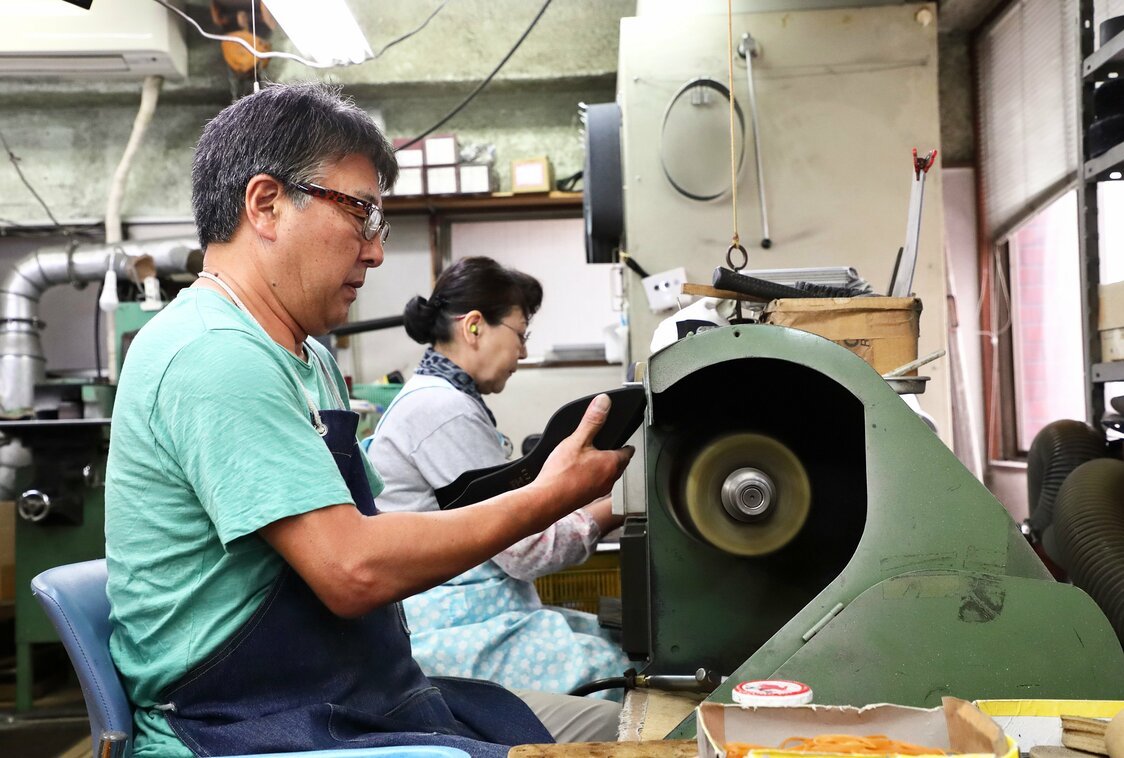
Artisans at the Asakusa workshop have been making shoes since its founding in 1951. (© Hanai Tomoko)
-

An artisan sewing kimono fabric onto genuine leather. (© Hanai Tomoko)
-
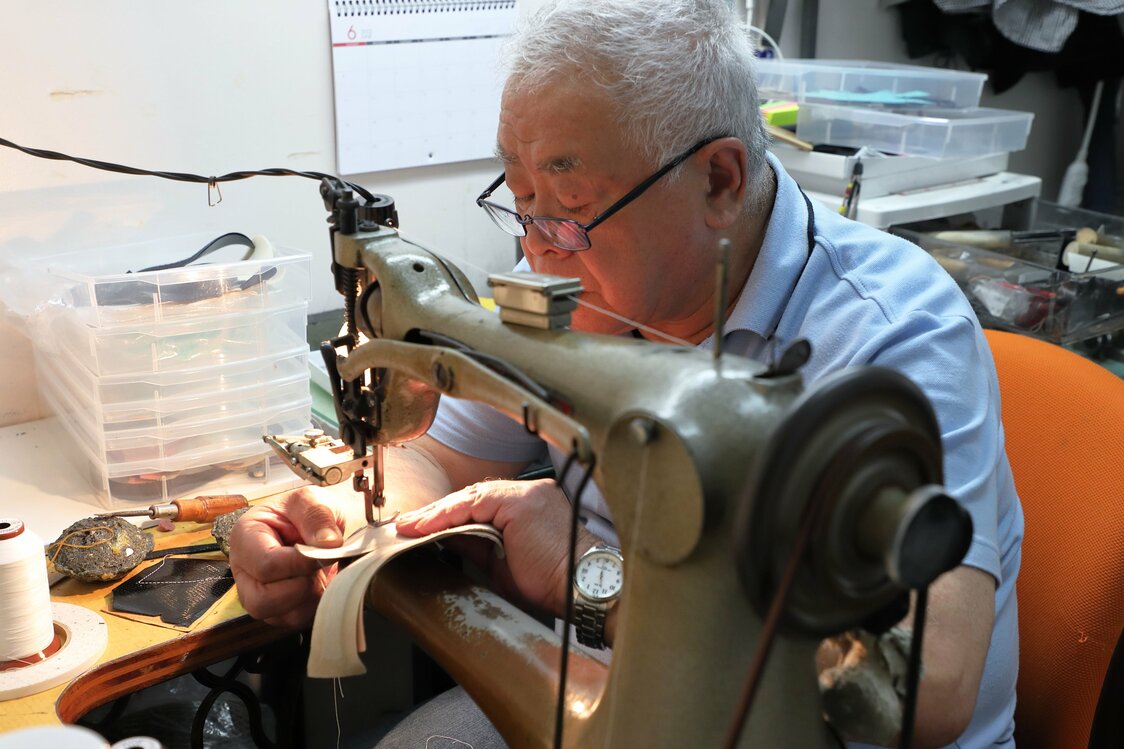
Some of the veteran artisans still use foot-operated treadle sewing machines. (© Hanai Tomoko)
-
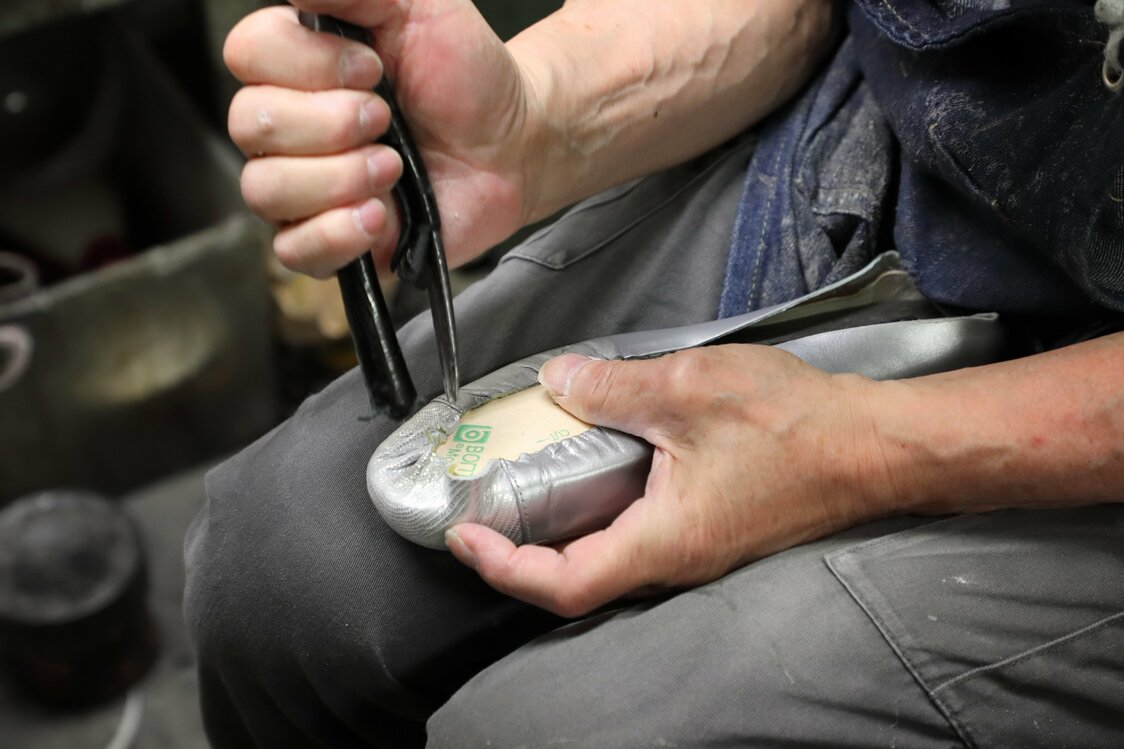
A pull-over technique known as lasting is used to affix the leather uppers to the insoles. All such work is done by hand. (© Hanai Tomoko)
-
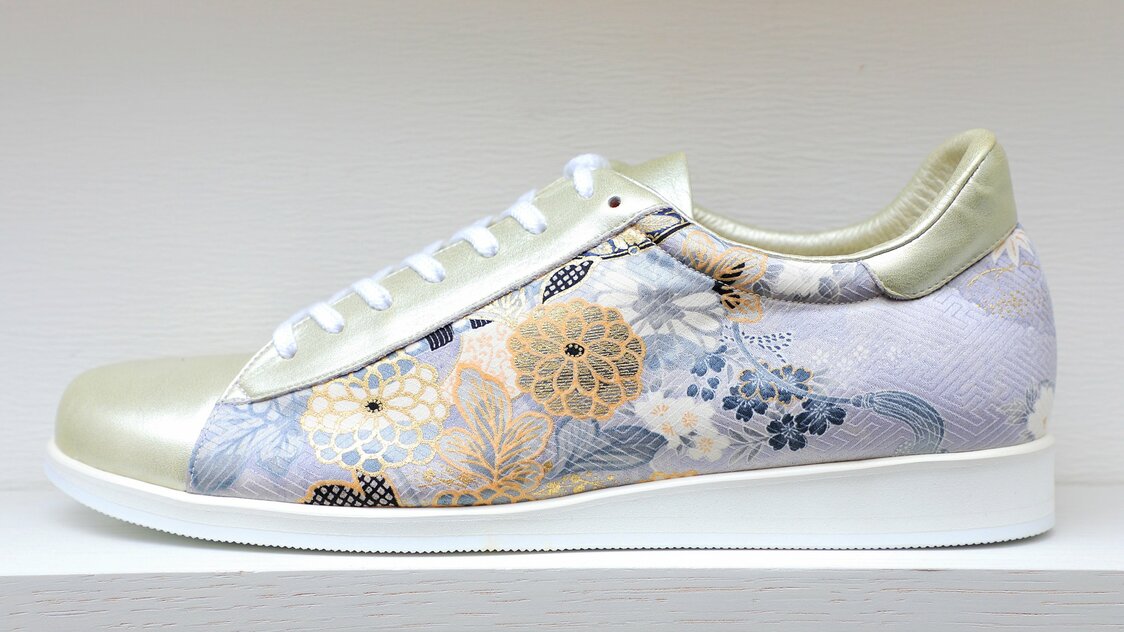
The heel is 25 millimeters high, perfect for effortless walking. (© Hanai Tomoko)
-
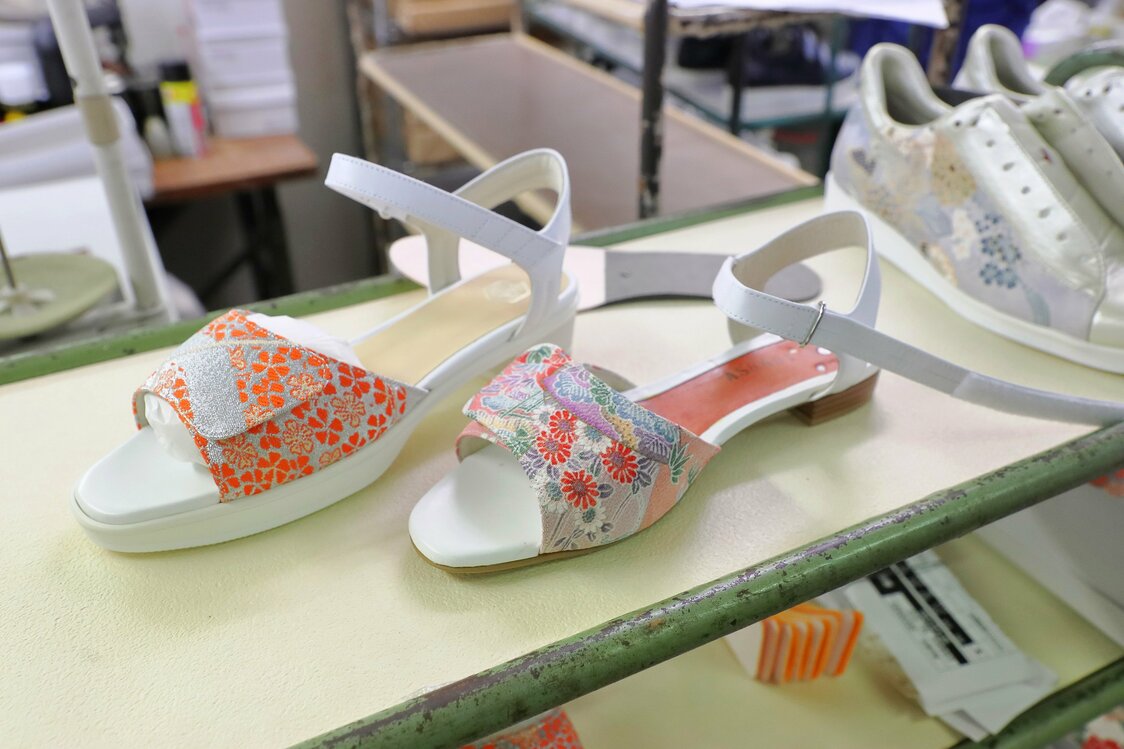
Tokyo Kimono Shoes’ latest offering is kimono sandals. (© Hanai Tomoko)
-
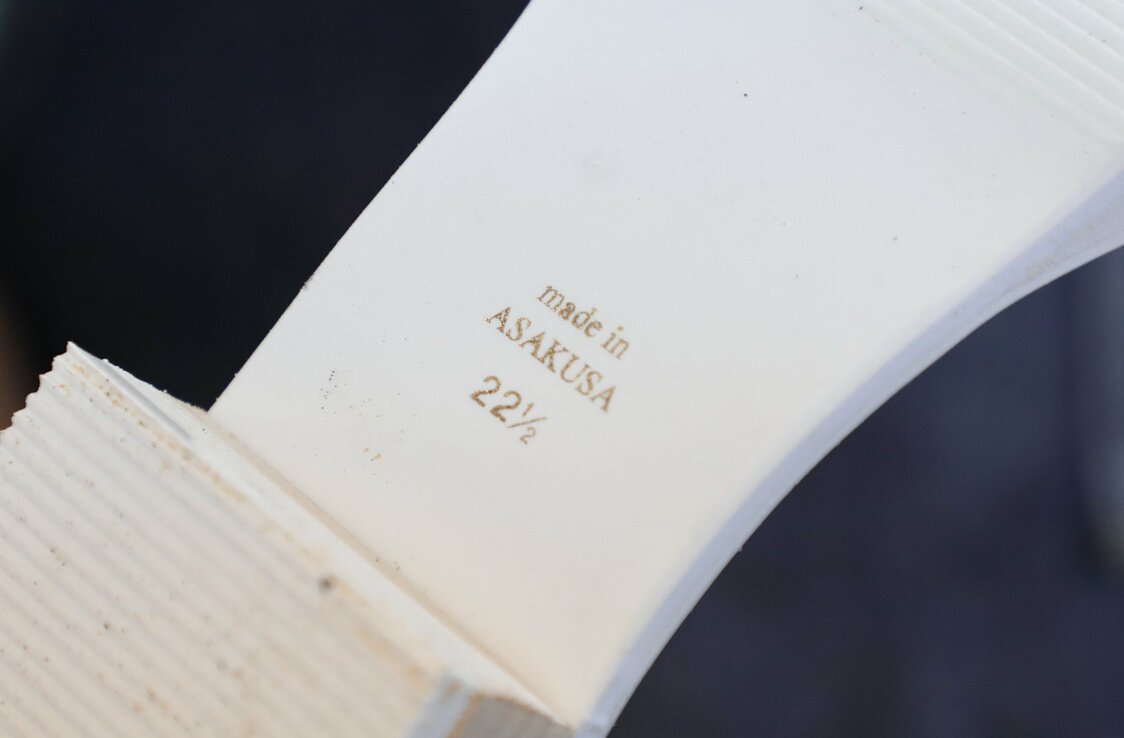
Each shoe is imprinted “Made in Asakusa.“ (© Hanai Tomoko)
-
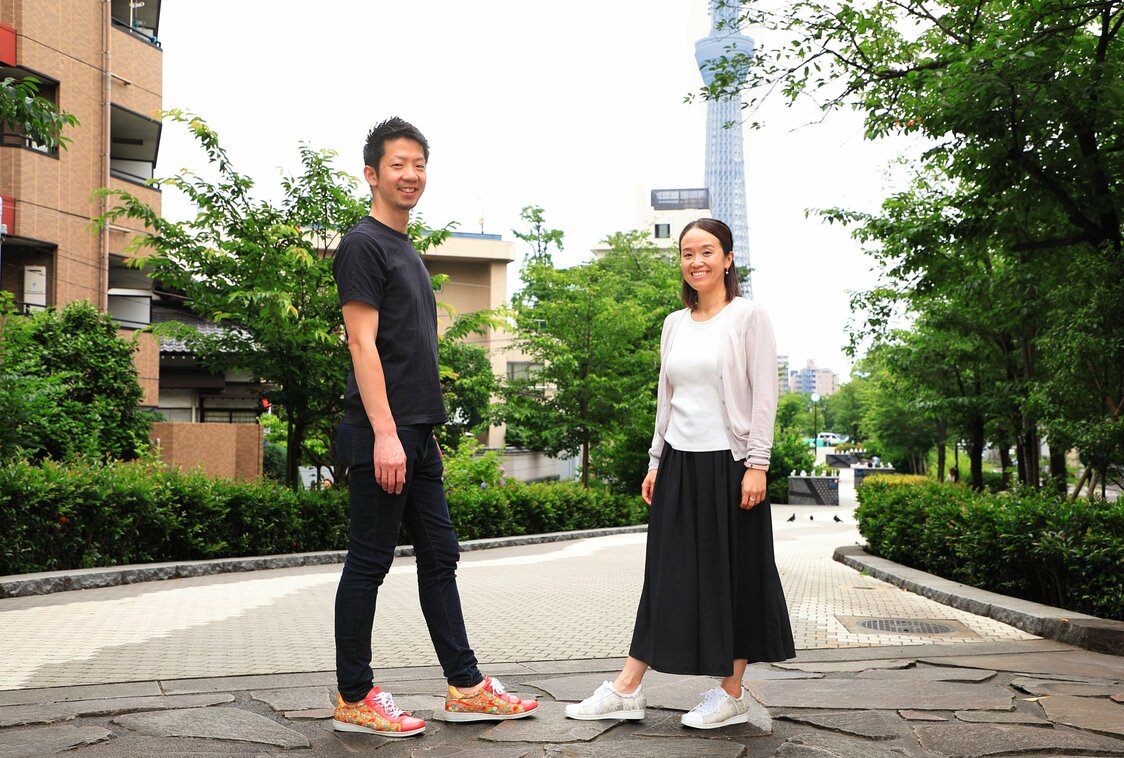
Potato Co. President Kawamura Shōtarō (left) and Konishi Nanami of the company’s PR department sporting kimono shoes. (© Hanai Tomoko)


 Read in other languages