-
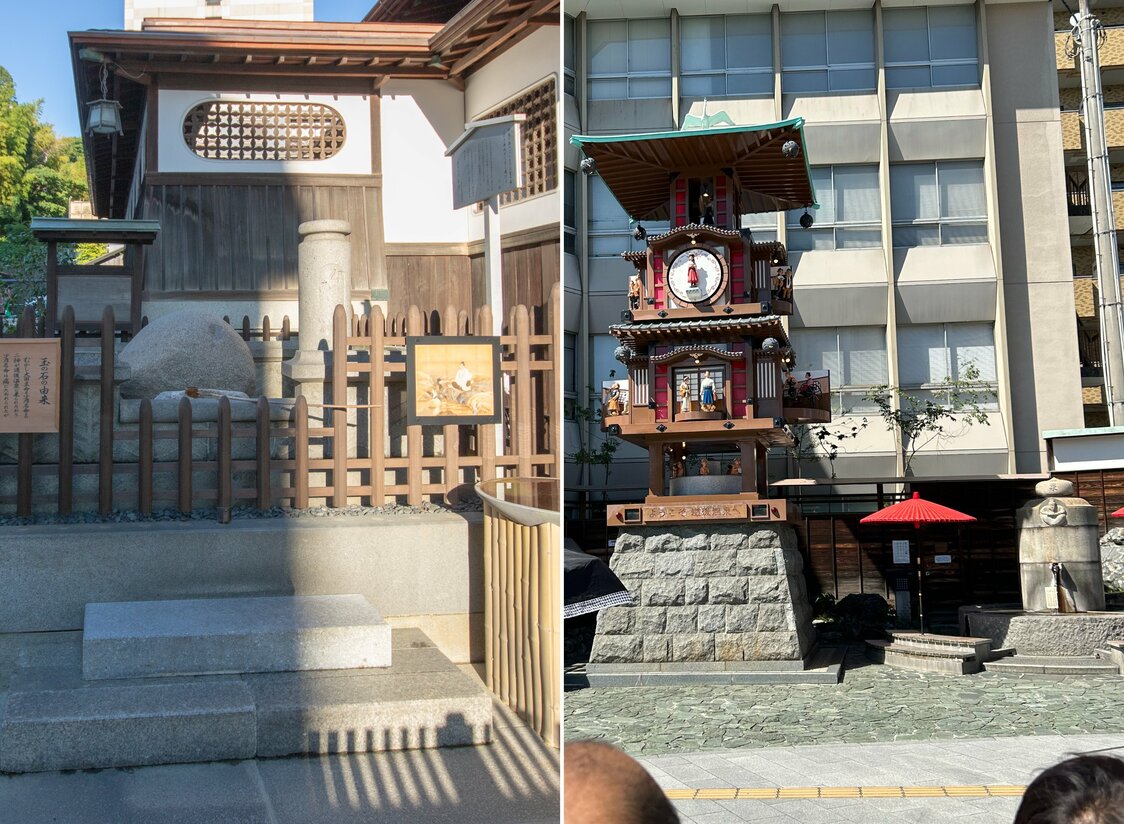
Left: The spring where the deity Sukunahikona is said to have come to restore his health. Right: The Botchan mechanical clock and a footbath in the square fronting Dōgo Onsen station. (© Nippon.com)
-
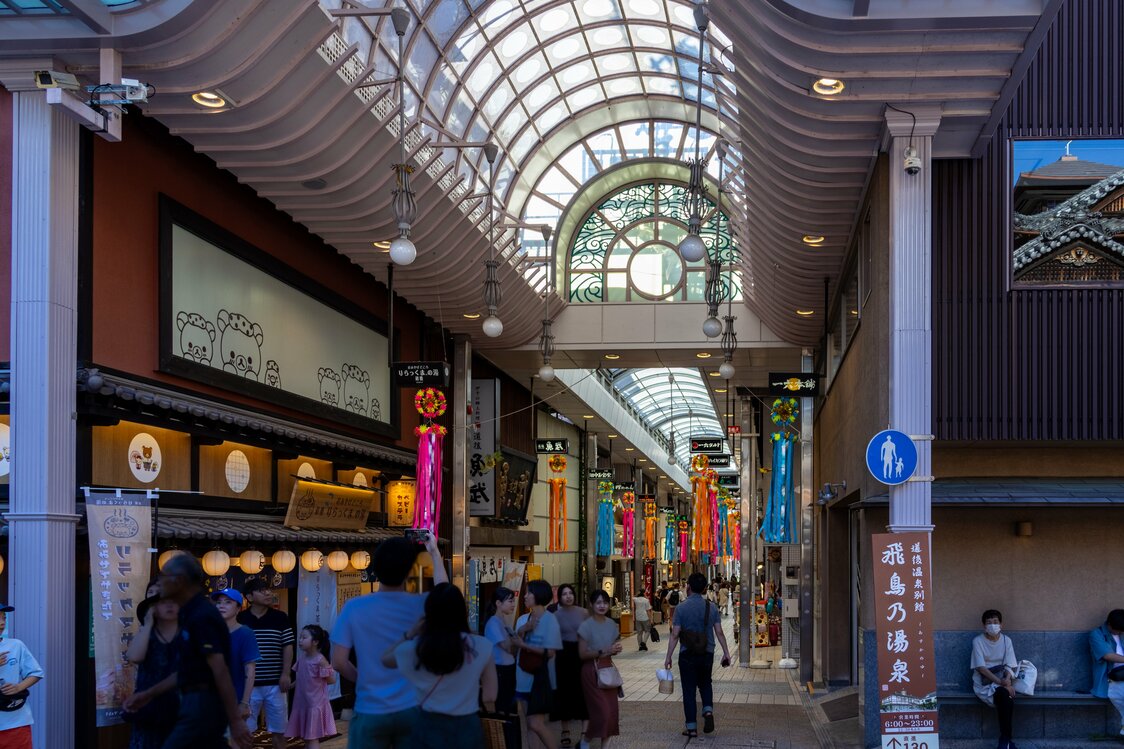
Dōgo Haikara-dōri, the shopping arcade linking Dōgo Onsen Station with the Dōgo Onsen Honkan. (© Nippon.com)
-
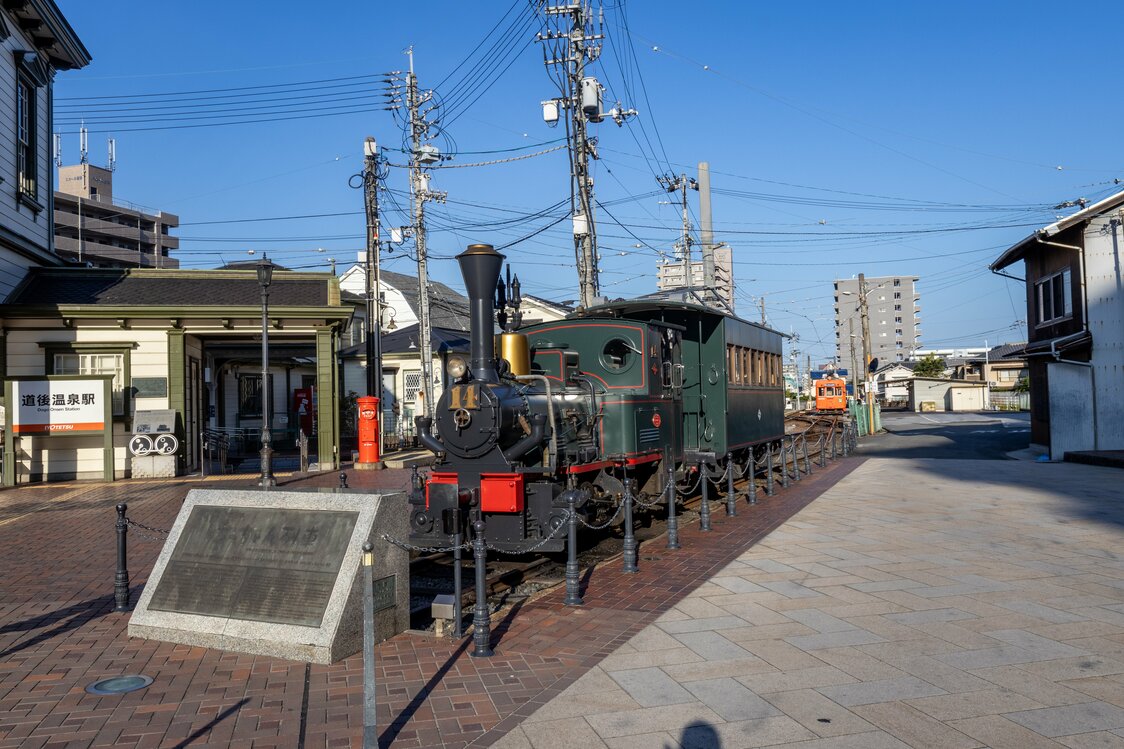
The Iyotetsu Railways Botchan train. Originally a steam locomotive operating on a route serving city residents, it was fitted with a diesel engine when it was restored. (© Nippon.com)
-
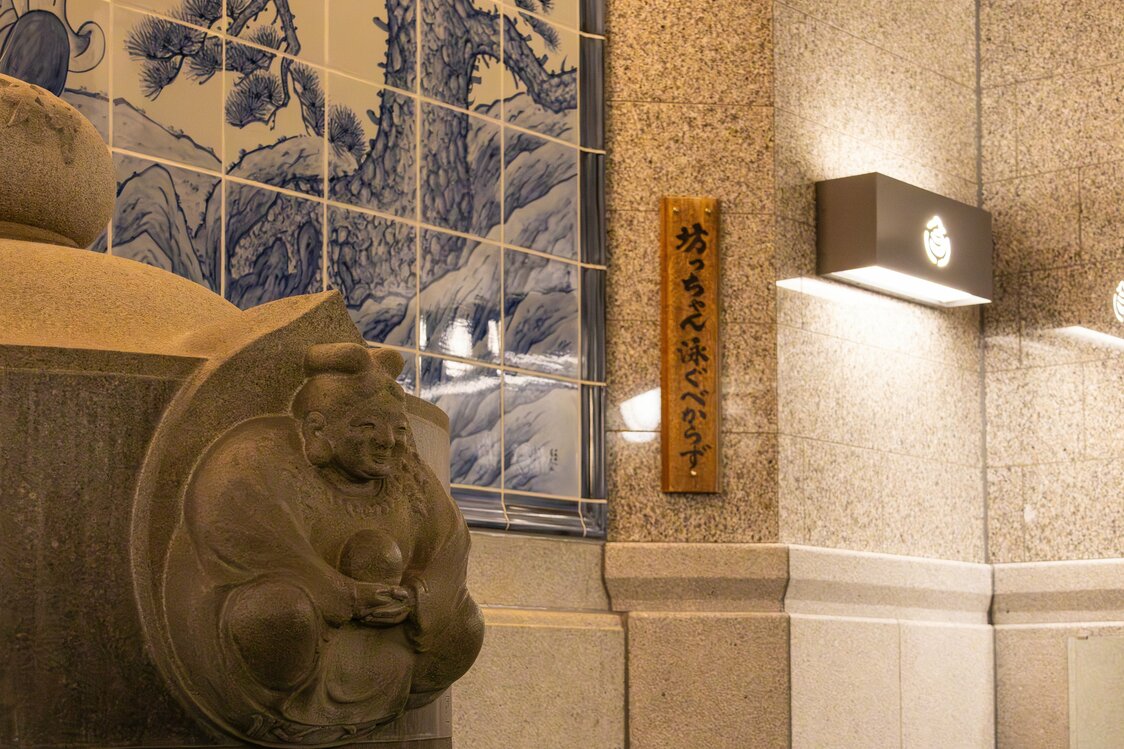
The “Botchan, no swimming” sign in the Kami no Yu bath in the Honkan building references a famous episode in the book. (© Nippon.com)
-
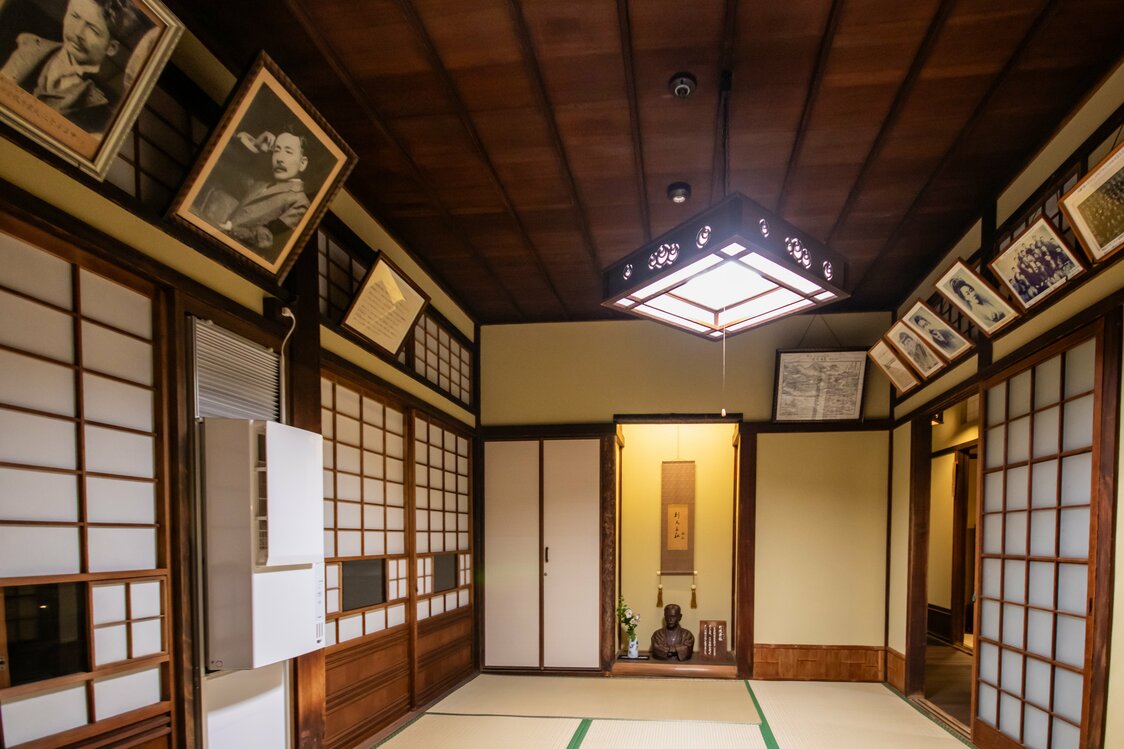
In the Botchan Room, photos of love interest Madonna and other characters in the book are also on display. (© Nippon.com)
-
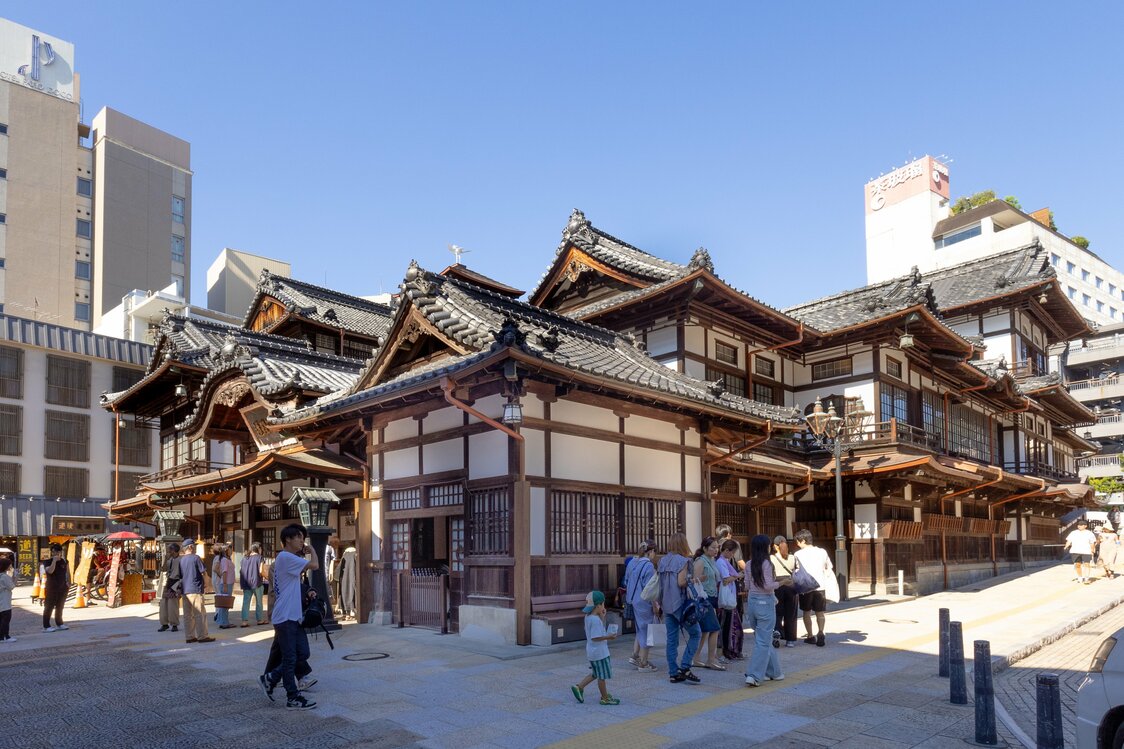
The Honkan’s distinctive architecture. The bathhouse in the film Spirited Away is said to have been modeled on the building. (© Nippon.com)
-
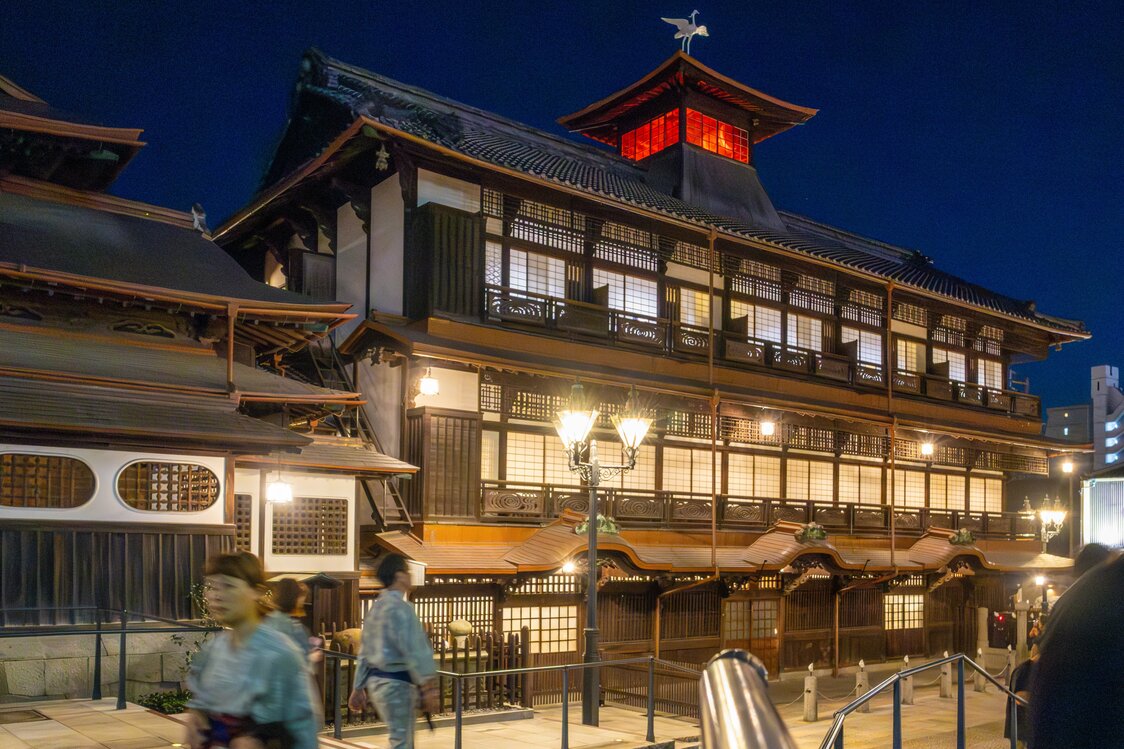
The Shinrokaku cupola glowing red. The Tokidaiko drum suspended inside sounds three times a day, at six, 12:00 noon, and 6 pm. (© Nippon.com)
-
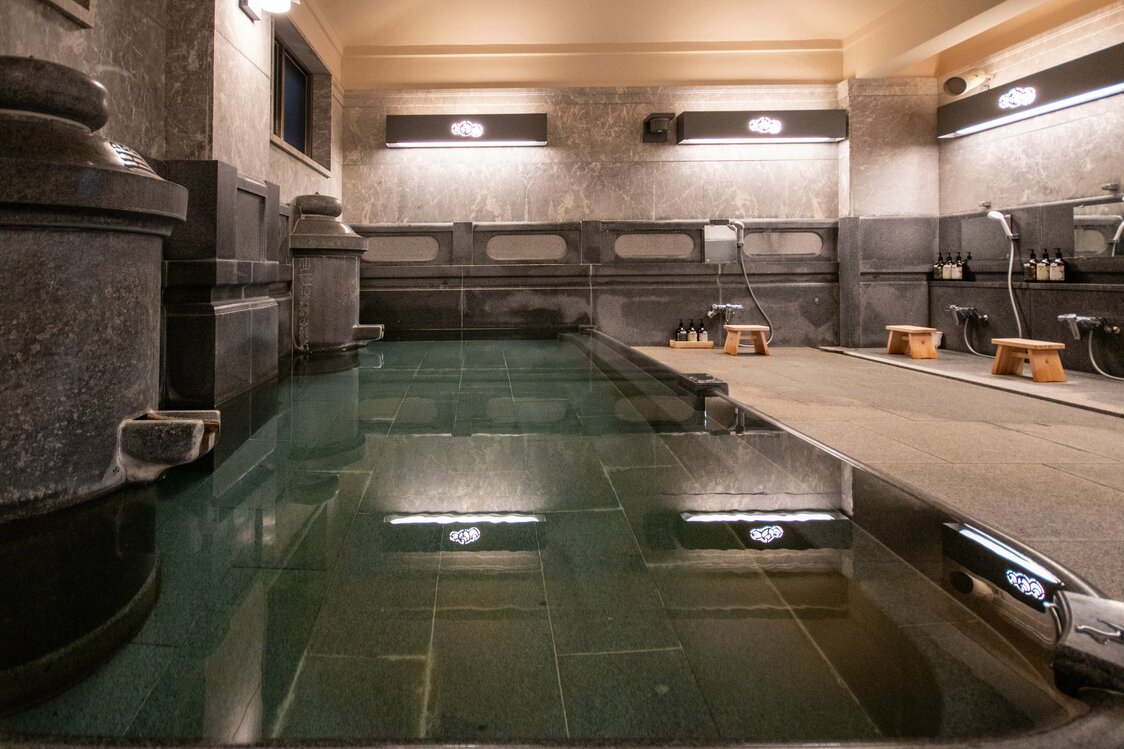
The Tama no Yu bath. The alkaline hot spring water is gentle on the skin; the water comes direct from the source with no reheating or added water. (© Nippon.com)
-
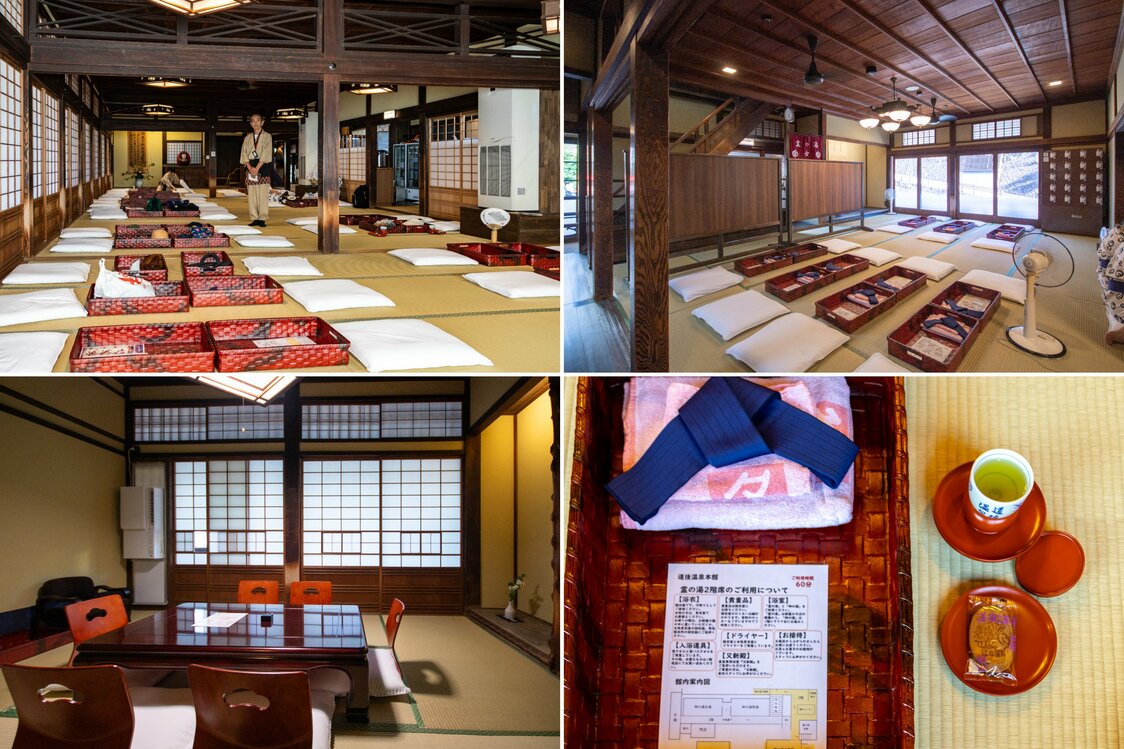
Top left: The second-floor Kami no Yu relaxation room has a capacity of 70 people. Top right: The second-floor Tama no Yu relaxation room holds 20 occupants. Bottom left: On the third floor of Tama no Yu, there are eight relaxation rooms. Bottom right: Use of the relaxation rooms includes a rented yukata and green tea, and depending on the room, a hand towel. (© Nippon.com)
-
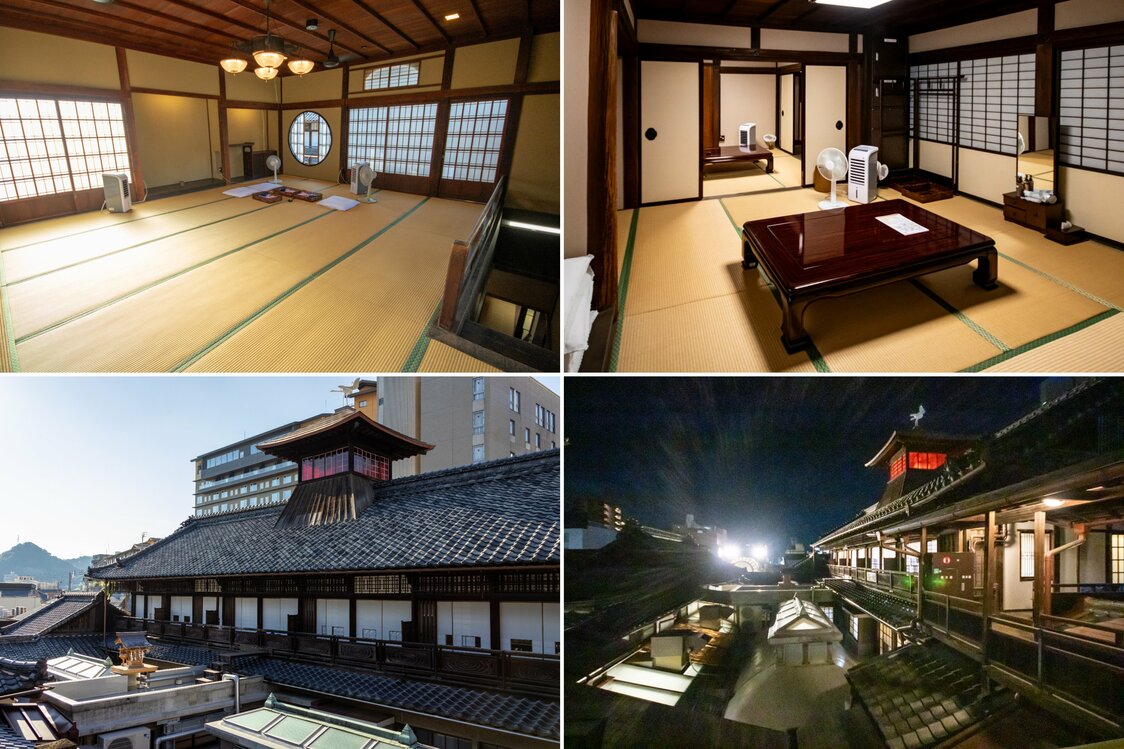
The Shirasagi Room (top left), for 18 occupants, and the Hishō Room (top right), for 10 occupants, offer close-up views of the egret, symbol of Dōgo, atop the cupola. (© Nippon.com)
-
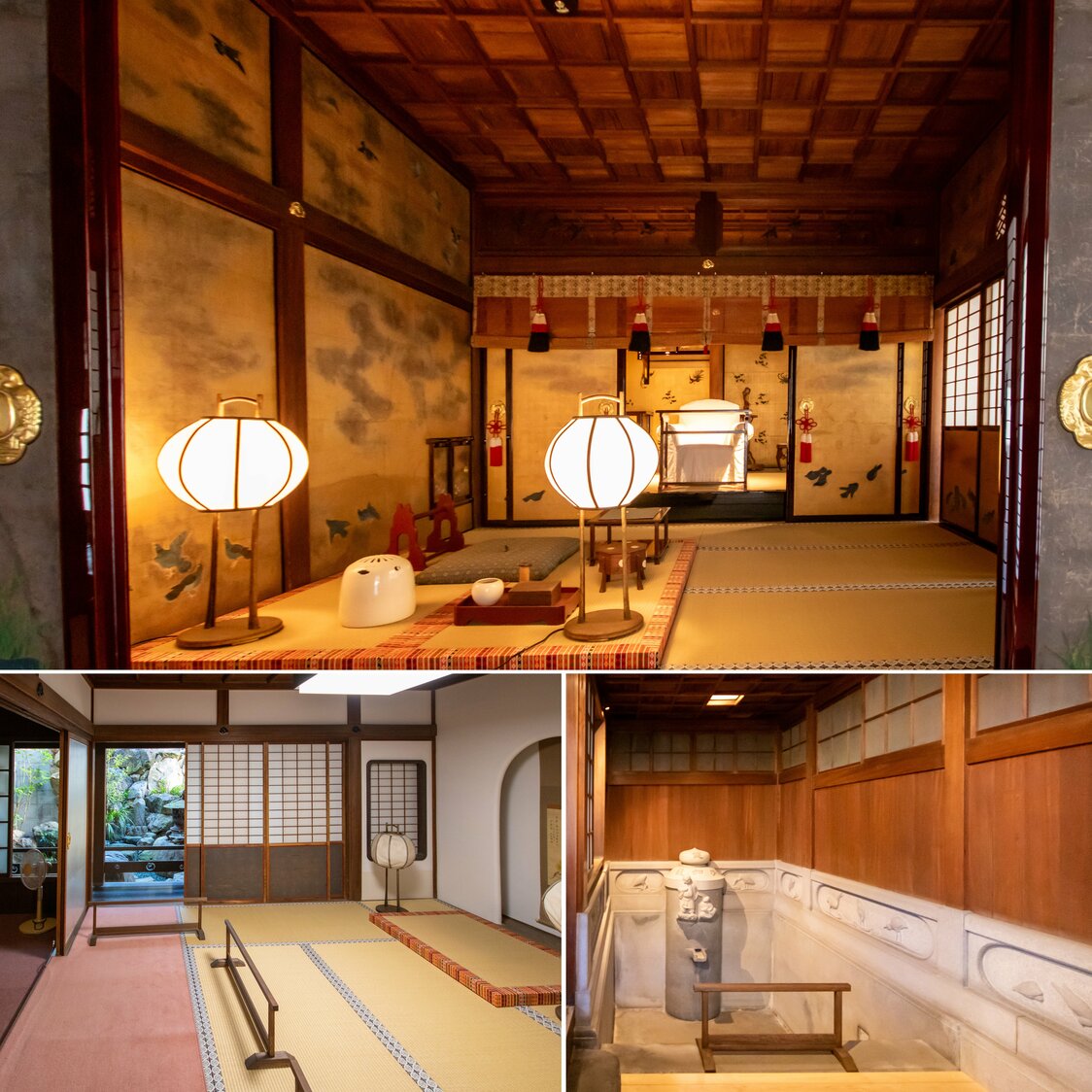
Top: the Yūshinden relaxation room. Left: the changing room has a view of an inner garden. Right: the Oyudono bath. (© Nippon.com)
-
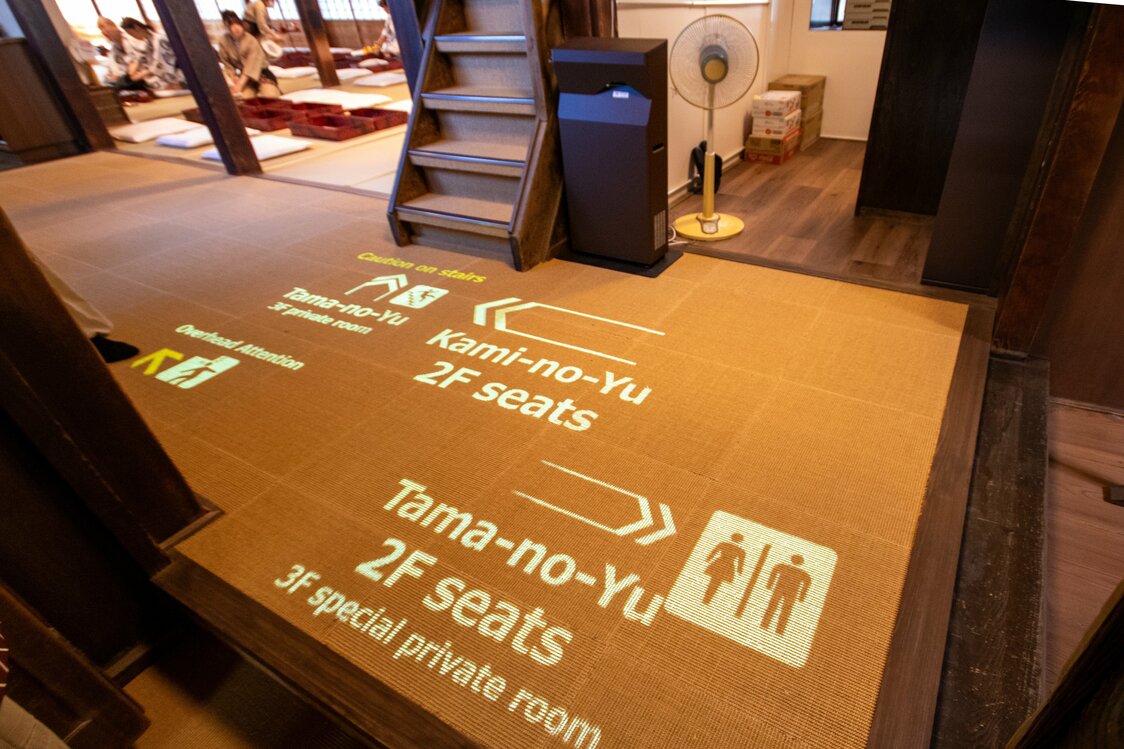
The building being a cultural asset, no signs can be posted on the walls. Instead, directions are shown projected on the floor. (© Nippon.com)
-
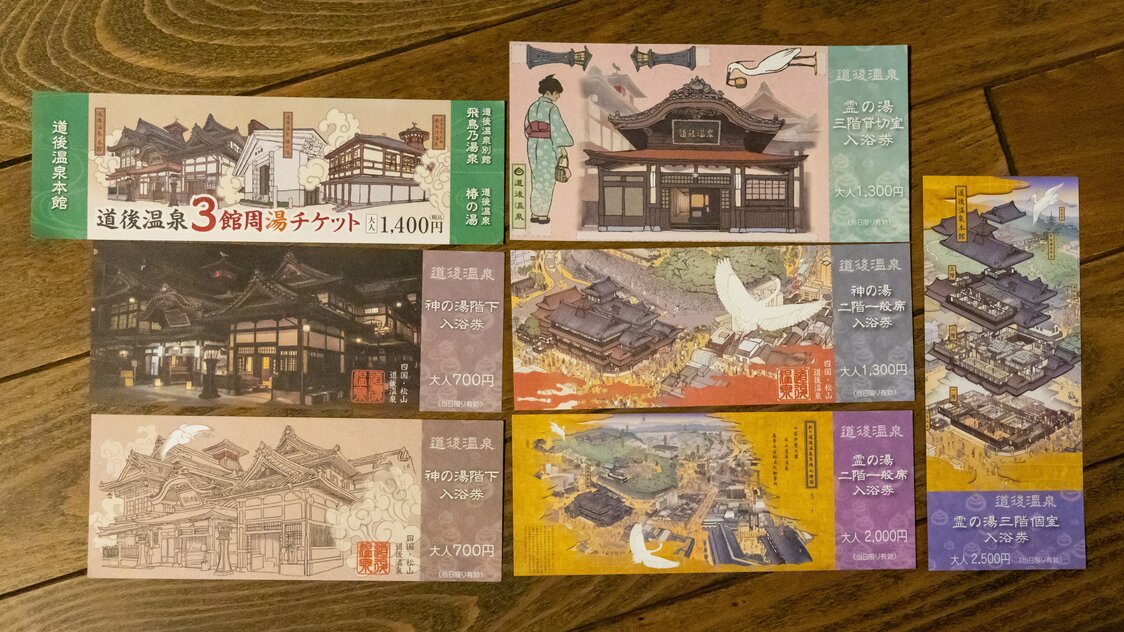
Redesigned tickets. The stubs make a handsome souvenir. (© Nippon.com)
-
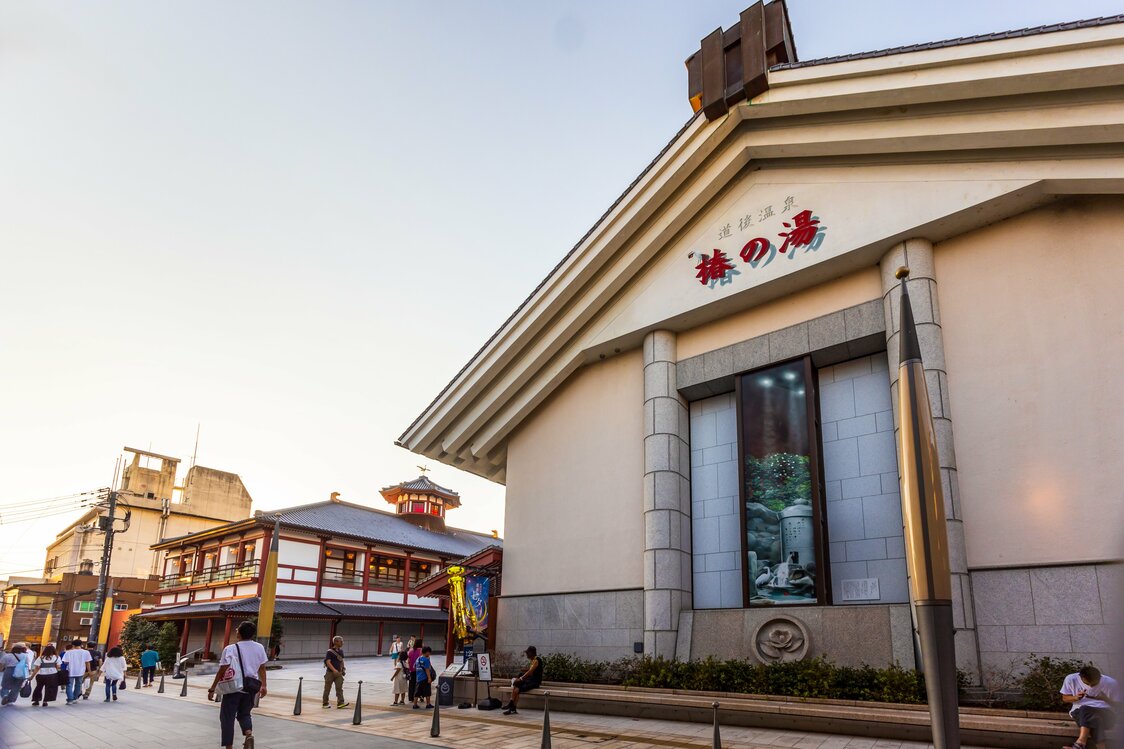
Tsubaki no Yu (foreground) and Asuka no Yu, nearby annexes to the Honkan, are also city-operated public baths. (© Nippon.com)
-
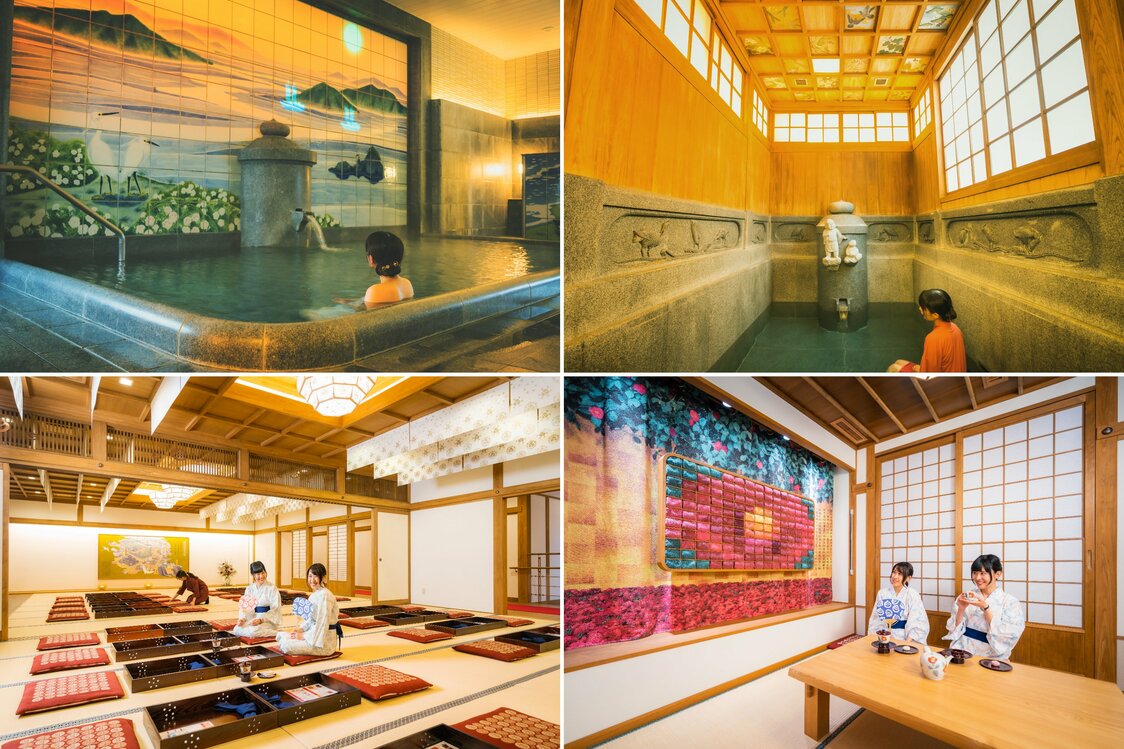
Top left: the large communal bath. Top right: this bath can be reserved for private use. Bottom left: the large relaxation room. Bottom right: a private relaxation room with a wall decorated with traditional craft art. (Courtesy Dōgo Onsen Consortium)
-
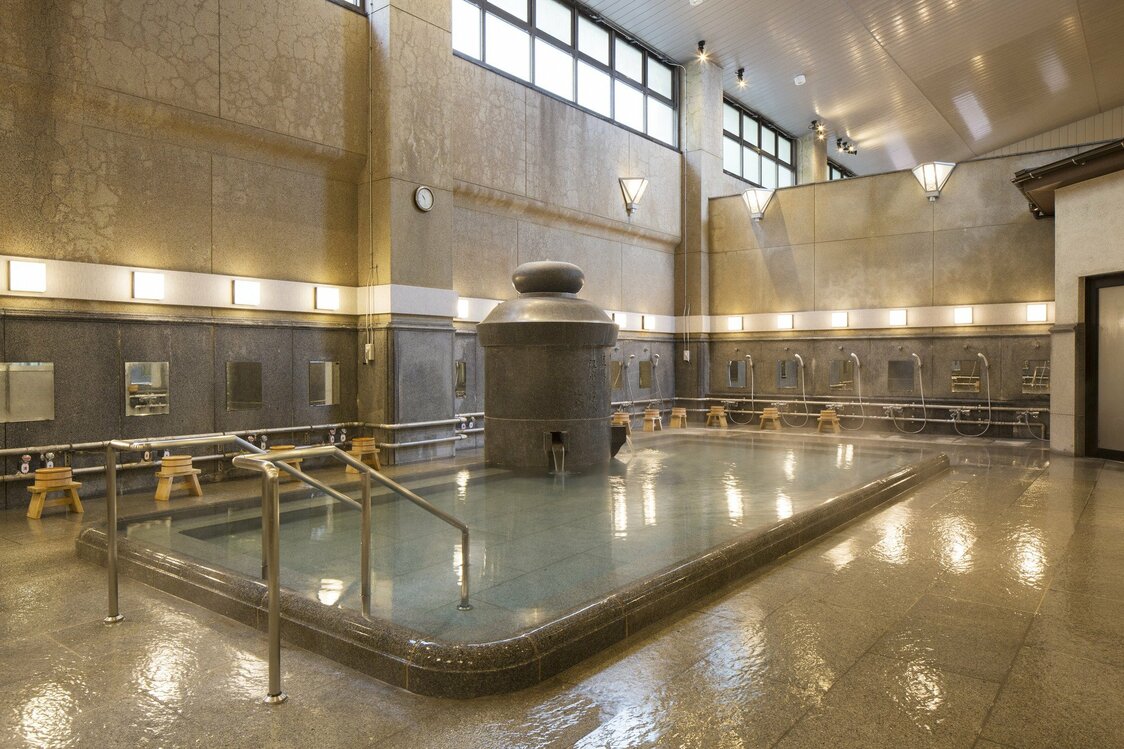
The Tsubaki no Yu annex has just a plain, unadorned bath. (Courtesy Dōgo Onsen Consortium)
-
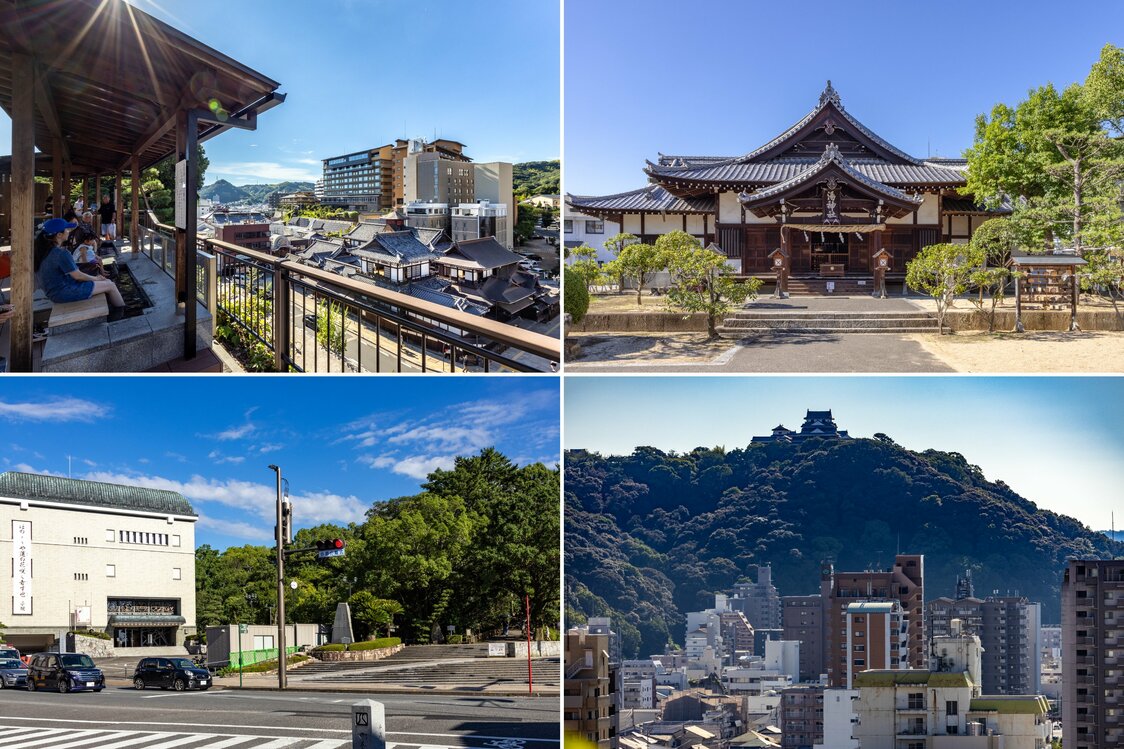
Top left: An elevated vantage point with a footbath gives a fine view of the Honkan. Top right: Yu Shrine, venerating deities Ōkuninushi and Sukunahikona. Bottom left: Dōgo Park, on the site of a former medieval castle. The Shiki Museum, honoring poet Masaoka Shiki, is at the park’s north entrance. Bottom right: Matsuyama Castle and the city are visible from the park’s observation deck. (© Nippon.com)


 Read in other languages