-
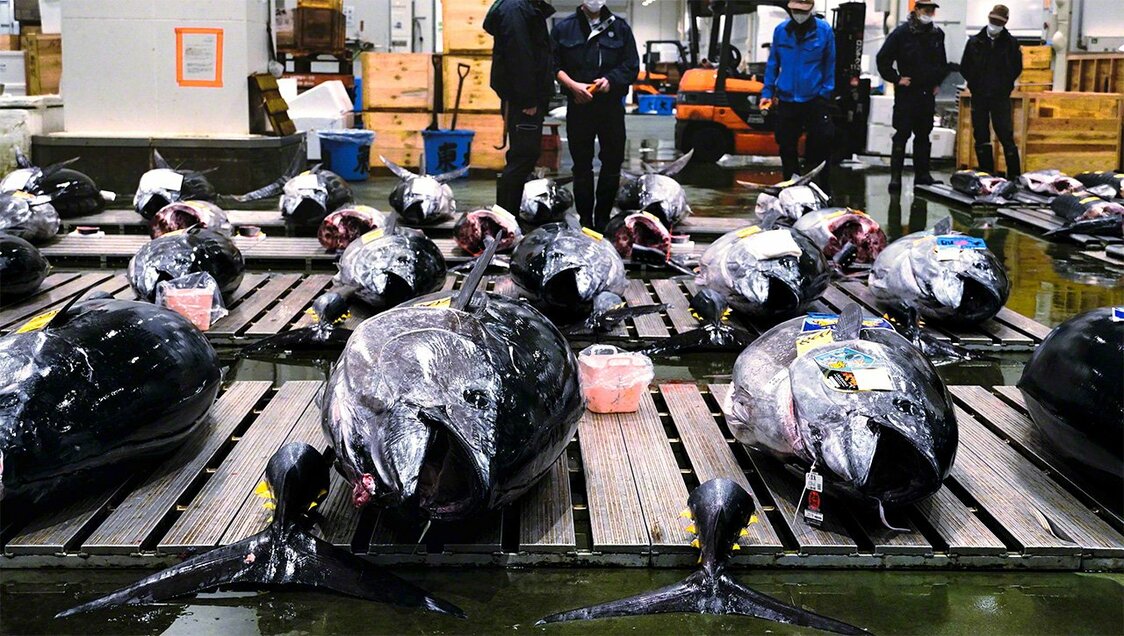
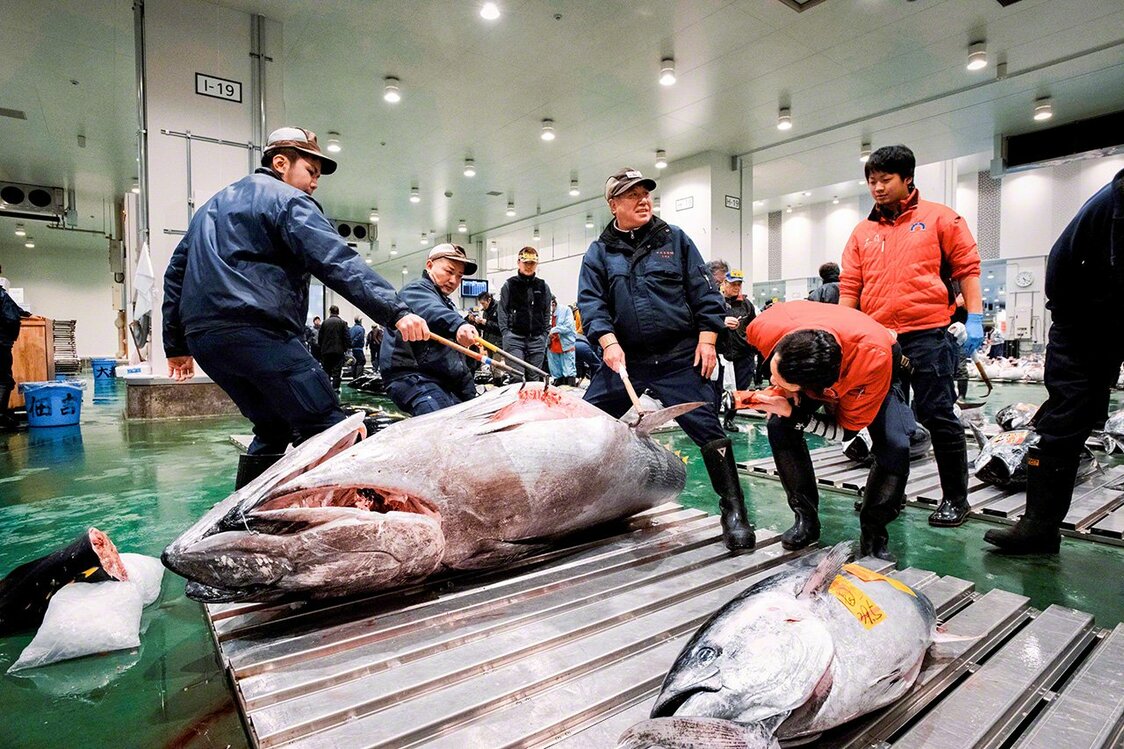
Late autumn to New Year is the season when Japanese Pacific bluefin tuna (hon-maguro), nicknamed “black diamonds,” are auctioned off. (© Uzawa Akihiko)
-
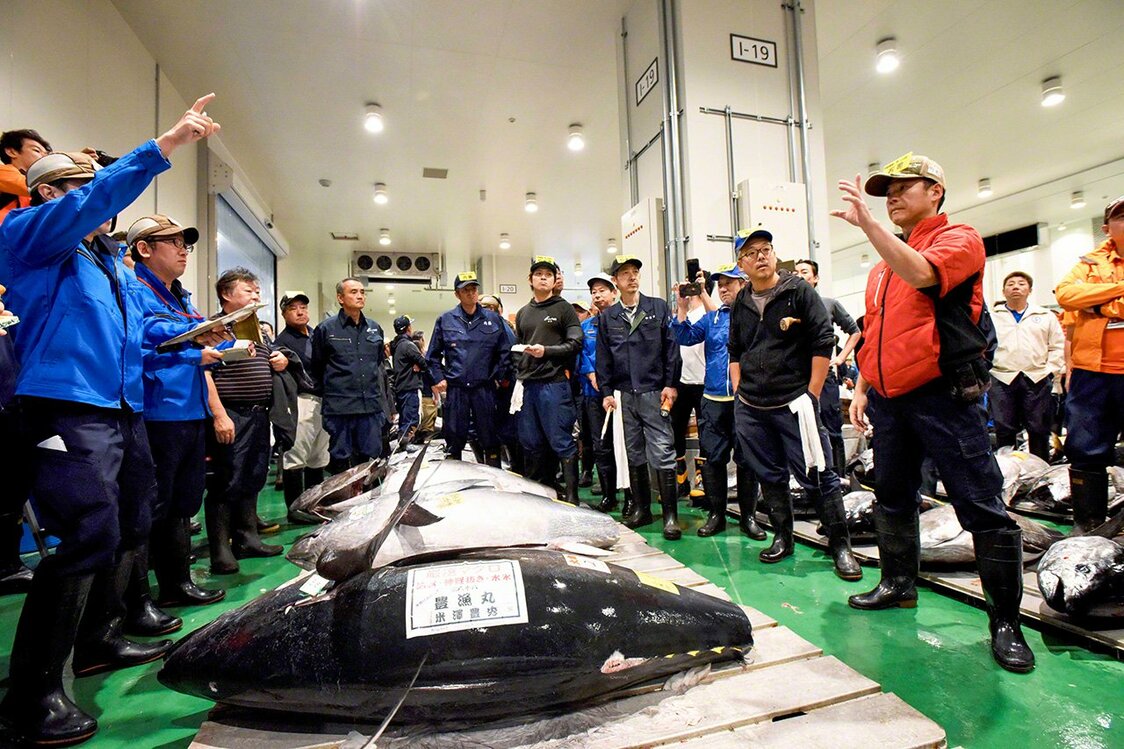
The auction is the site of fierce competition between buyers. (© Uzawa Akihiko)
-
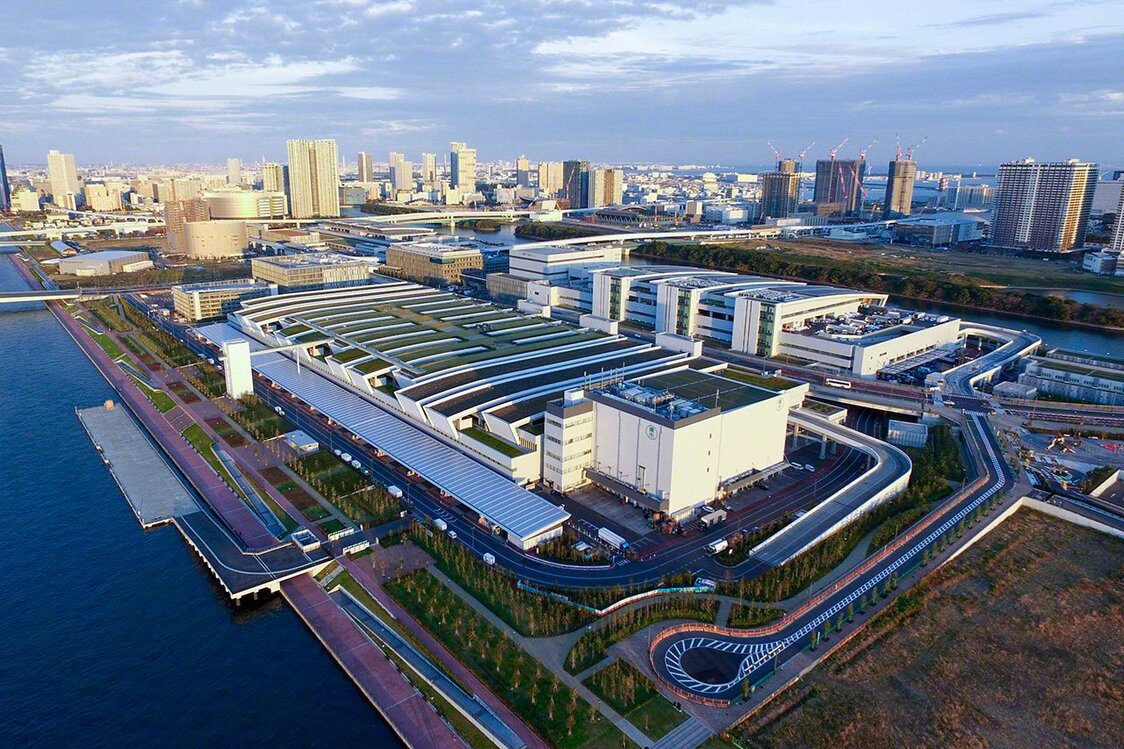
No other market in the world handles as much tuna each day as Toyosu. (© Uzawa Akihiko)
-
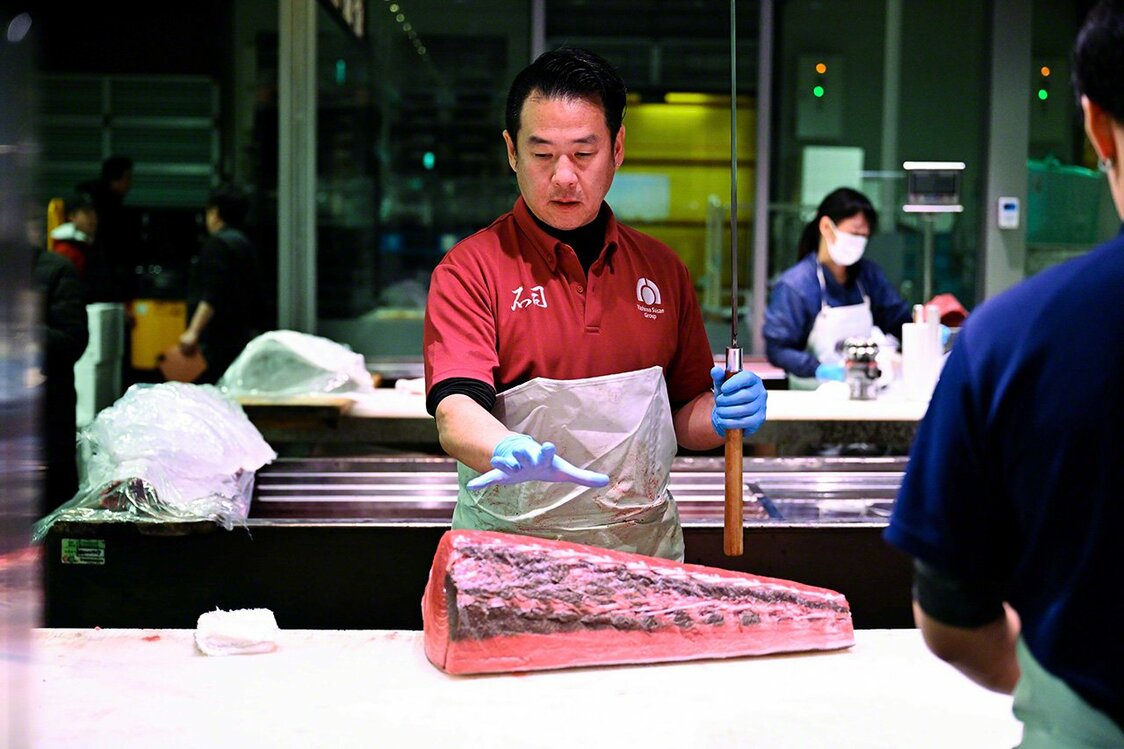
It is entrancing to watch Shinoda, third-generation head of Ishiji, as he works. (© Uzawa Akihiko)
-
The belly of the tuna is opened to allow for inspection of the fattiness. (© Uzawa Akihiko)
-
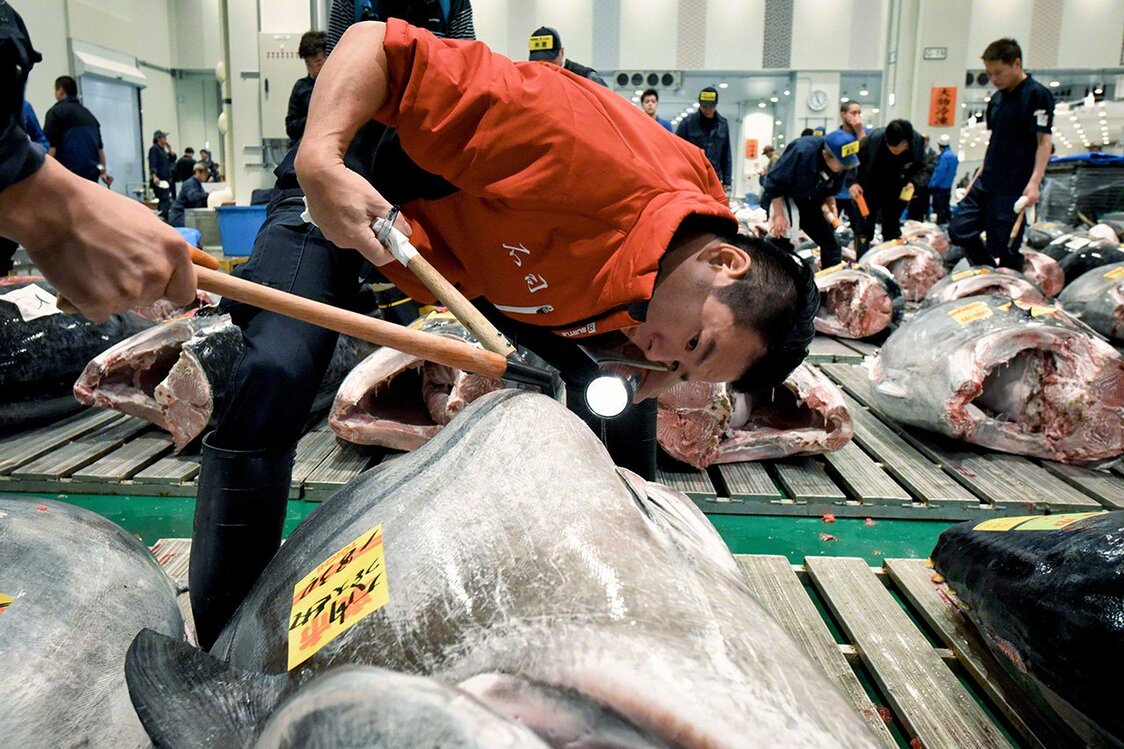
The taste, aroma, and texture varies, even for fish from the same location. (© Uzawa Akihiko)
-
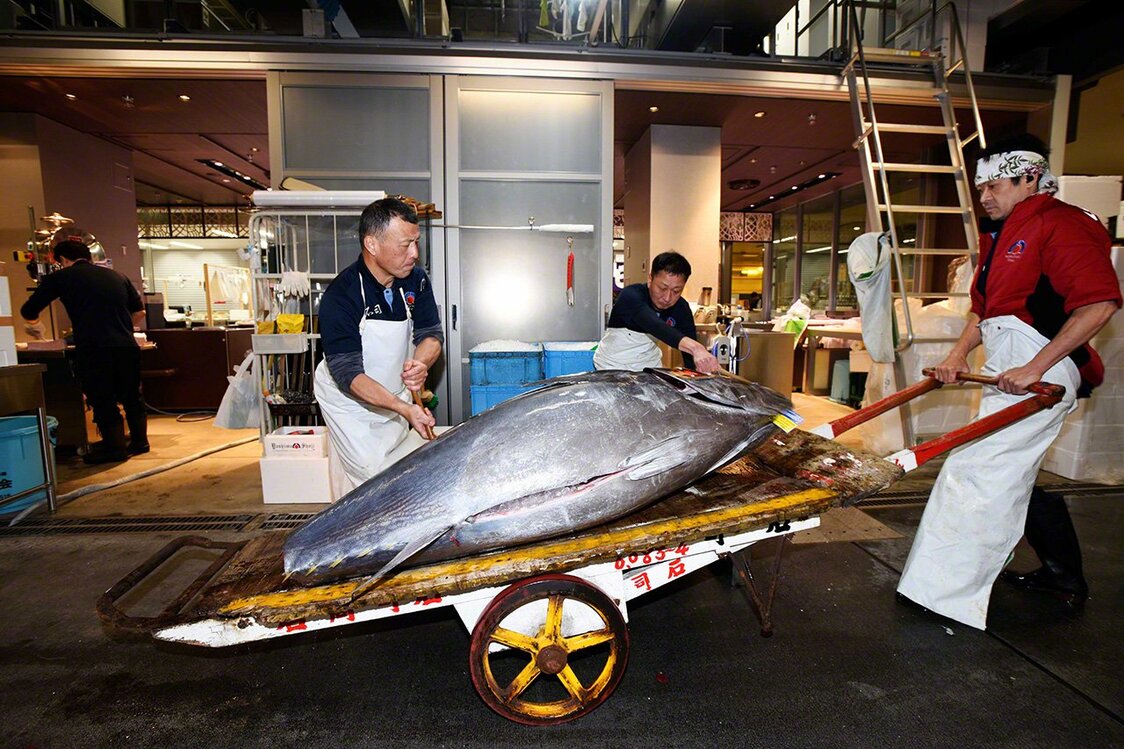
The tuna are quickly carted from the auction to the store on wagons. It requires some effort to move these enormous fish. (© Uzawa Akihiko)
-
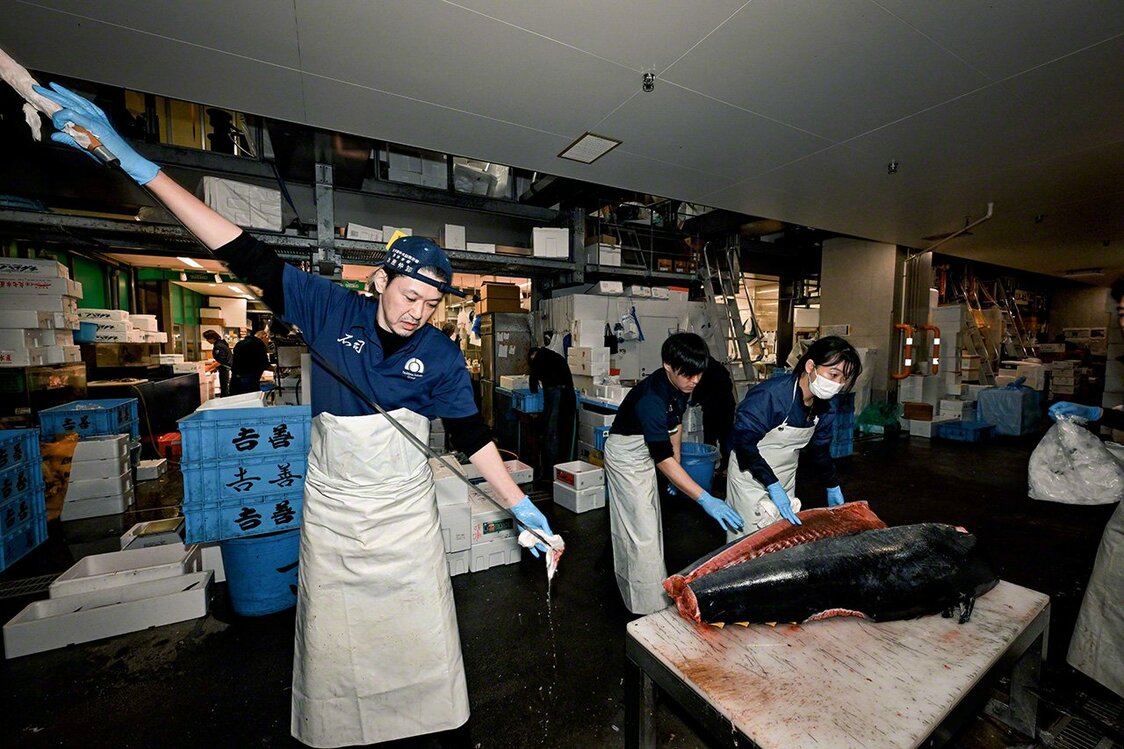
The task of cutting takes several people and a special tuna knife. (© Uzawa Akihiko)
-
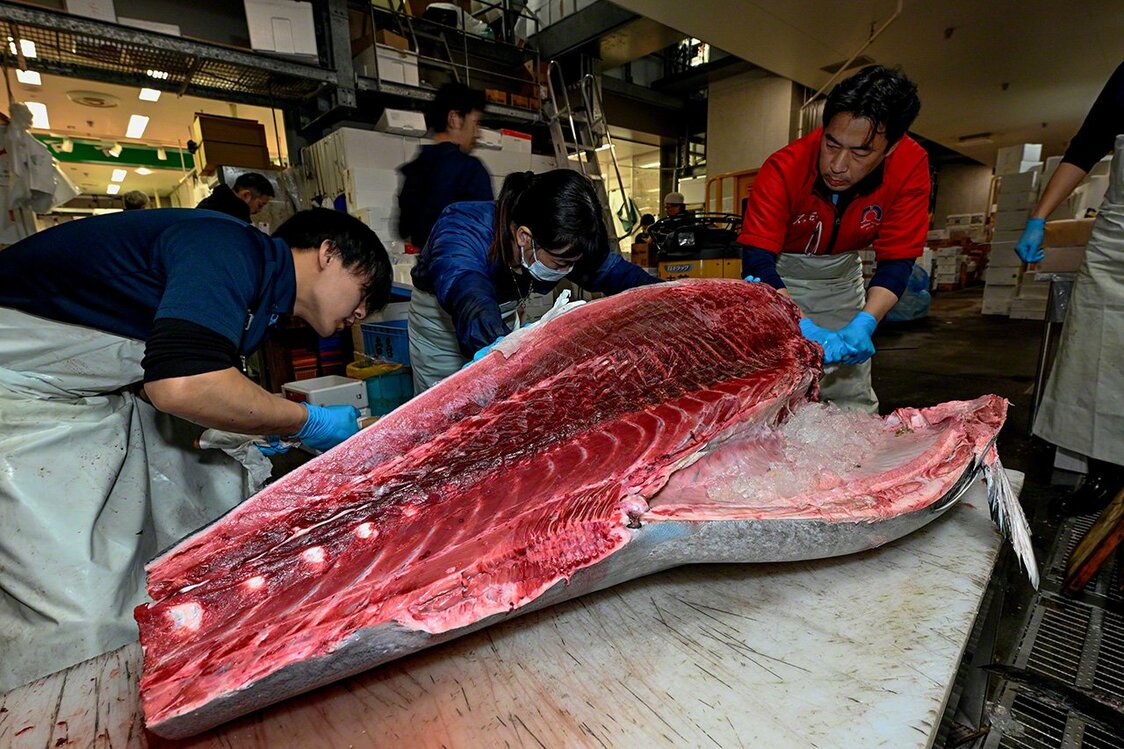
The value of the fish first becomes apparent when its belly is cut open. It’s a tense moment. (© Uzawa Akihiko)
-
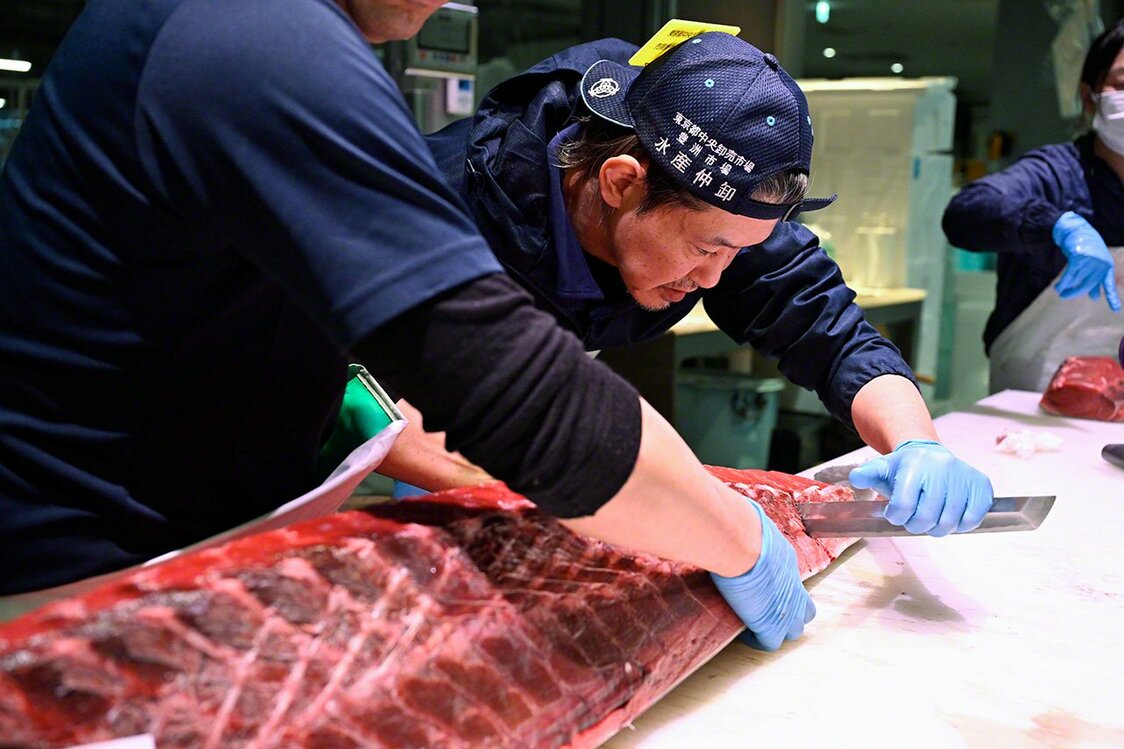
Even after it is cut in half, slicing up the fish still requires two people. (© Uzawa Akihiko)
-
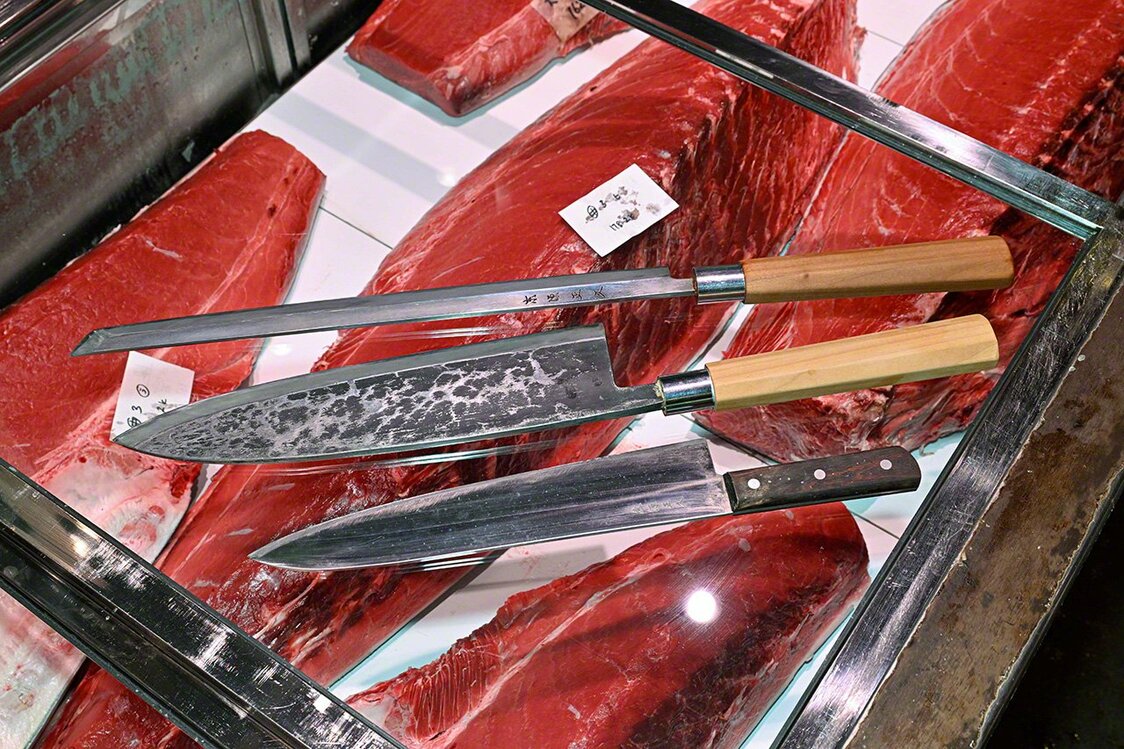
Specific knives are used for different sections. (© Uzawa Akihiko)
-
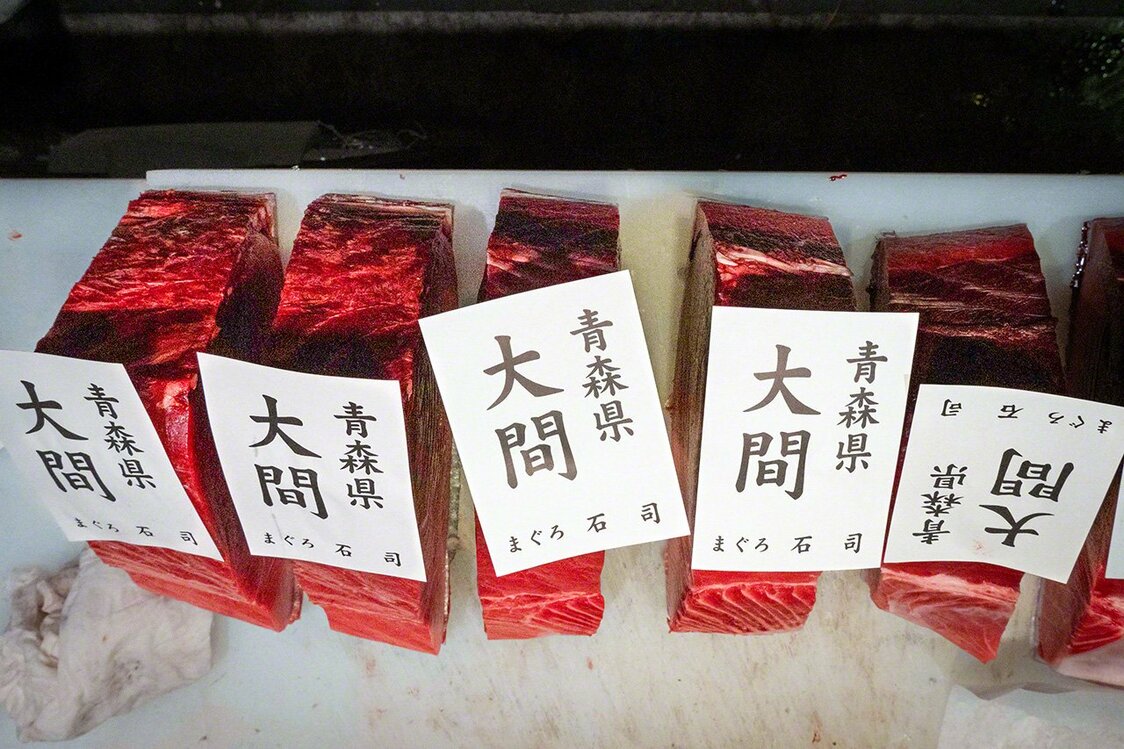
Customers come to the shop in the early morning looking out for fish from Ōma, the Holy Land of tuna. (© Uzawa Akihiko)
-
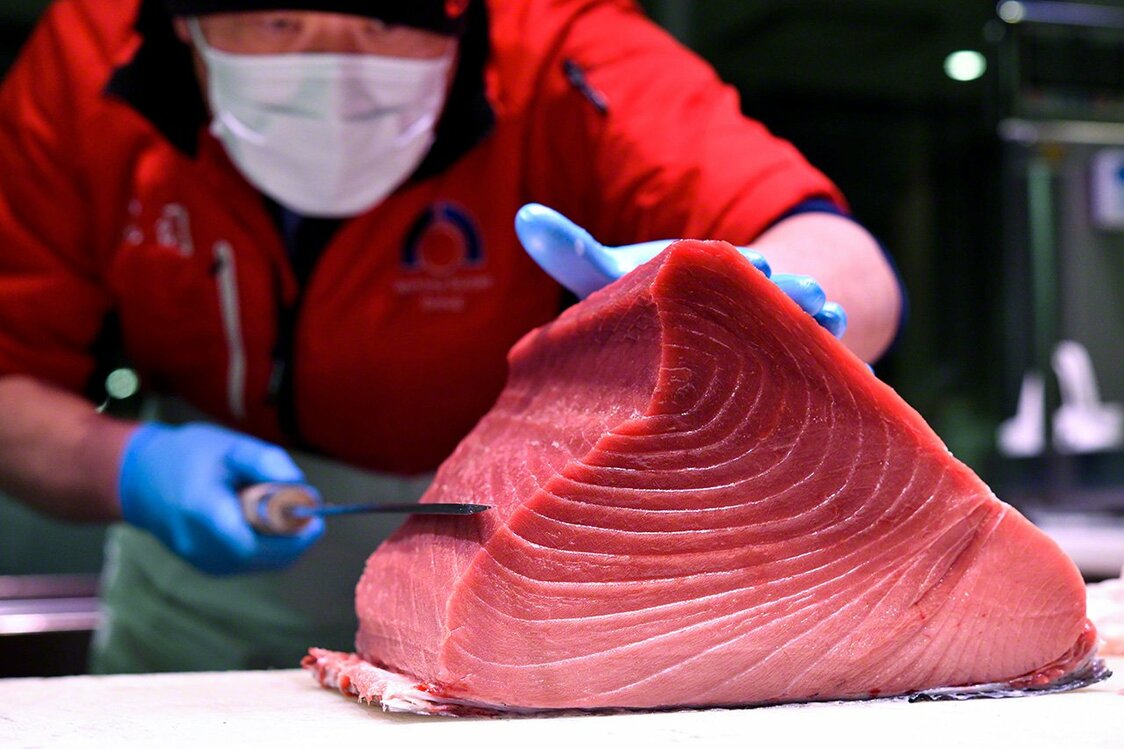
The prized hara-kami cut of the tuna. The white fat is glorious to behold. (© Uzawa Akihiko)


 Read in other languages