-
-
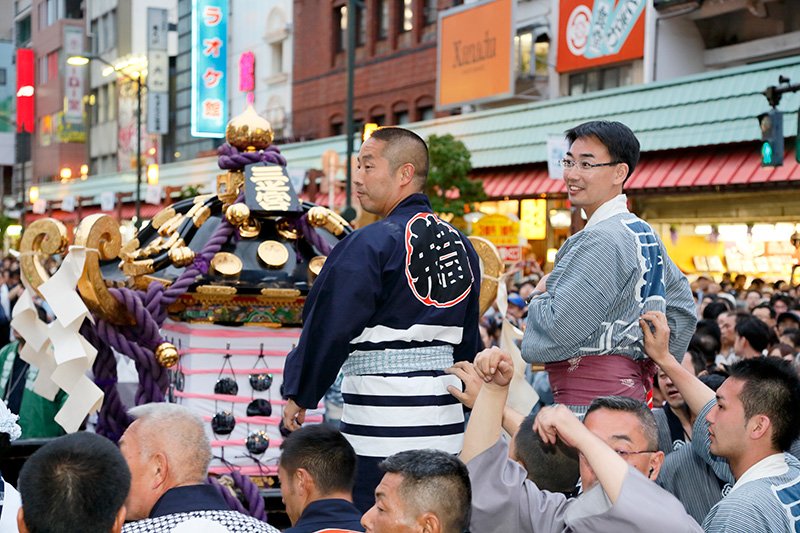
Nakajima at work as the San no Miya “mikoshi” is paraded through the streets.
-
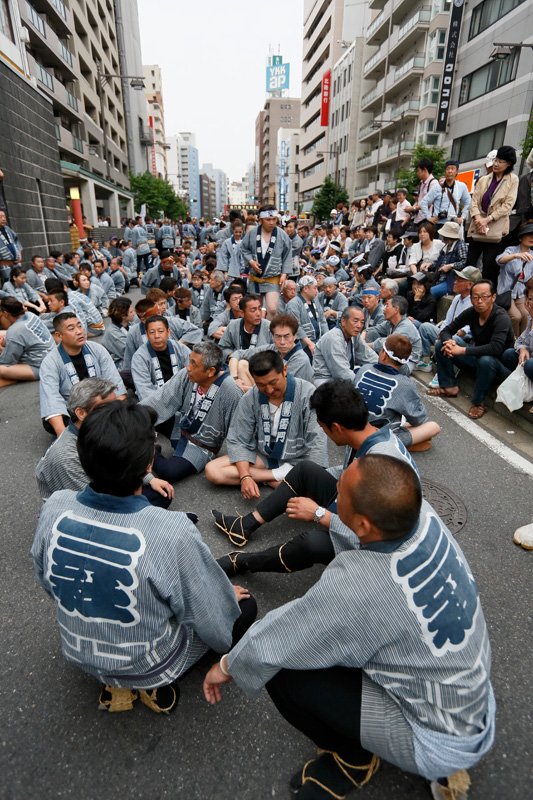
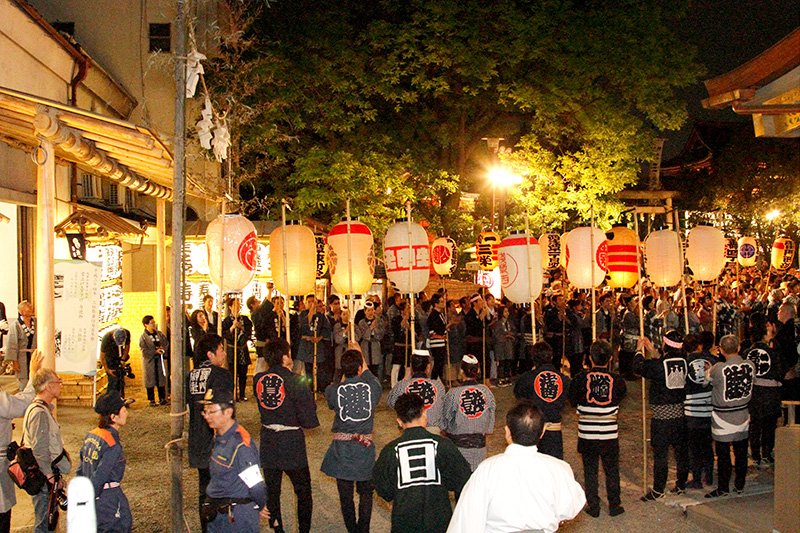
Shrine-bearers wait for the San no Miya to arrive in the Kaminarimon Higashi district.
-
-
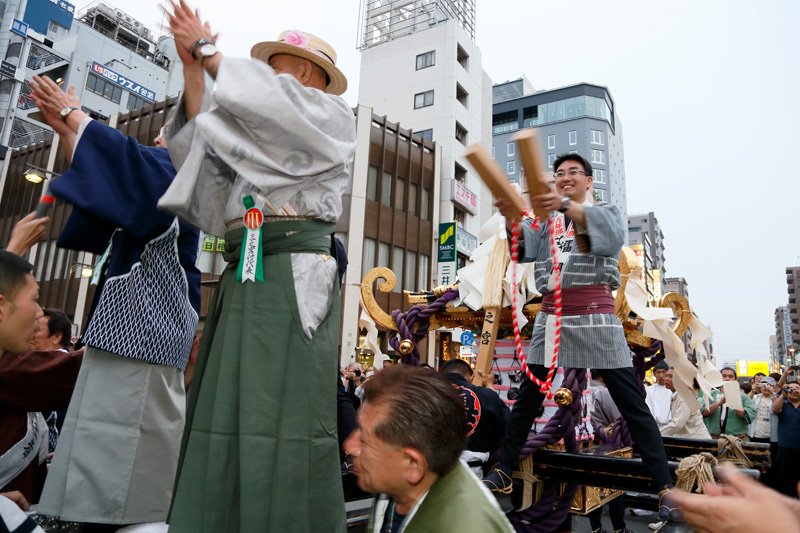
Nakajima on top of the San no Miya.
-
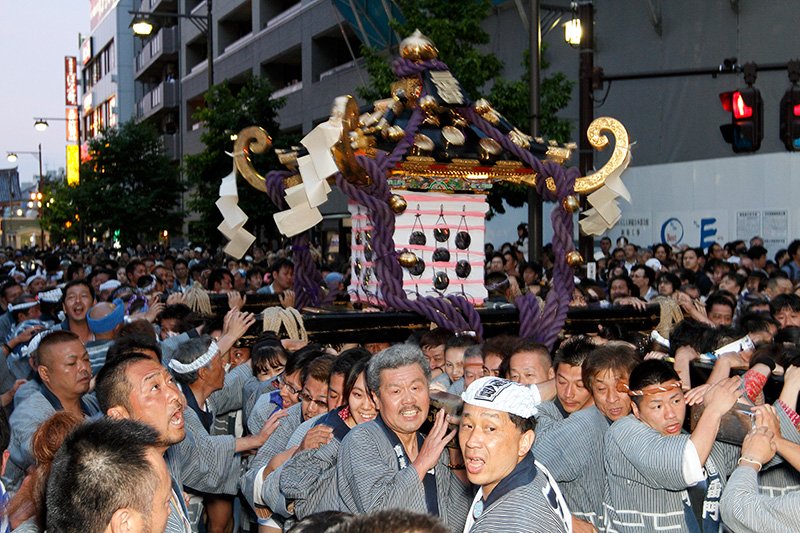
The “mikoshi” sets off just after six in the evening.
-
-
-
-
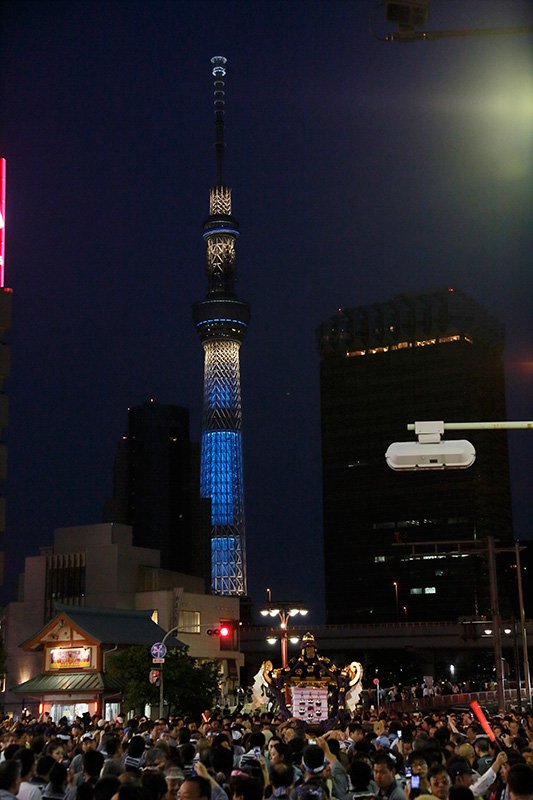
The Tokyo Skytree lit up against the evening sky.
-

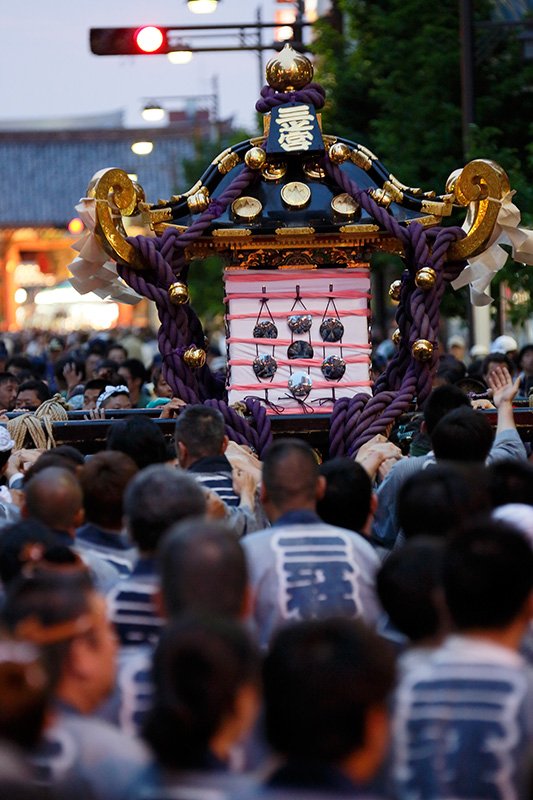
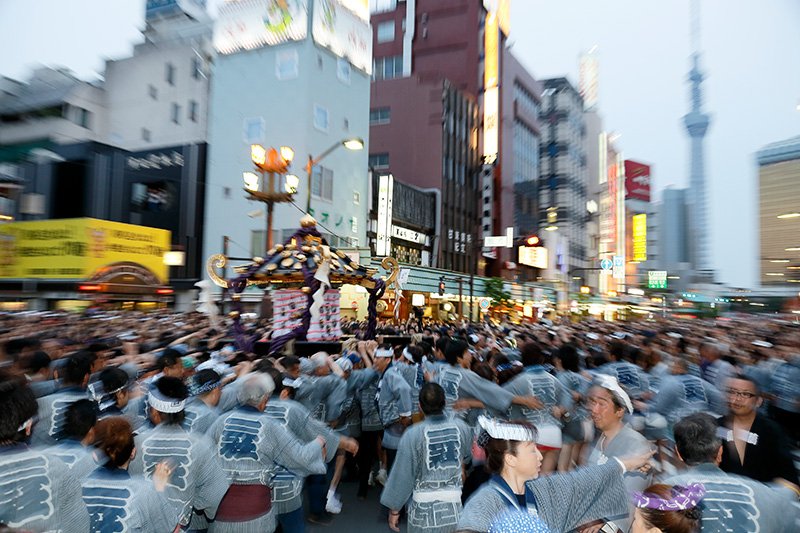
The San no Miya arrives at the Kaminarimon Gate.
-

Shifting population patterns in recent years mean that many neighborhoods can no longer recruit sufficient numbers of ujiko to carry the heavy mikoshi at the festival each year. The neighborhood communities are helped out by teams of volunteer shrine bearers from near and far, people drawn by the opportunity to experience the excitement of the festival up close and to help keep the traditions alive at the same time.
-
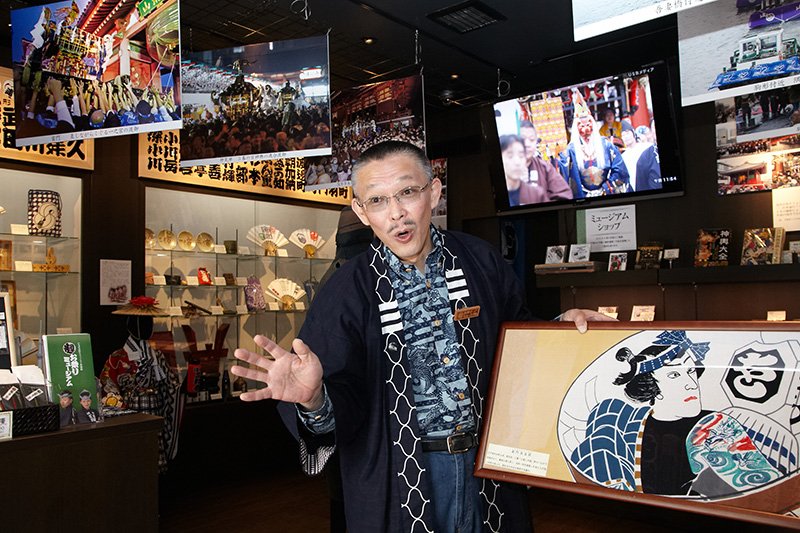
Matsumoto’s enthusiasm for the festival is infectious.
-
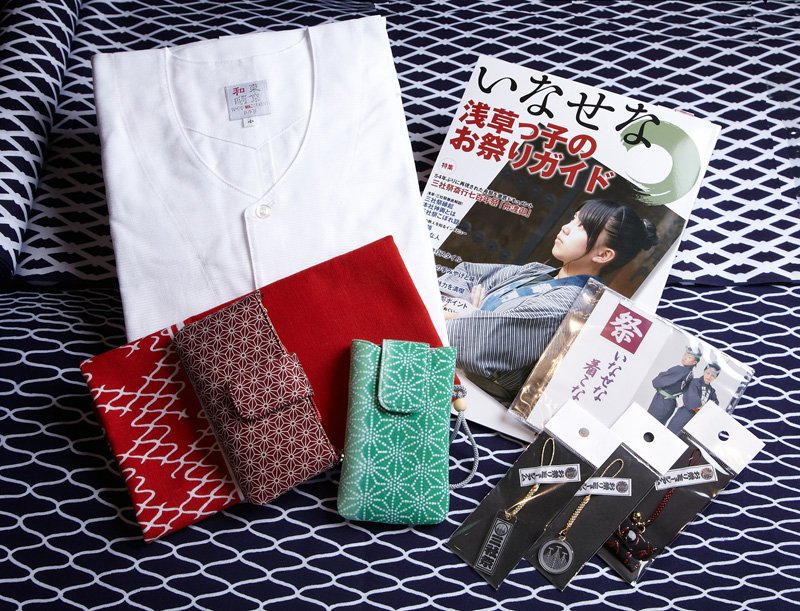
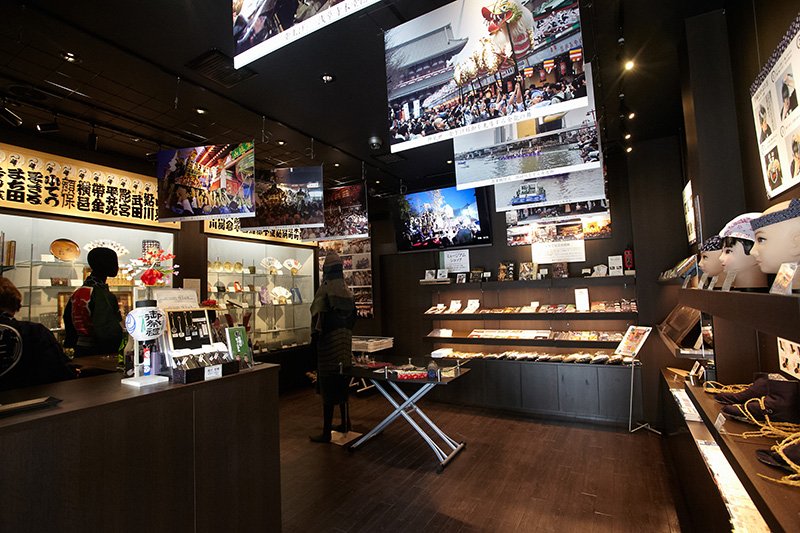
A variety of festival-related merchandise is on sale in the museum shop.
-
-
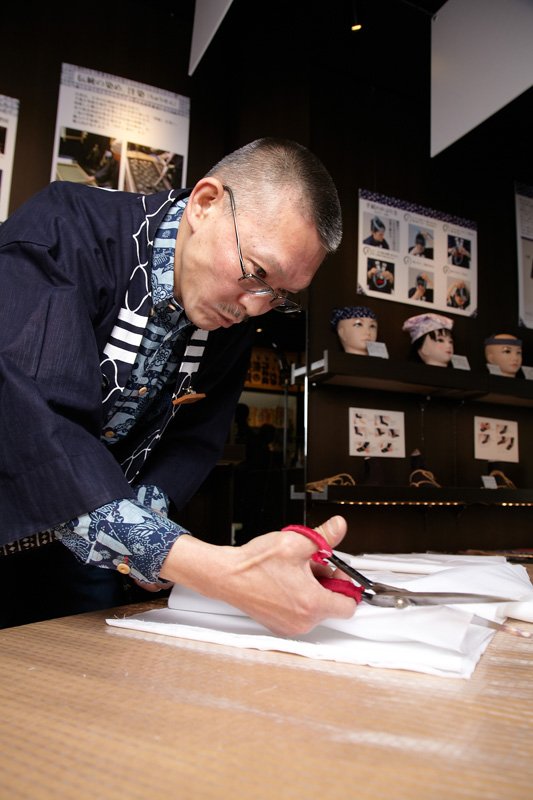
Cutting the white fabric for special festival hand cloths.
-
-
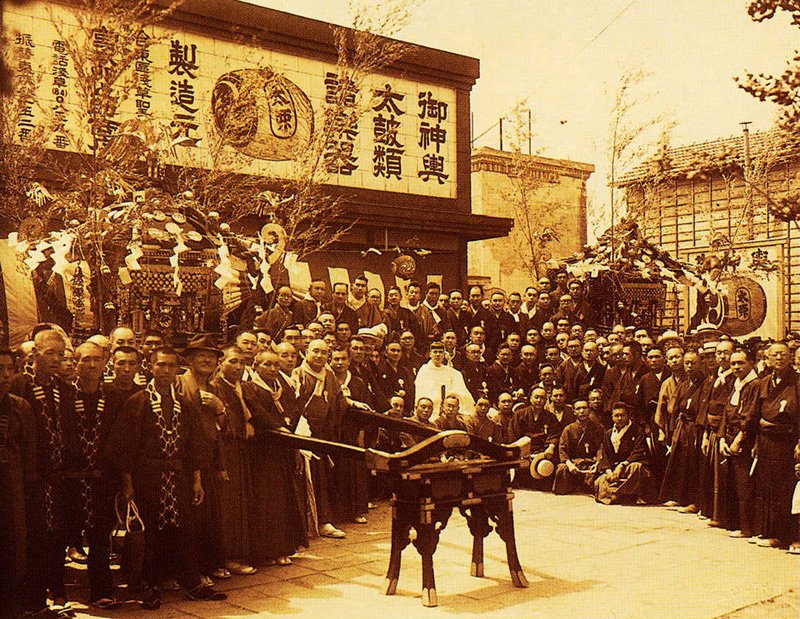
Postwar versions of the Ichi no Miya and Ni no Miya “mikoshi” were ready in time for the festival in 1950, after the originals were destroyed during World War II. (Photo courtesy of Miyamoto Unosuke Co., Ltd.)
-
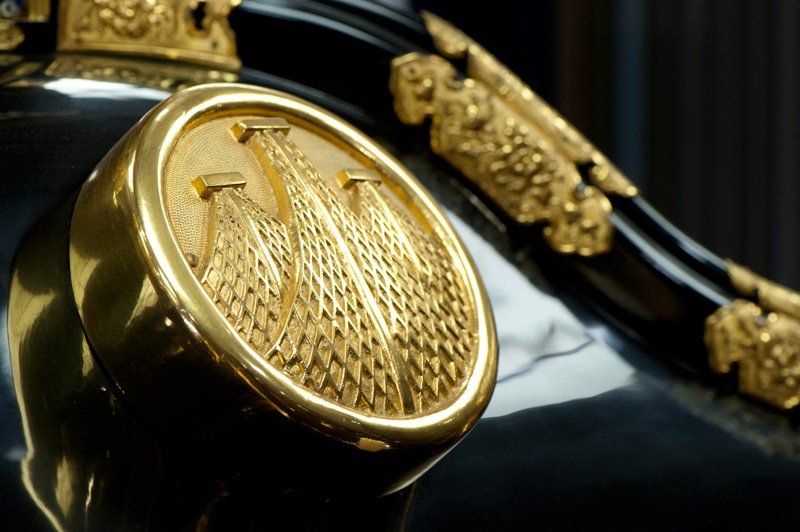
The “mitsuami-mon” (three nets crest) symbolizes the three men whose spirits are revered as the divinities of Asakusa Shrine.
-
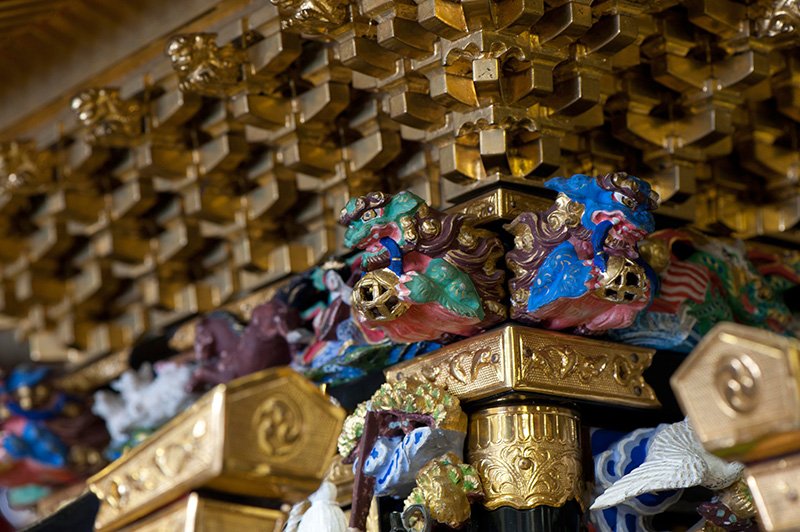
Not a single nail is used in the “masugumi” that supports the “mikoshi” roof.
-
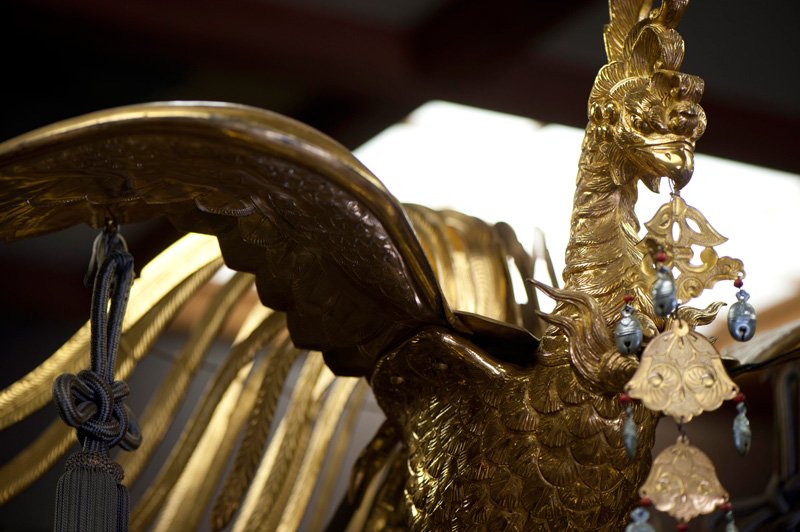
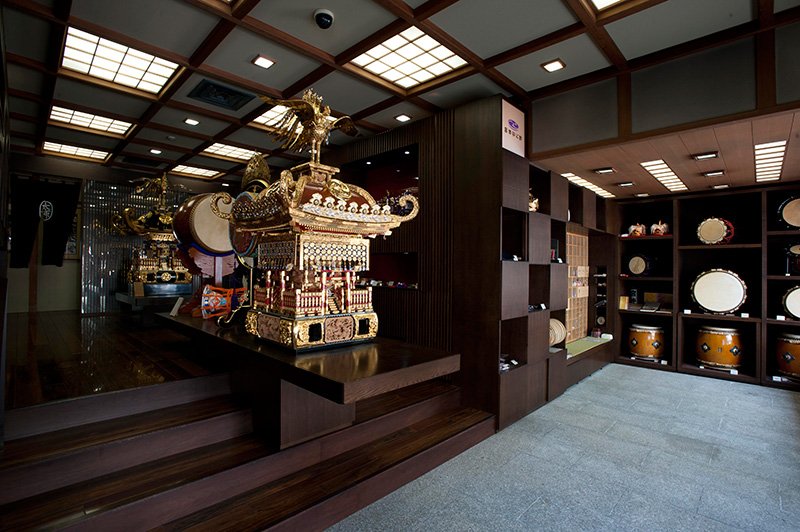
A “mikoshi” from around 1955, dominated by the majestic figure of a phoenix, is displayed at the head office of the Miyamoto Unosuke Co., Ltd.
-
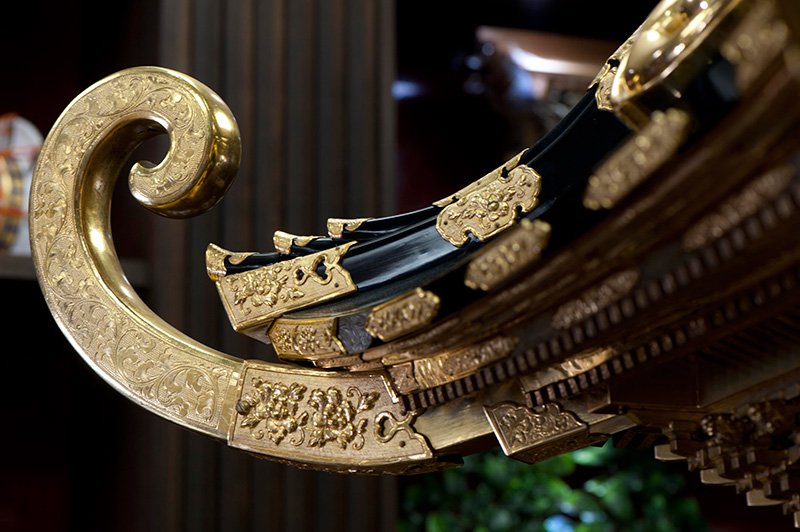
The ornamentation at the four corners of the “mikoshi” curves up from under the roof–one of the distinctive characteristics of the Sanja Matsuri “mikoshi”.
-
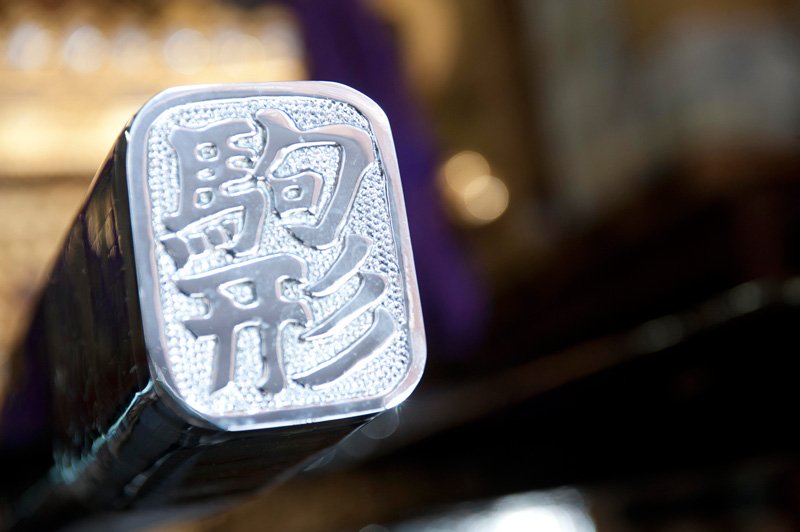
One of the supporting poles of the Komagata “mikoshi”, used by the shrine bearers during the procession, with the kanji characters for “Komagata” inscribed on the end.
-
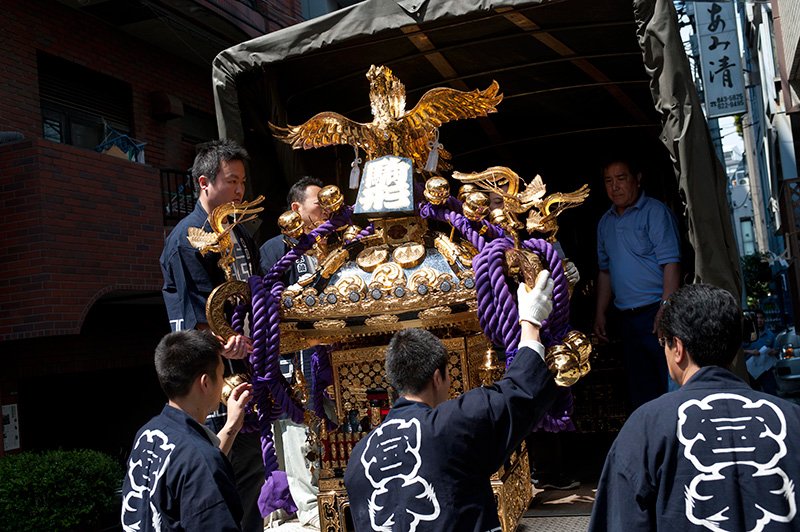
The Miyamoto Unosuke delivers the “mikoshi” to Komagata ready for use in the festival.
-
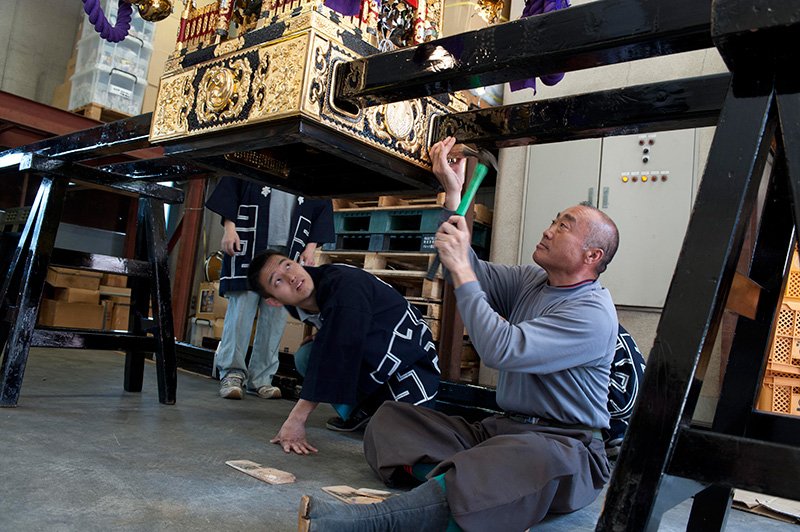
Master carpenter Kikuchi works on binding the ropes to the supporting pole.
-
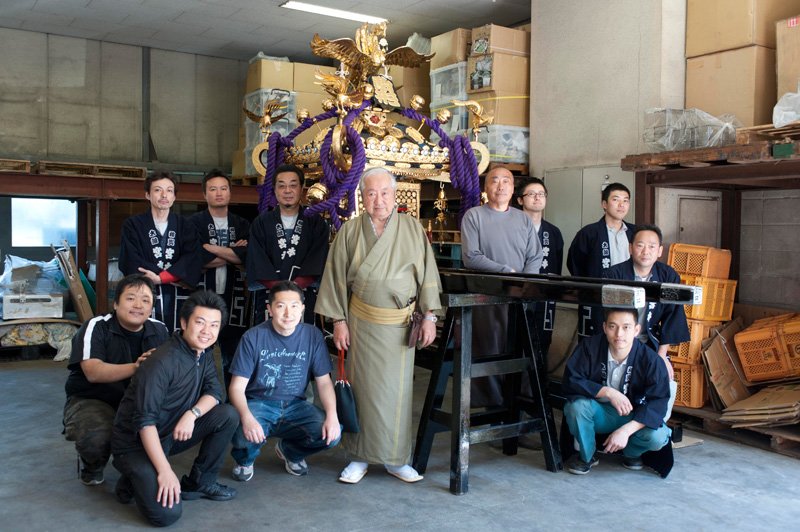
Work is finished and the “mikoshi” is now ready for the festival.
-
-
-
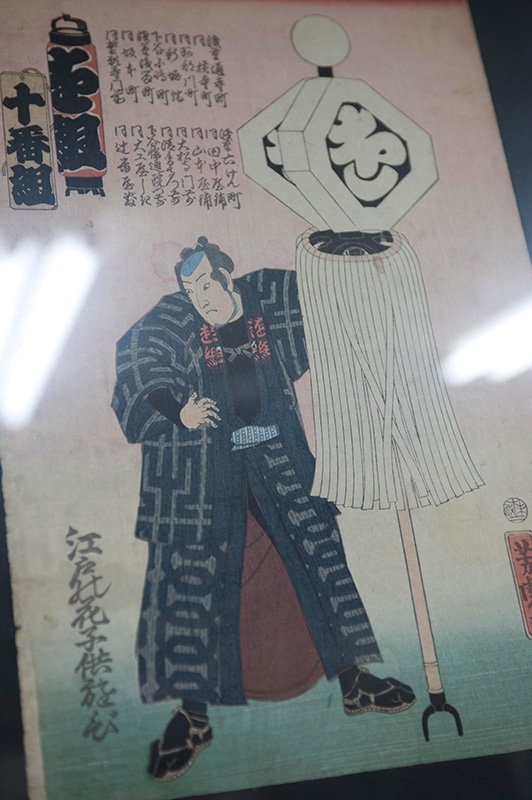
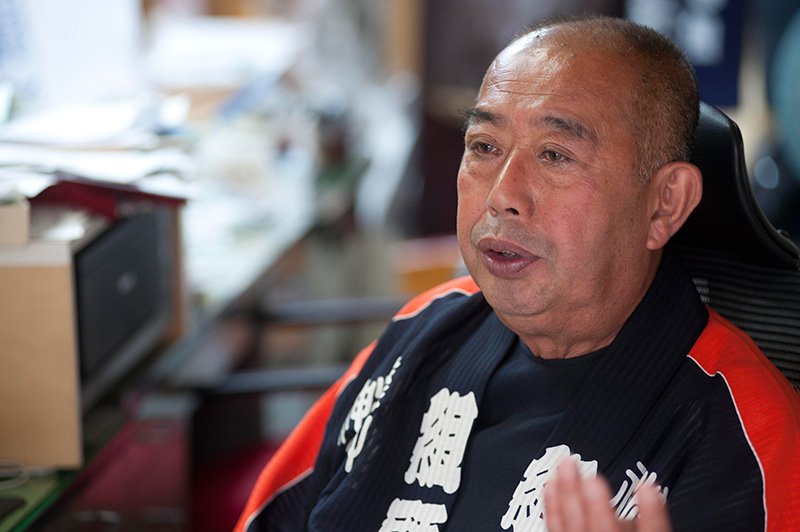
The first Shinmon Tatsugorō was a construction worker and fireman. This prominent figure has appeared regularly in historical dramas depicting life in the capital during the nineteenth century. Sugibayashi is the seventh to bear the name.
-
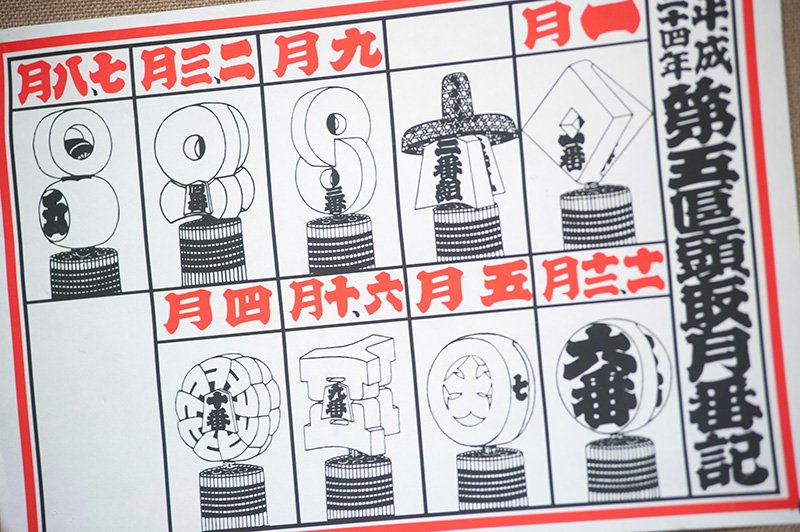
The three-dimensional “matoi” fire standards used during the Edo period. Each firefighting group had its own distinctive “matoi,” which would be placed atop a burning building to indicate a fire had broken out.
-
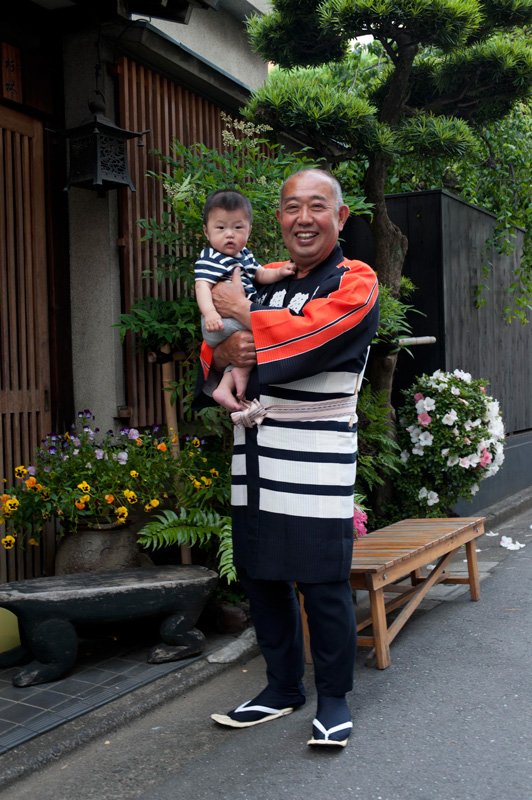
Sugibayashi with his grandson, who will one day be the ninth-generation Shinmon Tastsugorō.
-
-
-
-
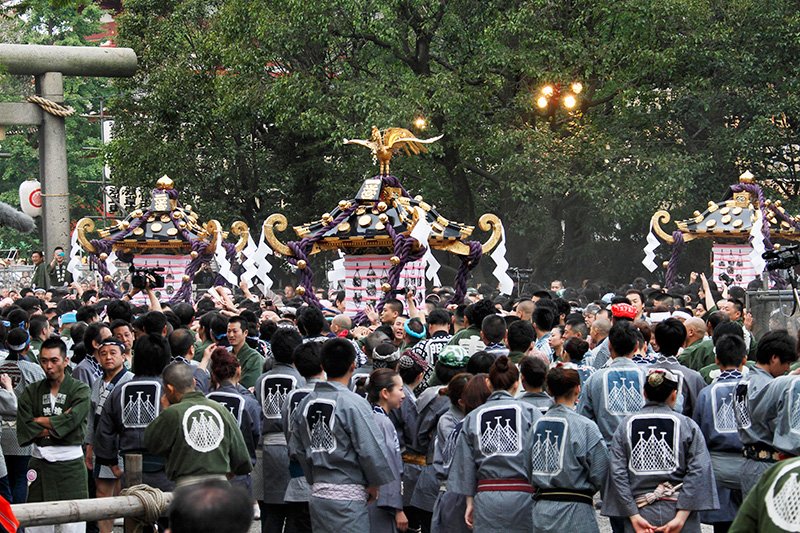
The three main “mikoshi” (Ichi no Miya, Ni no Miya, and San no Miya) leave Asakusa Shrine at the start of their tour of the 44 neighborhoods of Asakusa.
-
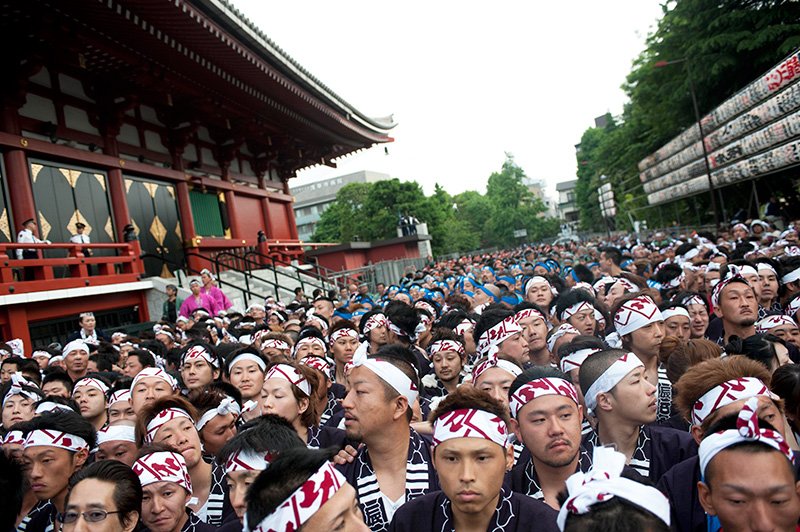
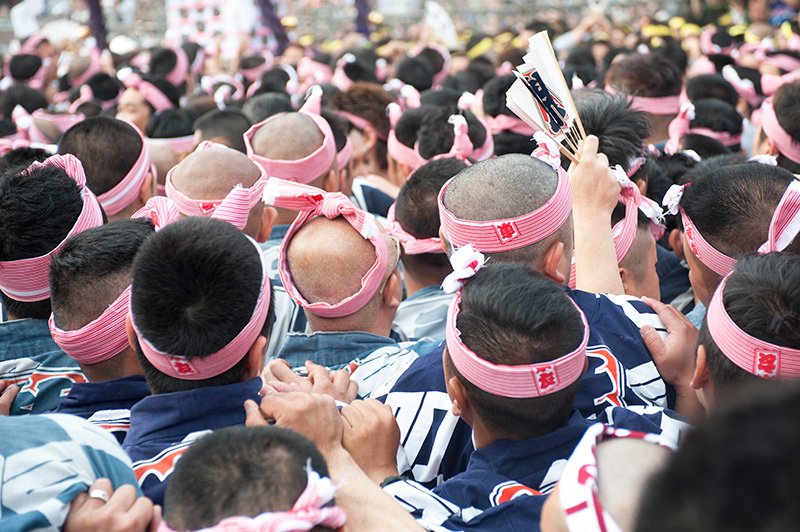
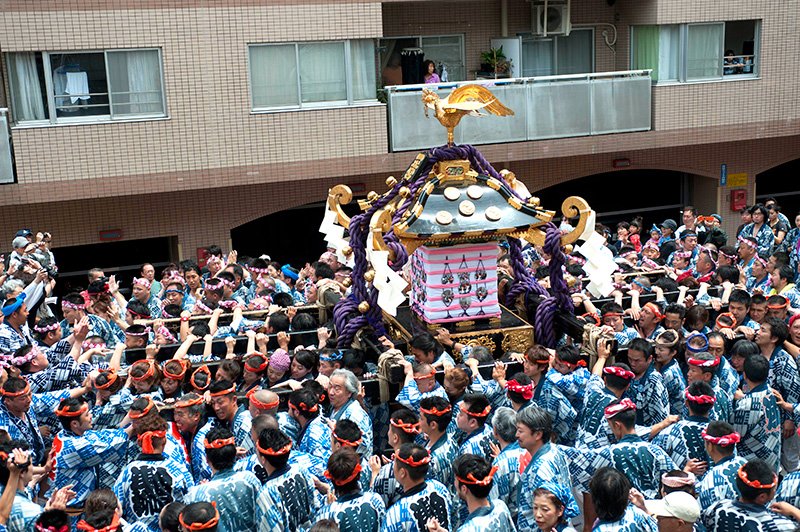
A mass of people looking for a chance to help carry one of the three main “mikoshi.” As many as 3,000 people crowd round each “mikoshi,” fighting to get as close to the action as possible.
-
-
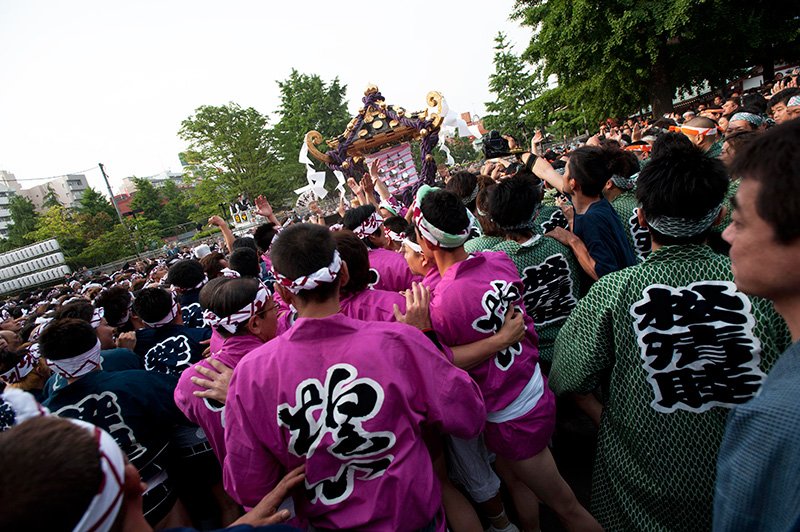
Barricades are set up to ensure no one gets hurt in the chaos.
-
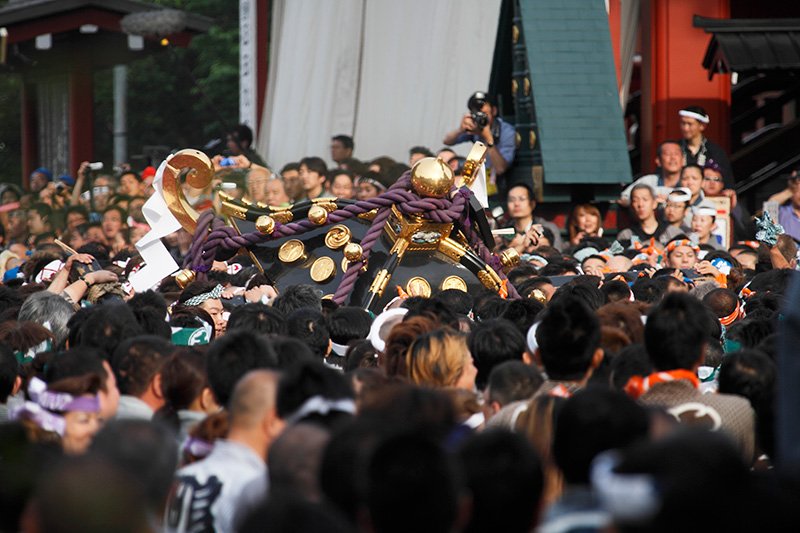
The “mikoshi” lurches violently as the team of bearers loses its balance for a moment.
-

-
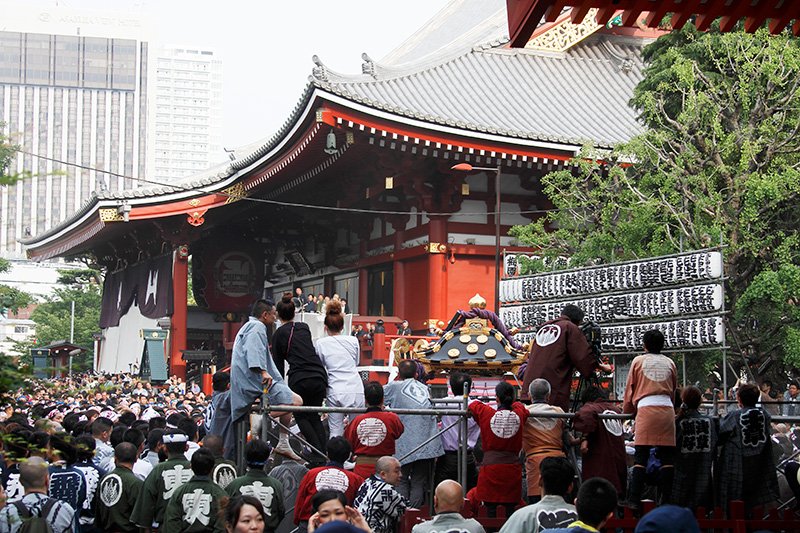
The three “mikoshi” leave Asakusa Shrine.
-
-

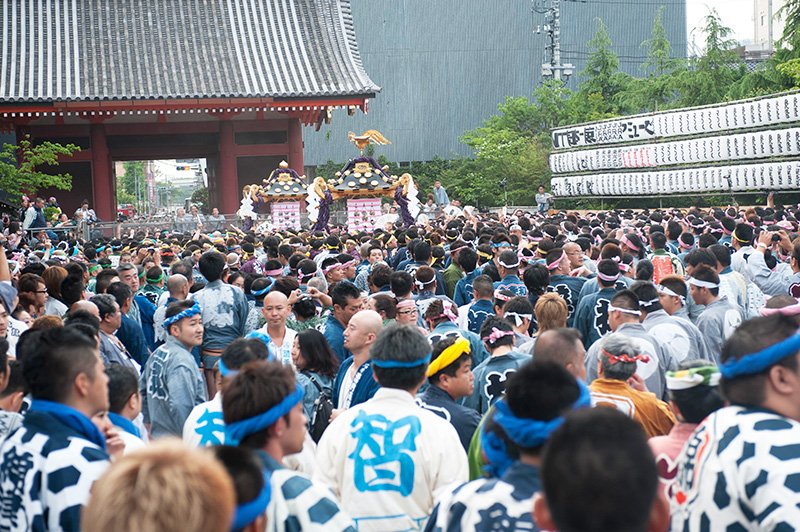
In front of the main prayer hall at the Buddhist temple Sensōji.
-
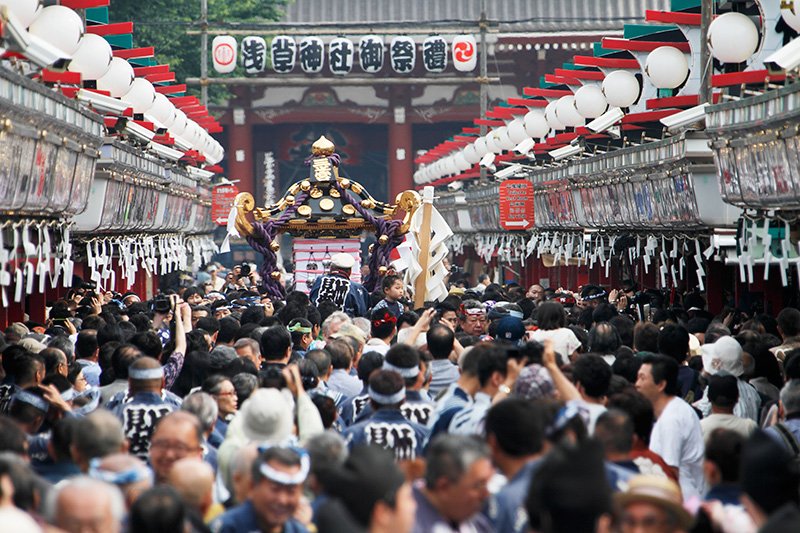
Passing through the Nakamise.
-
-
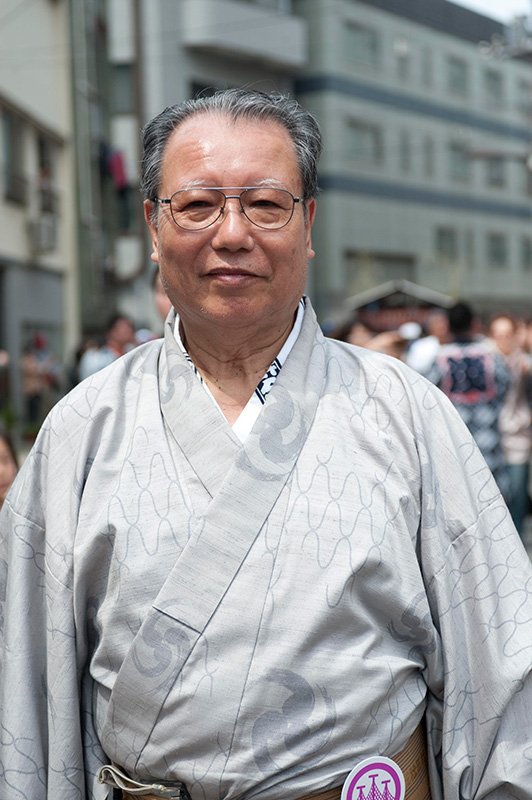
Saitō is the head of the Uma San-Chōkai neighborhood association. “We don’t have many kids in our neighborhood most of the time, but when the festival comes round all the youngsters who’ve moved away after getting married come back with their families. Everyone makes a special effort to be here for the festival.”
-
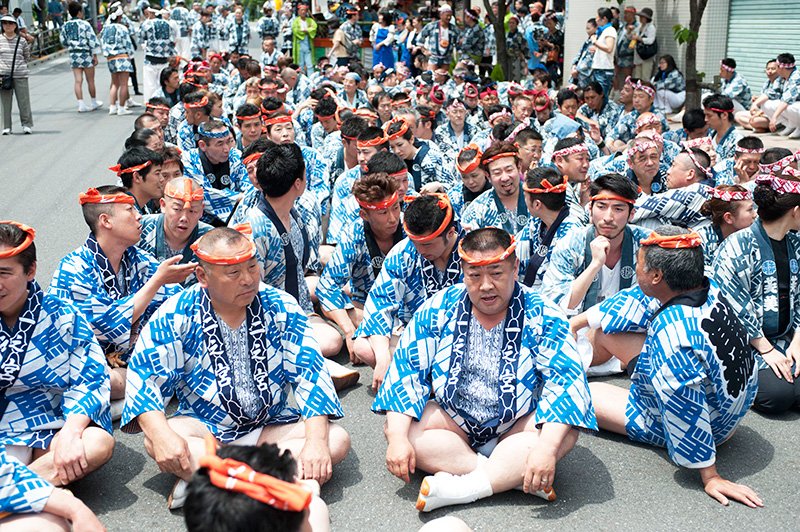
A team of shrine bearers waits for the “mikoshi” to arrive at Asakusa Uma San-Chōkai, one of the 12 neighborhoods of the Eastern Division.
-

The Ichi no Miya arrives in Uma San-Chōkai at 12:10 on the afternoon of May 20.
-
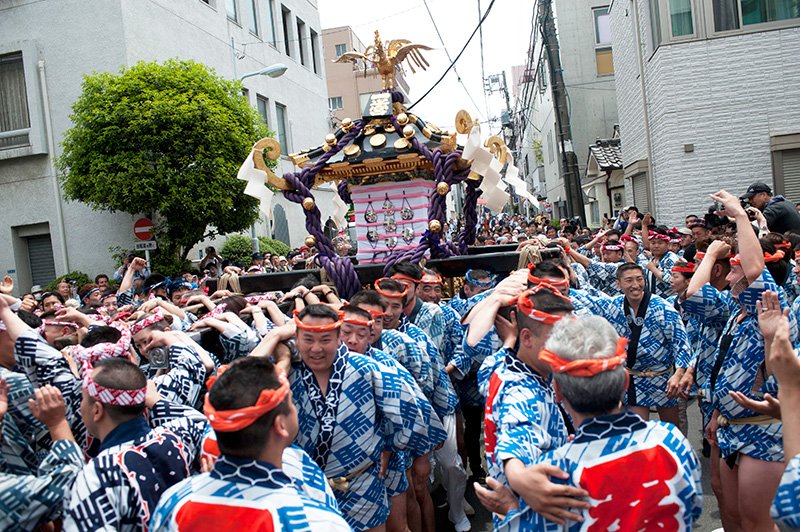
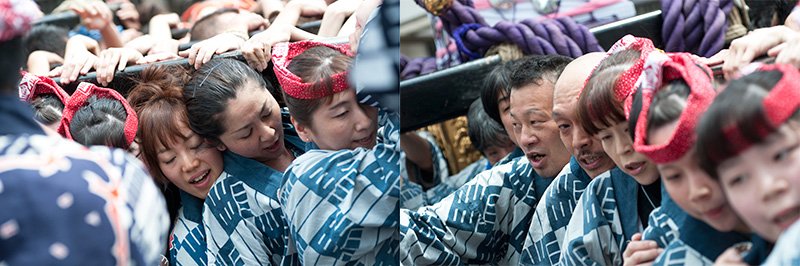
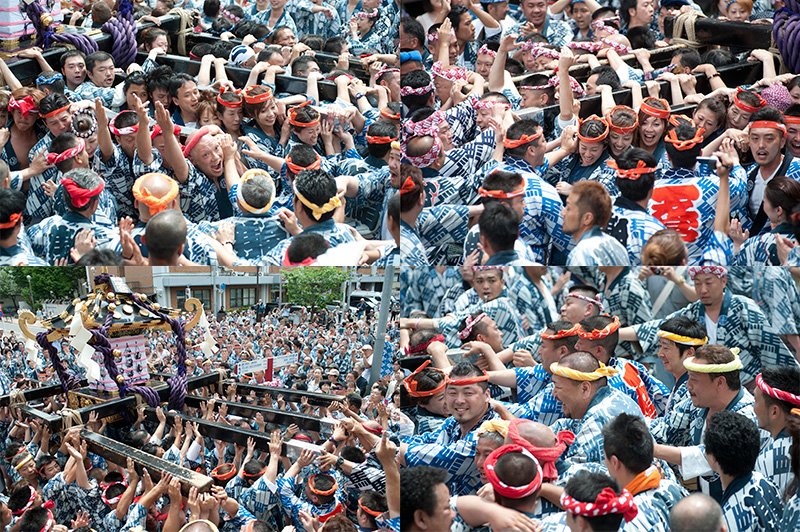
The atmosphere reaches fever pitch as the bearers come together in a solid mass.
-
-
-
-

-
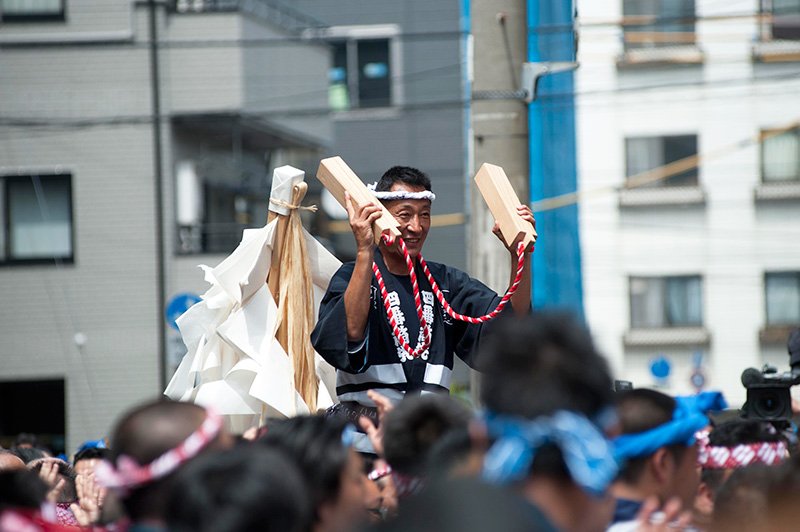
The head of the Uma San-Chōkai association leads the team of bearers in a round of ceremonial clapping.
-
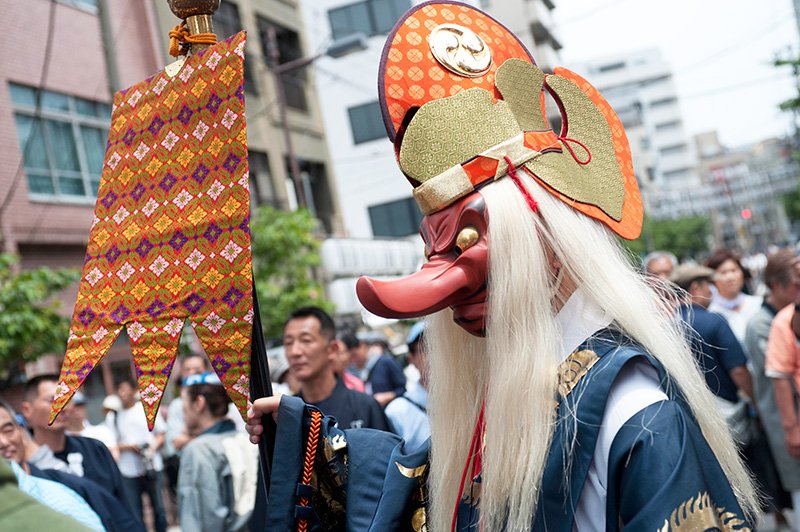
An imposing tengu demon leads the way, representing the god Saruta Hiko no Mikoto, who welcomed the gods to earth in early myths.
-
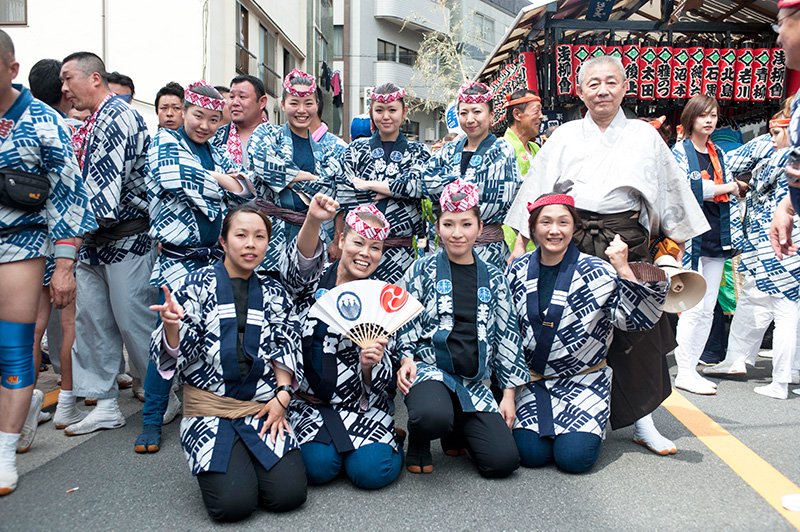
Relaxed smiles after the neighborhood procession concludes without incident.
-
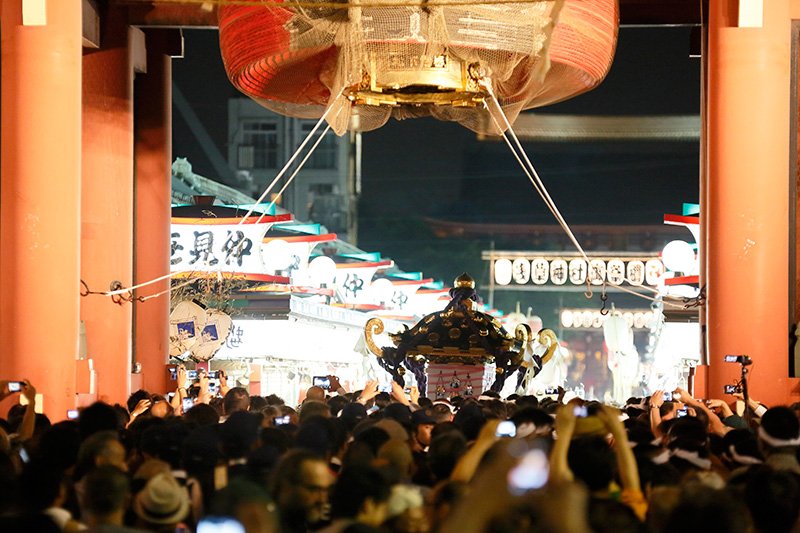
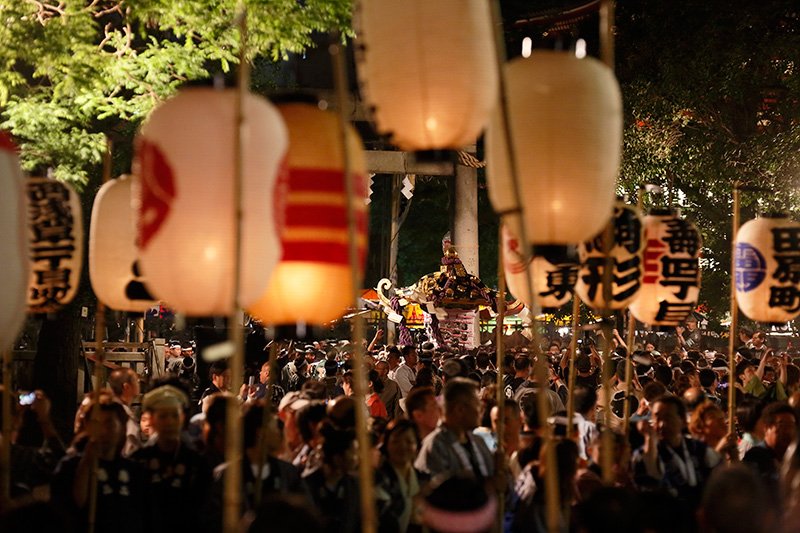
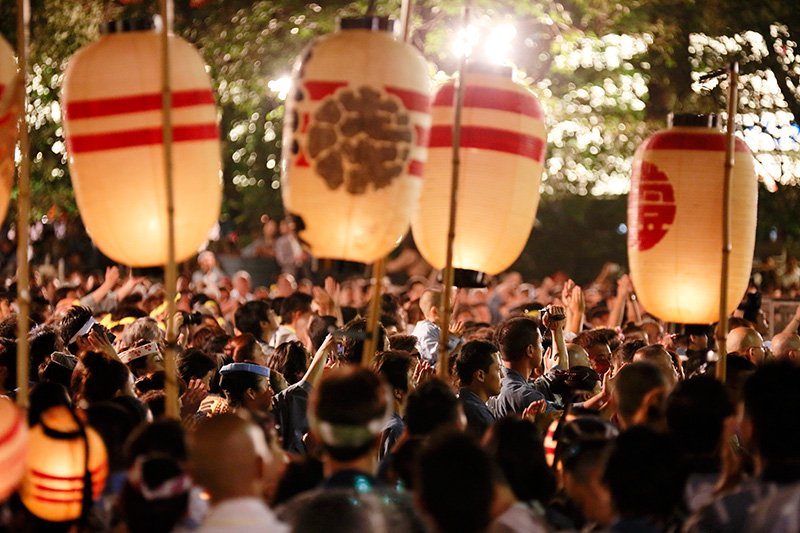
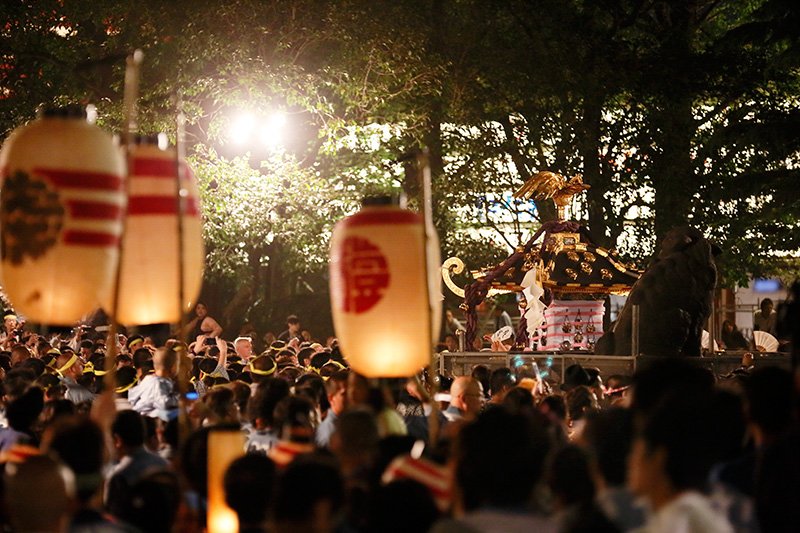
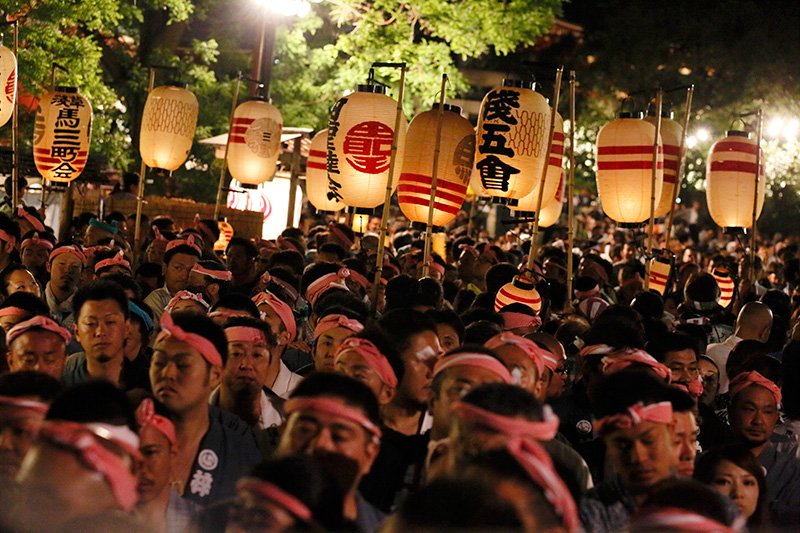
A “mikoshi” passing under the Kaminarimon Gate at the entrance to the temple Sensōji. After their tour of the 44 neighborhoods, the three main “mikoshi” are returned to Asakusa Shrine on Sunday evening.
-
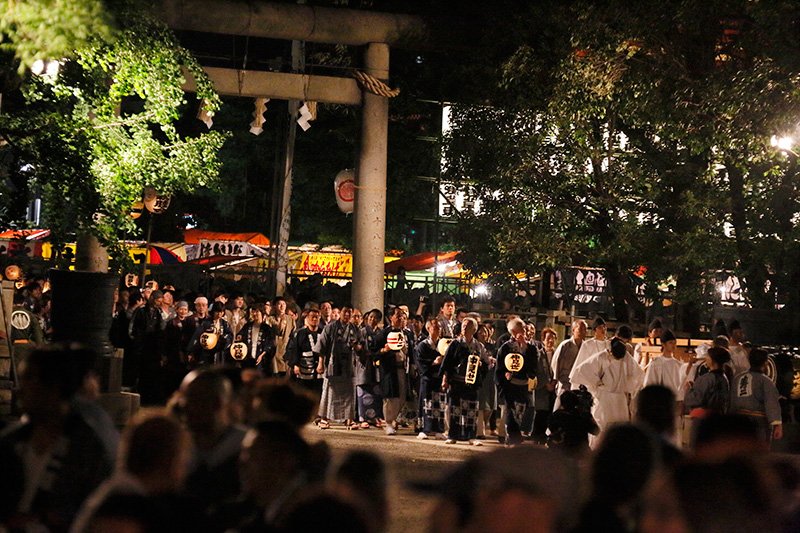
A procession passes under the torii gate into the precincts of Asakusa Shrine, led by Shintō priests.
-
-
-
-

-
-
-
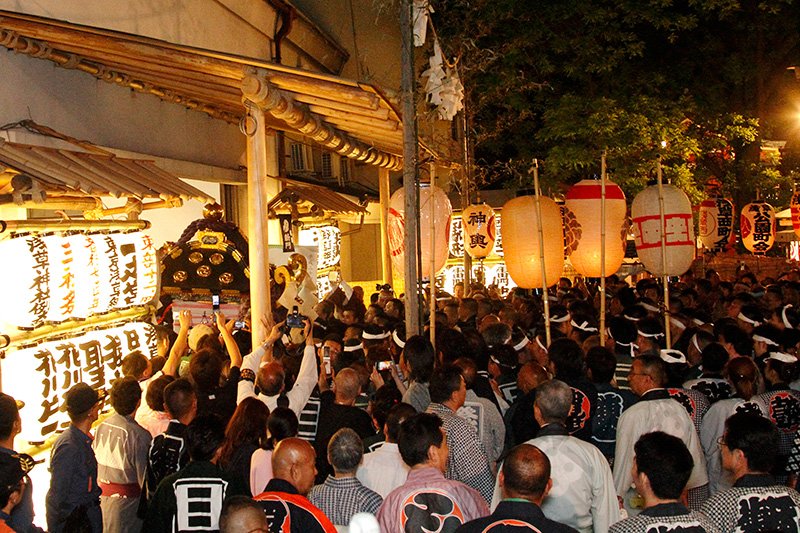
The San no Miya is returned to its storage place after its procession is completed.
-


 Read in other languages