-
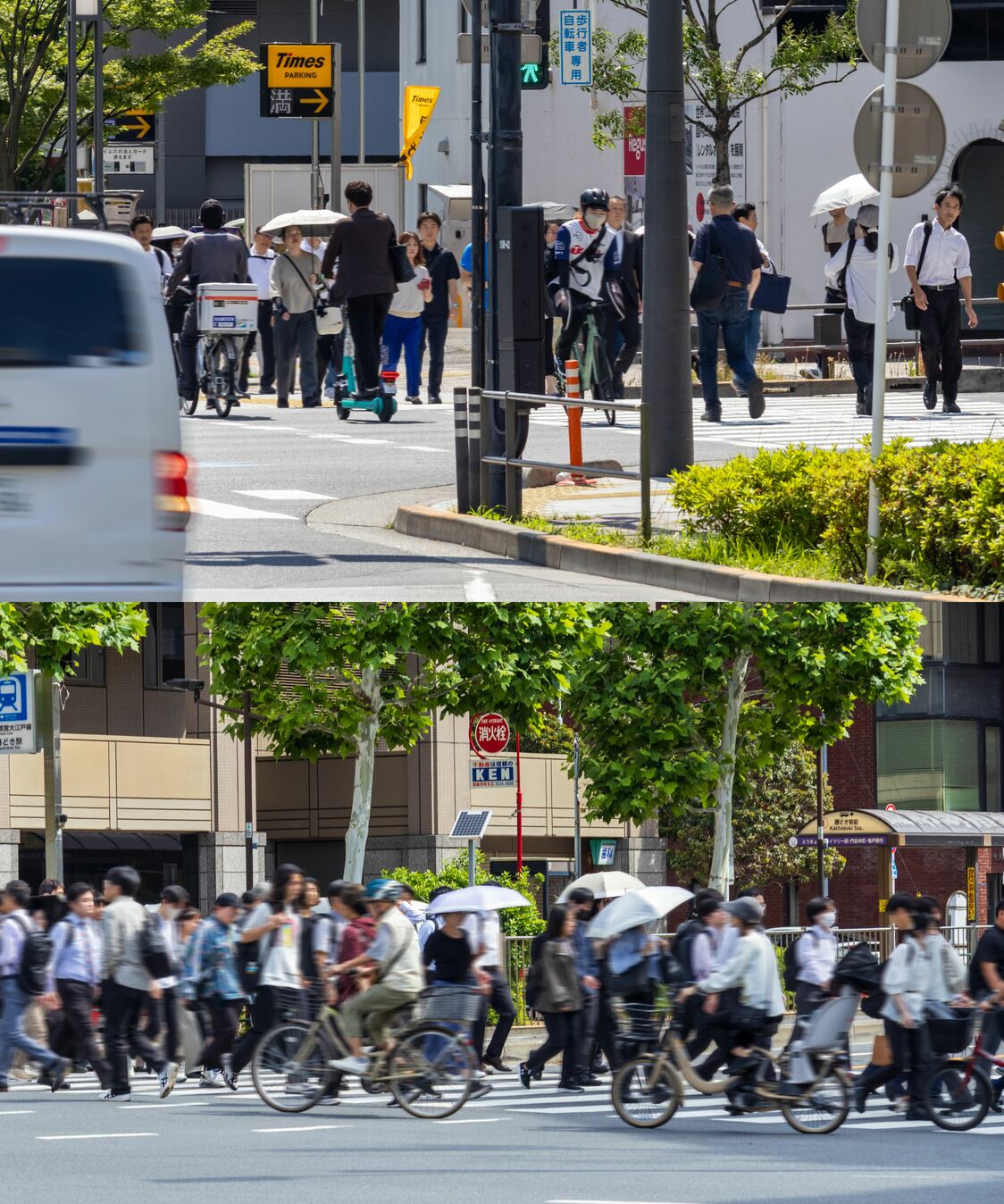
Cyclists and pedestrians mix during the morning rush in Tokyo. (© Nippon.com)
-
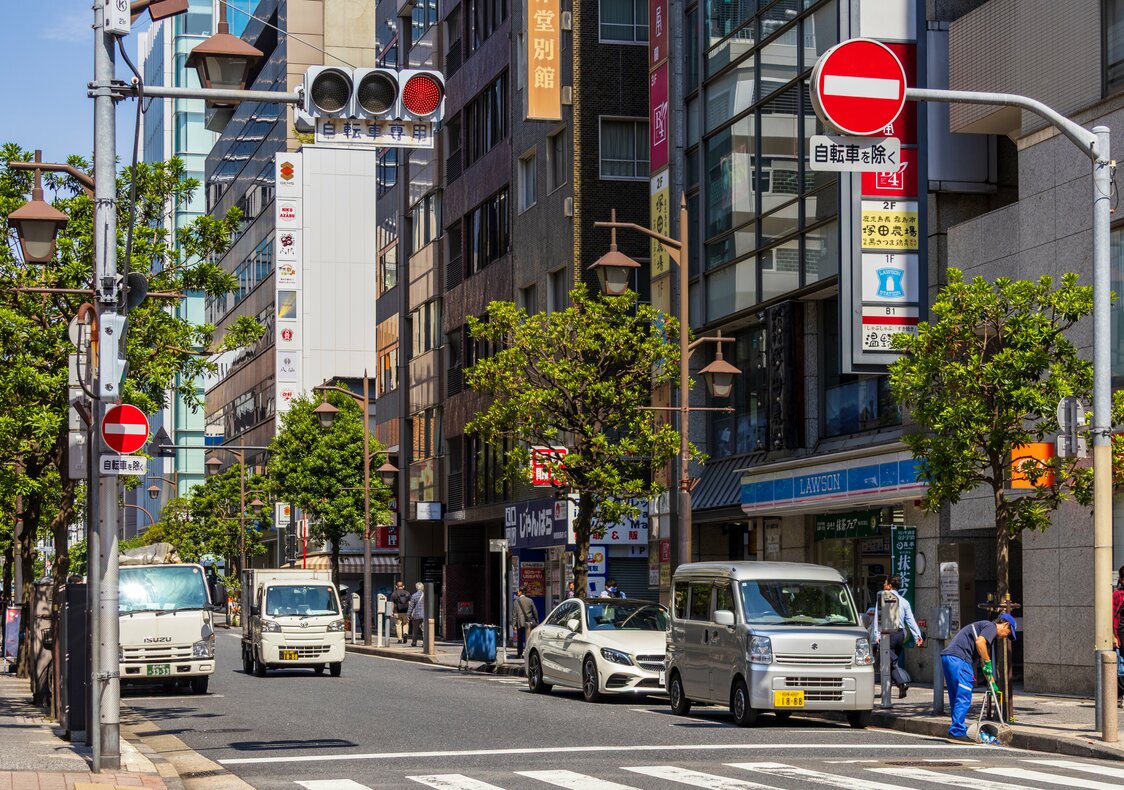
The lack of pictographs and Japanese-only text can make “no vehicular entry” signs (the red circle with the white bar at top right) difficult for non-Japanese speakers to understand. (© Nippon.com)
-

Many signs in other countries have additional plates that give vital information, such as these “do not enter” warnings that allow bicycles to enter against the flow of vehicular traffic. From top: “Do not enter” signs in Germany, Poland, and Italy with easy-to-understand supplemental signs for cyclists. (© PhotoAC)
-
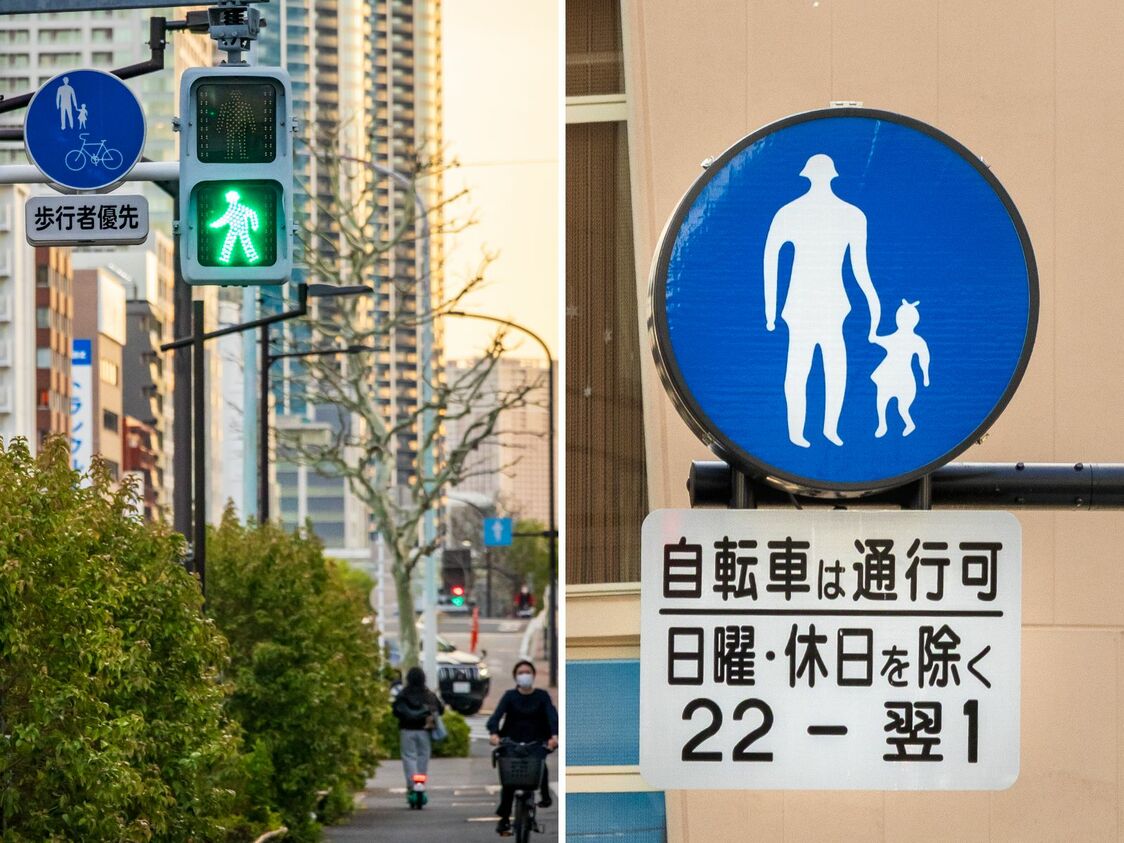
A blue and white “pedestrians only” sign with a supplemental sign allowing bicycles to use the walkway. Similar signs showing a bicycle mark on a blue background also indicated bicycles may pass. (© Nippon.com)
-
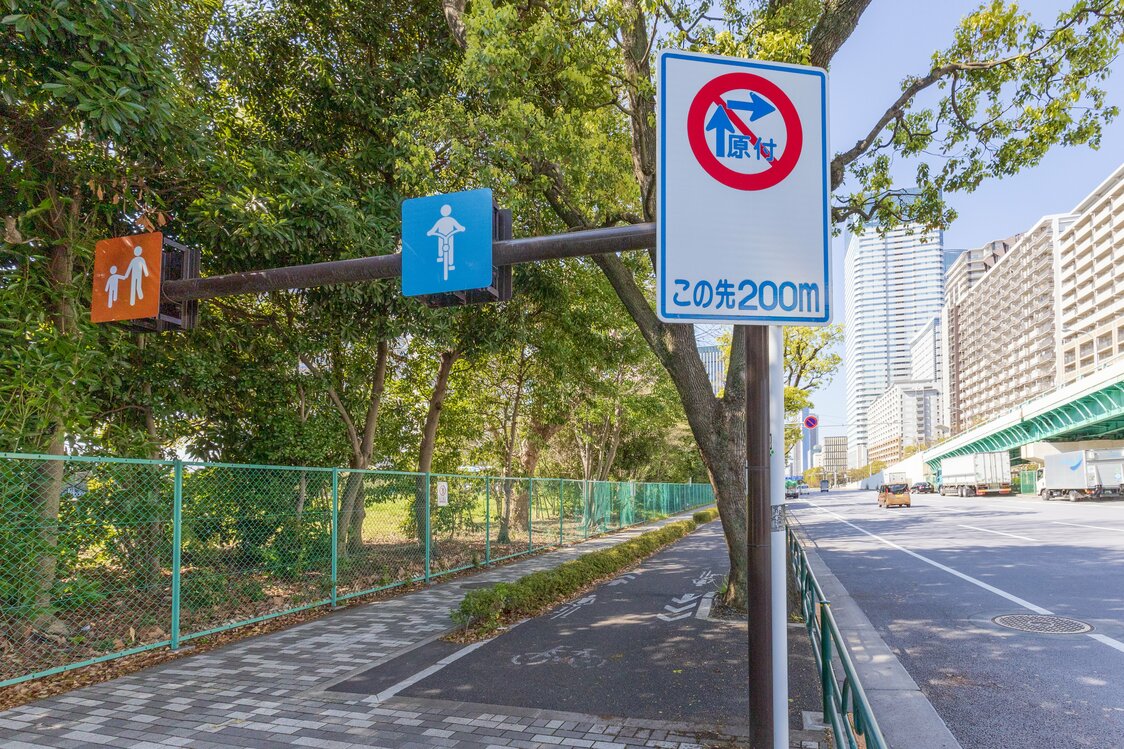
Signs indicate separate pedestrian and bicycle paths on some sidewalks along major thoroughfares. (© Nippon.com)
-
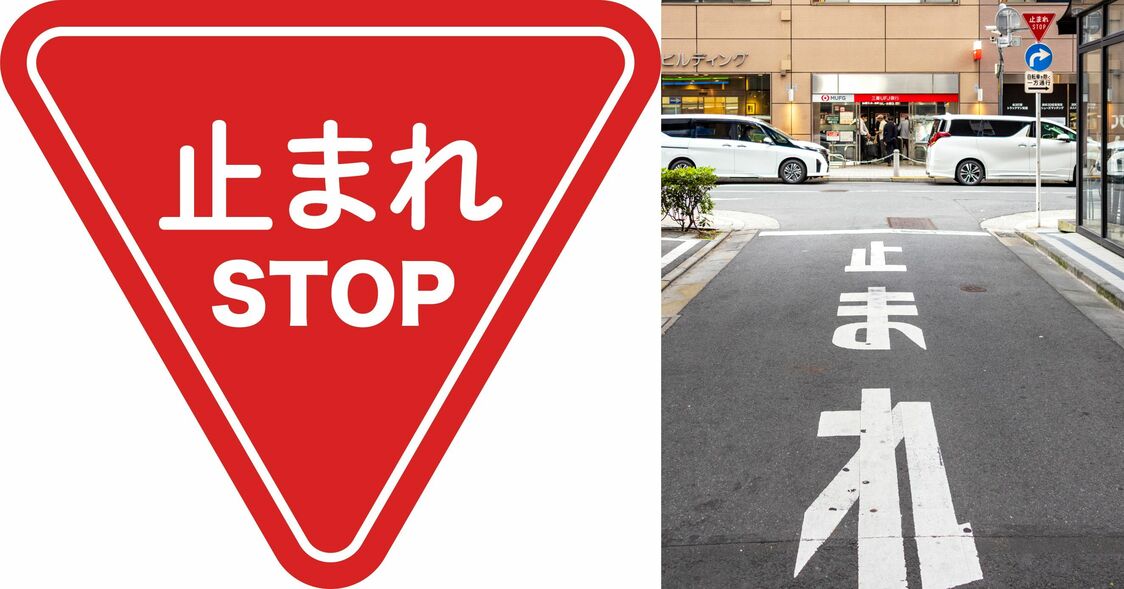
Left: Newer versions of Japan’s triangular stop signs have English (© IllustAC); right: a white stop line painted on the road indicates where cars and bicycles must stop. (© Nippon.com)
-
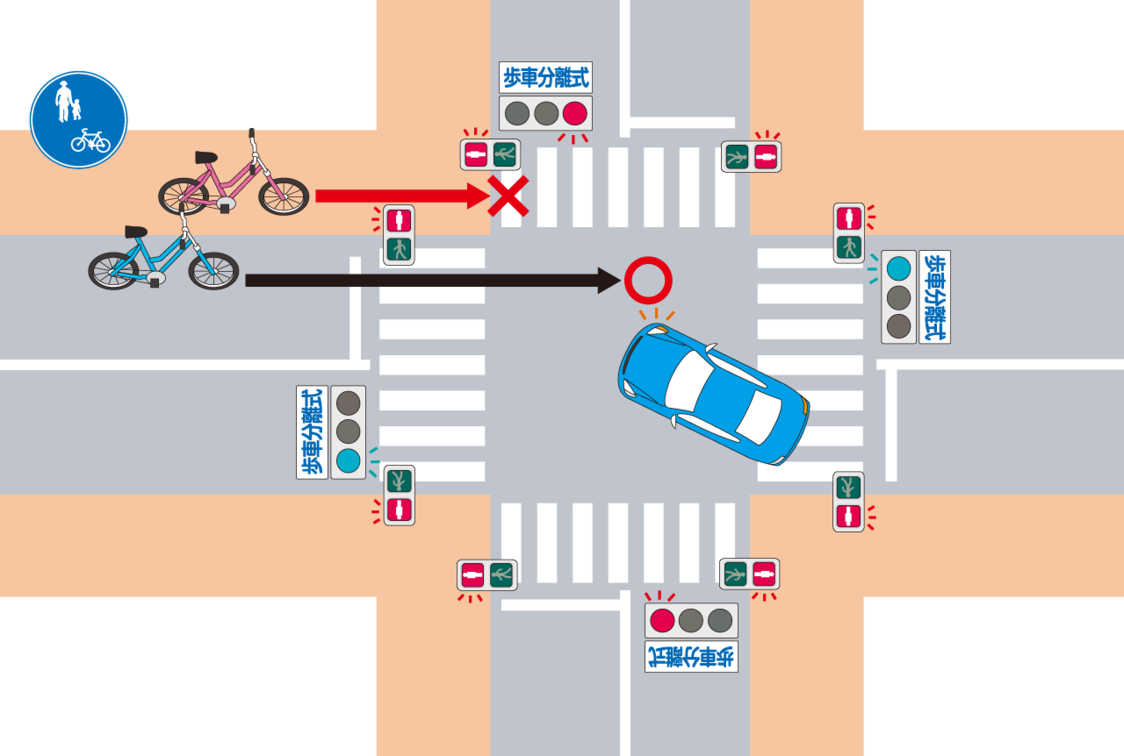
Bicyclists follow pedestrian crossing signals when on sidewalks and traffic signals when on the road. Cyclists riding on the road need to keep an eye out for turning vehicles when passing through an intersection. (© Satō Tadashi)
-
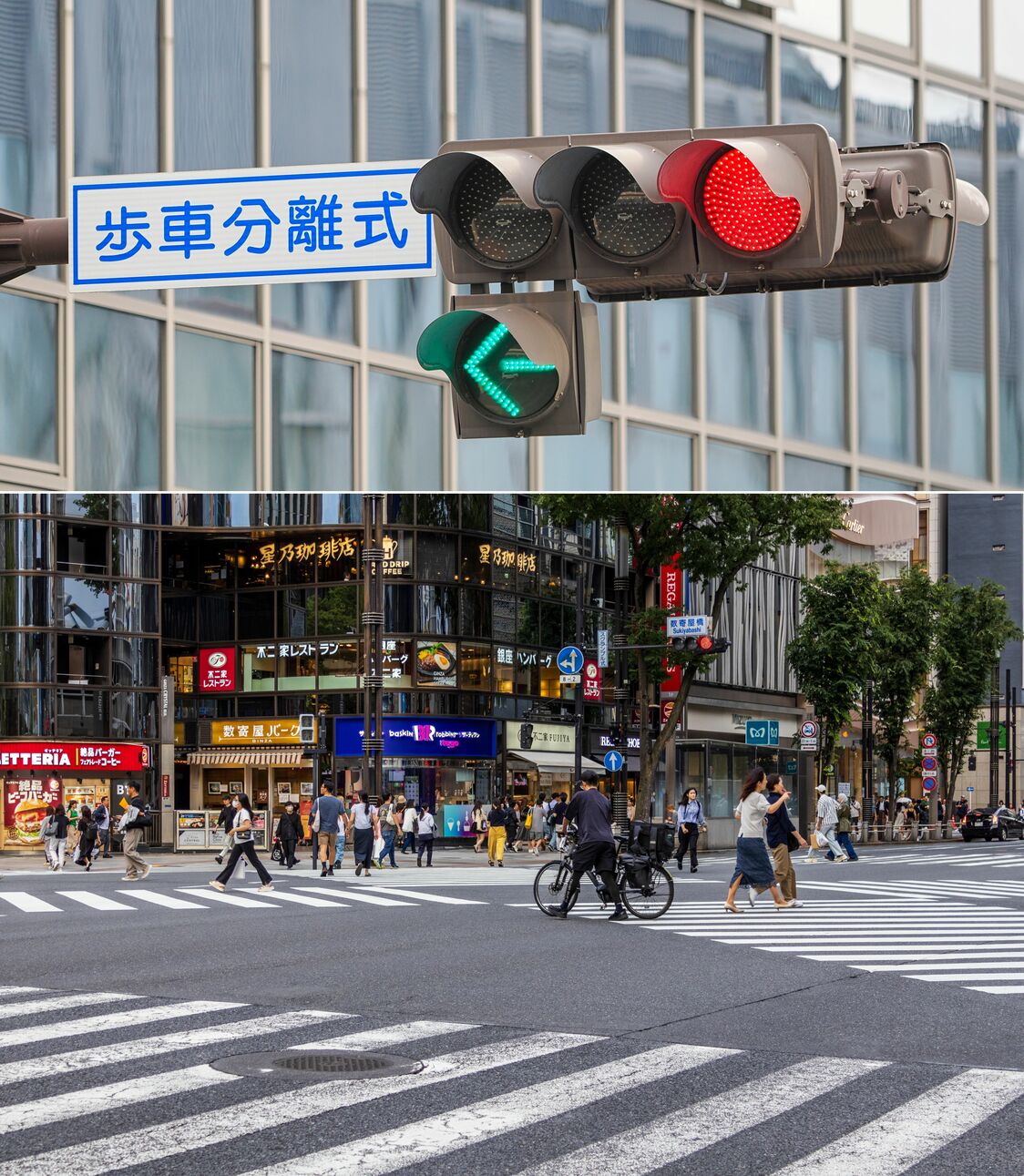
Top: Around 5% of intersections in Japan have separately timed signals for vehicles and pedestrian traffic. (© PhotoAC); at scramble-style crossings, which allow pedestrians to cross in any direction, cyclists crossing diagonally must dismount and walk their bikes across. (© Nippon.com)
-
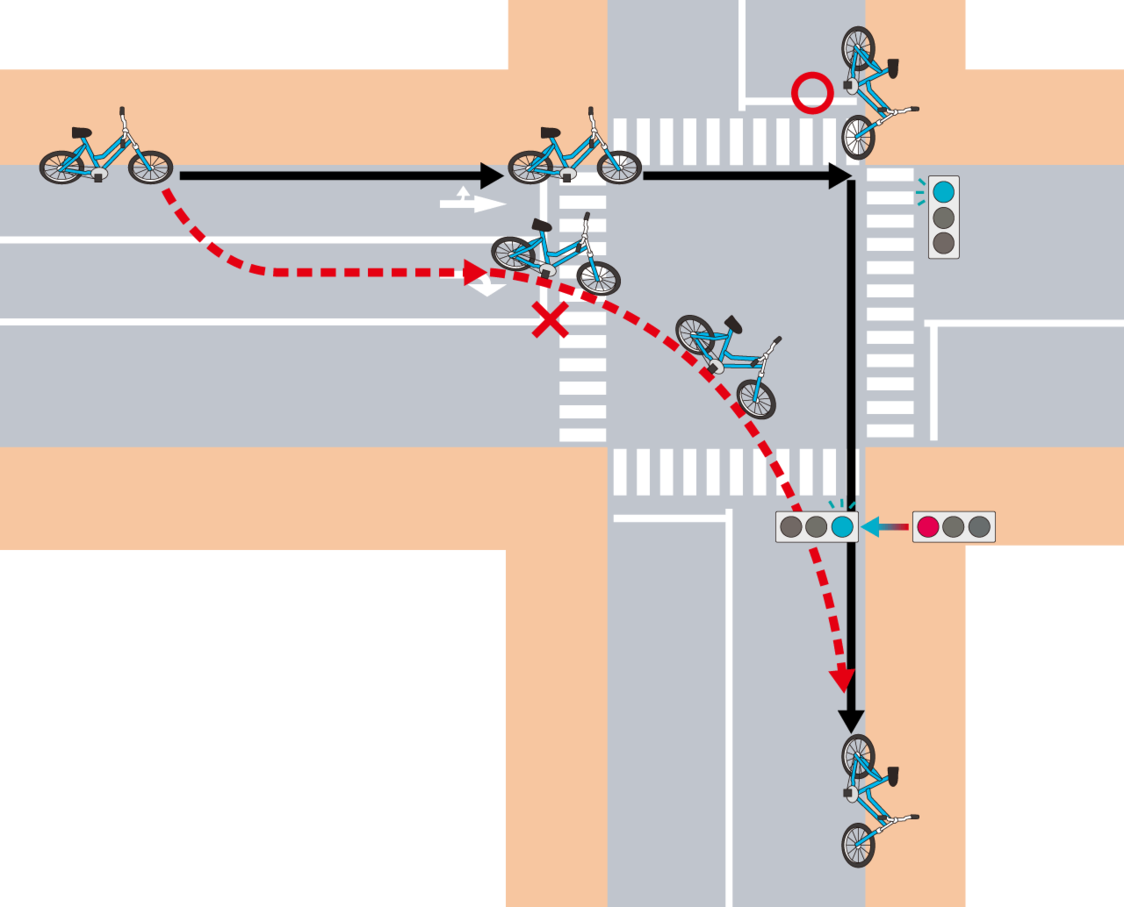
A diagram of a two-stage right turn (black arrows) and an illegal right turn (the red course). (©︎ Satō Tadashi)
-
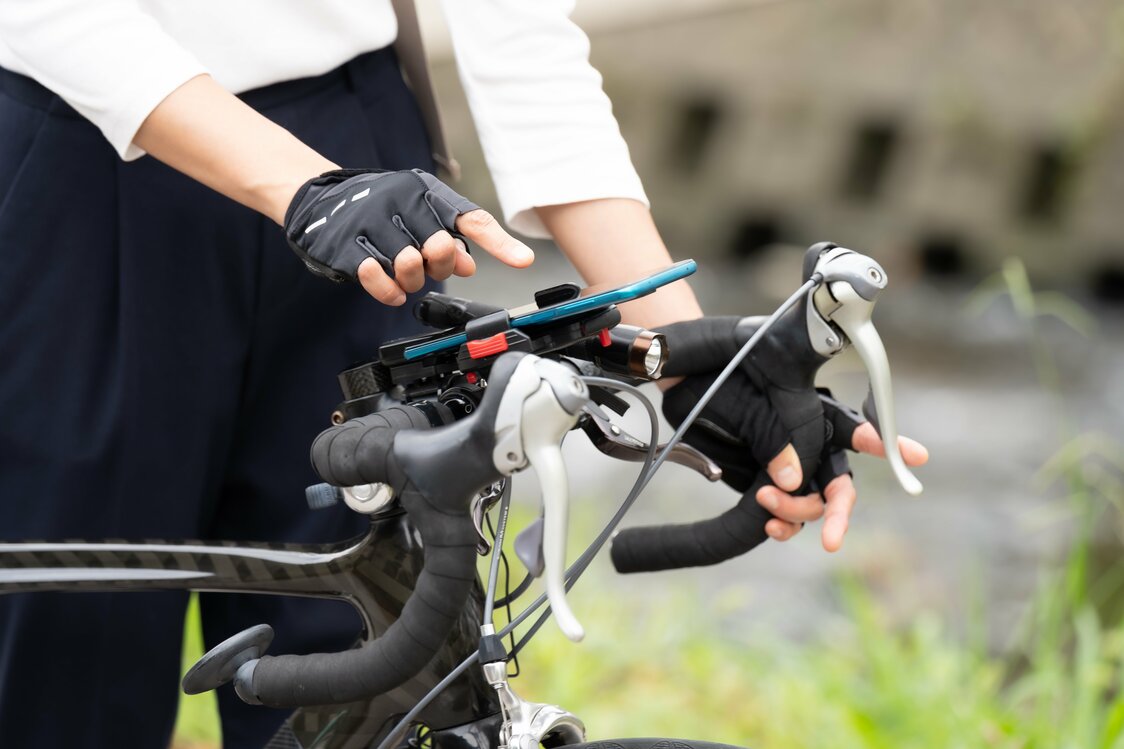
Using a smartphone while cycling, even if the device is in a holder, could lead to a steep fine. (© Pixta)
-
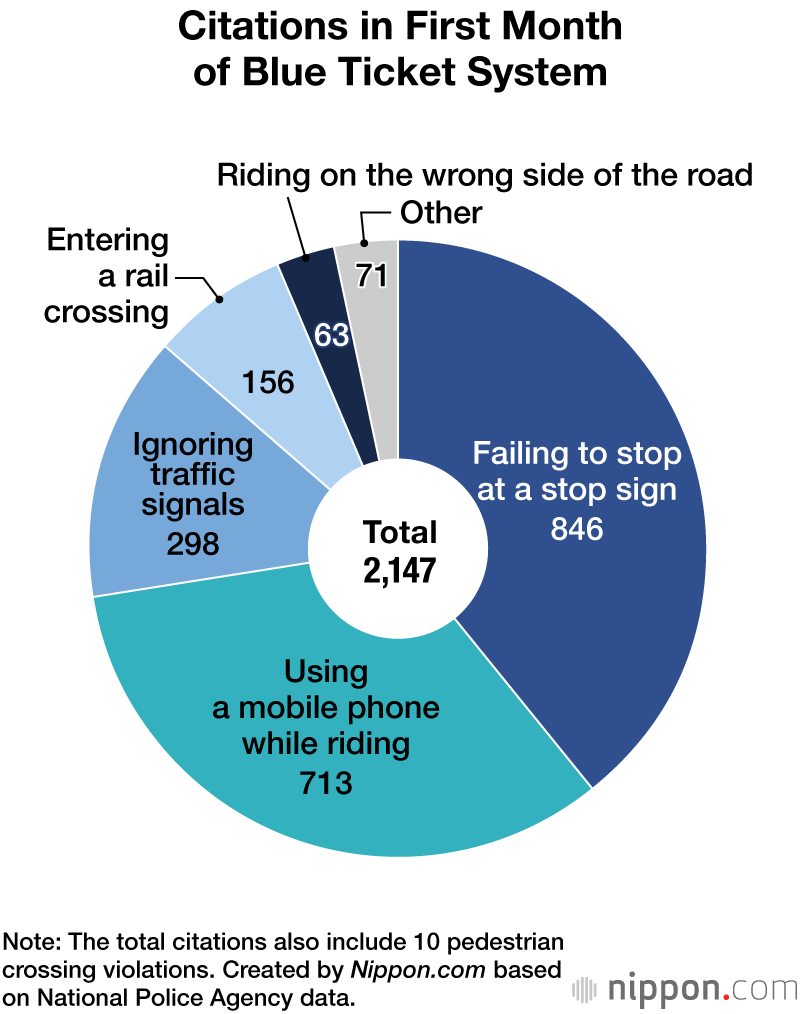
Citations in First Month of Blue Ticket System
-
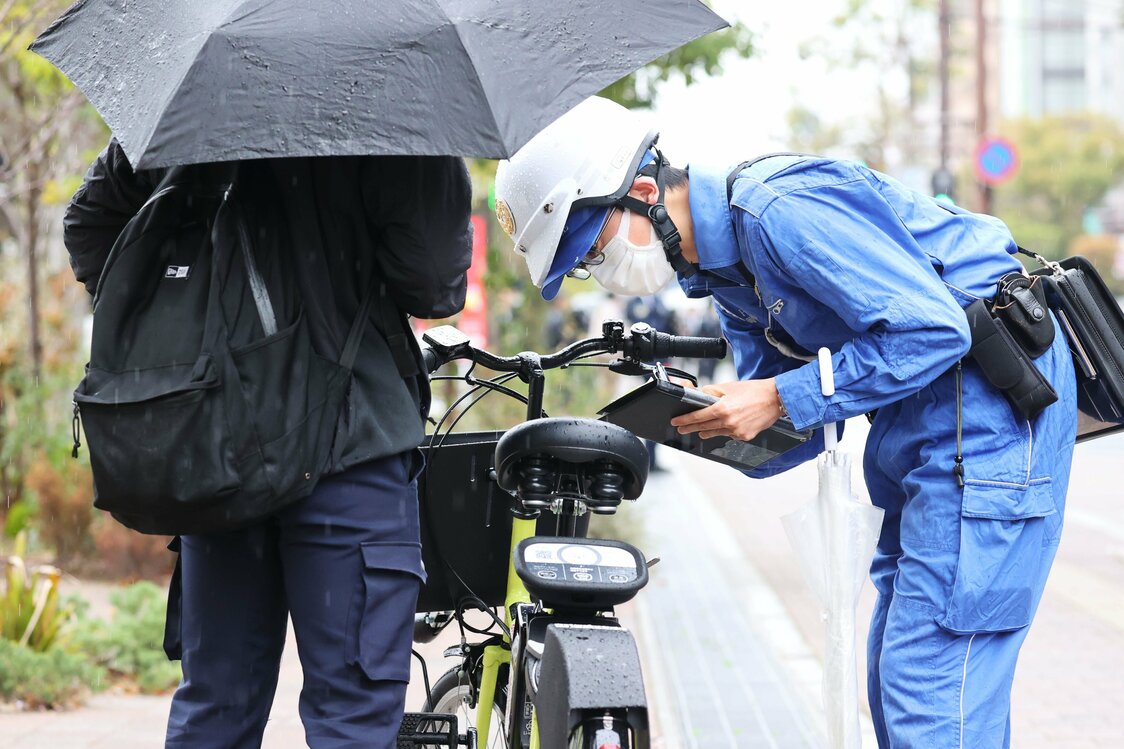
A police officer in Okayama stops a cyclist for holding an umbrella on April 1, 2026. (©︎ San’yō Shimbun/Kyōdō)
-
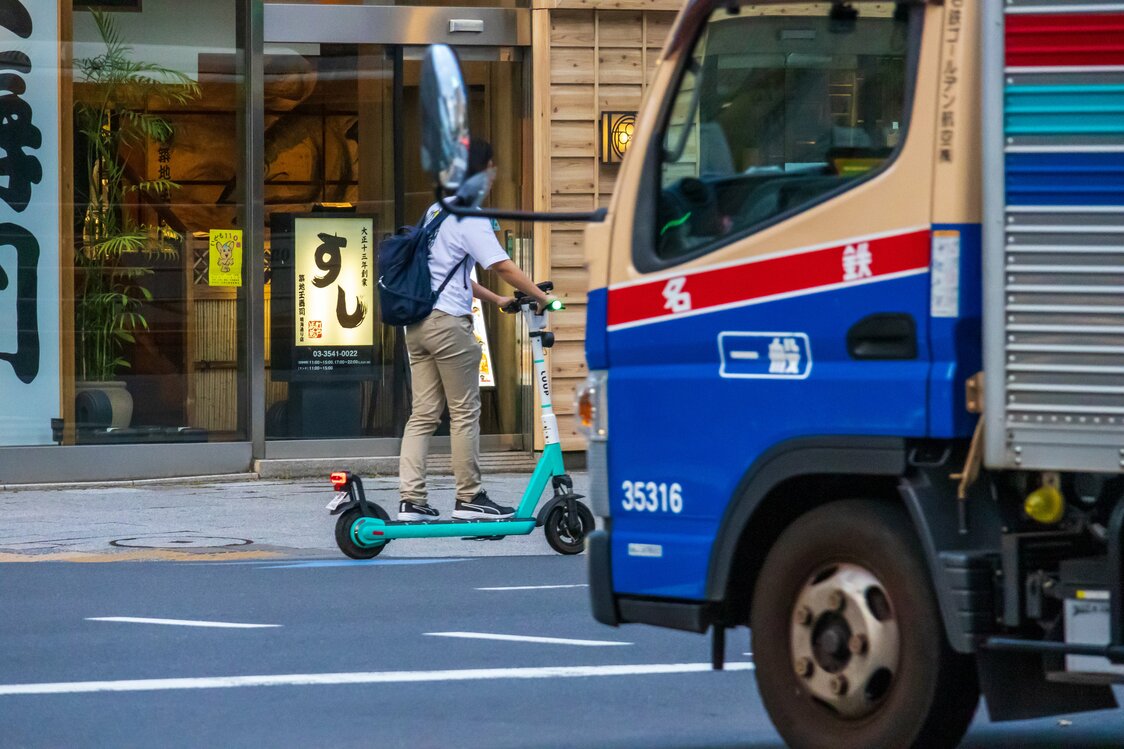
E-scooters have a maximum speed of 20 kilometers an hour, but riders can toggle to a lower top speed of 6 km/h, which allows them to be operated on sidewalks. (© Nippon.com)


 Read in other languages