


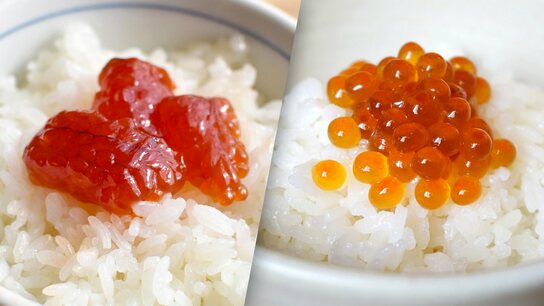
Autumn is prime season for salmon fishing, and with salmon come the red jewels of their roe. A look at the culinary delights of sujiko and ikura.
Awaiting the Salmon Run
Salmon born in the rivers across the Tōhoku and Hokkaidō regions of northern Japan head to sea and migrate for around three to five years, cycling between the Gulf of Alaska and the Bering Sea, before heading back to their natal rivers to spawn. Their return runs peak in September and October, making fall season a time when anglers eagerly wait along the coast for the salmon heading inland.
There is a particular delicacy associated with salmon that pairs wonderfully with rice—the roe of the female fish. These eggs are so highly prized that they are called “rubies of the sea.”
The whole roe sac is removed from a caught female salmon. While they remain enclosed within the sac membrane after removal, the eggs are called sujiko. It is once these eggs have been carefully separated from the membrane into individual little pearls that they become ikura.
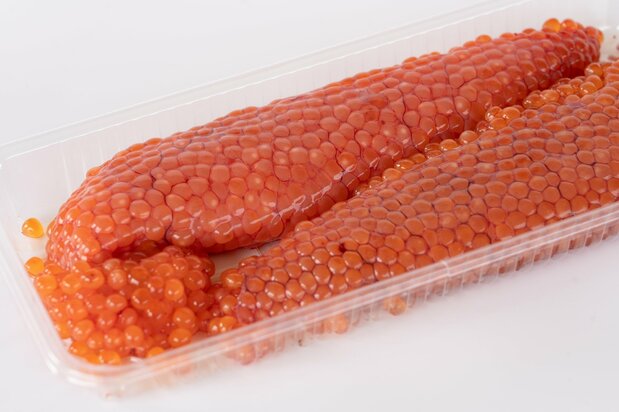
 Fresh sujiko, before being salt-cured. (© PhotoAC)
The sujiko generally available in stores comprises small eggs that have been harvested early in the season and then salt-cured. It has a characteristic moist stickiness. In some regions, rather than salting, sujiko is prepared by being marinated in miso or sake kasu (lees).
It is the perfect accompaniment to rice, as well as an exceptional dish to pair with sake.
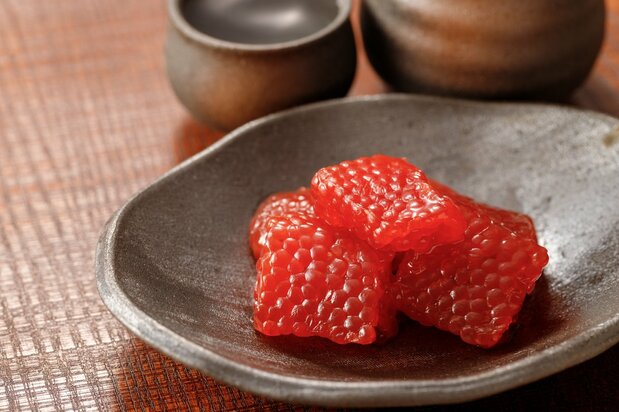 Salt-cured shio-sujiko. (© PhotoAC)
Ikura, meanwhile, are usually harvested when the salmon are closer to the spawning stage, as the eggs are larger. They are usually sold in stores marinated in a soy sauce-based liquid seasoning. What makes ikura especially delicious is the little pop they make as they burst in your mouth. Interestingly, the word ikura derives from the Russian for “fish roe” or “small grains.”
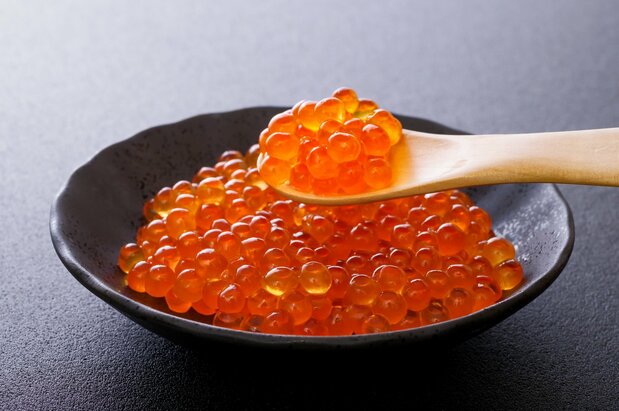 (© PhotoAC)
Below we introduce a few classic ways to enjoy salmon roe in Japanese cuisine.
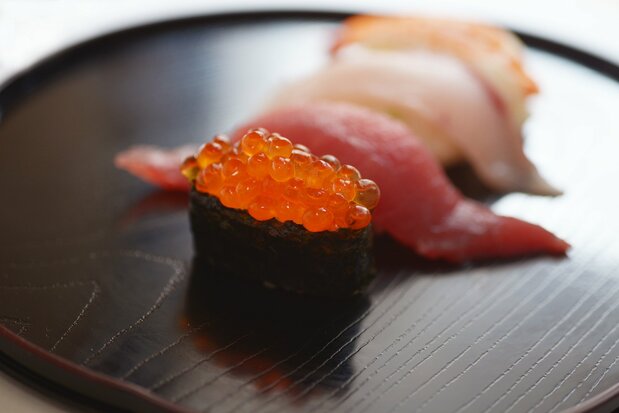
Gunkanmaki
The little pearls of ikura tend to roll around, so for this sushi, nori is wrapped (maki) around the nigiri rice and the ikura piled up in the center. Referred to as gunkan, or warships, these vessels are so loaded with flavor, you'll find yourself wanting to eat a whole fleet!
 (© Pixta)
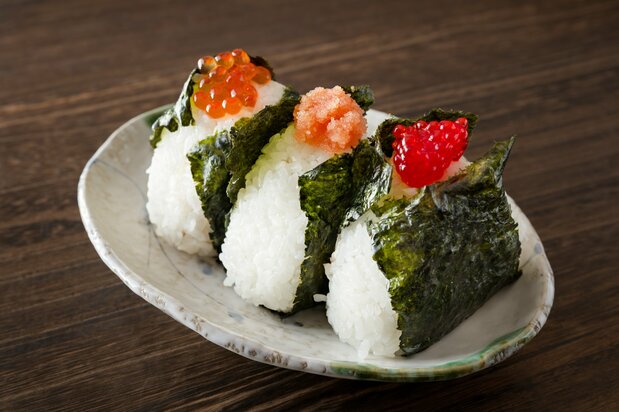
Onigiri
The onigiri rice ball on the left is topped with ikura, while the one on the right has sujiko. Even at specialty onigiri shops and convenience stores, they may be a little pricey, but lovely whenever you want a small treat.
 (© Pixta)
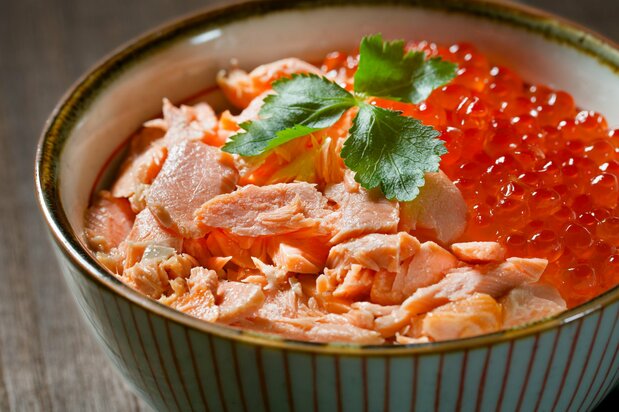
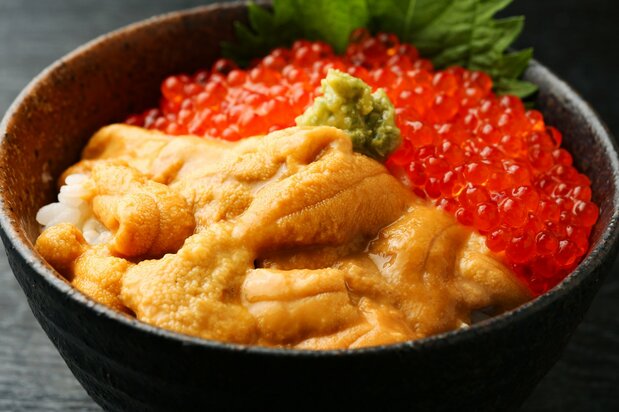
Sake Ikuradon and Uni Ikuradon
Ikura makes the perfect ingredient for these rice bowl dishes, featuring ample helpings of sake (salmon) or uni (sea urchin) along with ikura, completely concealing the rice and leaving you well satisfied.
 (© Pixta)
 (© Pixta)
Canapés
The glistening red of the ikura is an excellent way to add glamor to dishes. This includes appetizers like canapés, as well as the festive sushi dish chirashi-zushi and more.
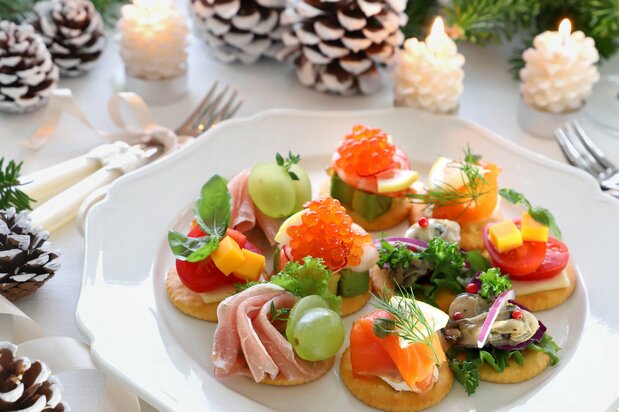 (© Pixta)
Homemade Ikura Shōyuzuke
In October and November, it is easy to find fresh sujiko in supermarkets. Place them in lukewarm salted water, and you’ll find it’s surprisingly easy to separate the eggs from the membrane. Then all you need to do is make a soy-sauce based marinade to your liking, skipping the additives and preservatives. It takes a bit of time and effort, but it’s well worth it for the unbeatable taste of home-prepared ikura.
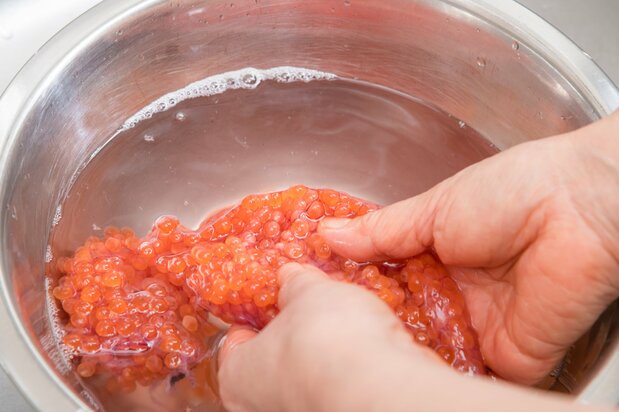 Breaking up the sujiko in lukewarm salted water. (© Pixta)
(Originally published in Japanese. Text by Ecraft. Banner photo © Photo AC.)