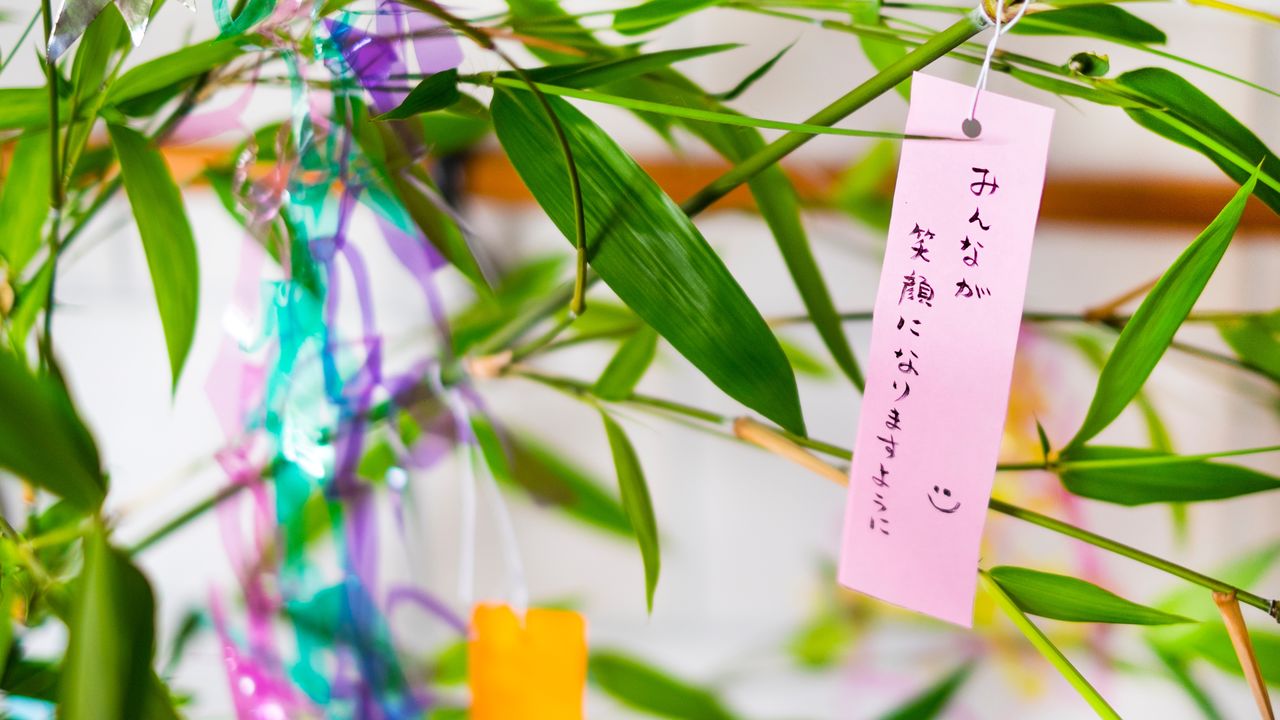
Tanabata: Japan’s Festival of Wishing on the Stars
Guide to Japan Culture Society- English
- 日本語
- 简体字
- 繁體字
- Français
- Español
- العربية
- Русский
Writing Wishes on Colorful Paper Strips
As July 7 approaches each year, bamboo branches decorated for Tanabata begin appearing at homes and in the streets of towns and cities across Japan. Colorful paper strips known as tanzaku bearing wishes for the future flutter in the summer breeze, creating one of Japan’s signature seasonal sights. During this time, many city halls, train stations, shopping malls, and other public spaces set up bamboo branches where anyone can write a wish on a paper strip and add it to the display.
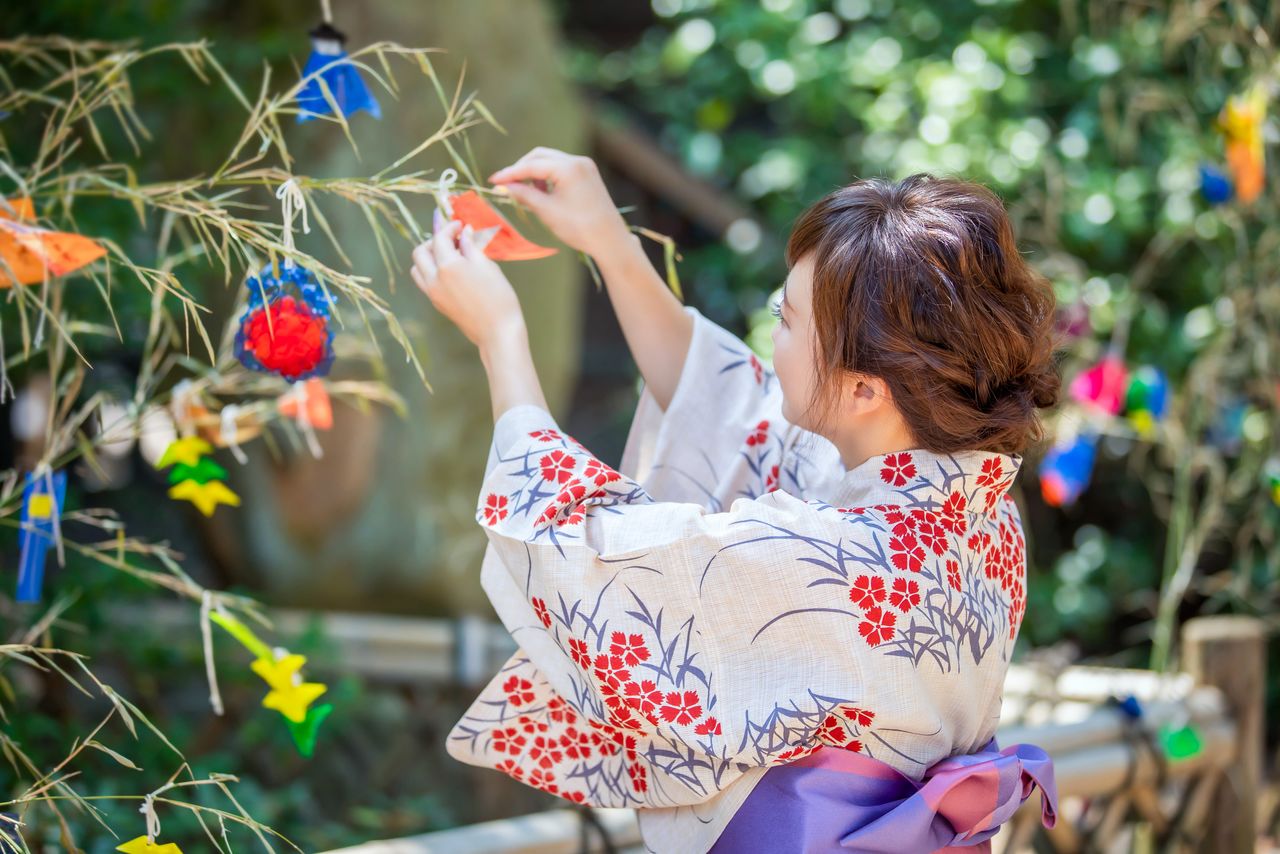
(© Adobestock)
Tanabata came to Japan from China and is one of the five sekku or seasonal festivals in the traditional calendar. In China, the star Vega in the constellation Lyra was long associated with silk farming and needlework. while the star Altair in the constellation Aquila was connected with farming.
A well-known legend developed around these two stars, which shine on opposite sides of the Milky Way. Orihime (Vega), the daughter of the Heavenly Emperor, was a gifted weaver, while Hikoboshi (Altair) was a hardworking cowherd. But as soon as they married, both began neglecting their work. This angered Orihime’s father and he separated them on each side of the Milky Way. According to the story, he allowed them to meet only once a year, on the condition that they worked diligently as before. In China, people prayed to become skilled at weaving and sewing by following Orihime’s example. After this custom reached Japan, it gradually changed into an event for wishing for improvement in the arts and calligraphy.
Sōmen noodles are also commonly served at Tanabata. One theory says that people eat them because the noodles resemble threads, expressing a wish to become as skilled at weaving as Orihime. Another theory holds that sōmen came to be eaten on Tanabata because wheat, the main ingredient, was traditionally believed to ward off poison.
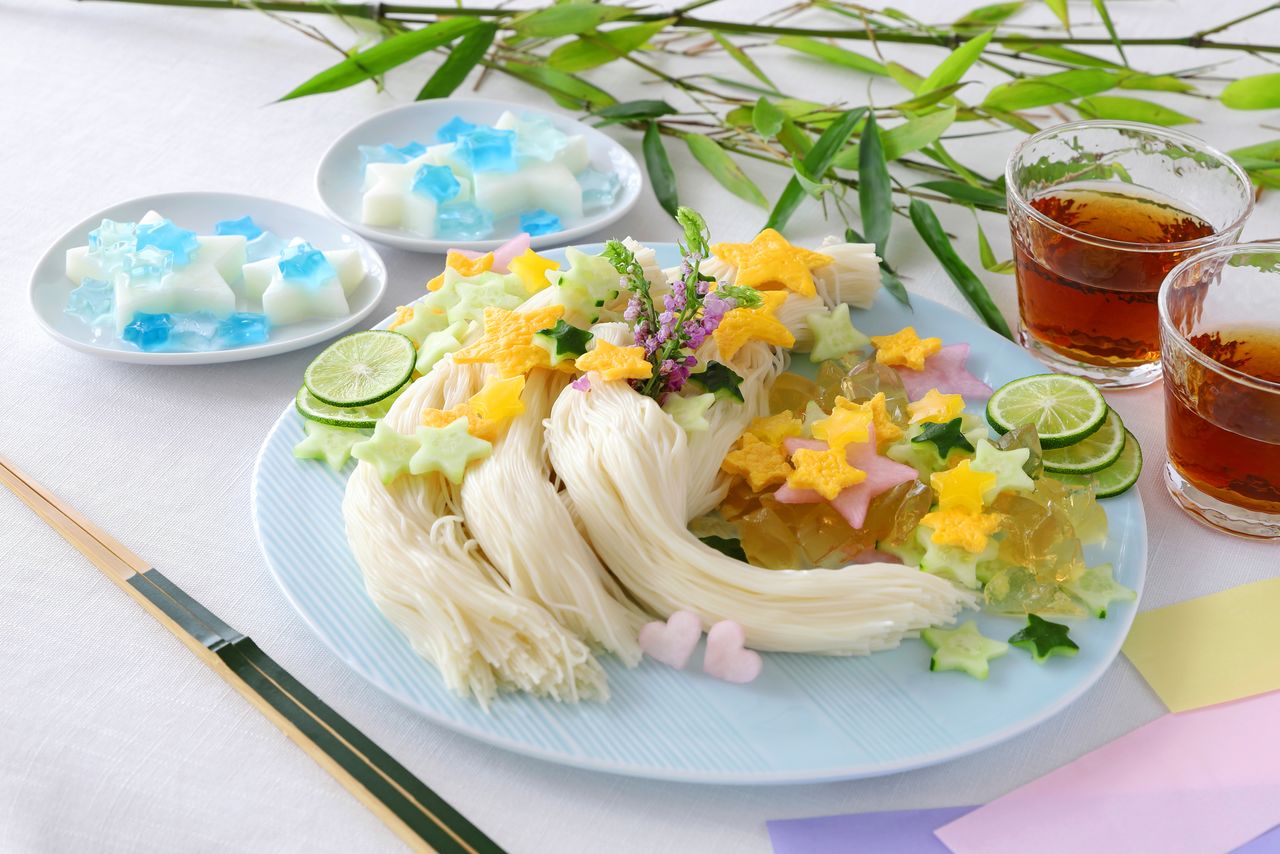
Tanabata sōmen served to resemble the Milky Way. (© Adobestock)
Tanabata became a widespread celebration among commoners during the Edo period (1603–1868). At terakoya temple schools across Japan, the new custom emerged of writing wishes on paper strips as part of handwriting practice and hanging them from bamboo branches. Bamboo has long been a familiar plant to the Japanese people. Because it grows with great vitality and stretches straight toward the heavens, people believed it would carry their wishes up to the sky.
Japan’s Three Great Tanabata Festivals
Tanabata is not only a time for individuals to pray to the stars. Large-scale festivals are also popular, filling entire towns with elaborate decorations such as giant streamers. The Sendai Tanabata Festival in Miyagi, the Shōnan Hiratsuka Tanabata Festival in Kanagawa, and the Anjō Tanabata Festival in Aichi are known as Japan’s three great Tanabata festivals. In recent years, some have included the Ichinomiya Tanabata Festival, also in Aichi, to make a list of four major Tanabata festivals. The Sendai and Anjō festivals are held in early August, bringing them closer to the traditional timing of Tanabata according to the former lunar calendar.
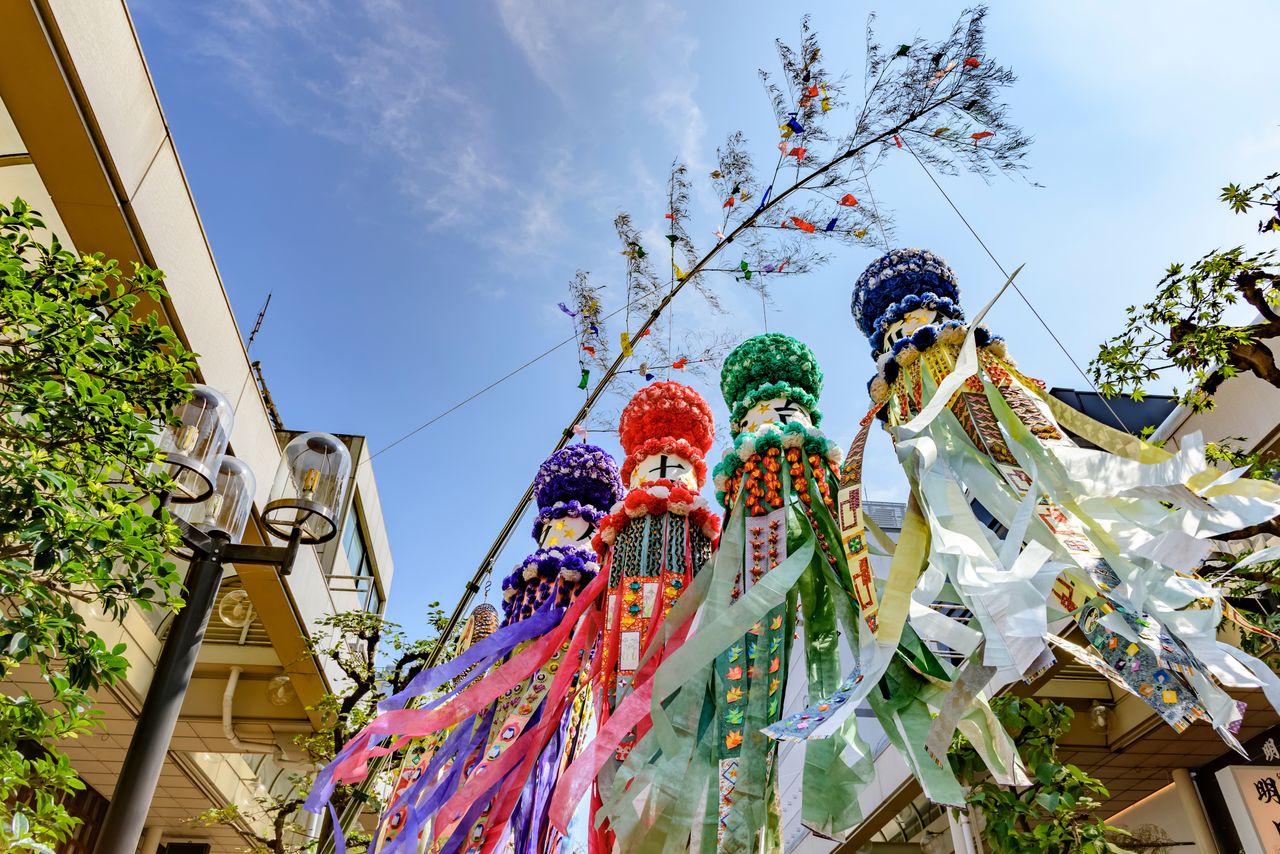
Sendai Tanabata Festival. (© Adobestock)
Data Sources
- FAQ: What Is Tanabata? (Japanese) from the National Astronomical Observatory of Japan.
- Tanabata: A Day for Sōmen (Japanese) from the Japan Federation of Dried Noodle Manufacturers Associations.
(Translated from Japanese. Banner photo: Tanabata decorations on bamboo branches. © Adobestock.)