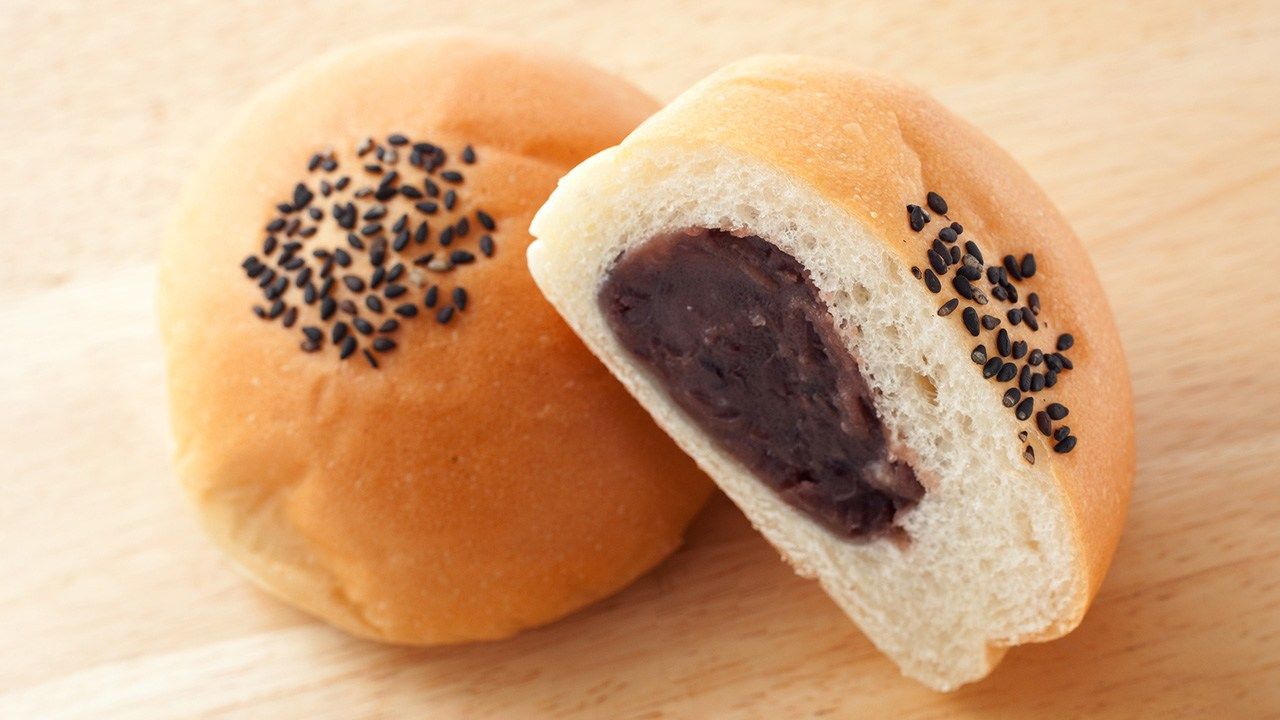
Anpan: Japan’s Classic Sweet Snack Bread
Guideto Japan
Food and Drink History- English
- 日本語
- 简体字
- 繁體字
- Français
- Español
- العربية
- Русский
A Former Samurai’s Invention
The popular Japanese snack anpan consists of a roll filled with an or sweet bean paste; with pan being the Japanese word for “bread.” It is commonly topped with sesame seeds.
Anpan was invented in 1874, when Western influences were reshaping Japan under the new Meiji government. A former samurai called Kimura Yasubei, who had opened a bakery called Kimuraya in Tokyo, took inspiration from traditional manjū confectionary and combined the familiar flavor of an with bread, which was then still a novelty. (Kimuraya remains a well-known Ginza bakery today.)
In 1875, anpan won imperial approval when Kimuraya presented the snack bread to Emperor Meiji for an April outing to view cherry blossoms, cementing the reputation of what was already a hit product.
The treat is now inextricably linked with the children’s hero Anpanman, whose head is made of anpan. He can offer up parts of his head to those in need, and get a new one baked by Jamu Ojisan (Uncle Jam).
(Originally written in English. Banner photo © Pixta.)