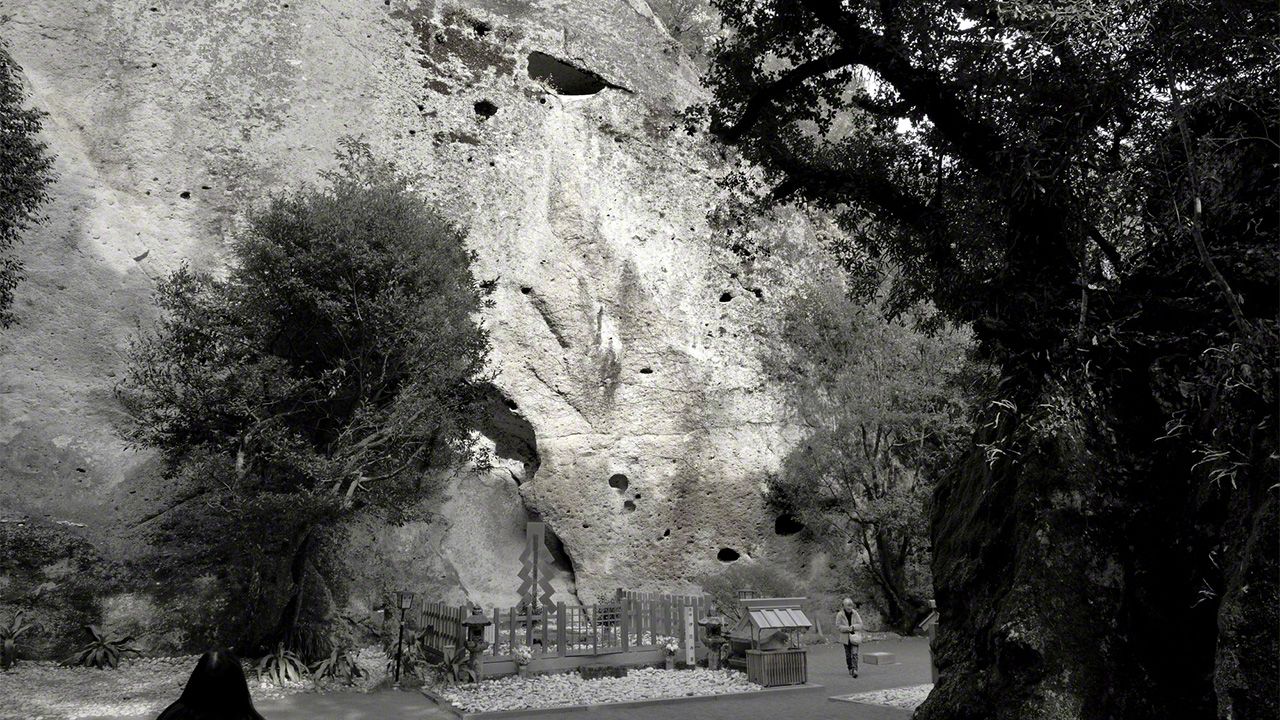
A Pilgrimage in Black and White
Hana no Iwaya: The Cave of Izanami, Japan’s Mother Creator
Guideto Japan
Images Culture- English
- 日本語
- 简体字
- 繁體字
- Français
- Español
- العربية
- Русский
The Site of Japan’s Creation Myth
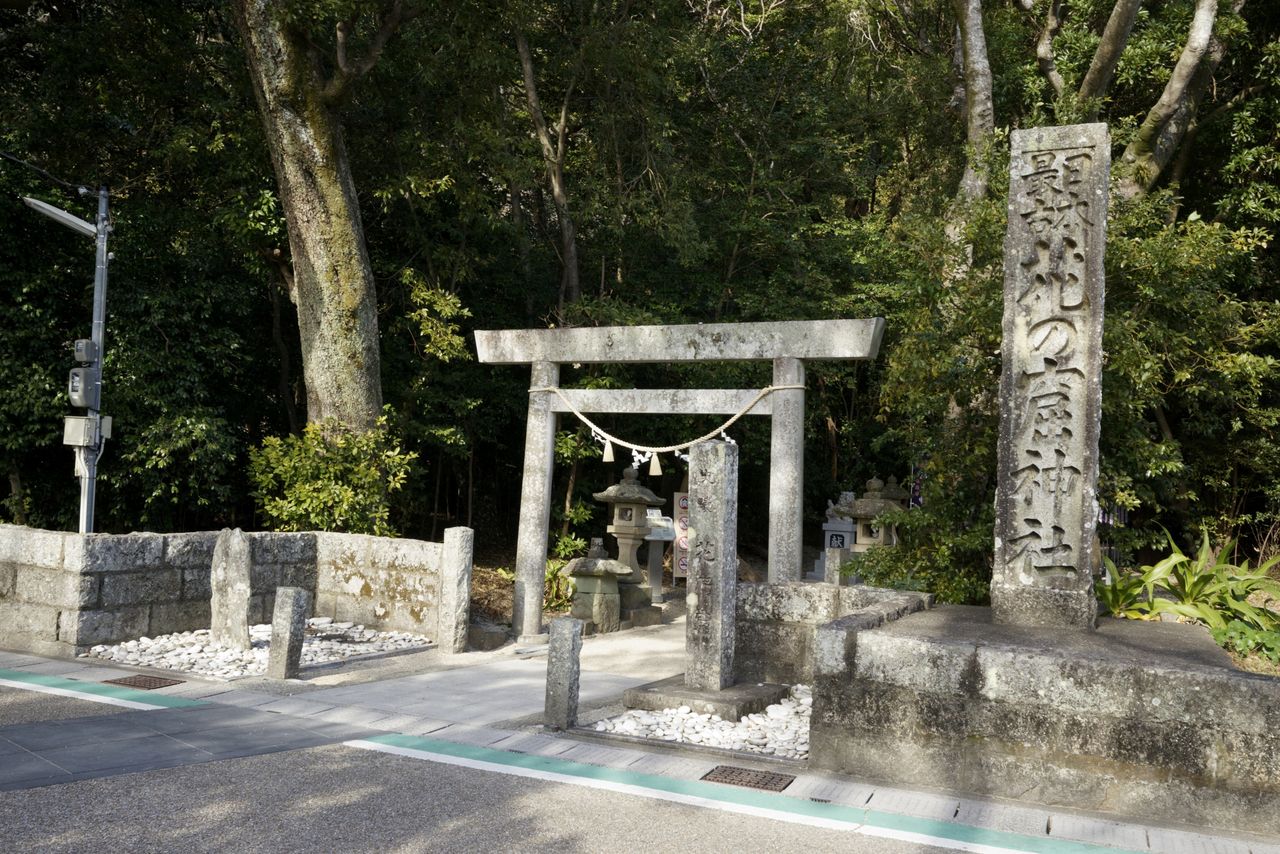
Counted among Japan’s oldest shrines, Hana no Iwaya (“flower cave”) stands along the Shichirimihama coast of the Kii Peninsula, facing the Pacific. Unlike most Shintō shrines, it has no hall of worship. Passing through the torii and following the path inward, one encounters a sheer stone wall rising 45 meters high. This cliff itself is the goshintai—the body of the deity—and worshippers offer prayers from an enclosure set before it.
The enshrined goddess, Izanami, is the primordial mother in Shinto mythology who, together with her consort Izanagi, created the islands of Japan and gave birth to countless deities. According to the Nihon Shoki, she died from burns sustained while birthing the fire god Kagutsuchi and was buried here. For that reason, Hana no Iwaya has long been regarded as a threshold to Yomi—the land of the dead.
Standing before the immense rock wall, one feels both its overwhelming physical presence and the quiet breath of an ancient spirit. Directly across from the worship area lies Ōji no Iwaya (“prince’s cave”), dedicated to Kagutsuchi—a layout that allows mother and child to remain side by side in eternal repose.
Looking up, a thick ceremonial rope stretches from the summit of the cliff to a sacred pine within the shrine grounds. Each February and October, the otsuna kake ritual is performed: a 170‑meter rope is extended from the peak to the sacred tree. Three woven banners—minagare no hata—are suspended from it, each adorned with flowers and fans. In earlier centuries, the imperial court sent brocade banners for this rite; when that practice ceased, local residents took on the responsibility of crafting them on their own. After the festival, the banners remain in place, swaying gently in the sea breeze.
Bare rock, the sound of Pacific waves, and the absence of ornamentation give Hana no Iwaya a stark, primordial beauty. Its unadorned landscape of prayer, unchanged since antiquity, evokes the very roots of Japanese forms of worship.
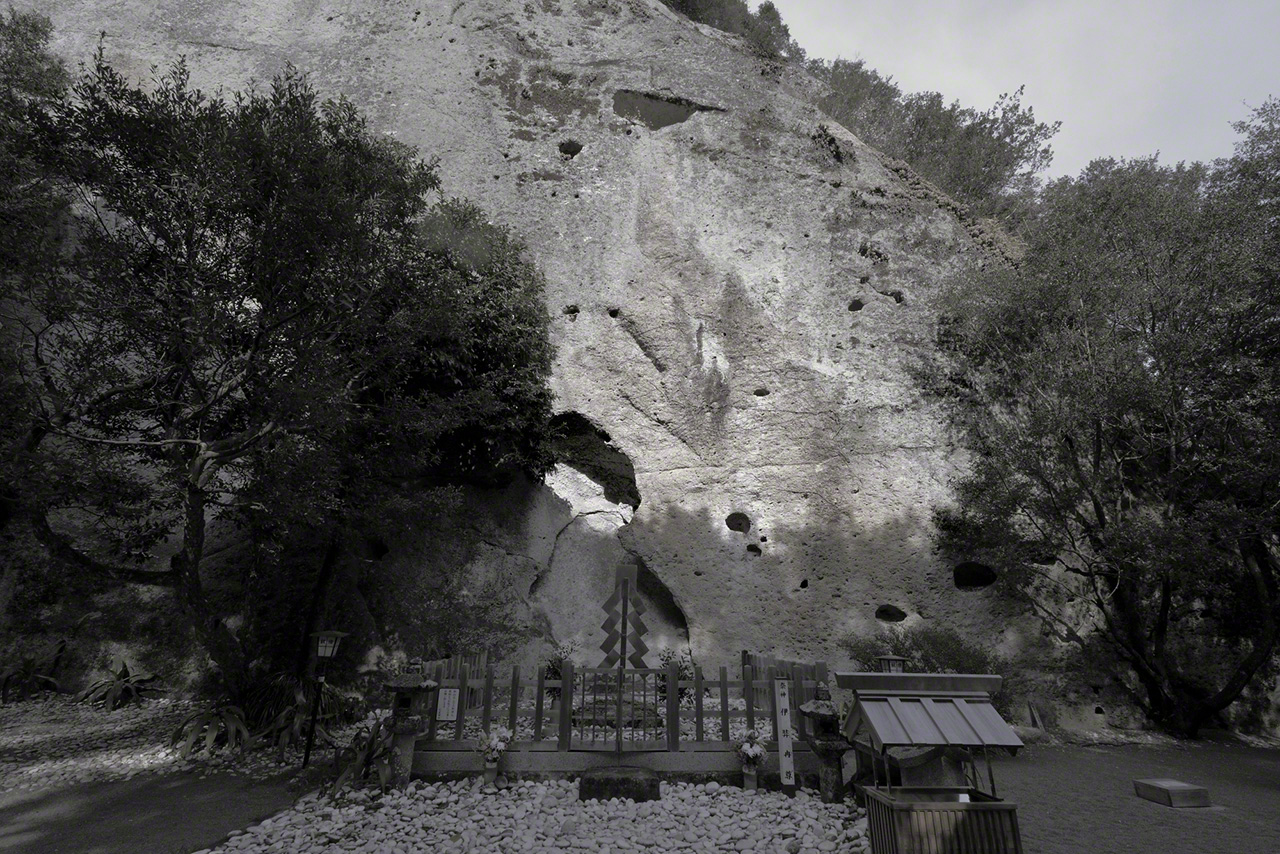
Visitors offer their prayers to the cliff from an area paved with white stones, evocative of ancient ritual sites. (© Ōsaka Hiroshi)
Hana no Iwaya Shrine
- Address: 130 Arima‑chō, Kumano, Mie Prefecture
- Deities enshrined: Izanami no Mikoto, Kagutsuchi no Mikoto
Situated along the ancient coastal route of southern Mie Prefecture, this venerable shrine is part of the UNESCO World Heritage Site “Sacred Sites and Pilgrimage Routes in the Kii Mountain Range.” Together with Kamikura Shrine in Kumano, it preserves the archaic tradition of worshipping a massive rock as the divine presence itself.
Izanami, who birthed the islands and deities of Japan and later ruled the realm of Yomi, is believed to be entombed here. People have long honored her with offerings of flowers and ritual banners.
Since ancient times, Kumano has been revered as a place where the souls of pilgrims undergo spiritual rebirth. Hana no Iwaya—shrouded in myth and anchored by its awe-inspiring natural formations—stands as a quintessential sanctuary of this sacred landscape of resurrection.
The shrine grounds are unadorned yet exude a powerful dignity. (© Ōsaka Hiroshi)
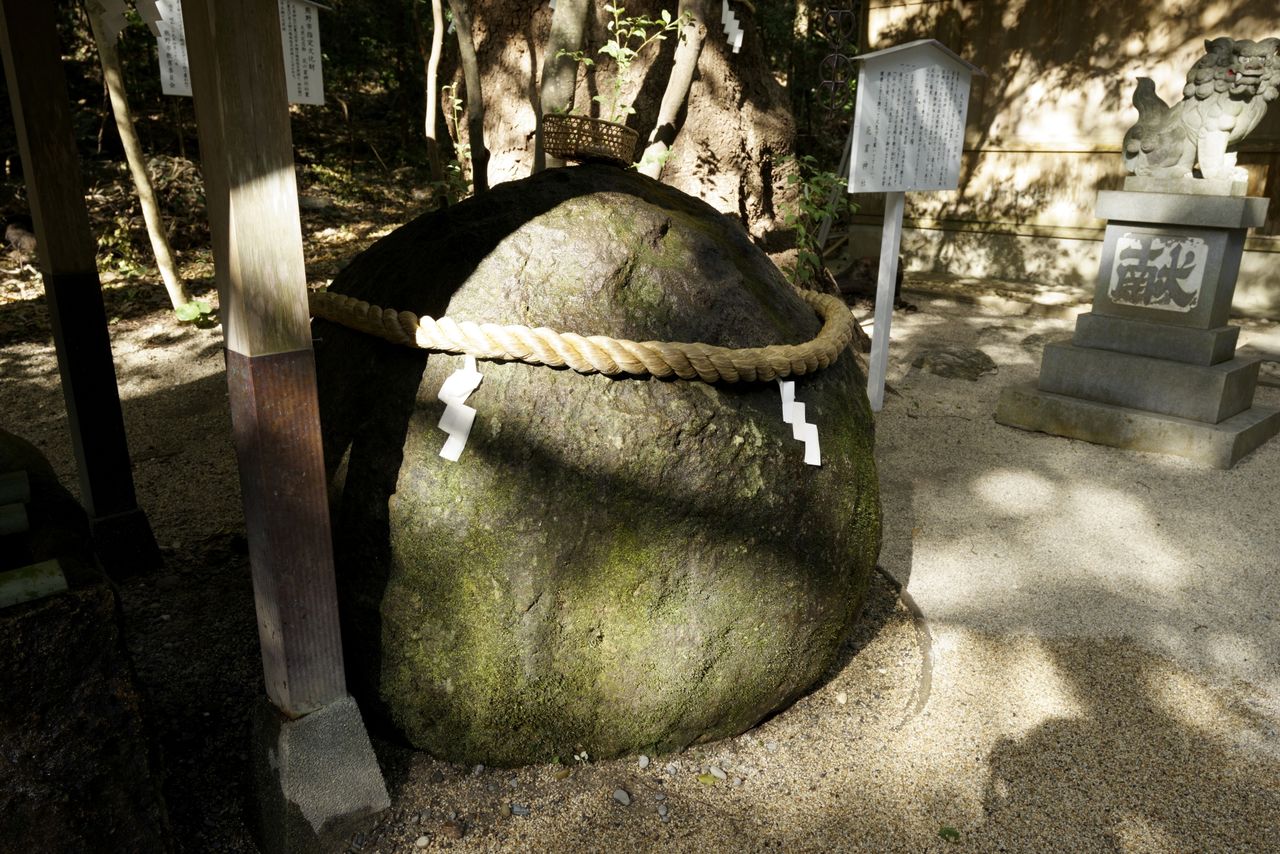
Round stones have long been believed to house divine spirits. This one is said to be the largest in the Kumano region. (© Ōsaka Hiroshi)
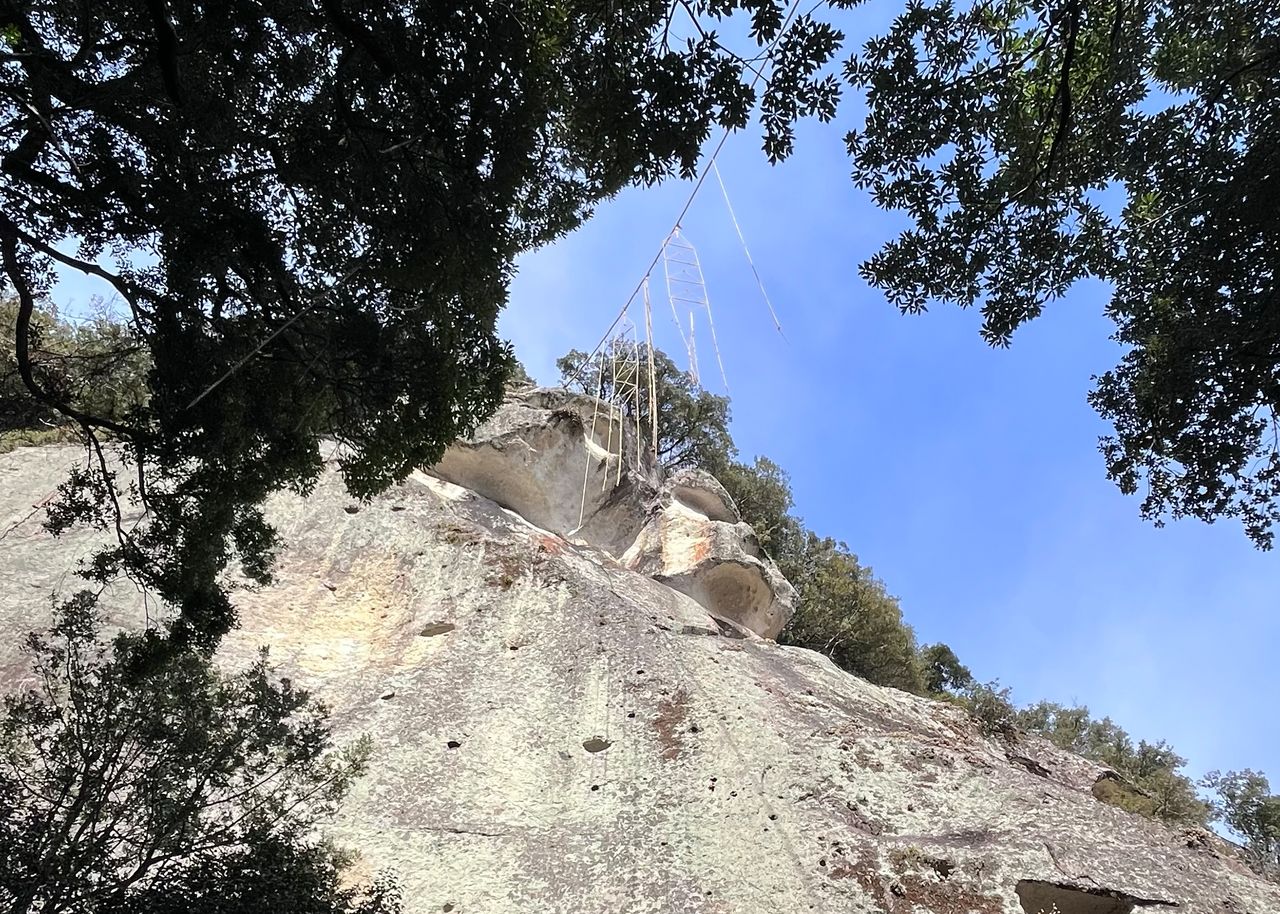
A rope stretches from the summit of the sacred rock to a pine tree in the precinct, bearing the minagare banners. (© Kitazaki Jirō)
(Originally published in Japanese. Text and editing by Kitazaki Jirō. Banner photo: The Hana no Iwaya cliff is worshipped as the sacred dwelling place of Izanami no Mikoto. © Ōsaka Hiroshi.)