A Pilgrimage in Black and White
Onigajō: A Demon’s Castle Standing Sentinel Over the Kumano Pilgrimage Routes
Guideto Japan
Culture- English
- 日本語
- 简体字
- 繁體字
- Français
- Español
- العربية
- Русский
The Lair of Marauding Demon Pirates
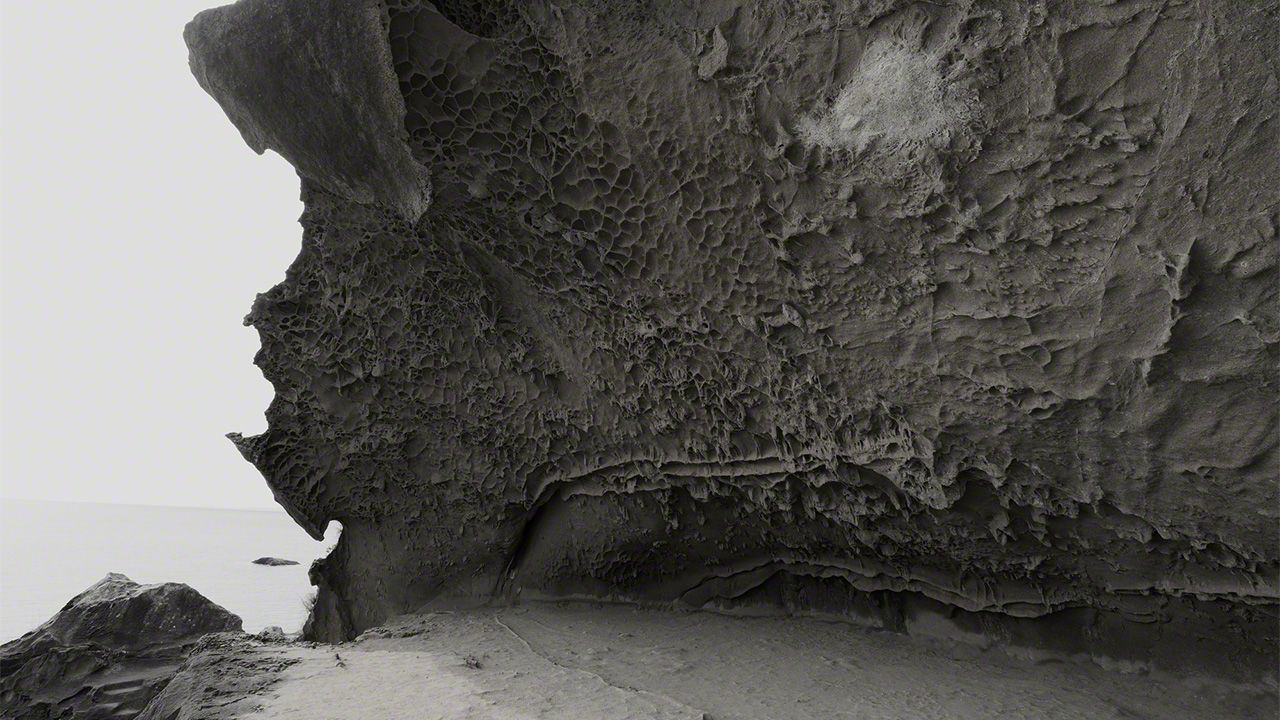
Located within Kumano in Mie Prefecture, Onigajō lies at the southern edge of the rias coastline that begins in the Ise-Shima region, a famous area of outstanding beauty. It consists of a series of massive tuff cliffs lined with sea caves of varying sizes carved out by the rough waves of the Pacific. There is something awe-inspiring and otherworldly about this striking landscape, shaped by the forces of nature. It is easy to imagine people in ancient times regarding a place like this with awe and reverence, and how legends and myths turned it into the dwelling place of demons and other supernatural creatures.
The sea caves are characterized by sharply pointed openings, honeycomb-like patterns on their walls and ceilings, and smooth, flat floors. The largest of them, Senjōjiki, is particularly impressive, with a vast cave formation divided into upper and lower sections.
Onigajō is associated with a legend of demon-slaying. During the reign of Emperor Kammu (781–806), a pirate named Tagamaru used the cave as his stronghold. Preying on ships on the seas around Kumano, he and his fellow marauders became feared as oni or demons. Ordered by the emperor to subdue the demon pirates, the warrior Sakanoue no Tamuramaro struggled in a series of battles in the rough seas of the region before finally succeeding in his mission. According to the legend, aided by a deity who appeared in the form of a young boy, he eventually slew Tagamaru with a bow and arrow. Tradition holds that Tagamaru’s severed head was buried at Ōma Shrine in Kumano.
A short distance south of Onigajō, on the Shichiri Mihama coast, stands a curious rock formation known as Shishi-iwa (“Lion Rock”), rising some 25 meters above the shoreline. It takes its name from its resemblance to a lion roaring out at the sea.
The Shishi-iwa is regarded as one of the koma-inu lion-dogs that guards Ōma Shrine, and its fearsome form seems to stand watch over the vengeful sprits of the pirates of the past. From mid-May to late June, just after sunrise, the lion appears to hold the rising sun in its mouth. This sight attracts large numbers of visitors from early morning at this time of year.
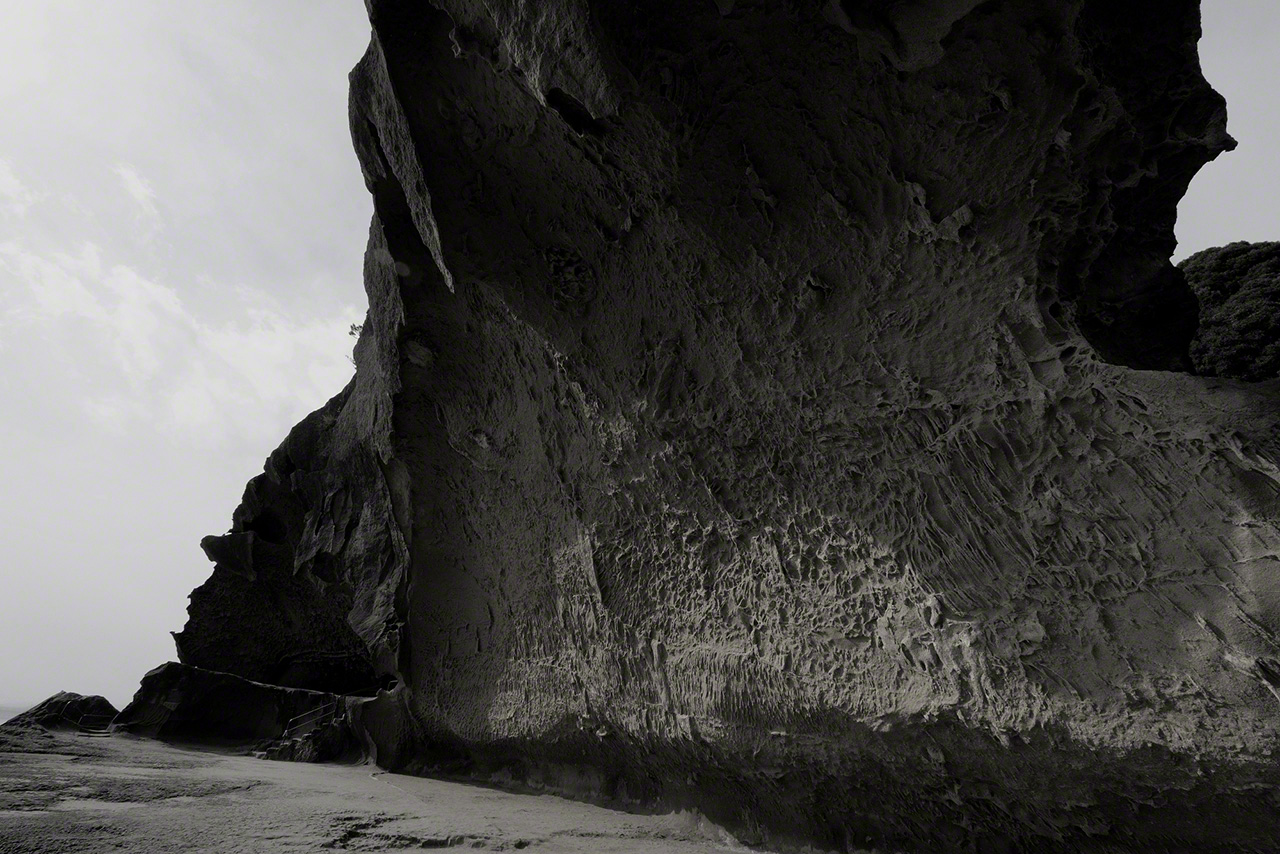
These vast caves were carved into the rock by tidal erosion. (© Ōsaka Hiroshi)
Onigajō
- Location: 1835–7 Kinomoto-chō, Kumano, Mie Prefecture
A dramatic stretch of rock formations jutting out into the surging waters of the Pacific. Since ancient times, the coastal tuff formations have been subject to earthquakes and shaped by weathering and tidal erosion, creating countless caves in a series of terraces along the coast. The largest of them, Senjōjiki, covers some 1,500 square meters and is said to have been the Oni no Iwaya or Demon’s Cave that was used as the stronghold of pirates until they were defeated by Sakanoue no Tamuramaro. On the summit, enclosed by steep rock walls, the remains of a sixteenth-century fortress can still be seen. This fortification is believed to have given rise to the name Onigajō (Demon’s Castle). About 1.5 kilometers to the west-southwest stands another giant rock formation known as Shishi-iwa (“Lion rock”), resembling one of a pair of komainu lion dogs that guard the entrances to Shintō shrines. (This one is said to guard the nearby Ōma Shrine.)
Situated along the route linking Ise and Kumano, Onigajō and Shishi-iwa were already notable scenic sights mentioned in pilgrimage guidebooks in the Edo Period (1603–1868). In 2004 they were included as part of the UNESCO World Heritage Site “Sacred Sites and Pilgrimage Routes in the Kii Mountain Range.” Although there is no clear evidence that these rock formations were ever objects of religious devotion themselves, their awe-inspiring natural beauty continue to captivate pilgrims and travelers to this day.
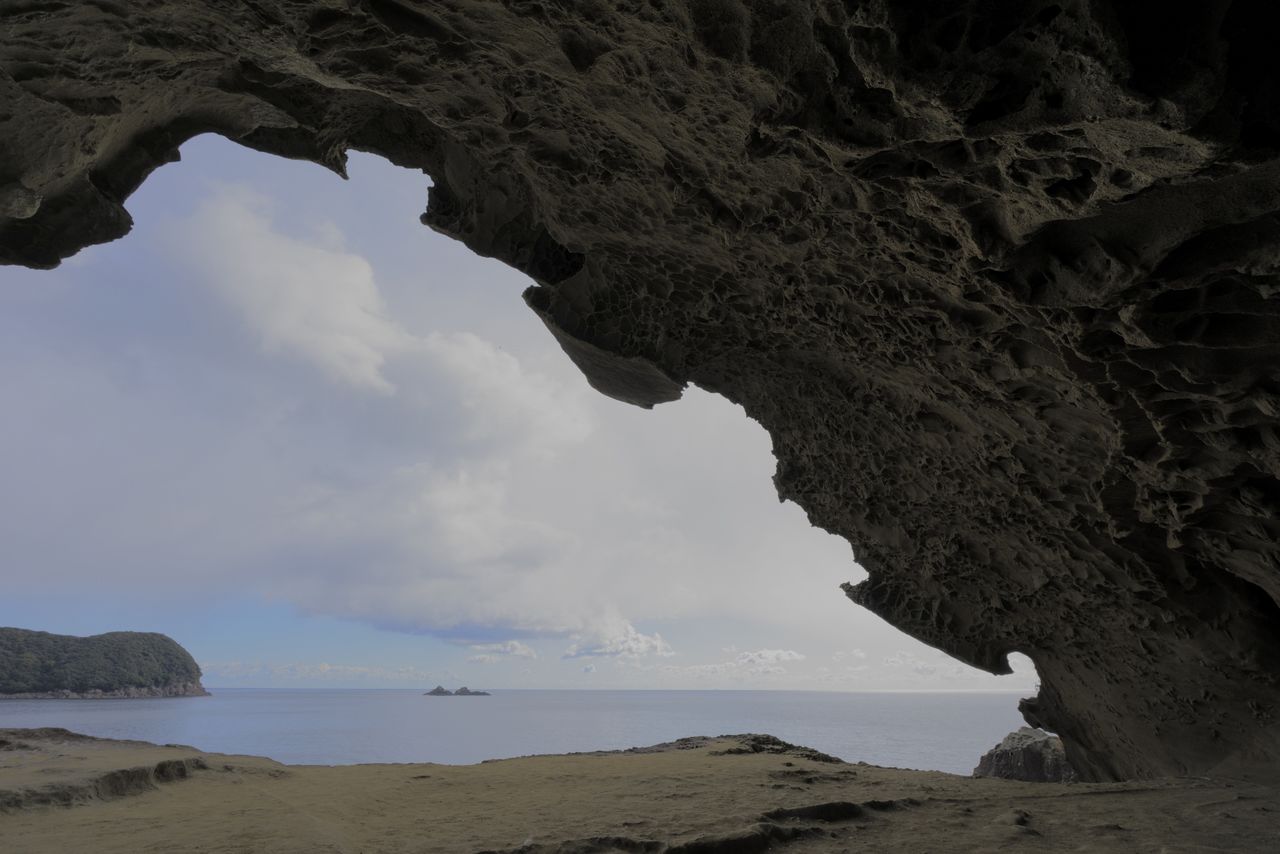
The Senjōjiki cave was reputedly once the abode of demons. (© Ōsaka Hiroshi)
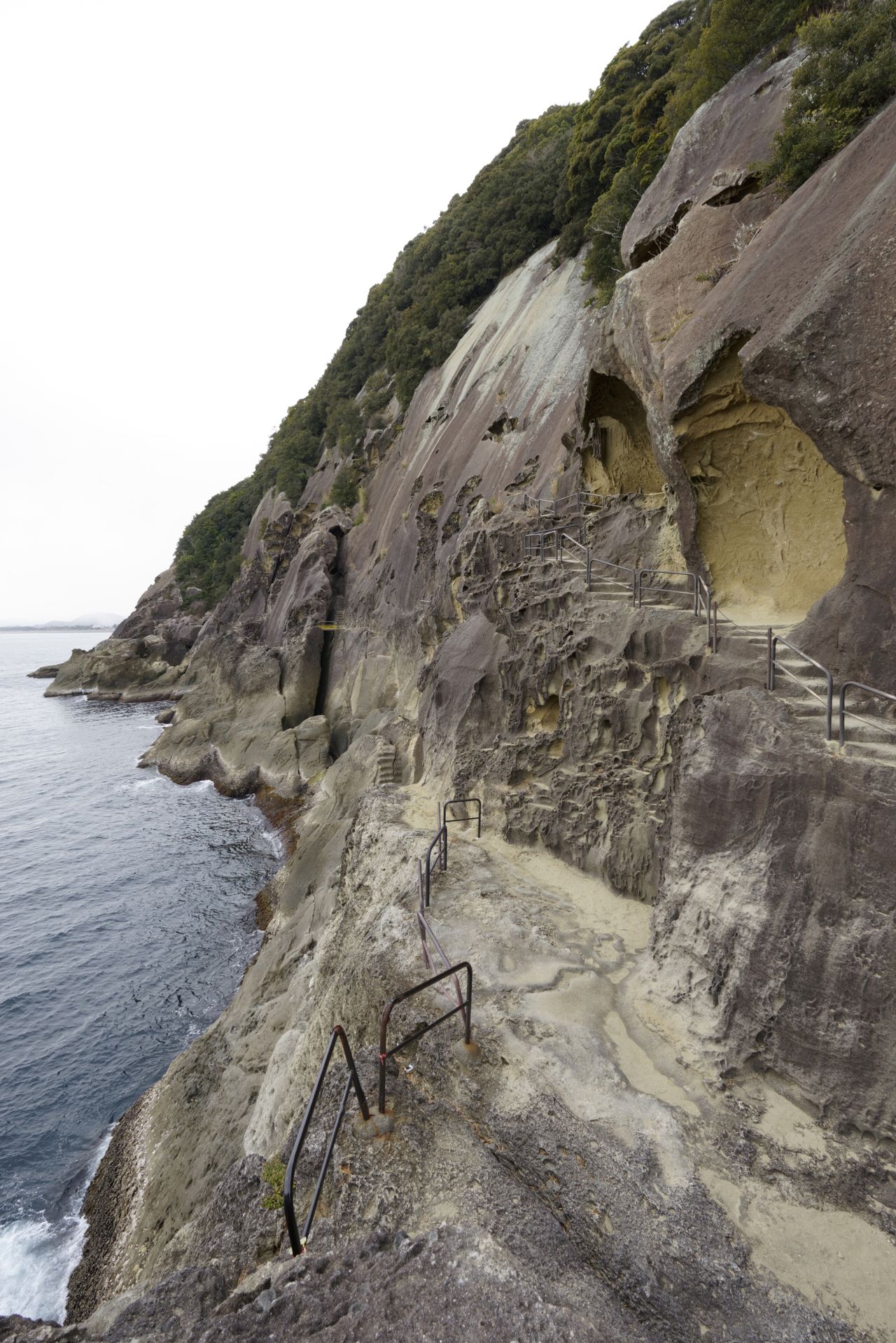
The footpath from the west of the Senjōjiki Cave traverses a steep and narrow stretch of rugged coastline, where waves pound against the bottom of the rocky cliff. (© Ōsaka Hiroshi)
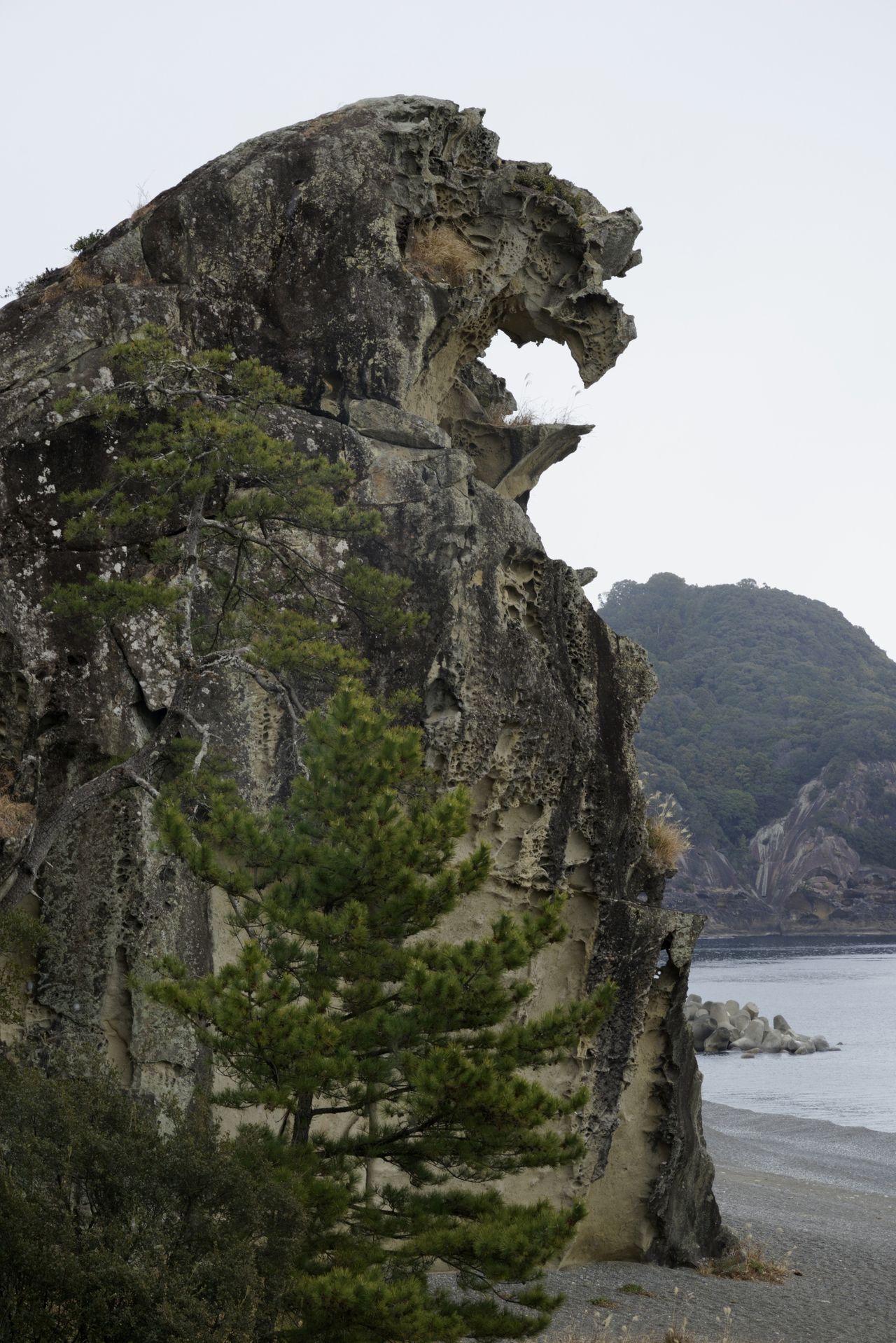
The Shishi-iwa with the Onigajō in the background. This rock formation resembles a lion roaring out at the waves. (© Ōsaka Hiroshi)
(Originally published in Japanese. Text and editing by Kitazaki Jirō. Banner photo: Senjōjiki, the largest of the Onigajō caves. © Ōsaka Hiroshi.)