When Are Japan’s National Holidays?
Guideto Japan
Society Culture- English
- 日本語
- 简体字
- 繁體字
- Français
- Español
- العربية
- Русский
Sixteen Days Each Year
Japan currently has 16 national holidays each year, as established under the Act on National Holidays.
- January 1 New Year’s Day
- Second Monday in January Coming of Age Day
- February 11 National Foundation Day
- February 23 Emperor’s Birthday
- March 20 or 21 Vernal Equinox Day
- April 29 Shōwa Day
- May 3 Constitution Memorial Day
- May 4 Greenery Day
- May 5 Children’s Day
- Third Monday in July Marine Day
- August 11 Mountain Day
- Third Monday in September Respect for the Aged Day
- September 22 or 23 Autumnal Equinox Day
- Second Monday in October Sports Day
- November 3 Culture Day
- November 23 Labor Thanksgiving Day
Holidays Without Fixed Dates
Most holidays, such as New Year’s Day and National Foundation Day, fall on fixed dates and do not change from year to year. However, there are some exceptions.
For example, four holidays are observed on a particular Monday of a given month rather than on fixed calendar dates, although these holidays originally fell on specific dates. Coming of Age Day, for instance, used to be celebrated on January 15, but is now on the second Monday. The holidays were moved under a legal reform known as the Happy Monday system, which was introduced to create more three-day weekends and encourage travel and leisure activities.
Japan also has the holidays Vernal Equinox Day and Autumnal Equinox Day, whose dates are determined by astronomical calculations.
Extra Holidays
There are also cases where days not covered above become holidays. One example is a “substitute holiday.” When a national holiday falls on a Sunday, the next non-holiday weekday becomes a substitute holiday instead. Under law, holidays are defined as days for the nation to celebrate, express gratitude, or commemorate important occasions, but there is no sense of occasion if they take place on a Sunday, when most people are usually not working anyway. As a result, substitute holidays most often fall on Mondays.
There are exceptions to this rule, however. For example, because May 3 through 5 are three consecutive national holidays, if either May 3 or May 4 falls on a Sunday, the substitute holiday is pushed to May 6, meaning it may fall on a Tuesday or Wednesday instead.
In addition, Japan has a rule that a weekday sandwiched between two national holidays becomes a holiday. This occurs irregularly and, under the current system, only happens in September. For instance, if Respect for the Aged Day falls on Monday, September 21, and Autumnal Equinox Day falls on Wednesday, September 23, then Tuesday, September 22 automatically becomes a holiday as well.

Japan’s system of national holidays was first formally established in 1948 with the enactment of the Act on National Holidays. At the time, there were only 9 national holidays. Through subsequent revisions, however, new holidays were added, names were changed, and dates were moved, resulting in the current total of 16 national holidays. Holidays that were later added or renamed include Respect for the Aged Day, which honors senior citizens and celebrates longevity; Shōwa Day, which commemorates the Shōwa era, a period associated with Japan’s postwar recovery and rapid economic growth; and Marine Day and Mountain Day, which encourage appreciation for the blessings of nature.
Data Sources
- National holidays (Japanese) from the Cabinet Office.
- Act on National Holidays from the Ministry of Justice.
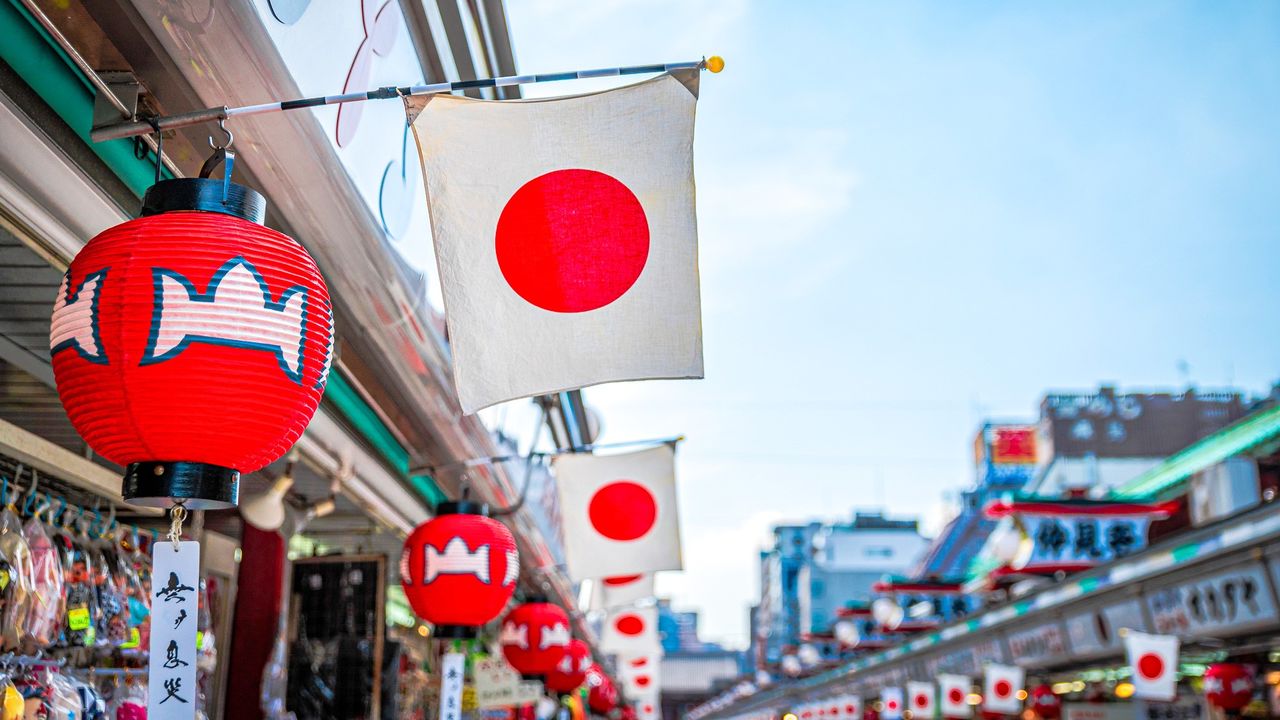
(Translated from Japanese. Banner photo: Businesses sometimes display Japanese flags on national holidays. © Pixta.)