Ten Exceptional Utensils from Kappabashi, Japan’s Kitchen
Pots Galore: Donabe and Yukihira Offering Quick Ways to Cook Every Day
Culture Guide to Japan Food and Drink- English
- 日本語
- 简体字
- 繁體字
- Français
- Español
- العربية
- Русский
Retains Heat, Cooks Quickly
“They show me photos, saying they want this kind of pot. It must have been really delicious,” says Iida Yūta, the sixth-generation owner of Iidaya. What overseas tourists are showing him on their smartphones are the evening meals they have enjoyed while in Japan, and the item they are seeking? A donabe earthenware pot.
Although best used on an open flame, like a gas stovetop, donabe that are compatible with induction heating are also available.
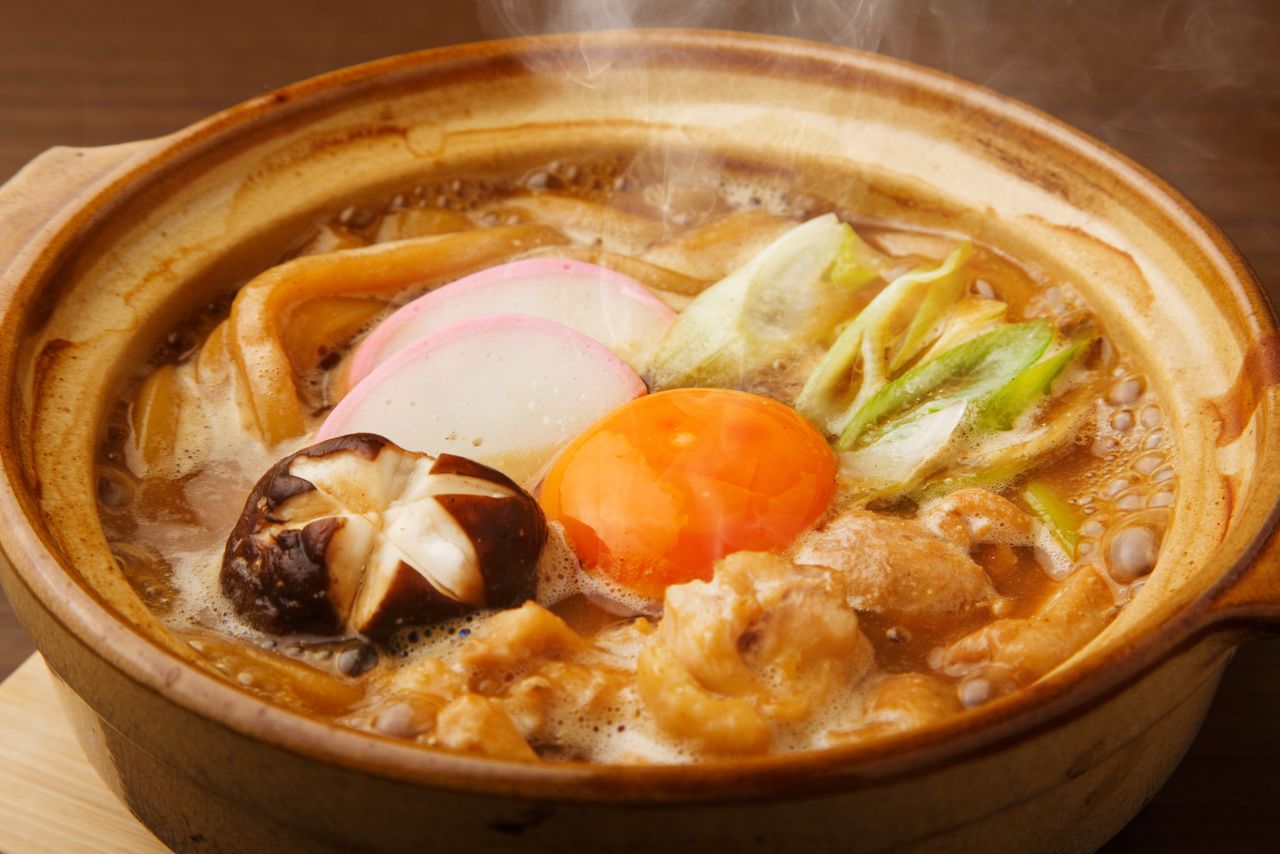
The donabe earthenware pot for one or two people is a best-seller. Once the food is cooked, the whole pot can be placed straight on the table, acting as a serving dish. (© Pixta)
Among the types of earthenware used for these pots, Bankoyaki and Igayaki from Mie Prefecture, along with Shigarakiyaki from Shiga Prefecture are highly regarded. With a donabe, the ingredients heat slowly, meaning they cook all the way through. This type of pot is special due to its exceptional heat retention, so even after being removed from the stove, the food stays piping hot for a long time. A donabe also adds charm to the dining table.
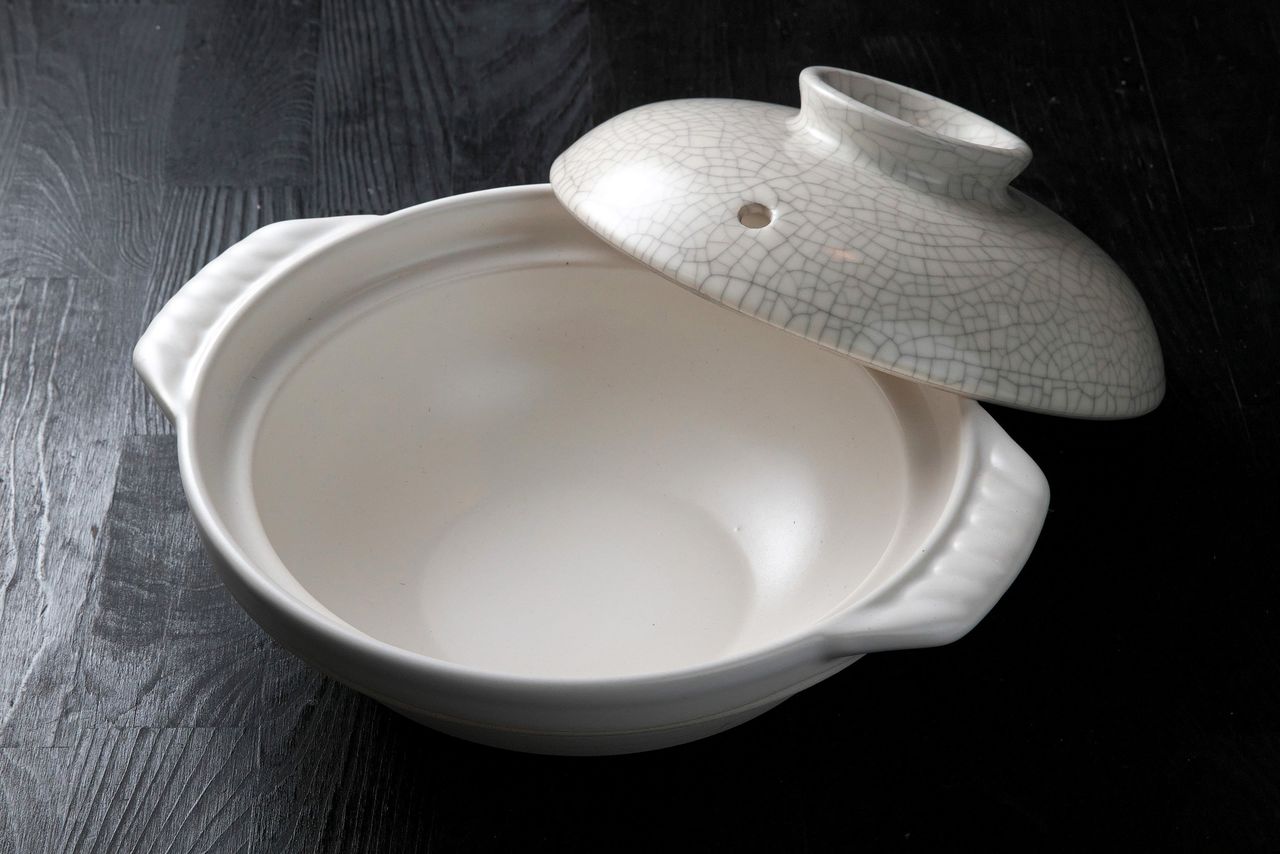
Sumi ink is applied and soaked into the crackled exterior glaze to highlight the pattern. (© Nomura Kazuyuki)
When cooking rice, a specifically designed thick-walled donabe is recommended, rather than a standard donabe. The temperature rises slowly, while retaining heat for a long time after boiling, so rice can be ready in minutes. “This takes ten minutes to cook and ten minutes to steam. It’s extremely quick and rice cooked in a donabe definitely tastes better,” Iida explains.
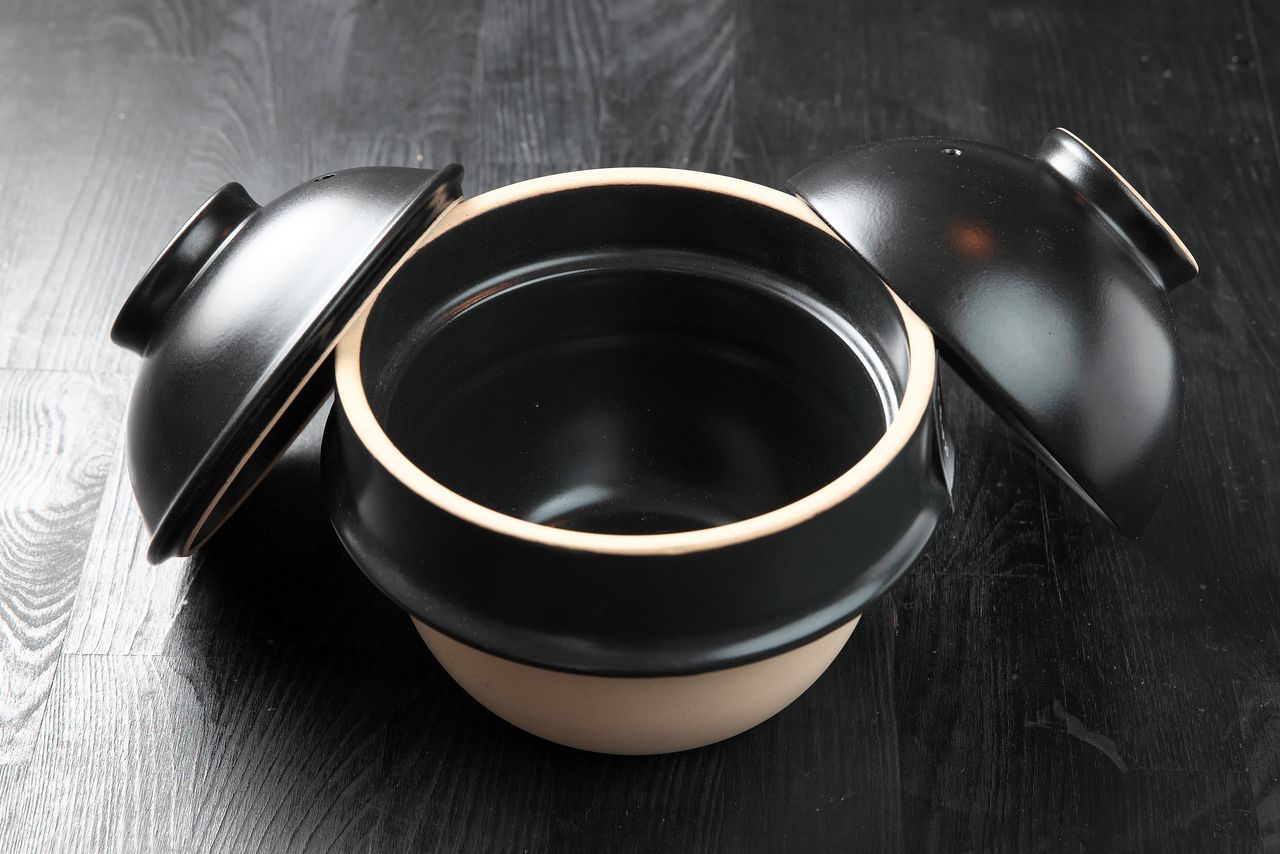
A donabe designed for cooking rice. Its rounded shape enhances heat convection and it includes an inner lid for further heat and moisture retention. (© Nomura Kazuyuki)
All-Purpose and Frequently Used
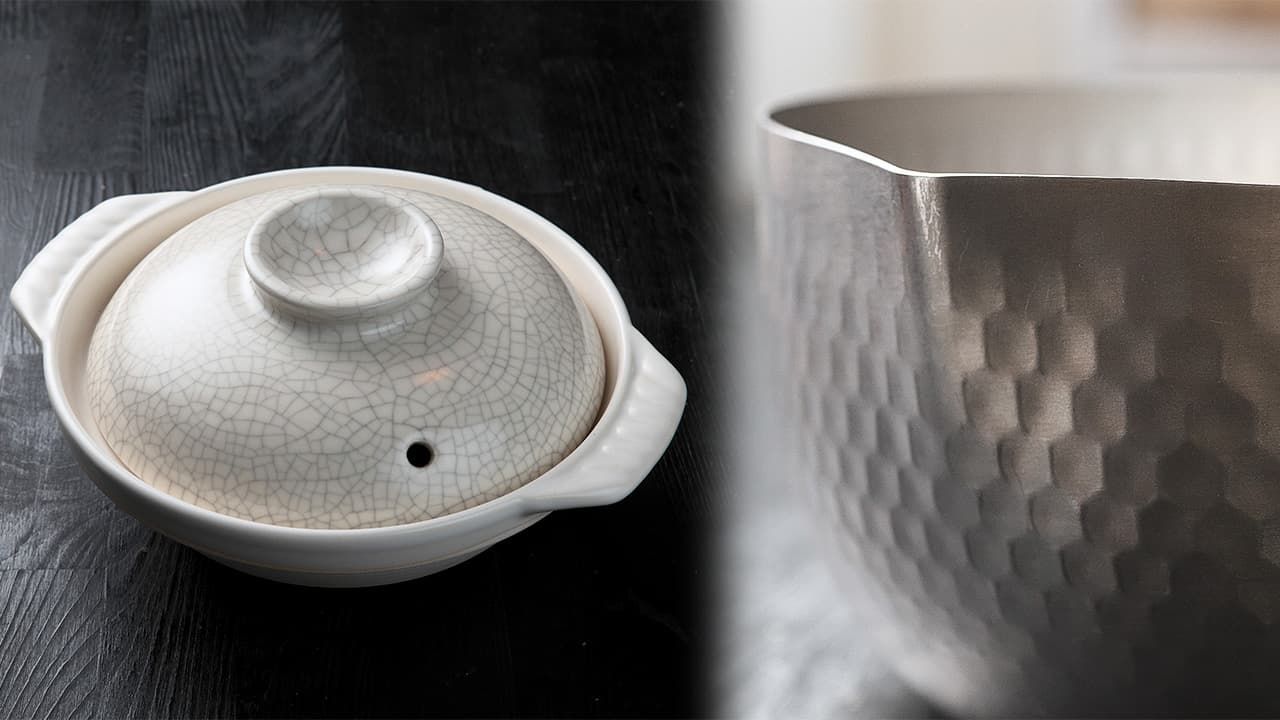
A yukihira pan is a type of lightweight single-handled saucepan with spouts on either side for pouring. While the sides of saucepans and stewpots used overseas rise up straight, the sides of a yukihira pan widen outward from a rounded base. This design creates convection and lets moisture evaporate more easily, so is perfect for simmering. What makes this pan so distinctive is its tsuchime dimpled surface, marks created by repeated hammering. As Iida points out, “Hammering metal strengthens it, increasing its durability. Another advantage is the dimples increase the surface area, which improves heat conductivity.”
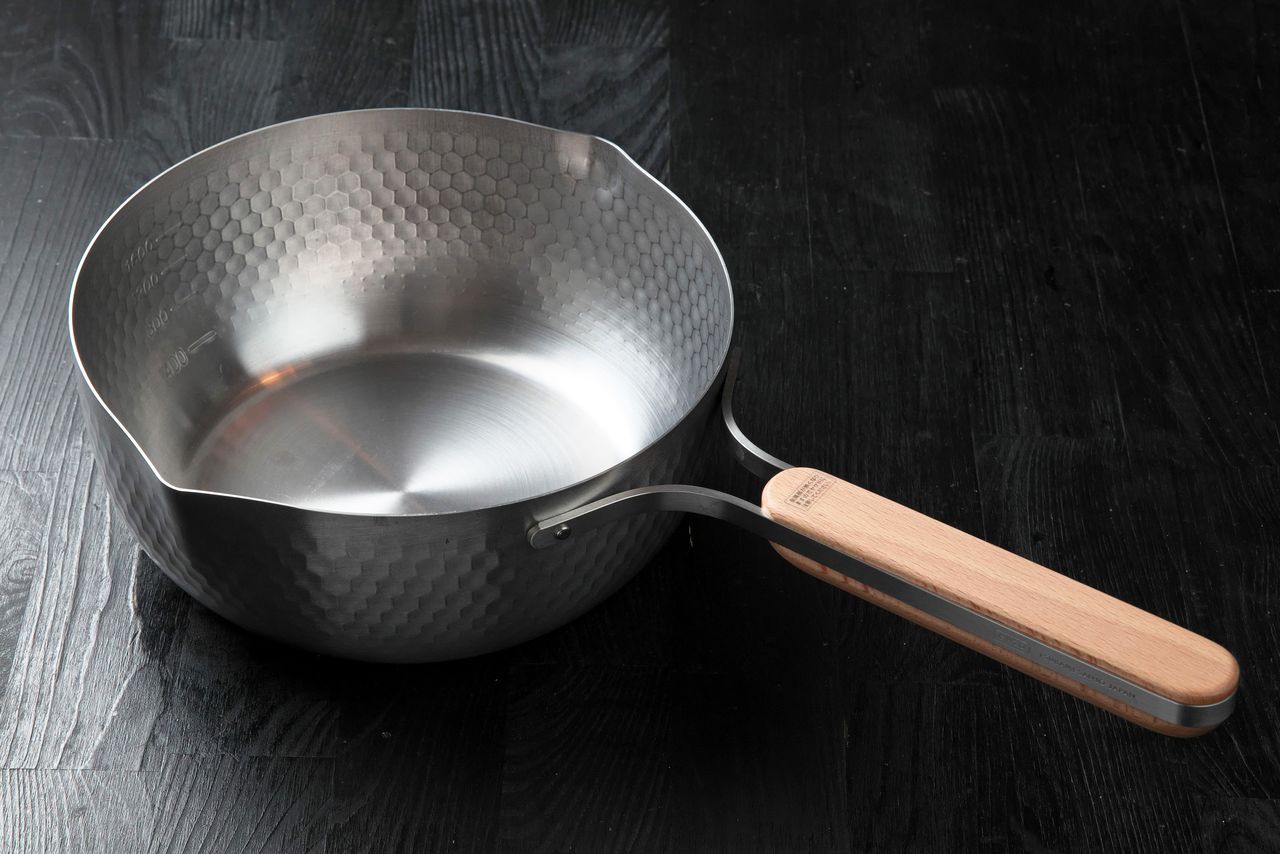
A stainless steel yukihira pan. It is made in the Tsubame-Sanjō region of Niigata, an area renowned for its high-quality metalwork. (© Nomura Kazuyuki)
Yukihira pans made from copper or aluminum have higher heat conductivity, so food can be cooked even quicker. Stainless steel ones are also popular as they are easy to clean. They can be used to boil vegetables, as well as make ramen and miso soup, so they are possibly the most used pan in the Japanese kitchen.
Ten Utensils Sought by Overseas Visitors
- Oroshigane: Traditional Japanese Graters for Every Ingredient on Your Plate
- Suribachi and Surikogi: Function Meets Beauty to Create the Perfect Texture
- Onigiri Molds and Sushi Roll Mats for Beautifully Formed Japanese Cuisine in a Flash
- Japan’s Cutting Edge: Peelers, Slicers, and Scissors
- Tea Kettles and Strainers: Traditional Items with Surprising New Uses
- Pots Galore: Donabe and Yukihira Offering Quick Ways to Cook Every Day
- Frying Pans: Weighing the Choices Between Lifetime Use and Lightweight Cooking Action
- Bentō Essentials: From Tamagoyaki Pans to Nonslip Chopsticks
- Japanese Cutting Boards for the Kitchen and Table
- Innovative and Easy: Soy Sauce Dispensers and Miso Muddlers

(Originally published in Japanese. Reporting and text by Nippon.com. Banner photo: A donabe earthenware pot and yukihira pan with a tsuchime dimpled surface. © Nomura Kazuyuki.)