Ten Exceptional Utensils from Kappabashi, Japan’s Kitchen
Japan’s Cutting Edge: Peelers, Slicers, and Scissors
Culture Guide to Japan Food and Drink- English
- 日本語
- 简体字
- 繁體字
- Français
- Español
- العربية
- Русский
Developed with the Customer in Mind
The sole function of a kitchen peeler may be to peel thin strips off of an ingredient, but customers can find around 100 different types stocked at Iidaya, a cooking goods emporium in the shopping district of Kappabashi, Tokyo.
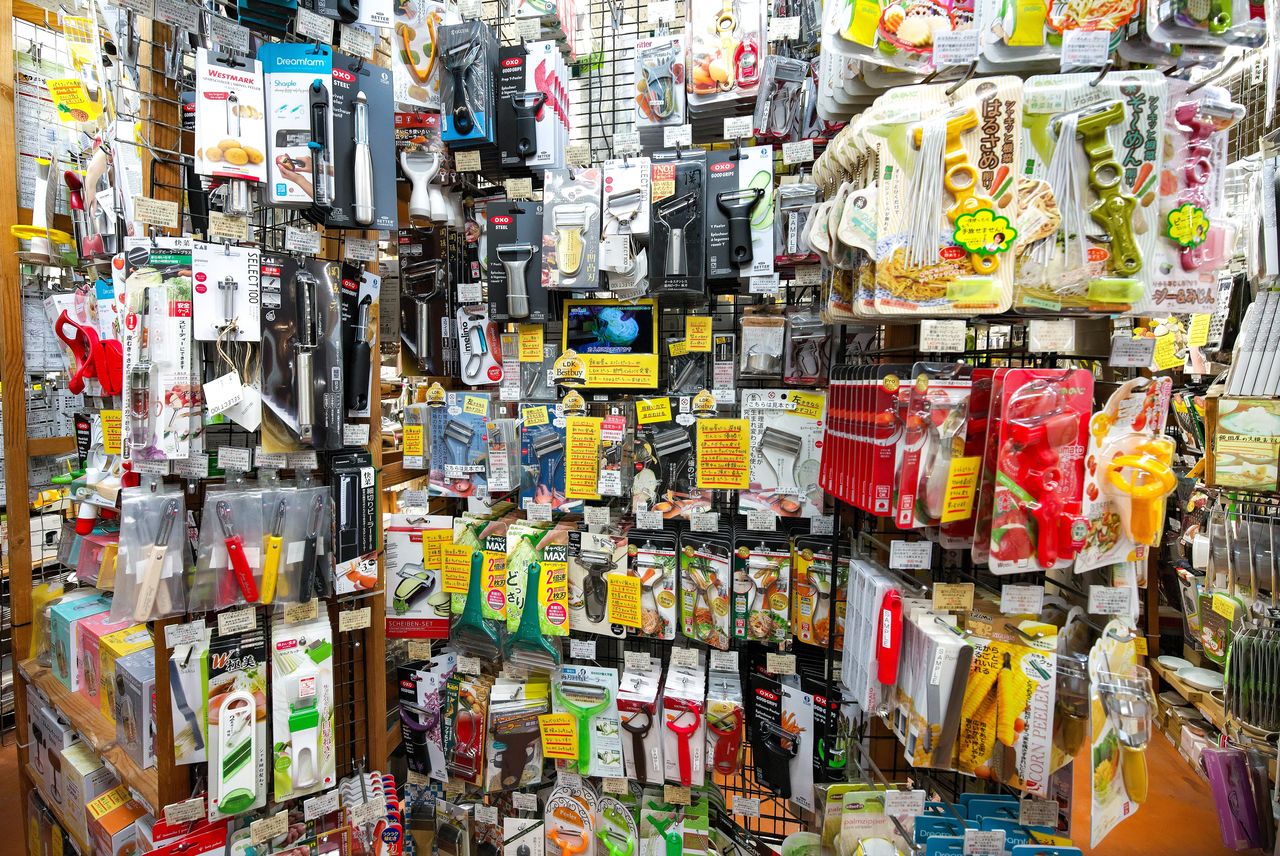
The peeler section at Iidaya. (© Nomura Kazuyuki)
Despite the huge variety already on his shelves, Iida Yūta, the sixth-generation owner of Iidaya, developed one of his own. His decision was based on a request from a customer who had limited range of hand motion due to rheumatoid arthritis, and was seeking a product that “is easier to hold and that peels with minimal effort.” He tested out more than 200 types, but none met his expectations. Iida realized that “the angle of the handle and the blade are key,” so with the support of a manufacturer, he carried out research and created prototypes, changing the angles one degree at a time.
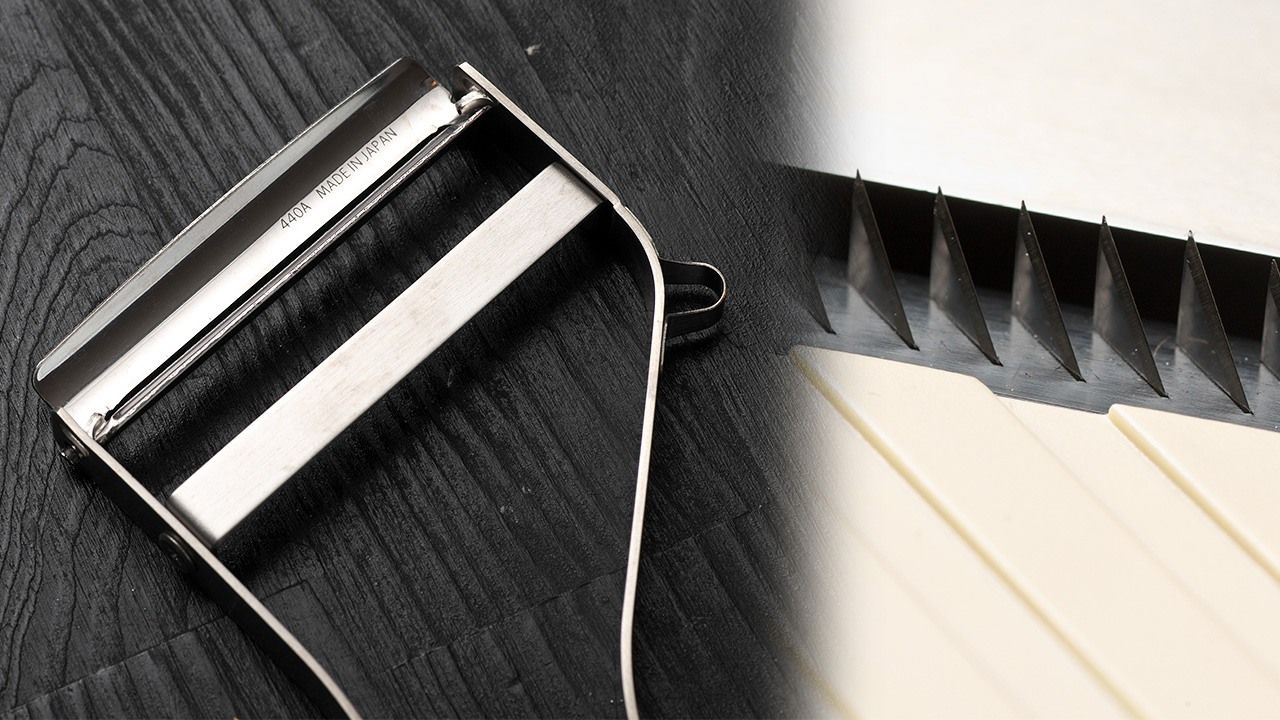
After five years, he succeeded in developing a peeler that can remove skin with just the lightest of strokes. Everything, including the mold used to manufacture the final product, is made in Japan. Made completely from stainless steel and with replacement blades available, the product was intended from the start to be used for an indefinitely long period. Iida named it the Ever Peeler.
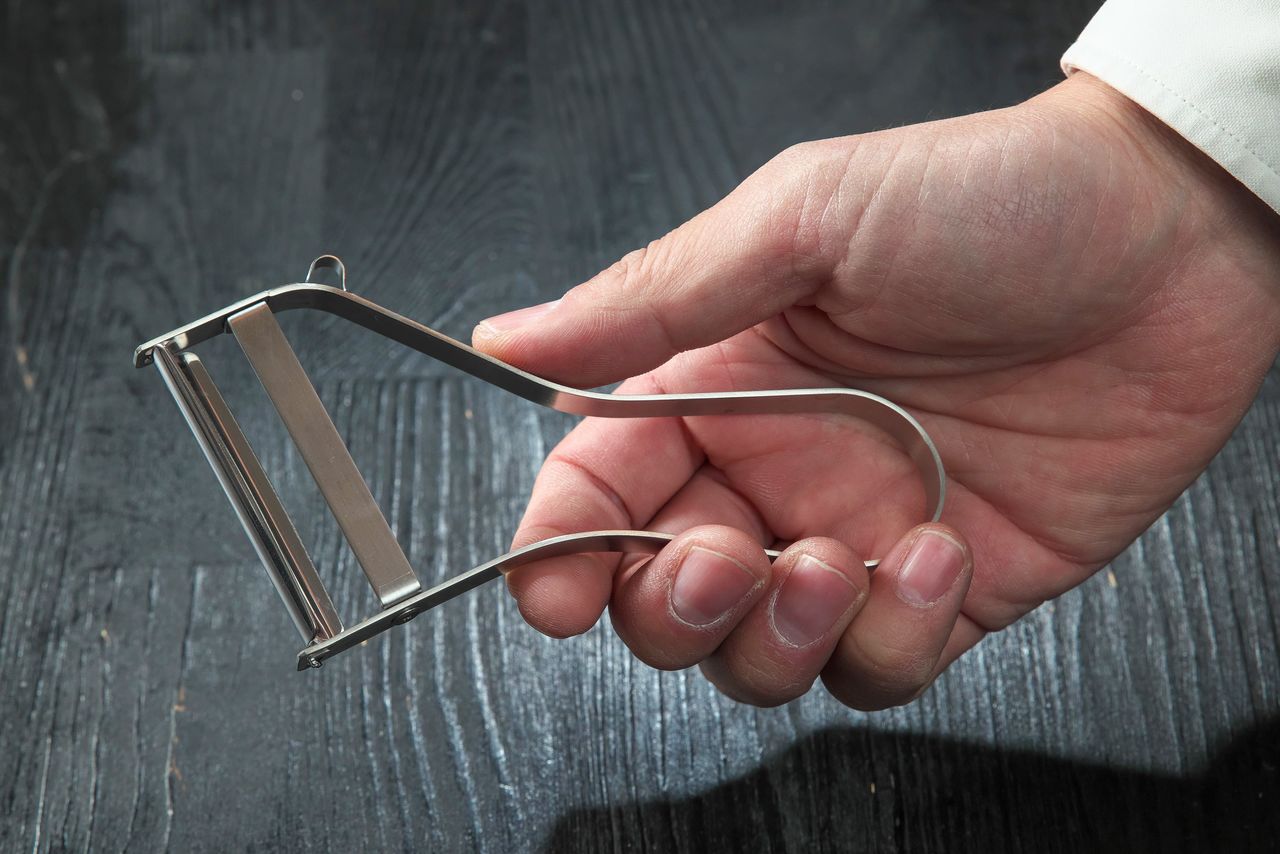
A 30-degree angle was found to be best. (© Nomura Kazuyuki)
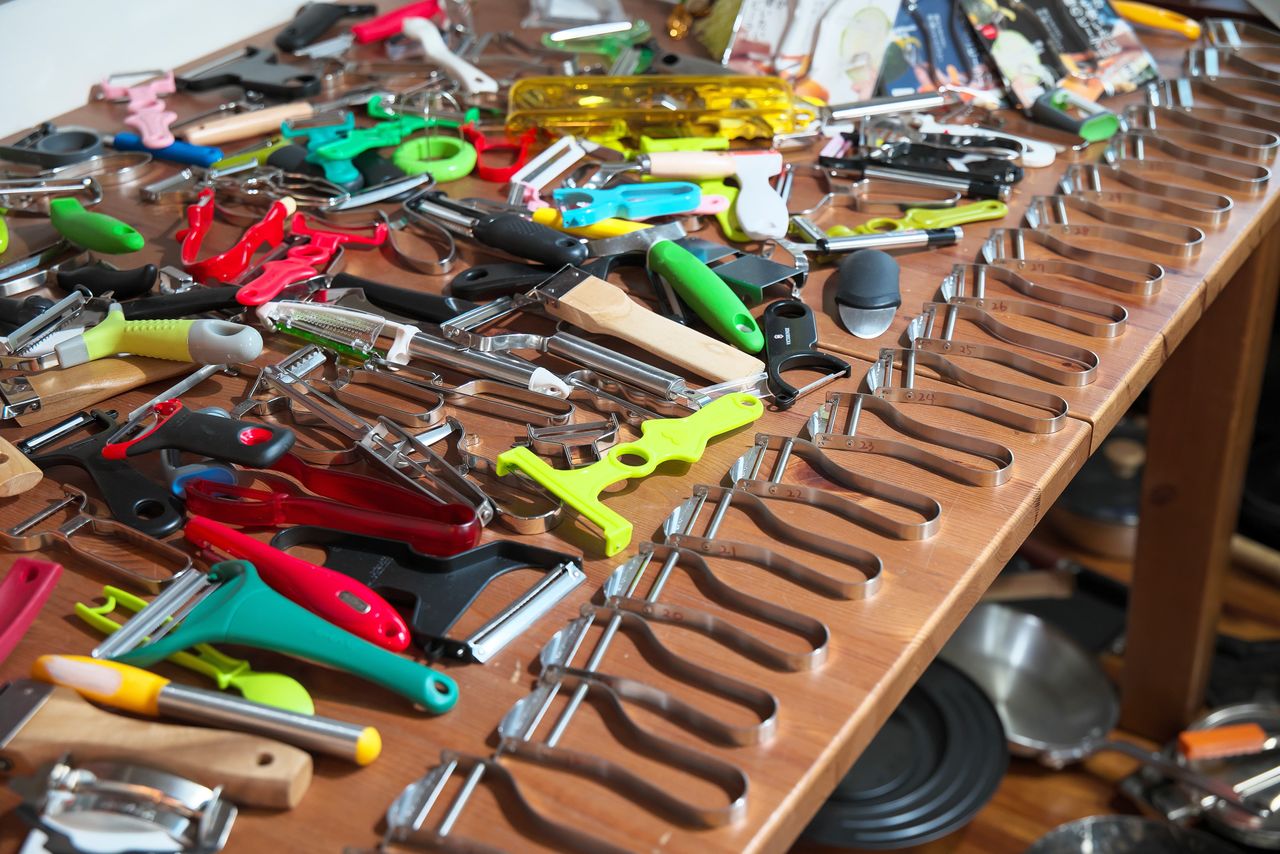
The mountain of peelers Iida ordered for development purposes. (© Nomura Kazuyuki)
The Ever Peeler went on sale in winter 2019 and became a huge hit. It began to feature on television programs and won a Good Design Award. When this news reached overseas, visitors to Japan started specifically asking for it by name.
Its sharpness and durability are unsurpassed. “The other day, we received some great feedback from a food processing company, who said ‘even after peeling 30,000 thick-skinned satsumaimo (sweet potato), around 6.5 tons in all, it still peels well. We bought replacement blades, but when do we need to change them?’”
The manufacturer that produced this peeler is based in Seki, Gifu Prefecture, a town famed as a traditional center for swordsmiths. The firm also makes kitchen scissors, another of Iidaya’s best-selling items. Although not produced solely in Japan, these scissors are highly regarded for the excellent grip of the dual-serrated blades, capable of cutting cleanly through even slippery chicken skin.
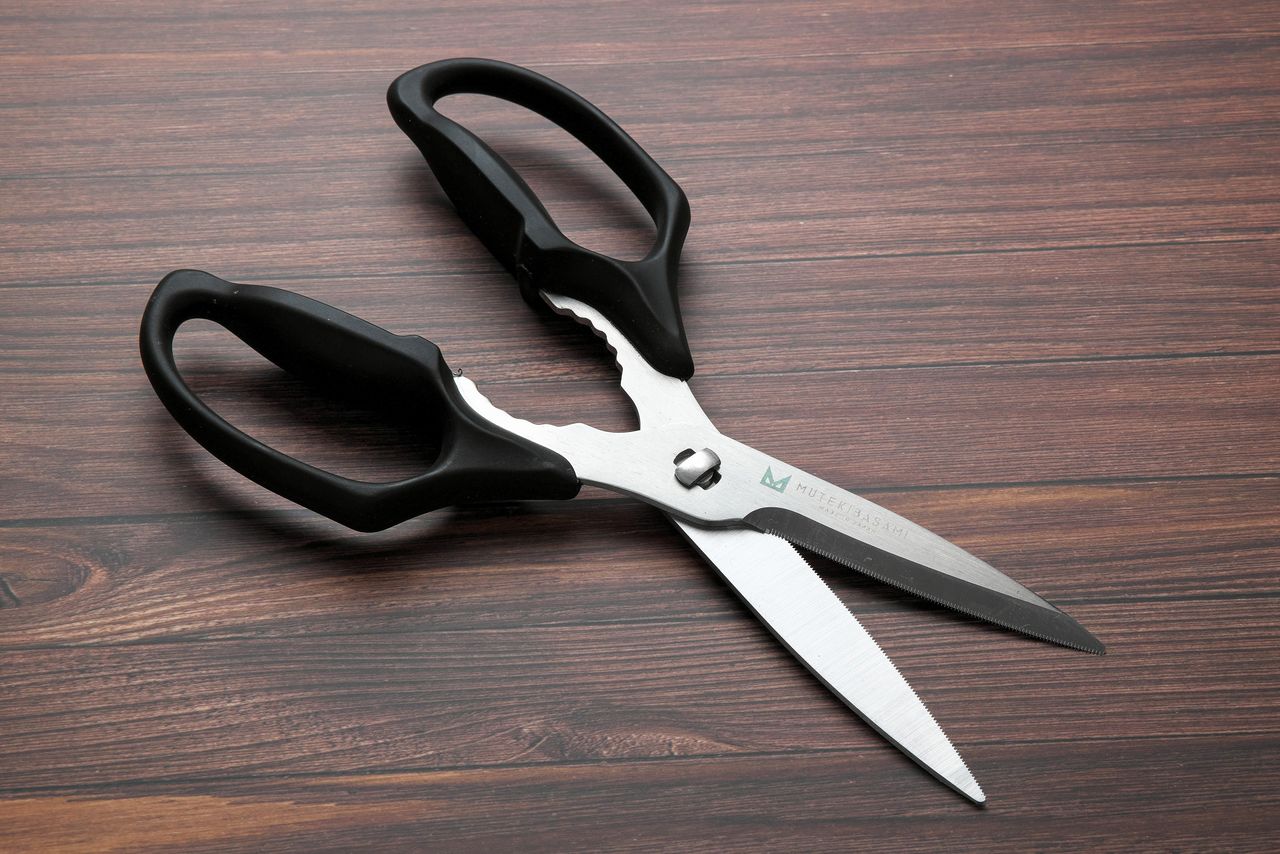
The aptly named Mutekibasami, “invincible” (muteki) kitchen scissors. They are easy to dismantle for cleaning, making them hygienic to use. (© Nomura Kazuyuki)
Specially Designed for the “World’s Hardest Food”
Mandoline slicers, used to cut vegetables into thin slices or julienne strips, are a standard utensil in kitchens all over the world. However, what makes Iidaya’s best-selling slicer, the Quirélois, exceptional is its sharpness. The Japan-made product has an adjustable blade, providing a slicing range from 0.5 millimeters to 3 millimeters in thickness. Even soft tomatoes can be thinly sliced with ease. Its naming reflects this. Quirélois is a transliteration of the Japanese phrase kireru wā (wow, it cuts so well), said to be an exclamation of early users of the tool.
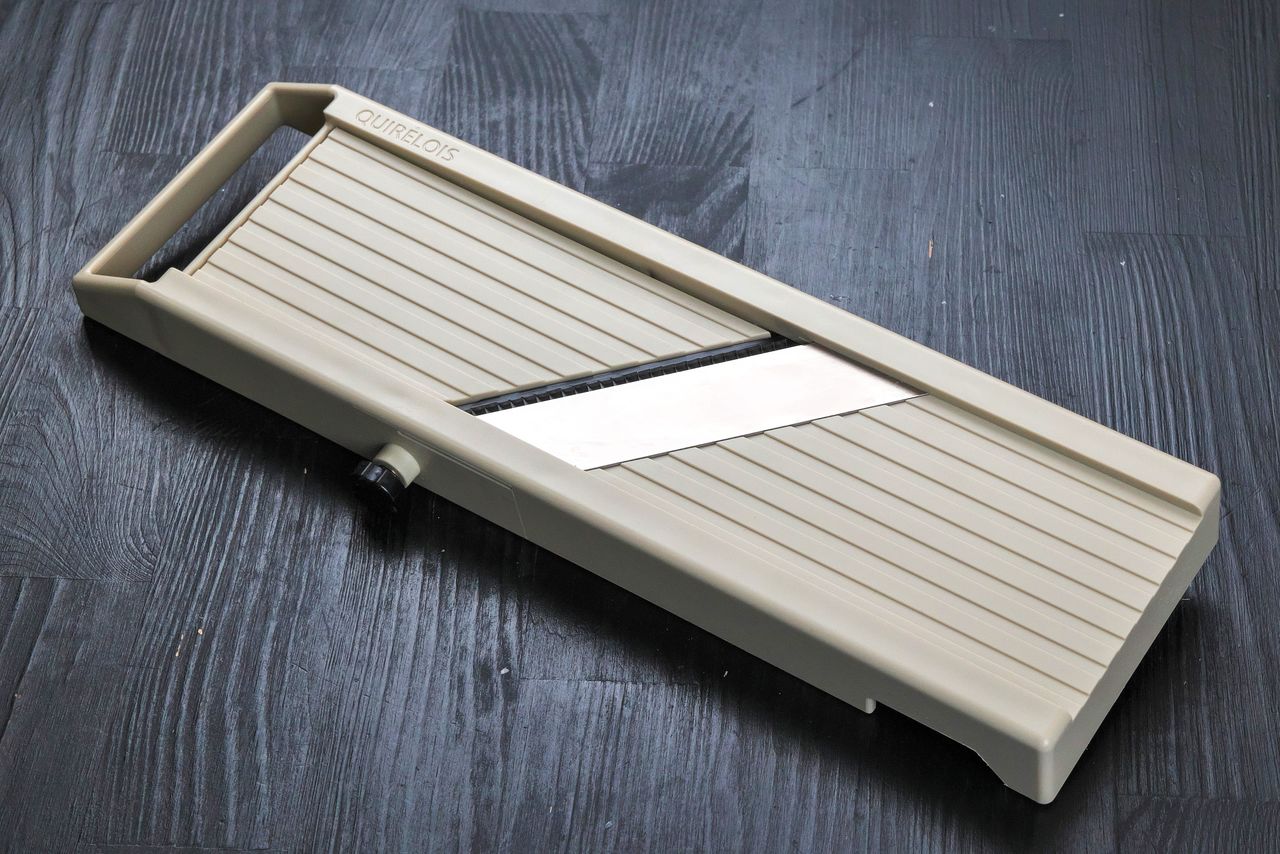
The Quirélois slicer, named for how well it cuts. (© Nomura Kazuyuki)
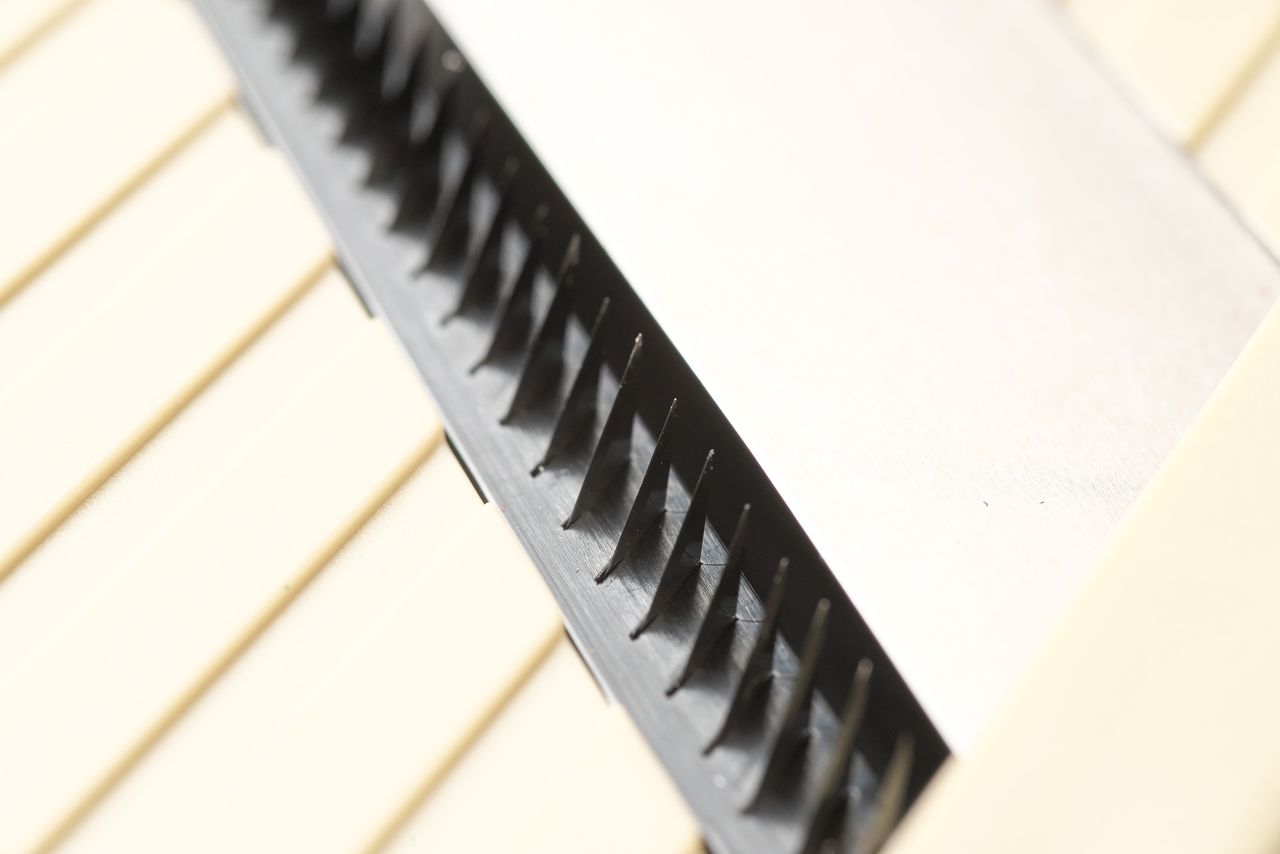
The replaceable blade has a row of thin triangular teeth 1 millimeter apart, fixed onto a steel base. It makes it easy to create professional-style sashimi garnishes. (© Nomura Kazuyuki)
That said, Japan already boasts a traditional slicer—the katsuobushi shaver. Iida set his heart on one particular shaver and worked hard to persuade the manufacturer to let him stock it at Iidaya. It is a true masterpiece, crafted by highly skilled artisans from the Tsubame Sanjō region of Niigata Prefecture, known for its metalworking industry. It may be more common to buy conveniently prepackaged machine-cut shavings these days, but with a beautiful tool like this, you will want to take the time shaving katsuobushi by hand.
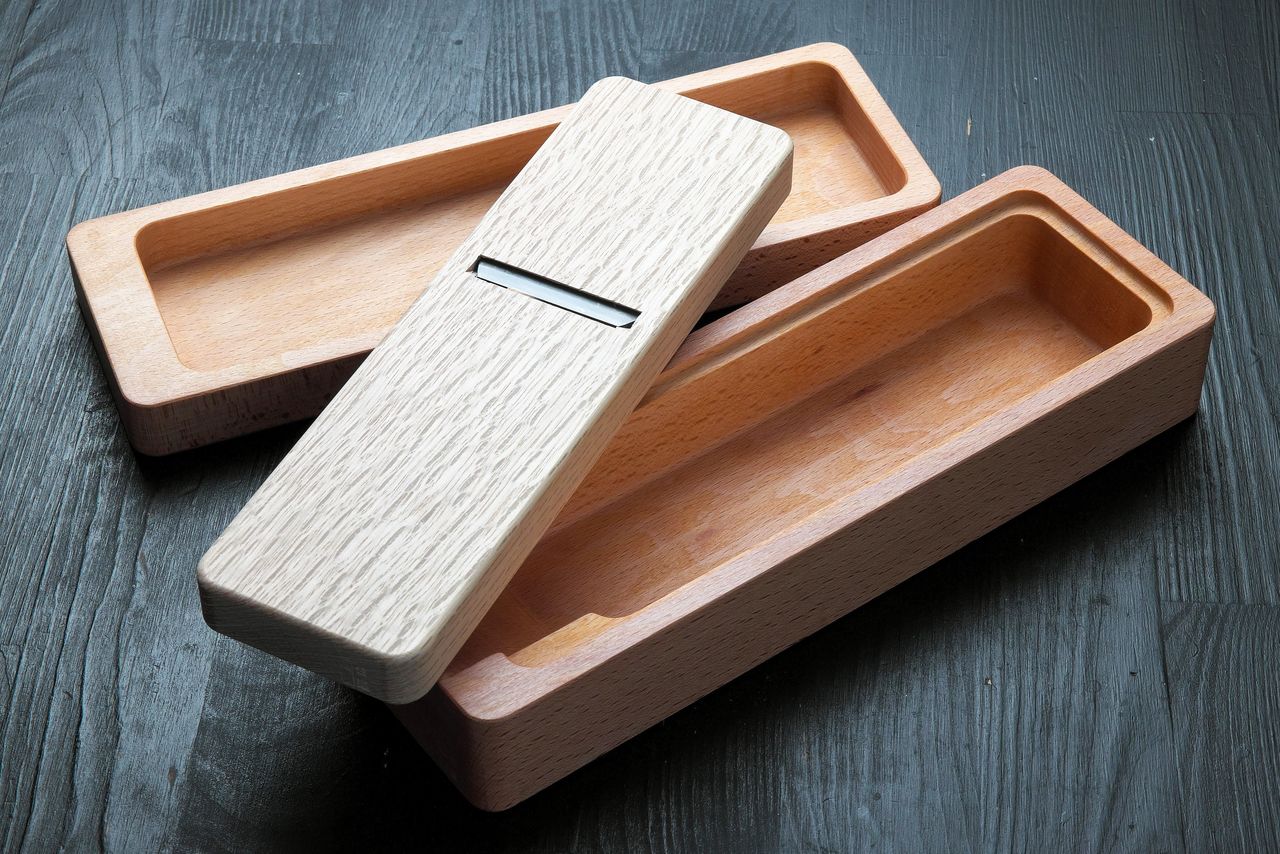
The katsuobushi shavings are so thin, they are almost translucent. (© Nomura Kazuyuki)
Ten Utensils Sought by Overseas Visitors
- Oroshigane: Traditional Japanese Graters for Every Ingredient on Your Plate
- Suribachi and Surikogi: Function Meets Beauty to Create the Perfect Texture
- Onigiri Molds and Sushi Roll Mats for Beautifully Formed Japanese Cuisine in a Flash
- Japan’s Cutting Edge: Peelers, Slicers, and Scissors
- Tea Kettles and Strainers: Traditional Items with Surprising New Uses
- Pots Galore: Donabe and Yukihira Offering Quick Ways to Cook Every Day
- Frying Pans: Weighing the Choices Between Lifetime Use and Lightweight Cooking Action
- Bentō Essentials: From Tamagoyaki Pans to Nonslip Chopsticks
- Japanese Cutting Boards for the Kitchen and Table
- Innovative and Easy: Soy Sauce Dispensers and Miso Muddlers

(Originally published in Japanese. Banner photo: The Ever Peeler and the teethed blade of the Quirélois mandoline slicer. © Nomura Kazuyuki.)