Ten Exceptional Utensils from Kappabashi, Japan’s Kitchen
Frying Pans: Weighing the Choices Between Lifetime Use and Lightweight Cooking Action
Culture Guide to Japan Food and Drink- English
- 日本語
- 简体字
- 繁體字
- Français
- Español
- العربية
- Русский
Five Years of Frying-Pan Development
Just about every home has a frying pan. The most common type has an aluminum body with a fluoropolymer coating. These are popular due to their nonstick finish, making both cooking and cleaning simple. After a few years of use, the coating can get scratched or begin to peel, but as this type of frying pan is reasonably priced, it is relatively easy to replace.
But Iida Yūta—the sixth-generation owner of Iidaya, a comprehensively stocked kitchenware store in Tokyo’s Kappabashi district—had a different idea. He aimed to “create a frying pan that can be used for a hundred years and passed down from parent to child.” He envisioned a rust-resistant, nonstick, and highly durable stainless steel frying pan that was integrally molded and, taking into consideration it needed to be long-lasting, that had a sturdy base three millimeters thick. He reached out to metalworking manufacturers to find one that would be willing to work with him on this, but was consistently turned down, being told “it won’t appeal to the general public” and that “there will be no demand for replacements.”
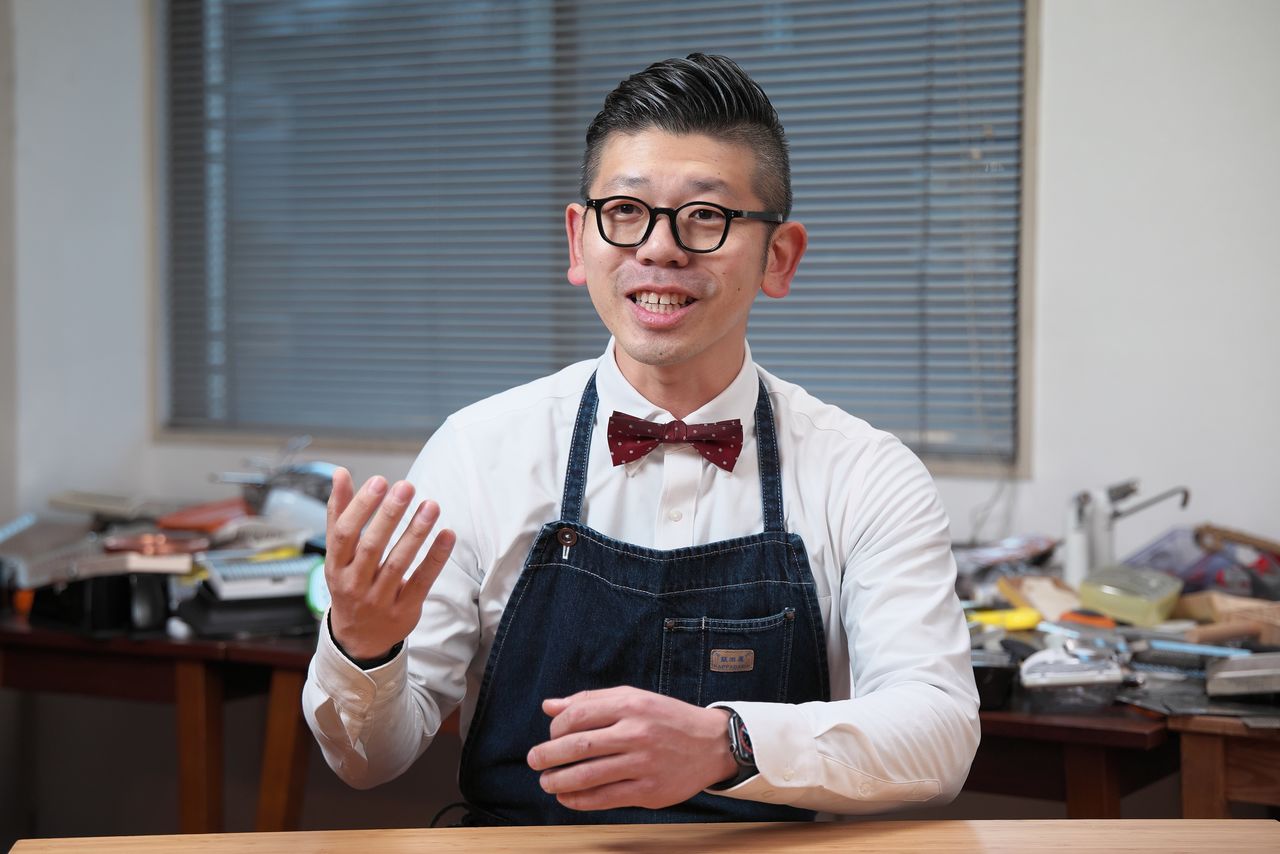
Iida Yūta, speaking at a cookware research session. He tirelessly kept contacting manufacturers. (© Nomura Kazuyuki)
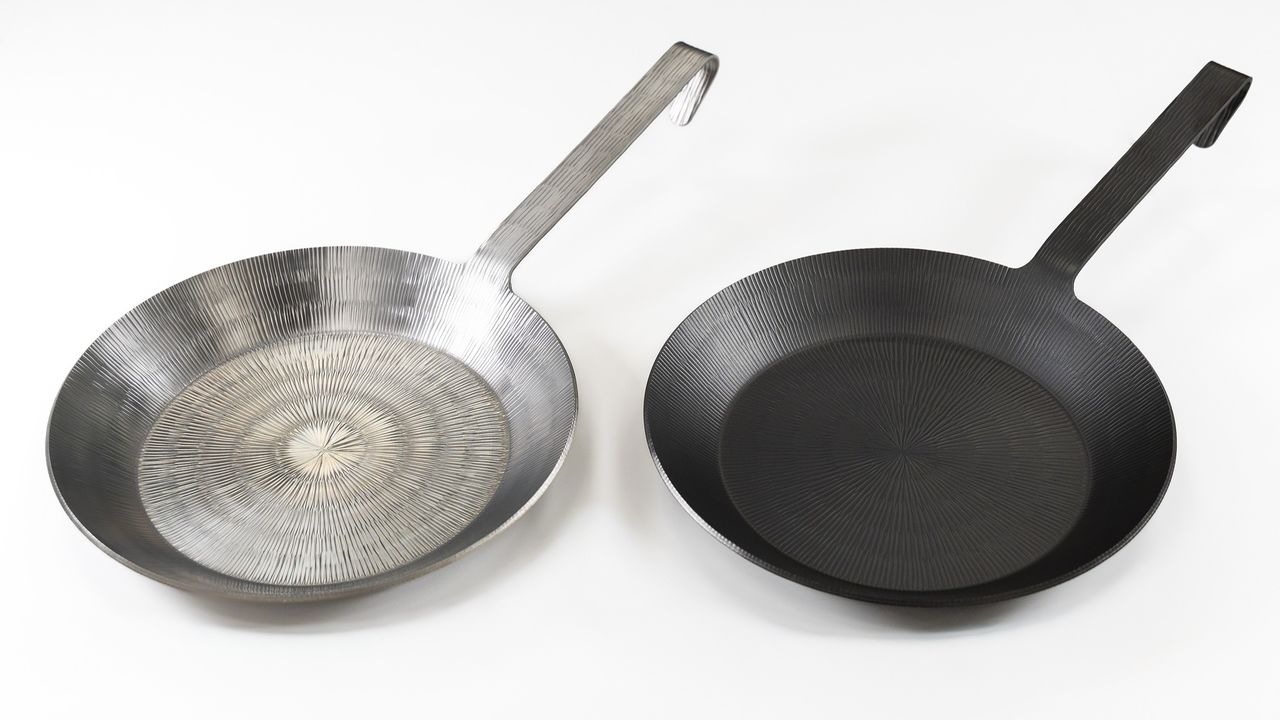
Finally, a manufacturer replied, saying “let’s give it a go.” That was Fujinos, known for having developed the world’s first 200-volt induction-compatible cooking pot. The company is located in the Tsubame-Sanjō region of Niigata, an area renowned for its high-quality metalwork. After a lot of trial and error, it devised a unique, unprecedented manufacturing process, using a hammered finish that creates a huge number of extremely fine indentations, radiating out from the center of the pan. Taking two years to plan and three years to develop, this envisioned frying pan was launched at last in 2017. To reflect the wish for it to be used by generation after generation, it was named Ever Grill.
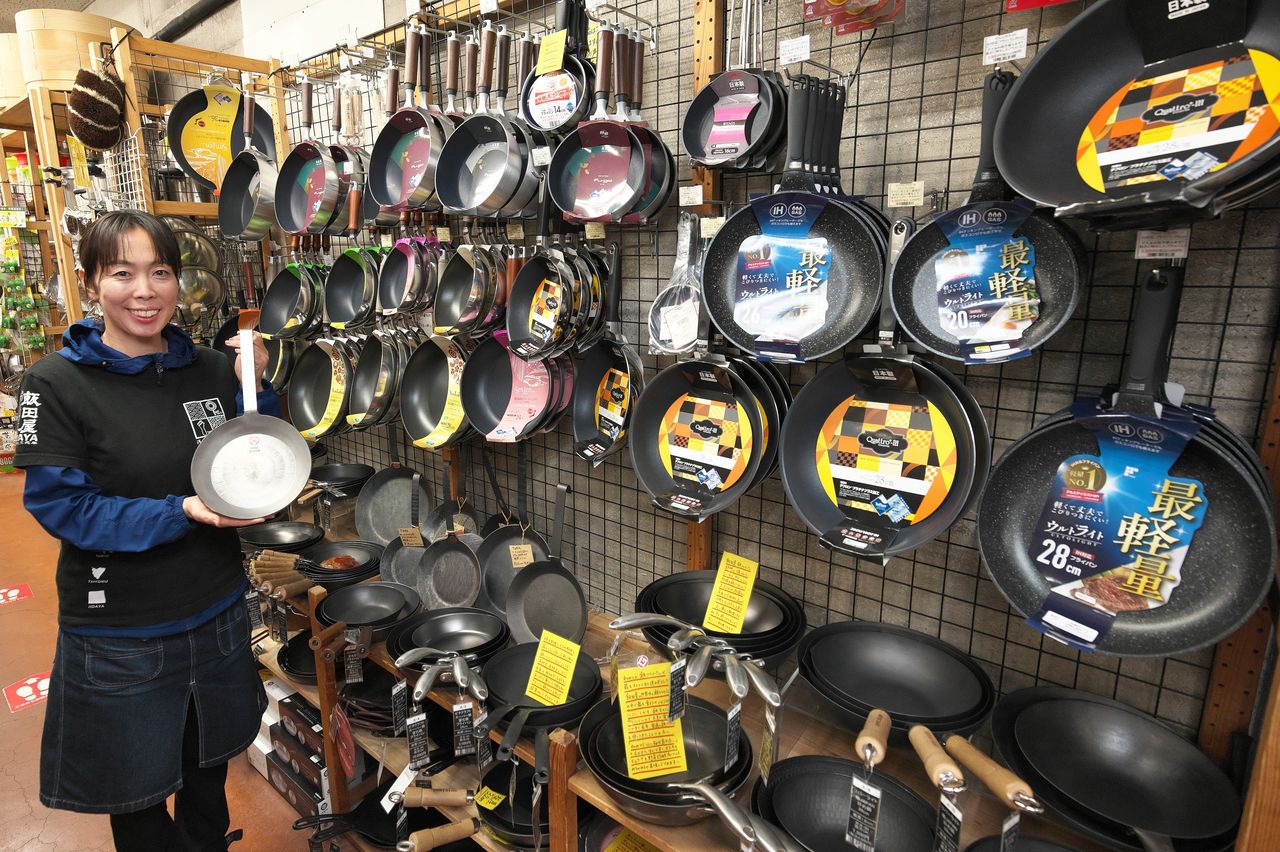
A staff member holding the stainless steel Ever Grill. This section in Iidaya has a wide range of frying pans. (© Nomura Kazuyuki)
The finely textured surface stops steak from sticking while being cooked. As heat is conducted slowly, the juices are sealed in, resulting in meat that is seared crispy on the outside, while remaining tender and juicy on the inside. Since being featured on television in 2019 and winning a Good Design Award, this frying pan has become a best-selling item that is so popular production struggles to keep up with the demand.
An iron nitride version of the Ever Grill is also available. Although significantly heavier and more expensive, this is said to sell even better than the steel version. “Iron absorbs oil well, making seasoning even easier,” explains Iida. This is likely being sought out by people who appreciate the benefits of cast-iron frying pans.
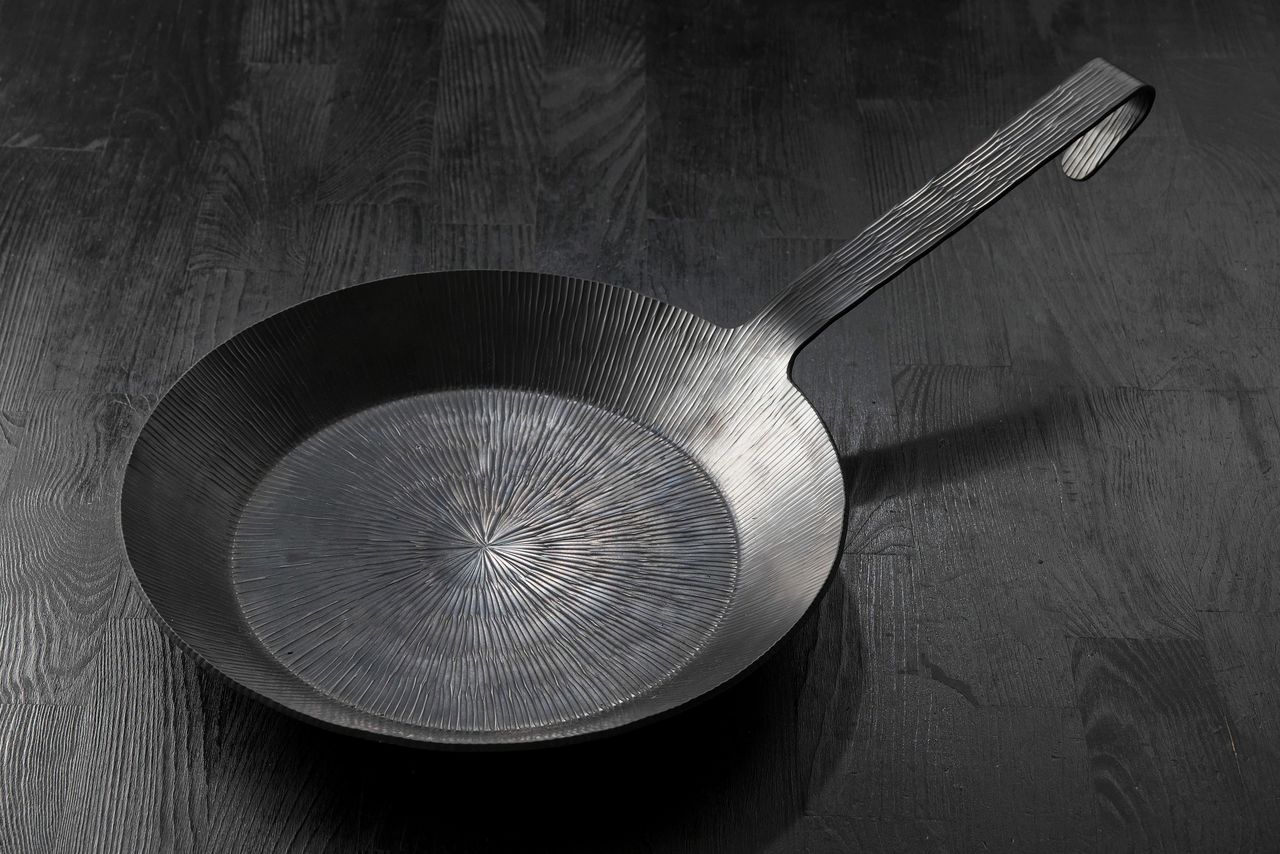
The iron nitride version of the Ever Grill. (© Nomura Kazuyuki)
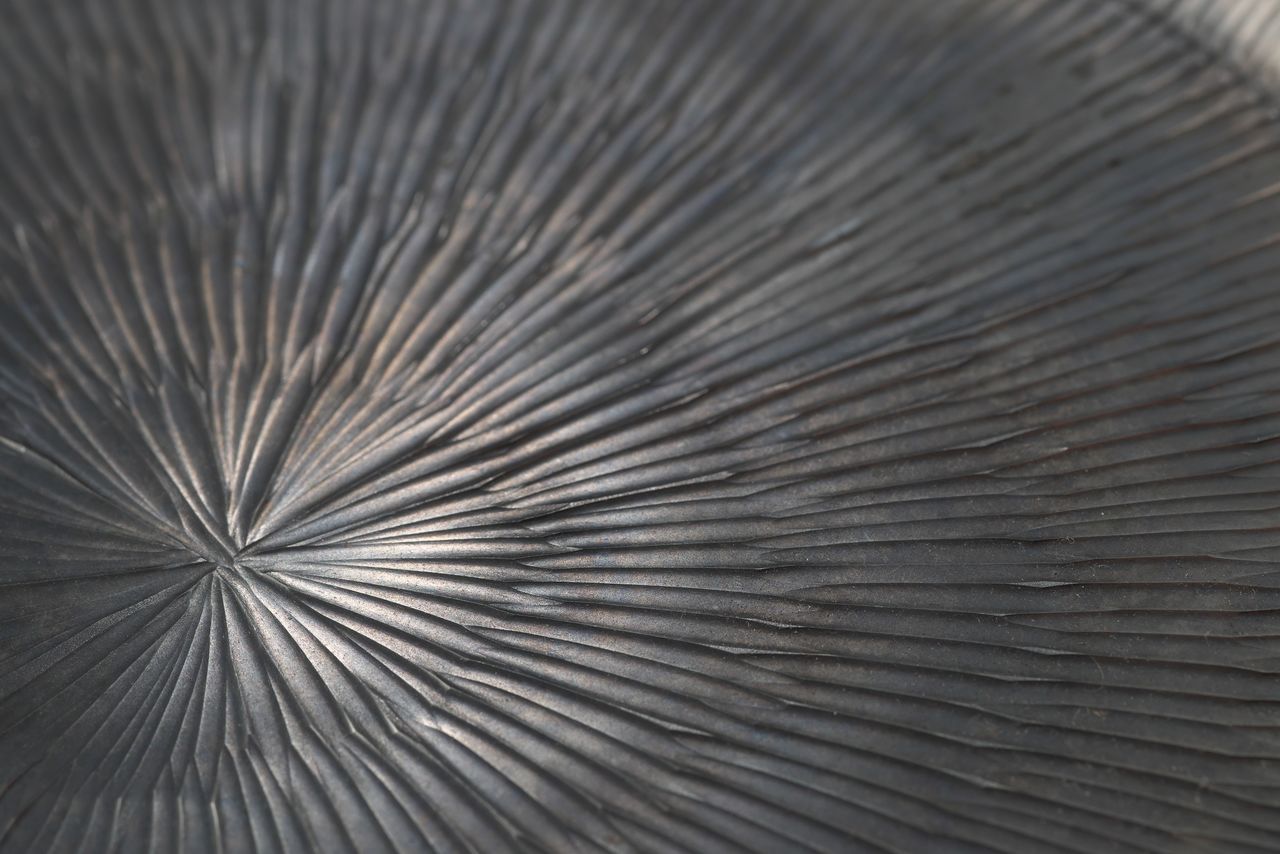
As the metalworkers create the indentations by hand, only a few can be produced each day. (© Nomura Kazuyuki)
Choose Titanium for Lightness
The Ever Grill frying pan is not suited for those who prefer a lighter pan, though. “People from the Greater China region, in particular, toss food in the pan while cooking, so lightness is very important to them,” explains Iida. The pure titanium frying pan favored by customers from China and Taiwan is also made by a manufacturer based in the Tsubame-Sanjō area. Measuring 1.2 millimeters in thickness and 26 centimeters in diameter, it is surprisingly light, weighing at just 560 grams. As you likely use a frying pan every day, you should take time to carefully consider which one will suit you best.
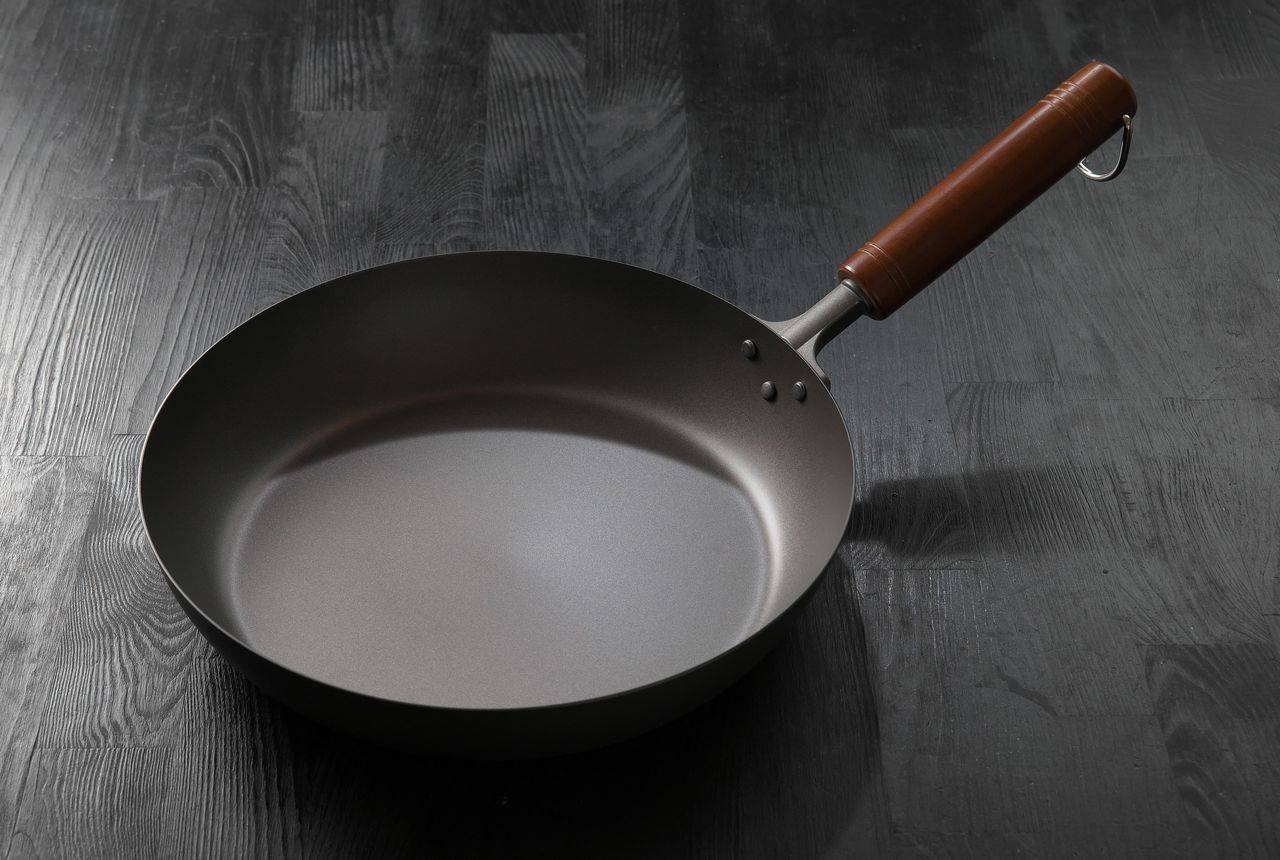
A wooden-handled, pure titanium frying pan that feels “light as a feather.” It is great for making stir fries. (© Nomura Kazuyuki)
Ten Utensils Sought by Overseas Visitors
- Oroshigane: Traditional Japanese Graters for Every Ingredient on Your Plate
- Suribachi and Surikogi: Function Meets Beauty to Create the Perfect Texture
- Onigiri Molds and Sushi Roll Mats for Beautifully Formed Japanese Cuisine in a Flash
- Japan’s Cutting Edge: Peelers, Slicers, and Scissors
- Tea Kettles and Strainers: Traditional Items with Surprising New Uses
- Pots Galore: Donabe and Yukihira Offering Quick Ways to Cook Every Day
- Frying Pans: Weighing the Choices Between Lifetime Use and Lightweight Cooking Action
- Bentō Essentials: From Tamagoyaki Pans to Nonslip Chopsticks
- Japanese Cutting Boards for the Kitchen and Table
- Innovative and Easy: Soy Sauce Dispensers and Miso Muddlers

(Originally published in Japanese. Banner photo: The Ever Grill stainless steel frying pan, at left, and the iron nitride version at right. © Nippon.com.)