JFL Today: Considering Japanese-Language Education for Foreign Residents
Foreign Enrollment: Gifu High School on the Front Line of Japanese Language Education
Society Culture Education World Politics- English
- 日本語
- 简体字
- 繁體字
- Français
- Español
- العربية
- Русский
Responding to Diversity
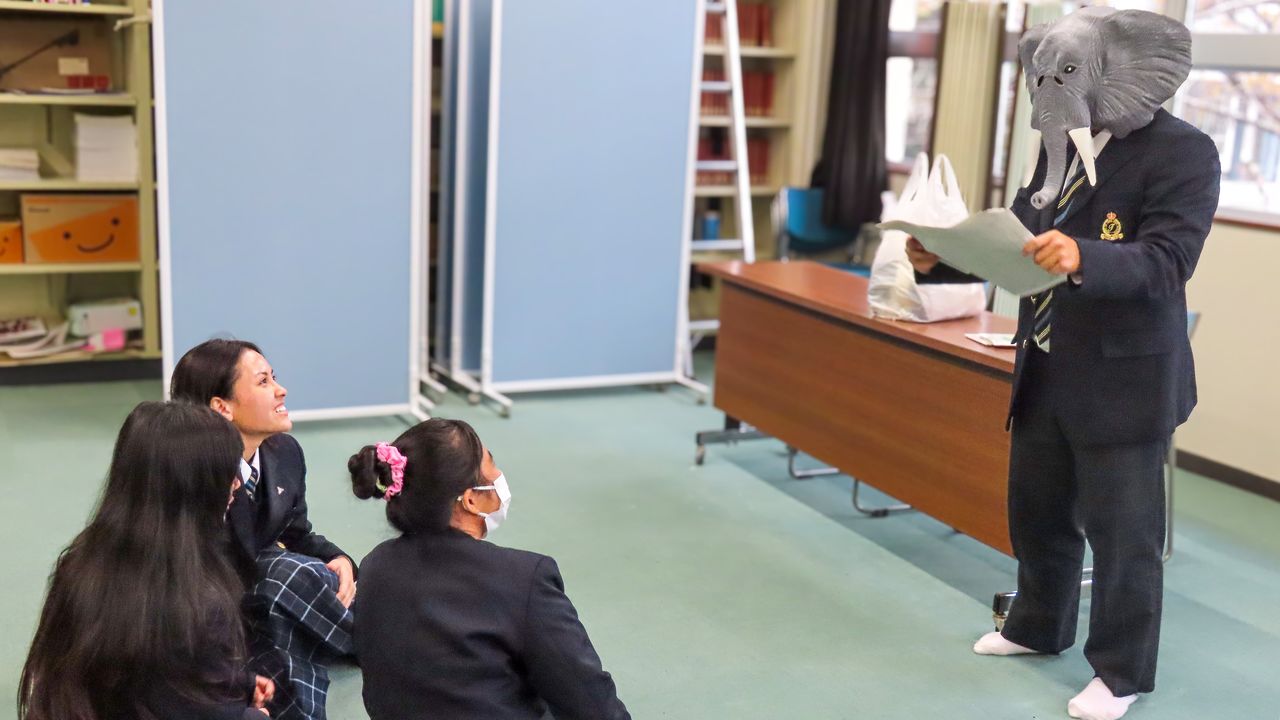
Wada Satomi, a teacher at Gifu Prefectural Tōnō High School, looks over her class of second-year students as they work on a writing task. The assignment is to create an original script in Japanese based on folktales and stories they read previously. The groups of uniformed students chatter excitedly as they go about their task, filling the classroom with an assortment of Japanese, English, Tagalog, and Portuguese indicative of the school’s diverse student body. With a full three-fifths of students having foreign backgrounds, Tōnō High represents a changing facet of Japan’s public education system.
Wada stands at the ready to offer advice to her charges as needed. She explains that the script writing exercise builds and hones the students’ Japanese language skills by requiring them to repeatedly modify drafts, adding or tweaking parts to make the works more entertaining.
The various groups busily discuss their ideas, molding them into storylines. One working on a reinterpretation of the ghostly Japanese folktale “Yuki-onna” describes a macabre twist: “A male characters bites the dust at the start but comes back as a zombie.” Another wrestles with a mashup of “Snow White” and the Japanese tale “Momotarō.” “It’s hard to come up with a good ending,” confesses a member.
Once the scripts are complete, groups move on to the next task of staging their creations.
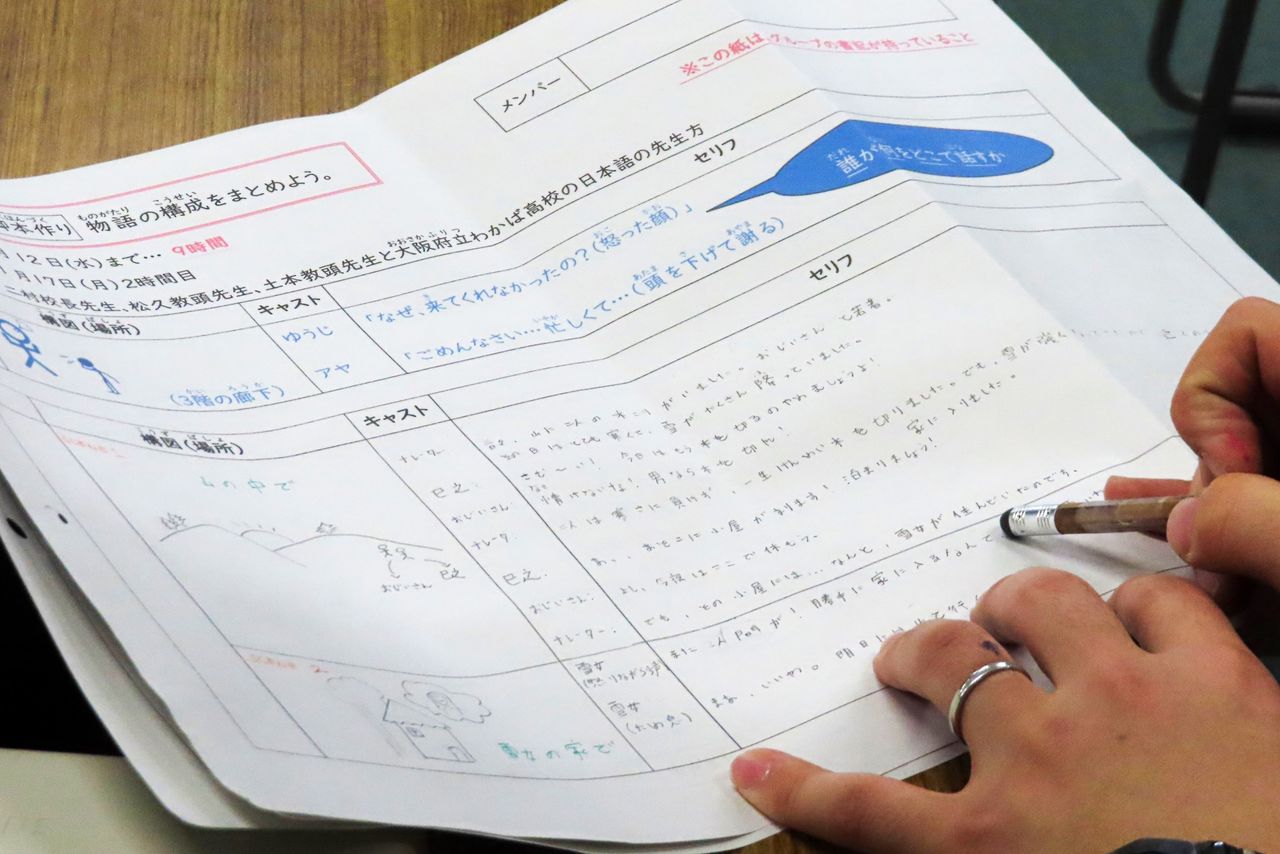
Wada Satomi looks over a script written by students as part of Japanese language class. (© Tanaka Keitarō)
The class is part of a special Japanese language program for students with foreign backgrounds that Wada oversees. Mastering Japanese is essential for the students’ futures in Japan. Wada says that writing and performing the plays teaches the pupils to consider the language from multiple angles. “They have to look at the world through the eyes of the protagonist,” she explains, “but they also have to work out how to convey the story to the audience clearly and concisely.” The performances are filmed, with teachers at Tōnō and peers from other high schools viewing the final product and providing feedback.
The goal is not solely linguistic, either. The entire process, from writing to performing to filming, is designed to foster the skills and habits needed to be independent in Japanese society. For instance, students must meet strict deadlines each step of the way, the aim being to foster the habit of getting work done on schedule, a trait highly valued in Japanese culture.
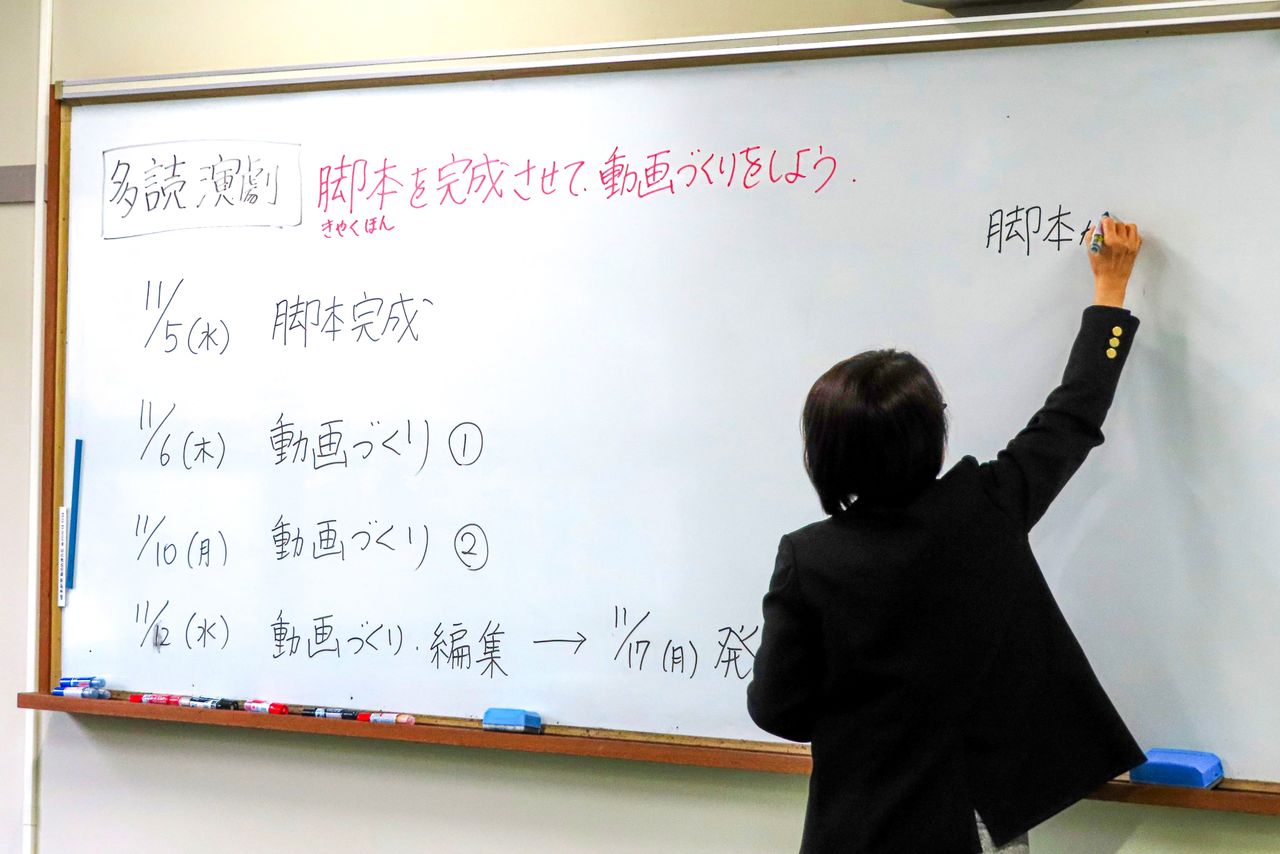
Wada Satomi writes deadlines to complete tasks on a whiteboard for her students. (© Tanaka Keitarō)
A Growing Demographic
Tōnō High School was founded in 1896 in Mitake-chō in the Kani district of Gifu, an area that boasts a long and rich legacy as a stop on the old Nakasendō highway. The school is on the small side, with a total capacity of 360 students spread over three years (grades 10 through 12). By choosing from eight categories that range from social science and international studies to math, and science to business and manufacturing, pupils are able to tailor their studies based on their interests and goals.
While a public school, Tōnō High has seen a steady uptick in students hailing from countries as diverse as the Philippines, Brazil, and Nepal. Their numbers have gone from just three students in 2006 to over 200 in 2025, amounting to 62% of total enrollment. A primary factor in this shift is the area’s automotive manufacturing industry, which has come to rely more and more on foreign laborers “It’s been an organic process,” explains Tsuchimoto Shigeru, the school’s vice principal. “We recognized the need to accommodate the growing number of students from different cultural backgrounds, and the prefectural education board has supported our efforts.”
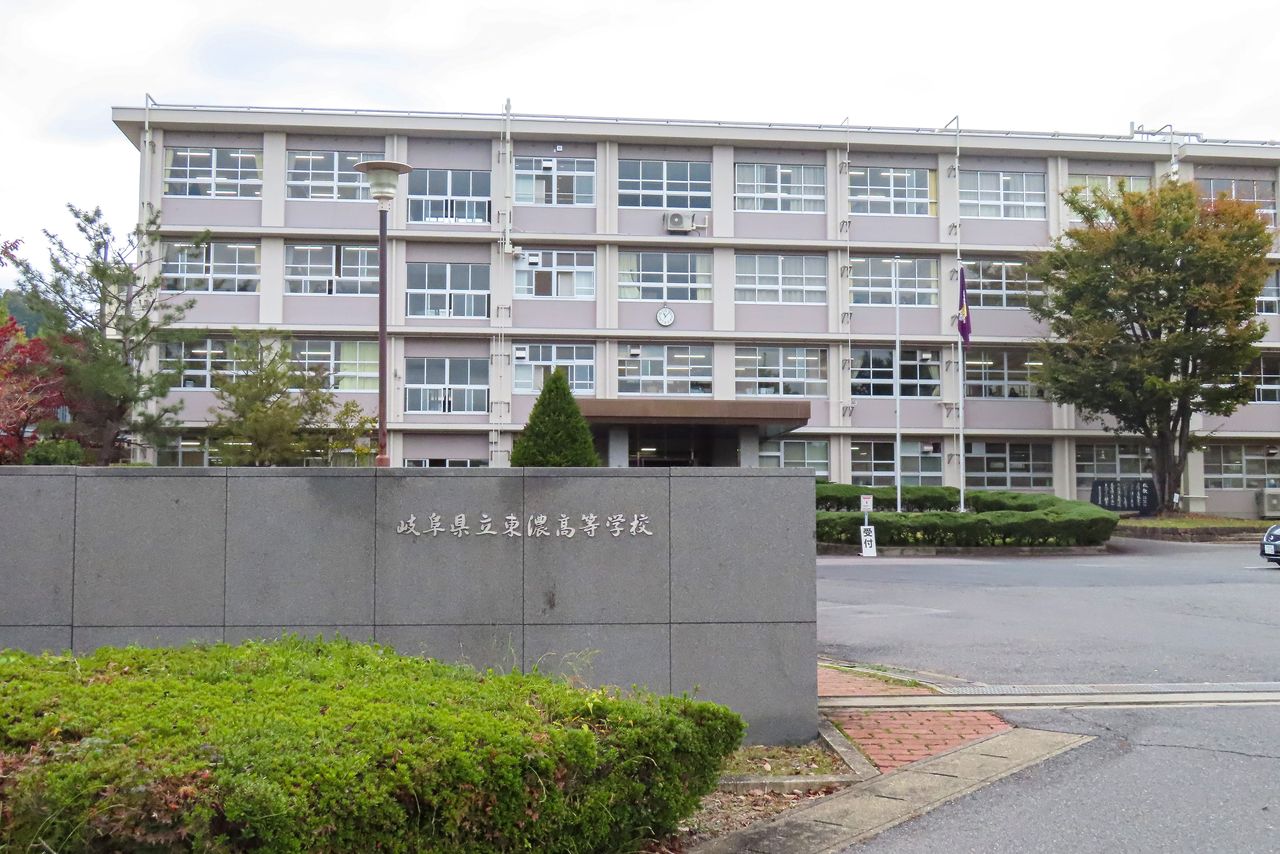
Gifu Prefectural Tōnō High School. (© Tanaka Keitarō)
Building Skills for Life
The school aims over three years of study to provide foreign students with a level of competency in Japanese as well as other skills that will allow them to pursue further education or find employment in Japan. To this end, teachers and administrators created special classes, two for tenth graders and one for eleventh graders, specifically designed for students in need of Japanese language instruction. By the twelfth grade, foreign pupils are considered proficient enough to continue their language studies alongside their Japanese peers.
A dedicated division was established in fiscal 2022 to oversee the Japanese program and to handle communication with parents of foreign students. It includes one full-time English teacher and another qualified to teach Japanese. There are also two Portuguese speakers, two Tagalog speakers, and one Chinese speaker dispatched as support staff by prefectural government who primarily assist first-year students during classes.
Administrators of the program consult with experts at universities to develop the curriculum and are constantly exploring new approaches for instilling the knowledge and attitudes foreign students will need to take an active role in Japanese society.
In the first year of the program, tenth graders are assigned a vast reading list to build Japanese literacy fundamentals. Eleventh graders then hone their Japanese through drama-based activities, including writing and performing original works. Twelfth graders build on what they have learned in the first two years, including creating videos that are shown at local elementary and middle schools and by interacting with their peers in Japanese.
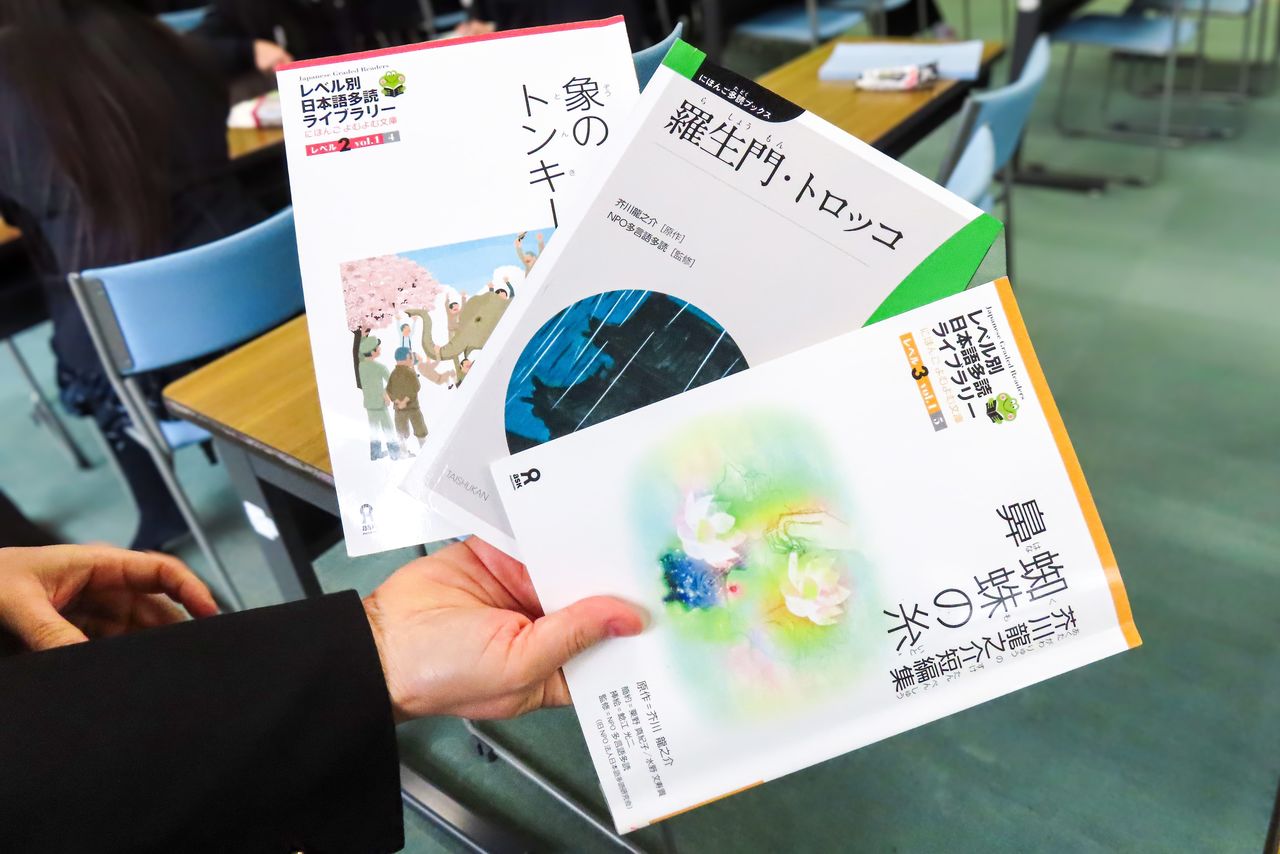
The Japanese texts Tōnō High uses helped form the base of its emphasis on reading and drama. (© Tanaka Keitarō)
The twelfth-grade curriculum is further tailored to prepare students for the next stage of their lives, whether that be continuing their education or joining the labor force. Pupils learn basic skills, such as how to compose a cover letter, and take part in realistic mock interviews, such as for jobs or visa applications, with teachers and other staff playing various roles.
Wada points out that the students themselves have helped guide the topics that are covered. “Student were particularly interested in language for driving in Japan,” she says. “They want to know specific terms so as to be able to communicate with authorities in case of a traffic accident.” This led to the inclusion of a driving-based unit complete with an accident investigation conducted by teachers in the role of police officers.
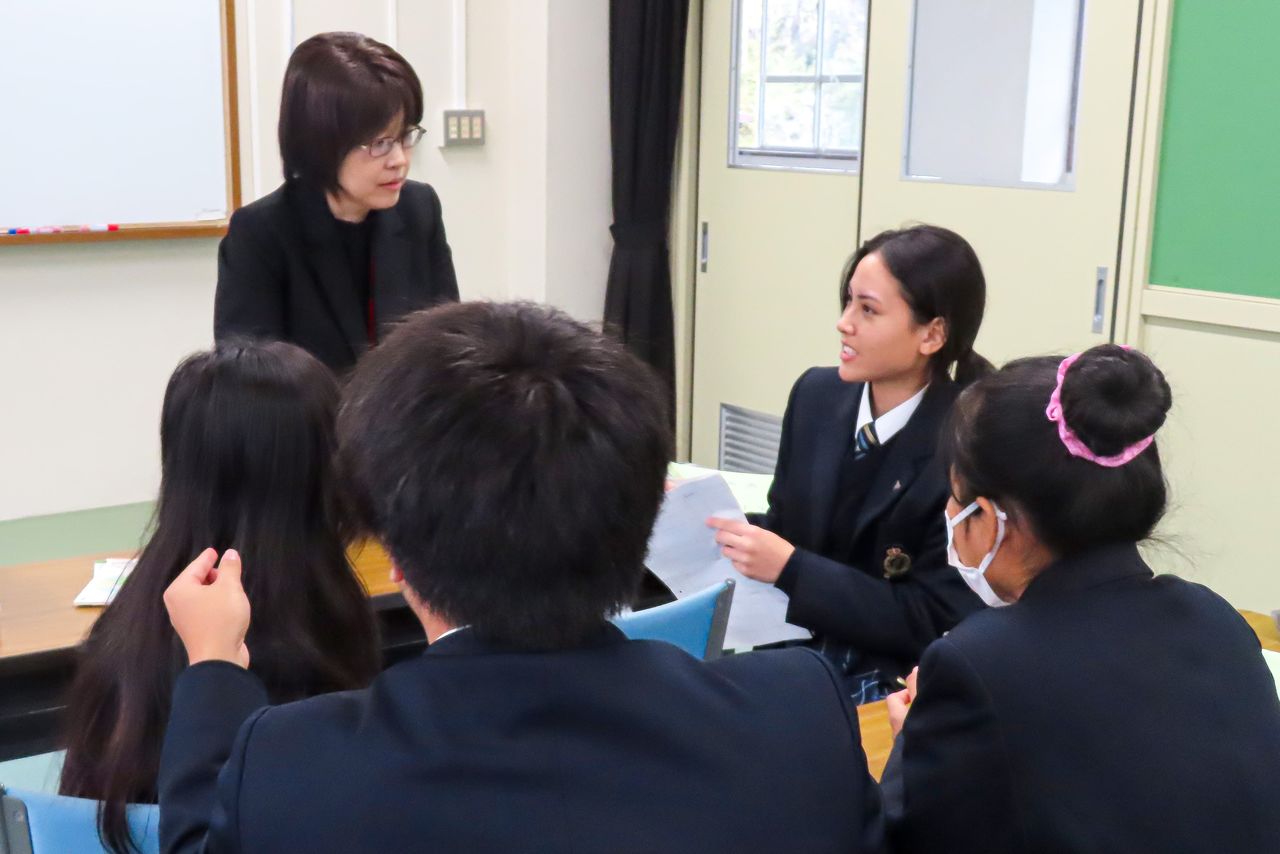
Wada (upper left) talks with students during Japanese class. (© Tanaka Keitarō)
The school’s multicultural atmosphere also plays a role in Japanese language learning. Students are naturally curious about the different cultural backgrounds of their peers, and as they interact, they pick up new words and expressions “I like that my friends have different cultural backgrounds and their own unique perspectives,” declares one smiling student.
Principal Futamura Fumitoshi proudly ascribes the label “priceless” to the school’s learning environment. “The intersection of different nationalities and cultural backgrounds exposes students to an array of languages, customs, and ways of thinking. This brings immense benefits both academically and in terms of personal growth.”
Strong Track Record
This is not idle boasting, either. Among students of the Japanese program, 85% either go on to higher education or find regular employment after graduating, with the ratio being roughly equal for both trajectories. Those who continue their education attend a diversity of institutions, including vocational schools and universities in Japan as well as schools in their home countries. Only a small portion of students, for personal or other reasons, end up taking nonregular work, dropping out, or leaving Japan altogether. The fact that most graduates of Tōnō High’s Japanese program follow their desired course puts them far above the national average, which shows that among high school students with foreign backgrounds needing Japanese language instruction, 10% do not seek higher education or find regular employment after graduating, 40% end up in nonregular positions, and nearly 10% drop out.
“Having the students graduate is not just our goal, it’s our responsibility,” asserts Tsuchimoto. “It opens the door to their futures. Seen in this light, high school serves an important role in realizing a stable, multicultural society.”
In 2019, the Ministry of Education, Culture, Sports, Science, and Technology recognized Tōnō High School’s forward-thinking educational approach with a commendation for excellence in career education. As the number of residents with foreign roots in Japan continues to grow, the school’s Japanese program stands as a model for helping students overcome the language barrier and follow paths that will enable them to lead independent lives as productive members of Japanese society.
(Originally published in Japanese. Banner photo: Students at Gifu Prefectural Tōnō High School work on a drama-based activity that is part of the Japanese language program. © Tanaka Keitarō.)