Japan’s Top Events in Summer 2026
Lifestyle Travel Society Guide to Japan- English
- 日本語
- 简体字
- 繁體字
- Français
- Español
- العربية
- Русский
A Hot Time to Visit a Hot Tourist Destination
While visitors come to Japan all year round, it is worth knowing that temperatures can be very hot in the summer, especially in July and August. Enjoy the events below that are indoors or take place at night, but while outside in the daytime, it is important to stay hydrated, take breaks in the shade, and avoid excessive sun by wearing a hat or using a parasol.
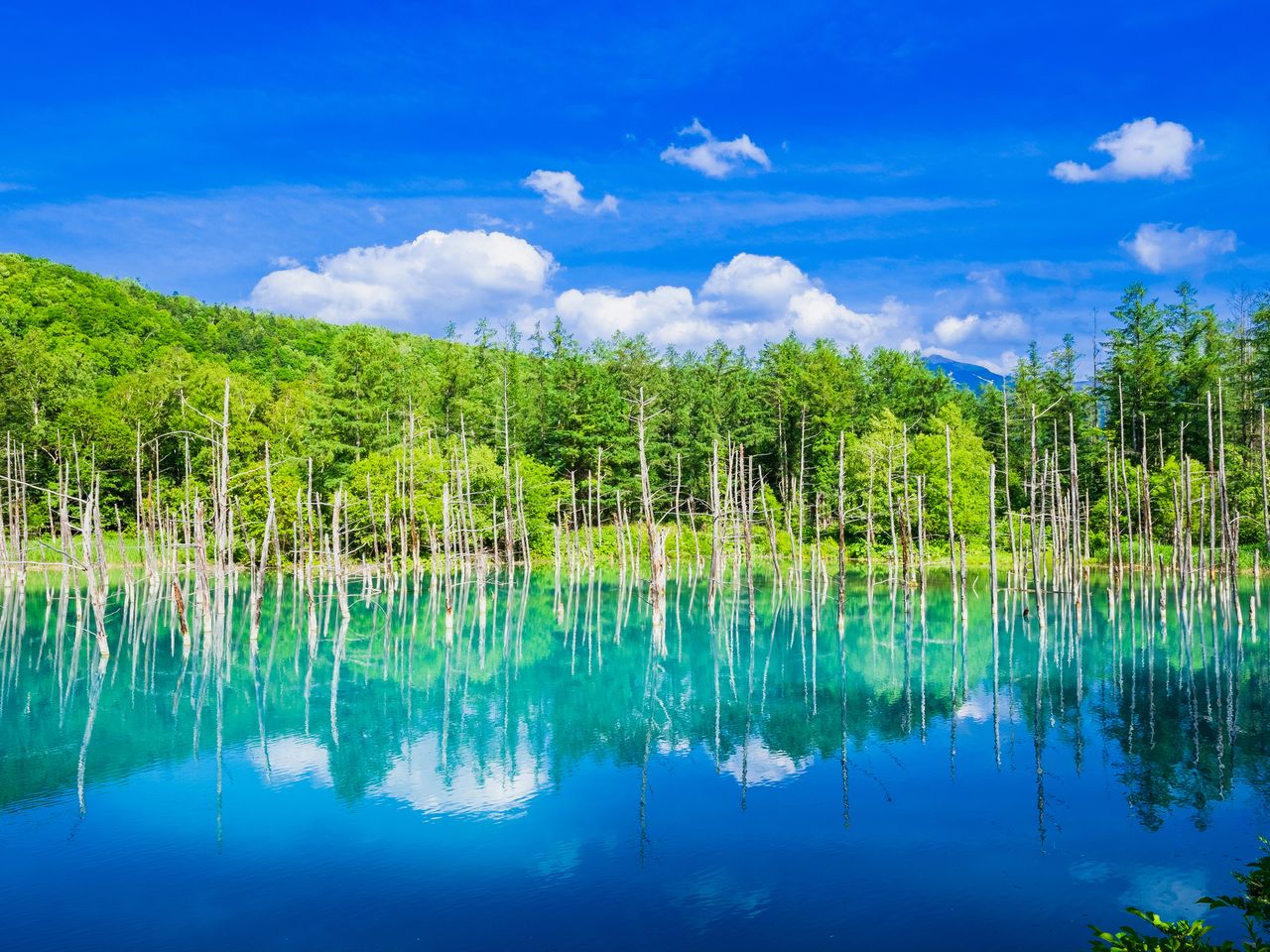
Shirogane Blue Pond in Biei, Hokkaidō: Mid-May to Early June
The Blue Pond in the Hokkaidō town of Biei gets its name from the extraordinarily deep blue colors of its waters in early summer. The phenomenon started around 1990, when work to prevent erosion at the nearby Biei River altered its flow. A mixture of groundwater containing aluminum and the waters entering the basin from the river, which flows immediately to the northeast, appears bright blue when sunlight reflects against it. The color is at its best from May until early June, when there are many fine days, and is most visible around the middle of the day, when the sun is high in the sky.
(© Pixta)
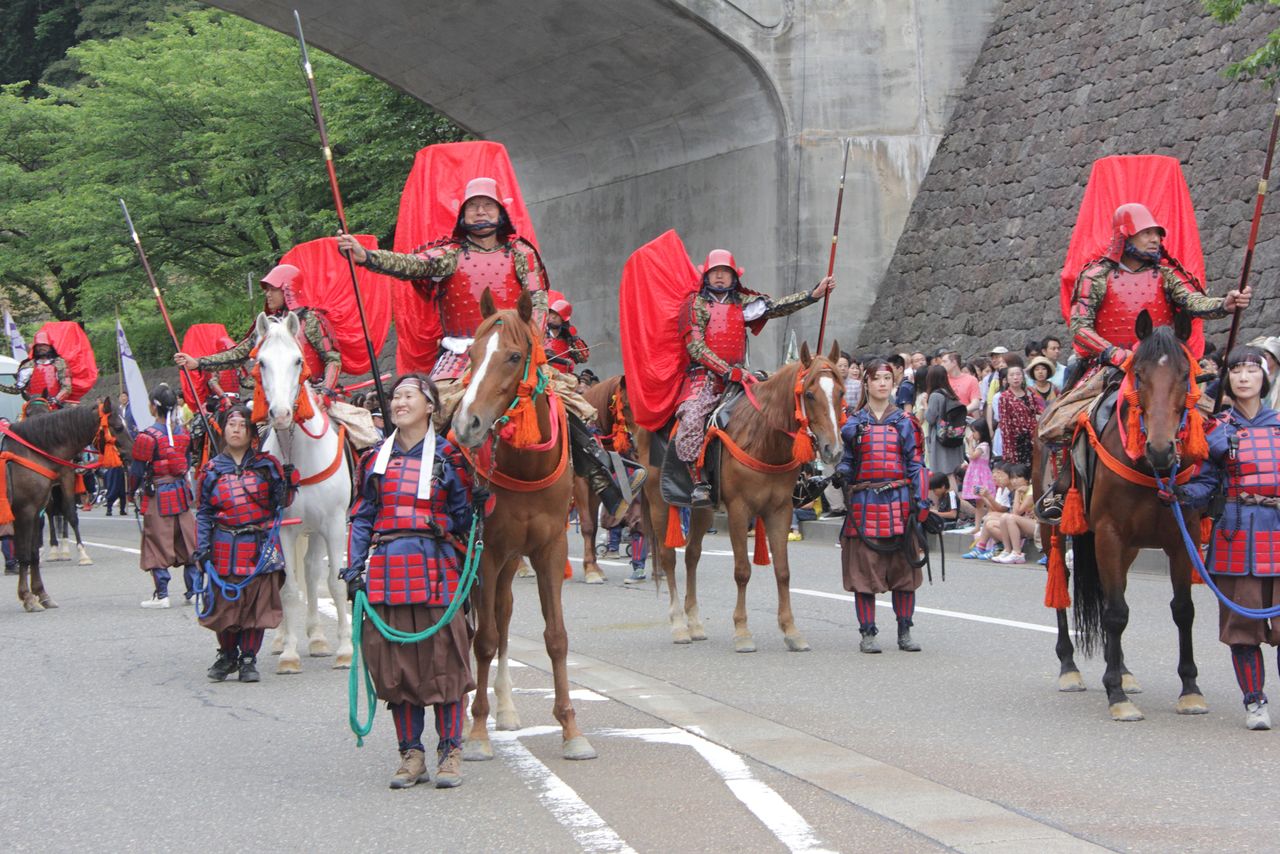
Kanazawa Hyakumangoku Festival: June 5–7
This magnificent festival celebrates the historic 1583 entry into Kanazawa Castle of the lord Maeda Toshiie to found the Kaga domain. Hyakumangoku in the name of the festival refers to the fabled wealth of the domain, amounting to “1 million koku,” a koku being a bushel of rice that can be harvested from the domain’s land holdings, equivalent to around 180 liters. Highlights include the epic samurai parade, dynamic ladder acrobatics, and traditional lion dances.
Official website: https://100mangoku.net/foreign/
(© Kanazawa municipal government)
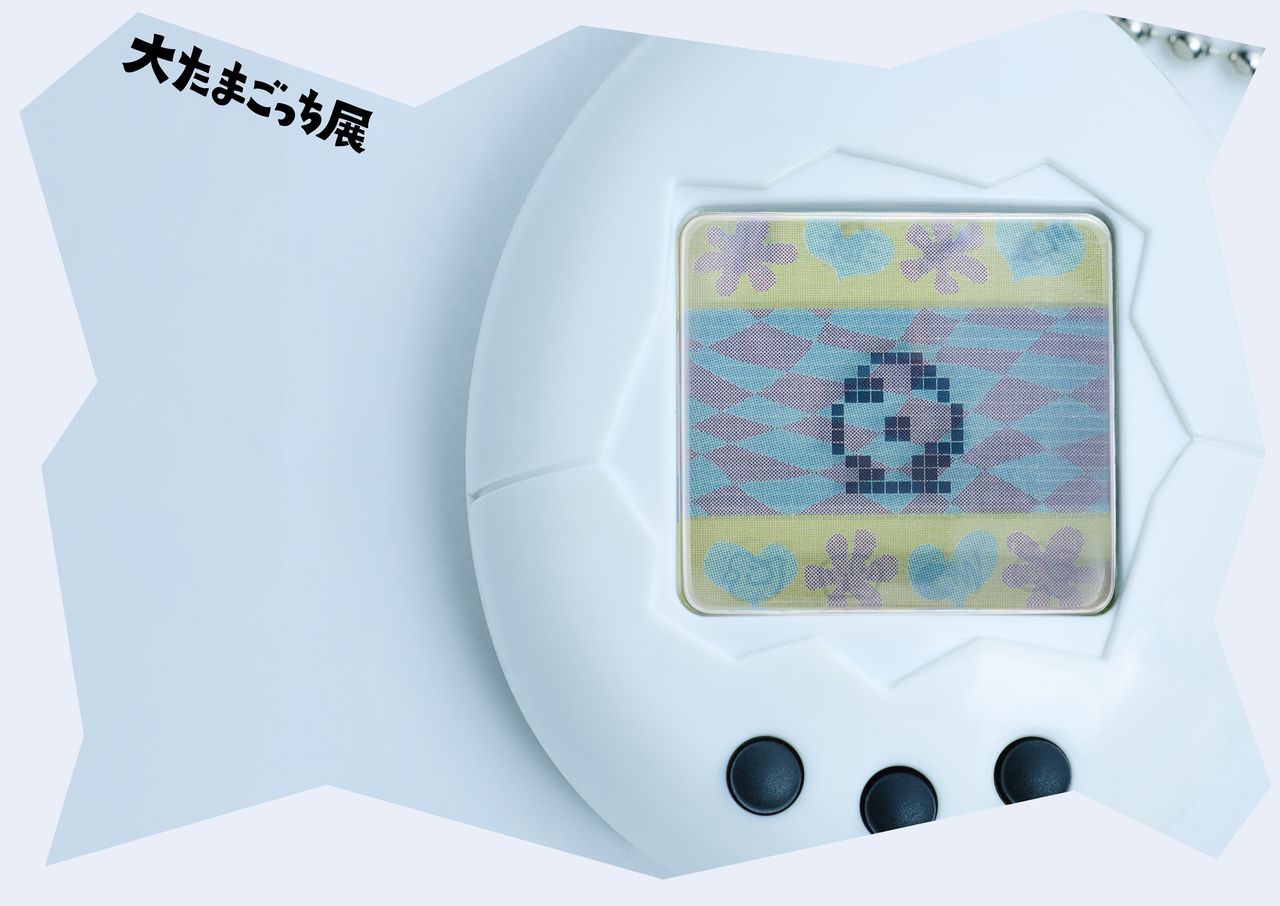
The Tamagotchi Exhibition at Sapporo Factory: June 6–28
This exhibition marks 30 years since the launch of the iconic Tamagotchi in 1996, which became a huge hit in Japan, especially among high school girls, and then an international sensation. As well as looking back over the past three decades, there are immersive experiences to enjoy at the commercial complex Sapporo Factory. Attendees must book time slots in advance. The exhibition will continue to be held at other venues around the country, some yet to be announced, around winter 2027.
(© BANDAI)
Shingū Hydrangea Festival: June 13–30
The festival takes place at Shingū Hydrangea Garden Village in the mountains of Shikokuchūō, Ehime. This photogenic spot features 20,000 hydrangeas blooming on the mountainside. Board the monorail, which only runs during festival season, and look down on the amazing view of the flowers.
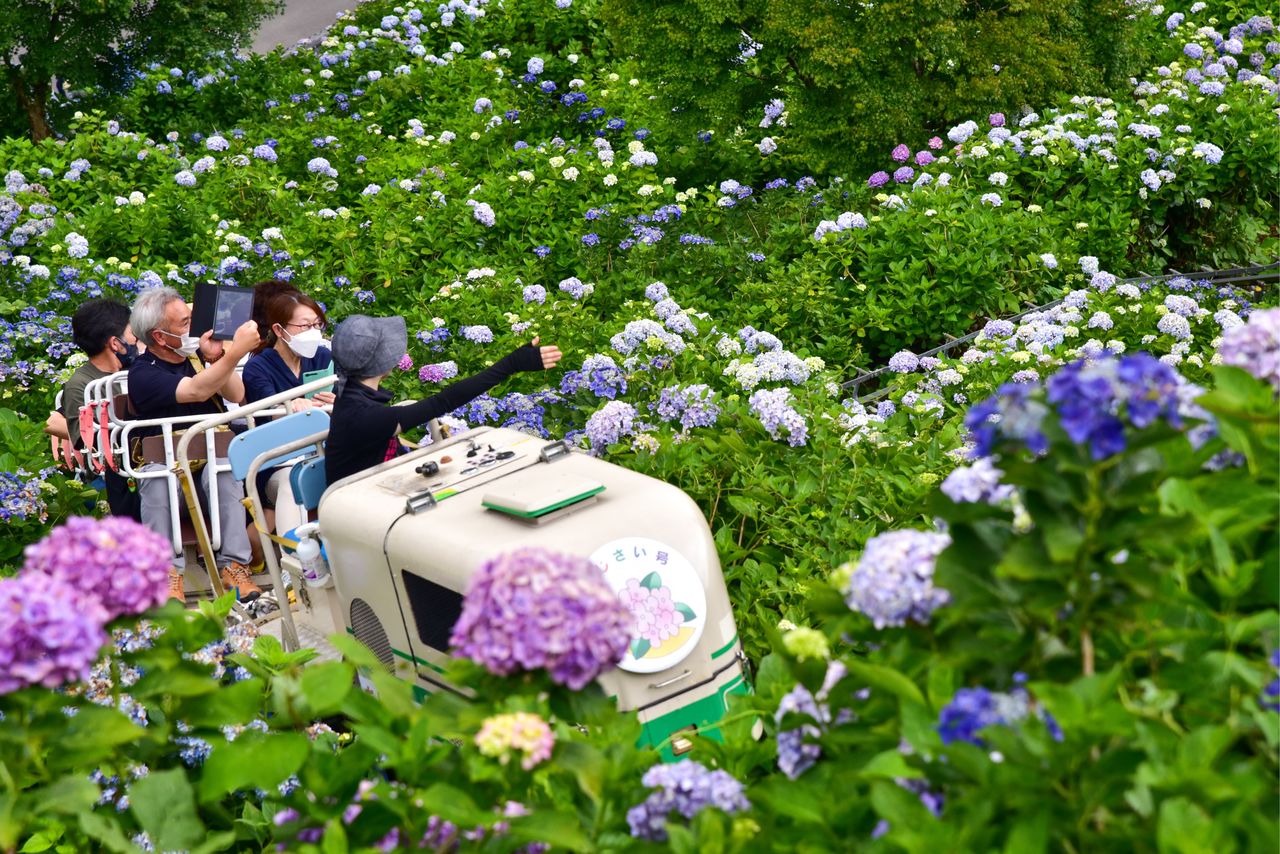
(© Shikokuchūō City Tourism Association)
Nagoshi no Harae: June 30
This is a purification ritual at the end of the first half of the year. Many shrines in Japan erect a large ring, known as a chinowa, woven from thatch, straw, or other plants. Worshipers pass through it to be purified and pray for good health in the second half of the year.
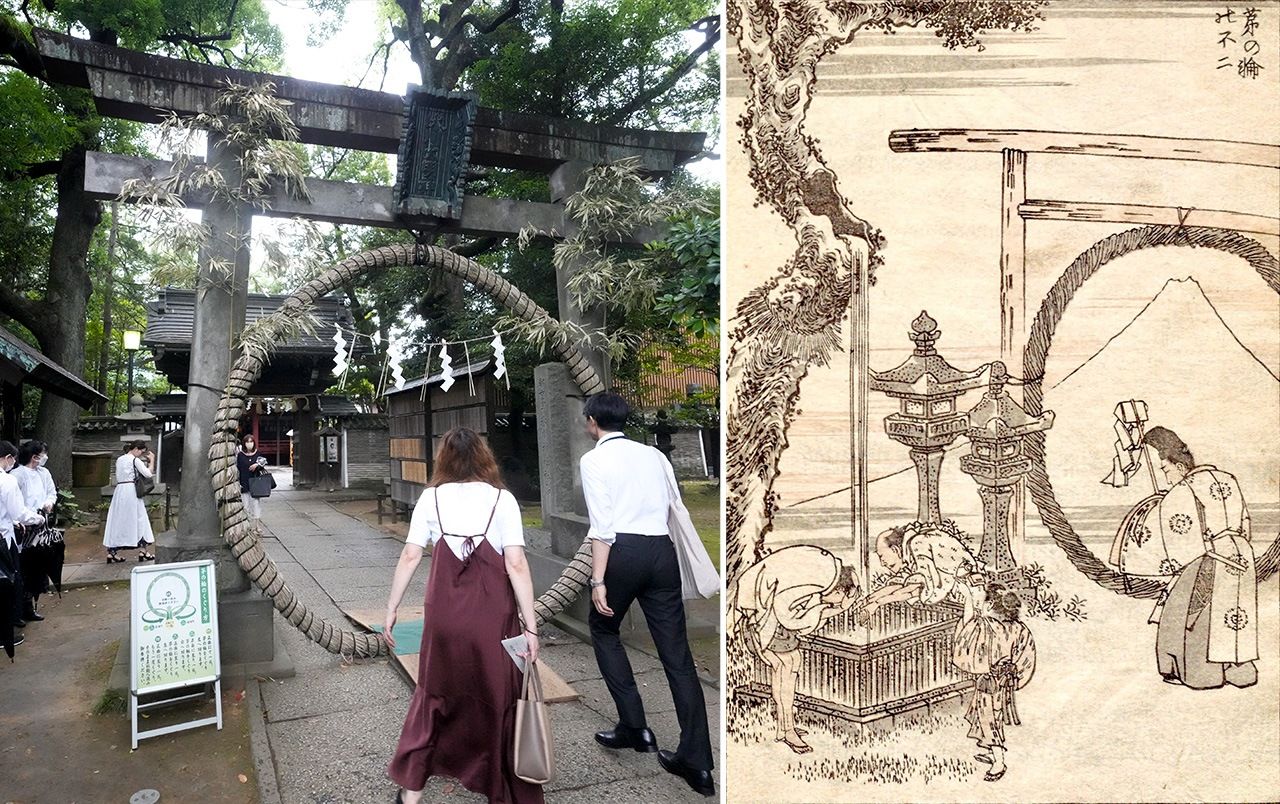
At Tokyo’s Akasaka Hikawa Shrine (left), visitors should pass through the ring three times, while walking in a figure eight pattern. Photograph taken in June 2023 (© Jiji). At right, a picture of a chinowa ring appears in Hokusai’s One Hundred Views of Mount Fuji (Courtesy National Diet Library).
Fūchin Taisai Festival: July 5
This festival dedicated to the wind gods at the Tatsuta Taisha shrine in Sangō, Nara, began during the reign of Emperor Tenmu in the seventh century, and is associated with prayers for good harvests and protection against wind and water disasters. It is known for kagura dances and a fireworks display including columns of fire shooting many meters toward the night sky.
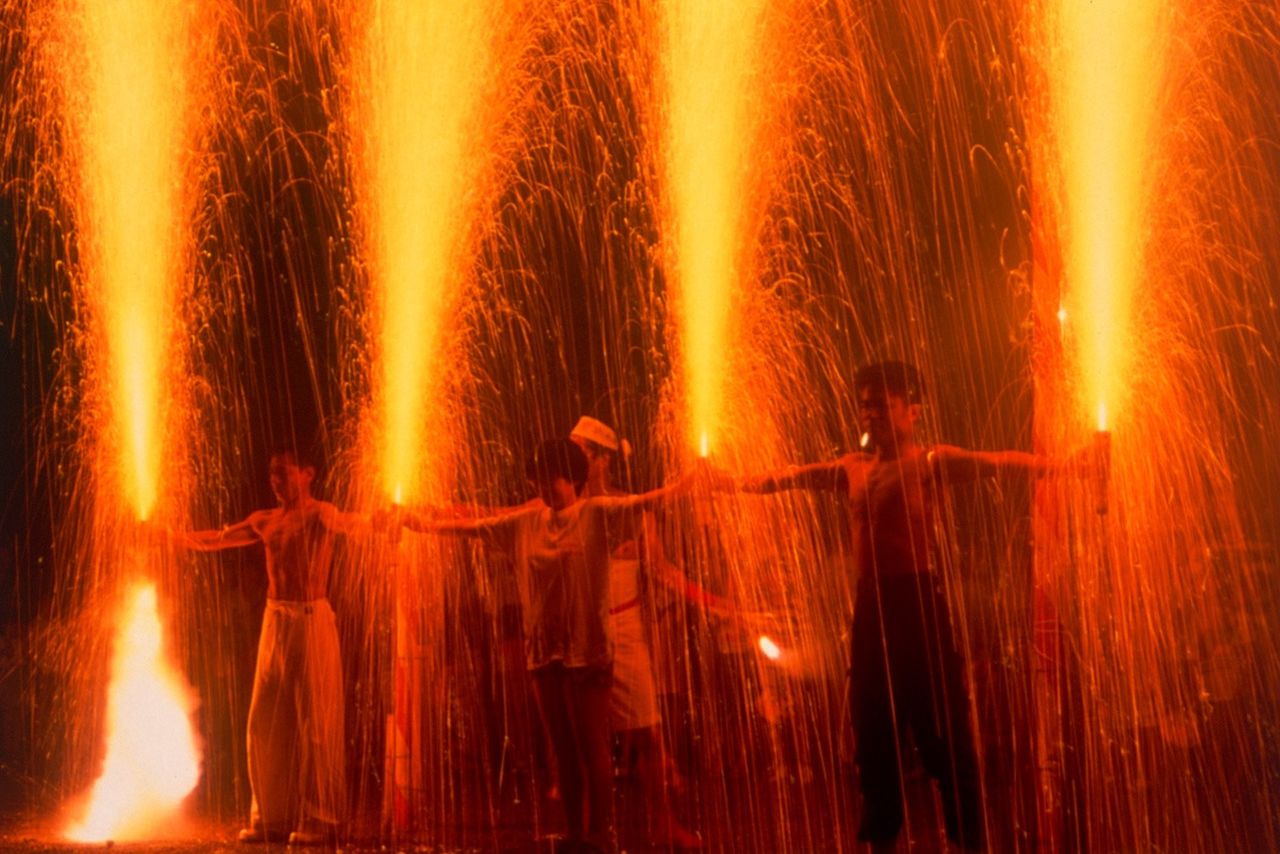
(© Nara Visitors Bureau)
Sawara Grand Festival: July 10–12
Floats made of zelkova wood carry spectacular, four-meter-high dolls as they wind through the streets of Sawara, Chiba, in this celebratory event, which is among the float festivals listed by UNESCO as Intangible Cultural Heritage in Japan. The rapid turns of the float are thrilling to watch.
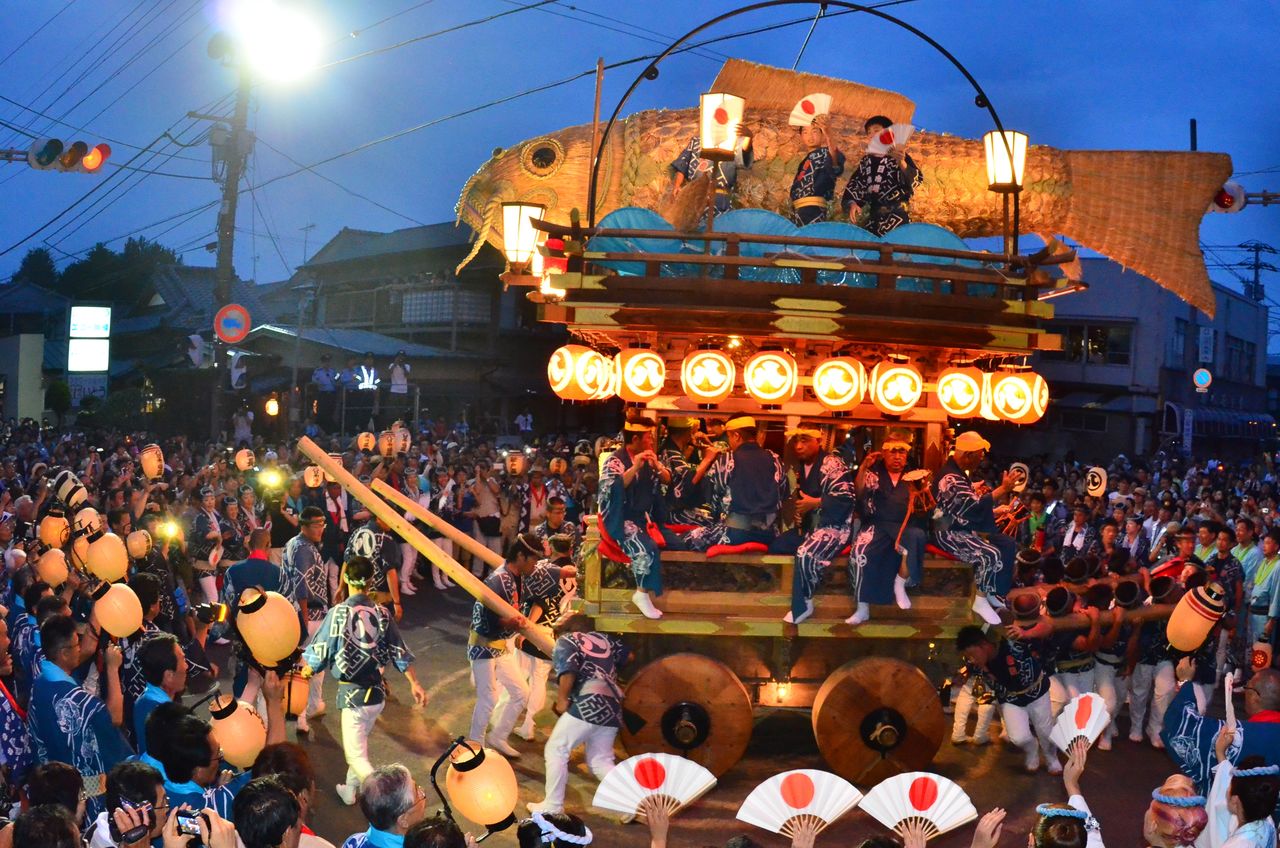
(© Katori municipal government)
Izunuma-Uchinuma Lotus Festival: Mid-July
Visitors can take boat trips to view lotus flowers on the Izunuma and Uchinuma lakes in Kurihara and Tome, Miyagi Prefecture. When surrounded by the lotus blooms, boat riders report feeling like being in a Buddhist paradise. It is best to view the flowers when they are fully open in the early morning.
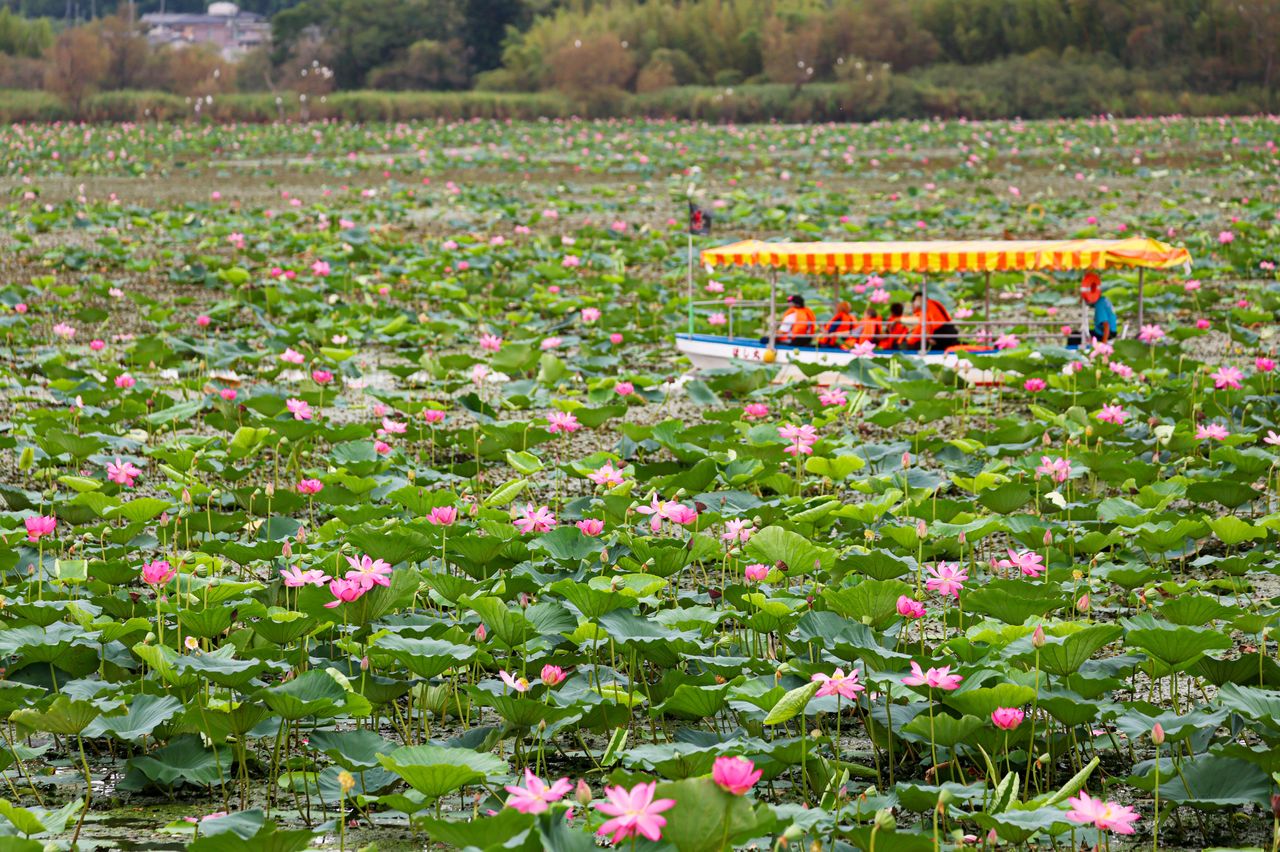
(© Jiji)
100th Anniversary of the Tokyo Metropolitan Art Museum (Edo in Focus: Japanese Treasures from the British Museum) at the Tokyo Metropolitan Art Museum: July 25–October 18
The British Museum has 40,000 pieces in its Japanese collection, particularly prized pieces including ukiyo-e and other art collected in the nineteenth century. This exhibition at the Tokyo Metropolitan Art Museum will showcase a selection with a focus on folding screens, hanging scrolls, and handscrolls from the Edo period (1603–1868). It will also display works by eight of the top ukiyo-e artists, including Utamaro, Sharaku, Hokusai, and Hiroshige.
Official website: https://www.tobikan.jp/en/exhibition/2026_britishmuseum.html
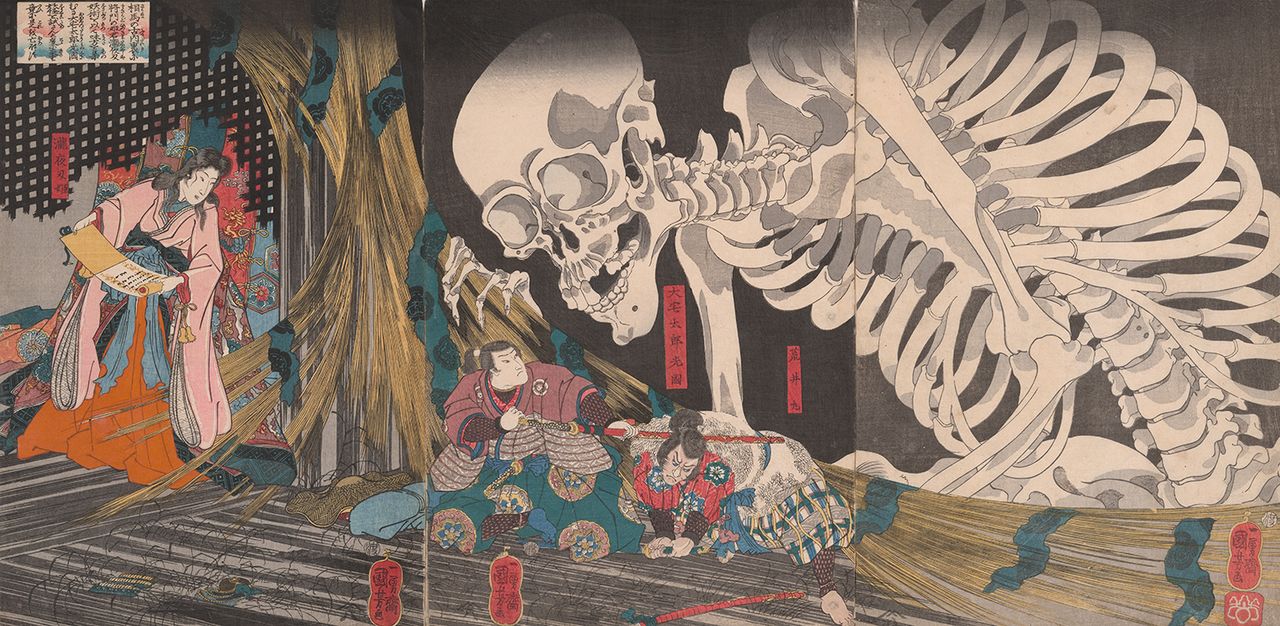
Princess Takiyasha and the Skeleton Spectre by Utagawa Kuniyoshi, 1845–46. (© The Trustees of the British Museum)
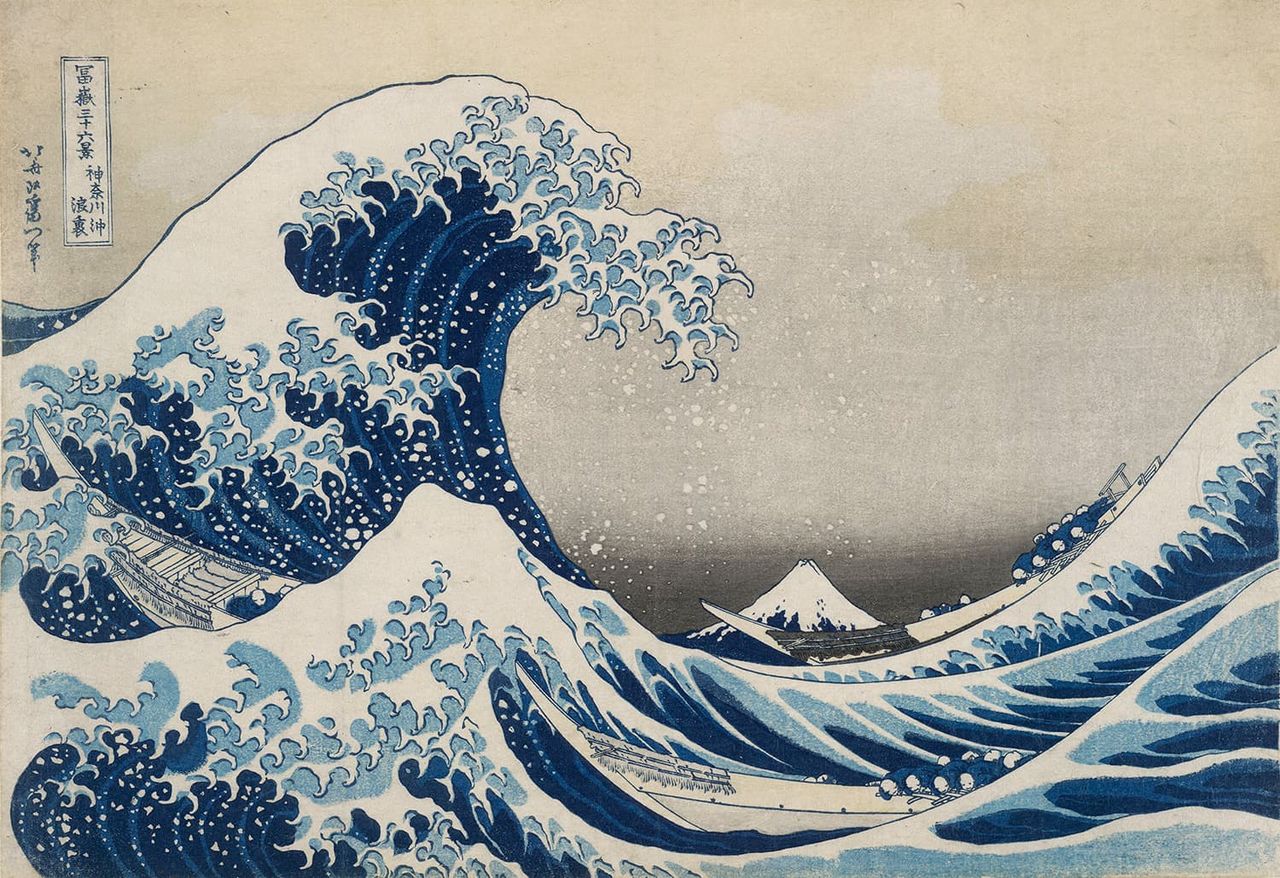
Under the Wave Off Kanagawa (“The Great Wave”), from the series Thirty-Six Views of Mt. Fuji by Katsushika Hokusai, c. 1831. (© The Trustees of the British Museum)
Nagaoka Fireworks Festival: August 2–3
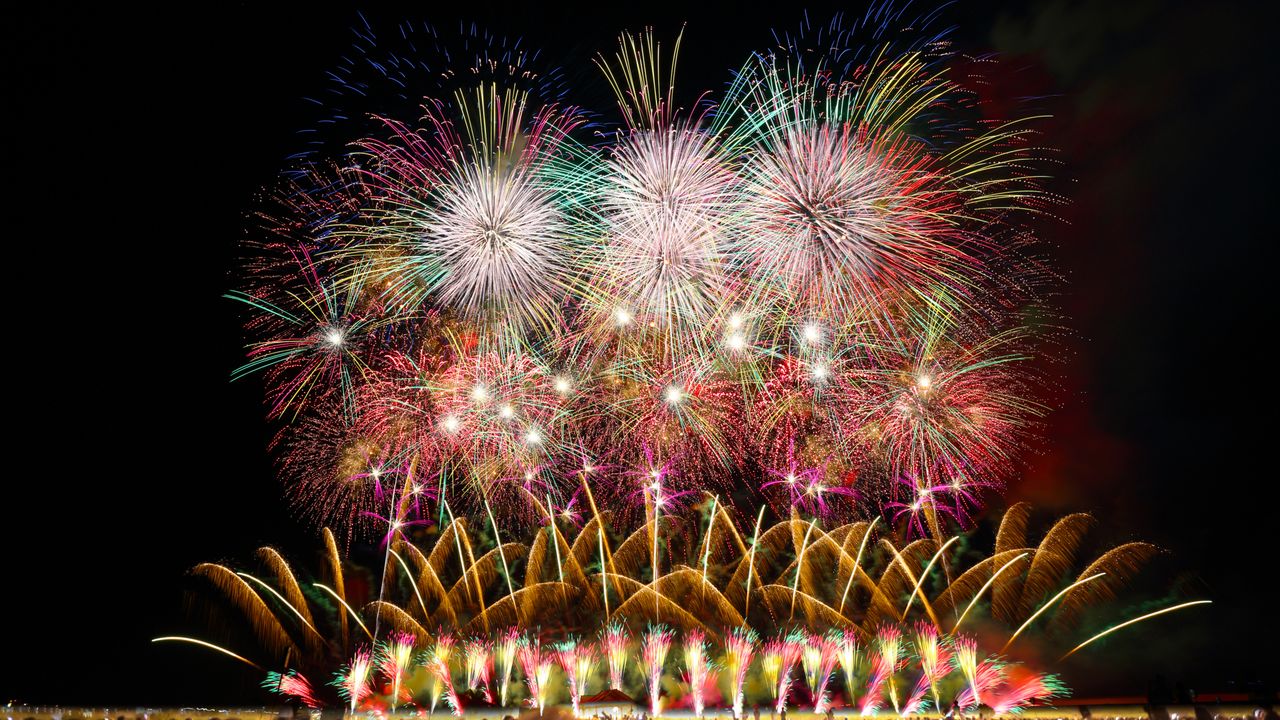
This event began in 1946 as a form of reconstruction and to remember those killed during major firebombing on August 1, 1945. From 1947 onward, it has been held on August 2 and 3. One massive firework bursts to spread across the sky with a diameter of 650 meters, while the Phoenix display stretches for two kilometers.
Suhōtei Festival: August 7–13
Taking place at Iminomiya Shrine in Shimonoseki, Yamaguchi, this festival is said to have started 1,800 years ago to commemorate a victory in battle against oni by the legendary Emperor Chūai. Men carry huge bamboo poles, 30 meters long and weighing 100 kilograms, with banners attached, while women hold lanterns on bamboo branches as they circle the oni stone within the shrine. Once little known outside the area, the festival has become more famous via social media, with the number of international visitors increasing each year.
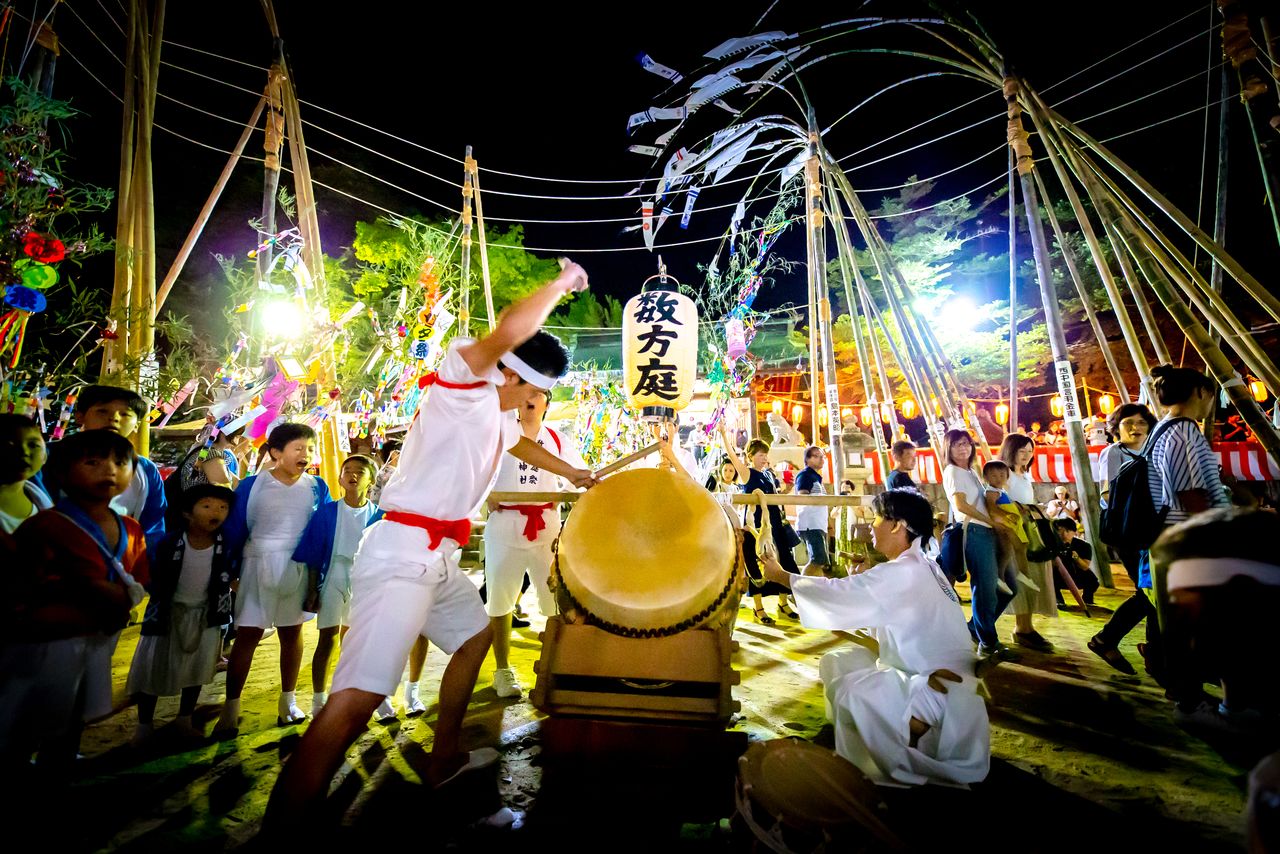
(© Yamaguchi Prefectural Tourism Federation)
Ōmagari Fireworks Festival (National Fireworks Competition): August 29
Top pyrotechnicians picked from around the country gather in Daisen, Akita, for this fireworks competition. It is the only Japanese contest to include a category for daytime fireworks, using smoke and color instead of light. In the nighttime category, the participants compete with two shells regulated in size, followed by a performance lasting two and a half minutes.
Official website: https://www.omagari-hanabi.com/en/overview/summer
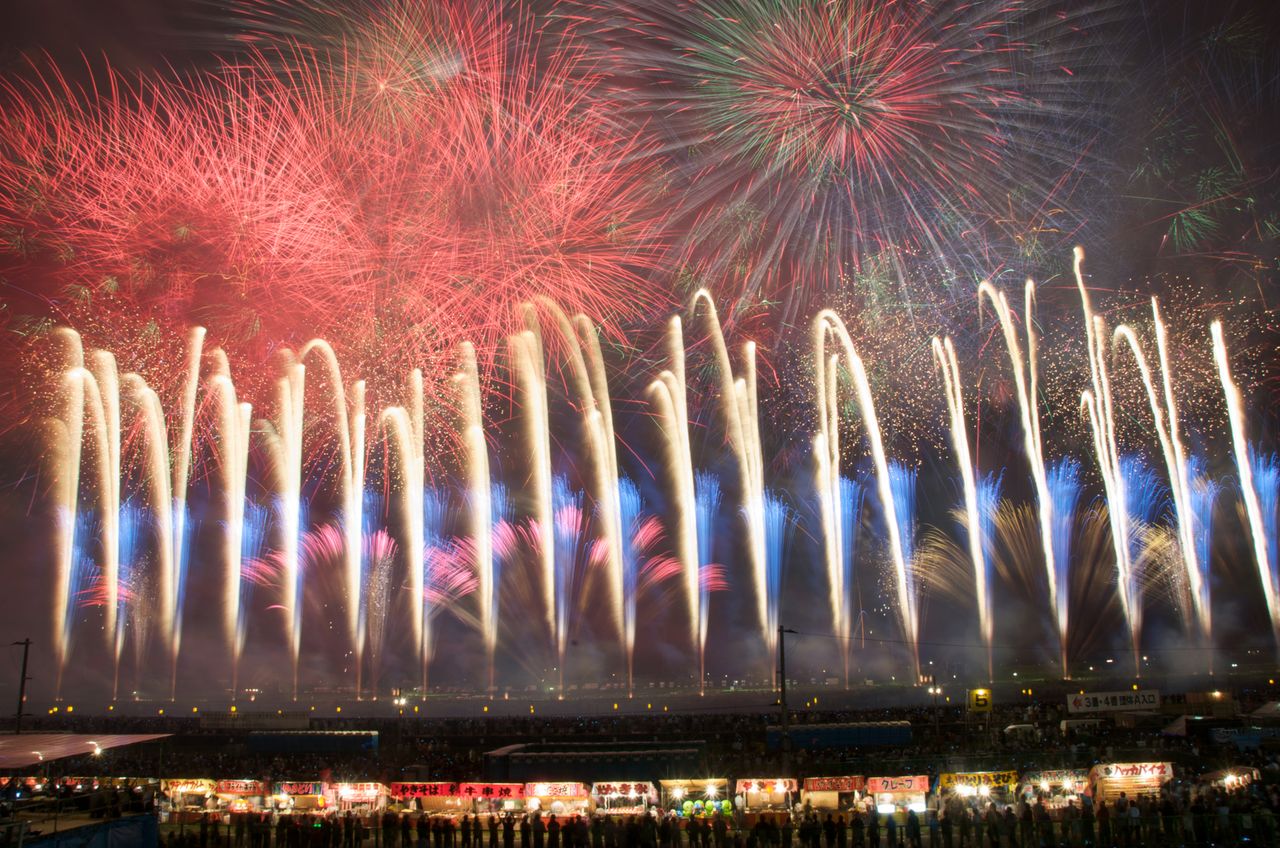
(© Tōhoku Tourism Promotion Organization)
(Translated from Japanese. Banner photo: A display at the Nagaoka Fireworks Festival. © Niigata Prefectural Tourist Association.)