Notable Deaths in 2025
Newsfrom Japan
Society- English
- 日本語
- 简体字
- 繁體字
- Français
- Español
- العربية
- Русский
January 5
Lee Hoesung (89): Writer
Lee, who wrote under the penname Ri Kaisei, was the first Zainichi Korean to win the Akutagawa Prize, which he received in 1972 for the story Kinuta o utsu onna (The Cloth Fuller). Born in 1935 in Karafuto (now Sakhalin), he settled with his family in Sapporo, Hokkaidō, after World War II. He earned a degree in literature from Waseda University and started working for the Zainichi Korean newspaper Choson Sinbo. His literary debut came in 1969 with Mata futatabi no michi (The Same Road Again), which won the Gunzō Prize for New Writers. His works were often semi-autobiographical, recounting the experiences and history of ethnic Koreans living in Japan.
March 25
Shinoda Masahiro (94): Film Director
As a leading figure of postwar Japanese New Wave cinema, Shinoda was known for films that explored both avant-garde and traditional themes, notably his 1969 Double Suicide. Born in 1931 in Gifu, he joined the film studio Shōchiku in 1953 and made his directorial debut in 1960 with One-Way Ticket to Love, about a group of struggling musicians. He retained a distinct aestheticism over his long career even as he departed from his earlier style, with films like MacArthur’s Children (1984) and Gonza the Spearman (1986), a lavish adaptation of a work by Edo-period playwright Chikamatsu Monzaemon that won the Silver Bear at the Berlin International Film Festival.
June 3
Nagashima Shigeo (89): Baseball Player and Manager
Nagashima was widely admired as Japan’s “Mr. Baseball.” Born in Sakura, Chiba, in 1936, he was a star player for Rikkyō University, where he hit a record-setting eight home runs in play among the six Tokyo universities. He joined the Yomiuri Giants of Nippon Professional Baseball in 1958 and captivated fans with his flamboyant play. Paired with the Oh Sadaharu as part of the “ON Cannon,” he was a pillar of a Giants dynasty that saw the club win nine straight Japan Series championships. He won a slew of honors over his playing career, including six batting titles and five MVP awards. He served several stints as Giants manager starting in 1975, winning the Japan Series with the club in 1994 and 2000.
Nagashima was inducted into the Japanese Baseball Hall of Fame in 1988. He received the People’s Honor Award in 2013, and in 2021 he became the first baseball player to be bestowed the prestigious Order of Culture.
July 14
Inoue Manji (96): Ceramic Artist
Inoue was a Living National Treasure and leading figure in Japanese ceramics. Born in 1929 in Arita, Saga, he first trained in the colorful patterns of Aritayaki potty before devoting himself solely to producing white porcelain, earning high acclaim for his beautiful, translucent pieces. He established his own kiln 1971 at the age of 42, and over his career he visited the United States more than a score of times to teach pottery, starting in 1969 with a stint at Pennsylvania State University. He tirelessly refined his form and clarity of his works, helping spread the reputation of Aritayaki globally.
July 18
Tamiya Shunsaku (90): Chairman of Tamiya Corporation
A pioneer of plastic modeling, Tamiya, who was born in 1934, became captivated by model building in elementary school. He joined his father’s wooden model manufacturing company in 1958 and soon began producing plastic models. He became president of Tamiya Plastic Model in 1977 and grew the company into a global brand known for its high-quality models and remote-control cars, such as the popular mini four-wheel-drive series. Tamiya had an uncanny eye for detail and would visit used bookstores to collect materials on tanks, cars, and aircraft, and even bought actual items when possible, to study the parts, drawing model blueprints himself.
August 10
Kamamoto Kunishige (81): Soccer Player and Manager
A world-class striker, Kamamoto was a core part of Japan’s bronze-medal run at the 1968 Mexico Olympics. Born in Kyoto in 1944, he attended Waseda University and made his international debut in 1964 at age 19 at the Tokyo Olympics. As a professional, he played for Yanmar Diesel, the forerunner of J. League club Cerezo Osaka, scoring 202 career goals in 251 appearances and claiming seven scoring titles in the Japan Soccer League. As an international, he claimed top scoring honors in Mexico with seven goals, including a brace in the bronze-medal match, and scored a record 75 goals in 76 appearances, which remains the all-time best for Japanese men.
He was a player/manager for Yanmar, and after retiring he was head coach of Gamba Osaka when the J. League launched in 1993. He was appointed vice chair of the Japan Football Association in 1998 and was influential in planning and carrying out the 2002 Korea-Japan World Cup. Outside soccer, he was elected to the House of Councillors in 1995, serving one term.
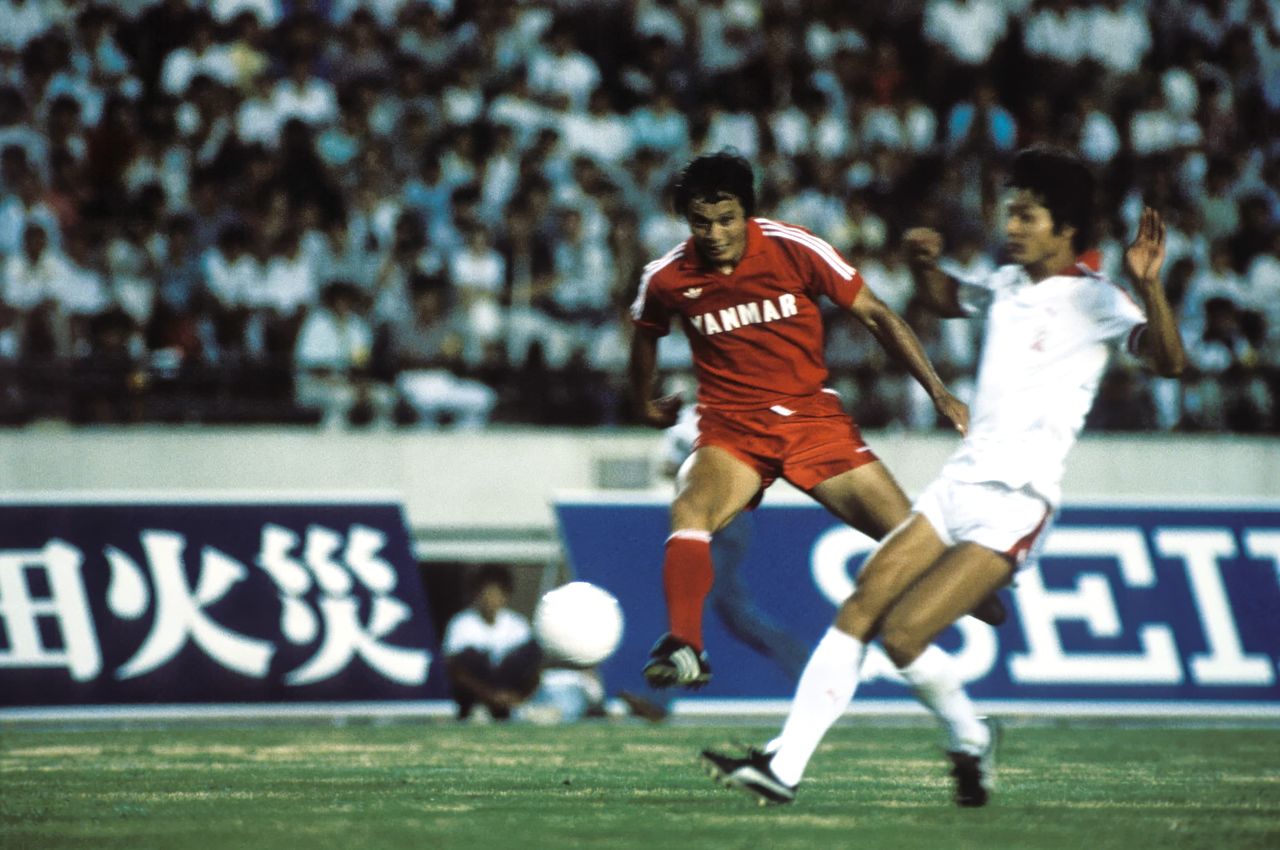
Kamamoto Kunishige, in red, vies for the ball during his retirement match in 1984 at the National Stadium in Tokyo. (© Jiji)
August 14
Sen Genshitsu (102): Tea Ceremony Grand Master
Sen devoted his life to advocating for world peace through chadō, the Japanese tea ceremony, holding ceremonies at such prominent locations as the UN headquarters and the Vatican. Born in 1923 in Kyoto, as a student he was drafted into the navy at the height of the Pacific War and chose to become a kamikaze pilot, although he was never called on to fulfill his grim duty. In 1964, he became the fifteenth head of the Urasenke school. He used his wartime experience and the spiritual legacy of his ancestor, tea master Sen no Rikyū, to promote “peacefulness through a bowl of tea.” He received the Order of Culture in 1997, and in his later years, he served as a goodwill ambassador to the UN and UNESCO.
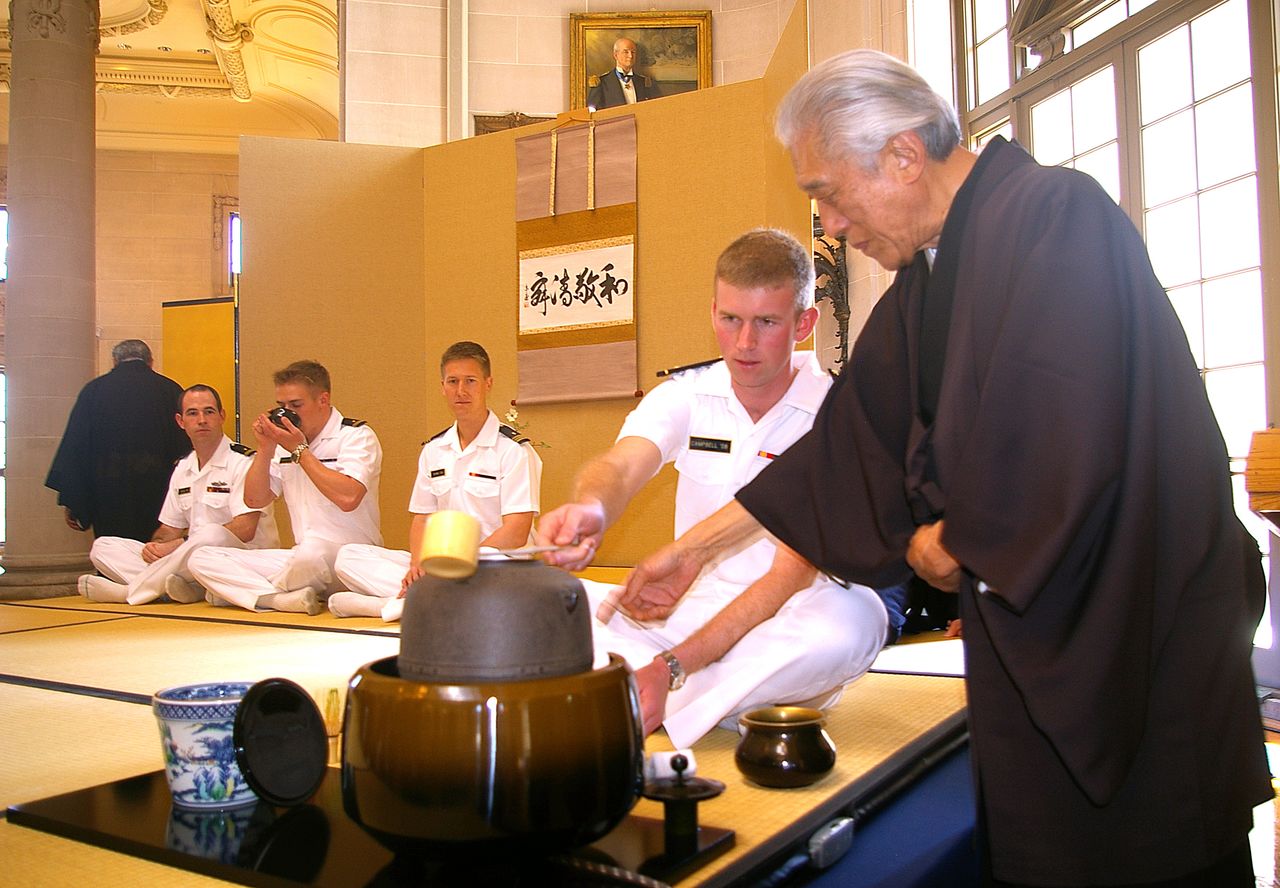
Sen Genshitsu (right) instructs US sailors in Annapolis, Maryland, in the Japanese tea ceremony in 2008. (© Jiji)
September 5
Narita Mayumi (55): Para Swimmer
A swimming sensation, Narita competed in four consecutive Paralympics, starting from Atlanta in 1996, and attended six games in all. She excelled at each stroke and competed in a wide range of events, winning 20 Paralympic medals, including 15 golds. Born in Kawasaki, Kanagawa, in 1970, she started swimming at age 23, with her natural athleticism also drawing her to pursue para athletics and para alpine skiing. After retiring, she dedicated herself to further developing parasports, including holding talks and serving as a commentator at parasports events.
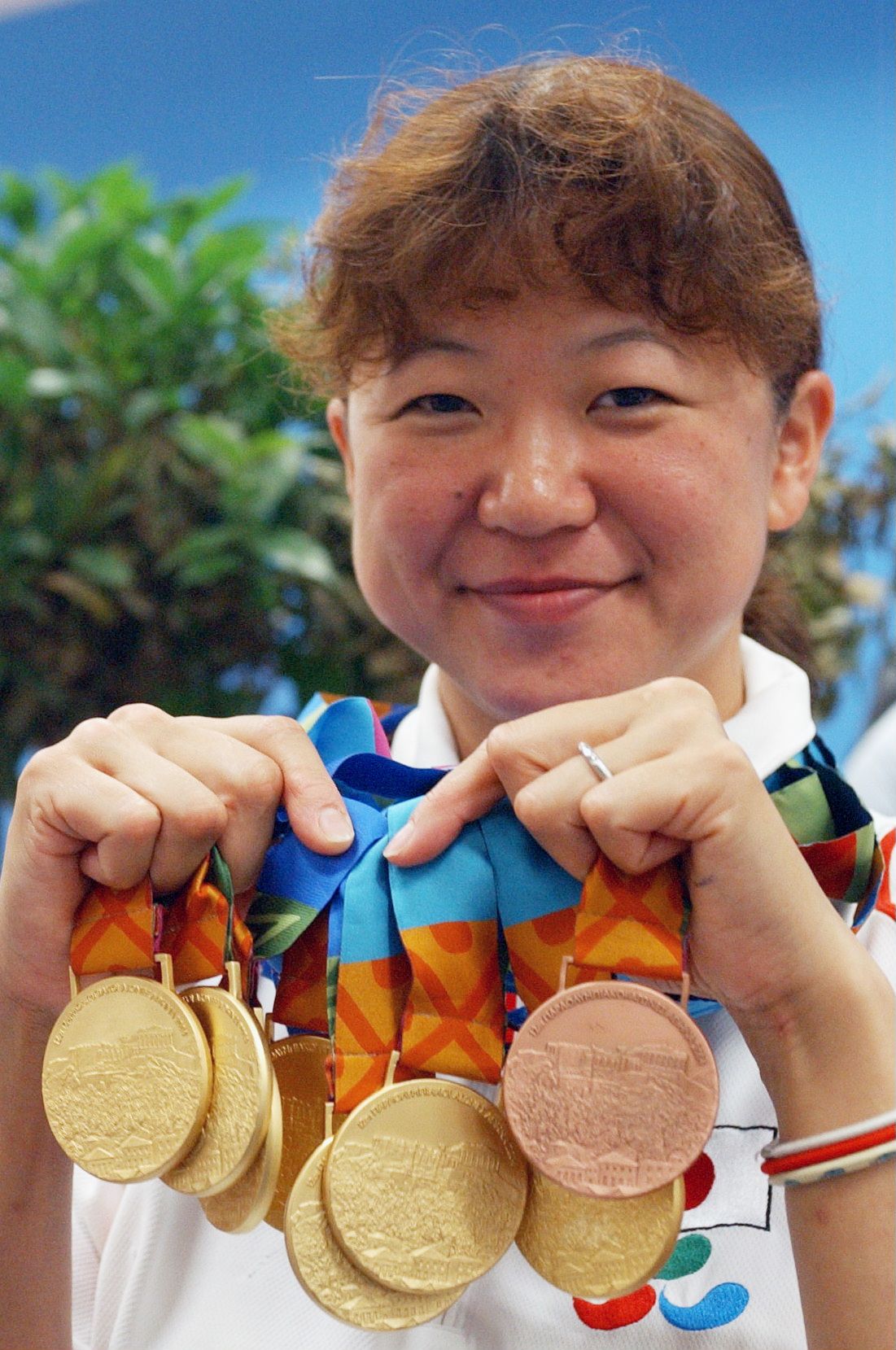
Narita Mayumi proudly displays her seven gold medals and one bronze from the Paralympics Games in Athens. Photo taken in Athens, Greece, in September 2004. (© Jiji)
October 17
Murayama Tomiichi (101): Former Prime Minister
Murayama became Japan’s prime minister in 1994 through a three-party alliance, led by his Japan Socialist Party. He is best known for the Murayama statement, in which he acknowledged Japan’s colonial rule and aggression with “deep remorse” and “heartfelt apology,” establishing the government’s official position on historical recognition for successive cabinets.
Born in 1924 in Ōita Prefecture, Murayama first joined the local fisherman’s union after the war, gaining experience and working his way up the political ladder as a member of the JSP. He served on the Ōita city council and Ōita prefectural assembly before being elected to the House of Representatives in 1972. As prime minister, he declared the Japanese Self-Defense Forces constitutional and maintained the Japan-US Security Treaty, in a drastic shift from the JSP’s pacifist principles. He was criticized for his slow response to the Great Hanshin-Awaji Earthquake and the sarin attacks carried out by Aum Shinrikyō in 1995. After stepping down in 1996, he worked to rebuild the JSP, renaming it the Social Democratic Party.
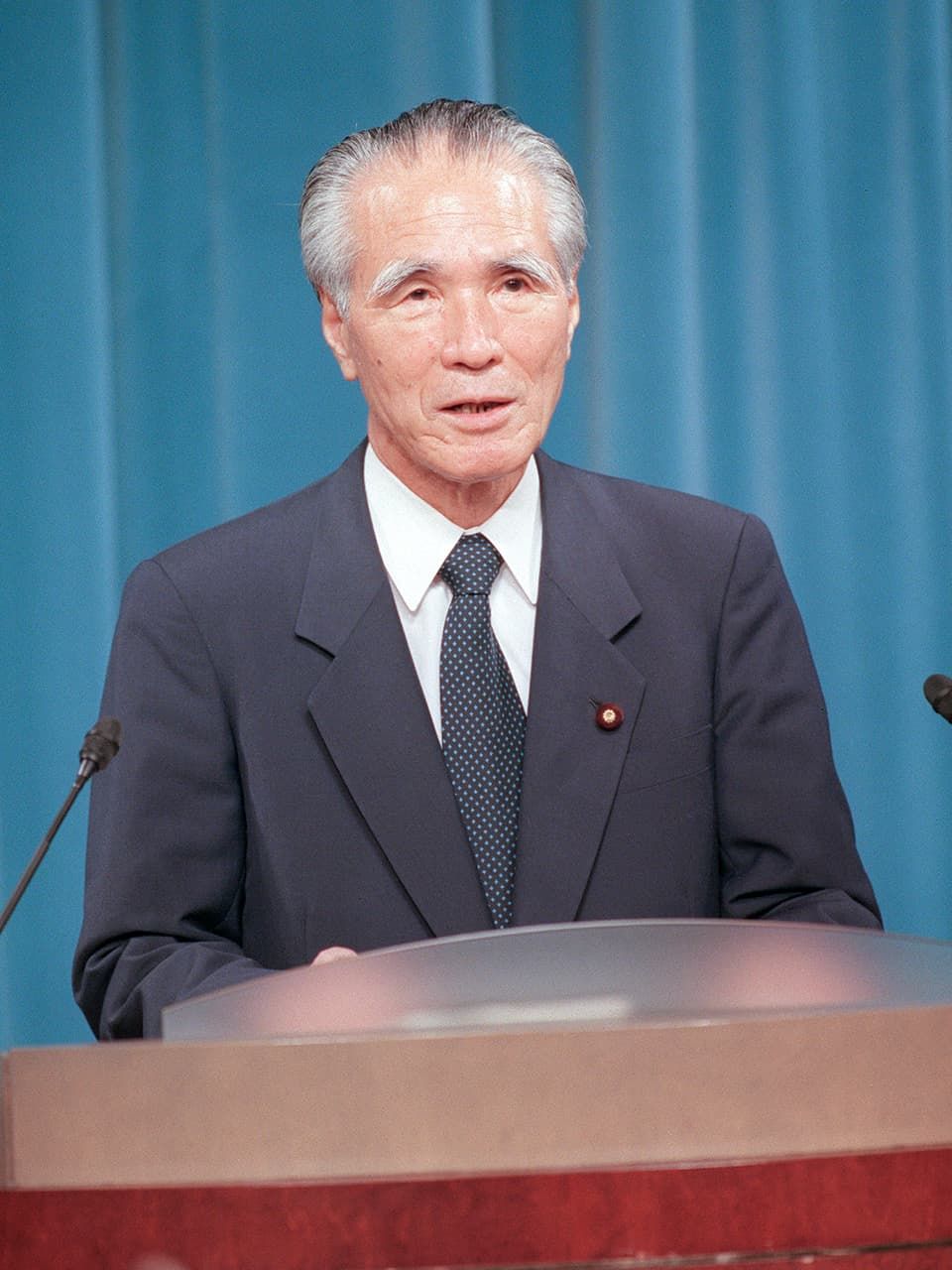
Prime Minister Murayama Tomiichi reads his historic statement on August 15, 1995, marking the fiftieth anniversary of the end of World War II. (© Jiji)
November 8
Nakadai Tatsuya (92): Actor
A star of Japan’s cinematic golden age, Nakadai won international acclaim for his roles in such masterpieces by Kurosawa Akira as Yōjimbō (1961), Sanjūrō (1962), and Kagemusha (1980), which won the Palme d’Or at the Cannes film festival. Born in 1932 in Tokyo, Nakadai gained attention as the lead in Kobayashi Masaki’s Human Condition trilogy (1959–61). He established the Mumeijuku acting school with his wife, the actress Miyazaki Yasuko. He was named by the government a Person of Cultural Merit in 2007 and received the Order of Culture in 2015.
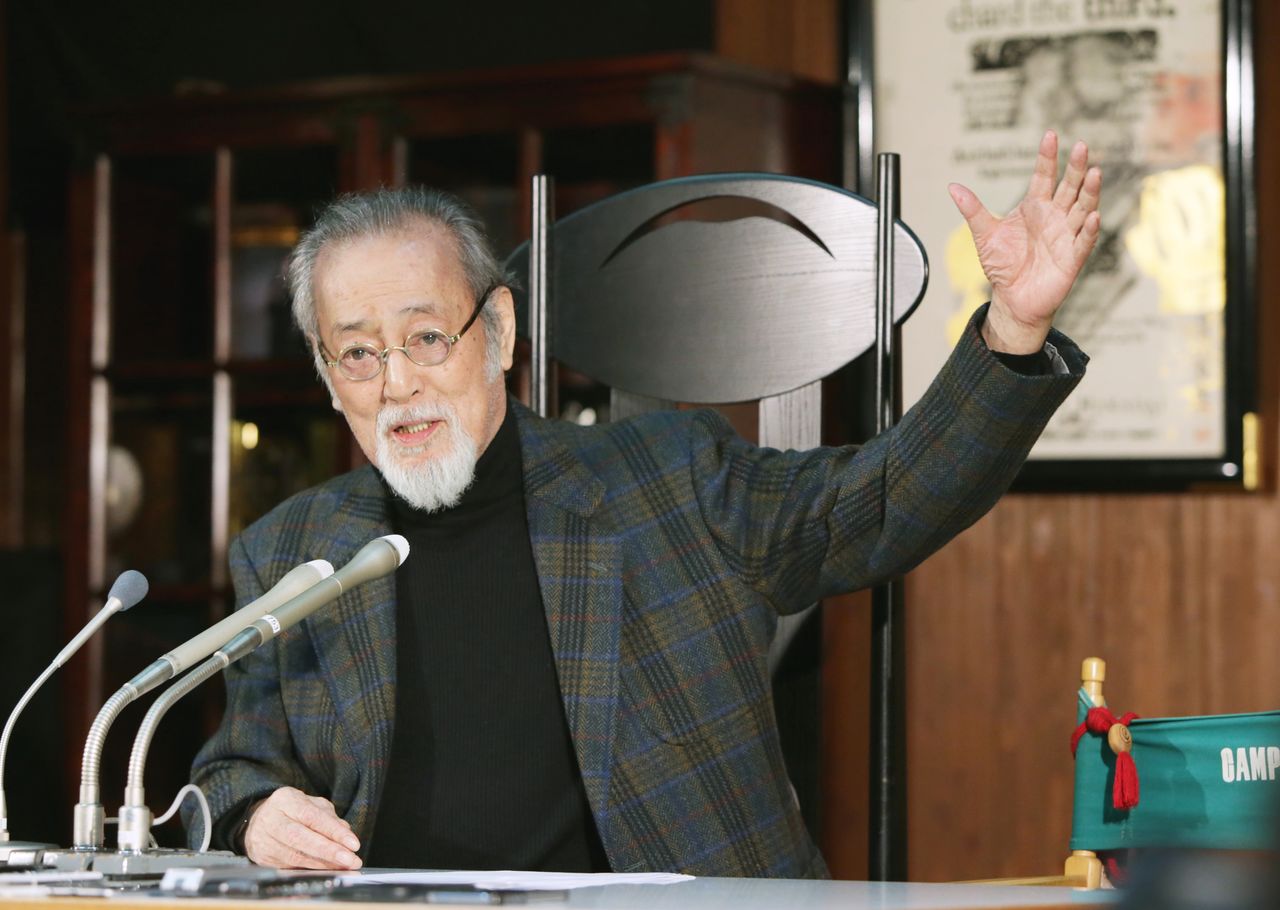
Nakadai Tatsuya speaks to the press at his acting school Mumeijuku in Tokyo in October 2015 after being awarded the Order of Culture. (© Jiji)
(Originally published in Japanese. Banner photo: Nagashima Shigeo stands beside a picture of himself as a player during an event in March 2018 celebrating the seventieth anniversary of the Tokyo Press Photographers Association. © Kyōdō.)