Literature and Supernatural Battles: Yokohama Exhibition Celebrates 10 Years of “Bungō Stray Dogs” Anime
Newsfrom Japan
Guide to Japan Culture Entertainment Manga Anime- English
- 日本語
- 简体字
- 繁體字
- Français
- Español
- العربية
- Русский
Literary Namesakes
The manga Bungō Stray Dogs, serialized in Young Ace since 2012, tells the story of a team of detectives who fight supernatural battles against the mafia in the port of Yokohama. Written by Asagiri Kafka and illustrated by Harukawa Sango, the manga was adapted into an anime series in 2016. It has a unique literary connection in that the characters take their names from famous writers (bungō means “classic author” in Japanese). As the story begins, Nakajima Atsushi, who has been driven out of an orphanage, meets the detectives Dazai Osamu and Kunikida Doppo, and becomes embroiled in their work.
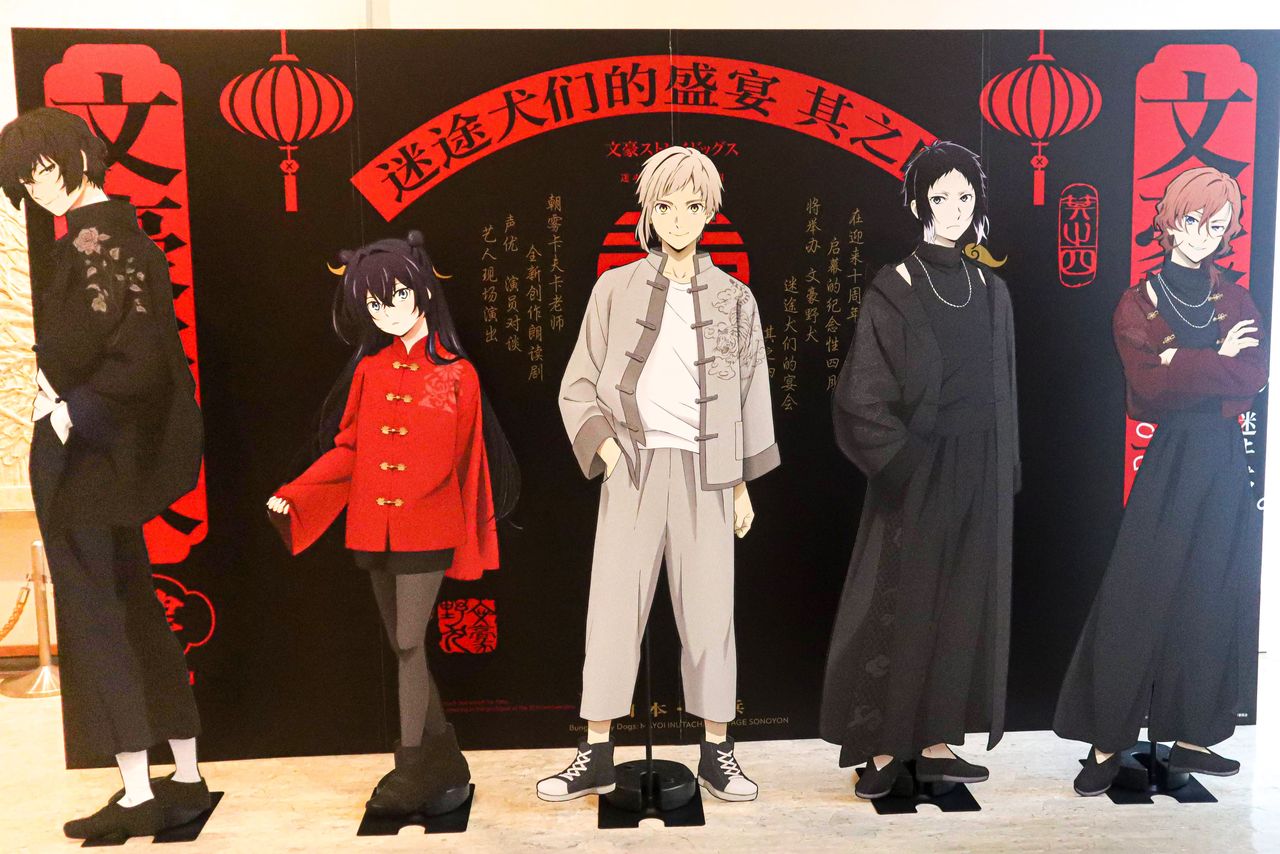
Life-size panels of the Bungō Stray Dogs characters at the entrance to Kanagawa Museum of Modern Literature. (© Nippon.com)
The characters’ powers are based on the works of the writers they are named after. For example, Nakajima’s Beast Beneath the Moonlight, which transforms him into a huge white tiger, derives from the real author Nakajima’s short story “The Moon Over the Mountain,” in which a man becomes a tiger.
A Bungō Stray Dogs exhibition at the Kanagawa Museum of Modern Literature running until July 12 marks the anime’s tenth anniversary. It includes 140 literary exhibits related to 30 authors, as well as a section dedicated to the anime.
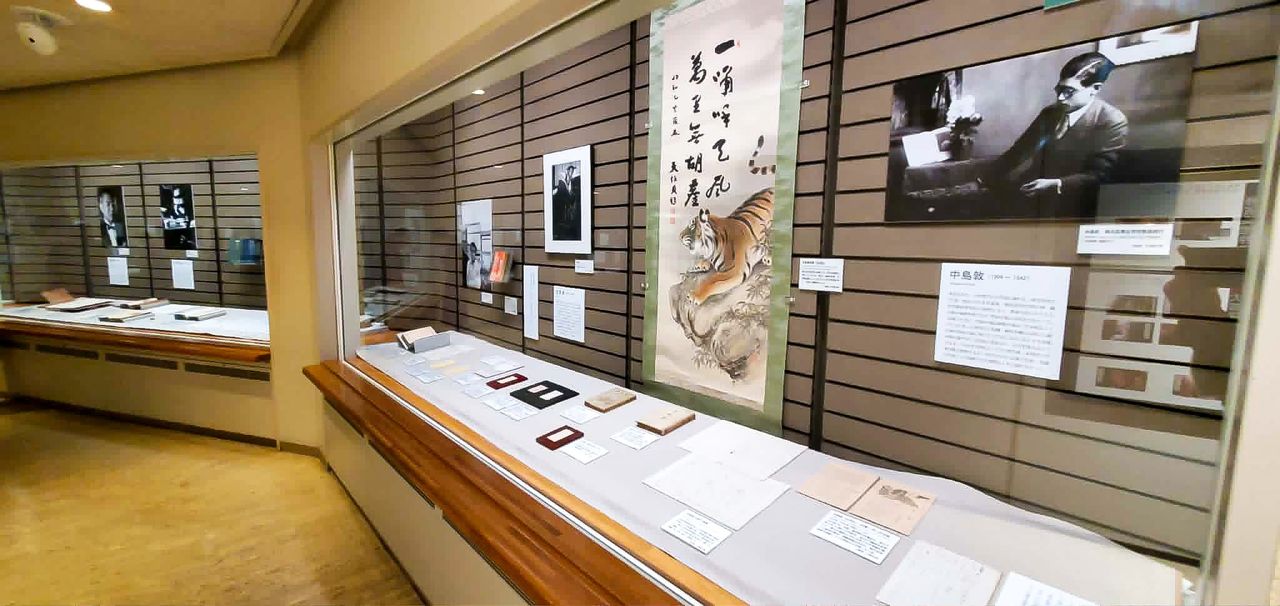
Exhibits connected with Nakajima Atsushi and Dazai Osamu. (© Nippon.com)
Among fragments of drafts of Nakajima’s “The Moon Over the Mountain” is the sentence “This shame always clings to my self-respect,” which is thought to be connected to the famous phrase in the story, “cowardly pride and arrogant shame,” used by the man who becomes a tiger to explain the reason for his transformation. This recalls the state of mind of the character Nakajima, who suffers, unable to accept himself. In this area, visitors can also view the tiger in a painting once owned by the author.
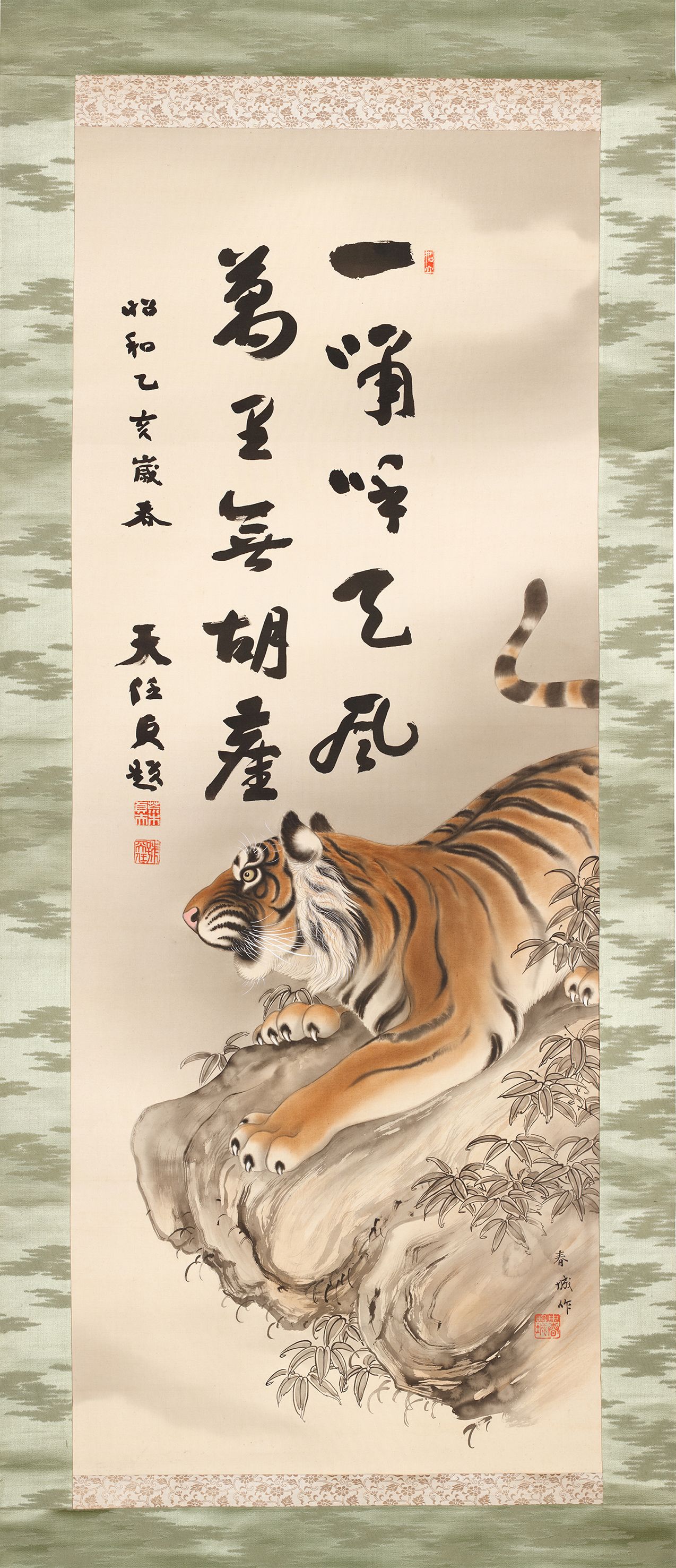
A painting of a tiger once owned by Nakajima Atsushi (painted by Nakajima Shunjō in 1935). (© Kanagawa Museum of Modern Literature)
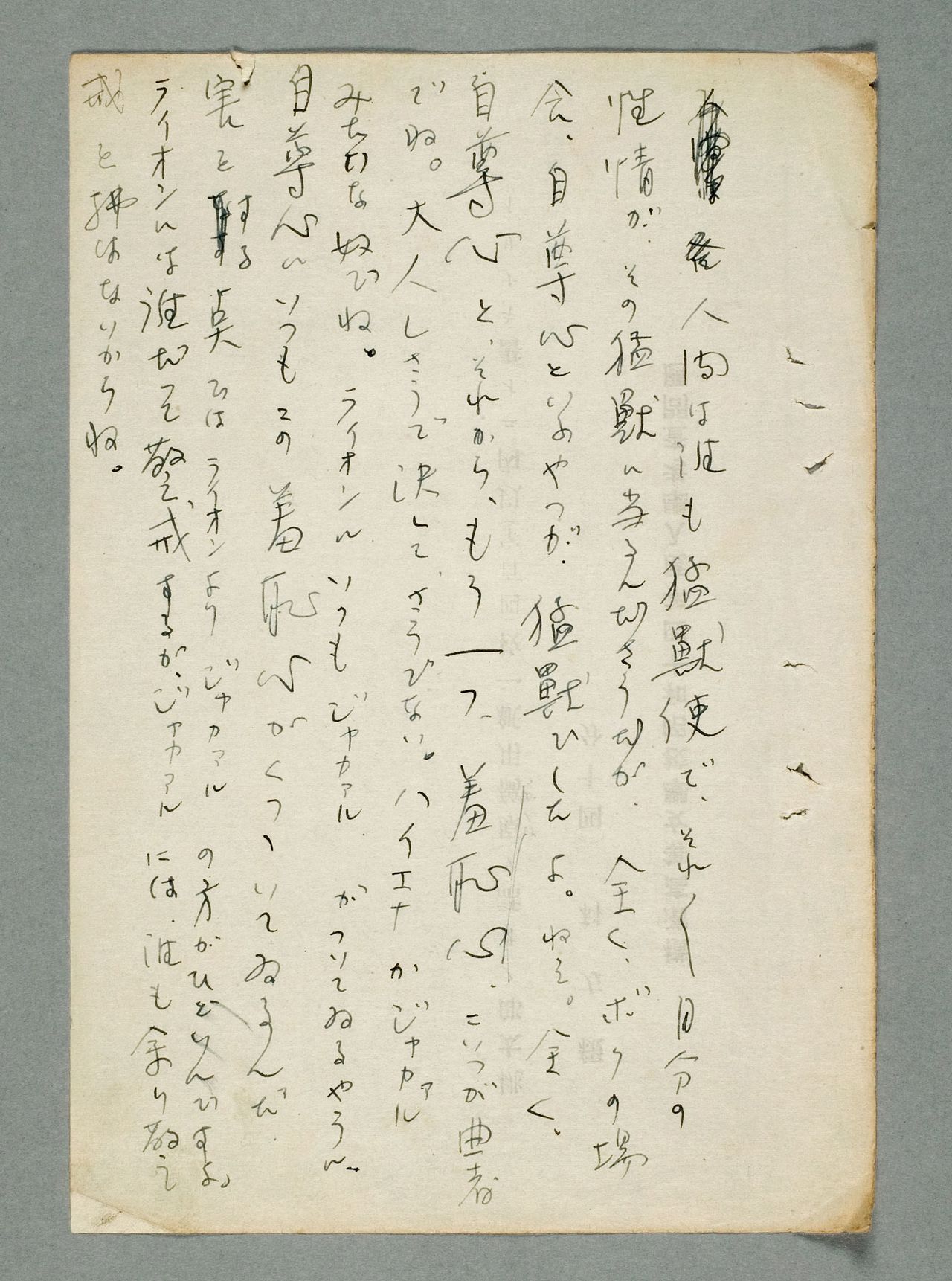
Fragments of drafts of Nakajima Atsushi’s “The Moon Over the Mountain.” (© Kanagawa Museum of Modern Literature)
The Real Bungō
Among the Dazai Osamu exhibits is a business card including a note in his own handwriting, conjuring up images of him meeting up with editors and publishers to discuss his works.
The Natsume Sōseki section introduces a printing block for manuscript paper. This was used to print paper customized to the character count of fiction serialized in newspapers.
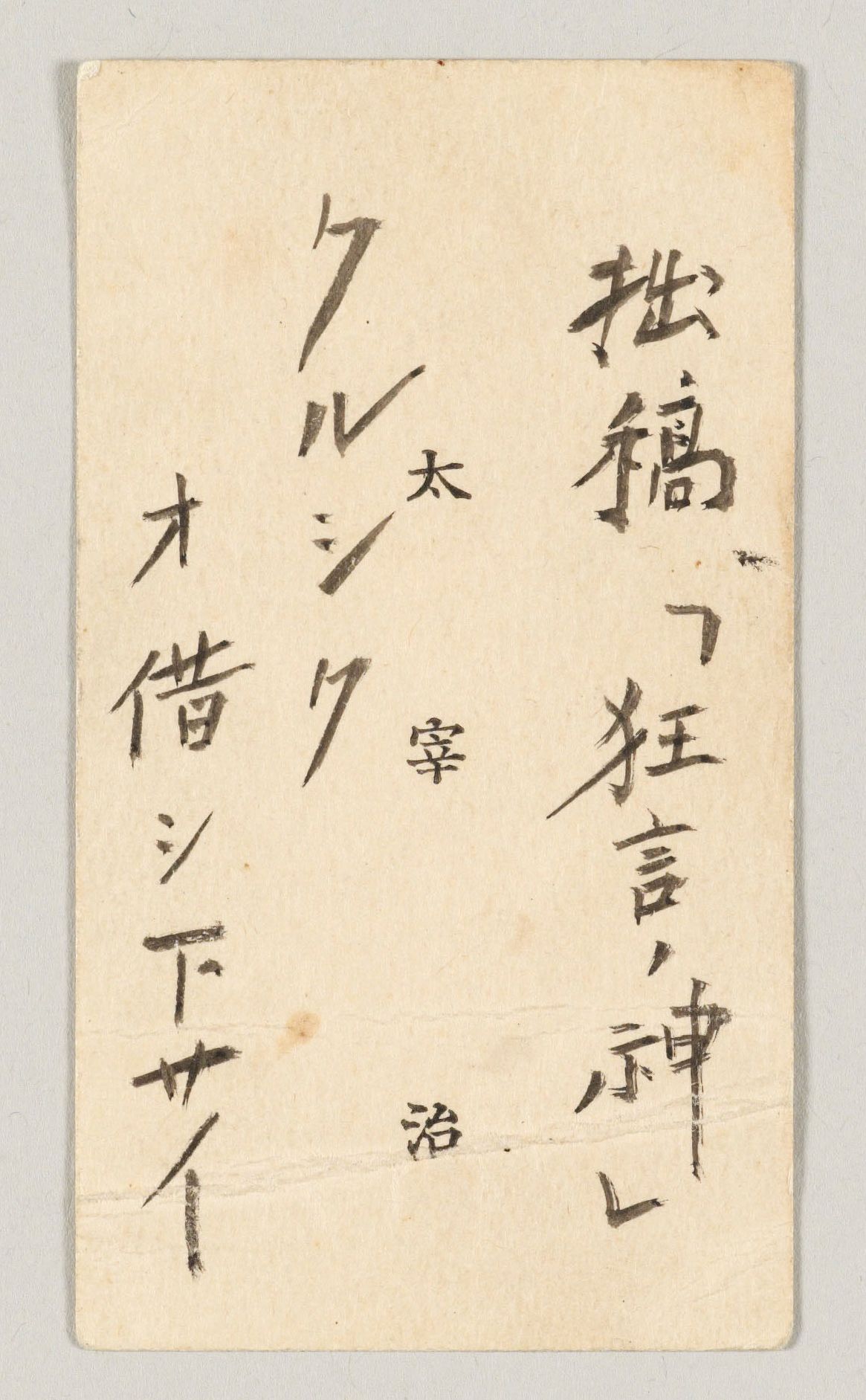
Dazai Osamu’s business card with a note about his story “Kyōgen no kami” (“The God of Farce”). (© Kanagawa Museum of Modern Literature)
Other sections feature writers including Kunikida Doppo, Edogawa Ranpo, Akutagawa Ryūnosuke, Nakahara Chūya, Tanizaki Jun’ichirō, Yosano Akiko, Miyazawa Kenji, and Mori Ōgai.
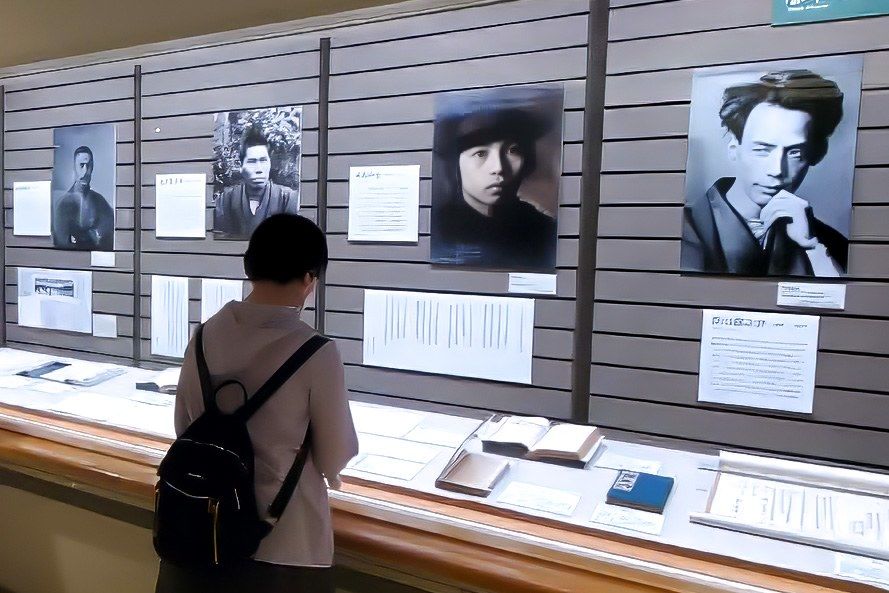
There are sections introducing a total of 30 authors. (© Nippon.com)
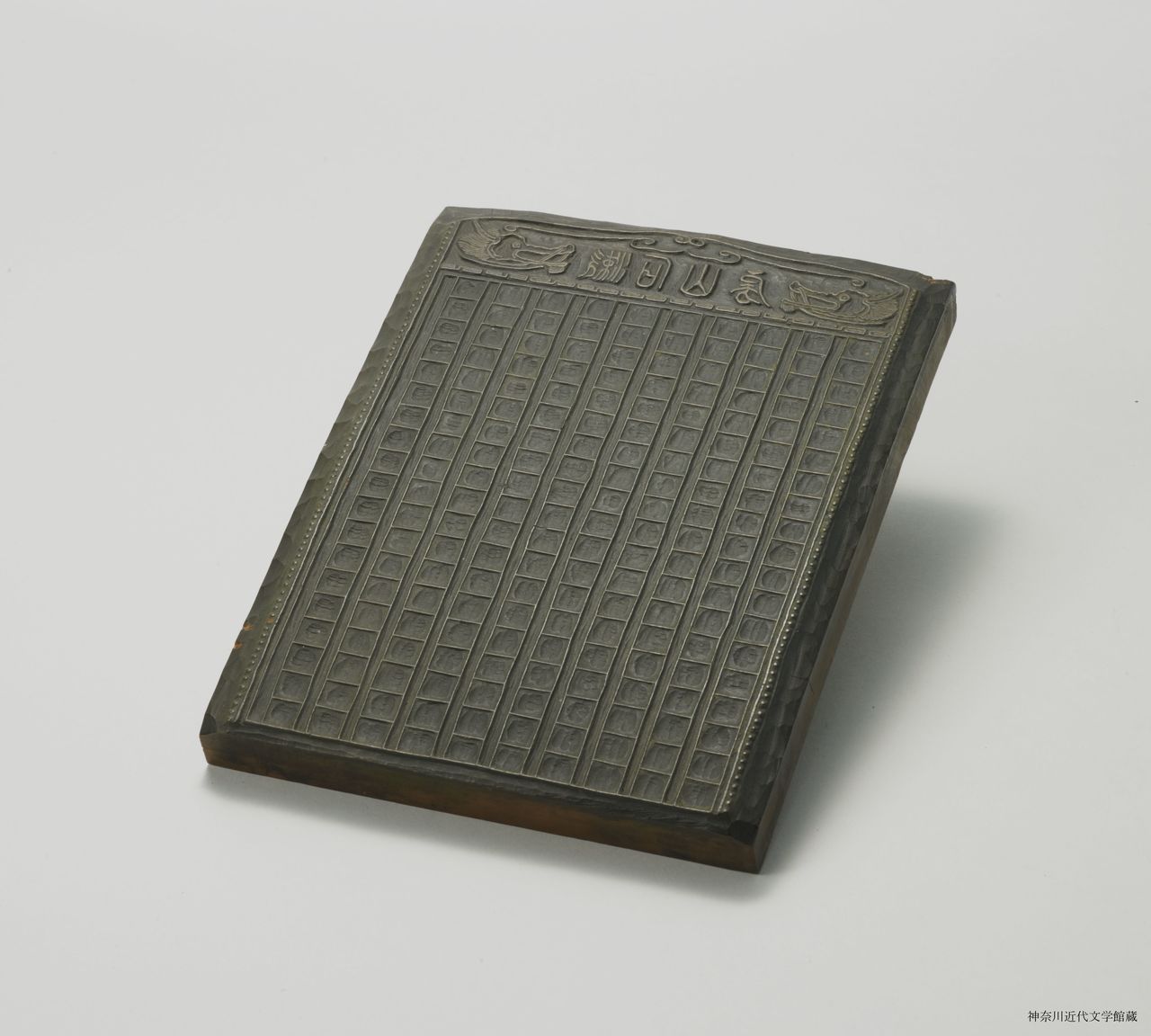
Natsume Sōseki’s printing block for preparing customized paper for serialized newspaper stories. (© Kanagawa Museum of Modern Literature)
Stage and Screen
There are also extensive materials from the anime and stage adaptations. A large screen by the entrance offers a five-minute introduction to Bungō Stray Dogs, and visitors can take photos in front of a panel of life-size characters. In the exhibition hall are 90 items, including original anime artwork, voice acting scripts, and costumes and props from the stage version.
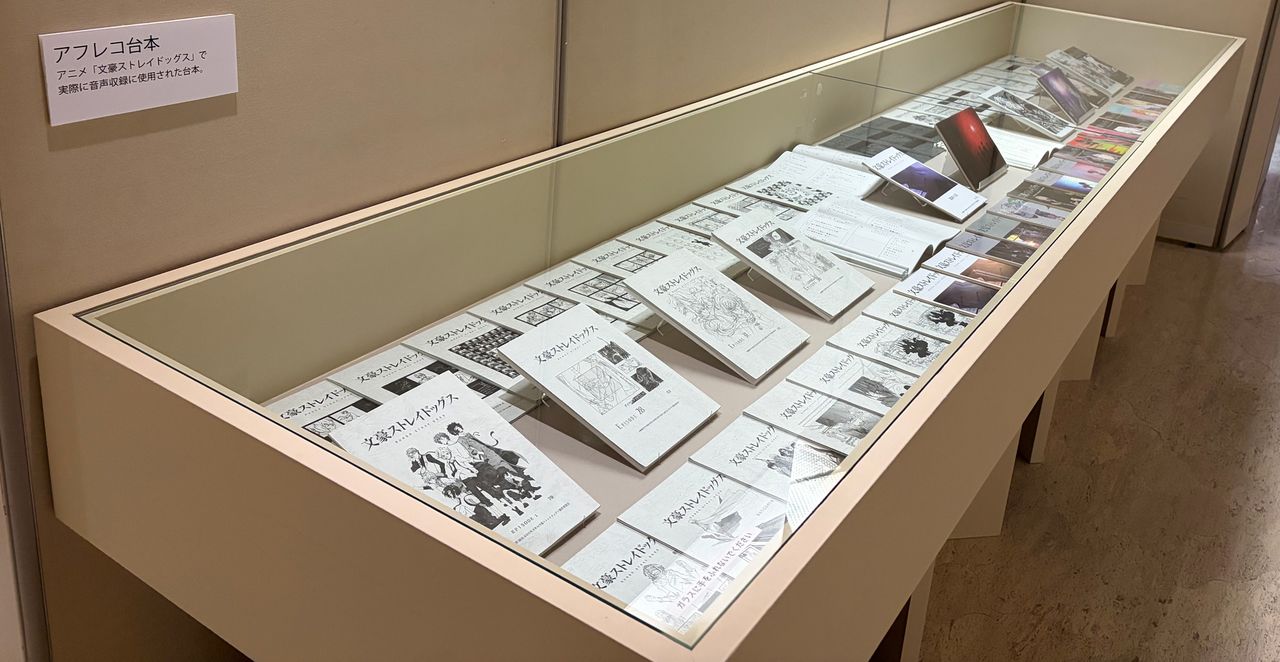
Voice acting scripts for the Bungō Stray Dogs anime. (© Kanagawa Museum of Modern Literature)
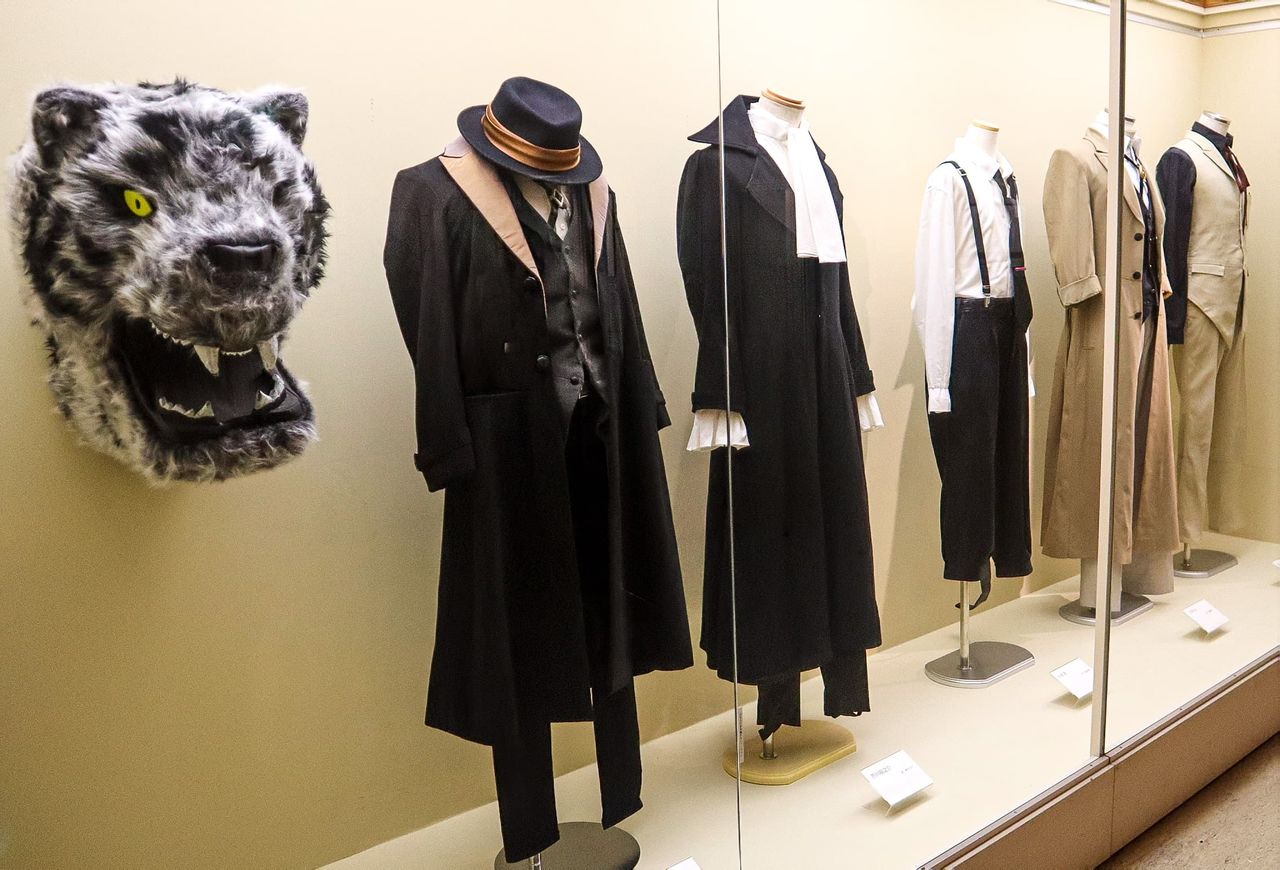
Costumes from the stage adaptation. (© Nippon.com)
The Kanagawa Museum of Modern Literature is located in Yokohama’s Harbor View Park. As a fictionalized version of the city is the main setting for Bungō Stray Dogs, local places that appear in the anime are on display.
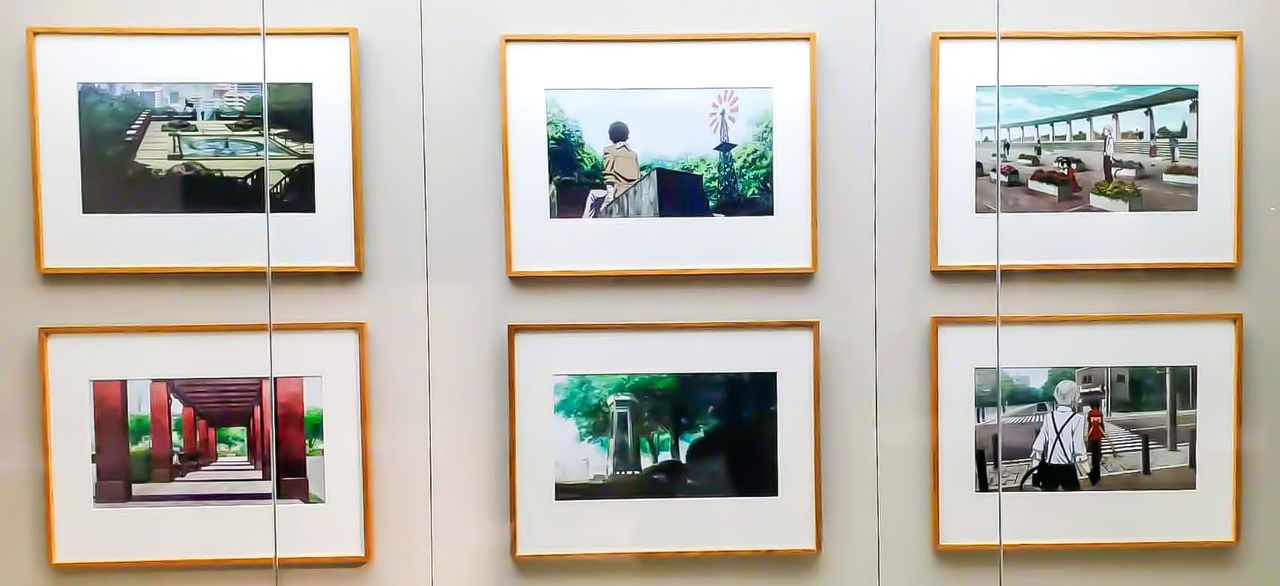
Scenes from the anime featuring Yokohama locations. (© Nippon.com)
The museum has run a number of collaborations with Bungō Stray Dogs since a Dazai Osamu exhibition in 2014, and this tenth anniversary exhibition builds on that history.
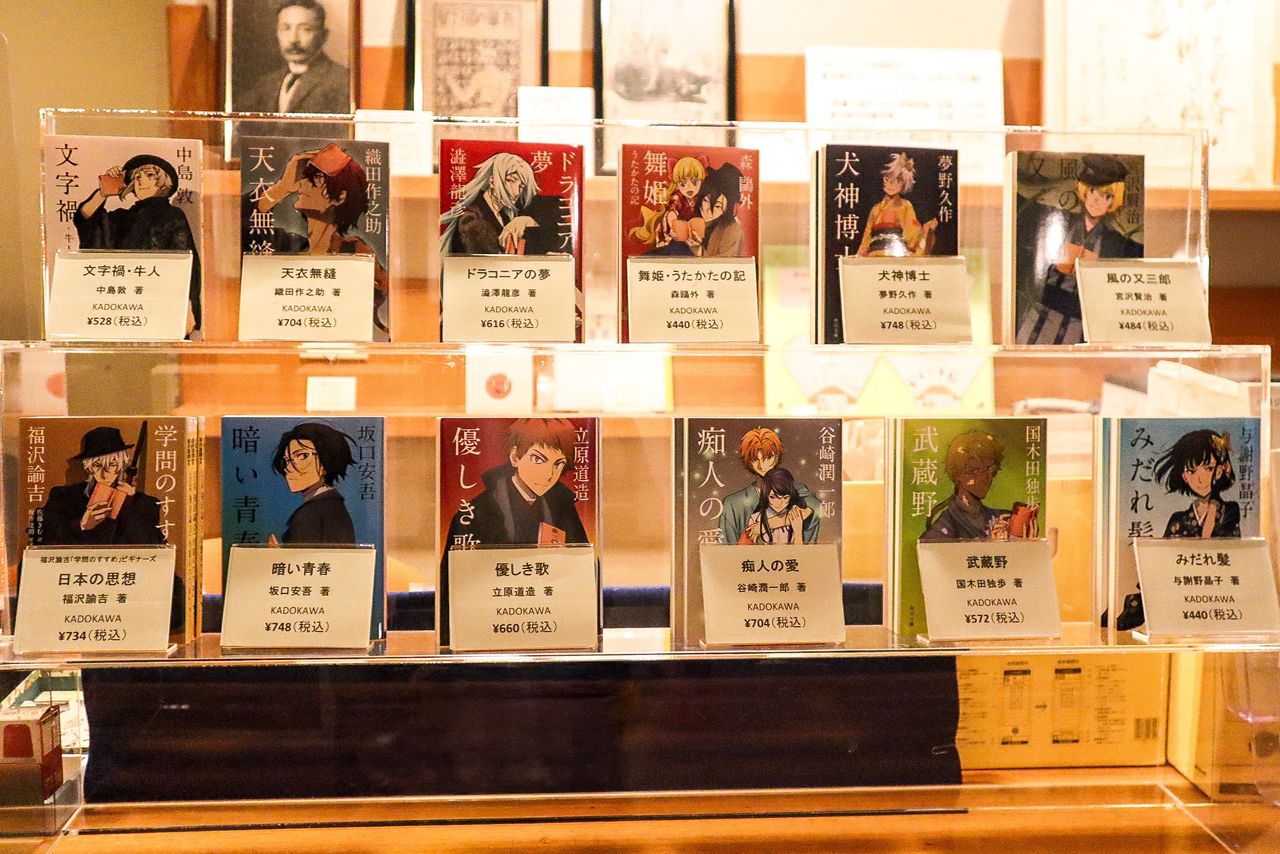
Works by classic writers with their Bungō Stray Dogs character counterparts on the covers are on sale in the museum shop. (© Nippon.com)
The museum café Sushi Kissa Sususu has some limited-edition menu items to tie in with the exhibition. The Bungō-don is a seafood-on-rice creation, the Rashōmon Black Sesame Pudding takes its name from Akutagawa’s famous short story, and the No Longer Human Highball is based on the Denki Bran cocktail mentioned in Dazai’s novel.

Exhibition tie-in items at Sushi Kissa Sususu, from left: the No Longer Human Highball, the Bungō-don, and the Rashōmon Black Sesame Pudding. (© Nippon.com)
Bungō Stray Dogs Anime Tenth Anniversary
- Venue: Kanagawa Museum of Modern Literature, Yokohama
- Exhibition dates: June 6–July 12, 2026 (closed on Mondays)
- Hours: 9:30 am–5:00 pm (last entry 30 minutes before closing)
- Admission fees: Adults ¥800; Visitors over 65 or under 20, students ¥400; High school students ¥100. Admission is free for junior high school students and younger.
- Admission method: By reserved time slot at weekends (adult tickets via Lawson Ticket; all others via official website). Same-day tickets available on weekdays, subject to capacity by time slot. Weekday reservations can also be made via the official website.
- Access: A 10-minute walk from Exit 6 of Motomachi-Chūkagai Station on the Minatomirai Line.
- Official homepage (Japanese) https://www.kanabun.or.jp/exhibition/27729/
(Translated from Japanese. Banner photo: The Bungō Stray Dogs Anime Tenth Anniversary Exhibition. © Nippon.com.)