


Effects of Procurement Quotas
The procurement quota for newly launched firms can be expected to energize innovative companies by accelerating the birth of start-ups and the creation of spinoffs from major corporations. Early in the Meiji era (1868–1912), new space for economic activities was created through the rise of lower-ranking samurai, and in the postwar period the dissolution of the zaibatsu conglomerates and the purge of business leaders had a similar effect. In the wake of the recent disaster, there is a need for opening up new economic space once again to facilitate the reconstruction process. If this is not done, existing companies will continue to employ conventional methods, obstructing the emergence of innovation. By the same token, the procurement quota for smaller local companies would have the objective of not just creating jobs but also drawing in the necessary human resources. I have heard that many young people are now heading off to Tōhoku or returning there in order to take part in the reconstruction; places where they can be put to work need to be readied.
The quota for foreign corporations is also important. As the architect Andō Tadao has emphasized, foreign companies will not show much interest in the construction of new cities and towns if they do not have a state-of-the-art design. They need to be attractive projects that whet the appetite of investors. In light of this, a quota would be sure to draw the attention of overseas companies. It would also have other benefits. In the public works sector, the participation of foreign companies in construction projects would likely put an end to exclusionary business practices, and the price tags of winning construction bids could be expected to fall considerably. Innovative methods underpinned by a variety of conceptions could also be expected. As a result of the catastrophe, Japan has become the world’s largest recipient of assistance, and we need to make the benefits we have received openly available to the world in order to repay this kindness. This would be Japan’s third period of opening itself to the world—following the Meiji and postwar openings.
The Need for Decentralization
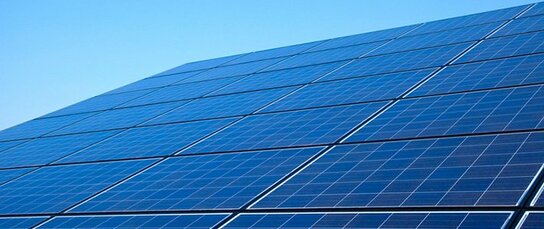
As the nation begins work on the construction of decentralized eco towns and smart cities, we must recognize that an important part of the paradigm shift involves ending the lopsided concentration of functions in Tokyo and establishing a decentralized society with more regionally autonomy. The building of these new municipalities represents a departure from the paradigm in which every effort was made to achieve balanced development in all parts of Japan. Under a series of Comprehensive National Development Plans, essentially identical cities were built nationwide, regardless of differences in climate and natural features. What is now needed, however, is a development plan that makes the most of the distinctive character of each region. Urban development based on the fourth of the Comprehensive National Development Plans resulted in areas around train stations and airports throughout Japan looking the same and in sprawling urban areas. Community building for eco towns and smart cities needs to take a different approach. For one thing, it must be premised on local electricity generation utilizing solar, wind, and geothermal power, as well as biomass and timber pallets. In addition, the twentieth-century city model in which residents commute from suburban homes to urban jobs is no longer appropriate because it is premised on excessive energy consumption. The design of urban space now needs to be compact and agreeable, bringing homes, workplaces, educational institutions, and entertainment facilities closer together.
Having a highly concentrated central government impose standardized designs from the top down is not the way to realize highly energy-efficient cities and towns. Regional governments holding discretionary powers will play an important role. Decentralization is also desirable from the viewpoint of the state’s risk management. The recent disaster made clear to everyone just how dangerous it is to amass state functions in a single region. If a major earthquake directly hit the Kantō region, the state would become completely paralyzed because Japan’s administrative, business, and information functions are so highly concentrated in the Tokyo metropolitan area. The road to recovery from such a disaster would likely be extremely chaotic.




 Read in other languages