


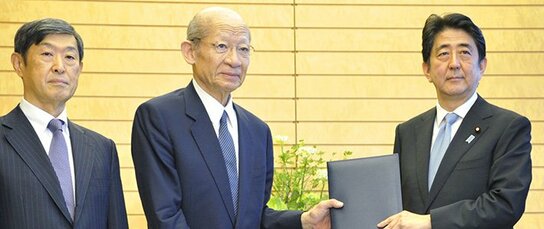
A Broad National Consensus
HOSOYA YŪICHI The historian E.H. Carr, in a famous quote, argued that history is “an unending dialogue between the past and present.” The Abe statement manifests this perfectly, intertwining past events with decisions being made by the administration today. He juxtaposes Japan’s actions before and during the war with the pacifist path taken after its defeat and commits Japan to never repeating the mistakes of the past. The terminology he uses sees history in the light of present-day realities, in the context of the prevailing global order and the confines within which Japan finds itself today.
Arguments between Japanese liberals and conservatives regarding perceptions of history have grown increasingly strident over the past two decades. Prime Minister Abe’s statement, I feel, was an attempt to bridge this ideological divide by incorporating elements from both camps. Here was Mr. Abe, perhaps Japan’s most conservative prime minister, embracing the remarks made by Mr. Murayama, who was the country’s most liberal prime minister who issued so-called Murayama statement. In that sense, it represents a very broad national consensus. If we compare it to the comments the prime minister was making a year or two ago, we can see how his perception of history has become much deeper and broader. I like to think that this was a result of his very meticulous reading of the advisory panel’s final report.
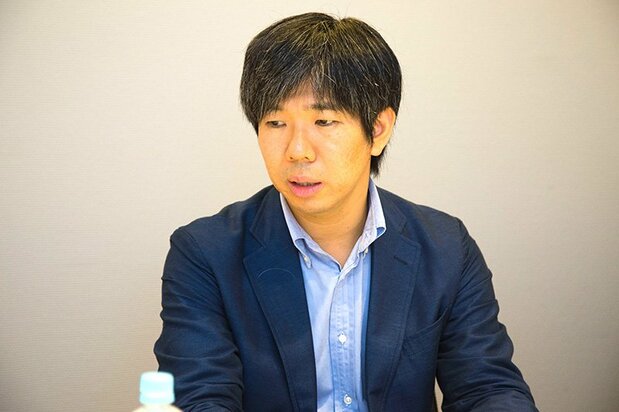

Presenters and Commentators at the Panel Meetings
INTERVIEWER I understand that there was some disagreement among the panel members on the definition of “aggression.” Were the sessions marked by heated debate on other issues? How did the final report ultimately take shape?
SHIRAISHI As a practical matter, there was only enough time for each panel member to a make a two- to three-minute comment per presentation. We met for just seven sessions, moreover, so there were considerable restrictions on the input each of us could make.
KAWASHIMA I should point out that the final report, to a large degree, reflects the input from the presenters who were invited to each session, rather than the views of individual panel members. The main contributions the members made were to offer their comments, based on which the presentations were revised to form the gist of the recommendations. Those comments, naturally, were made from a very broad spectrum of viewpoints. Interestingly, detailed transcripts of our meetings were published right after each session, so there was considerable media coverage of the drafting process. The public reaction to those stories gave us an idea of what people were thinking.
The topics covered were fixed from the start, as were the presenters. We had one session on lessons from history, three on Japan’s postwar path, and one on our future vision. One could pretty much surmise the outline of the final report by the time the speakers, panel members (some of whom also made presentations), and the agenda items were set.






 Read in other languages