



Clean and Straight-Laced in China, Please
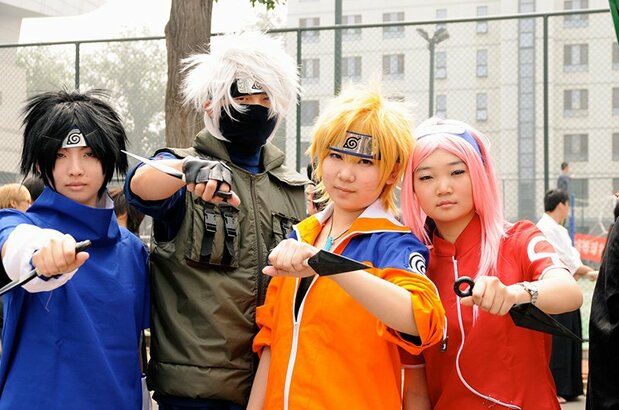
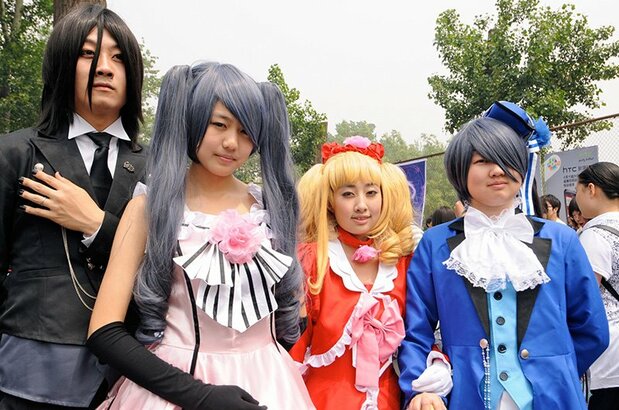
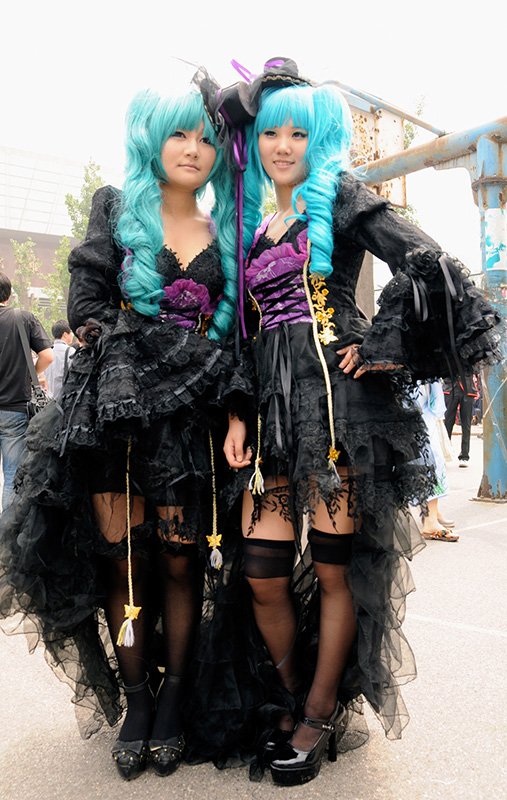
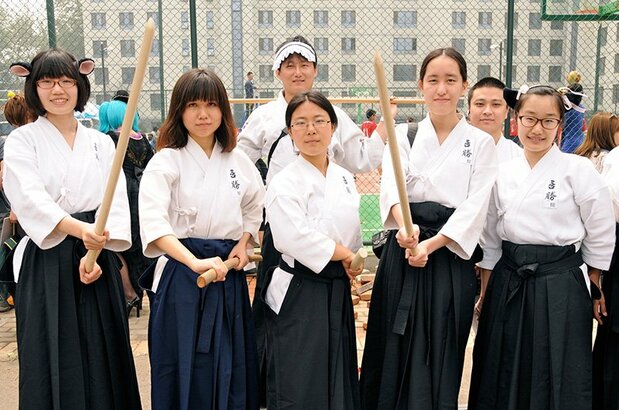
Despite the popularity of Japanese manga and anime among Chinese youth, though, there are some sharp differences between what is going on in Japan and what can be allowed under China’s strict regulations. At official events in China, erotic or violent content is forbidden, particularly anything that is sexually suggestive.
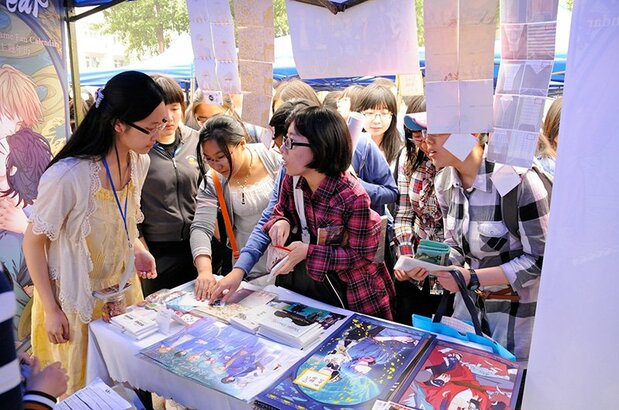
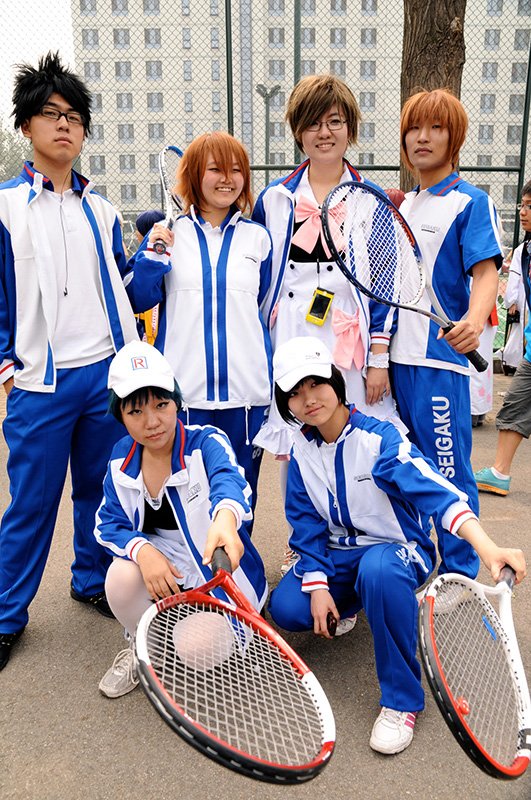
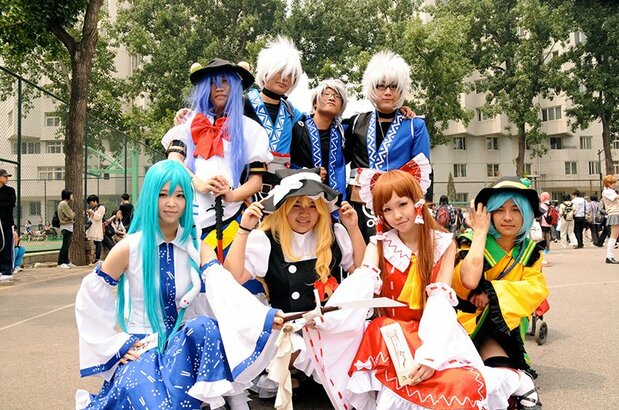
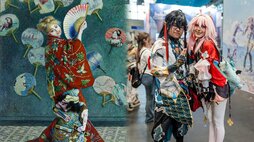
The sort of erotic themes on view at events for fans in Tokyo were hardly anywhere to be seen at the May fair in Beijing.
One of China’s top universities, Tsinghua University, held a “maid café” event on April 2, 2012. At maid cafés in Tokyo, young women dressed in maid costumes act as servants for customers, and there are sexual overtones. But the event in China stuck to a healthy, breezy style.
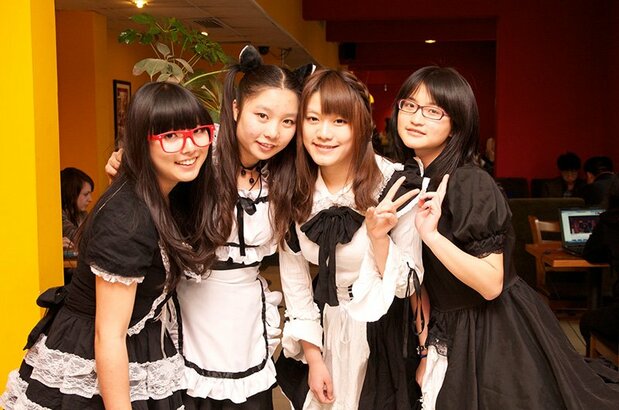
 Tsinghua University’s maid café event
The maid café event was the second such event hosted by an anime and manga club that students at Tsinghua University founded 13 years earlier, called the “Next Generation Dong Man Society.” The enthusiastic chairman of the club, Lu Yichen, is a third-year engineering student who traveled to Tokyo’s Akihabara district to get a first-hand look at a Japanese maid café. He recalls some of the hard work that went into establishing the event:
“Many Chinese people misunderstand what maid cafés are. I wanted to hold the event in a larger venue but the university refused permission, saying there was too much eroticism and class discrimination. So I really wanted to hold a clean and fun event that positively conveyed Akiba culture.(*1) Lots of students are fans, but very few of them get a chance to visit the ‘sacred land’ of Akiba.”
This is one example of how Japanese subculture is expanding in China while becoming localized at the same time.
Legitimate Business Counters Dong Man Piracy
Although piracy and illegal Internet downloads have contributed greatly to the popularity of dong man in China, there has been a recent expansion of legitimate businesses as well.
TV Tokyo Corporation has linked up with China’s major Internet video broadcasting site, Tudou, to bring a number of popular anime productions to Chinese viewers, free of charge. Some of the most famous ones are Naruto, Bleach, and Gintama. Meanwhile, iQIYI.com, a video broadcasting subsidiary of China’s main portal site Baidu, is also selling legitimate anime content. As of mid-May 2012, one of the most popular series, Detective Conan, had over 200 million weekly views.
Compared to films and TV programs, Internet video broadcasts are currently subject to fewer import restrictions in China. There are high hopes that making legitimate content more widely available will lead to a decrease in illegal viewing, but is hard to gauge exactly how steep that decrease will be. Izumi Shōichi, vice president of a Chinese subsidiary of Japan’s major toymaker Tomy, offers the following comments based on his experience with the company’s licensing business:
“In the anime industry at least, a ‘legal content bubble’ seems to have emerged in China’s Internet market. One factor behind this is the increased attention paid to protecting rights holders in China, but another reason is the greater focus on corporate image, particularly in the case of listed companies, such as the NASDAQ-listed company Baidu. It is now possible to buy anime legally in China. According to a 2008 study by Morgan Stanley, the estimated worth of the anime industry in China will be ¥6.7 trillion in 2014, and it is expected to grow 1.5 times over the subsequent five years. Despite this rapid growth, however, anime in China is still around 20 years behind that of Japan. Given the huge potential in China, many anime-related Japanese businesses are keeping a close eye on the Chinese market.”
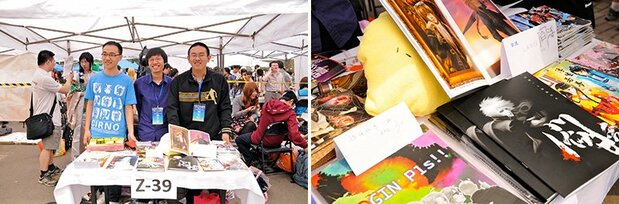
A Wealth of Creativity and Ideas
Liu Xiaofeng, a Japanese history professor at Tsinghua University, is an advisor to the Next Generation Dong Man Society. When he was an exchange student at Kyoto University, Liu used to pore over manga like Yawara!, Dragon Ball, and works by Tezuka Osamu. As both a fan himself, and an educator, he welcomes the expansion of legal anime businesses in China. He explains the appeal of dong man:
“It comes down to the wealth of creativity and ideas. Dragon Ball is based on the classical Chinese novel Journey to the West and features stories about small capsules that contain airplanes and other fantastic ideas. Works by Tezuka Osamu and Miyazaki Hayao tackle philosophical issues on a global scale. The strength of Japanese dong man is the knack for taking traditional stories from all over the world and turning them into something new and original.”
For the past few years, a Chinese anime television series has also been a big hit. The English translation of the title is Pleasant Goat and Big Big Wolf. US animations featuring 3D and computer generated graphics, such as Kung Fu Panda and Shrek, have also been popular in China. And Izumi Shōichi points to a trend toward a westernization of the Chinese market.
The Chinese anime market reacts quickly to innovation and the influence of Western trends is growing. How can Japanese animation, with its strengths in traditional 2D techniques, compete with that? Anime and manga are an important part of Japan’s soft power and the country needs to carefully consider how to answer that question.
(Photographs by Sado Tamako.)









(*1) ^ Short for Akihabara, where the first maid café was established.










 Read in other languages