


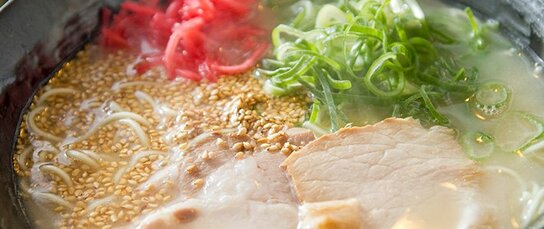
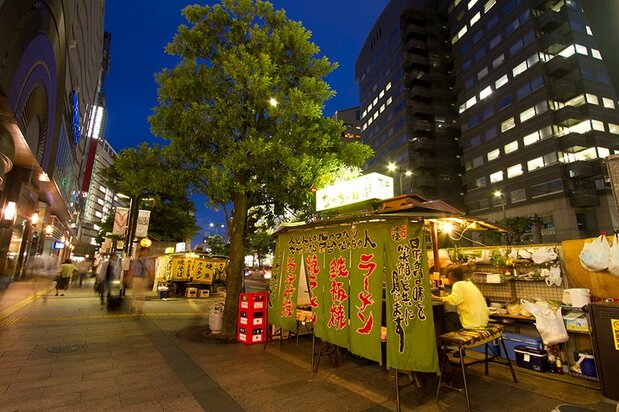
Eating on the Streets of Hakata

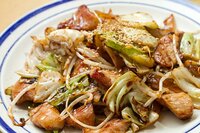 Fried cabbage and pork.
The following is an account written by one of our Chinese translators.
It was raining, so we didn’t want to linger outside any longer than necessary. We hurried through the rain and ducked under the curtains into the comfort of one of the covered stalls that lined the street. Three or four salarymen in suits were already inside, drinking and chatting after a day in the office. The owner was busy pouring drinks and preparing food, trading jokes and banter with his customers as he worked. It was a relaxed and friendly atmosphere.
 An omelet filled with “karashi mentaiko.”
We sat down near the entrance and ordered food and drinks. Several more people entered, greeting the owner and the other customers with the air of regulars. Although there were only 10 of us, we were already pressed for space around the U-shaped counter. Unused to the atmosphere, and suddenly finding myself surrounded by so many strangers, I started to feel nervous. Uncertain what to do, I concentrated on my food in silence.
 The owner says that there are over 100 items on the menu, many of them the result of customers’ requests.
The man sitting opposite me suddenly cut into his freshly made mentaiko omelet with his chopsticks and handed half of it to me. “Here, try this,” he said. My first instinct was to refuse, but the owner explained that this was normal procedure. “When we eat out at the stalls, it’s normal for us to share with each other,” he said. I accepted and ate the omelet. It was delicious.
What happened next was even more unexpected. I had noticed that the elderly man sitting next to me had been scribbling intently for some time. Presently he finished and handed me a piece of paper. “Could you tell me if I’ve written this correctly?”
Talking About Li Bai in Hakata
Written on the piece of paper was a famous poem, “Departing from Baidi in the Morning,” by the Tang poet Li Bai. It was written perfectly, without a single mistake. Another young man sitting by us was as impressed as I was. “How come you know something like that?” he asked. With a hint of pride, the older man replied, “In the old days, everyone used to study Chinese poetry. It was the sign of an educated man, you know.” Suddenly, everyone around the counter was joining in a lively discussion about the influence of Chinese on Japanese, quoting the various proverbs, poems, and historical figures they knew. Before I knew it, my nervousness had disappeared and more than an hour had flashed by.
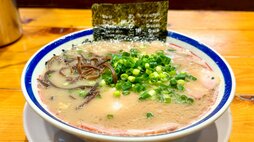
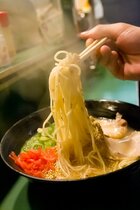 Rāmen noodles: One of the indispensable classics of Japanese street stall menus.
Although our experience of Hakata’s street food culture was very brief, it was enough to give me a sense of what makes this style of eating and drinking so attractive. Street stalls like this one are a treasured part of local culture. Night after night, they are bustling with life and activity. People come not just for the food, but for an experience that is difficult to find elsewhere. There are no barriers here: The moment you sit down, you are part of the crowd, chatting and mixing on easy terms with the people around you, whether you are one of the regulars or a complete stranger. Good food, good drink, and good conversation—what better way could there be to relax after a long day at work than an hour or two in one of Hakata’s local street food stalls? They may be small, but they are filled with warmth and humor.









 Read in other languages