


Angering the Water God
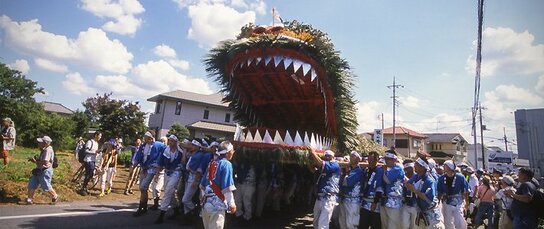
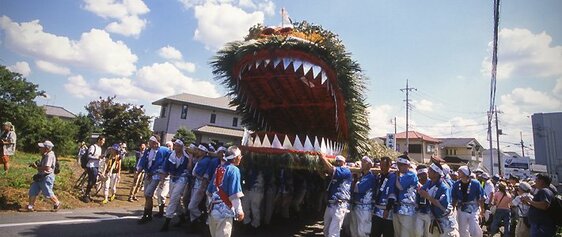
Before beginning its 2016 journey, the dragon received divine status in a ceremony at Shirahige Shrine. As water brought from Raiden Shrine in Gunma Prefecture was poured into its gaping mouth, it became a dragon god. Some 300 men then carried it the 2 kilometers from the shrine to Kandachigaike, while the thundering sounds of the drums and conches reverberated in all directions, calling out for the clouds to open. Curiously enough, during the dragon god’s progress, the glare of the sun died down and a cool wind started to blow.
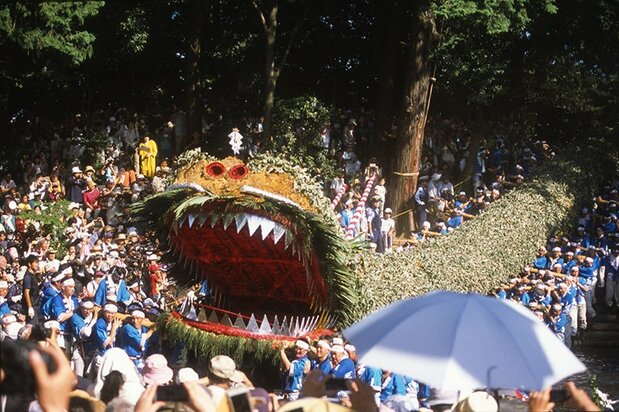
 The 36-meter beast looks like a real creature as it emerges from the trees.
An hour and a half after it left Shirahige Shrine, the dragon god lumbered out of a clump of trees into view of the pond. It seemed to be a monster from another world.
Sacred water from the Raiden shrine had also been poured into Kandachigaike. The dragon god weaved its way steadily through the trees and solemnly entered the pond. Its great body rose and fell in the water, twisting and circling, as selected residents beat at the surface with model swords or clamored at their conches in a bid to anger the water god into bringing thunder and rain.
Ame fure Tanjaku / koko ni kakare kurokumo
Make it rain, Taishakuten.
Bring black clouds here.
Participants energetically cried out this distinctive call for rain. In the Japanese lyrics, Tanjaku refers to Taishakuten (Indra in Sanskrit), the Buddhist guardian deity.
 The dragon god enters the pond in the climax of the festival.
Auspicious Fragments of the Body
The festival reached its climax in the dismantling of the dragon god, representing its ascent to heaven. The lovingly constructed body was smashed into pieces in just five minutes. Residents pillaged the golden jewels attached to its head, the eyes, ears, and other parts said to be auspicious, taking them home to put on display.
The main purpose of the festival is now boosting community ties rather than rainmaking. Still, people say that even today, there is a high chance of rain by the end of the day following the festival. Perhaps it still retains some of its old power.
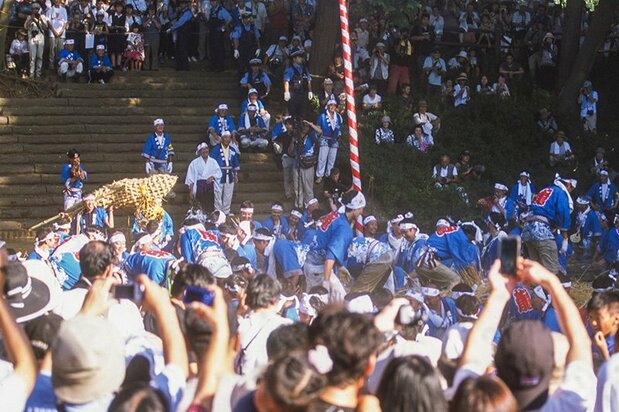 Participants rush to grab parts of the dismantled dragon god.





 Read in other languages